GSI Outdoors Pinnacle Camper Cookset (4-Person)
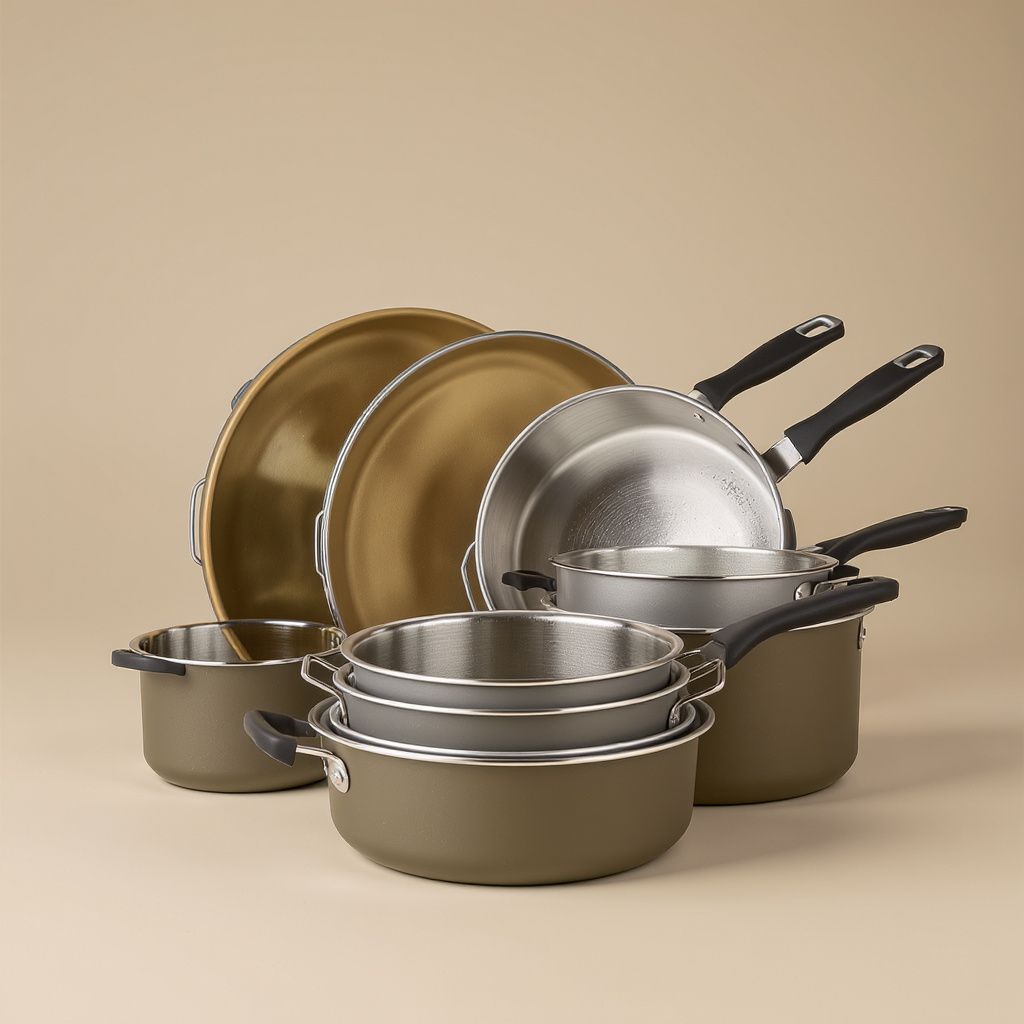
- Pieces
- 11 + 4 servings
- Pot Capacity
- 2L + 3L
- Weight
- 3.6 lbs
- Materials
- Hard-anodized aluminum + ceramic nonstick
- Compatibility
- Gas / electric / fire (NO induction)
- Warranty
- Limited lifetime
Overview — Who is this for?
This GSI Pinnacle Camper review is for the van lifer who has already done the research, already bounced between a dozen cookset options, and keeps landing in the same frustrating middle ground. The Stanley Adventure Base Camp at around $60 feels too plasticky and too "car camping weekend" for someone who actually lives in their rig. The Magma Nesting 10-Piece Set at $189 feels like overkill — marine-grade stainless designed for boats that pound through saltwater for decades. You want something in between. Something serious enough to cook real meals on, light enough to not punish your payload, and organized well enough that it doesn't become a clattering mess every time you hit a washboard forest road.
The GSI Outdoors Pinnacle Camper 4-Person Cookset sits exactly in that gap. At roughly $119.95, it's the mid-tier nesting cookset that solves most van kitchen problems without asking you to either compromise or overspend. You get 23 total pieces — 11 cookware items plus 4 mugs, 4 plates, and 4 bowls — all wrapped in a welded heavy-duty stuff sack that doubles as a wash basin. The whole kit weighs 3.6 pounds, which is genuinely impressive once you handle it in person.
It's the right answer if Magma feels too premium and Stanley feels too plastic. If that sentence describes where you've been stuck, keep reading — this is almost certainly the cookset you should buy. But there's one important caveat about the aluminum construction that you need to understand before pulling the trigger, and we'll get to that in the section on hard-anodized aluminum.
What's in the cookset (specific inventory)
Let's get specific, because "23 pieces" sounds impressive until you realize some cooksets pad the count with silverware and call it a day. The Pinnacle Camper is not doing that. Here's what you actually get.
On the cookware side, you have a 2-liter pot with a lid, a 3-liter pot with a lid, and a frying pan with a folding handle. That's the core cooking trio — small pot for boiling water, rice, or sauces, large pot for pasta, stews, or soups for four, and a pan big enough to cook eggs, sear meat, or fry vegetables. The lids double as strainers on the pots, which is a small touch that matters when you're draining pasta over a sink the size of a shoebox. The frying pan's folding handle locks firmly and tucks flat against the pan body for nesting, so it doesn't eat precious drawer real estate.
On the serving side, you get 4 mugs, 4 plates, and 4 bowls. They're made of BPA-free plastic, color-coded so your partner stops stealing your coffee mug, and sized for adult portions rather than the miniature camping dishes you sometimes see. Everything nests inside the pots for storage.
Rounding out the kit is a welded heavy-duty stuff sack that's not just a sack — it's engineered as the organizing system, and we'll cover why that matters in its own section below. Total weight for all 23 pieces is 3.6 pounds, which is lighter than most single cast-iron skillets.
Hard-Anodized Aluminum — the trade-off
Here's the honest part. The Pinnacle Camper pots and pan are made from hard-anodized aluminum with a ceramic-coated nonstick interior. This is the single most important thing to understand about this cookset, because it defines both why it's so light and why it won't work for everyone.
Hard-anodized aluminum is aluminum that's been electrochemically treated so the surface becomes extremely hard — harder than stainless steel, actually — and resistant to corrosion. It heats up fast, distributes heat evenly, and weighs a fraction of what stainless cookware weighs. That's why you can fit a full 4-person cooking and dining set into a 3.6-pound package. Stainless simply cannot do that at this size without getting into premium marine-grade territory like Magma, and even then you're carrying more than double the weight.
The trade-off is induction compatibility. Aluminum is not magnetic, which means it will not work on an induction cooktop. Full stop. If your van kitchen runs on a 12V or 120V induction burner — and a lot of modern builds do, because induction is efficient, safe, and doesn't produce combustion fumes — this cookset is the wrong choice. You'd be buying cookware you can't actually use.
If your van runs on propane, butane, a 2-burner camp stove, or you cook on open fire pits at campsites, aluminum is genuinely better than stainless for most tasks. It heats faster, uses less fuel, and is dramatically easier to handle. For gas cookers and traditional camp stoves, the Pinnacle Camper is arguably the right material choice.
So the decision tree is simple. Induction kitchen? Skip this, go Magma. Gas or flame kitchen? Keep reading.
Performance (heat distribution, nonstick durability)
On a propane stove, the Pinnacle Camper performs like cookware that costs significantly more than $119.95. The hard-anodized aluminum base heats evenly across the bottom of the pot, which means no hotspots burning the center of your sauce while the edges sit lukewarm. Pasta water comes to a boil noticeably faster than in stainless, and you'll actually save fuel over the long haul — a real consideration when you're refilling propane at whatever sketchy gas station you can find on the way out of a national forest.
The ceramic-coated nonstick interior is the other reason to buy this set. Ceramic coatings have come a long way in the last decade, and GSI's implementation holds up well to real-world use. Eggs slide off without oil. Pancakes flip cleanly. Cleanup with a paper towel and a splash of water is genuinely possible, which matters enormously when your water supply is 25 gallons and the nearest refill is 40 miles away.
The caveats on nonstick are the caveats on all ceramic nonstick cookware, and you should know them. Don't use metal utensils — silicone, wood, or nylon only. Don't crank the stove to maximum heat under an empty pan, because overheating is the fastest way to degrade any ceramic coating. Don't stack the pots directly on top of each other without the included dividers, because rattling metal-on-metal will eventually scratch the interior surfaces. Follow those three rules and the nonstick will stay functional for years. Break them, and you'll be looking at a new cookset in 18 months.
Heat retention is where aluminum loses to stainless and cast iron. Once you take the pan off the burner, it cools fast. For most cooking this is irrelevant, but if you're the kind of cook who likes to bring a stew to a boil and then let it coast on residual heat, you'll notice. Keep the burner on low instead.
The Welded Stuff Sack (storage organization)
This is the feature GSI doesn't talk about enough and it deserves its own section. The welded heavy-duty stuff sack that comes with the Pinnacle Camper is not just a bag — it's the organizational backbone of the whole kit. The welded seams (rather than stitched) mean it's essentially waterproof and structurally rigid when packed. When you zip everything inside, the sack holds its shape and can be slotted into a drawer or cabinet without flopping or collapsing.
Inside, the sack has integrated dividers and tensioning that keeps the pots, pans, lids, and dishware from clattering against each other while you drive. Anyone who's lived in a van knows that "thing that rattles every time you hit a bump" quickly becomes "thing you want to throw out the window." The Pinnacle Camper, packed properly in its sack, stays silent over washboard roads, gravel, and potholes.
The sack also converts into a wash basin in a pinch. It's not a luxurious feature, but when you're dry camping and need to wash dishes without running a faucet, being able to fill the sack with a quart of heated water, soap up the inside, and rinse everything in sequence is genuinely useful. If you want to go deeper on how kits like this fit into a broader layout, see our van kitchen storage solutions guide for drawer and cabinet planning ideas.
GSI Pinnacle vs Stanley Adventure vs Magma Nesting
Here's the comparison that probably brought you to this review. Three cooksets, three price points, three very different philosophies.
The Stanley Adventure Base Camp Cookset at around $60 is the budget option. It's stainless steel on the cookware side, which means it's induction-compatible and bombproof, but the dishware is plastic and the overall feel is "weekend car camping" rather than "daily driver." It's heavier than the Pinnacle Camper by about a pound and a half, and the nesting is looser. Buy it if you're on a tight budget, if you only cook in your van occasionally, or if you specifically need induction-compatible pots at the lowest possible price.
The Magma Nesting 10-Piece Set at $189 is the premium option. Marine-grade 18/10 stainless steel, designed for boats, induction-compatible, and built to last 20+ years of daily saltwater abuse. It's heavier than the Pinnacle Camper by a lot, and the price reflects the materials. Buy it if you have an induction cooktop, if you want cookware that will outlive your van, or if you just prefer stainless over aluminum as a matter of principle.
The GSI Pinnacle Camper splits the difference. Lighter than both, cheaper than Magma, nicer than Stanley. The catch is aluminum, which locks you out of induction. For gas and flame kitchens — which still describe most van builds — it's the best balance of weight, performance, and price.
Value for Money
At $119.95 for 23 pieces, the Pinnacle Camper works out to about $5.20 per item. That alone is reasonable, but the real value calculation is different. You're not buying 23 separate items, you're buying a complete, integrated, organized kitchen system that fits in a drawer and weighs less than a gallon of water. Replacing this with individually purchased pots, pans, dishware, and a storage solution would cost significantly more and take up significantly more space.
Compared to the $60 Stanley, you're paying double, but you're getting much better cookware materials, a real nonstick surface, a better organizing system, and noticeably less weight. Compared to the $189 Magma, you're saving $70 and about 2 pounds of payload. Neither alternative is strictly better — they're different answers to different questions — but the Pinnacle Camper's answer fits the most van builds.
Who should skip this
Skip this cookset if you have an induction cooktop. Aluminum will not work, and no amount of wishful thinking changes that.
Skip it if you're a hard-use cook who abuses pans with metal utensils, high heat, and metal scouring pads. Ceramic nonstick has limits and you'll blow through them.
Skip it if you cook for more than four people regularly. The 3L pot is the ceiling, and stretching it to feed five or six adults is frustrating.
Skip it if you want cookware that will last 25 years without question. Aluminum and ceramic nonstick are durable for their category, but stainless will always outlast them.
For everyone else — solo van lifers, couples, and small families cooking on propane or butane — this is the right cookset at the right price.
Final Verdict
The GSI Outdoors Pinnacle Camper 4-Person Cookset is the honest middle answer in a market full of compromises. It's light enough that you'll actually use it, organized enough that it won't drive you crazy, and priced where a real van lifer can justify it without flinching. The aluminum trade-off is real and it rules out induction kitchens, but if your rig runs on gas or flame, this is probably the cookset you should buy. It beats Stanley on quality and it beats Magma on weight and price. Recommended.
FAQ
Is the GSI Pinnacle Camper induction compatible? No. The hard-anodized aluminum construction is not magnetic, so induction cooktops will not recognize the pots or pan. If you have induction, buy the Magma Nesting set instead.
How many people does the 4-person set actually feed? Comfortably four adults for most meals. The 3L pot handles a pasta dinner for four, and the frying pan is wide enough for four eggs or four portions of vegetables. Stretching to five is possible but tight.
Can I use metal utensils with the ceramic nonstick coating? No. Use silicone, wood, or nylon utensils only. Metal will scratch the ceramic surface and dramatically shorten its usable life.
How durable is the welded stuff sack? Very. The welded seams are stronger than stitched ones and resist tearing, water infiltration, and abrasion. It's the part of the kit most people end up praising after a year of real use.
Is hard-anodized aluminum safe for cooking? Yes. The anodization process seals the aluminum so it doesn't leach into food, and the ceramic nonstick coating adds a second barrier. It's as safe as any modern cookware.
How does the weight compare to stainless alternatives? The Pinnacle Camper weighs 3.6 pounds total for 23 pieces. Comparable stainless sets typically weigh 5 to 7 pounds. For van builds where every pound matters, that difference adds up fast.
Compare with similar products
See how this stacks up against the other compact cookware we've tested.
Related Reviews
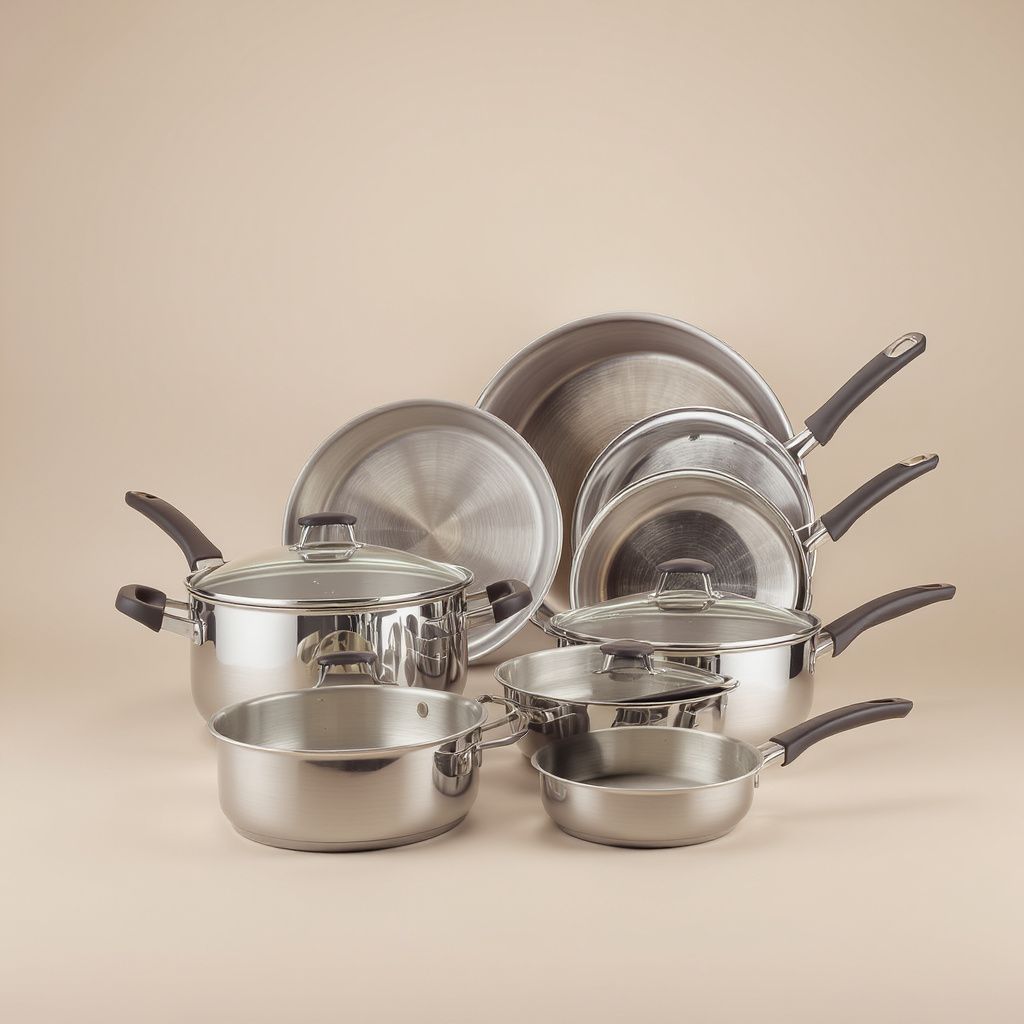
Magma Nesting 10-Piece Stainless Cookware
Marine-grade nesting cookware designed for boat galleys. A full kitchen's worth of gear in a 10" cube.
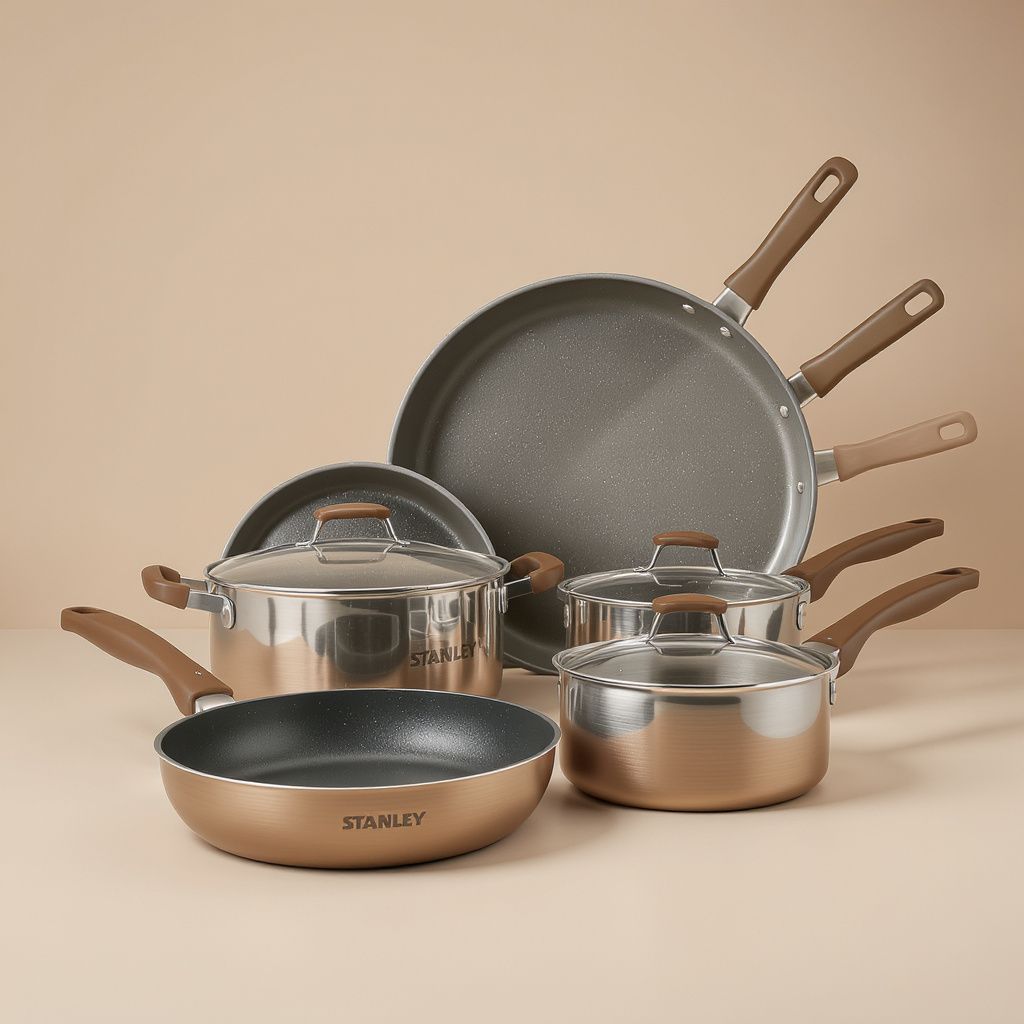
Stanley Adventure Base Camp 21-Piece
21 pieces nested inside a single 3.5L pot. The best budget cook set for 2–4 people.
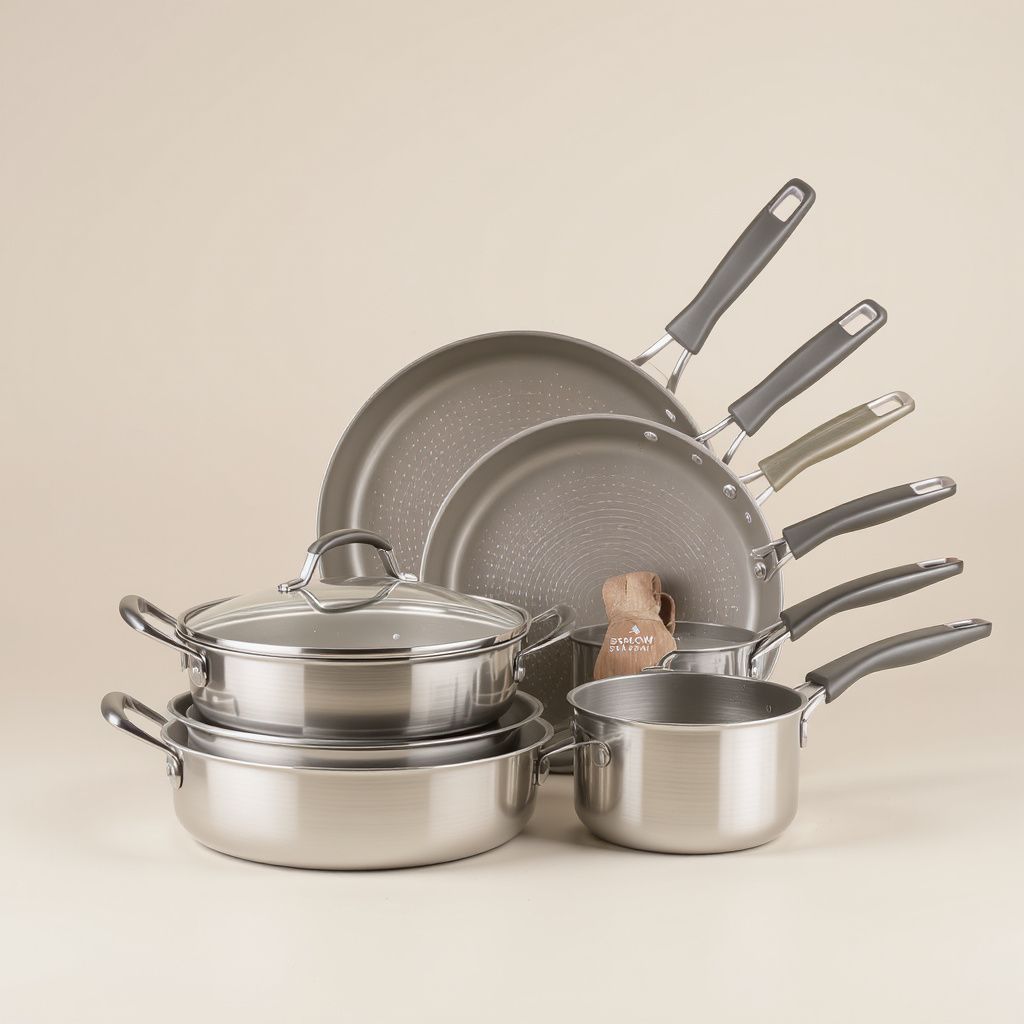
Snow Peak Titanium Multi Compact Cookset
The ultralight option. Titanium cook set built for weight-obsessed van dwellers and backpackers.