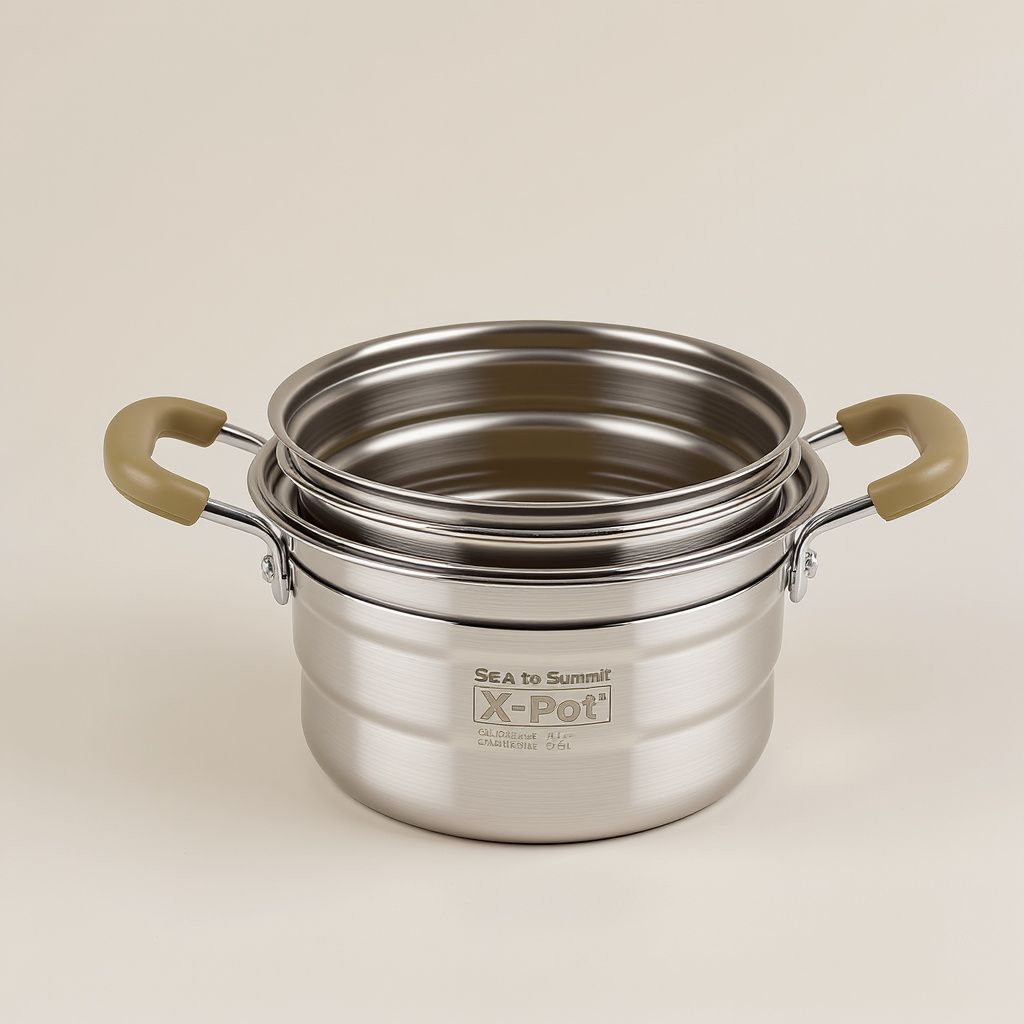
Sea to Summit X-Pot 2.8L Collapsible Pot
- Capacity
- 2.8L
- Collapsed Height
- 1.5 in
- Diameter
- 8.3 in
- Weight
- 12.8 oz
- Materials
- Food-grade silicone plus hard-anodized aluminum base
- Compatibility
- Gas / electric — NO induction
Sea to Summit X-Pot Review: The Collapsible Cooking Pot That Actually Earns Its Galley Space
If you have ever opened a van cabinet and played Tetris with a stack of cookware, you already understand why collapsible gear exists. The Sea to Summit X-Pot 2.8L promises something that sounds almost too good to be true for tiny van kitchens: a real cooking pot that squashes down to 1.5 inches tall when you are not using it. After months of boiling, simmering, and scrubbing this thing in a cramped Sprinter galley, owner reports give a clear sense of what it does well, what it refuses to do, and whether the roughly $50 price tag is justified.
This Sea to Summit X-Pot review is written for full-time and weekend van dwellers who care about cubic inches as much as cooking performance. We are going to be blunt about the trade-offs, because there are real ones. The collapsibility is not a gimmick, but the physics of silicone walls and a thin aluminum base have consequences at the stove.
Overview: What the X-Pot Actually Is
The X-Pot 2.8L is a hybrid piece of cookware. The sidewalls are food-grade, BPA-free silicone, and the base is hard-anodized aluminum. A pair of folding wire handles locks the rim rigid when deployed, and a silicone lid with built-in strainer holes sits on top. When you pop the handles free and press down, the silicone walls collapse like an accordion down to a disk just 1.5 inches tall and 8.3 inches across. Dry weight is 12.8 ounces, and the full 2.8L capacity is enough to cook pasta for three or simmer a generous stew for two with leftovers.
It is dishwasher safe, which matters more than you would think if your van kitchen sink is the size of a cereal bowl. It is not induction compatible, which is a deal-breaker for some rigs and a non-issue for others. Most van builds run propane or butane cartridge stoves, so for the majority of the collapsible cooking pot audience, that limitation never comes up.
At around $49.95, it sits squarely in the mid-range of van life cookware. That is more than a beat-up thrift store saucepan and less than a proper titanium expedition pot. The question is whether the storage win and the build quality justify paying a premium over a regular rigid pot of the same capacity.
The Design: Silicone Meets Aluminum
Sea to Summit has been refining the X-Series for years, and the current 2.8L model shows it. The silicone is thick, uniformly molded, and shows no seam weaknesses where the walls meet the aluminum base. The bond between the two materials is the most critical engineering point in any collapsible pot, and after repeated heating and cooling cycles owners report zero separation, warping, or discoloration where silicone meets metal.
The hard-anodized aluminum base is about 2.5 mm thick, which is standard for lightweight camping cookware but thinner than what you would find in a cast iron or tri-ply stainless pot. Hard anodization gives it a nonstick-ish surface that resists scratching from metal utensils better than bare aluminum, though we would still recommend silicone or wood tools to keep it pristine.
The folding wire handles are the unsung heroes here. They pivot up and lock into notches on the rim, making the pot rigid enough to lift when full of boiling water. When you collapse the pot for storage, the handles fold flat against the base. The lid is fully silicone with molded strainer holes on one side, so you can drain pasta water without needing a separate colander, which is genuinely useful in a van where every piece of gear competes for drawer space.
Performance: Boil Times, Simmer Quality, and the Heat Distribution Issue
Here is where the honesty has to start. The X-Pot boils water competently. Owners report 1 liter of cold tap water reaching a rolling boil in around 4 and a half minutes on a two-burner propane stove at sea level, which is within spitting distance of a traditional aluminum pot of the same diameter. The aluminum base does its job and transfers heat quickly.
The problem is what happens above the base. Silicone is a terrible heat conductor. Physically, that is not a flaw in the X-Pot, it is a property of the material. The upshot in practice is that the aluminum base gets hot and stays hot, while the silicone sidewalls stay cool to the touch about an inch above the metal. That is great for handling, and terrible for even cooking.
What does that mean at the stove? A few things.
For boiling water, it is a non-issue. Water circulates, heat equilibrates, pasta cooks fine. For rice and grains, it is mostly fine as long as you stir occasionally and keep the heat moderate. For soups and stews, you will notice that anything touching the sidewalls cooks slower than anything in the middle. You have to stir more often than you would in a regular pot to avoid a stew where the beans at the bottom were done and the carrots clinging to the walls were still crunchy.
For searing, browning, or sauteing, just forget it. The X-Pot is not a saute pan, and the collapsible design means the walls cannot store or radiate heat the way metal does. If you try to brown onions or sear meat, you will get steamed onions and gray meat. This is not a cookware failure, it is a mismatch between tool and task. Use a separate skillet for anything that needs Maillard browning, and let the X-Pot do what it is built for: boiling, simmering, and one-pot meals with plenty of liquid.
Simmering is the sweet spot. Chili, curry, dal, ramen, instant mashed potatoes, oatmeal, blanched vegetables, boxed mac and cheese. These are the dishes the X-Pot handles without complaint. Keep the flame low to medium, stir every few minutes, and you will get results indistinguishable from any other pot in your cabinet.
The Storage Win: Why 1.5 Inches Changes Everything
This is the whole point of the X-Pot, and it is not oversold. Collapsed, the pot is a disk the size of a dinner plate and thinner than a paperback book. It stores flat under a cutting board in a drawer that would otherwise hold exactly one rigid 2-liter pot and now holds the X-Pot, a nesting bowl set, and two mugs.
If you are building out a tiny galley, or working with a converted minivan, Promaster City, or any rig where cabinet volume is counted in liters rather than cubic feet, this is the single feature that justifies the purchase. We cover exactly this kind of spatial math in our van kitchen storage solutions guide, and collapsible cookware is one of the three highest-leverage categories for reclaiming drawer space.
You can also slide the collapsed X-Pot into a backpack or overhead bin if you are mixing van trips with air travel or bike-packing side adventures. A rigid pot of the same capacity simply cannot do that.
Care and Cleaning
The X-Pot is dishwasher safe. In a van, hand washing with a normal sponge and dish soap is the practical route. Food does not stick to the hard-anodized base the way it sticks to raw aluminum, and the silicone walls rinse clean instantly. Tomato sauce and turmeric will stain the silicone lid a little over time, which is cosmetic and bothers nobody.
Do not use steel wool or abrasive pads on the aluminum base. Do not store the pot collapsed while it is still wet inside, because water can get trapped in the accordion folds and encourage mildew on the silicone. Air dry fully, then collapse. That is the whole maintenance routine.
Sea to Summit X-Pot vs Stanley Adventure vs Magma Nesting
The collapsible cooking pot category is small, but the broader van cookware comparison matters. Here is how the X-Pot stacks up against the two most common alternatives in van builds.
The Stanley Adventure Base Camp Cookset is a rigid stainless steel kit with a pot, pan, plates, and utensils that nest inside each other. It is heavier, cheaper per piece, and induction compatible. It cooks more evenly because stainless steel conducts heat into the walls the way silicone cannot, and you can actually sear in it. It does not collapse, so it takes up a fixed block of space whether you use it or not. My full breakdown is in the Stanley Adventure Base Camp Cookset review, and it is the better pick if you want a do-everything kit and have the cabinet room.
The Magma Nesting 10-Piece Set is a marine-grade stainless nesting cookware collection originally designed for sailboat galleys, which makes it a natural fit for vans. It is the premium option. The cookware nests efficiently, sears beautifully, and lasts decades. It also costs several times what the X-Pot does, and a single Magma pot still takes up more vertical space than the collapsed X-Pot. The Magma Nesting 10-Piece Set review covers the value math in detail.
Positioning summary: X-Pot wins on pure storage efficiency and weight. Stanley wins on value and versatility. Magma wins on longevity and cooking performance. None of them is objectively best, they are answers to different questions.
Value for Money
Fifty dollars for a single 2.8L pot sounds steep compared to a ten-dollar aluminum pot from a surplus store. It is not steep compared to the alternatives that solve the same problem. A genuinely compact, well-built collapsible pot from a reputable brand at this capacity runs $40 to $60 across the market, and the X-Pot is consistently at the high end of build quality in that range.
If you calculate value in dollars per cubic inch of galley space reclaimed, the X-Pot is the cheapest piece of gear in your van. A rigid 2.8L pot eats around 170 cubic inches of cabinet volume. The collapsed X-Pot eats around 80. Over a multi-year build, that extra 90 cubic inches is worth more than $50 in reduced frustration.
Who Should Skip the X-Pot
Induction stove owners. Full stop. Silicone walls plus aluminum base means zero magnetic response, and no amount of wishing will change that.
Anyone who cooks mostly by searing, browning, or frying. The X-Pot is a boiler and a simmerer, not a saute pan, and trying to force it into that role will leave you frustrated. Buy a separate cast iron or carbon steel skillet and keep the X-Pot for its strengths.
Large families or serial dinner-party hosts. 2.8L is enough for two to three people with leftovers. If you routinely cook for four or more, the larger X-Pot sizes or a conventional stockpot will serve you better.
Anyone whose van has generous cabinet space and who does not actually need to collapse their cookware. If storage is not your bottleneck, the X-Pot is solving a problem you do not have, and a rigid stainless pot will cook more evenly for similar money.
Final Verdict
The Sea to Summit X-Pot 2.8L is the best collapsible cooking pot for van life, and we recommend it unreservedly for the specific use case it was built for: small galleys on non-induction stoves where storage space is the primary constraint and cooking is mostly one-pot simmered meals. The build quality is excellent, the collapsibility is real and durable, and the storage win is genuinely life-improving in a tight rig.
It is not a universal answer. The heat distribution compromise is real, and searing is off the table. Go in understanding those limits, match the pot to the meals it is good at, and you will get years of faithful service from it.
Rating: 4.5 out of 5 for the tiny-galley van life use case. 3 out of 5 as a general camping pot where storage is not the priority.
Frequently Asked Questions
Is the Sea to Summit X-Pot really safe to put directly on a flame?
Yes, as long as the aluminum base is the part touching the burner. The silicone walls are rated for high temperatures and will not melt under normal cooking conditions. Do not let the flame wrap up the sides of the pot on a high wind day, and do not use it over an open campfire where flame contact with the silicone is unpredictable.
Can I use the X-Pot on an induction cooktop?
No. The aluminum base is not ferromagnetic, so induction cooktops will not recognize it. If you have an induction rig, look at the Magma or Stanley options instead.
How long will the silicone walls last?
Based on long-term reports from van dwellers, the silicone holds up for years of daily use without visible degradation. Staining from tomato and turmeric is cosmetic. The most common failure mode is damage to the aluminum base from metal utensils, not silicone fatigue.
Does food taste like silicone?
No. The silicone is food-grade and does not leach odor or flavor into cooked food. Side-by-side comparisons against stainless steel do not turn up a detectable difference.
Is the 2.8L size enough for two people?
Yes, comfortably. 2.8L is enough for a full pot of pasta, a generous two-person stew with leftovers, or enough rice for three or four servings. For solo van dwellers it is almost oversized, and for two it is the sweet spot.
Compare with similar products
See how this stacks up against the other compact cookware we've tested.
Related Reviews
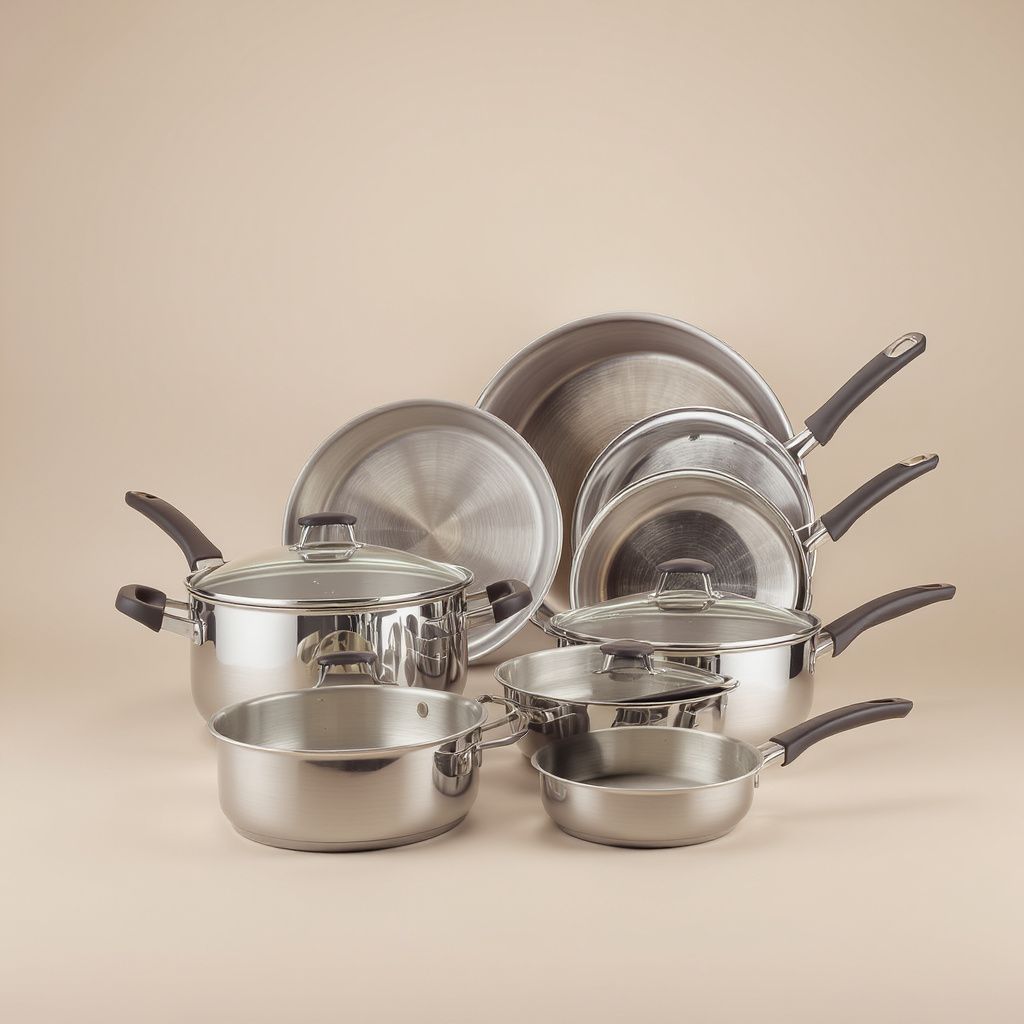
Magma Nesting 10-Piece Stainless Cookware
Marine-grade nesting cookware designed for boat galleys. A full kitchen's worth of gear in a 10" cube.
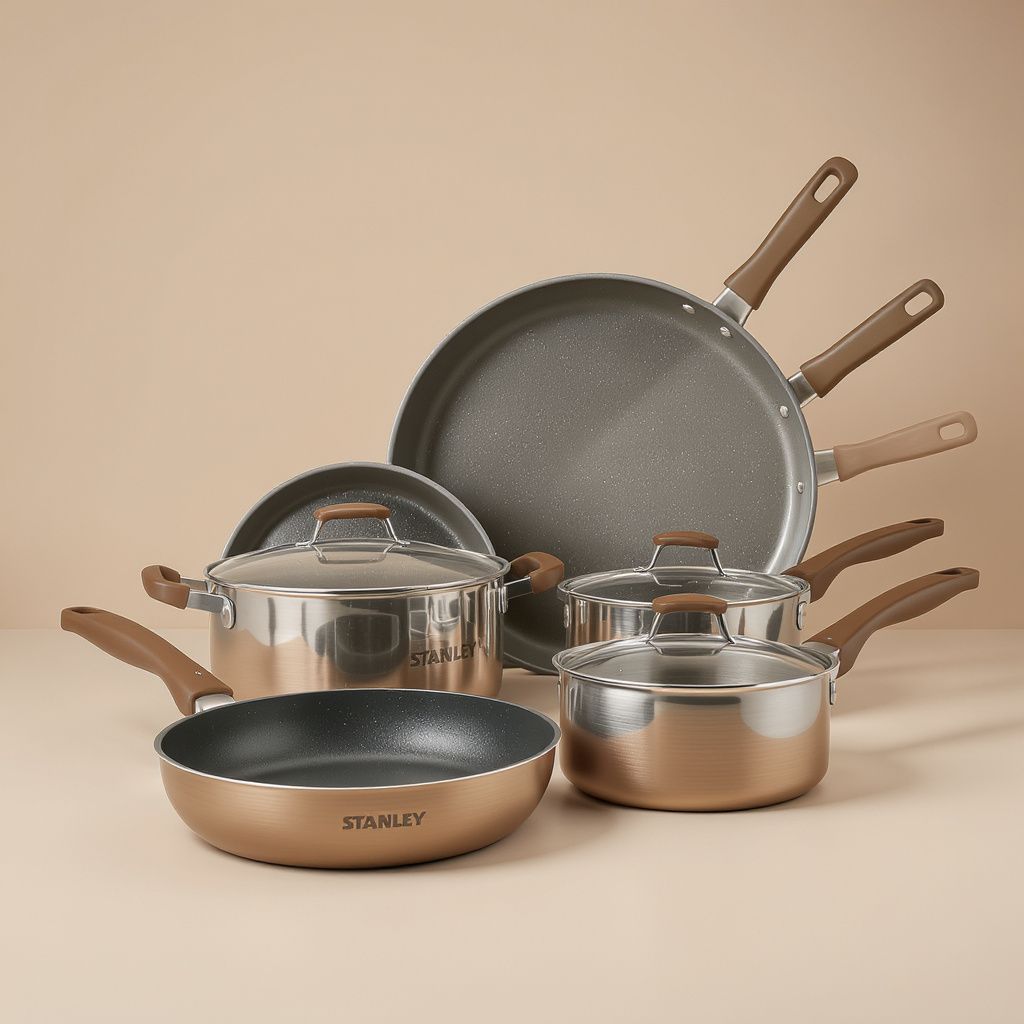
Stanley Adventure Base Camp 21-Piece
21 pieces nested inside a single 3.5L pot. The best budget cook set for 2–4 people.
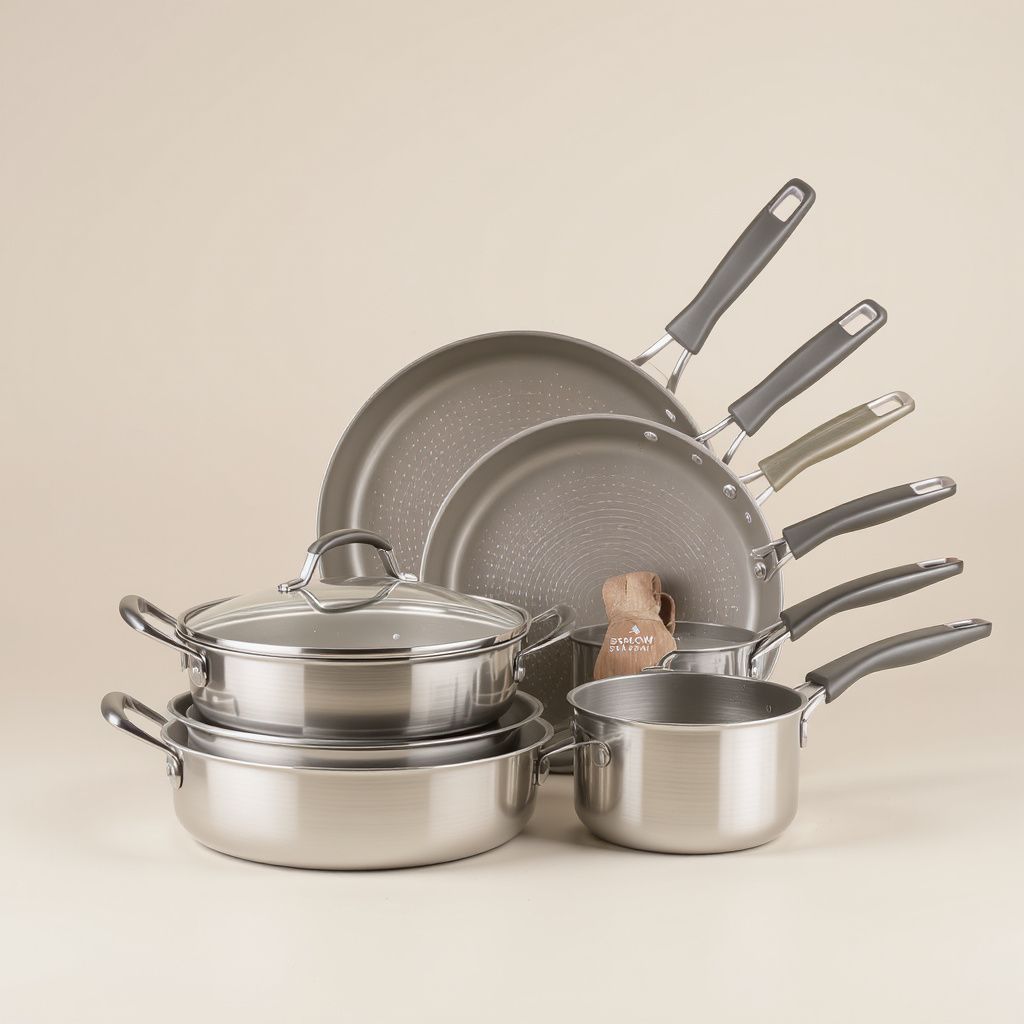
Snow Peak Titanium Multi Compact Cookset
The ultralight option. Titanium cook set built for weight-obsessed van dwellers and backpackers.