All-Clad D3 Stainless 10" Skillet
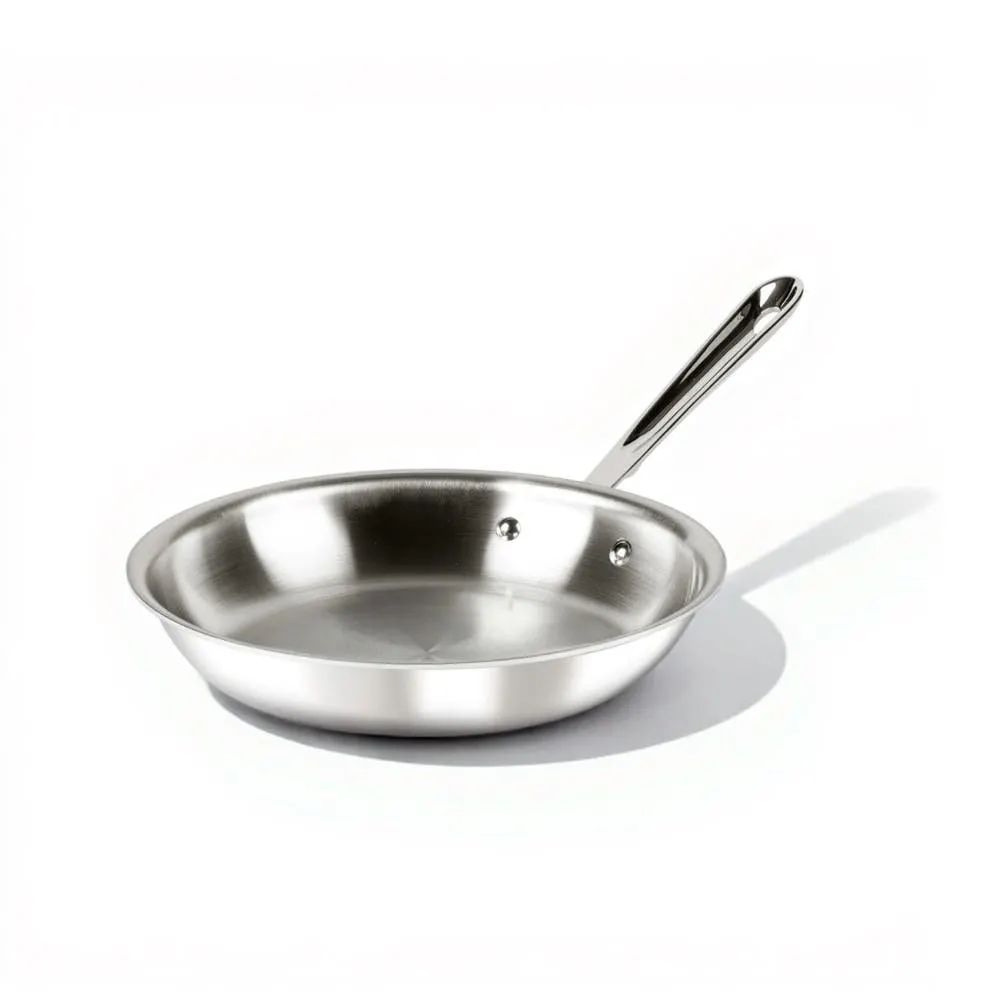
- Model
- 41106SC (with lid)
- Diameter
- 10 in
- Dimensions
- 18.6 x 11.5 x 3.7 in (All-Clad)
- Weight
- 3.73 lb (All-Clad; lid not specified)
- Materials
- 3-ply stainless, aluminum core
- Compatibility
- Any stovetop incl. induction / oven (600°F)
- Care
- Hand wash
- Warranty
- Limited lifetime
All-Clad D3 10 inch Skillet Review: The Premium Chef Pan for a Van Kitchen
One thing to get out of the way first. The All-Clad D3 10-inch skillet is a premium pan with a premium price. It costs far more than a Lodge cast iron pan, and considerably more than a decent mid-tier stainless skillet. For one pan. If your first reaction is that nobody should spend that much on a skillet to cook in a van, that's a fair reaction.
This All-Clad D3 10 inch skillet review weighs that price against All-Clad's published specs and the practical demands of a van galley: one burner, limited water, induction or outdoor gas, and a drawer that gets shaken on every road.
What the Amazon link sells: the All-Clad D3 Stainless 10-inch Fry Pan with Lid, model 41106SC (ASIN B00FUF5OIS).
Choose this if:
- You cook multi-step meals (sauté, deglaze, pan sauce) most days and want one high-quality stainless pan.
- You cook on induction, or on gas outdoors, and want one pan that suits both.
- You want a lid, and want a pan that's lighter than cast iron.
Skip this if:
- You mostly cook one-pot meals or boil water; a skillet isn't your bottleneck.
- You cook over campfires often; All-Clad lists stovetops and ovens, and open fire will discolour and stress the pan.
- You want a budget pan; the Lodge 10.25-inch skillet costs a fraction as much.
Overview: What You Are Actually Buying
The listing this site links to is the All-Clad D3 Stainless 10-inch Fry Pan with Lid (All-Clad model 41106SC). All-Clad says it is "Made in the USA with global components in our Pennsylvania Factory." The "D3" designation refers to the three-layer bonded construction: stainless steel outside, an aluminum core, and a stainless cooking surface, bonded together up the sidewalls to the rim. All-Clad's page doesn't state the steel grade of the cooking surface. The handle is a separate stainless piece riveted on.
Specs that matter for van life, per All-Clad:
| Spec | All-Clad D3 10 in fry pan with lid |
|---|---|
| Size | 10 in diameter (flat-base size not published) |
| Overall size | 18.6 x 11.5 x 3.7 in, including the handle |
| Weight | 3.73 lb per All-Clad (lid not specified); Amazon lists 3.5 lb |
| Cooktops | Any stovetop, including induction |
| Oven | Pan and lid oven-safe to 600°F |
| Care | Hand wash (All-Clad lists it as not dishwasher safe) |
| Warranty | Limited lifetime |
For comparison, Lodge's catalog lists the L8SK3 cast iron skillet at 5.34 lb without a lid.
All-Clad doesn't publish the flat-base diameter; on a flared 10-inch fry pan it is noticeably smaller than 10 in, so measure it against your induction coil or burner if fit matters. The flat zone is enough to sear two modest steaks, or fry a few eggs and some bacon at once. For one or two people on the road, the 10-inch is a practical size. The 12-inch is bigger and heavier than most van builds need, and the 8-inch works best as a second pan.
Tri-Ply Construction Explained (and Why It Matters in a Van)
Here is the problem with cheap single-layer stainless pans. Stainless steel is a poor conductor of heat. In a pan made only of stainless, the spot directly over the burner gets very hot while the edges stay cooler, so food burns in the centre while the edges lag.
The fix is to put a layer of something conductive between two layers of stainless. Aluminum is the usual choice because it's light and conducts heat many times better than stainless. The D3 uses an aluminum core bonded to both stainless faces, so the cooking surface heats more like aluminum (fast, even) but wears and cleans like stainless (durable, non-reactive, safe with acidic food).
What separates fully clad pans like the D3 from disc-bottom pans is that the bonded layers run up the sidewalls to the rim. A disc-bottom pan has its aluminum only in a disc under the base, so the walls heat less. That matters for reductions and pan sauces that climb the sides; it matters less for frying.
The riveted handle is a solid attachment for a pan that gets put in a drawer and driven down washboard roads. The trade-off is that at 18.6 in long overall it needs a long drawer or a hanging spot, and the rivets complicate cleaning: food and grease can collect around the rivet heads inside the pan, so give them a quick pass with a brush when you wash up with limited water.
Performance: Heat Distribution and Searing
Two standard bench tests are worth knowing about, because they're how cookware reviewers separate good clad pans from poor ones. We have not run them ourselves; the descriptions below are the method, not our results.
Heat distribution (flour test). Dust a cold, dry pan with an even layer of flour, put it on medium heat, and watch the flour brown. An even pan browns the flour at the same rate across the surface; an uneven one browns a ring or spot first. Expect any pan to show some ring where a small, focused camp-stove flame hits; the aluminum core reduces that rather than removing it.
Sear test. Preheat the pan on medium-high, add a thin film of high-smoke-point oil, wait for it to shimmer, add a dry steak, and leave it alone until it releases. A well-made clad pan produces an even crust and uniform fond for a pan sauce. You can run both tests on your own stove in a few minutes when the pan arrives.
The D3 can't match cast iron's heat retention on a thick steak, because it has less mass, but it is much more responsive. Turn the burner down and the D3 cools quickly; cast iron takes minutes. In a van, where you're often cooking on one burner and juggling steps, responsiveness is worth a lot.
Cooktops and Induction Compatibility
All-Clad lists the D3 as compatible with any stovetop, including induction. The outer stainless layer is magnetic, so it should be detected by portable induction units such as the Duxtop 9100MC. A flat base matters on induction (for full contact with the glass) and on gas (a warped pan hot-spots badly on a focused flame); avoid heating it empty on full power and never plunge it hot into cold water, the usual causes of warping. Power use for frying is modest compared with boiling: as an estimate, 15 minutes of frying at an average of about 1,000 W on a portable hob is roughly 250 Wh at the hob, or about 22 Ah from a 12.8 V battery after a typical 10% inverter loss. To size a battery and inverter for your own hob, use the power calculator.
On butane or propane camp stoves, it works well too. Those stoves are typically labelled by their makers for outdoor use (the Gas One GS-1000G this site links to is labelled for outdoor use only), so cook outside with them. All-Clad doesn't list campfire use; open flame and coals will discolour the stainless and can overheat the pan unevenly.
Cleanup with Limited Water
Stainless intimidates people. It shouldn't. The rules are simple:
- Preheat the dry pan for a minute or so before adding oil.
- Add oil, wait for it to shimmer, then add food.
- Don't move proteins until they release on their own.
- After cooking, deglaze with a splash of water or wine while the pan is still warm.
That last step is the key to low-water cleanup. Deglazing lifts most of the fond, so the wash itself takes about a cup of hot water, a drop of dish soap and a non-scratch sponge. Stubborn burnt-on residue comes off with a Bar Keepers Friend paste. Compared with nonstick, stainless needs more technique and sometimes a scouring powder; compared with cast iron, you can soak it and scrub it hard without worrying about seasoning. Don't use steel wool, and let a hot pan cool before it meets cold water.
All-Clad lists this pan as hand wash only, which rarely matters in a van.
For more on material trade-offs, see our van cookware materials guide, which covers stainless, cast iron, carbon steel and nonstick side by side.
All-Clad D3 vs Lodge Cast Iron vs Magma Nesting
These are the three closest alternatives on this site.
vs Lodge 10.25 Cast Iron. The Lodge costs a fraction as much, weighs more (5.34 lb in Lodge's catalog, without a lid), holds heat longer, and has no coating to damage. It's also slow to respond, rusts if it's left wet, is hard on long tomato and wine sauces, and the weight is noticeable when you lift it out of a low drawer. Cast iron is the better pan for campfire cooking and for single-temperature cooks like a steak or cornbread. The D3 suits multi-step cooking: sauté, deglaze, finish. Full details in our Lodge cast iron skillet review and the Lodge cast iron vs All-Clad stainless comparison.
vs Magma Nesting 10-Piece Set. The Magma set is built for space-constrained builds: five cooking vessels that nest into under half a cubic foot. Its pans have a tri-clad disc base rather than full cladding up the walls, so the sidewalls heat less evenly than the D3's, and its handles are removable, which is great for storage and a little less solid under a vigorous stir-fry. If you need a full kit in one drawer, the Magma wins. If you want the best-performing single skillet, the D3 wins. Some van cooks run both: the Magma for pots and one D3 as the main frying pan. See our Magma nesting 10-piece set review.
Value for Money
Here's the reasoning behind the premium. A fully bonded, bare stainless pan has nothing to wear off, and All-Clad backs the D3 with a limited lifetime warranty and rates it oven- and broiler-safe to 600°F. The premium buys full cladding up the walls, a lid, and induction compatibility in a pan that weighs about 1.6 lb less than the Lodge skillet. If you cook seriously every day, a pan that doesn't need replacing on the road makes the premium easier to justify. If you cook occasionally, it's harder to justify; a mid-tier clad pan or the Lodge will do.
Who Should Skip This Pan
Not everyone should buy a D3. Skip it if:
- You cook mostly one-pot meals, soups and boil-in-bag. A skillet isn't your bottleneck.
- You use a single butane burner a few times a week. A budget pan will do.
- You're a weekend van user, not a full-time road cook. Mid-tier stainless is fine.
- You want easy eggs above all. A carbon steel pan such as the de Buyer Mineral B builds a seasoned release surface and also works on induction.
Final Verdict
The All-Clad D3 10 inch skillet is the benchmark fully clad stainless pan for people who cook seriously in small kitchens. Its tri-ply construction spreads heat up the walls, it weighs 3.73 lb per All-Clad (about 1.6 lb less than the Lodge cast iron skillet), and it responds quickly when you change the heat. The riveted handle, flat base, lid and induction compatibility suit van life as well as a home kitchen. The premium price is real; whether it's worth it depends on how often you cook.
If you're a full-time van cook, or anyone who considers a well-seared piece of food part of what makes van life worth it, it's the premium pan we'd look at first.
FAQ
Is the All-Clad D3 worth the premium price for van life? For full-time van cooks who use a skillet daily, often yes, because a pan that stays flat and doesn't need replacing on the road has real value. Weekend users can save the money.
Does the Amazon listing include a lid? Yes. The listing this site links to is the D3 10-inch fry pan with lid (All-Clad 41106SC). All-Clad lists the pan and lid as oven-safe to 600°F.
Can I use metal utensils on the D3? All-Clad's product page doesn't address utensils. Bare stainless has no coating to damage, so metal spatulas and tongs are generally fine; they may leave cosmetic marks. Avoid cutting food in the pan.
Will the D3 work on my propane 2-burner? Yes. All-Clad lists it for any stovetop, and the flat base sits stably on camp stove grates. Use propane and butane camp stoves outdoors, as their makers instruct.
Does food really not stick to stainless? Correctly preheated stainless releases most proteins once they've browned, but it isn't nonstick. Eggs take practice: medium heat, butter, and patience.
Is it dishwasher safe? All-Clad lists this pan as hand wash only.
What does the warranty cover? All-Clad lists a limited lifetime warranty. Limited lifetime cookware warranties typically cover manufacturing defects, not wear, discoloration or misuse, so read All-Clad's current terms before relying on it.
Sources and verification
- https://www.all-clad.com/d3-stainless-3-ply-bonded-cookware-fry-pan-with-lid-10-inch.html (All-Clad): model 41106SC, 10 in, dimensions 18.6 x 11.5 x 3.7 in, weight 3.73 lb (lid not specified), tri-ply bonded with aluminum core, oven-safe to 600°F, any stovetop including induction, hand wash only, limited lifetime warranty, "Made in the USA with global components in our Pennsylvania Factory"; no steel grade or flat-base diameter published (checked 2026-10-12)
- Amazon listing ASIN B00FUF5OIS: title "D3 Stainless Steel 10" Fry Pan with Lid", part number 41106SC, 3.5 lb, oven and broiler safe to 600°F, induction compatible, hand wash only, limited lifetime warranty (checked 2026-10-12)
Compare with similar products
See how this stacks up against the other compact cookware we've reviewed.
Head-to-head comparisons
Related Reviews

For: Induction kit for two
Stanley Wildfare Pro 15-Piece Stainless Steel Fry Pan Cook Set, 8.75 in Tri-Ply Fry Pan
A cook-and-eat kit for two built around an 8.75-inch tri-ply 18/8 stainless fry pan with a fold-and-lock handle. Stanley lists it as induction compatible, 3.74 lb, and nesting to 8.74 x 8.74 x 2.08 in with its lid, two plates, two cutlery sets, a cutting board with trivet and a folding spatula. It's a much lighter induction option than the Magma set, but it has one pan and no pot.

For: Induction searing, quicker response
de Buyer MINERAL B Classic Carbon Steel Fry Pan, 10.25 in (5610.26)
A 3 mm carbon steel fry pan with a beeswax finish and no synthetic coating, made in France. de Buyer lists the 10.25-inch size at 4.2 lb with a 7.3-inch cooking surface and rates it for induction, gas, electric and ceramic hobs. It sears like cast iron but heats and cools faster. Like cast iron, it needs seasoning, drying and oiling, and de Buyer limits it to short oven use: 400°F for under 10 minutes.

For: Nonstick with detachable handles
T-fal Ingenio Expertise 10-Piece Nonstick Cookware Set with Detachable Handles, Induction, Black (L242SA74)
Aluminium pans with T-fal's Platinum PTFE nonstick coating and an induction base, plus two detachable handles. Remove the handles and the pans stack. T-fal lists the set at 11.07 lb and 13.0 x 13.0 x 7.1 in stacked. You get 8.5 and 11-inch fry pans, a 3 qt saucepan and a 3.5 qt sauté pan, each with a glass lid and a plastic storage lid. It's the easy-release, low-water-cleanup option, but the coating wears and needs gentle utensils.