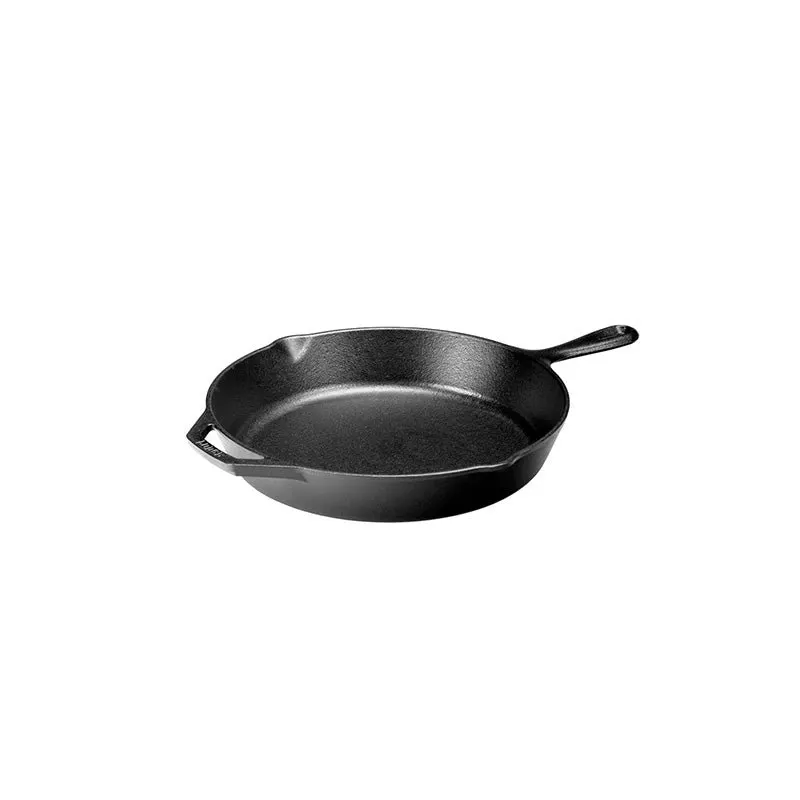
Lodge L8SK3 10.25-inch Cast Iron Skillet
- Model
- L8SK3
- Diameter
- 10.25 in
- Overall Size
- 16.13 x 10.75 x 2.25 in (Lodge catalog)
- Weight
- 5.34 lb (Lodge catalog; Lodge store data lists 5.66 lb)
- Materials
- Cast iron, pre-seasoned with vegetable oil
- Compatibility
- Any stovetop incl. induction / oven / grill / campfire (Lodge)
- Warranty
- Lodge Made Right warranty (Amazon: lifetime)
Overview — Who is this for?
If you only buy one pan for your van, this is the one we'd point most people to first, for three checkable reasons: Lodge lists it for every heat source you'll meet on the road (any stovetop including induction, oven, grill and campfire), it has no coating to wear out, and it is budget-priced. This Lodge cast iron skillet review is for anyone who's tired of replacing worn-out nonstick pans and wants a pan that can sear properly on modest camp burners.
It is pre-seasoned out of the box and made in South Pittsburg, Tennessee, where Lodge has been casting iron since 1896. This review covers who it's for, why cast iron earns its place in a weight-conscious rig, the honest downside (about 5.3 lb is a lot), and where we'd choose something else.
What the Amazon link sells: the Lodge Pre-Seasoned Cast Iron Skillet, 10.25 inches (ASIN B00006JSUA; the listing's model field reads L8SK3PLT and its part number 17L8SK3, both variants of Lodge's L8SK3 code).
Choose this if:
- You want one pan that sears, fries, bakes and braises, on induction, gas or a campfire.
- You want bare iron with no coating to wear out, at a budget price.
- You can store about 5.3 lb low in the van and don't mind drying and oiling a pan after each use.
Skip this if:
- Every pound counts, or lifting a 5 lb pan one-handed is hard on your wrists.
- You won't dry and oil a pan after washing; it will rust.
- You mostly boil water or cook long tomato or wine dishes; a stainless pot suits those better.
Key specs at a glance
| Spec | Lodge L8SK3 (per Lodge) |
|---|---|
| Size | 10.25 in top diameter (flat-base size not published) |
| Overall size | 16.13 x 10.75 x 2.25 in including the handle (catalog) |
| Weight | 5.34 lb (catalog); Lodge's store data lists 5.66 lb, Amazon 5.35 lb |
| Heat sources | Any stovetop including induction, oven, grill, campfire |
| Finish | Pre-seasoned with vegetable oil |
Why cast iron in a van (the case)
Van kitchens are hard on cookware. You've got vibration from washboard roads rattling pans against each other, temperature swings from cold mountain passes to hot desert parking lots, humidity from cooking in a small space, and storage measured in inches, not cabinets.
Nonstick is the most fragile option. The coating scratches when metal shifts against it in a drawer on a bumpy road, and overheating it, which is easy to do on a small butane burner with a concentrated flame, degrades the coating. Once the release is gone, the pan has to be replaced.
Stainless steel is more durable. It handles high heat, and a good set like the Magma nesting cookware is genuinely van-friendly. Stainless can sear well, but it takes more skill and more preheating to get a deep crust, especially in thinner pans or on a small burner, because it holds less heat than cast iron and the pan's temperature drops when cold meat goes in.
Cast iron sidesteps both problems. There's no coating to scratch or flake, and it is hard to damage in normal use (though it can crack if dropped onto a hard floor or shocked with cold water while very hot). Because of its thermal mass, once it's hot, it stays hot: drop a cold steak onto a well-preheated pan and the surface temperature recovers quickly, so you get a proper crust. In a van, where dinner is often the highlight of the day, that matters.
Lodge specifically
Lodge's history page dates the foundry to 1896 in South Pittsburg, Tennessee, and its catalog says the business "is still carried on by his family today." Lodge says it debuted foundry-seasoned cast iron in 2002, which is why the L8SK3 can go straight from the box to the stove. Lodge lists the skillet as made in the USA and made without PFAS.
Cast iron isn't a complicated product, and much of what separates good from poor is consistency: an even casting, a seasoning that doesn't flake, a handle you can grip, a flat base. Lodge publishes its dimensions, weights, care instructions and warranty; many unbranded cast iron pans publish none of that, so you can't check what you're buying. The L8SK3 has a long main handle, an assist handle opposite, and a pour spout on each side, per Lodge.
Performance (searing, baking, eggs, induction)
On a single-burner butane stove, expect several minutes of preheating to bring a 5 lb pan up to searing temperature; that is the cost of thermal mass. Once there, it holds that heat well. Ribeyes, smash burgers, pork chops and blackened fish fillets all work in this pan. Lodge doesn't publish the flat-base diameter, but a 10.25-inch skillet with sloped sides has room for two generous burgers or one big steak, which suits the typical one- or two-person van meal.
A note on butane stoves: they are typically labelled by their makers for outdoor use (the Gas One GS-1000G this site links to is labelled for outdoor use only), so cook outside the van with them. Keep the skillet centred on the grate. Cassette stove manuals set pan-size limits for a reason. Iwatani's ZA-3HP manual, for example, says the bottom of the pot should be less than 9.5 in (24 cm) across and must not extend over the fuel canister cover, warning that an oversized utensil "may result in over heating of the fuel canister and result in a fire or explosion." The L8SK3 is 10.25 in across the top rim and narrower at the base; Lodge doesn't publish the base diameter, so measure it against your own stove's limit, and keep the pan centred so the rim doesn't overhang the canister side.
Baking is where cast iron earns its second life. A skillet cornbread cooked in a camp oven or an RV oven comes out with a crust a cake pan won't match. Dutch baby pancakes, focaccia, skillet brownies and fruit crisps all work, and the L8SK3 goes from oven to cooktop to campfire grate.
Eggs are the classic cast iron objection. Yes, you can cook eggs on cast iron without them welding to the surface. The trick is patience: preheat over medium for a couple of minutes, add butter or oil, wait until it shimmers, then add the eggs. Seasoning builds with use, so release improves over the first weeks of cooking with fat. Rush it and they'll stick.
Induction compatibility matters for van lifers running a Duxtop portable induction cooktop off a lithium battery bank. Cast iron is strongly magnetic, so it works on any induction hob, and Lodge lists its cast iron as compatible with all stovetops including induction. Two practical cautions: lift the pan rather than sliding it, because rough cast iron can scratch a glass induction top, and bring it up to temperature gradually rather than on full power, which reduces the risk of hot spots and warping. To size the battery and inverter for induction cooking, use the power calculator.
Care & Seasoning (the only real maintenance burden)
Here is the honest trade-off: cast iron asks something of you. Lodge's routine is three steps: wash with warm, soapy water and a stiff brush or pad, "dry completely," and "add a thin layer of oil" over the whole surface. That's a minute or two of work.
Lodge says "soap is totally okay" because modern dish soap isn't strong enough to remove seasoning, that "soaking cast iron in water is a recipe for rust," and that a dishwasher "will remove the seasoning and likely cause rust." What damages seasoning is soaking the pan, the dishwasher, or putting it away damp. In a van, drying matters more than at home, because condensation in a closed cabinet can start rust quickly. Keep a dedicated cloth for drying cast iron, or set the pan back on low heat for a minute.
With limited water, cast iron is one of the thriftiest pans to clean. Scrape it while warm, scrub any stuck bits with a chainmail scrubber and a splash of hot water, and wipe it out. Compared with nonstick, it needs the extra drying and oiling step; compared with stainless, burnt-on food usually needs less soaking because the seasoning releases it. If you're dialing in your cleanup workflow, our van kitchen dishwashing system guide walks through a water-efficient routine.
If the seasoning starts to look patchy or dull, you can refresh it the way Lodge describes: wipe on a very thin layer of oil, "not enough to drip or run," set it upside down in an oven at 450–500°F for one hour, and let it cool in the oven. Without an oven, a few thin coats of oil heated on the stove until they stop smoking does a similar job; do that outside or with the van well ventilated, because it smokes.
Weight & Storage Considerations
Now the honest downside. Lodge's catalog lists the L8SK3 at 5.34 lb (Lodge's online store data says 5.66 lb, which may include packaging). That is not trivial in a van. Add a single-burner butane stove and the pan-plus-stove kit weighs several pounds more. In a small conversion where every gear decision is weighed against payload, that's a real cost.
It's also awkward to store. Lodge's catalog lists it at 16.13 in long including the handle, and it doesn't nest with anything. You can stack another pan inside it with a pan protector between them, but a fixed handle that long won't tuck into every drawer.
A solution that works: store the L8SK3 in a dedicated low slot with a felt pad underneath and a paper towel on the cooking surface, oriented vertically against a cabinet wall so it doesn't rattle, with a simple retainer to keep it in place while driving. Never store it in an upper cabinet. You can hang the skillet from a hook on the galley wall, which works but can rattle on rough roads.
Is the weight worth it? For most van cooks, yes. For someone in a micro-camper or a small trailer where every ounce matters, maybe not.
Lodge L8SK3 vs Lodge 12-inch vs other cast iron
Lodge makes cast iron skillets in many sizes, from a 3.5-inch mini up to 15 inches. For van life, the choice usually comes down to the 10.25-inch L8SK3 or the 12-inch L10SK3.
The 12-inch is tempting because you can cook four burgers at once. Lodge's catalog lists it at 7.35 lb and 18 in long, about 2 lb more than the L8SK3, and its extra 1.75 inches of diameter can overhang small butane stoves and the heating coil on compact portable induction units, which gives uneven heat at the edges. The 10.25-inch is the practical middle size: big enough to sear two generous portions, small enough for most compact cooktops, and light enough to handle one-handed for most people.
Against other brands, Lodge wins on price and availability. Premium makers sell lighter or machined-surface cast iron that costs considerably more. For a van that takes knocks, a budget pan that's easy to replace is a sensible choice. If weight is the sticking point, the de Buyer Mineral B carbon steel pan is the lighter seasoned-iron alternative on this site; the de Buyer vs Lodge comparison sets them side by side. If you'd rather have stainless, see the Lodge vs All-Clad comparison.
Value for Money
The L8SK3 is the budget-tier pan on this site, and with no coating to wear out it can stay in service for decades if it's dried and oiled; Lodge backs it with its Made Right warranty. Compared with replacing nonstick pans as their coating wears, it is one of the strongest long-term buys in van cookware.
Who should skip this
A few honest cases. If you're tightly weight-limited, look at a carbon steel skillet, which is lighter for the same diameter but holds less heat. If you can't comfortably lift about 5 lb with one hand (wrist injuries, arthritis), you'll find flipping food awkward. If you won't dry a pan after washing it, you'll rust it quickly. And if your cooking is mostly boiling water for dehydrated meals, a light pot is a better tool for that job.
For most other van cooks, this is the pan to start with.
Final Verdict
The Lodge L8SK3 10.25-inch cast iron skillet has no coating to wear off and is hard to damage in normal use. It holds heat better than stainless for searing, lasts far longer than nonstick, works on induction, gas and campfire, and is budget-priced. The weight is real and the maintenance is real, but both are modest for a pan that does this many jobs. If you only buy one pan for your rig, this is the one we'd start with.
FAQ
Is the Lodge L8SK3 actually induction-compatible? Yes. Cast iron is strongly magnetic, and Lodge lists its cast iron as compatible with any stovetop including induction. Lift it rather than slide it on a glass top, and heat it gradually.
Will about 5.3 pounds damage a portable butane stove? A 10.25-inch skillet is within the normal range for most single-burner cassette stoves, but check your stove's manual for pan-size and weight limits. Centre the pan, and don't use pans or griddles that overhang the cartridge compartment. Use butane stoves outdoors, as their makers instruct.
Do I really need to re-season it? Rarely. If you cook regularly with oil and dry the pan after washing, the seasoning maintains itself. A full re-season is only needed occasionally, or after a rust spot.
How does it compare to a carbon steel pan for van life? Carbon steel is lighter for the same diameter, heats faster, and can do most of what cast iron does. It holds less heat for searing and needs its seasoning built up. For most van lifers, cast iron is the easier default.
Will it rust in a humid van environment? It can, if it's stored wet or under-oiled. Dry it completely after washing, rub a thin coat of oil on the cooking surface, and store it with a paper towel on the surface. A small rust spot isn't fatal: scrub it off, dry, oil and heat the pan.
Can I cook acidic foods like tomato sauce in cast iron? Short-duration yes, long-duration no. A quick pan sauce with wine and tomato is fine. Simmering marinara for hours can wear the seasoning and give the food a metallic taste. Use stainless for long acidic cooks.
Sources and verification
- https://www.lodgecastiron.com/products/round-cast-iron-classic-skillet (Lodge): 10.25 in L8SK3, "compatible with any stovetop (including induction), oven, grill, or campfire", seasoned with vegetable oil, made in the USA, made without PFAS, long handle plus assist handle and two pour spouts, hand wash / dry / oil, Made Right warranty (checked 2026-10-12)
- https://www.lodgecastiron.com/products/round-cast-iron-classic-skillet.json (Lodge store data): skillet sizes from 3.5 to 15 in; L8SK3 listed at 2,567 g (5.66 lb) (checked 2026-10-12)
- https://images.orgill.com/weblarge/10031/Lodge_GL12_GC12_Catalog.pdf (Lodge catalog hosted by distributor Orgill): L8SK3 16.13 x 10.75 x 2.25 in, 5.34 lb; L10SK3 18 x 12 x 2.25 in, 7.35 lb; family-ownership statement (checked 2026-10-12)
- https://www.lodgecastiron.com/pages/how-to-clean (Lodge): wash, dry, oil steps; soap, soaking and dishwasher guidance (checked 2026-10-12)
- https://www.lodgecastiron.com/pages/cleaning-and-care-cast-iron-restore-and-season-rusty-cast-iron (Lodge): re-seasoning at 450–500°F for one hour, upside down, cool in oven (checked 2026-10-12)
- https://www.lodgecastiron.com/blogs/story/a-look-back-125-years (Lodge): founded 1896 in South Pittsburg, Tennessee; foundry seasoning introduced 2002 (checked 2026-10-12)
- https://m.media-amazon.com/images/I/B1utlrsjwgS.pdf (Iwatani ZA-3HP instruction manual, US/Canada edition): outdoor-only camp use, pot bottom under 9.5 in (24 cm), no cookware extending over the canister cover (checked 2026-10-12)
- Amazon listing ASIN B00006JSUA: title "Lodge Pre-Seasoned Cast Iron Skillet, PFAS-Free, 10.25 Inches", model L8SK3PLT, 16.12 x 10 x 2 in, 5.35 lb, made in the USA, lifetime warranty (checked 2026-10-12)
Compare with similar products
See how this stacks up against the other compact cookware we've reviewed.
Head-to-head comparisons
Related Reviews
For: Light 4-person kit (gas)
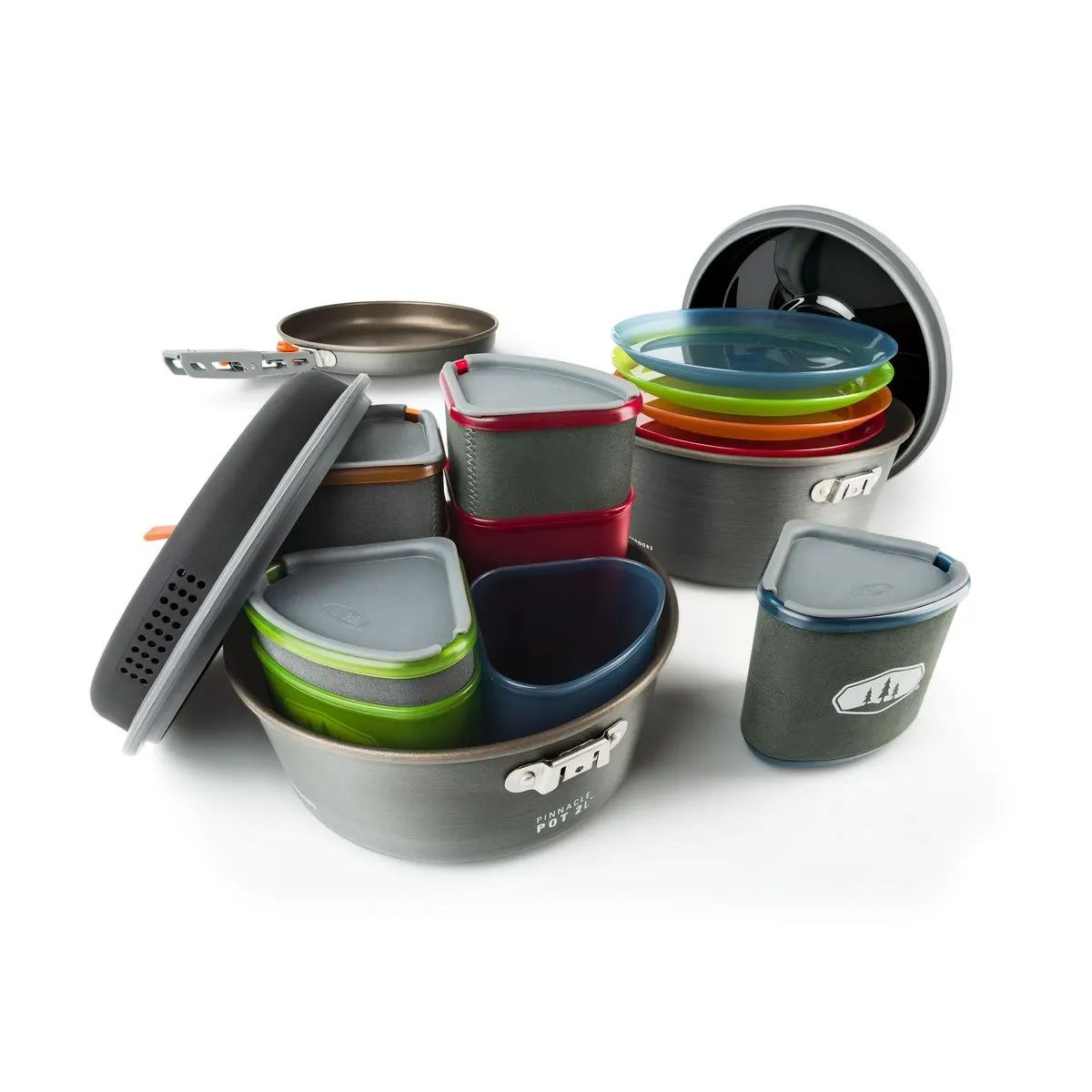
GSI Outdoors Pinnacle Ceramic Camper Cookset (4-Person)
The current version of GSI's nesting 4-person kit, with a ceramic nonstick coating instead of the old PTFE. Complete and compact, but no induction, a heat-sensitive coating, and a higher price than the stainless Glacier.
For: Collapsible pot for induction
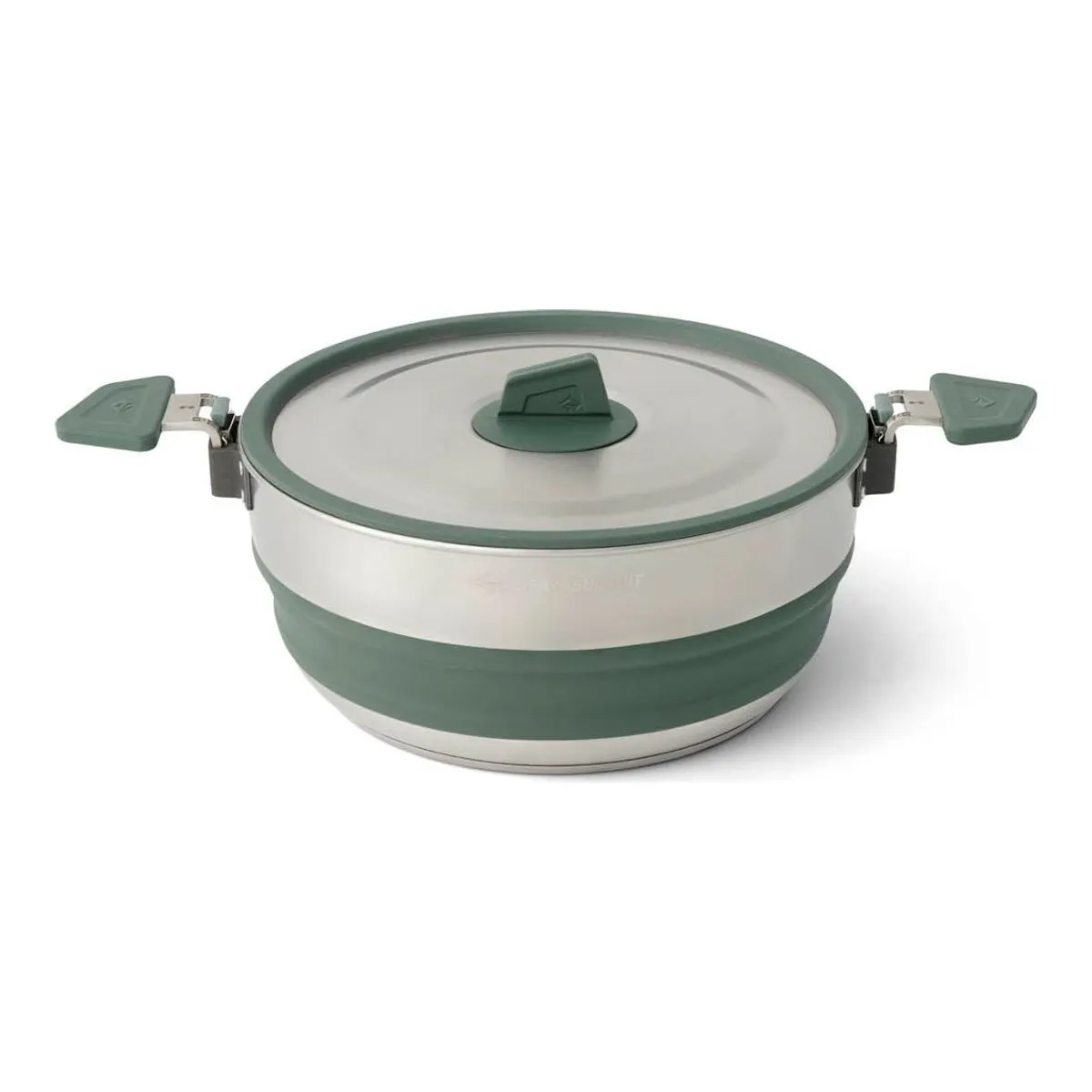
Sea to Summit Detour Stainless Steel Collapsible Pot 3L
The X-Pot's successor fixes its biggest flaw: a three-ply stainless base that works on induction. Collapses to 2.5 in with a lockable lid, but it's over twice as heavy and not for campfires.
For: Braising, baking, one-pot meals
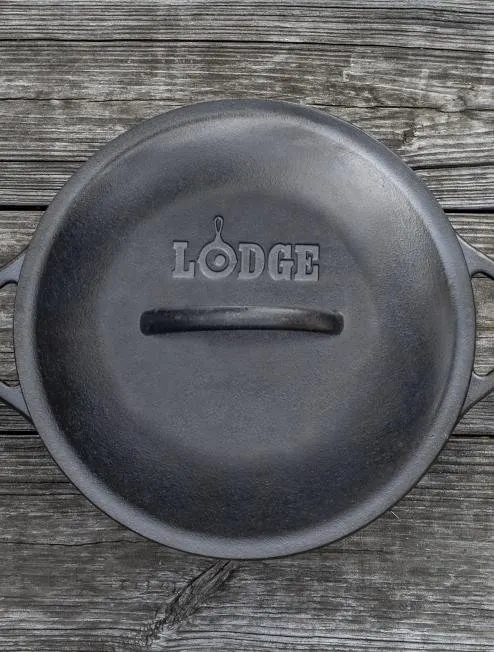
Lodge L8DOL3 5-Quart Cast Iron Dutch Oven
A 5-quart cast iron Dutch oven for roasting, baking bread and simmering stews. With no coating to wear off it is hard to damage in normal use. Heavy at 11.64 lb per Lodge's catalog, so it suits vans that cook big one-pot meals often.