Dometic CFX3 45 Powered Cooler
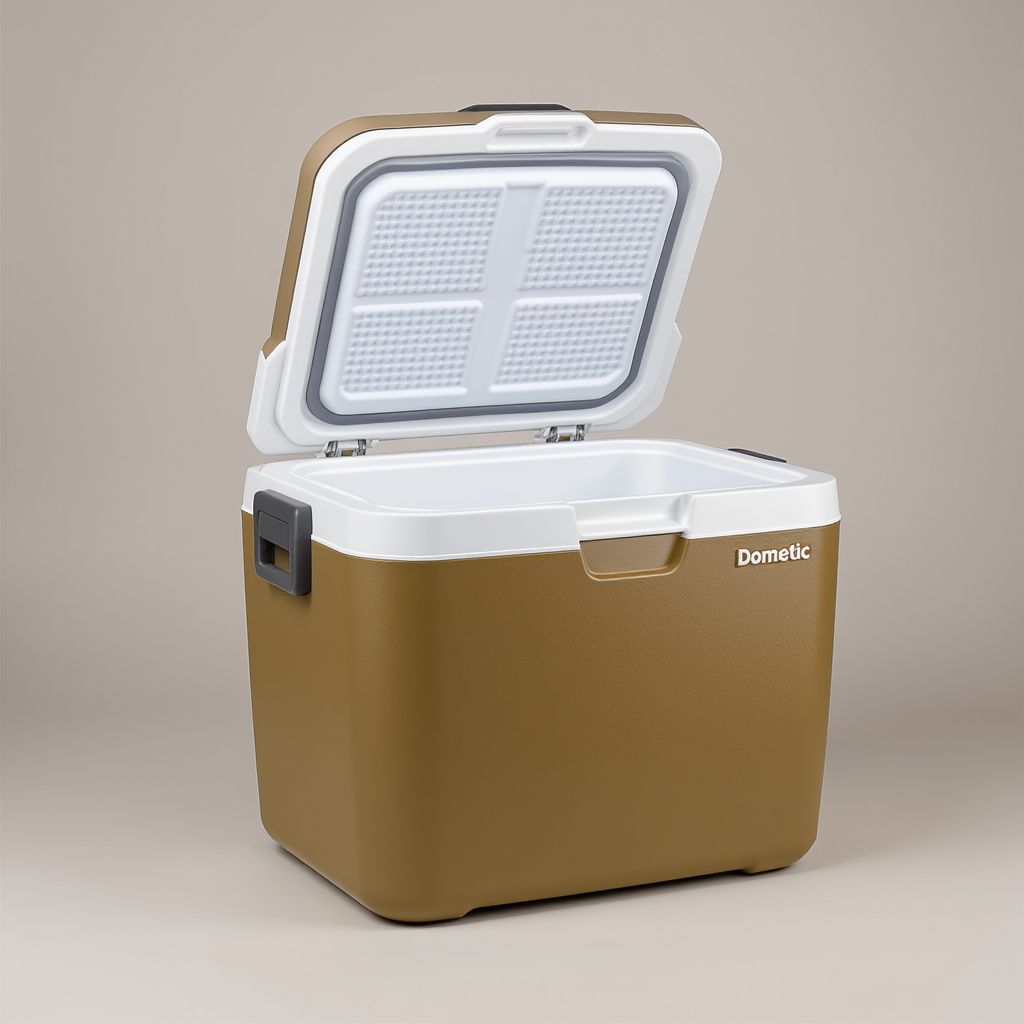
- Capacity
- 46L / ~64 cans
- Dimensions
- 27.4 x 15.5 x 16.3 in
- Weight
- 44 lbs
- Power Source
- 12/24V DC + 120V AC
- Power Draw
- ~1.0 Ah avg
- Warranty
- 3 years (5 on compressor)
Overview: What the Dometic CFX3 45 Actually Is
This Dometic CFX3 45 review is written for people who have already decided a 12V compressor fridge beats a passive cooler and are now staring at the $1,099 price tag wondering if it is worth the jump from the smaller CFX3 35. The short answer is that the CFX3 45 is the same fridge as its little brother with roughly 10 extra liters of usable space, and whether those 10 liters justify an extra $200 depends entirely on how many days you stay out and how many mouths you feed.
The CFX3 45 is a single-zone 46L powered cooler that can run as a fridge or a freezer, not both at once. It uses Dometic's VMSO3 variable-speed compressor, the same unit found in the CFX3 35, wrapped in the ExoFrame impact-resistant chassis the CFX3 line is known for. You get Wi-Fi and Bluetooth control through the Dometic app, a full-color display on the lid, and a 3-year overall warranty with 5 years specifically on the compressor. External dimensions are 27.4 by 15.5 by 16.3 inches, and it weighs 44 pounds empty. It holds about 64 standard 12oz cans if you pack it tight.
Positioning it against the rest of the category: this is a premium dual-purpose cooler for couples running 4 to 7 day trips who need a bit more buffer than the 35L class gives them but do not want to step up to the heavier, pricier dual-zone models.
Build Quality and the ExoFrame Chassis
The ExoFrame construction is the most visible upgrade Dometic made when it moved from the CFX2 generation to the CFX3. Instead of a plain plastic shell, the corners and edges get reinforced TPE bumpers and an exposed internal frame that takes impacts before the compressor housing does. In practice this means you can slide the fridge across a van floor, drop it 6 inches into a truck bed, or let it shift during a washboard road without flexing the compressor mounts.
The hinges feel overbuilt. The latch is a single center-pull design that stays closed on rough roads but opens one-handed when you want it. The lid seals against a soft gasket that still compresses properly after the warranty period on most units in long-term owner reports. Interior wall thickness is roughly the same as the CFX3 35, which means the extra 10L of capacity comes almost entirely from a longer footprint rather than thinner insulation. That is the right tradeoff.
One thing worth flagging: at 44 pounds empty, the CFX3 45 is about 6 pounds heavier than the CFX3 35 and notably heavier once loaded. If you plan to lift it in and out of a vehicle daily, that matters. If it lives bolted to a slide in your van, it does not.
Performance: Pull-Down, Temperature Stability, Ambient Range
Dometic rates the CFX3 45 to hit temperatures as low as -7 F, which puts it firmly in freezer territory. In a 75 F ambient room it pulls a full load from room temperature down to 38 F in roughly 45 to 55 minutes depending on how packed it is. If you pre-chill your food and drinks in a home fridge before loading, the compressor cycles stay short and power draw drops meaningfully.
Temperature stability is the real win with the variable-speed VMSO3 compressor. Cheaper 12V fridges cycle hard: compressor on full blast, compressor off, temperature swings 4 to 6 degrees. The VMSO3 ramps up and down to match demand, so internal temps hold within about 1 to 2 degrees of set point once the fridge has stabilized. Your lettuce does not freeze against the back wall. Your eggs do not sweat.
Ambient performance holds up well into the 95 F to 100 F range, which is where budget 12V fridges start to struggle. In a hot van with the sun hitting the side, the CFX3 45 will run its compressor more often but it will not lose temperature. That is the difference between a premium unit and a $400 knockoff.
Power Consumption: Real Ah Numbers
This is the question everyone actually wants answered. In a 75 F ambient environment with the fridge set to 38 F and the lid opened a reasonable number of times per day, the CFX3 45 draws roughly 0.6 to 0.9 amps per hour on a 12V system. That works out to between 14 and 22 amp-hours over 24 hours.
Push the ambient temperature up to 90 F and you should plan for 25 to 32 Ah per day. Run it in freezer mode at 0 F in the same 90 F ambient and you are looking at 45 to 60 Ah per day, which is the regime where your battery bank starts to care.
Practical math for a typical van build: a 100 Ah lithium battery gives you roughly 3 to 4 days of autonomy running the CFX3 45 as a fridge with no solar input at all. A 200 Ah lithium bank with 200 watts of solar will keep it running indefinitely in most conditions. If your electrical system is marginal, read the 12V fridge buying guide before you commit, because the fridge itself is only part of the equation.
Compared to the CFX3 35, the 45 draws about 15 to 20 percent more power on average. That is not nothing, but it is smaller than the capacity gain would suggest because the compressor is identical and the insulation ratio is actually slightly better on the larger unit.
Capacity Math: 4 to 7 Day Couples Trip
Here is where the 46L number translates into real food. For two people on a 5-day trip with moderate cooking ambition, a reasonable pack looks like this: a dozen eggs, a pound of butter, a block of cheese, a quart of milk, six beers or seltzers, three days of fresh produce, two nights of pre-portioned proteins for cooking, leftovers from night one and night three, condiments, and a small bag of ice for drinks.
That fits in the CFX3 45 with maybe 10 to 15 percent of the volume left for a grocery run mid-trip. The same pack in a CFX3 35 fits, but only if you are disciplined and willing to eat the proteins in a specific order. On a 7-day trip for two, the 35 starts forcing tradeoffs. The 45 gives you breathing room.
For a solo traveler or weekend trips, the 35 is the smarter buy every time. For couples, full-time van dwellers who resupply every 5 to 7 days, or anyone who wants to throw a six-pack in without rearranging, the 45 earns its extra footprint. Three people using it as the only cold storage is pushing it.
CFX3 45 vs CFX3 35 vs Whynter FM-45G
Three fridges in roughly the same size class, three different philosophies. The CFX3 35 is the same fridge as the 45 with 10 fewer liters and $200 off the price. If your trips are 3 to 4 days or you travel solo, buy the 35 and spend the $200 on better bedding or a second battery.
The CFX3 45 itself is the couples' sweet spot. Same compressor, same app, same build quality, same warranty, just enough more space to matter. You are paying for capacity, not engineering, and that is a fair trade if you actually need the capacity.
The Whynter FM-45G is a different animal. It is a dual-zone fridge with a fridge compartment and a true freezer compartment running simultaneously, and it sells for roughly $600 to $700. That is $400 less than the CFX3 45. What you give up: a less refined compressor that cycles more aggressively, a chassis that will not survive the same abuse, and an app that is not as polished. What you gain: the ability to run ice cream and salad greens at the same time without choosing. For people who want true frozen food on the road, the Whynter is the better tool even though it is the less premium product.
Dometic CFX3 45 vs CFX3 35 comes down to capacity. CFX3 45 vs Whynter FM-45G comes down to whether you need dual-zone functionality more than you need premium build and efficiency.
Value for Money
At $1,099 the CFX3 45 is not cheap. You are paying a premium over comparable 45L units from Iceco, Alpicool, and Whynter that deliver similar temperatures at lower prices. The case for the Dometic is built on three things: the VMSO3 compressor runs quieter and more efficiently than anything in the budget tier, the ExoFrame chassis actually survives real-world use instead of cracking in year two, and the 5-year compressor warranty means that if the one part that matters most fails, you are covered through most of the fridge's useful life.
If you buy a $500 46L fridge and it dies in 3 years, you spent $500. If you buy the CFX3 45 and it lasts 10 years, you spent $110 per year. The math favors the premium unit if and only if you actually keep it that long. For full-timers, the value case is clear. For weekend warriors who use their rig 20 nights a year, the budget option is probably smarter.
Who Should Skip This
Skip the CFX3 45 if any of these apply: you travel solo or as a weekend-only couple (get the CFX3 35 instead), you need true frozen food separate from refrigerated food (get the Whynter or a proper dual-zone unit), your electrical system cannot cleanly handle 20 to 30 Ah per day (fix the electrical first), your budget is under $800 (Iceco VL45 or Alpicool CF45 deliver 80 percent of the performance for half the price), or you need a fridge for an RV with shore power 90 percent of the time (a 120V compressor fridge or residential unit makes more sense).
Also skip it if you are buying on aesthetics alone. The CFX3 45 is a tool. It looks fine but you should be buying it for the engineering, not the color scheme.
Final Verdict
The Dometic CFX3 45 is the right fridge for couples who travel 4 to 7 days at a stretch, need reliable cold storage in variable conditions, and plan to keep the unit long enough for the 5-year compressor warranty to matter. It is not the cheapest 46L 12V fridge you can buy and it is not trying to be. The extra $200 over the CFX3 35 buys you real, measurable capacity that makes longer trips noticeably less annoying, and the VMSO3 compressor plus ExoFrame build quality means you are unlikely to be shopping for a replacement in 3 years.
If that description sounds like your use case, this is the fridge. If you are solo, weekend-only, or working with a tight budget, buy something else with a clear conscience.
FAQ
Is the Dometic CFX3 45 worth $200 more than the CFX3 35?
For couples doing 4+ day trips, yes. The extra 10 liters stops forcing pack-order decisions and gives you room to do a mid-trip grocery run without emptying the fridge. For solo travelers or weekenders, no, stick with the 35.
Can the CFX3 45 run as a fridge and a freezer at the same time?
No. It is a single-zone unit. You pick one temperature and everything inside runs at that temperature. If you need simultaneous fridge and freezer operation, you need a dual-zone model like the Whynter FM-45G.
How much solar do I need to keep the CFX3 45 running off-grid?
In moderate conditions, 100 watts of solar paired with a 100 Ah lithium battery handles it comfortably. In hot weather or if you are in shaded campsites frequently, step up to 200 watts of solar and 200 Ah of lithium to build in margin.
Does the Wi-Fi and Bluetooth app actually work?
Yes, and it is more useful than you might expect. Bluetooth gives you in-van control so you can adjust temperature from bed. Wi-Fi lets you check the fridge remotely if your van has a data connection, which matters when you leave it running overnight at a trailhead.
How loud is the compressor?
Quiet enough to sleep next to. The VMSO3 hums at roughly 40 to 45 dB under normal load, closer to 50 dB when it first kicks on. It is noticeably quieter than budget 12V fridges and quieter than most home refrigerators.
Is 44 pounds empty too heavy for a slide-out mount?
No, but check your slide's weight rating. Loaded to capacity the fridge will hit 70 to 80 pounds, which is within spec for most heavy-duty drawer slides but at the edge of lightweight ones. Match the slide to the loaded weight, not the empty weight.
Compare with similar products
See how this stacks up against the other 12v fridges we've tested.
Related Reviews
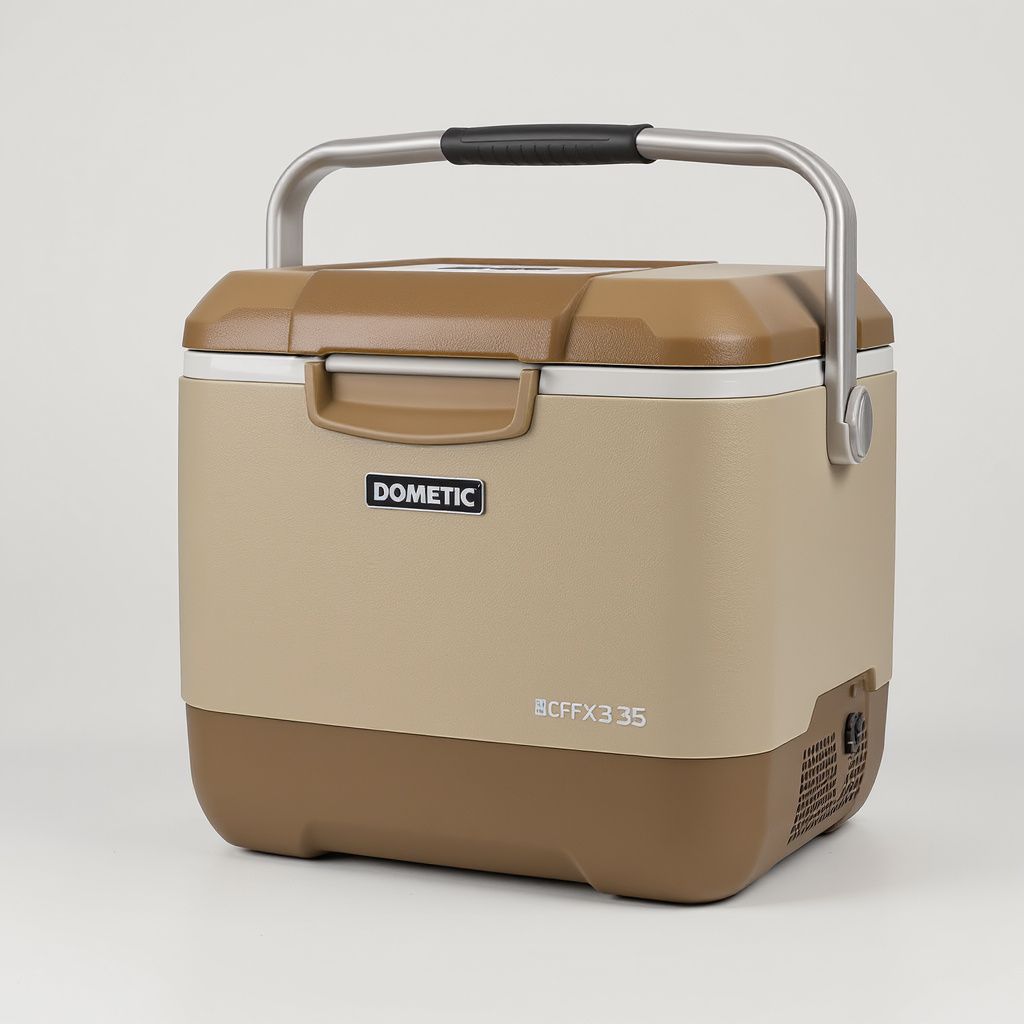
Dometic CFX3 35 Powered Cooler
The gold standard 12V fridge for serious van builds — efficient compressor, app control, and bombproof construction.
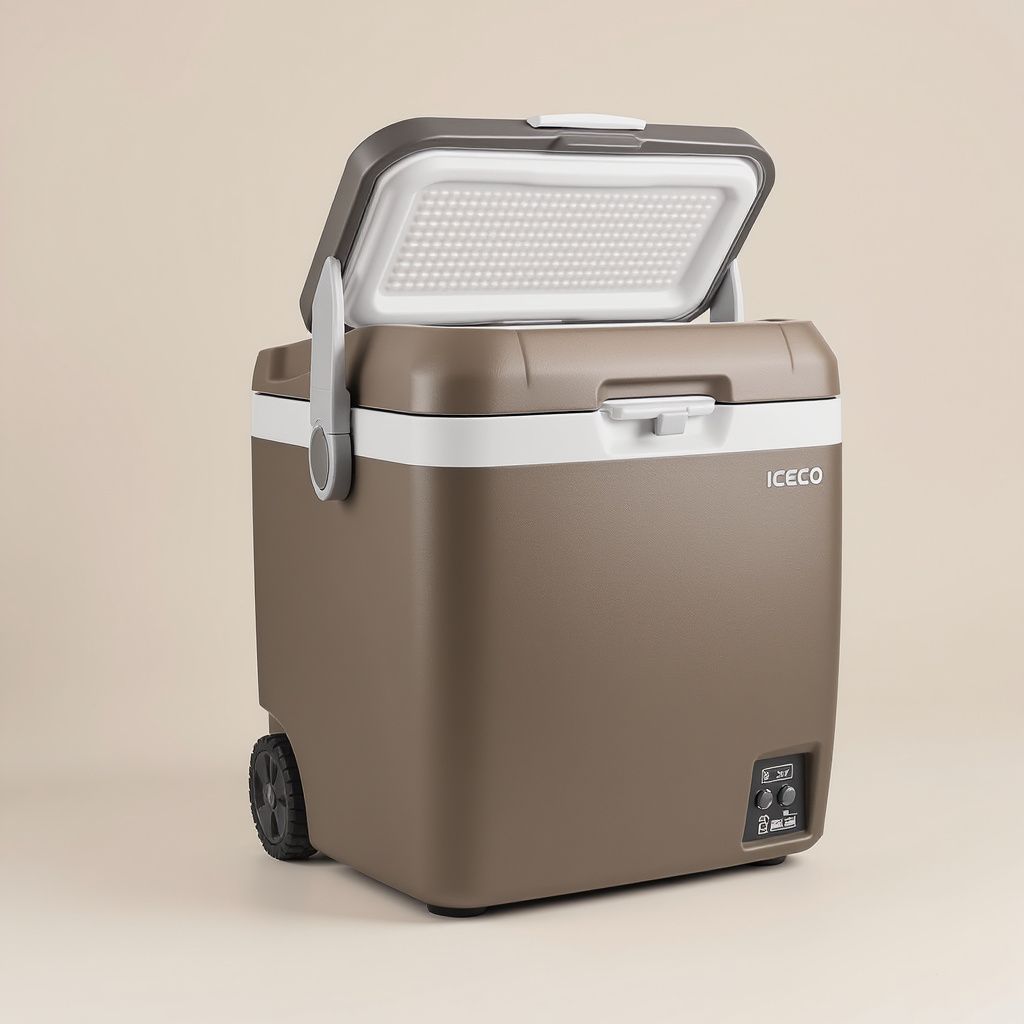
Iceco VL35 ProS 12V Fridge Freezer
The value pick. 80% of the Dometic experience at half the price — Secop compressor, solid insulation, no app gimmicks.
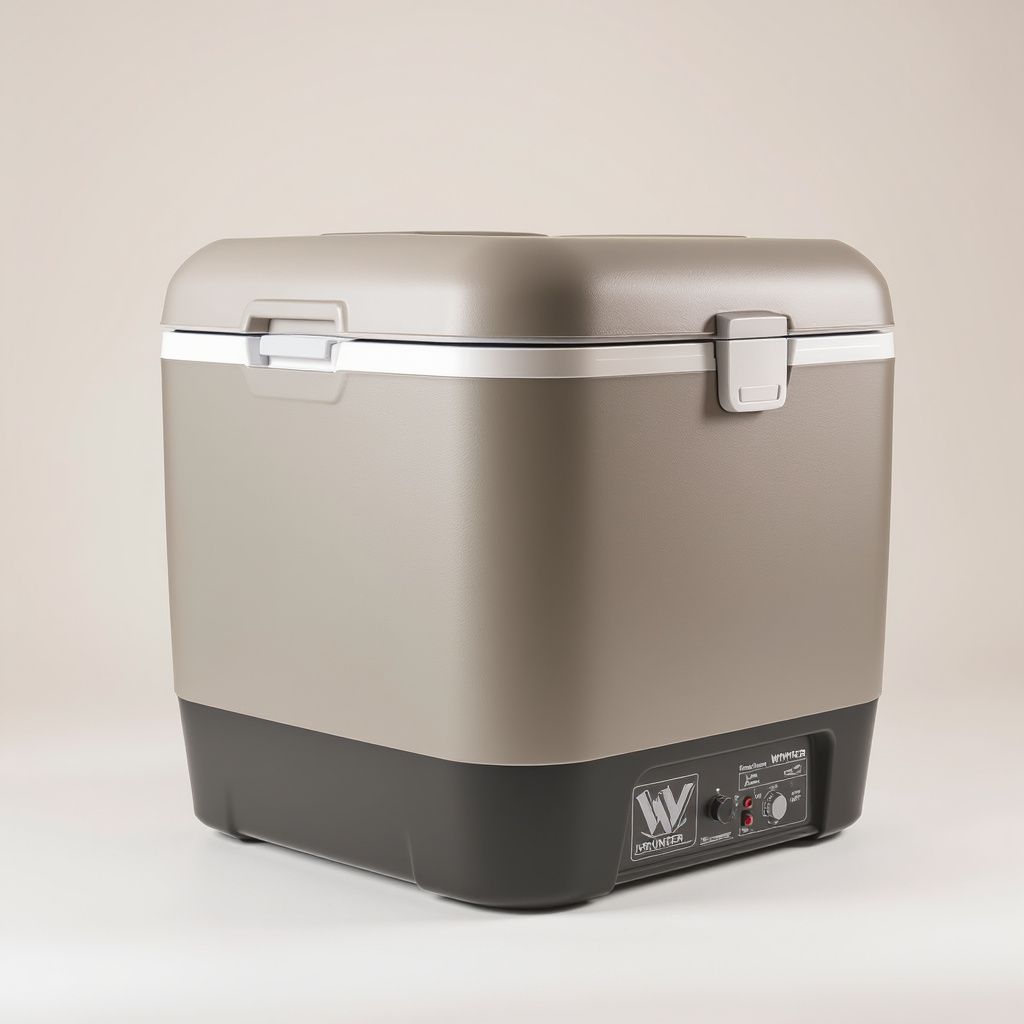
Whynter FM-45G 45-Quart Dual Zone Portable Fridge Freezer
The most versatile dual-zone 12V fridge for the price. Run it as fridge, freezer, or both at once — backed by a 1-year warranty and stocked at every major retailer.