Iceco VL35 ProS 12V Fridge Freezer
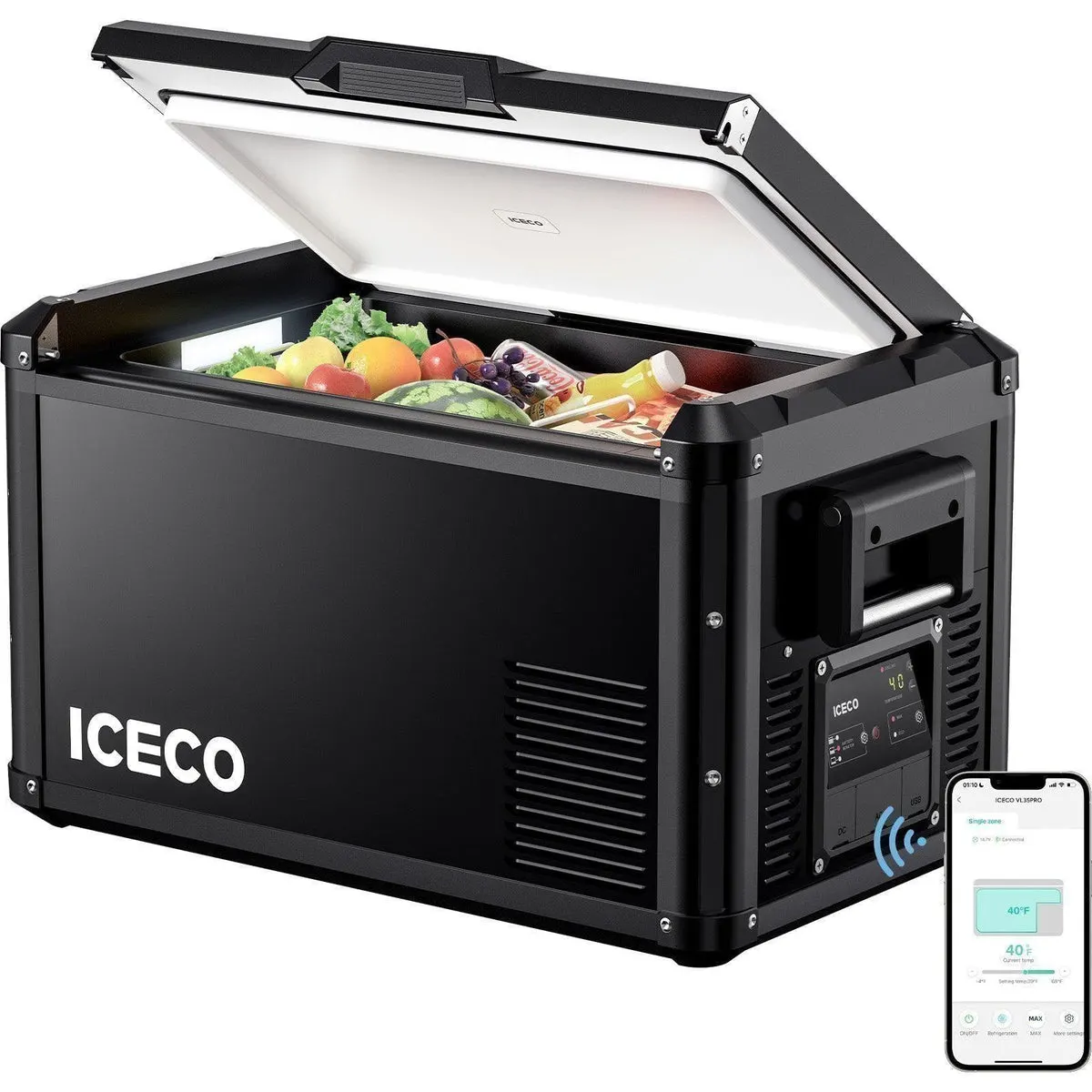
- Capacity
- 35L / 37 qt
- Dimensions
- 28.1 x 15.9 x 15.7 in
- Weight
- 48.7 lbs
- Power Source
- 12/24V DC + 110-120V AC (manual)
- Power Draw
- 0.430 kWh/24h lab rating (~34 Ah/day at 12.8 V)
- Warranty
- 5 yr compressor / 1 yr parts
- Compressor
- Secop
- Ventilation
- Over 5 cm at the sides, 10 cm at the front air outlet (ICECO manual)
Overview — Who is this for?
This Iceco VL35 review is for the van lifer who has done the math, looked at a Dometic price tag, and thought: "There has to be a sensible middle ground." For a lot of builds, that middle ground is the ICECO VL35 ProS, the exact model the Amazon listing we link sells ("ICECO VL35 ProS 12V Refrigerator, 37 Qt"). It's a 35-liter (37-quart) single-zone compressor fridge-freezer with a Secop compressor and a metal cabinet. Secop is the same compressor maker behind many premium-brand fridges, and the VL35 ProS is priced well below them. There's no Wi-Fi, no app and no Bluetooth: just a cold box with a button panel.
Choose this if:
- You want a Secop compressor with a 5-year compressor warranty at a mid-range price.
- Your fridge bay is low. At 15.7 inches, it's one of the lower fridges in our lineup.
- You'd rather have physical buttons than an app.
Skip this if:
- You want app control or wheels. The ICECO JP40 Pro has both.
- Weight matters. At 48.7 lbs empty, it's the heaviest 35-liter fridge we cover, 7 to 12 lbs more than the Dometic CFX5 35, depending on which Dometic figure you use.
- You need a fridge and a freezer at the same time.
What the Amazon link sells: "ICECO VL35 ProS 12V Refrigerator, 37 Qt" in black (ASIN B0CCP9HZV1, model VL35 ProS). A quick note on method: we research rather than test. Specs below come from ICECO's VL35/45/60 ProS manual (version 7.0), its product page and the Amazon listing, all listed under Sources at the end. Where nobody publishes a figure, we say so. See how we research.
Bottom line up front: the VL35 is the pragmatist's pick. It has a Secop compressor and a five-year compressor warranty, runs on a modest lithium bank, and leaves more of your budget for solar or batteries.
Capacity, Dimensions and Clearance
These are three separate numbers, and you need all three to plan an install.
Interior capacity. ICECO's manual lists 35.0 liters (37.0 quarts). That's roughly 50 standard 12-oz cans, or a gallon of milk plus several days of groceries for two. ICECO's product page says the removable basket leaves height for 11-inch-tall items.
External dimensions. ICECO's manual gives 28.1 x 15.9 x 15.7 inches (714 x 404 x 399 mm, L x W x H). The empty weight is 48.7 lbs (22.1 kg).
Ventilation clearance. ICECO's manual asks for more than 5 cm (about 2 inches) on the left and right sides and 10 cm (about 4 inches) at the front air outlet. It gives that figure as the fix for its E4/E5 error codes, the ones a starved or overheating compressor throws. Plan on about 32 x 20 inches of floor space, plus height to open the lid.
Lid and access. You load it from above. ICECO's manual says the lid can be opened from the right or the left side, or removed completely by pressing both latches inward. That helps in a van: you can open it toward the galley or the door, or lift it off under a low counter.
Wheels. None. ICECO ships a handle and four corner guards in the box, and its VL ProS manual lists a tie-down kit and a slide mount as optional accessories. Use them, or a strap to solid anchor points, rather than bungees.
For a solo traveler or a couple, 35 liters covers four to five days of fresh food, or about a week if you pack carefully. If you're feeding a family of four for more than a weekend, look at something bigger: the 60-liter Iceco VL60 Dual Zone or the 45-liter Dometic CFX2 45. To check whether 35 liters fits your own shopping pattern, the 12V fridge sizing guide has worked examples for solo travellers and couples.
Design & Build Quality
The VL35 ProS is built for function over looks. ICECO describes the case as hardened steel, and the lid is held by two latches that also release it for removal. The latches are plastic, so check them for play now and then if the fridge rides in a slide tray on corrugated roads. The interior liner is plain molded plastic.
ICECO rates its fridges for ambient temperatures up to 55°C (131°F) and for light rain, with the vents kept clear of water. Its manual says not to expose the fridge to moderate or heavy rain and to keep it in a well-ventilated area. If it has been shipped or carried upside down, ICECO asks you to leave it upright for 24 hours before switching it on so the compressor lubricant can settle.
Controls and display
The control panel has an LED display and a few buttons. It covers on/off, MAX and ECO modes, Celsius or Fahrenheit, setting the temperature, and battery protection. ICECO's manual also lists a USB port. ICECO notes that the USB port works only when the fridge runs on DC. There's nothing to pair or update.
Interior
ICECO supplies one removable basket and a drain plug. Its product page says the basket leaves room for 11-inch-tall items. ICECO's manual doesn't describe an interior light, so don't count on one; a stick-on LED light solves it.
Cold air sinks, so the bottom of the box runs coldest. ICECO's manual says the display shows an average temperature. Put drinks and frozen meat at the bottom, and produce and dairy in the basket.
What's good:
- Secop compressor with a 5-year compressor warranty
- A lid that opens from either side or lifts off
- 12/24V DC ports on both sides, plus AC input
- Low 15.7-inch height
What's mediocre:
- Interior plastic is visibly utilitarian
- No app or Bluetooth
- Heaviest 35-liter fridge in our lineup
Performance
ICECO specifies a Secop compressor but doesn't publish the model number. Secop DC compressors are used across many established 12V fridge brands, and ICECO backs this one for five years. Neither fact guarantees any individual unit.
What we can and can't tell you here. We do not run our own thermal tests. The figures below are what ICECO publishes. Where it publishes nothing, we say so rather than fill the gap.
Cool-down times
ICECO does not publish pull-down times for the VL35 ProS, and we have not measured them. As a general rule for this class of fridge, an empty box reaches fridge temperature much faster than freezer temperature, and a box loaded with room-temperature food takes hours, not minutes. Pre-cool it on AC at home the night before a trip, and load food that is already cold.
Temperature range and stability
ICECO lists a range of 0°F to 50°F (-18°C to +10°C). The flashing number on the display is the setpoint and the solid number is the current interior temperature, per the manual. Because the bottom of the box runs colder than the top, check it against a standalone fridge thermometer placed mid-height for the first few days: 40°F or below for the fridge, 0°F for a freezer.
Noise
ICECO doesn't publish a sound level, and we have not measured one. Like any compressor fridge, it is quiet between cycles and makes a low hum plus fan noise while the compressor runs. In a small van, put the compressor end away from the bed if you're a light sleeper.
Power Consumption
Keep two kinds of number apart here.
- Published power rating. ICECO doesn't publish a nameplate wattage or running current for the VL35 ProS in its manual, on its product page or on the Amazon listing. Its manual lists a 15A internal fuse. Fuse and wire the circuit per ICECO's manual, and size the battery from the daily figure below, not from a running current.
- Published daily energy. ICECO's manual and its catalog page list 0.430 kWh per 24 hours for the VL35 ProS. ICECO says the figure "is only suitable for laboratory testing, and the actual power consumption is subject to actual conditions". It doesn't state the ambient temperature or setpoint.
At 12.8 V nominal (a lithium house battery), 430 Wh works out to about 34 Ah per day, an average of roughly 1.4 A. Counted at 12 V, as many calculators do, it's about 36 Ah.
| Conditions | Wh/day | Ah/day at 12.8 V | Source |
|---|---|---|---|
| ICECO lab figure | ~430 | ~34 | ICECO manual |
| Cool shoulder season | ~340 | ~27 | Our estimate |
| Hot van, 95°F+ | ~650 | ~51 | Our estimate |
The cool and hot rows are our estimates, assuming a fridge setpoint around 37°F, a few lid openings a day and the clearances above. Daily consumption on any compressor fridge roughly scales with the gap between ambient and setpoint. Size your bank against the hot-day figure, not the average.
Duty cycle and battery protection
A compressor fridge's daily figure is set by its duty cycle: how much of the day the compressor runs. Hot air, sun on the lid, a cramped bay and frequent lid openings all raise it.
ICECO's manual lists three battery-protection levels at 12V, shown as cut-off / restart:
- Low: 9.6V / 10.9V
- Medium: 10.4V / 11.7V
- High: 11.1V / 12.4V
Use High if the fridge could draw from a vehicle starting battery. On a LiFePO4 house bank, use the lowest level your battery maker is comfortable with.
Battery sizing implications
Using ICECO's rated figure plus a summer margin:
- 100Ah LiFePO4 + 200W solar: comfortable for three-season use and weekend trips in most climates.
- 200Ah LiFePO4 + 300W solar: fully off-grid full-timing, including hot summers.
- Lead-acid banks: double those Ah numbers, because you only want to use about 50% of the rated capacity.
Plug your own setup into the fridge battery calculator or the power calculator.
Iceco VL35 vs Dometic CFX5 35
Dometic's current premium 35-liter fridge is the CFX5 35, so that's the head-to-head here, on published specifications. The older CFX3 35 is still listed on Amazon with limited stock.
Where the Dometic wins
- Insulation: the CFX5 35 adds vacuum insulated panels on top of polyurethane foam.
- Weight: Dometic's US product page lists 36.5 lbs (its US manual says 41.9 lb) against the VL35's 48.7 lbs.
- Published draw: Dometic's US page rates the CFX5 35 at 1.11 Ah/h at 12 V (about 27 Ah or 320 Wh per day) at 32°C (90°F) ambient and 4°C (39°F) inside. That's lower than ICECO's 430 Wh lab figure, though the two tests aren't directly comparable because ICECO gives no conditions.
- App and display: the CFX5 has Bluetooth app control, a weatherproof color display and an 18W Quick Charge USB port.
- Fit and finish: self-folding aluminum handles and a non-slip removable lid.
Where the Iceco matches or wins
- Compressor: the VL35 runs a Secop. Dometic's Australian page names the CFX5's compressor as its own VMSO3.5. Secop units are the more widely used in other brands' fridges.
- Capacity: both are 35-to-36-liter, roughly 50-can single-zone boxes.
- Height: 15.7 inches against 16.0.
- Lid: the VL35's lid opens from either side or lifts off without tools. The CFX5 35's lid is removable, but Dometic's US manual shows lid reversal only for the CFX5 55IM and the dual-zone models.
- Price: the VL35 costs considerably less.
- Compressor warranty: ICECO covers the Secop compressor for 5 years and other parts for 1 year. The CFX5's Amazon listing shows a 2-year manufacturer warranty and Dometic's Australian page says 5 years, so confirm the US term with Dometic.
Read our full Dometic CFX5 35 review and the head-to-head comparison for the deep dive. The short version: the Dometic's extra cost buys vacuum insulation, an app, a nicer display and handles, less weight and a lower published draw. Both keep food cold on a broadly similar battery budget.
Value for Money
The VL35 sits in the mid-range. Below it are budget brands with undisclosed compressors and shorter warranties. Above it, you pay for vacuum insulation, apps and brand.
ICECO's warranty is 5 years on the Secop compressor and 1 year on other parts, per its manual, with a 30-day refund guarantee from delivery. The 1-year coverage on the electronics and everything else is short, so keep your proof of purchase and test the fridge on AC as soon as it arrives. Our 12V fridge buying guide covers what actually matters in any compressor fridge: published daily energy at stated conditions, insulation, compressor and clearance.
Who should skip this
- You need an app and remote monitoring. The VL35 has no wireless anything. Look at the ICECO JP40 Pro or the Dometic CFX5 35.
- You need 50+ liters. Look at the Iceco VL60 Dual Zone.
- You want a fridge and a freezer at the same time. This is a single-zone box. The VL60 has two compartments with separate lids and setpoints.
- You lift the fridge often. At 48.7 lbs empty, it's heavy. The wheeled JP40 Pro or the lighter Dometics are easier to move.
- Your bay is boxed in. If you can't give it 5 cm at the sides and 10 cm at the front outlet, it will run harder and longer.
Final Verdict
The ICECO VL35 ProS is our value pick among the 12V compressor fridges we cover, for checkable reasons: a Secop compressor, a five-year compressor warranty and a mid-range price. You also get a published 24-hour energy figure that a modest lithium bank can carry, a low 15.7-inch cabinet, and a lid that opens from either side.
You give up interior finish, an app, wheels and 7 to 12 pounds against the Dometic. For most van builds on a realistic budget, that is a fair trade.
Rating: 4.5 / 5. Docked half a point for the weight and the utilitarian interior.
FAQ
How much power does the Iceco VL35 use?
ICECO's manual lists 0.430 kWh per 24 hours for the VL35 ProS, about 34 amp-hours per day at 12.8 V (36 Ah counted at 12 V), an average of roughly 1.4 amps. ICECO calls it a laboratory figure and doesn't state the test conditions. Mild weather will pull it lower. A hot van in sun can push it up by half again or more, so size your bank for the hot-day case.
How much clearance does the VL35 need?
ICECO's manual asks for more than 5 cm (about 2 inches) on the left and right sides and 10 cm (about 4 inches) at the front air outlet. With an 28.1 x 15.9 inch body, plan on roughly 32 x 20 inches of floor space.
Is the Iceco VL35 worth it vs Dometic?
For most van builders, yes. Against Dometic's current premium 35-liter model, the CFX5 35, the VL35 offers about the same capacity, a Secop compressor with a 5-year compressor warranty, and a considerably lower price. The Dometic adds vacuum insulated panels, a lower published draw, 7 to 12 pounds less weight, a color display and Bluetooth app control. If those matter to you, pay up.
Can the Iceco VL35 freeze?
Yes. It's a single-zone compressor fridge-freezer, and ICECO lists a range down to 0°F. You use it as either a fridge or a freezer at any one time, not both.
What compressor does the Iceco VL35 use?
The VL35 ProS uses a Secop DC compressor, which ICECO backs with a 5-year compressor warranty. ICECO doesn't publish the exact compressor model. Dometic's current CFX5 line uses its own VMSO compressor instead.
Does the Iceco VL35 have Wi-Fi or Bluetooth?
No. ICECO's VL ProS manual has no app or Bluetooth section, and neither ICECO's product page nor the Amazon listing lists app control for the VL35 ProS. Control is from the panel on the fridge. If app control is a must-have, look at the Dometic CFX5 35 or, for less money, the ICECO JP40 Pro.
Will the Iceco VL35 drain my battery overnight?
Not on a reasonably sized house bank. At the average implied by ICECO's lab figure, roughly 1.4 amps, it uses about 17 Ah over 12 hours. That's under 20 percent of a 100Ah lithium bank, and less on cool nights. Set battery protection to High if there's any chance it draws from your starting battery.
What should I do when the VL35 arrives?
If the box shows it travelled on its side or upside down, ICECO's manual says to leave the fridge upright for 24 hours before powering it on so the compressor lubricant can settle. Then run it on AC for a day and check it against a thermometer. ICECO offers a 30-day refund window from delivery, so test early.
Sources and verification
- ICECO VL35/45/60 ProS manual, version 7.0, https://cdn.shopify.com/s/files/1/0053/1536/2906/files/ICECO_VL354560_ProS_Manual_7.0_APP.pdf: dimensions (28.1 x 15.9 x 15.7 in), 48.7 lb net weight, 35.0 L / 37.0 qt, 0°F to 50°F range, lid opening and removal, 5 cm side and 10 cm front-outlet clearance, battery-protection cut-off and restart voltages, 0.430 kWh/24h lab figure, 15A fuse, 55°C ambient limit, rain guidance, 24-hour settling time, warranty and 30-day refund (checked 2026-10-12).
- ICECO VL35 ProS product page, https://icecofreezer.com/products/vl35pros-iceco-freezer: Secop compressor, steel case, removable basket and 11-inch item height, side-opening lid, USB on DC only, warranty wording (checked 2026-10-12).
- Dometic CFX5 35 US product page, https://www.dometic.com/en/product/cfx5-35-electric-cooler-97000050754: 36.52 lb weight, 1.11 Ah/h at 32°C ambient and 4°C inside, vacuum insulated panels, TFT display, 18W QC 3.0 USB (checked 2026-10-12).
- Dometic CFX5 US operating manual, https://media.dometic.com/externalassets/07-0703-070328-070328002_97000050754_152475.pdf: lid reversal shown only for the 55IM and dual-zone models, 41.9 lb weight in the technical data, 50 mm ventilation on all sides (checked 2026-10-12).
- Dometic CFX5 35 Australian product page, https://dometic.com/en-au/outdoor/fridgefreezers-and-coolers/portable-fridgefreezers/07-0703-070328-070328002-369005: VMSO3.5 compressor name and 5-year Australian warranty (checked 2026-10-12).
- Amazon listings, ASIN B0CCP9HZV1 (VL35 ProS: title, model, dimensions, weight, reversible-lid and warranty wording) and ASIN B0DVM1G8VM (CFX5 35 warranty field) (checked 2026-10-12).
Compare with similar products
See how this stacks up against the other 12v fridges we've reviewed.
Head-to-head comparisons
- ICECO VL35 ProS 12V Fridge vs Dometic CFX5 35 FridgeSpecs, fit and trade-offs side by side
- ICECO VL35 ProS 12V Fridge vs BougeRV CR 30Qt 12V FridgeSpecs, fit and trade-offs side by side
- ICECO VL35 ProS 12V Fridge vs ICECO JP40 Pro 12V FridgeSpecs, fit and trade-offs side by side
- ICECO VL35 ProS 12V Fridge vs YETI Tundra 45 CoolerSpecs, fit and trade-offs side by side
Related Reviews
For: Full-time dual-zone cooling
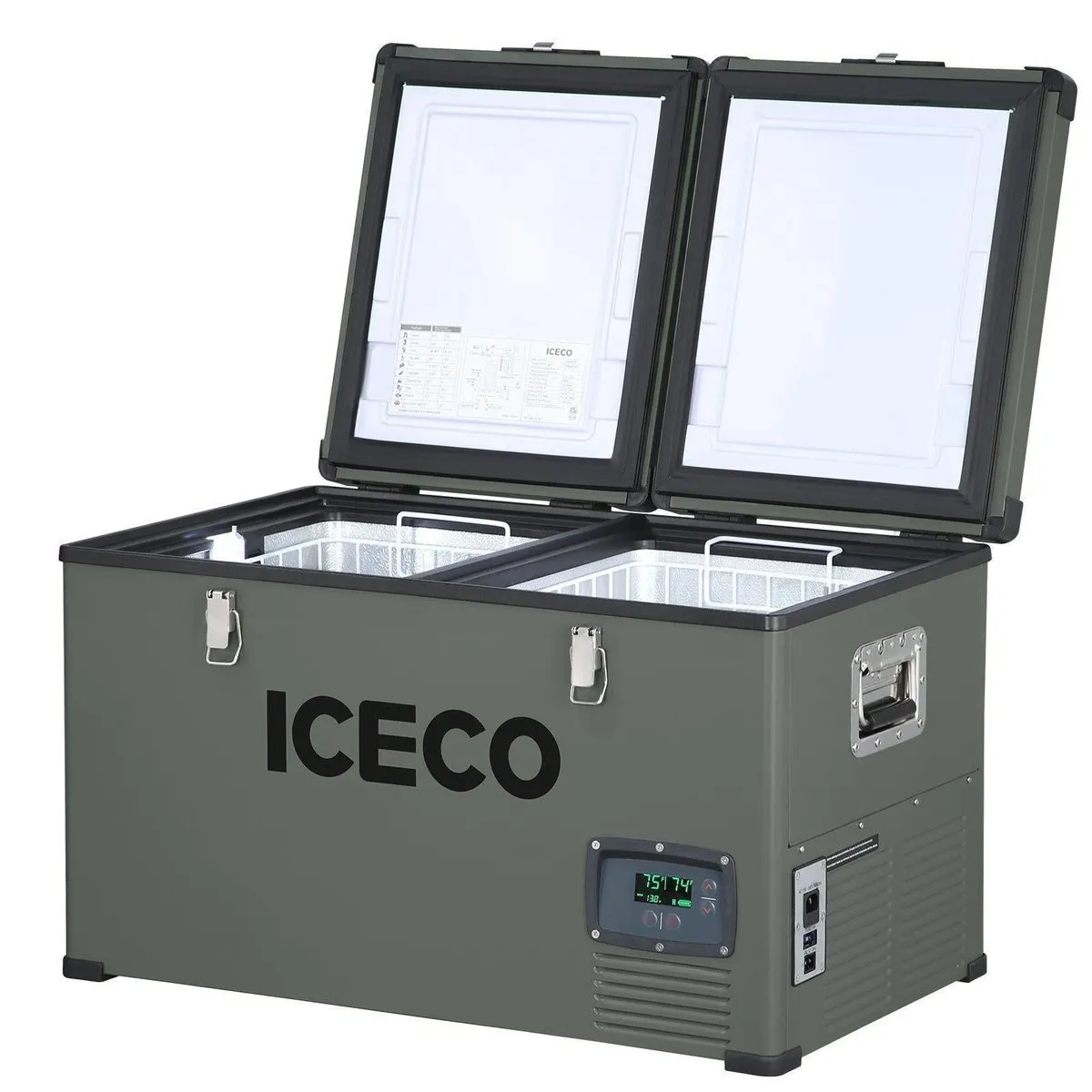
ICECO VL60 Dual Zone 60L 12V Fridge Freezer
True dual zone at a mid-range price: 60L, two lids and setpoints, Secop compressor and a steel cabinet. Heavy and power-hungry, but strong value for families.
For: Weekend trips, first builds
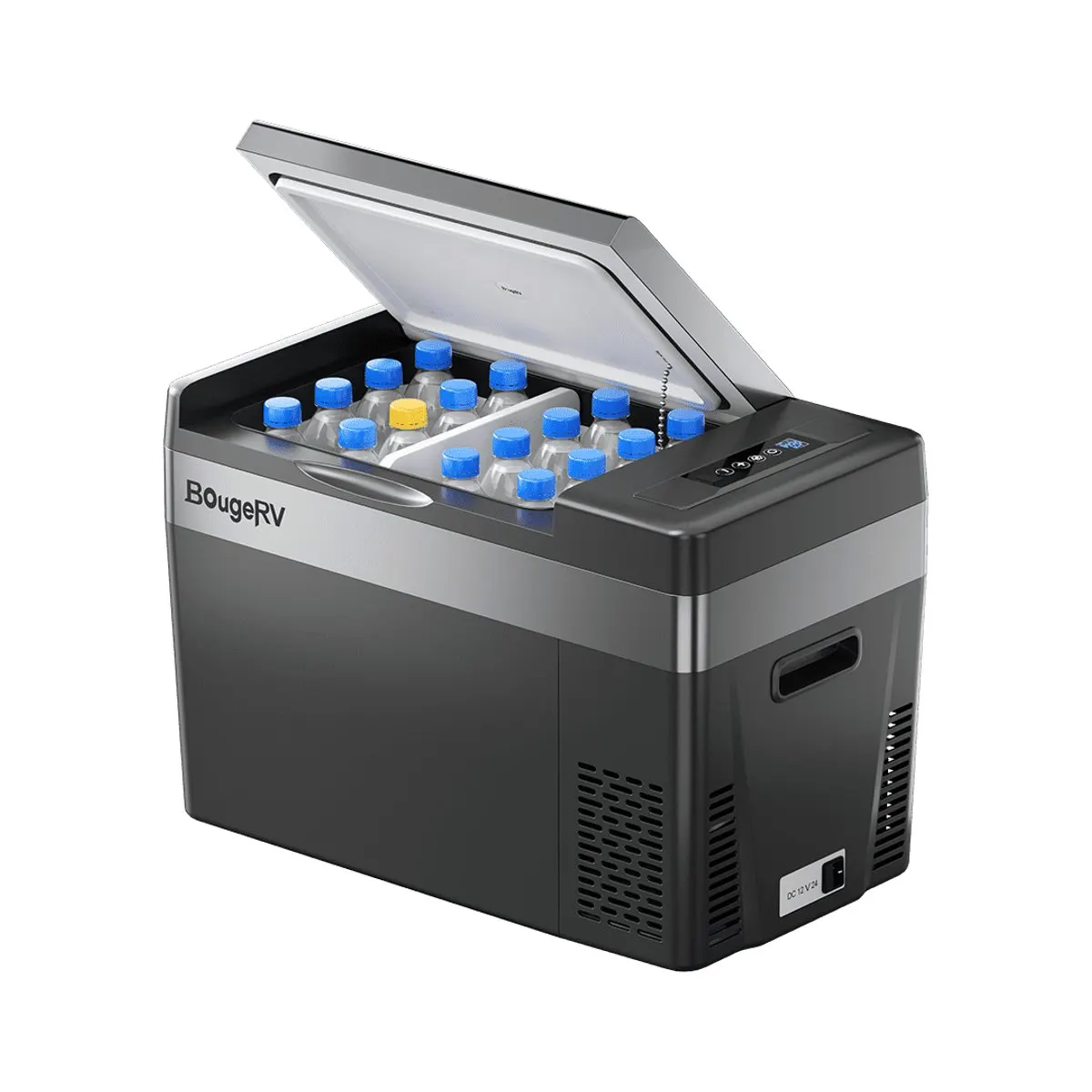
BougeRV CR 30 Quart (28L) 12V Portable Fridge Freezer
A light, compact 30-quart compressor fridge-freezer at a budget price. No app and not a Secop, but a sensible budget pick for weekend trips and first builds.
For: Small vans, low power draw
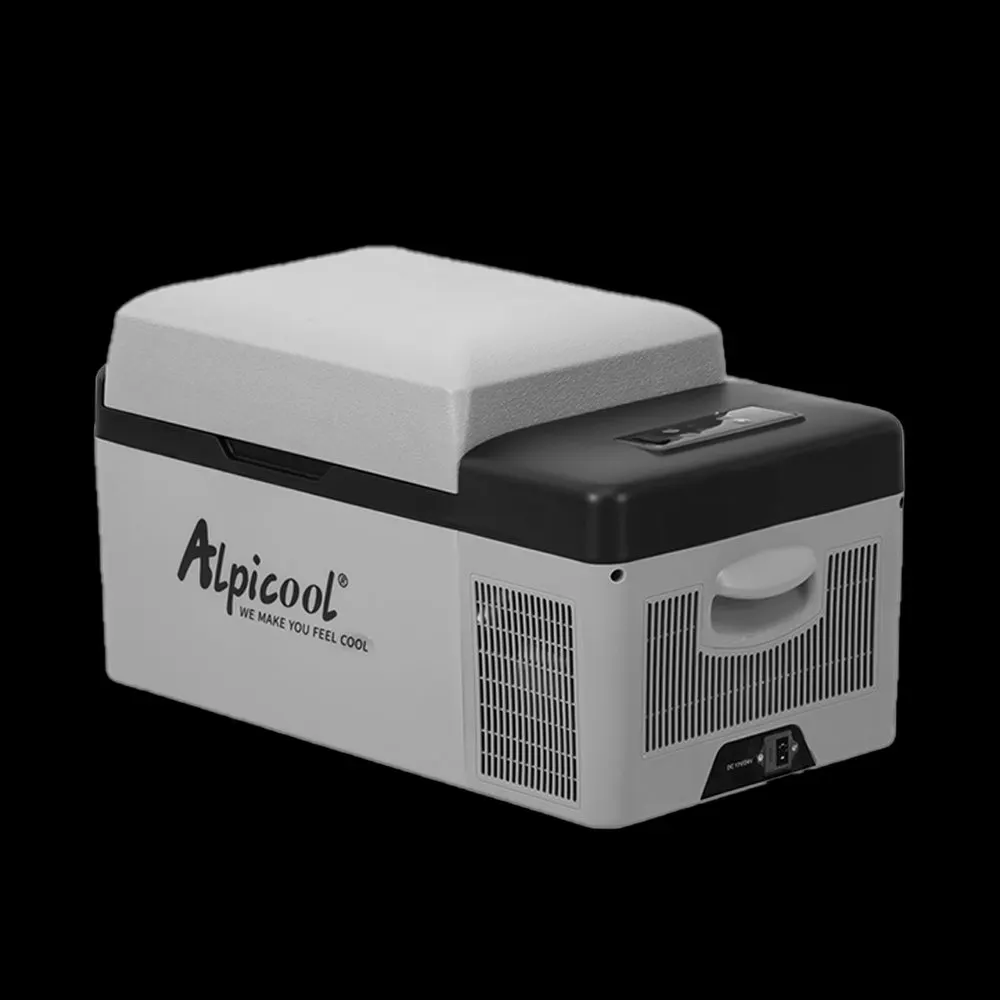
Alpicool C20 12V Portable Compressor Fridge
A smaller step down from the BougeRV 30 qt: 21 quarts, compressor cooling and a low-voltage cutoff at a budget price. Alpicool publishes no rated wattage or ventilation clearance, so plan with margin.