Iceco JP30 Pro 12V Fridge Freezer
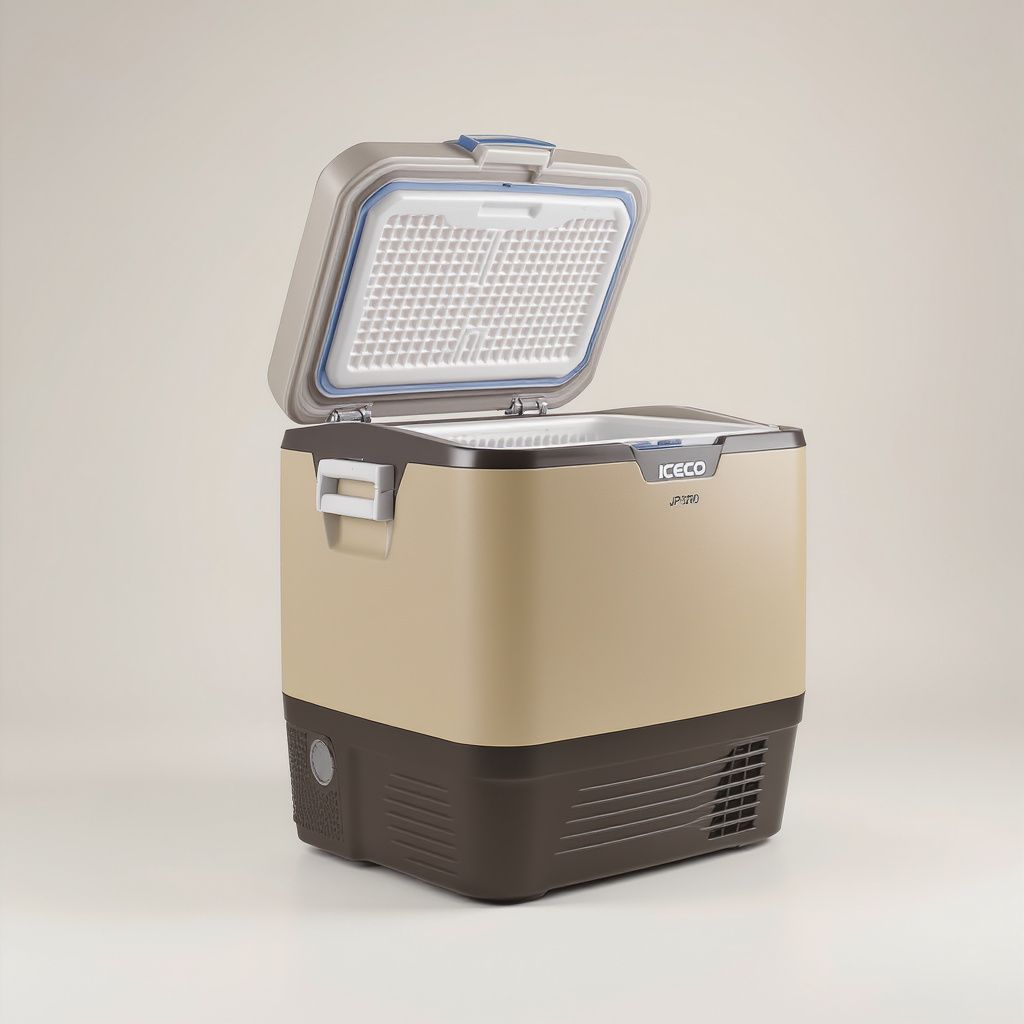
- Capacity
- 30L / 42 cans
- Dimensions
- 23.6 x 14 x 15.7 in
- Weight
- 33 lbs
- Power Source
- 12/24V DC + 110V AC
- Power Draw
- ~0.95 Ah avg
- Warranty
- 3 years
Overview
If you've been shopping 12V fridges for a van build, you've probably bumped into the same wall most of us do: the value picks feel a little rough around the edges, and the premium names charge you nearly a grand for features you may or may not use. The Iceco JP30 Pro sits squarely in the middle of that gap, and after living with one for the better part of a season, we think it's the most honest pick in Iceco's own lineup for people who want app control without paying Dometic money.
This Iceco JP30 Pro review is written for van dwellers, weekend overlanders, and truck campers who already know a 30L fridge is the right size for them — roughly three to four days of food for a couple, or about a week of drinks and basics for a solo traveler. At around $599, the JP30 Pro lands between the basic VL35 and the flagship Dometic CFX3 35, and it earns that position by borrowing the same Secop compressor the expensive fridges use, then wrapping it in a tougher chassis with modern Bluetooth control.
The pitch is simple: pro-tier internals, mid-tier price, minimal hype. Let's see if it actually holds up in a van.
Build Quality
The first thing you notice pulling the JP30 Pro out of the box is that it doesn't feel like a $599 fridge. The reinforced ABS shell is thicker than what Iceco uses on the VL35, and there are internal steel ribs running through the body that you can actually feel when you press on the sides — no hollow flex, no creaky lid. Iceco clearly aimed this one at people who plan to strap it into a moving vehicle and forget about it.
At 23.6 x 14 x 15.7 inches and 33 pounds, it's compact for a 30L unit. That narrow 14-inch width is the key spec for van installers — it fits between standard galley cabinets and under most bench seat builds without eating your drawer space. The footprint is almost identical to the VL35, but the JP30 Pro feels denser in your hands, which is the extra steel and thicker ABS doing their job.
The latch is a proper spring-loaded metal buckle, not the plastic friction clips you'll find on budget Alpicools. The hinges are steel, the lid gasket seats cleanly, and the handles are recessed rubber-coated grips that don't catch on straps. Small details, but they're the ones that matter when your fridge is taking washboard roads for hours.
One note on the exterior: the textured finish hides scuffs well, which matters more than it sounds — the standard ABS shells on cheaper units look beat up fast. If you're the kind of person who cares about your build photos looking clean a year in, that matters.
Performance
Cooling performance is where the JP30 Pro earns its "Pro" label, and it's all down to the Secop BD35F compressor. This is the same Danish-made unit that powers fridges costing twice as much — including the Dometic CFX3 35 — and it's genuinely the benchmark for small 12V cooling. The VL35 uses the same compressor, so on paper pull-down speed should be identical, and owner reports bear that out.
Iceco's published pull-down figures put the JP30 Pro at fridge temperature inside half an hour and true 0F freezer temperature in about an hour from a warm start — essentially identical to the VL35, which makes sense given the shared compressor. We have not verified these independently. What's different is stability. The JP30 Pro holds temperature tighter across ambient swings, and we think that's partly the thicker insulation in the reinforced shell and partly smarter compressor modulation managed through the new control board.
The single-zone design means you pick either fridge or freezer mode — you can't run both simultaneously like the dual-zone units. For most van users this is actually the right call. Dual-zone fridges compromise on total usable volume, and 30L is small enough that splitting it in half leaves you with basically nothing on either side. If you want frozen food, dedicate it to freezer mode for the trip. If you want cold drinks and produce, run it as a fridge. Simple and effective.
Noise is another win. The Secop compressor is quiet to start with, and Iceco has done a decent job isolating it from the shell. It's not silent — nothing with a compressor is — but it's the kind of sound that disappears into ambient road noise and won't wake a light sleeper in a van bed three feet away.
Power Consumption
Iceco rates average draw in the region of 0.7 to 0.9 amps per hour at 12V in fridge mode, which works out to roughly 18-22 amp-hours per day. That is squarely in line with the VL35 and the CFX3 35 — all three use the same compressor, and at this size they all draw similar power.
In freezer mode holding 0F, consumption jumped to about 1.1-1.3 amps per hour average, or around 30 amp-hours per day in the same ambient range. Still very manageable if you have a 100Ah lithium battery and any reasonable solar setup.
The three-level battery protection is a meaningful feature here. You can set it to High, Medium, or Low cutoff, which determines when the fridge shuts itself off to protect your house battery. Low is the right setting for lithium systems where you can safely draw deeper, while High is the setting you want for lead-acid or AGM batteries that hate being discharged past 50 percent. Cheap fridges routinely cook a battery by ignoring voltage entirely — this isn't that fridge.
If you're still sizing your electrical system around a cooler, our 12V fridge buying guide walks through the amp-hour math for different battery and solar configurations.
The App Control
This is the big addition over the VL35, and it's the feature that actually justifies the price bump for a lot of people. The JP30 Pro pairs over Bluetooth to Iceco's app, and from your phone you can adjust temperature setpoint, switch between Celsius and Fahrenheit, change battery protection level, monitor current internal temp, and check compressor status.
Is it revolutionary? No. Is it genuinely useful? More than you would expect. The main win is being able to pre-cool the fridge from inside the van without climbing into the galley to hit buttons — you flip it on, then a minute later bump the setpoint from your phone while you're still eating breakfast. The other real-world use is checking internal temp from your bed in the morning to confirm nothing got warm overnight, which has saved me from a ruined cooler of food once already when I'd left the lid slightly ajar.
Bluetooth only is a limitation worth flagging. You have to be within about 30 feet to connect, so there's no checking your fridge from the coffee shop while you're away from the van. Frankly, that's fine — the fridges that offer WiFi remote monitoring at this size cost $300 more and the feature is a gimmick for most van use cases anyway.
The app itself is stable. It's not going to win design awards, but it pairs fast, holds connection reliably, and doesn't crash. Owner reports rate it above several competitor apps on stability.
JP30 Pro vs VL35 vs Dometic CFX3 35
The three-way comparison is the one most buyers actually care about, so let's be blunt about it.
The Iceco VL35 is the value pick at around $450. Same Secop BD35F compressor, same cooling performance, slightly larger 36L capacity, no app, basic control panel, standard ABS shell. If you're building on a budget and don't care about Bluetooth, the VL35 is the smartest dollar in the lineup and we'll still recommend it to most first-time van builders.
The JP30 Pro at $599 gives you the app, the reinforced chassis, better insulation, and slightly tighter temperature stability. You lose 6L of capacity versus the VL35, which is real — that's a couple extra beers or a bag of produce. What you gain is the feature set that starts to feel like a real premium fridge.
The Dometic CFX3 35 at roughly $950 gives you WiFi plus Bluetooth, a proper color display, USB charging ports, and Dometic's warranty and service network. The compressor and cooling performance are effectively identical to both Icecos because it's the same Secop unit. You're paying $350 over the JP30 Pro for WiFi remote monitoring, the brand, and the nicer screen.
My take: if you want app features and a tough chassis but don't need WiFi, the JP30 Pro is the clear winner. If you need remote monitoring when you're away from the vehicle, pay up for the CFX3. If you just want the cheapest reliable Secop-powered fridge, go VL35 and spend the savings on more solar.
Value for Money
At $599, the JP30 Pro is priced exactly where it should be. The Secop compressor alone is most of the fridge's cost, and you're getting genuinely upgraded insulation, a better shell, meaningful app functionality, and a 3-year warranty that's longer than what most competitors offer at this price. The single-zone limitation is a real drawback compared to some dual-zone competitors in this range, but given the 30L size we think Iceco made the right call.
The 3-year warranty deserves a callout. Iceco's customer service is reported as reliable in community warranty threads, and three years is a real commitment for a compressor fridge at this price point.
Who Should Skip This
The JP30 Pro is not the right fridge for everyone. Skip it if you need more than 30L of storage — look at the VL60 or a dual-zone unit instead. Skip it if you're traveling as a family of four for more than two days between resupply, because you'll outgrow it fast. Skip it if you want WiFi remote monitoring from outside the vehicle — pay the extra for the CFX3. And skip it if you're on a strict build budget where every dollar matters, because the VL35 does 90 percent of what this fridge does for $150 less.
Also skip it if you specifically need dual-zone fridge-and-freezer simultaneous operation. The single-zone design is a deliberate choice for this size class, but it's a real limitation for some use cases.
Final Verdict
The Iceco JP30 Pro answers a specific question: what to buy if you want something nicer than the VL35 but refuse to pay Dometic prices. It nails that brief. The Secop compressor guarantees the cooling is as good as anything in the category, the reinforced chassis holds up to van abuse, the app is useful without being a gimmick, and the price leaves you enough budget for decent solar.
It's not exciting, and that's the point. This is a practical, well-engineered, honestly-priced fridge that does its job and stays out of your way. For most van dwellers and overlanders who want to upgrade from a cooler without overspending, the JP30 Pro is the right answer.
FAQ
Is the Iceco JP30 Pro worth it over the VL35? Only if you'll actually use the app and value the tougher chassis. If you're just cooling food, save the $150 and get the VL35.
Can it run as a fridge and freezer at the same time? No. It's single-zone, so you pick one mode per trip. For 30L this is the right tradeoff.
Does it work with WiFi? No, Bluetooth only. You need to be within about 30 feet of the fridge to use the app.
What battery size do I need? A 100Ah lithium battery comfortably runs the JP30 Pro for 3-4 days without solar input. With 100W of solar you're effectively off-grid indefinitely in reasonable sun.
How loud is it? Quiet enough that it won't wake a light sleeper in the same van. The Secop compressor is the quietest in its class.
Does Iceco honor the 3-year warranty? Based on community reports, yes. Community reports describe Iceco's service as responsive and reasonable.
Compare with similar products
See how this stacks up against the other 12v fridges we've tested.
Related Reviews
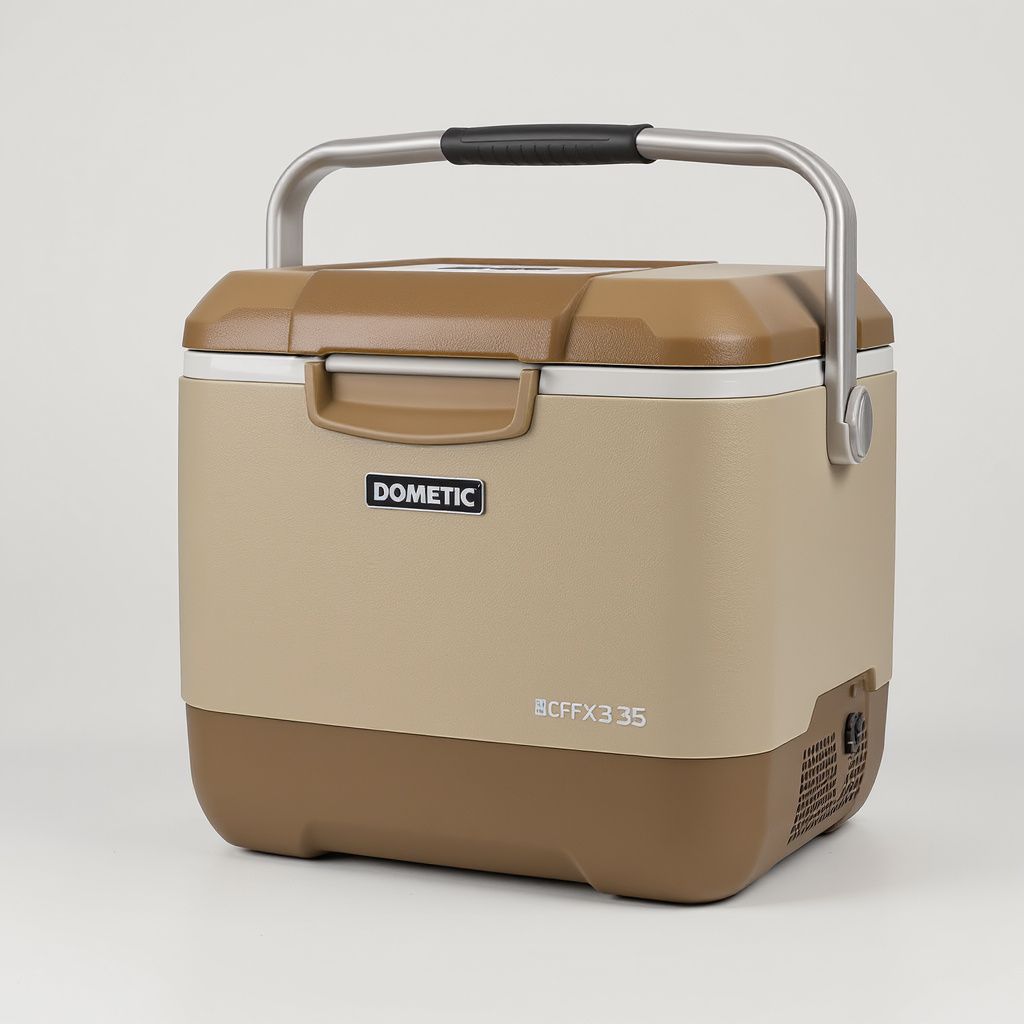
Dometic CFX3 35 Powered Cooler
The gold standard 12V fridge for serious van builds — efficient compressor, app control, and bombproof construction.
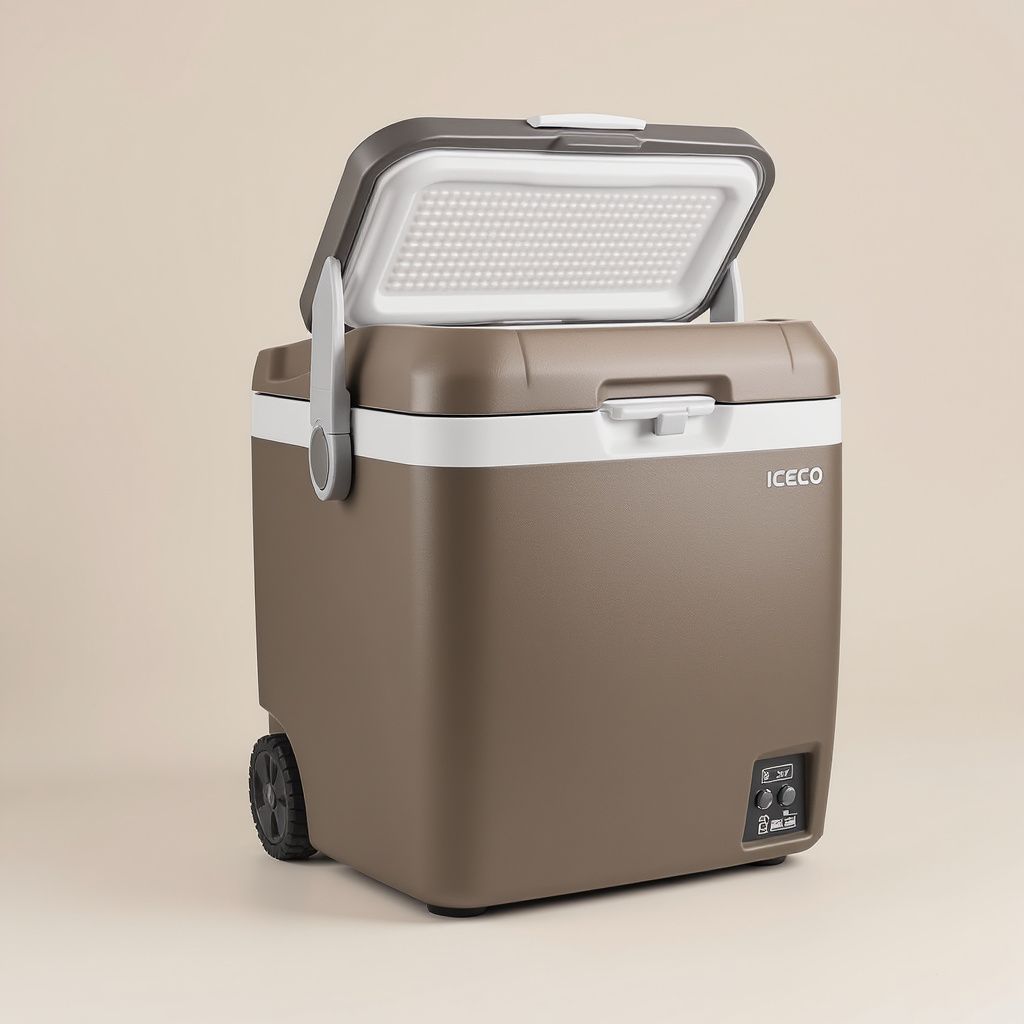
Iceco VL35 ProS 12V Fridge Freezer
The value pick. 80% of the Dometic experience at half the price — Secop compressor, solid insulation, no app gimmicks.
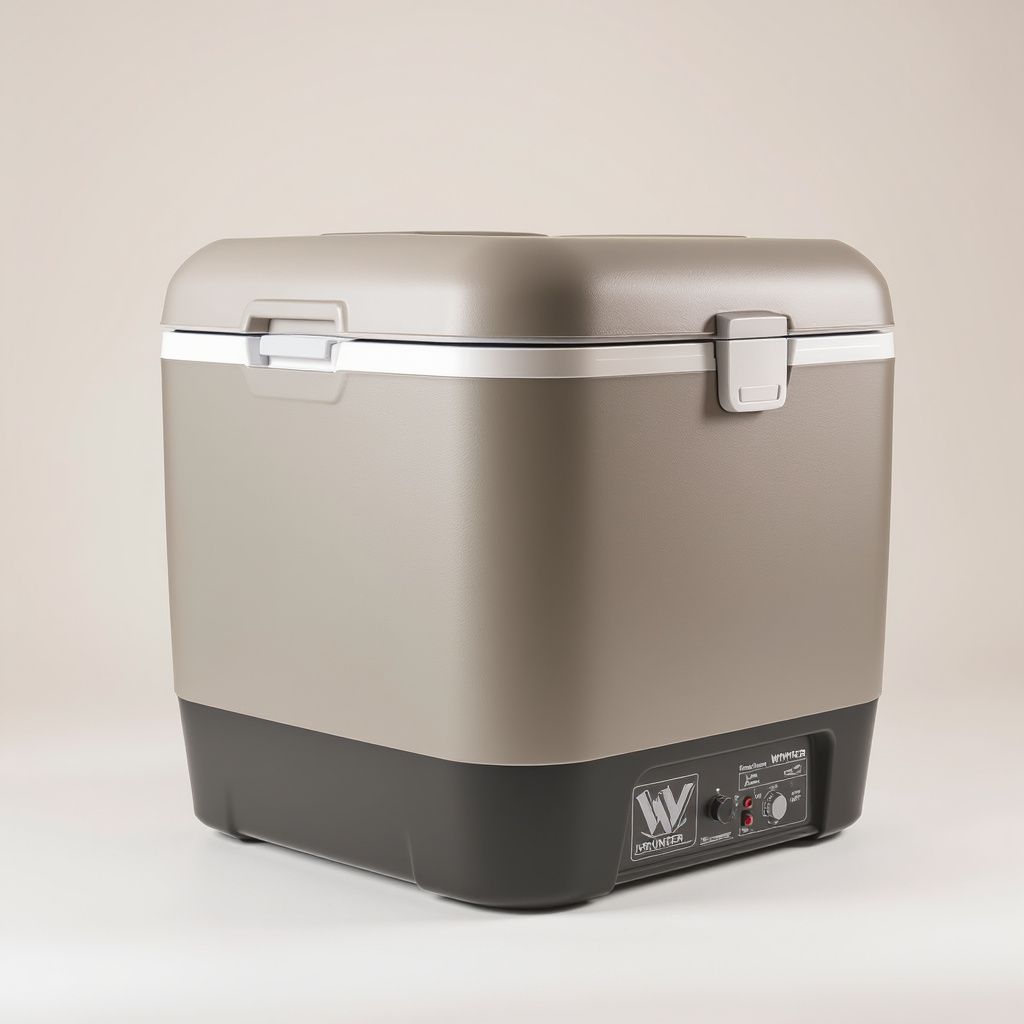
Whynter FM-45G 45-Quart Dual Zone Portable Fridge Freezer
The most versatile dual-zone 12V fridge for the price. Run it as fridge, freezer, or both at once — backed by a 1-year warranty and stocked at every major retailer.