Pelican 1430 Top Loader Case
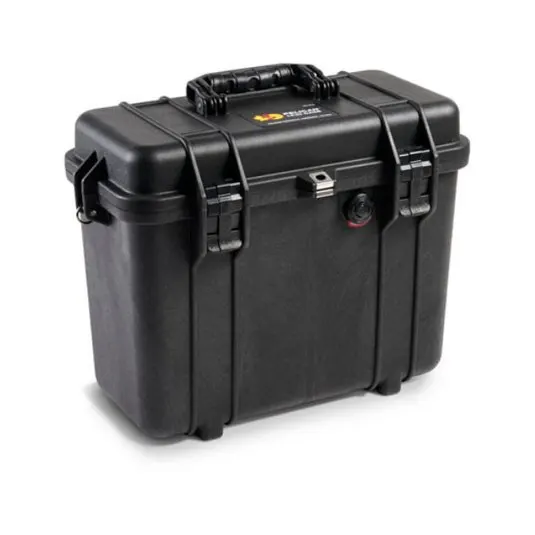
- Exterior
- 16.40 x 8.71 x 13.15 in (Pelican)
- Interior
- 13.56 x 5.76 x 11.70 in (Pelican)
- Capacity
- 0.53 cu ft, about 15 L (Pelican)
- Weight
- 6.50 lb with foam, 5.60 lb without (Pelican)
- Waterproof Rating
- IP67 (Pelican)
- Temperature Range
- -40°F to 190°F (Pelican)
- Warranty
- Pelican lifetime guarantee
Pelican 1430 Case Review: Sealed, Foam-Lined Storage for Small Gear
The Pelican 1430 is a premium case. One costs as much as several decent plastic totes, so the question in this review is simple: does the gear you're storing need this level of protection, or are you paying for more than you'll use?
What the Amazon link sells: the Pelican 1430 Protector top loader case with foam, in black (ASIN B000E9LOWK, Pelican part number 1430-000-110). At the time of checking it was sold by Amazon.com.
Choose this if:
- You carry a few small, expensive or irreplaceable items (electronics, documents, knives, medication)
- They ride somewhere exposed to water, dust or impacts
- You want a narrow case that loads from the top
Skip this if:
- You're storing food, cookware or clothing
- You need lots of volume (the interior is under 6 inches wide)
- Your budget is better spent on the fridge or electrical system
What the Pelican 1430 is
The 1430 is a top-loading hard case from Pelican's Protector line. Unlike the flatter clamshell cases most people picture, it's tall and narrow, and you load it from the top. That shape suits vans. In a compact build, a slim vertical slot beside a cabinet or under a bench is often easier to find than open floor area.
Pelican's US product page publishes a detailed spec sheet:
| Spec | Pelican figure |
|---|---|
| Interior | 13.56 x 5.76 x 11.70 in (lid depth 2.00 in, bottom depth 9.70 in) |
| Exterior | 16.40 x 8.71 x 13.15 in |
| Interior volume | 0.53 cu ft (about 15 L) |
| Weight | 5.60 lb without foam, 6.50 lb with foam |
| Temperature range | -40°F to 190°F |
Materials, per Pelican: a polypropylene body, ABS latches, a polymer O-ring, stainless steel hinge pins and 1.3 lb of polyurethane foam. Pelican lists IP67, DEF STAN 81-41 and MIL-STD-810G fungus-test certificates for the case. The Amazon listing adds stainless-steel-reinforced padlock protectors, and Pelican gives the padlock hole diameter as 0.31 inches.
Pelican backs the case with its lifetime "Guarantee of Excellence." Like any guarantee, it has exclusions, so read Pelican's current terms before you rely on it.
The temperature range is worth noting for van use. A parked van in summer sun can get very hot inside, and Pelican's published 190°F maximum gives you a real limit to design around. Keep the case out of direct sun behind the windshield, and don't mount it next to a heater outlet.
IP67: what it means in a van
IP67 is a specific test standard, not a marketing word. The "6" means dust-tight. The "7" means protected against temporary immersion, normally defined as up to 1 metre for 30 minutes. Pelican lists the 1430 as IP67-certified. The Amazon listing explains how the seal works: a tongue-and-groove lid fit plus a polymer O-ring.
What that means in practice:
- Dust: you can hose road dust off the outside without grit getting past the seal, as long as the O-ring is clean.
- Water: the case survives being caught in a roof-box leak, a tipped water jug or a shallow crossing where water reaches the cargo floor.
- Limits: IP67 is a rating for temporary immersion, not permanent submersion. The seal only works with a clean, undamaged O-ring and fully closed latches. Pelican lists a 1433 replacement O-ring for the 1430 series.
The YETI LoadOut GoBox 30 is also listed as IP67, by its Amazon listing and a YETI retailer. The difference between the two isn't the seal rating. It's the foam, the pressure valve and the shape.
The pressure equalisation valve
The Amazon listing says Pelican cases "come standard with an Automatic Pressure Equalization Valve which releases built up air pressure while keeping water out." Pelican's page lists the valve's vent as a 3-micron hydrophobic non-woven membrane.
Why it matters on the road: a fully sealed box traps air at whatever pressure it was closed at. Drive from sea level to a high mountain pass and the inside is at higher pressure than the outside. Close it up high and drive down, and the inside is at lower pressure, which can make the lid hard to open. Dometic notes this effect on the unvented Front Runner Wolf Pack Pro. The valve lets the 1430 equalise through altitude and temperature swings without you breaking the seal.
The valve doesn't dry the air inside. Moisture you seal in stays in. Pack a silica gel pack with electronics, and make sure knives are fully dry before they go into foam.
Foam, latches and handling
The case ships with Pelican's Pick N Pluck foam: pre-scored layers you pull out to make cut-outs for your gear, plus lid foam. Plan the layout before you pull, because removed cubes don't go back in neatly. Foam is the part that actually cushions gear against shock. Pelican's page lists 1430-series accessories, including a 1431 replacement foam set, a 1435 padded divider set and a 1439 lid organizer. A padded divider set suits gear you swap often better than plucked foam does.
The ABS latches hold the lid down against the O-ring. They take a deliberate press and lift to open, so check that both are fully closed every time. The two padlock points with stainless reinforcement let you lock the case, though a lock on a plastic case is a deterrent rather than real security.
At 6.5 lb with foam, the case is light enough to lift out of a cabinet one-handed.
Van kitchen and living uses
The 1430 earns its place with gear where damage is expensive or hard to replace:
- Good kitchen knives in custom-cut foam, so edges never touch each other or a drawer. See our van knife storage and safety guide.
- Documents and passports, and medications that need protecting from damp.
- Small electronics: a backup drive, a satellite messenger, spare headlamp batteries, a phone or tablet.
- A compact camera body with one or two small lenses.
The interior is about 13.6 inches long, 5.8 inches wide and 11.7 inches deep. That suits several small items or one tall, slim one. Measure your gear against those numbers; a few of the items above will fill it. The top-loading design means you can stand the case upright in a cabinet and lift items out from above without removing the case. For a broader look at how hard cases fit into a galley layout, see the van kitchen storage solutions guide.
Restrain it. A 6.5 lb case is a projectile in a hard stop. Secure it in a cabinet with a lip or fixed blocks, or strap it through the handle to a tie-down point.
A sensible pattern for a van is two tiers: replaceable items (food, clothing, cookware) in cheaper bins, and the few irreplaceable items in a sealed, foam-lined case.
Pelican 1430 vs YETI GoBox 30 vs Plano Sportsman 108 Qt
These three cases take different approaches to storage.
YETI LoadOut GoBox 30: listed as IP65 and IP67, about 30 litres, with a removable divider and cargo tray and no foam. It costs more than the Pelican and weighs about twice as much (YETI retailer BCF lists 5.5 kg). It's the better choice for a kitchen kit you open several times a day.
Plano Sportsman Trunk 108 Qt: costs considerably less, holds many times the volume, and has wheels. It has no gasket, so it keeps out dents and light weather rather than water and dust. It's a budget bulk-storage option.
Pelican 1430: neither the biggest nor the cheapest. It's the only one of the three with pick-apart foam and a pressure-equalisation valve, which makes it the most protective for small, delicate items. If you only need one case for general gear, buy the Plano. Add the Pelican only for specific items that justify it.
Value for money
The test is simple. If the gear inside is worth several times what the case costs, and would be damaged by water or impact, the case pays for itself the first time it prevents that damage. Good knives, a camera or a satellite messenger can easily clear that bar. If the gear inside is worth less than the case, you're over-spending; use a cheaper gasketed bin instead.
Who should skip the Pelican 1430
Skip this case if your storage is mainly dry goods, cookware, clothing or tools you can easily replace. Skip it if your gear never sees water, dust or rough handling. Skip it if you'd rather put the money toward a better fridge, a water filter or solar. And skip it if you want a case that holds a full kitchen kit; the 1430 is intentionally compact.
Final Verdict
The Pelican 1430 is a well-specified top-loading case for small gear that has to stay dry and intact. Pelican publishes everything a buyer needs: IP67 certification, a -40°F to 190°F temperature range, exact interior dimensions, material details and a lifetime guarantee. With its foam and pressure valve, it works more like insurance than storage. If you carry gear that would be costly to replace, it's a sensible buy. If you don't, put the money into a Plano trunk or a set of gasketed bins.
FAQ
Is the Pelican 1430 actually submersible? Pelican lists it as IP67, which covers temporary immersion, normally up to 1 metre for 30 minutes. Keep the O-ring clean and undamaged and both latches fully closed. It isn't meant for permanent submersion.
Can I fit a full DSLR kit inside? A compact one, possibly. Pelican lists the interior at 13.56 x 5.76 x 11.70 inches, so a camera body and one or two small lenses fit better than a full kit. Measure before buying.
Does the lifetime guarantee really cover everything? No. Pelican's guarantee covers many kinds of breakage and defects, but it has exclusions, and foam is generally treated as a wear item. Read Pelican's current terms.
Will it survive a hot van? Pelican publishes a temperature range of -40°F to 190°F. Keep it out of direct windshield sun and away from heater outlets, and remember that heat is harder on electronics inside than on the case.
How does it compare to the Pelican 1450 or 1510? The 1430 is taller and narrower than the clamshell-style 1450 and smaller overall than the 1510 carry-on. Choose the 1430 when vertical space matters more than floor area.
Is it airline carry-on legal? At 16.40 x 8.71 x 13.15 inches outside (Pelican), it's within many airlines' carry-on limits, but rules vary by airline, and some items you might store in it (knives, for example) can't go in the cabin. Check your airline's limits.
Sources and verification
- Pelican US, 1430 Protector Case product page: exterior and interior dimensions, lid and bottom depth, interior volume, weight with and without foam, materials, purge-valve vent membrane, temperature range, IP67 / DEF STAN 81-41 / MIL-STD-810G certificates, padlock hole diameter, lifetime Guarantee of Excellence, 1430-series accessories (1431 foam, 1433 O-ring, 1435 dividers, 1439 lid organizer). https://www.pelican.com/us/en/product/cases/protector/1430 (checked 2026-10-12)
- Amazon listing for ASIN B000E9LOWK, the listing this review links to, via the Amazon Creators API: title, part number 1430-000-110, black, O-ring and tongue-and-groove seal, pressure equalisation valve, Pick N Pluck foam, padlock protectors, interior dimensions, lifetime warranty field, seller (Amazon.com), availability (checked 2026-10-12)
- Dometic US, Front Runner Wolf Pack Pro page, for the internal-air-pressure note on an unvented box. https://www.dometic.com/en-us/product/wolf-pack-pro (checked 2026-10-12)
- BCF (YETI retailer), YETI LoadOut GoBox 30 page, for the GoBox weight. https://www.bcf.com.au/p/yeti-loadout-gobox-30-gear-case-white/666100.html (checked 2026-10-12)
Compare with similar products
See how this stacks up against the other kitchen storage we've reviewed.
Related Reviews
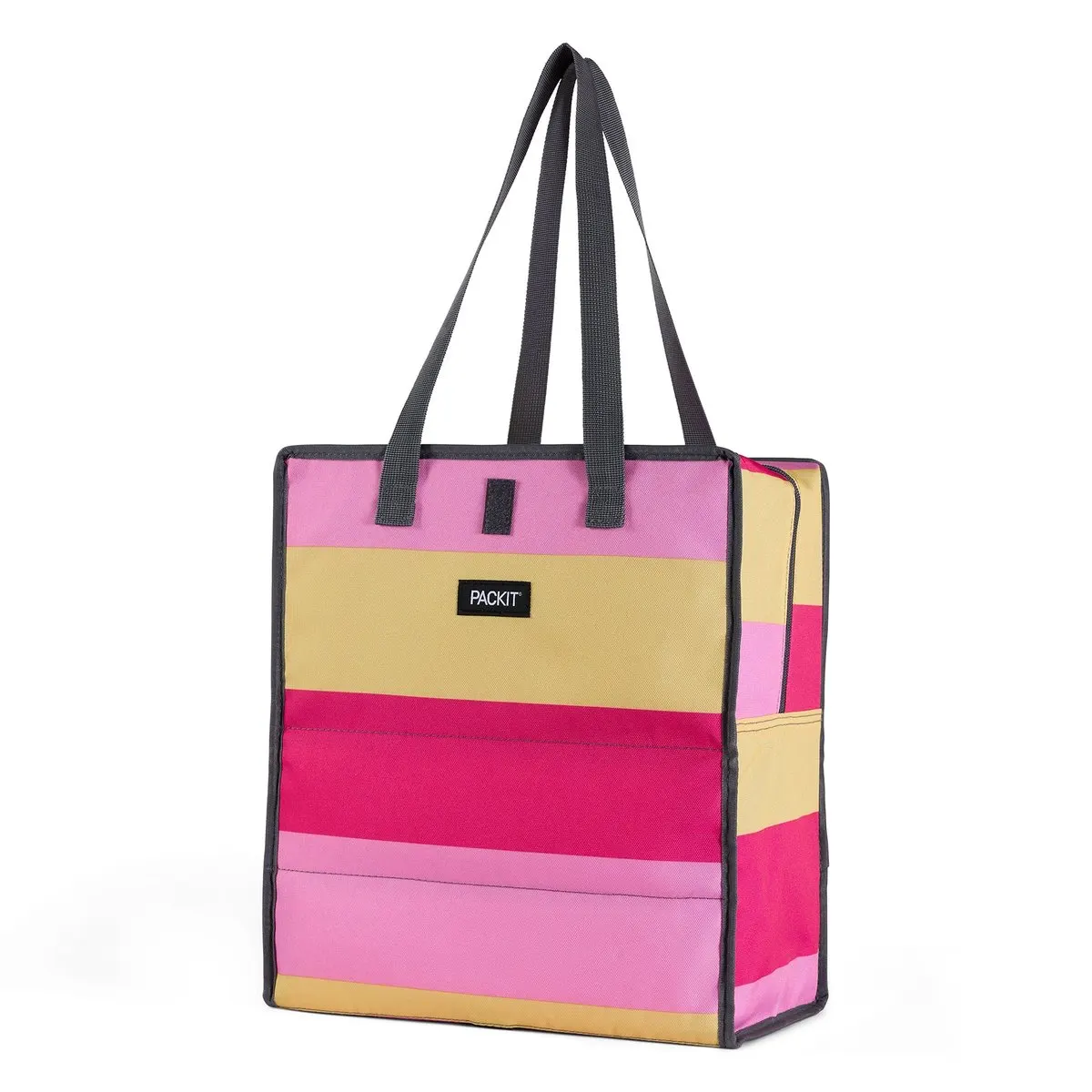
For: Grocery run to the fridge
PackIt Freezable Grocery Shopping Bag
A grocery tote with freezable gel built into the walls and base that PackIt says keeps groceries chilled "for hours" without ice. Useful for the drive between the grocery store and the van fridge.

For: Quieter drawers and cabinets
Con-Tact Brand Grip Premium Non-Adhesive Shelf Liner, 18 in x 10 ft, Bright White
A cushioned, non-adhesive foamed-PVC liner with an open scrim that cuts to size with scissors. In a van it reduces sliding and rattling in drawers and cabinets and protects surfaces, but it is friction, not a restraint: heavy items still need a latched door, a lip or a strap.

For: Keeping cabinet doors shut
Southco MP-05-312-11 Round Push-to-Close Latch, Chrome on Chrome (Pack of 2)
A positive-locking marine latch that latches itself when the door closes and opens only when you pull the flush knob, so contents leaning on a van cabinet door or drawer front don't open it. Southco publishes the cutout, door-thickness range and materials, but the keeper and screws are sold separately and there is no published load or crash rating.