Sawyer Squeeze Water Filter vs Grayl GeoPress 24oz Purifier
The budget hollow-fiber backup vs the pricier virus-rated purifier. Two very different water safety tools.
Disclosure: As an Amazon Associate I earn from qualifying purchases. Links to Amazon on this page are affiliate links: if you buy through one, VanLifeKitchens.com may earn a commission at no extra cost to you. Read our affiliate disclosure.
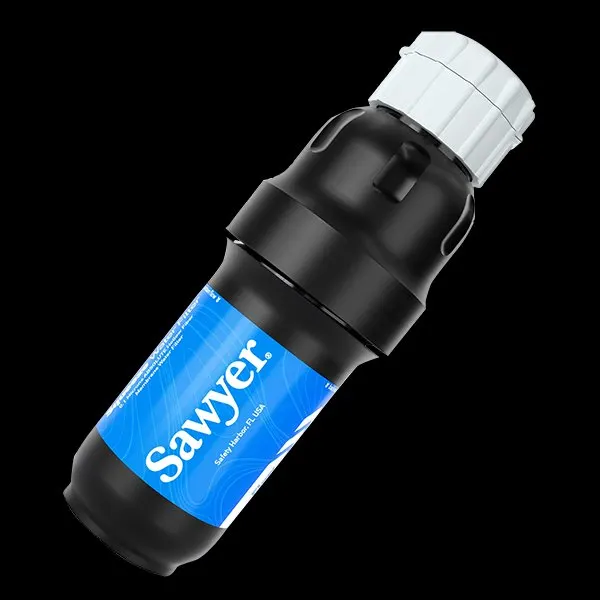
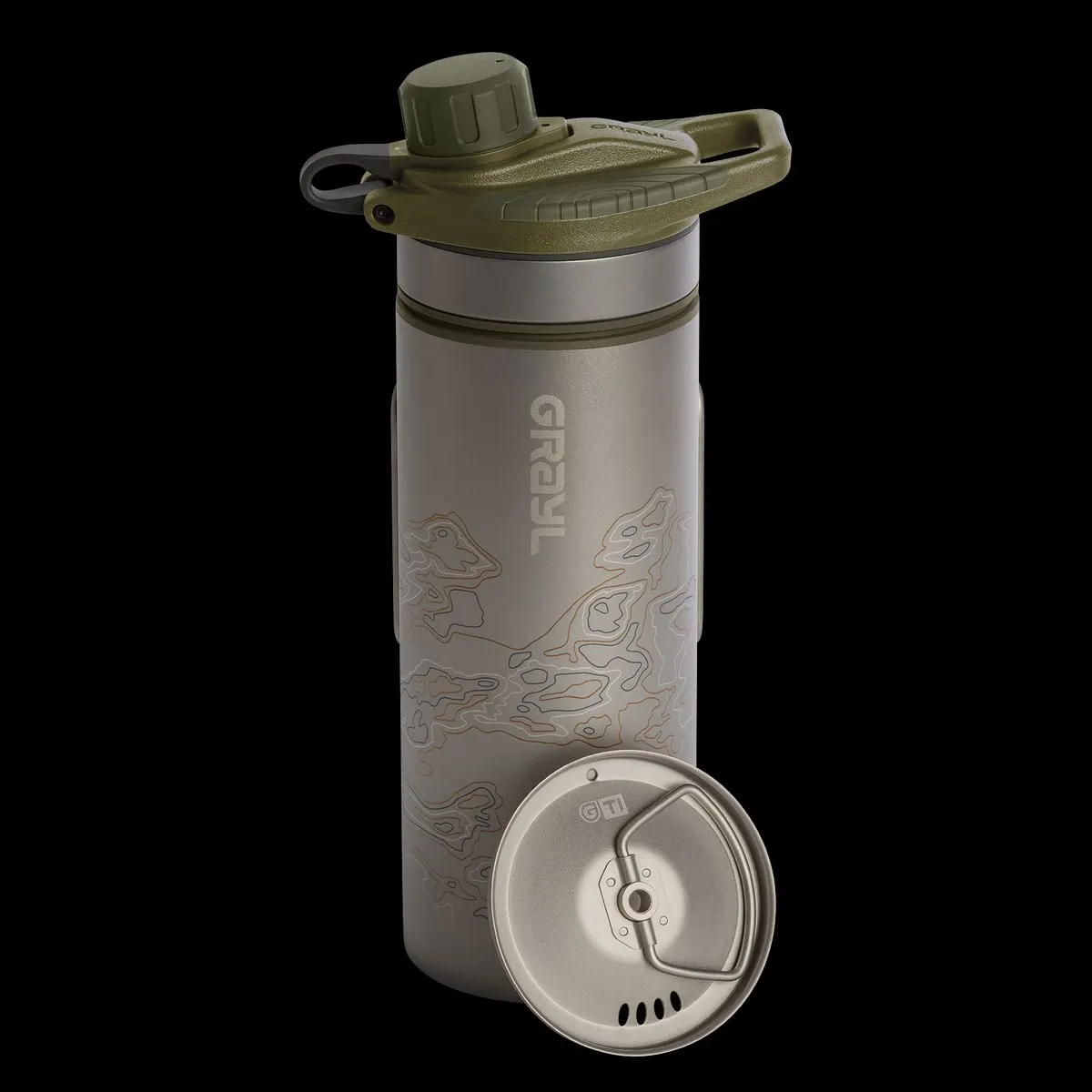
We recommend the Grayl GeoPress 24oz Water Purifier Bottle
“The Grayl GeoPress wins on contaminant coverage — it is the only filter here that claims virus removal, and it reduces many chemicals and low levels of metals, in addition to bacteria and protozoa. The Sawyer Squeeze wins on cost (it's considerably cheaper), weight (about 2 oz for the filter vs 15.9 oz), and no cartridge to replace (Sawyer publishes no gallon rating), but it removes only bacteria and protozoa. For clear backcountry sources where viruses are a low risk, the Sawyer is usually enough. For international travel or sources downstream of people or livestock, the Grayl is the safer choice.”
Read the full Grayl GeoPress 24oz Water Purifier Bottle reviewSpecifications
| Spec | Sawyer Squeeze Water Filter | Grayl GeoPress 24oz Water Purifier Bottle |
|---|---|---|
| Best for | Pocket backup filter | Travel and untreated water |
| Filter Rating | 0.1 micron absolute | — |
| Weight | About 2 oz filter (Amazon listing); Sawyer lists 8.19 oz for the kit | 15.9 oz (450 g) |
| Flow Rate | Not published by Sawyer (about 1.5 L/min is our rough estimate) | — |
| Life | Not stated on Sawyer's current page | — |
| Fits | Standard 28 mm bottle threads (Sawyer) | — |
| Warranty | Lifetime against defects, filter only; void if frozen after wetting (Sawyer) | 10-year, workmanship and materials (Grayl) |
| Capacity | — | 24 oz (710 ml) |
| Size | — | 10.4 in tall, 3.4 in base diameter (Grayl) |
| Filter Life | — | 350 presses / ~65 gallons (250 L), or 3 years |
| Removes | — | Viruses, bacteria, protozoa; reduces heavy metals, chemicals, microplastics (Grayl) |
| NSF Testing | — | Lab-tested to NSF/ANSI 42 & 53 protocols; meets US EPA Guide Standard for microbiological purifiers |
Sawyer Squeeze Water Filter
- 0.1 micron absolute hollow fiber
- About 2 oz filter (Amazon listing)
- Lifetime warranty against defects (Sawyer)
- Inexpensive
- Doesn't remove viruses, chemicals or heavy metals
- Hand-squeezing is slow for jugs
- Freezing after wetting ruins it and voids the warranty
Grayl GeoPress 24oz Water Purifier Bottle
- Rated for viruses (99.99%, per Grayl)
- 8-second press-and-drink operation
- 350-press cartridge life; 10-year warranty on the bottle
- Suits questionable fresh-water sources (not seawater)
- Replacement cartridges are an ongoing cost, every ~65 gallons
- Press requires meaningful hand strength
The short answer
Buy the Grayl GeoPress if your travels take you across borders, into remote backcountry, or anywhere the water source is truly unknown. It's the only one of these two that's marketed as a purifier covering viruses (Grayl claims 99.99%), and its carbon also reduces many chemicals, heavy metals and tastes, all in one press that Grayl rates at about eight seconds. It is for fresh water only. That broader coverage is why it wins this matchup.
Buy the Sawyer Squeeze if you mostly travel in the US and drink from campground spigots, springs and backcountry streams, where the usual risks are bacteria and protozoa. It costs far less, the filter alone weighs about 2 ounces per the Amazon listing against the Grayl's 15.9 ounces empty (Grayl's figure), and it has no cartridge to replace. The Amazon listing we link is the SP129 kit with two 32 oz pouches. For domestic van life, the Sawyer is enough.
These aren't really substitutes. The Sawyer is a cheap pathogen filter you keep as a backup, and the Grayl is the tool you carry when you have no idea what's in the water. Read the full Sawyer Squeeze review and Grayl GeoPress review, and see the water filtration complete guide for how either one fits next to a countertop filter.
Contaminant coverage: filter vs purifier
The Sawyer's 0.1-micron absolute hollow-fiber membrane removes bacteria and protozoa. Sawyer cites an independent lab report (Hydration, LLC, report S05-03) showing 99.99999% for bacteria and 99.9999% for protozoa, which covers Giardia, Cryptosporidium and E. coli, the main concerns in North American backcountry water, plus 100% of microplastics. Sawyer makes no virus claim for it and cites no NSF/ANSI certification on its product page; the CDC says portable filters will not remove viruses. It also doesn't touch chemicals, heavy metals, salt or chlorine taste.
Grayl says its GeoPress cartridge combines electroadsorption media, which captures viruses and bacteria by charge, with ultra-powdered activated carbon, which adsorbs many chemicals (including some PFAS and VOCs), pesticides, heavy metals, tastes and odours, and also filters particulates and microplastics. Grayl claims 99.99% of viruses, 99.9999% of bacteria and 99.9% of protozoan cysts, and says the GeoPress is independently tested to meet or exceed NSF/ANSI protocols 42 and 53 and the US EPA Guide Standard and Protocol for Testing Microbiological Water Purifiers.
Grayl is also clear about limits. Its FAQ says to avoid salty or brackish water, and that the cartridge is not designed for industrial disasters, coal ash spills, high lead levels, mercury, nuclear incidents, high tannin levels or toxic blue-green algae. It reduces low levels of chemicals and metals; it is not a fix for heavily polluted water.
Viruses are why this choice matters. In remote US and Canadian backcountry water, viral contamination is generally considered less likely than bacteria and protozoa, though the risk rises downstream of towns, septic systems and livestock, and after floods. In parts of Mexico, Central and South America, and Southeast Asia, waterborne viruses like hepatitis A, rotavirus and norovirus are a real concern, and a hollow-fiber filter alone won't protect you. Your other options there are boiling (the CDC advises a 1-minute rolling boil, or 3 minutes above 6,500 feet) or an approved chemical disinfectant used to its label contact time.
Neither device should be treated as a guarantee for every possible source. Neither one desalinates, and very silty water should be pre-filtered first.
Edge: Grayl GeoPress, clearly. It's the only one here that claims virus removal and reduces chemical contaminants.
Speed and daily workflow
The Grayl works like a French press. Fill the outer bottle, push the inner press down (Grayl rates it at about eight seconds per 24 oz, and quotes 5 L/min), and drink 24 ounces (710 ml) of treated water. There's nothing to hang and nothing to squeeze, which makes it the fastest way to get water at a roadside spigot or a creek crossing. The tradeoff is effort. Pressing takes real force, especially as the cartridge loads up (Grayl says to replace it when a press takes about 25 seconds), and people with weak wrists may find it tiring. Grayl also says to avoid water above 120°F (50°C).
Sawyer's product page doesn't state a flow rate. The site uses about 1.5 L per minute as a rough working estimate for a new filter, not a Sawyer rating; flow depends on how hard you squeeze and drops as sediment loads the membrane, until you backflush. Squeezing gets old if you're filtering a lot, but the Sawyer is more flexible. It threads onto standard 28mm bottles, works inline on a low-pressure line, and can hang from a dirty-water bag as an overnight gravity filter. That makes it much better than the Grayl for filling jugs. The Grayl review notes that filling a 5-gallon jug would take about 27 presses.
Edge: Grayl for fast single bottles on the go; Sawyer for volume. For bulk van water, the Sawyer is the more practical choice.
Weight, size and durability
The Sawyer filter weighs about 2 ounces per the Amazon listing (Sawyer's 8.19 oz figure appears to cover the whole kit) and fits in a glovebox or hip-belt pocket. Grayl lists the GeoPress at 15.9 ounces (450 g) empty, 10.4 inches tall and 3.4 inches across the base, and it is about 2.5 pounds full. That base is wider than many car and van cup holders, so plan on a door pocket or a bottle sleeve. The Grayl is a two-piece system you need to keep clean and intact. The Sawyer is a single sealed housing with no moving parts.
Both have a weak spot to manage. With the Sawyer, it's freezing. Sawyer's warranty page says there is no reliable way to tell whether a wetted filter was damaged by freezing, that freezing after wetting voids the warranty, and that a frozen filter should be replaced. Its stock squeeze pouches are thin and the part most likely to wear, so squeeze gently or thread the filter onto a sturdier 28 mm bottle. With the Grayl, it's silt. Visible particulates load the cartridge faster and make pressing harder, so let cloudy water settle or strain it through a clean cloth or coffee filter first, as the CDC suggests. Grayl's FAQ says a cartridge can survive freezing but should not be used after three or more freeze–thaw cycles, so keep both away from frost.
Edge: Sawyer Squeeze, for being lighter and smaller, with a simpler design that has fewer failure points.
Filter life and running cost
This is where the two are furthest apart. Sawyer's current product page gives no gallon rating for the Squeeze; it backs the filter itself with a lifetime warranty against manufacturer defects. The site no longer quotes the "100,000+ gallons" figure older listings used, because it isn't on Sawyer's current pages. In practice a hollow-fiber filter keeps working as long as backflushing keeps the flow usable; freezing or physical damage ends it regardless of volume. There's no cartridge, so the running cost is essentially the occasional pouch.
Grayl rates a GeoPress cartridge at about 350 presses, or 65 gallons (250 litres); replace it when a press takes about 25 seconds or three years after first use, whichever comes first. Replacements are an ongoing cost. Per gallon, that's still cheap compared with bottled water, but it adds up fast if you use the Grayl as your main supply. At two presses a day, one cartridge lasts about six months.
Edge: Sawyer Squeeze, by a wide margin. Its running cost is close to zero.
Where each one fits in a van water system
Neither is a primary galley system. For everyday drinking water at the counter, a gravity pitcher or under-sink filter handles volume better than either one. The Sawyer is the low-cost backup: if your main filter fails, it covers bacteria and protozoa from most freshwater sources, and it's the one you hand to a friend starting out. The Grayl is the specialist for trips where the source is unknown or viruses are a concern. It's also a daypack bottle for hikes and travel away from the van.
Grayl lists a ten-year warranty covering workmanship and materials on the GeoPress; the cartridge is a consumable, not a warranty item. Sawyer's lifetime warranty covers manufacturer defects in the filter itself, not the pouches and accessories, and freezing after wetting voids it. Check the current terms before you buy.
Edge: Sawyer for domestic backup duty; Grayl for international and unknown sources. Which one wins depends on where you drive.
Value
The Sawyer Squeeze is the budget option and the Grayl GeoPress costs considerably more upfront. Check current prices on Amazon, since they move often. Add replacement cartridges, each good for roughly 65 gallons, and the gap widens every time you treat a meaningful amount of water with the Grayl.
That doesn't make the Grayl poor value. You're paying for virus and chemical coverage that the Sawyer can't provide at any price. If you never leave developed US water sources, though, that coverage protects you from a risk you rarely face, and the Sawyer gives far more for the money. For travelers who split time between the US and Latin America, owning both is a reasonable setup: Sawyer for bulk refills, Grayl for drinking when the source is uncertain.
Which one should you buy?
Buy the Sawyer Squeeze if:
- You travel mainly in the US or Canada and fill from spigots, springs and streams
- You want a filter of about 2 ounces that lives in the glovebox as a backup
- You need to filter large volumes or fill jugs
- You want to pay once and skip cartridges
Buy the Grayl GeoPress if:
- You cross into Mexico or travel where waterborne viruses are a realistic risk
- You want chemical, heavy metal and taste filtration in a portable bottle
- You need water fast at a roadside tap or creek without any setup
- You want one take-anywhere bottle for hikes, flights and rental cars
FAQ
Does the Sawyer Squeeze remove viruses? No. Sawyer makes no virus claim for it; its 0.1-micron membrane is rated for bacteria and protozoa, and the CDC says portable filters will not remove viruses. Where viruses are a concern, use a virus-rated purifier like the Grayl, boil the water, or add an approved chemical treatment.
Is the Grayl GeoPress worth the extra money over the Sawyer? It's worth it if you travel internationally or drink from sources where viruses or chemical contamination are realistic. For strictly domestic use at developed sources, the Sawyer covers the main risks for far less money.
How long does a Grayl cartridge last compared with a Sawyer? Grayl rates a cartridge at about 350 presses, or 65 gallons; replace it when a press takes about 25 seconds or three years after first use, whichever comes first. The Sawyer has no cartridge to replace and no rated end of life on Sawyer's current product page; it keeps working as long as backflushing keeps the flow usable, unless it freezes after wetting or is physically damaged.
Can I use the Grayl GeoPress to fill water jugs in my van? Technically yes, but it's slow. Each press makes 24 ounces, so a 5-gallon jug takes about 27 presses, and it burns through cartridge life quickly. A Sawyer on a gravity bag or a countertop pitcher is better for bulk water.
Which is better for cold-weather van trips? Both need care. A wet Sawyer must not freeze, and Grayl says not to keep using a cartridge after three or more freeze–thaw cycles. Keep either one inside your sleeping bag, the heated cabin or an insulated bag on cold nights.
Sources and verification
- Sawyer Squeeze review: specs and sources for the Sawyer SP129 Squeeze kit (checked 2026-10-12)
- Grayl GeoPress review: specs and sources for the Grayl GeoPress 24 oz purifier bottle (checked 2026-10-12)
- Manufacturer pages cited in those reviews, not separately re-opened for this comparison: Sawyer Squeeze product page (https://www.sawyer.com/product/squeeze-water-filter-system), Sawyer warranty page (https://sawyer.com/warranty/), Grayl 24 oz GeoPress product page (https://grayl.com/products/24oz-geopress-filter-purifier-bottle-covert-edition), Grayl FAQ (https://grayl.com/pages/faqs) and the CDC's emergency water guidance (https://www.cdc.gov/water-emergency/about/index.html)