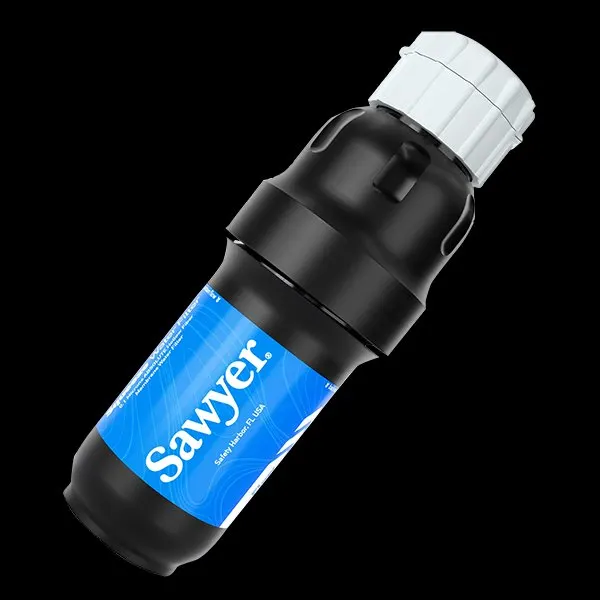
Sawyer Squeeze Water Filter
- Filter Rating
- 0.1 micron absolute
- Weight
- About 2 oz filter (Amazon listing); Sawyer lists 8.19 oz for the kit
- Flow Rate
- Not published by Sawyer (about 1.5 L/min is our rough estimate)
- Life
- Not stated on Sawyer's current page
- Fits
- Standard 28 mm bottle threads (Sawyer)
- Warranty
- Lifetime against defects, filter only; void if frozen after wetting (Sawyer)
Overview — Who is this for?
What the Amazon link sells: the Sawyer SP129 Squeeze Water Filtration System (ASIN B00B1OSU4W), which Amazon titles "Sawyer Products SP129 Squeeze Water Filtration System w/Two 32-Oz Squeeze Pouches, Straw, and Hydration Pack Adapter". The listing's feature text names the filter, two reusable 32 oz BPA-free pouches, a drinking straw, one set of inline hydration-pack adapters and a mesh storage bag. Sawyer's own product page describes the kit with a cleaning plunger, a cleaning coupling and gravity tubing as well. The two descriptions don't fully match, so check the listing photos for the plunger if you are relying on it for backflushing.
What it is, in one line: a 0.1-micron hollow-fibre filter for bacteria, protozoa and microplastics. It is not a purifier (Sawyer makes no virus claim for it) and it has no carbon stage, so it does nothing for chemicals, heavy metals or taste.
Choose this if:
- you want a light, low-cost backup filter for creek, spring or questionable-spigot water;
- you want something that also works as a gravity filter or a hydration-pack inline filter;
- you don't want a cartridge replacement schedule.
Skip this if:
- you need virus protection (travel where sewage contamination of water is plausible);
- you want lead, chemical or chlorine-taste reduction;
- you can't keep a wet filter from freezing.
This review is for full-time and weekend van lifers who already have, or are planning, a primary freshwater setup and want a small, simple filter stashed in a drawer for emergencies, boondocking refills from questionable spigots, or quick bottle fills on a hike away from the van. The Sawyer Squeeze is not the most convenient filter on this site and not the most thorough. Its case rests on three things: it is small, it sits in the budget tier, and Sawyer does not set an end-of-life volume for it on its current product page.
It is not a whole water solution. Anyone drawing from taps in regions with limited sanitation, anyone worried about agricultural runoff, and anyone expecting a filter to deal with lead from old campground plumbing needs something else, or something in addition. The Sawyer is a bacteria and protozoa filter. That covers the most common microbial risks in North American backcountry water, but it is not everything.
What It Removes (and What It Doesn't)
The Sawyer Squeeze uses a 0.1-micron absolute hollow-fibre membrane. Sawyer's product page says it removes 99.99999% of bacteria (it names salmonella, cholera, leptospirosis and E. coli), 99.9999% of protozoa (giardia and cryptosporidium) and 100% of microplastics. For those figures it cites an independent laboratory, Hydration, LLC, microbiological report S05-03, and says every Squeeze filter is individually tested three times to Sawyer's performance standards. Sawyer does not cite an NSF/ANSI certification for the Squeeze on that page.
For context, the CDC's guidance on making water safe says a portable filter needs an absolute pore size of 0.3 micron or smaller to remove bacteria and 1 micron or smaller for parasites such as Giardia and Cryptosporidium, and that portable filters will not remove viruses. The Squeeze's 0.1-micron absolute rating sits inside both of the CDC's pore-size thresholds; the virus limit applies to it like any other filter.
Here is what it does not do:
- Viruses. Sawyer does not claim virus removal for the Squeeze, and the CDC says portable filters won't remove them. In remote North American backcountry, viral contamination is generally considered less likely than bacteria and protozoa, but the risk rises downstream of towns, septic systems and livestock, after floods, and in regions with limited sanitation.
- Chemicals, pesticides, herbicides or industrial runoff.
- Heavy metals such as lead, copper or arsenic.
- Dissolved solids and salt. It will not make brackish or sea water drinkable.
- Chlorine taste and odour, fluoride, or hard-water scale.
If your concern is pathogens from a creek, a suspect RV park bib or a questionable refill jug, the Sawyer addresses the bacteria and protozoa part of that. If your concern is lead solder in an old campground plumbing system, the Sawyer does nothing for you. Match the tool to the threat.
We deliberately don't say the Sawyer makes water "safe to drink". No filter does that for every source. What Sawyer's published lab data supports is strong bacteria and protozoa removal. If viruses are a realistic risk, boil the water (the CDC advises a rolling boil for 1 minute, or 3 minutes above 6,500 feet), use a virus-rated purifier such as the Grayl GeoPress, or use a chemical disinfectant according to its label. The CDC notes that chemical disinfectants kill viruses and bacteria but may not kill parasites, which is why filtering first and disinfecting second is a common pairing.
Design & Build
The Squeeze is simple: a palm-size plastic housing, a threaded inlet, a push-pull outlet, and a hollow-fibre bundle inside that you never see or touch. Sawyer's warranty page says the Squeeze has a lifetime warranty against manufacturer defects for the life of the filter, covering the filter itself and not the other parts and accessories.
Weight. The sources disagree on what is being weighed. The Amazon listing says the filter weighs about 2 ounces. Sawyer's product page lists 8.19 ounces, which reads as the weight of the whole kit with pouches and accessories rather than the filter alone. Either way, it is light enough to leave in a door pocket permanently.
Pouches. The pouches are the part most likely to wear. They are thin, and hard squeezing puts stress on the seams. A practical habit is to squeeze gently, carry a spare, or skip the pouches and thread the filter onto a sturdier bottle, since Sawyer says it fits standard bottles with 28 mm threads. That one design choice is a big part of the Squeeze's flexibility: you can screw it straight onto a common disposable water bottle and drink through it.
Freezing. The housing has no moving parts and is hard to damage in normal use. The one hard rule is freezing. Sawyer's warranty page says that freezing the filter after it has been wetted voids the warranty, that there is no reliable way to tell whether the fibres were damaged, and that a frozen filter should be replaced. A filter that has never been wetted is not affected. In a van, this means you cannot leave a used Sawyer in an uninsulated cabinet through a sub-freezing night. Sawyer's advice for cold trips is to keep it close to your body; in a van, keep it in the heated cabin, a jacket pocket or your sleeping bag.
Flow Rate & Daily Use
Sawyer's product page does not state a flow rate. Our product record uses about 1.5 L/min as a rough working figure for a new filter, but treat that as an estimate, not a Sawyer rating. Flow from any squeeze filter depends on how hard you squeeze and how loaded the membrane is, and it drops as sediment builds up until you backflush.
For daily van drinking water, that pace is fine for a bottle and tiring for a jug. Filling a 1-litre bottle takes about a minute of steady squeezing. Filling a 20-litre jerrycan by hand means squeezing a 1-litre pouch twenty times. This is why the Squeeze makes more sense as a backup or trail filter than as a primary van water treatment step, unless you run it as a gravity filter (below).
Where it fits daily use is small refills. You pull into a boondocking site, there's a spring up the road, and you want two litres for coffee. Grab the Sawyer and a pouch, and you're done in a few minutes. Or you're at a campground with iffy-looking water and want a bacteria and protozoa barrier between the spigot and your bottle.
Integration with a Van Water System (squeeze-pouch vs inline vs gravity)
The Squeeze can work three ways. Sawyer's kit description includes parts for all three; as noted above, confirm what the Amazon listing ships.
Squeeze-pouch (stock). Use it the way Sawyer intends, with the included pouches or a 28 mm bottle. Cheapest, simplest, slowest. Best for backup duty and occasional use. It fits in a glovebox.
Inline. The kit includes inline hydration-pack adapters, so the Squeeze can sit inline on a hydration bladder hose or on the outlet of a low-pressure gravity or foot-pump line, such as a Whale Babyfoot foot pump setup. Sawyer does not publish a pressure rating for using the Squeeze downstream of a pressurised 12 V diaphragm pump, so don't plumb it after a pump like the Shurflo Revolution; use a filter housing designed for line pressure instead.
Gravity feed. Hang a dirty-water bag from the bed platform or a cabinet handle, attach the Sawyer to the bag outlet with tubing, and let gravity do the work. This turns the Squeeze from an active hand-powered filter into a passive one: hang four litres and collect filtered water in a clean jug. A collapsible bag such as the MSR Dromedary 10L is one option for the dirty side, but keep dirty and clean containers clearly separated and never let the dirty side touch the clean outlet. If you filter in bulk every week, a purpose-built gravity system like the Platypus GravityWorks 4L is faster and less fiddly. For how a filter fits into a larger build, see the van water system setup guide.
Filtered water can be recontaminated by a dirty jug or tank, so store it in a container you keep clean, such as a dedicated Scepter 5-gallon water container used only for treated water.
Filter Lifespan & Maintenance (backflushing)
Sawyer's current product page does not give a gallon rating for the Squeeze, and our earlier product data quoting a "100,000+ gallons" figure has been withdrawn because we could not find it on Sawyer's current pages. In practice, a hollow-fibre filter keeps working as long as you can push water through it at a usable rate, and backflushing is what keeps the rate usable. Physical damage or freezing ends its life regardless of volume.
Backflushing is the main maintenance task: push clean water backward through the outlet with the cleaning plunger, and sediment comes out of the inlet. Do this whenever flow drops noticeably, and before storage. Follow the instructions that come in the box for frequency and for sanitising before long-term storage. Use clean, filtered water for the backflush so you don't contaminate the clean side.
Two habits that matter in a van:
- Pre-filter cloudy water. Silt loads the membrane quickly. The CDC suggests letting cloudy water settle, or straining it through a clean cloth or coffee filter, before treating it. Do this before the Squeeze and you will backflush less often.
- Keep it from freezing once wet. As above, Sawyer treats a wetted filter that froze as one to replace.
Sawyer Squeeze vs LifeStraw Home vs Katadyn BeFree vs Grayl
Four different tools.
The LifeStraw Home 7-Cup pitcher is a countertop gravity pitcher with a broader filtration profile. LifeStraw says its membrane removes bacteria, parasites and microplastics and its activated carbon and ion-exchange stage reduces lead, mercury, PFAS, chlorine and other chemicals, and it lists NSF/ANSI 42, 53 and 401, NSF P473 and the US EPA and NSF P231 protocol for its Home pitchers. Like the Sawyer, it does not claim virus removal. It is slower, not portable in any useful sense, and the carbon stage needs replacing every 40 gallons or about two months. If you want one counter filter for full-time drinking water, the LifeStraw Home is the stronger choice; see the LifeStraw Home review and the LifeStraw Home vs Sawyer Squeeze comparison. (This slot used to recommend the Berkey Travel; genuine Black Berkey elements have been hard to find since EPA stop-sale orders that began in late 2022, so we no longer point buyers at it.)
The Katadyn BeFree 1.0L is the Sawyer's closest direct competitor: a similar 0.1-micron hollow-fibre filter on a soft flask. Katadyn's manual says to replace the membrane after 1,000 litres, and it cleans by shaking or swishing rather than backflushing. The Amazon listing the site links to is the "BeFree AC 2-Stage", which adds an activated-carbon insert for taste, odour and chlorine (see the BeFree review). The Sawyer is the better pick if you want no rated end of life and the gravity and inline options; the BeFree is nicer for quick single-litre fills.
The Grayl GeoPress is a purifier bottle that Grayl rates for viruses as well as bacteria and protozoa, with a carbon stage for some chemicals. It costs considerably more and its cartridge is rated at 65 gallons. See the Sawyer Squeeze vs Grayl GeoPress comparison for where each one makes sense.
For one filter on a van counter, choose the LifeStraw Home. For backup duty and backcountry fills in North America, the Sawyer Squeeze. For quick bottle fills with a taste stage, the BeFree. For international travel or sources where viruses are plausible, the Grayl. They coexist more than they compete.
Value for Money
The Sawyer Squeeze is a budget-tier filter with no cartridge to replace, so it has one of the lowest running costs of any filter on this site. The ongoing costs are pouches, which wear, and replacement of the filter itself if it freezes, cracks or clogs past what backflushing can fix. If you want a budget backup filter for a van, it is our default recommendation.
Who should skip this
Skip the Sawyer Squeeze if any of the following apply:
- You need a single primary filter for full-time van living and want chemical, heavy metal and taste reduction. Get a LifeStraw Home Gravity Pitcher, or an RV inline system such as the Clearsource Ultra if you fill a plumbed tank.
- You are traveling where viral contamination of water is a realistic risk and don't plan to also boil, use a purifier, or use a chemical disinfectant.
- You run a pressurised 12 V pump system and were hoping to plumb the Sawyer after the pump. Sawyer doesn't publish a pressure rating for that use.
- You want fast, effortless flow for jugs. Hand-squeezing gets old.
- You cannot reliably protect it from freezing in winter boondocking.
Final Verdict
The Sawyer Squeeze is our pick for a low-cost backup water filter for van life. It is not a complete water solution and should not be treated as one. It does one category of work, mechanical bacteria and protozoa filtration, backed by published lab figures, at a price and weight that make it easy to keep on hand. Pair it with a broader primary system like the LifeStraw Home or an RV inline setup, add a virus step where the source calls for it, store it where it will not freeze, and backflush it whenever flow drops.
FAQ
Is the Sawyer Squeeze safe for drinking water from streams and lakes? Sawyer's published lab data shows 99.99999% bacteria and 99.9999% protozoa removal, which covers the most common backcountry pathogen risks in North America. Sawyer does not claim virus removal, the CDC says portable filters won't remove viruses, and the filter does not remove chemicals, so we would not describe it as making water categorically "safe". If sewage or livestock contamination is plausible, also boil or use a virus-rated purifier.
Can I use the Sawyer Squeeze as my only van water filter? We would not recommend it as a primary system for full-time living. It does not address heavy metals, chemicals or dissolved solids, which can matter at older RV hookups and campgrounds. It is best used as a backup, emergency or point-of-use filter alongside a broader setup.
How often should I backflush the Sawyer Squeeze? Whenever flow noticeably slows, and before storage. Follow the instructions in the box for sanitising before long-term storage, and pre-settle cloudy water to reduce how often you need to.
What happens if the Sawyer Squeeze freezes? Sawyer says there is no reliable way to tell whether a wetted filter was damaged by freezing, that freezing after wetting voids the warranty, and that the filter should be replaced. A filter that has never been wetted is not affected.
How much does the Sawyer Squeeze weigh? The Amazon listing says the filter alone weighs about 2 ounces. Sawyer's product page lists 8.19 ounces, which appears to be the full kit with pouches and accessories.
Sawyer Squeeze vs LifeStraw Home — which should I buy first? If you are building out a full-time rig, buy the LifeStraw Home Gravity Pitcher first as your countertop system and add a Sawyer later as a backup for backcountry fills. If you are a weekender or just starting out, buy the Sawyer first because it is inexpensive and covers the most likely acute microbial risk (bacteria and protozoa), then add a LifeStraw Home when your setup matures.
Does the Sawyer Squeeze remove chlorine taste from campground water? No. It is a mechanical filter and does not address taste, odour or chemical contaminants. For chlorine taste, you want activated carbon, which is not part of the Sawyer system.
Sources and verification
- Sawyer Squeeze product page, https://www.sawyer.com/product/squeeze-water-filter-system: kit contents, 0.1-micron absolute rating, bacteria, protozoa and microplastics removal figures, Hydration, LLC report S05-03, factory testing, 28 mm thread fit, 8.19 oz listed weight, lifetime limited warranty, no published flow or gallon rating (checked 2026-10-12)
- Sawyer warranty page, https://sawyer.com/warranty/: lifetime warranty scope (filter only), freezing after wetting voids the warranty and the filter should be replaced (checked 2026-10-12)
- CDC, How to Make Water Safe in an Emergency, https://www.cdc.gov/water-emergency/about/index.html (now served at https://www.cdc.gov/water-emergency/about/index.html): boiling times, filter pore-size thresholds, portable filters not removing viruses, limits of chemical disinfection, settling cloudy water (checked 2026-10-12)
- Amazon listing ASIN B00B1OSU4W: exact kit title, model SP129, listed contents, about 2 oz filter weight (checked 2026-10-12)
Compare with similar products
See how this stacks up against the other water & sink gear we've reviewed.
Head-to-head comparisons
Related Reviews
For: Group gravity filtering at camp
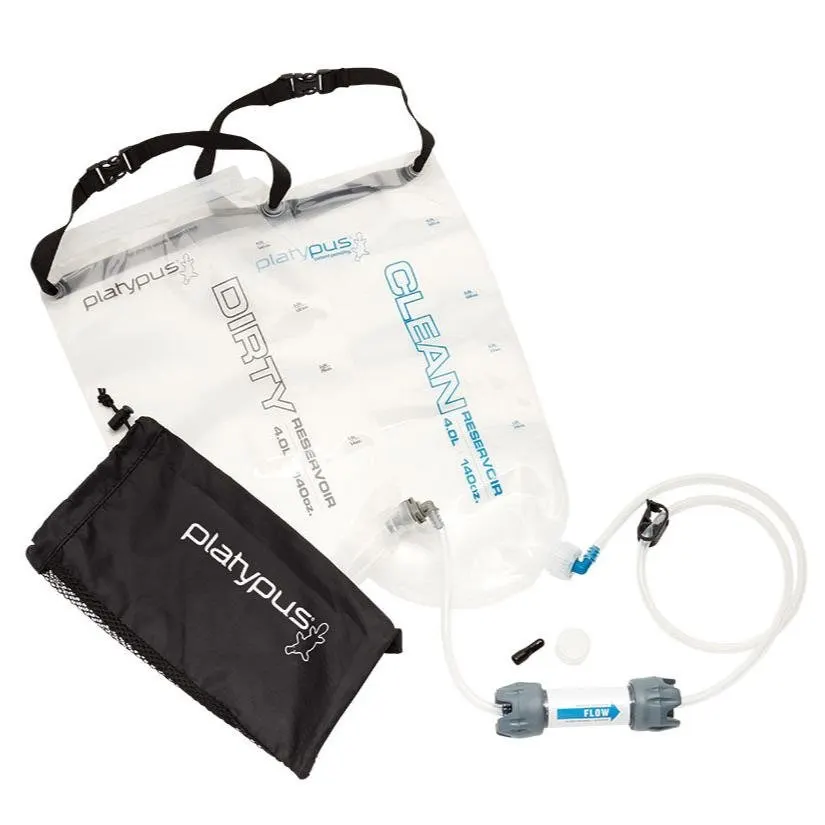
Platypus GravityWorks 4L Water Filter System
A 4-litre gravity filter with a 0.2-micron hollow-fibre element that Platypus says meets EPA/NSF guidelines for bacteria and protozoa, and removes particulates and microplastics. Fast and purely mechanical, with no pumping, but it does not remove viruses or chemicals, so it suits fresh-water sources and campground taps rather than water that may carry viruses.
For: Fast-flow squeeze bottle filter
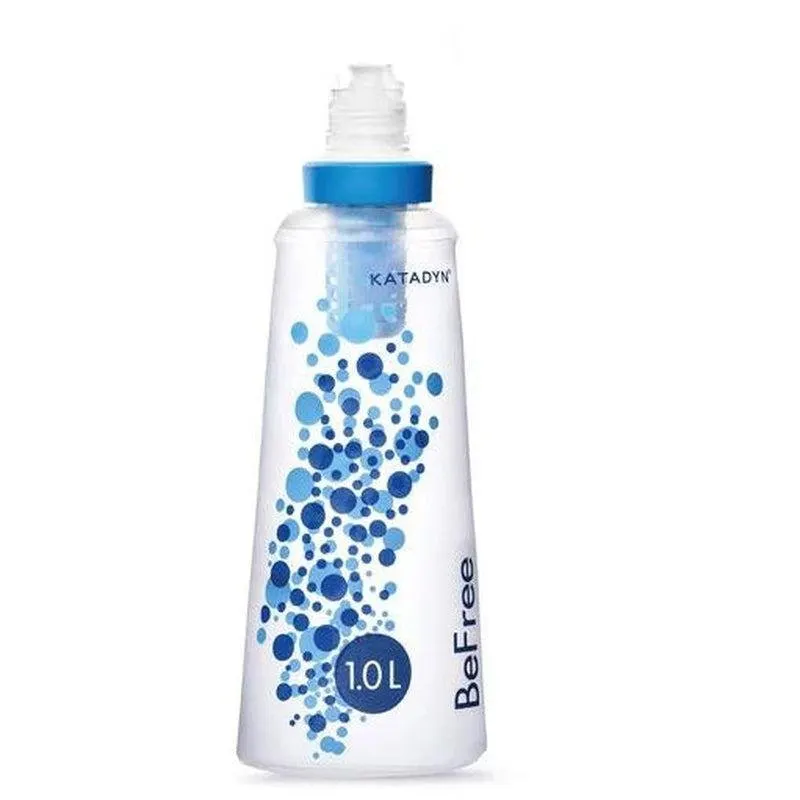
Katadyn BeFree 1.0L Collapsible Water Filter
A 1-litre soft flask with Katadyn's 0.1-micron hollow-fibre filter, which Katadyn says removes bacteria, protozoa and microplastics at up to 2 L/min. It does not remove viruses. The Amazon listing is titled "BeFree AC 2-Stage"; the activated-carbon insert in that version reduces chlorine, taste and odour but does not make it a purifier. A light backup for clear fresh-water sources.

For: No-wiring jug sinks
Whale Babyfoot GP4618 Manual Galley Foot Pump
A self-priming, foot-operated galley pump with 1/2-inch hose connections that delivers water only while you press it. It's the simplest way to get water from a jug to a van sink with no wiring, but its 5 ft suction lift and lack of a published potable certification set its limits.