Van Life Grocery Shopping: A Practical Strategy
How to grocery shop efficiently when your fridge is 35 liters and your nearest store is two hours away. Frequency, what to buy fresh vs shelf-stable, and the apps that find rural grocery stores.
Disclosure: As an Amazon Associate I earn from qualifying purchases. Links to Amazon on this page are affiliate links: if you buy through one, VanLifeKitchens.com may earn a commission at no extra cost to you. Read our affiliate disclosure.
The frustration of grocery shopping in van life
Grocery shopping in a house is boring. Grocery shopping in a van is a logistical puzzle that can eat half your day if you let it. You park a 20-foot rig in a lot designed for sedans. You walk inside, forget the layout is different from the last store 400 miles back, and end up buying three things you already have because you can't remember what's in the fridge you left running in the parking lot. Then you get back to the van, realize the milk won't fit, and have to rearrange the entire galley while a toddler cries in the next slot.
This happens to everyone. It is near-universal for the first few months, and it happens to nearly every full-timer. The mistake most new van lifers make is treating grocery shopping like they did at home: one big weekly haul, a full cart, a plan that assumed a 20-cubic-foot fridge and a pantry the size of a closet. In a van, that approach wastes food, wastes money, and wastes the thing you actually came out here for, which is time outside.
The good news: once you build a rhythm around the van's constraints instead of fighting them, grocery shopping becomes one of the easiest parts of life on the road. You stop overbuying. You stop throwing out wilted spinach. You stop driving 60 miles out of your way because you forgot onions. This guide is the cadence, the apps, the list, and the strategies that actually work when your kitchen has 35 liters of cold storage and your nearest Trader Joe's is in another time zone.
Shopping frequency: 3 days vs 7 days (the trade-off)
There are two real shopping cadences in van life, and which one you pick depends almost entirely on where you are.
The 3-day cadence works when you're in or near towns. You buy small amounts of fresh food, eat it before it goes bad, and never waste fridge space on stuff you're not going to touch for six days. This is ideal for national park gateway towns, coastal routes, and anywhere you're passing through civilization every other day anyway. You walk in with a list of eight items, walk out in ten minutes, and your fridge stays about 60 percent full at all times. Produce is crisp. Meat is never frozen-then-thawed-then-frozen. It is, honestly, how the rest of the world outside the United States has always shopped.
The 7-day cadence is for remote stretches. When you're heading into the Mogollon Rim, the Bears Ears, the Boundary Waters, or anywhere the next store is a full day of driving, you shop like a prepper. You fill the fridge, fill the pantry, fill the water tanks, and commit to a week of not seeing a checkout line. This costs you more in spoilage and requires tighter meal planning, but the trade is freedom to actually stay in the places you came to see.
The trap is doing the 7-day haul when you're actually on a 3-day route. You end up with a wilted mess by day five because you kept eating out or changed plans. The rule: if you know you'll pass a town within 72 hours, shop for 72 hours. If not, shop for seven full days and plan the meals before walking into the store.
What to buy fresh (and how much)
Fresh food is where van life gets expensive and wasteful if you're not careful. The principle is simple: buy what you can eat in three days, and buy only things that tolerate a bouncing vehicle.
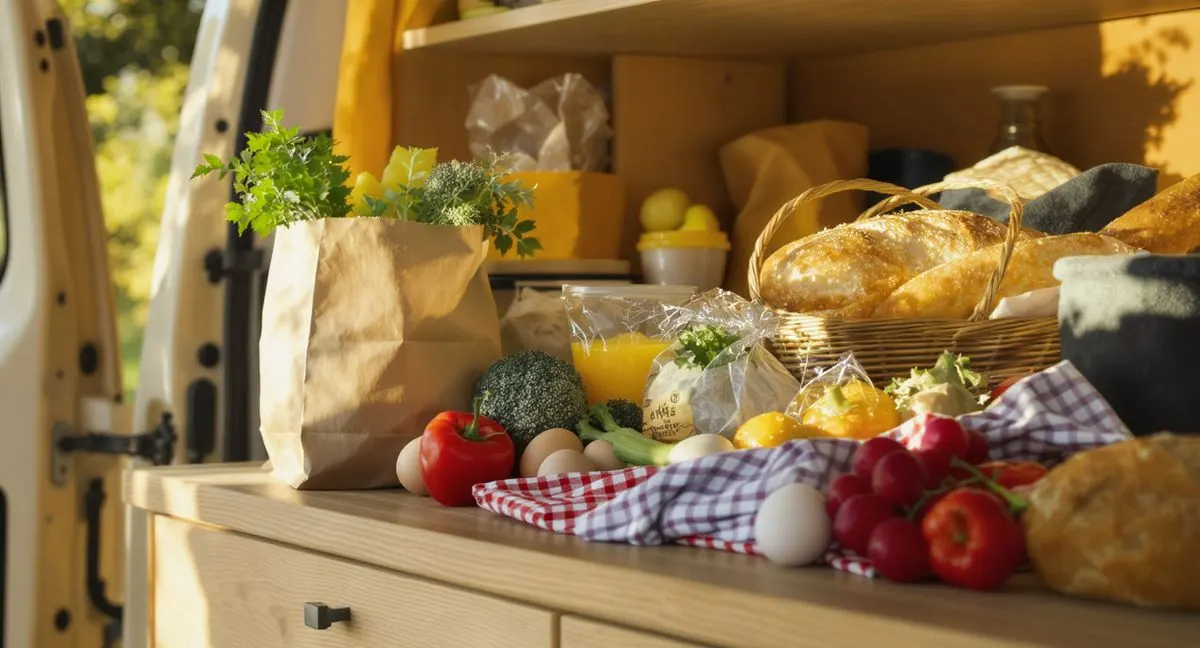
For produce, stick with hardy stuff. Carrots, cabbage, bell peppers, zucchini, sweet potatoes, yellow onions, garlic, limes, lemons, apples, and oranges all handle the road well and last a week or more. Avocados are worth it if you buy them at three different ripeness stages so they come into season over a week. Berries, lettuce, mushrooms, and fresh herbs are a no-go for full weeks. Buy them for 2 days max or skip them.
For protein, buy eggs (US supermarket eggs are washed, so the USDA says to keep them refrigerated; in the fridge they keep for several weeks), one pack of chicken thighs or ground beef to cook within a day or two, and pre-cooked sausage or bacon kept in the fridge and used by the package date. Dairy gets one block of hard cheese, one tub of Greek yogurt, and a half-gallon of whole milk or a shelf-stable oat milk. That's it. Anything more and you're playing Tetris every time you open the fridge door.
Quantities: for one person on a 3-day run, buy roughly 4 pieces of fruit, 3 days of vegetables for actual recipes, one protein, and the dairy basics. For two people on a 7-day run, roughly triple that and add a second protein.
What to buy shelf-stable
Your shelf-stable pantry is the backbone of van cooking because it doesn't care about your fridge space or your route. A well-stocked pantry means you can always make dinner, even on day six in the desert when the last fresh thing left is half a lime. For the full breakdown of what to carry and how to rotate it, see the van pantry shelf-stable staples guide. The short version: rice, dried pasta, canned beans, canned tomatoes, canned coconut milk, oil, vinegar, soy sauce, hot sauce, bouillon, oats, nut butter, tortillas (they hold weeks), and a mix of spices in small jars. For no-cook protein to keep in a door pocket or day bag, see the shelf-stable protein snacks guide.
Shelf-stable items are also where you save real money. A can of black beans is one of the cheapest things in the store and makes two meals. The same amount of protein from fresh chicken costs several times as much. As a rough planning rule of thumb (not a nutrition guideline), aim for something like 60 percent of weekly calories from shelf-stable sources and 40 percent from fresh. A split like that keeps the grocery budget under control while still eating like a human.
The 10-minute "express trip" shopping list
If you build a repeatable express list, you can be in and out of any grocery store in the country in under ten minutes. A good one looks like this and rarely needs to change:
Eggs, milk or oat milk, block cheddar, Greek yogurt, onions, garlic, bell peppers, carrots, one bag of spinach or a cabbage, apples, bananas, one protein (chicken thighs, ground beef, or sausage), tortillas, bread, and one impulse vegetable depending on what looks good.
That's 15 items. It fits in one basket, it covers three days of real meals, and every store will have every item. The key is not browsing. You walk the perimeter of the store in a predictable order (produce, dairy, meat, bread, checkout) and you don't go down aisles unless the pantry list needs something. Aisles are where the time and the money go.
For meal ideas that use exactly this kind of short list, the one-pot meals on the road guide has recipes built for exactly this kind of list.
Finding grocery stores in rural areas
Google Maps lies about rural grocery stores. It'll show you a "grocery store" that's actually a gas station with three boxes of cereal and a freezer full of taquitos. To find real food in the middle of nowhere, layer three tools.
First, iOverlander. It's built for overlanders and van lifers, and users tag actual full-service grocery stores along remote routes. Filter for "groceries" and read recent comments. Second, the store locator of the big supermarket chain in the state you're crossing. If one of its stores is within 60 miles, that's your answer, especially if it offers curbside pickup (more on that below). Third, search the county seat. Every county in the United States has a seat, and the seat almost always has at least one real supermarket. When you see you're going to be 150 miles from the nearest town you've never heard of, pull up a map, find the county you're driving through, and search the county seat plus "grocery."
For anything west of the Mississippi and rural, you're usually looking at a City Market (Kroger), an Albertsons, a Safeway, or a Smith's. In the Midwest it's Hy-Vee and Fareway. In the Southeast it's Publix, Food Lion, and Piggly Wiggly. Learning the regional chains saves you 30 minutes of guessing every time you cross a state line.
Curbside grocery pickup as a van life hack
Curbside grocery pickup is the single most underrated tool in van life grocery shopping. Here's why it works: you order in the store's app, you park in a numbered spot, a worker wheels your order to the van, and you're back on the road in a few minutes. You never go inside. You never fight a giant cart through a too-narrow aisle. You never get tempted by a display of cookies. Your rig stays parked in a reasonable spot instead of blocking traffic in a cramped lot.
Most large supermarket chains now offer it. Pickup fees and order minimums vary by chain and change often, so check the app before you count on free pickup. Most apps also remember your list between orders: keep a running list all week and hit "check out" the night before you'll be near a store. By the time you pull in the next afternoon, the order is waiting. It's the closest thing to a home grocery delivery experience you'll get on the road.
Whole Foods pickup through Amazon works the same way in cities if you have Prime, and it's genuinely the move when you want nicer produce and don't want to walk a Whole Foods with a cart full of expensive temptations. Kroger, Safeway, and HEB all have their own pickup apps too. Download them as you travel through their regions.
Food desert strategies
A food desert in van life is any stretch where the next real grocery store is more than 150 miles away. This is most of the Mountain West, huge chunks of Nevada, the Dakotas, parts of Appalachia, and nearly all of the good public land in Utah and Wyoming. Plan for it or suffer.
The strategy is simple: before you leave the last real town, you do a full 7-day shop plus a 2-day buffer. You top off water. You check propane. You accept that you won't see a full-size supermarket again until the weekend. Then you drive.
In the desert itself, the small stores in towns of 500 people are for emergencies only. Eggs and canned beans at a gas station in Hanksville cost far more than in town. You'll pay a steep markup, the selection is thin, and the produce is whatever didn't sell in the nearest city two weeks ago. Use them for milk, ice, and a treat when you've been out for a while, but don't build meals around them.
The other food desert move is trading with other van lifers at camp. This sounds weird until it happens. Someone has extra onions, you have extra tortillas, and an hour later you've both eaten better than either of you planned. Dispersed camping communities are surprisingly generous on night four in the middle of nowhere.
Cold storage planning
A 35-liter fridge is roughly the size of a large cooler. That's about enough space for a week of fresh food for one person, or four days for two, if you pack it right. Packing it right means removing cardboard packaging (it wastes space and insulates the food from the cold), pre-portioning proteins into flat freezer bags so they stack like books, and keeping a layer of dense cold items on the bottom because cold sinks.
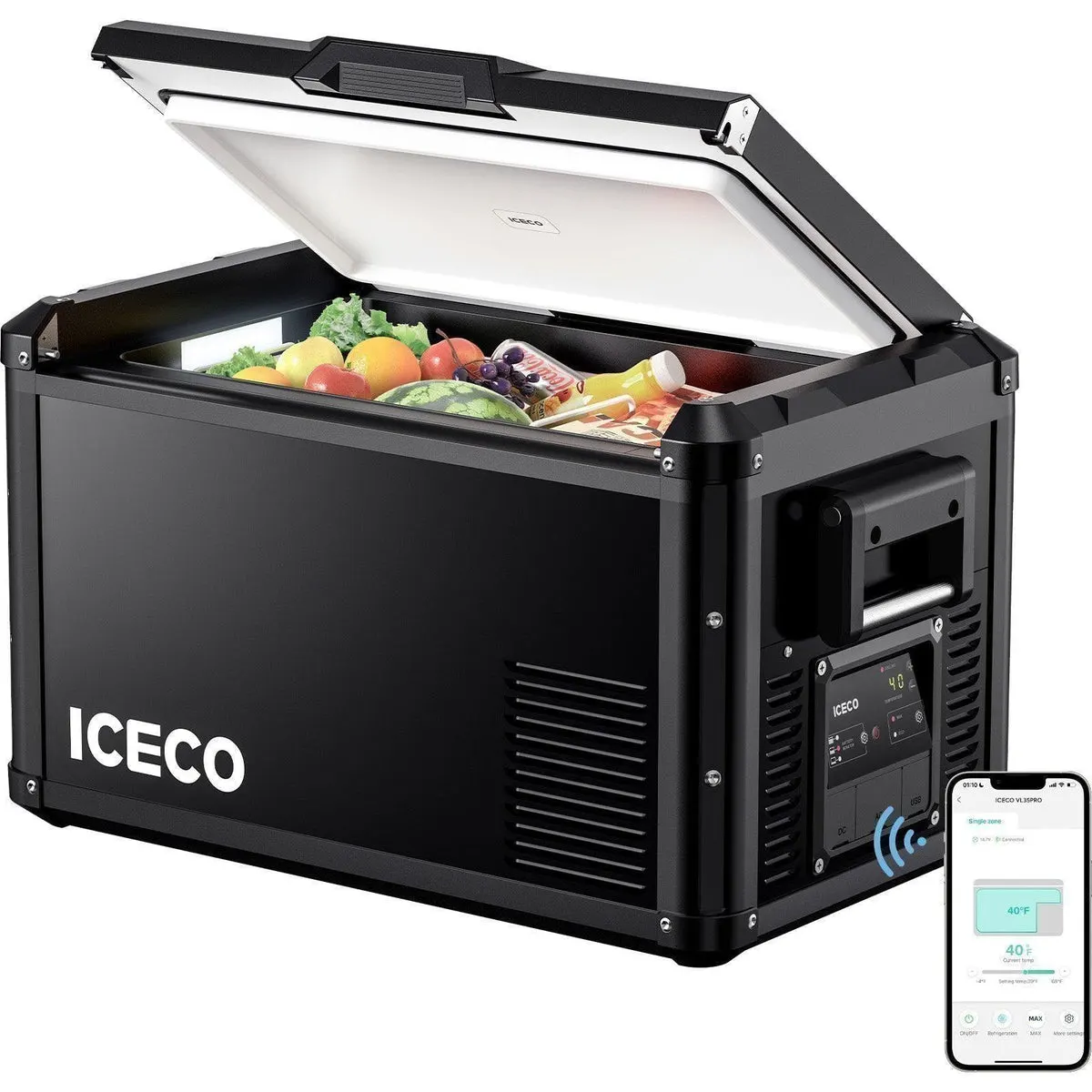
The Dometic CFX5 35 review covers a premium 36-liter fridge sized for a couple's 3–5 day stretch between grocery stops, and the Iceco VL35 ProS review covers the value alternative at a noticeably lower price. The short version: a good 12V compressor fridge is the single biggest quality-of-life upgrade in a van kitchen because it lets you actually shop for three days of fresh food without anxiety.
Plan your fridge in thirds. Top third: things you grab daily (yogurt, cheese, leftovers, drinks). Middle third: proteins and dairy. Bottom third: produce and the heavy cold anchor items. If you can't see something, you won't eat it, so don't bury anything important.
The weekly meal-planning rhythm
Meal planning in van life is not about spreadsheets. It's about knowing six meals you can make from your current list and picking one each night based on what needs to be used first. A mental rotation of maybe twelve meals covers most dinners: rice bowls, pasta with whatever vegetable is softening, tacos, stir-fry, curry from a can of coconut milk, eggs and toast for dinner, one-pot chili, grain bowls, and a few more.
Every shopping trip slots into one of those meal frameworks. There's no need to plan which meal happens on which night. Plan which ingredients will survive longest and cook the fragile stuff first. Spinach day one. Peppers day two. Cabbage day five. Carrots day six. This is the rhythm that stops waste.
Cost: what drives a van grocery bill
Cooking most meals in the van is far cheaper than eating out, and a single person cooking from the van and eating out maybe twice a week can keep the grocery bill modest with a mix of discount and regional chains and the occasional Whole Foods splurge. Couples eating primarily from the van spend less per person than solo travelers, since bulk staples and leftovers stretch further. Families with kids should expect groceries to be one of the biggest line items in the travel budget, and still feel tight.
The biggest variables are meat and eating out. If you cook beans-and-rice meals three nights a week, the grocery bill drops noticeably. If you grab coffee and pastries every morning, it doesn't matter what you do at the grocery store, you're losing the budget battle at the cafe.
FAQ
How often should I actually shop? Every three days if you're near towns, every seven if you're not. Don't try to do two weeks out of one haul. The spoilage will kill your savings.
Are discount supermarkets the best option for van life? For pantry staples and price, usually. For produce quality and variety, regional chains like Publix, HEB, or Kroger often do better. Buy the pantry load where it's cheapest and fresh food where it's best.
What about farmers markets? Great when they exist, almost never reliable enough to plan around. Hit them when you see them, but don't count on them for a weekly shop unless you're parked for a while.
How do I keep ice cream or frozen stuff? Most 12V compressor fridges, including the 35-liter models above, can be set below freezing, but a single-zone fridge then freezes everything inside it. To keep frozen food and fresh food at the same time you need a dual-zone fridge, or you accept that frozen items will slowly thaw in a fridge set to normal fridge temperature and must be eaten or cooked once thawed.
Do I need a Costco membership? Only if you travel with a partner or family and have serious storage. For solo van lifers, the pack sizes are wrong and you'll throw half of it out.
What's the one thing I should stop buying? Bagged salad. It rots in 48 hours, takes up huge fridge real estate, and costs far more per serving than a cabbage. A head of cabbage lasts two weeks and does the same job.
Products covered in this guide
Disclosure: As an Amazon Associate I earn from qualifying purchases. Links to Amazon on this page are affiliate links: if you buy through one, VanLifeKitchens.com may earn a commission at no extra cost to you. Read our affiliate disclosure.

More in Meal Prep
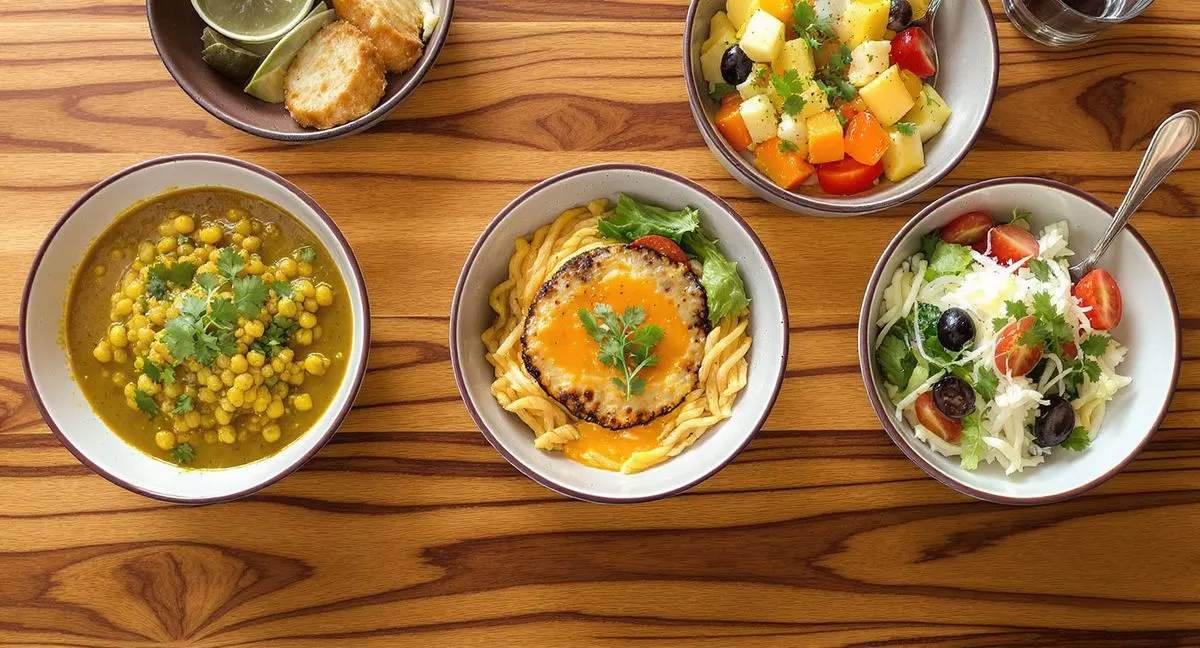
5 Vegetarian Van Life Meals That Don't Get Boring
Five vegetarian van recipes from mostly shelf-stable ingredients, 30 minutes or less in one or two pans, plus a weekly rotation to beat menu fatigue.
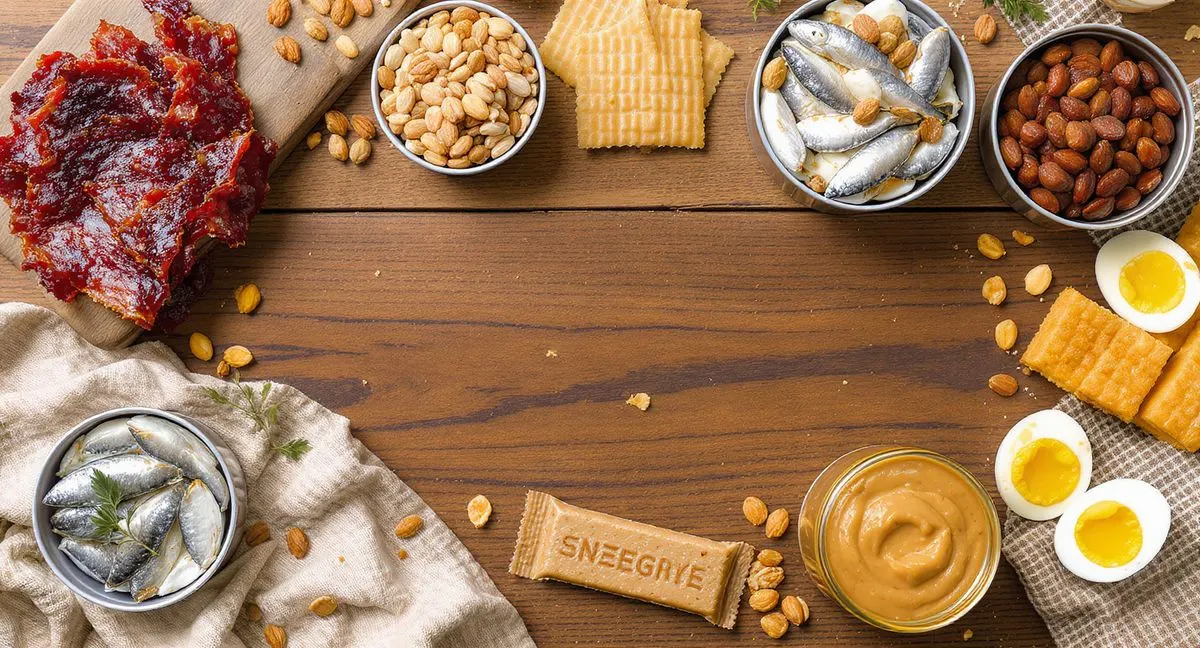
The Best Shelf-Stable Protein Snacks for Van Life
Twenty protein-rich snacks that don't need refrigeration — from jerky and trail mix to sardines and energy bars. The actual nutrition numbers, the brands worth buying, and how much to keep on hand.

How to Make Real Espresso in a Van (Without an Expensive Machine)
The three methods that actually produce real espresso in a van kitchen — the Wacaco Picopresso lever press, the Bialetti stovetop moka, and the AeroPress with a Prismo adapter. Plus the grinder question that matters more than the machine.