5 One-Pot Meals for Life on the Road
Real recipes for van kitchens — fast, delicious, one pan, and built around shelf-stable pantries.
Disclosure: As an Amazon Associate I earn from qualifying purchases. Links to Amazon on this page are affiliate links: if you buy through one, VanLifeKitchens.com may earn a commission at no extra cost to you. Read our affiliate disclosure.
Why one-pot meals are the soul of van cooking
There is a specific moment, usually around day four of a trip, when you realize your rig smells faintly of dish soap and yesterday's garlic. The sink is half-full, the drying rack is full, and the jug of fresh water you filled up in town is already half gone. This is the moment most van cooks learn, the hard way, that one-pot cooking is not a style choice — it is infrastructure.
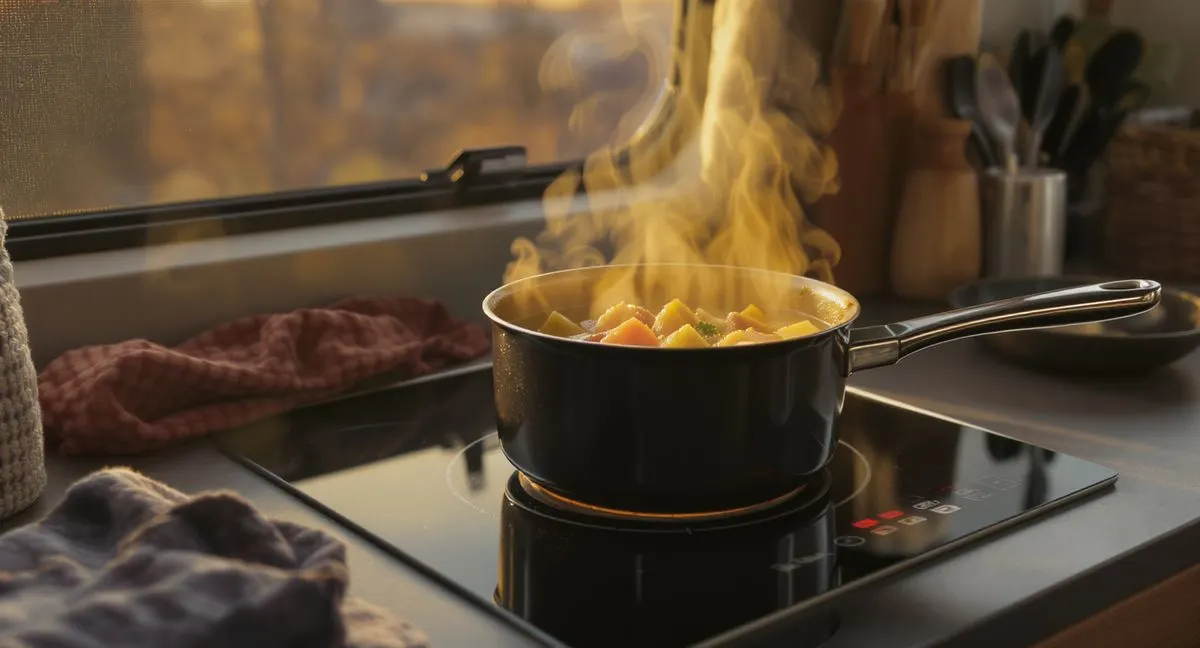
In a van, every extra pan is more greywater, more scrubbing under a trickle from a foot pump, more counter space lost in a kitchen that doubles as your office. And if you are running an induction burner off a lithium bank, every extra minute of simmering is watt-hours you could have spent running the fan.
The case for one-pot cooking comes down to four things:
- Water. A sink-full of dishes uses two to four liters. If you carry 40 liters, that is ten percent of your supply for one dinner. One pot and one plate cuts that by more than half.
- Storage. Every pot you dirty is one you cannot nest back until it is washed.
- Cleanup. In a tight galley, dirty dishes are a physical obstacle. You cannot make coffee tomorrow until you deal with tonight's skillet.
- Power budget. Running two induction burners at once doubles the draw. Most portable units are rated at 1,200 to 1,800 watts on their highest setting; at a simmer they cycle and average much less, but how much less depends on the unit, the pot and the setting. The Power Calculator is the fastest way to see what that means in watt-hours per meal.
One-pot cooking is not about deprivation. It is about a dinner rotation that is genuinely delicious and gentle on every finite resource in the rig.
The minimum kit
You do not need much, but what you have should be good. Cheap thin pans scorch and warp on induction — not what you want when water and propane are precious.
The hardware
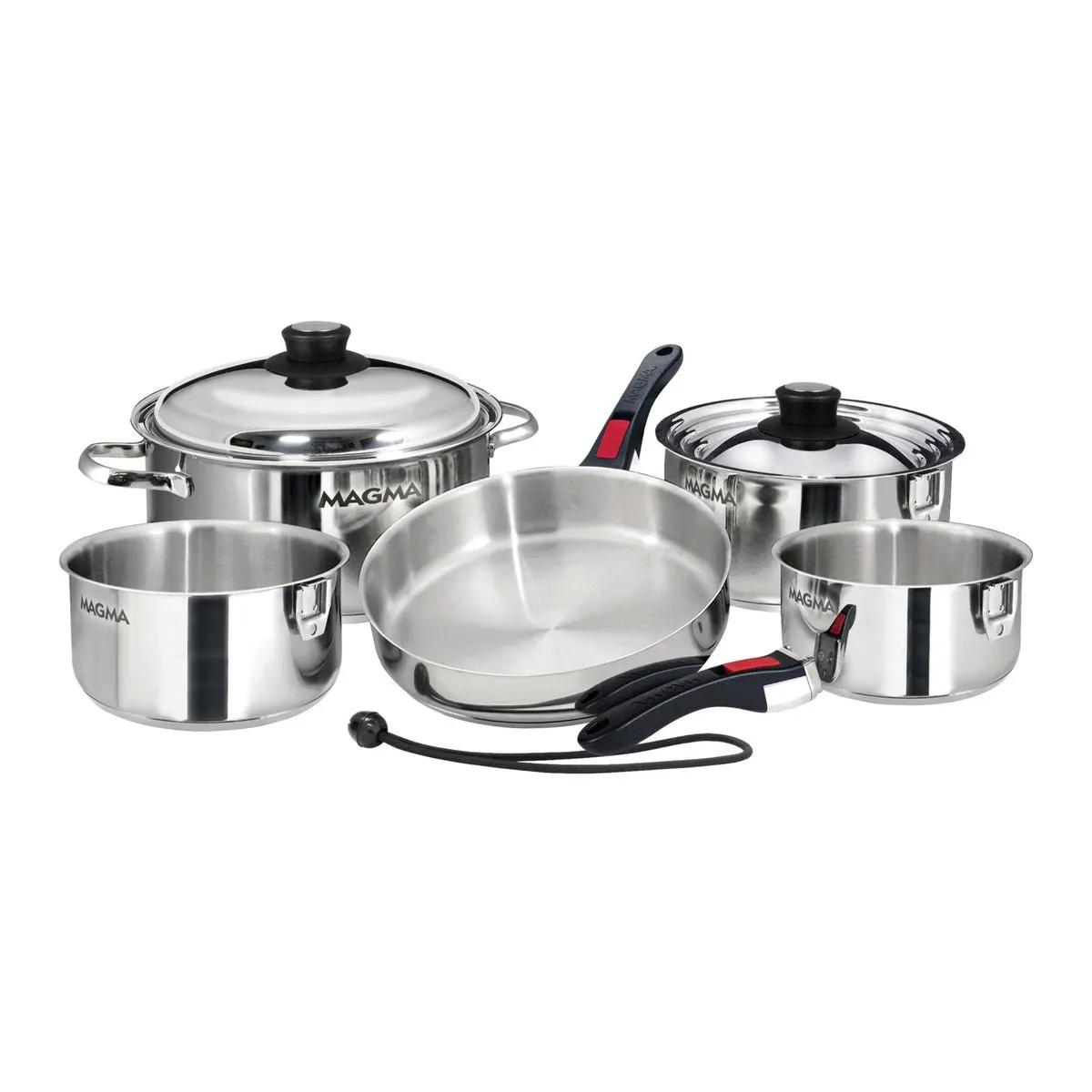
- One 3L (about 3 qt) pot with a tight lid. Soup, stew, rice, pasta, dal. The 3 qt sauce pan from the Magma nesting set is a solid baseline because it nests and has a heavy tri-clad base; step up to its 5 qt stock pot when you double a recipe. If you'd rather buy one pot than a set, the Tramontina Signature Tri-Ply 3-quart saucepan is clad stainless with an aluminium core, comes with a stainless lid and is listed by Tramontina for induction. It doesn't nest, so give it a fixed spot in a drawer.
- One 10-inch lidded skillet. Stainless or hard-anodized, with a lid that actually seals.
- One 8-inch chef's knife and a flexible cutting board. A full-size knife makes prep faster and safer than a paring knife. A flexible board funnels chopped onion into the pot and stores flat.
- One wooden spoon, one silicone spatula, tongs.
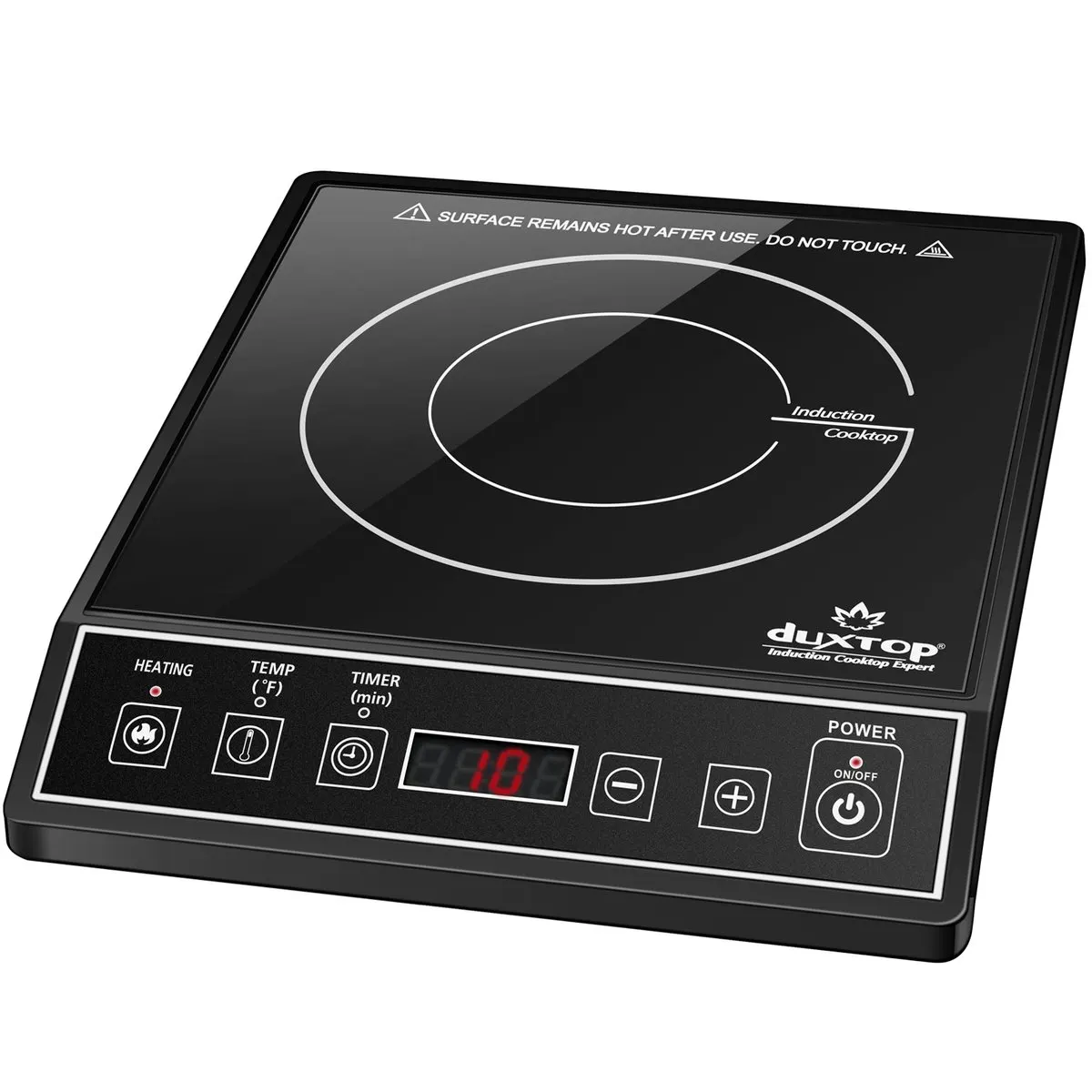
- A portable induction burner. The Duxtop induction cooktop is a widely sold 1,800 W induction unit that runs from a suitably sized pure sine inverter. Your pots need a magnetic base (test with a fridge magnet).
Where to cook
These recipes assume one burner. Inside the van, use induction (or a built-in cooktop that is rated and installed for vehicle use), and run the roof fan to clear steam and cooking smells. If you cook on a portable butane cassette stove or propane camp stove instead, cook outside: those stoves are manufacturer-labelled for outdoor use (Coleman and MSR, for example, say outdoor use only and warn against use inside vehicles, campers and tents because of carbon monoxide). Rain and cold are not exceptions; a cracked window, a roof fan or a CO alarm does not make a camp stove safe indoors. On a rainy night, that means induction inside, or a stove under an awning or tarp that is open on the sides, well away from the van's doors and windows. Butane also loses pressure in cold weather, so simmer times can run longer.
The short pantry
Everything here keeps without refrigeration for weeks or months.
- Olive oil, neutral oil, soy sauce, fish sauce, rice vinegar
- Salt, pepper, smoked paprika, cumin, coriander, chili flakes, curry powder, dried oregano
- Canned tomatoes, tomato paste in a tube, coconut milk, canned white beans, canned chickpeas, canned tuna
- Dried pasta, jasmine rice, red lentils, instant ramen, dried rice noodles
- Garlic, onions, shallots, ginger, lemons or limes
- Cured chorizo, miso paste, peanut butter, Thai red curry paste
With this kit and pantry, the five recipes below take no more than a quick produce stop.
Recipe 1: Smoky chorizo and white bean stew
The one for the first cold night of a trip. Tastes like you braised it for hours.
Ingredients (serves 2 generously)
- 150 g cured Spanish-style chorizo, sliced into half-moons
- 1 medium yellow onion, diced
- 3 garlic cloves, sliced
- 1 teaspoon smoked paprika
- 1 tablespoon tomato paste
- 1 can (400 g) crushed tomatoes
- 1 can (400 g) white beans, drained
- 200 ml water or stock
- 1 bay leaf if you have one
- Salt, pepper, olive oil
- A big handful of baby spinach or chopped kale (optional but good)
Steps
- Heat a splash of olive oil in the 3L pot over medium. Add the chorizo and cook 3 minutes until the oil runs red-orange.
- Add the onion and a pinch of salt. Cook 4 minutes until soft.
- Stir in the garlic, paprika, and tomato paste. Cook 1 minute until fragrant.
- Add the crushed tomatoes, beans, water, and bay leaf. Bring to a simmer, cover, and cook 12 minutes.
- Taste. Adjust salt. Stir in the greens until just wilted, about 1 minute.
Total time: 25 minutes. Serve with torn bread for mopping, or ladle it straight into a deep bowl and eat with a spoon. Swap the chorizo for a smoked sausage or even a can of drained chickpeas plus extra paprika for a vegetarian version.
Recipe 2: Coconut curry noodles
The one for a rainy week when you are down to one lime and a sad carrot in the bin. Fast, warming, genuinely great.
Ingredients (serves 2)
- 1 tablespoon neutral oil
- 2 tablespoons Thai red curry paste
- 1 tablespoon grated fresh ginger
- 1 can (400 ml) full-fat coconut milk
- 300 ml water
- 1 tablespoon fish sauce
- 1 teaspoon sugar or honey
- 150 g dried rice noodles (the flat kind)
- 1 carrot, cut into matchsticks
- 100 g any protein: shredded rotisserie chicken, leftover tofu, a can of drained chickpeas, or two eggs cracked in at the end
- Juice of half a lime
- Cilantro, scallion, chili oil to finish
Steps
- In the skillet over medium heat, fry the curry paste and ginger in the oil for 1 minute until it smells loud.
- Pour in the coconut milk and water. Add fish sauce and sugar. Bring to a simmer.
- Slide in the dried noodles and carrot. They will seem too long; they will soften. Push them under the liquid.
- Simmer 4 to 5 minutes, stirring, until noodles are tender.
- Stir in your protein to warm through. If using eggs, crack them in and let them poach for 2 minutes under the lid.
- Kill the heat. Squeeze in the lime. Top with anything green.
Total time: 15 minutes. Serve straight from the skillet into bowls, or eat it out of the skillet like an adult who has made choices. For variation, swap rice noodles for an instant ramen brick — seasoning packet discarded — and you have lunch.
Recipe 3: Shakshuka for one burner
Shakshuka is a natural one-pan dinner. It makes its own sauce and finishes in the pan you serve from.
Ingredients (serves 2)
- 2 tablespoons olive oil
- 1 medium onion, diced
- 1 red bell pepper, diced (optional if produce is thin)
- 3 garlic cloves, minced
- 1 teaspoon cumin
- 1 teaspoon smoked paprika
- 1/4 teaspoon chili flakes
- 1 can (400 g) whole peeled tomatoes, crushed by hand
- Salt and pepper
- 4 eggs
- Crumbled feta if you have it
- Bread, pita, or tortillas
Steps
- Heat the oil in the skillet over medium. Cook the onion and pepper with a pinch of salt for 6 minutes until soft and just starting to color.
- Add garlic and spices. Stir 30 seconds.
- Pour in the crushed tomatoes and 2 tablespoons of water. Simmer 5 minutes until thickened and glossy.
- Make four small wells in the sauce with the back of a spoon. Crack an egg into each. Salt the tops.
- Cover the skillet and reduce heat to low. Cook 4 to 6 minutes depending on how runny you like your yolks.
- Scatter feta, kill the heat, bring the whole skillet to the table on a folded towel.
Total time: 20 minutes. Serve with toasted pita or tortillas for scooping. Swap the eggs for a drained can of chickpeas warmed in the sauce if you are out of fresh eggs.
Recipe 4: Red lentil dal with rice, same pot
The fallback for when the fridge is empty and the nearest store is an hour away. Every ingredient is shelf-stable.
Ingredients (serves 2 to 3)
- 1 tablespoon neutral oil or ghee
- 1 medium onion, diced
- 3 garlic cloves, minced
- 1 tablespoon grated ginger
- 1 tablespoon curry powder or garam masala
- 1/2 teaspoon turmeric
- 1 cup (200 g) red lentils, rinsed
- 1 can (400 ml) coconut milk
- 500 ml water
- 1 teaspoon salt
- Juice of half a lemon
- To serve: cooked jasmine rice, a knob of butter, cilantro
Steps
- In the 3L pot, heat the oil over medium and cook the onion with a pinch of salt for 5 minutes.
- Add garlic, ginger, curry powder, and turmeric. Stir 1 minute.
- Add lentils, coconut milk, water, and salt. Bring to a simmer.
- Cover loosely and cook 15 minutes, stirring every few minutes so it does not catch on the bottom. The lentils should break down into a loose porridge.
- Finish with lemon juice. Taste and adjust salt.
Total time: 25 minutes. For the rice, boil it in the same pot the night before, or do the trick of cooking it first while you prep, then setting it aside in a bowl while the dal cooks in the same pot. Swap red lentils for yellow split peas if that is what the bulk bin gave you — add 10 minutes to the cook.
Recipe 5: Thai basil ground meat over rice
The fastest dinner in the rotation. With pre-cooked rice, it is ten minutes.
Ingredients (serves 2)
- 1 tablespoon neutral oil
- 4 garlic cloves, roughly chopped
- 1 fresh chili or 1/2 teaspoon chili flakes
- 350 g ground pork, chicken, or turkey
- 1 tablespoon soy sauce
- 1 tablespoon fish sauce
- 1 tablespoon oyster sauce (keeps unopened for ages)
- 1 teaspoon sugar
- A large handful of Thai basil or regular basil
- To serve: cooked jasmine rice, a fried egg per person if you are feeling it
Steps
- Get the skillet screaming hot over high heat. Add oil.
- Throw in the garlic and chili. Stir 10 seconds.
- Add the ground meat. Break it up and let it brown hard without stirring too much, about 4 minutes.
- Add soy, fish sauce, oyster sauce, and sugar. Toss 1 minute until glossy.
- Kill the heat. Fold in the basil until just wilted.
Total time: 12 minutes if rice is pre-cooked, 25 if not. Serve over rice with a crispy fried egg on top. Swap basil for baby spinach in a pinch; swap ground meat for crumbled firm tofu.
Shopping and storage tips for van pantries
A van pantry lives or dies by rotation.
- Buy once, eat for a week. The five recipes share a core of onions, garlic, canned tomatoes, coconut milk, and one fresh protein.
- Onions, garlic, and potatoes go in a breathable basket, not plastic. They last two to three weeks loose.
- Citrus holds ten days at room temp. Longer than you think.
- Tomatoes, herbs, and greens die first. Buy them last, use them first.
- Keep supermarket eggs in the fridge. US supermarket eggs are washed, which removes their natural protective coating, so the USDA says to refrigerate them and not leave them out for more than two hours. Unwashed farm eggs are a different case; ask the farm how they were handled.
- Coconut milk, canned beans, and cured sausage are your emergency pantry. With these three, you have dinner.
A good van pantry is not a stockpile. It is a rotation. Five cans deep on each staple, topped up every shop.
Adapting these recipes
The recipes above are starting points. Every one of them flexes.
- Scaling up. Doubling for four works in the same 3L pot, except the Thai basil stir-fry — cook it in two batches so the skillet stays hot.
- Scaling down. Solo? Halve everything except the aromatics. Keep onion, garlic, and ginger full strength so the dish still has backbone.
- Protein swaps. Any recipe with meat works with a drained can of beans. Any recipe with beans works with leftover shredded chicken. The sauce is the recipe; the protein is the variable.
- Spice swaps. Out of smoked paprika? Use regular paprika plus a drop of liquid smoke, or accept a less smoky dish.
- Grain swaps. Rice, couscous, orzo, and small pasta shapes are interchangeable. Couscous is the fastest — five minutes off the heat with boiling water.
- Solar slow-cooking. On a clear, sunny day, the dal or the bean stew can slow-cook outdoors in a small solar oven such as the Sunflair Mini, which comes with one collapsible silicone pot. Sunflair says conventional recipes take double the time or more and that cooking isn't possible under full cloud, so start by late morning and finish on the stove if the sun fades.
- Leftovers. Cook once, eat twice. A box with latching lids is less likely to spill the second night's dal across the fridge than a plate under foil; the Joseph Joseph Nest Lock set has five sizes that nest when empty. Let the food cool before it goes into a 12 V fridge.
Final thoughts
The meals people remember from van life are rarely the complicated ones — more often it is dal and rice on the induction burner in a rainstorm, side door cracked, watching the ocean disappear into fog. One pot, two onions, a can of coconut milk, a handful of lentils. It cost almost nothing, used almost no water, and took 25 minutes.
Van cooking is not about making do. It is about paring back until every ingredient and every minute earns its place. Fewer dishes means more time outside. Less water means more days off-grid. Less cleanup means dinner is a pleasure again, not a chore.
Pick two of these recipes this week. Cook them back-to-back. A rotation of five or six dishes is plenty for most trips, and the rig will thank you for every pan you did not dirty.
Products covered in this guide
Disclosure: As an Amazon Associate I earn from qualifying purchases. Links to Amazon on this page are affiliate links: if you buy through one, VanLifeKitchens.com may earn a commission at no extra cost to you. Read our affiliate disclosure.



More in Meal Prep
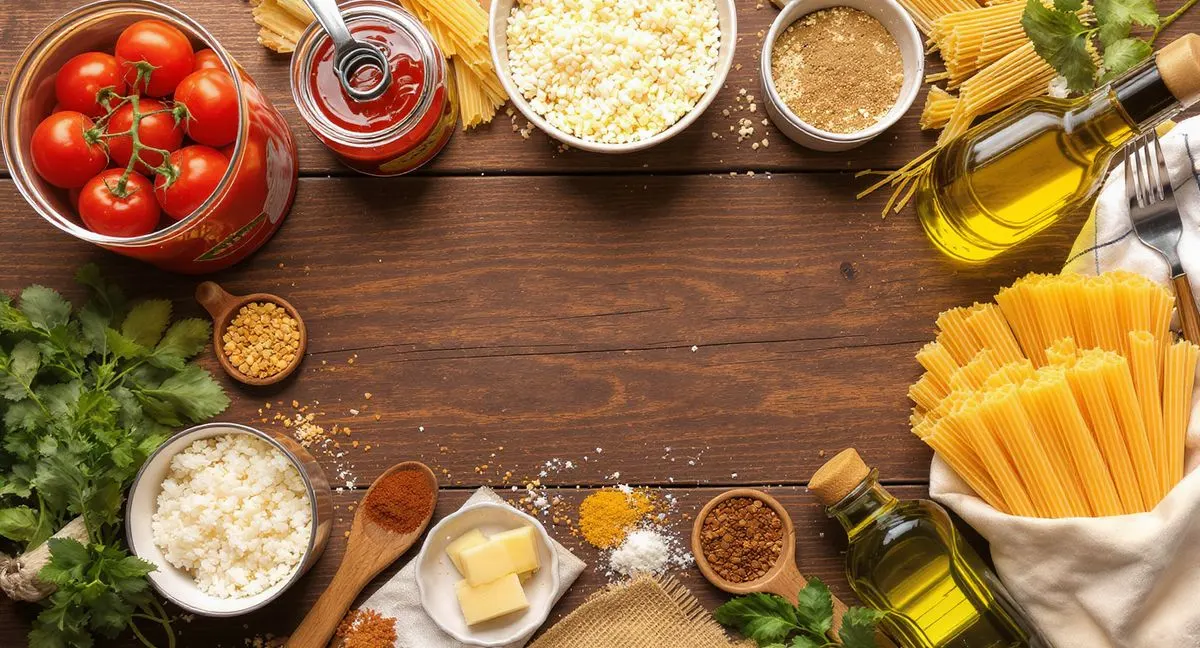
The Van Pantry: 25 Shelf-Stable Staples for Real Meals
A shelf-stable van pantry: 25 staple ingredients that combine into 30+ meals without refrigeration, with storage and restocking tips.
Van Life Grocery Shopping: A Practical Strategy
How to grocery shop efficiently when your fridge is 35 liters and your nearest store is two hours away. Frequency, what to buy fresh vs shelf-stable, and the apps that find rural grocery stores.
5 Vegetarian Van Life Meals That Don't Get Boring
Five vegetarian van recipes from mostly shelf-stable ingredients, 30 minutes or less in one or two pans, plus a weekly rotation to beat menu fatigue.