The Best Shelf-Stable Protein Snacks for Van Life
Twenty protein-rich snacks that don't need refrigeration — from jerky and trail mix to sardines and energy bars. The actual nutrition numbers, the brands worth buying, and how much to keep on hand.
Disclosure: As an Amazon Associate I earn from qualifying purchases. Links to Amazon on this page are affiliate links: if you buy through one, VanLifeKitchens.com may earn a commission at no extra cost to you. Read our affiliate disclosure.
Why protein matters more in a van than at home
If you cook at home, your protein supply is refrigerated — chicken, beef, eggs, yogurt, cheese, tofu, fish. In a van, the fridge is smaller, the restock cadence is longer, and the protein options shrink fast if you depend on cold storage alone. On a five-day stretch between grocery runs, a 35-liter van fridge is tapped out by day three on real cold protein. After that, you either fall back on rice-and-pasta calories with no real protein, or you pre-stocked shelf-stable protein and eat well all the way to the next town.
Protein matters in van life for three reasons beyond general nutrition. First, hiking, building, driving, and long days outside burn calories faster than office work, and those calories need protein to support recovery. Second, high-protein snacks keep you full between irregular meal times, which matters when lunch happens at a trailhead two hours late. Third, low-blood-sugar irritability is a real problem when you are living with another human in 80 square feet, and protein flattens the blood sugar curve. A well-fed van cook is a pleasant van cook.
This guide walks through twenty shelf-stable protein sources that actually survive the van pantry — not theoretical ones — with real grams-of-protein numbers, honest notes on taste and storage, and the brands worth buying. Most of this list stores unopened at room temperature for six to twelve months or longer. The exceptions (hard cheese, opened cured meats, opened jars) are flagged in their entries: follow the storage line on each package, and refrigerate anything whose label says "refrigerate after opening."
The twenty shelf-stable protein sources
1. Beef jerky (9–13g protein per ounce)
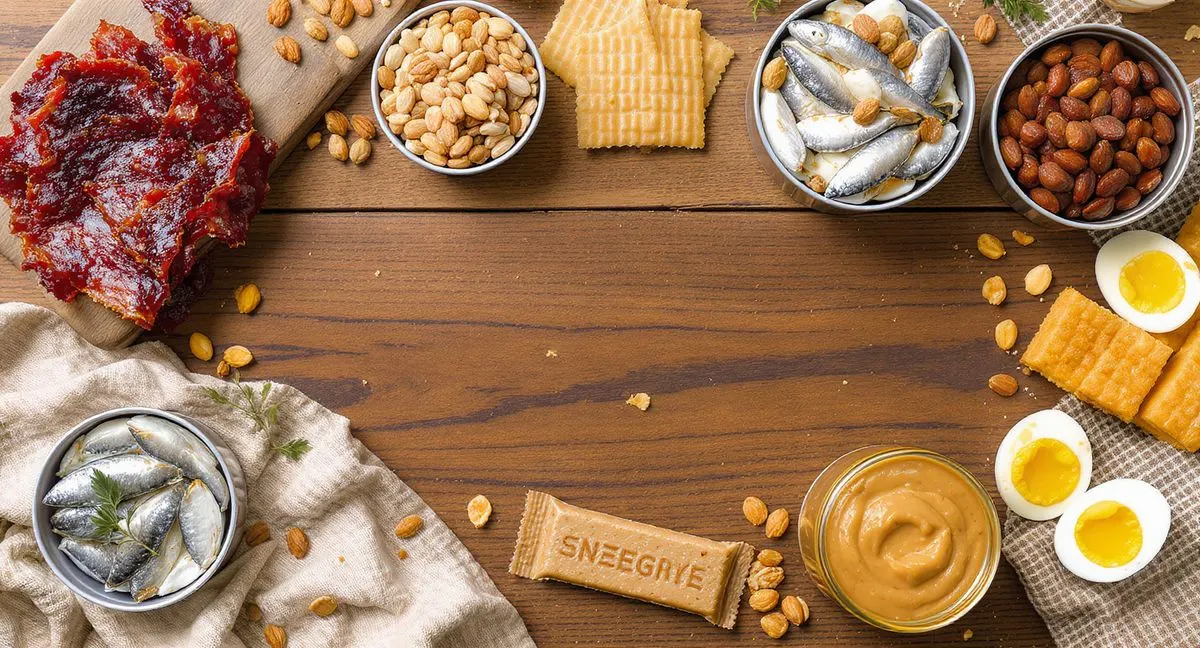
The default answer. Quality varies enormously — supermarket jerky is sugar and soy sauce wrapping a thin strip of low-grade meat. Real jerky from a small producer is dense, chewy, high-protein, and stores for months unopened. Shop brands like Country Archer, Chef's Cut, and Three Jerks; avoid anything with corn syrup in the first three ingredients. Typical bag: 2.5 oz, 30g protein, 250 calories.
2. Canned tuna (22g protein per 3 oz can)
The most cost-efficient protein on this list. A 3 oz can of StarKist or Wild Planet tuna in water is one of the cheapest items in the canned aisle and provides 22 grams of high-quality protein with almost no carbs and minimal fat. Tuna in olive oil bumps the calories and the flavor substantially — worth the small extra cost per can for real meals. Wild Planet's skipjack tuna in olive oil is a widely recommended mass-market option. Store cans in the pantry, rotate stock every six months.
3. Canned sardines (23g protein per can)
Sardines are the underrated king of van protein. A 3.75-oz tin provides about 23g protein, significant omega-3s, calcium (if you eat the bones, which you should), and enough fat to make them genuinely satisfying. King Oscar, Wild Planet, and Matiz are brands that owners and food writers commonly recommend. Eat straight from the tin on crackers, or flake into pasta with olive oil and lemon.
4. Canned chicken (21g protein per 3 oz serving)
Canned chicken is utilitarian. It is not the most beautiful food, but a can of Swanson white meat chicken turns into chicken salad, tortilla filling, or soup protein in about two minutes. 21g protein per serving, typically 140 calories. Store for 2+ years unopened.
5. Canned salmon (17–22g protein per serving)
Wild Alaskan pink or red salmon canned in water is the van fish protein answer. A 5-oz can of Bumble Bee pink salmon is budget-friendly and provides roughly 21g protein plus salmon's omega-3 profile. Eat it straight on bagels, or mix with mayo and dijon for a salmon salad sandwich.
6. Tuna/salmon pouches (no drain required)
StarKist and Bumble Bee sell tuna and salmon in foil pouches instead of cans. Same protein per serving as canned, but with two big advantages: no can opener needed, and no drain step. For a van pantry where dishes are water-constrained, the zero-drain factor matters. The pouches are slightly more expensive per ounce than cans but worth it for convenience.
7. Hard cheese (cheddar, parmesan) (7g protein per oz)
Hard, aged cheeses are low in moisture and tolerate time out of the fridge far better than soft ones, especially in a wax-rind or vacuum-sealed block. In practice that means days, not months, at warm van temperatures: they sweat oil and can mould, so keep them in the fridge when you can and treat room-temperature storage as a short-term fallback. Parmigiano Reggiano, aged cheddar, dry jack, and pecorino are the most forgiving. Soft cheeses (mozzarella, brie, chevre) do not. 7g protein per oz and meaningful calcium and fat make hard cheese an excellent van protein source.
8. Hard salami / dry-cured sausage (13g protein per oz)
Dry-cured meats — salami, pepperoni, soppressata, chorizo — are shelf-stable by design. The curing process removes enough water that bacteria cannot grow. A whole, uncut dry salami from Olli or Columbus is labelled for room-temperature storage until opened; once cut, follow the package instructions (many say to refrigerate after opening) and use it within the time the label gives. 13g protein per ounce, high fat, high flavor, pairs with the hard cheese above for the easiest van lunch on earth.
9. Peanut butter (7g protein per 2 tbsp)
A 16-oz jar of peanut butter holds roughly 90 grams of protein (about 14 servings of 7g) and stores for months unopened; natural styles keep best in the fridge once opened, or they separate and can go rancid faster in heat. Natural peanut butter (peanuts + salt) is slightly higher protein than the sweetened versions. Pairs with bread, apples, celery, crackers, or a spoon. Jif Natural, Santa Cruz Organic, and Teddy are all high-quality mass-market picks.
10. Almond butter (7g protein per 2 tbsp)
Higher in monounsaturated fats than peanut butter, slightly higher protein, significantly more expensive. Several nut-butter brands sell single-serve squeeze packs; check the label for storage after opening. Stores as long as peanut butter.
11. Shelf-stable tofu (Mori-Nu silken) (4g protein per 1/4 block)
Mori-Nu silken tofu is packaged in aseptic boxes that store at room temperature for 6–12 months. Four grams of protein per quarter-block is lower than other items on this list, but it is one of the few shelf-stable soft proteins that works for smoothies and miso soup. Niche but valuable for vegetarian van kitchens.
12. Lentils, dry (18g protein per 1 cup cooked)
A pound of dry lentils is one of the cheapest proteins you can buy and yields 5–6 cups of cooked lentils at 18g protein each. Lentils cook in 20 minutes with no soak time and are the best shelf-stable protein for making real hot meals. Red lentils cook fastest (15 min), green lentils hold their shape better, French lentils are the fanciest. Pair with rice for complete protein. To get two meals from one cooking session, cook a double batch of lentil soup or dal at breakfast and carry a portion in a vacuum food jar such as the Thermos Icon 16 oz, which Thermos says keeps food hot up to 10 hours as a best case. Preheat the jar with boiling water and fill it with the lentils at a full simmer, well above 140°F.
13. Dried black beans / chickpeas (15g protein per 1 cup cooked)
Dry beans are cheap, shelf-stable for years, and extremely high protein for the weight. The downside is cook time — 45–90 minutes of simmering, which burns gas or battery on a van cooktop. For this reason, canned beans are often a better van answer.
14. Canned beans (7g protein per 1/2 cup)
Canned black beans, pinto beans, chickpeas, and kidney beans are shelf-stable for 2+ years and ready to eat with no cooking. Each 15-oz can provides about 25 grams of protein total. Rinse before using to cut sodium. Bush's, Goya, and Eden Organic are the top mass-market picks.
15. Protein bars (10–20g protein per bar)
Protein bars are the easy answer and the correct answer for moving-vehicle snacking. Quality varies enormously. The best brands for real food vs processed shake-mix-in-a-wrapper: RXBar, Kind Protein, and Larabar for whole-food ingredients; Quest and Built Bar for higher protein per calorie. Typical bars: 10–20g protein, 200–250 calories, 6–12 months shelf life.
16. Jerky alternatives: turkey, bison, chicken, salmon (9–13g per oz)
Turkey jerky (Chef's Cut), bison jerky (Tanka), chicken jerky (Country Archer), and even salmon jerky (Nuchas) are all legitimate jerky alternatives with similar shelf life and protein content to beef jerky. Same caveats on sugar content.
17. Canned beef / corned beef (14g protein per serving)
Canned corned beef and roast beef hash are unglamorous, very shelf-stable, and useful for hot meals. Hormel and Libby's are the standards. Not the best-tasting item on this list, but it works for skillet dinners and emergency protein.
18. Powdered milk / powdered whey protein (8–25g protein per serving)
Nido and Carnation powdered milk provide about 8g protein per 1/4 cup, stored indefinitely in sealed cans. Whey protein powder typically provides around 20–25g of protein per scoop; check the label for your brand. Stir into oatmeal, coffee, smoothies. Not for everyone — the taste and texture are an acquired taste — but density-wise it is the most efficient shelf-stable protein by weight.
19. Boiled eggs in vinegar brine (6g per egg)
Commercially processed, shelf-stable jars of pickled eggs can be stored unrefrigerated until opened (check the label); refrigerate once opened. About 6g protein per egg. Don't keep homemade pickled eggs at room temperature: food-safety agencies say they must be refrigerated because of botulism risk. Niche but if you like pickled food, a jar in the pantry gives you instant deli-style protein.
20. Trail mix with nuts (5–7g protein per 1/4 cup)
A good trail mix with heavy nut content (almonds, cashews, peanuts) hits 5–7g protein per quarter cup, plus fat, plus complex carbs. Make your own for control over the sugar content — most commercial mixes are candy-heavy. A 1:1:1 mix of almonds, cashews, and raisins is a solid default.
How much to keep on hand
For one person for a week between grocery runs, plan roughly 100g of protein per day from combined sources, 60g of it ideally from shelf-stable items that don't rely on the fridge. A realistic weekly pantry stock for one van-dwelling person:
- 3 cans tuna or salmon (about 65g protein)
- 1 bag of jerky (about 30g)
- 1 16-oz jar peanut butter (about 90g)
- 1 pound lentils or 4 cans beans (about 100g)
- 1 block hard cheese + 1 salami (about 70g; the cheese is best kept in the fridge)
- 4 protein bars (about 50g)
Total: roughly 400g of protein, or about a week at 60g a day from the pantry. These figures are approximate, from typical nutrition labels; check the labels on what you actually buy. Double for two people, or scale by trip length.
What to skip
Not every "protein snack" marketed as shelf-stable actually is. Skip:
- Greek yogurt cups (need refrigeration, almost always)
- String cheese (most is labelled "keep refrigerated"; follow the package, and it gets greasy in heat)
- Fresh deli meat "chubs" (shelf-stable claims often mean "weeks not months")
- Most "protein cookies" (heavily processed, protein comes from isolate blends that don't satisfy like whole-food sources)
- Anything with whey protein in the first 3 ingredients claiming "shelf-stable" — it is usually a euphemism for "extremely processed"
See the van pantry shelf-stable staples guide for the full pantry context this list slots into, and the one-pot meals guide for recipes that use these shelf-stable proteins as the starting point.
More in Meal Prep
How to Make Real Espresso in a Van (Without an Expensive Machine)
The three methods that actually produce real espresso in a van kitchen — the Wacaco Picopresso lever press, the Bialetti stovetop moka, and the AeroPress with a Prismo adapter. Plus the grinder question that matters more than the machine.
5 One-Pot Meals for Life on the Road
Real recipes for van kitchens — fast, delicious, one pan, and built around shelf-stable pantries.
The Van Pantry: 25 Shelf-Stable Staples for Real Meals
A shelf-stable van pantry: 25 staple ingredients that combine into 30+ meals without refrigeration, with storage and restocking tips.