Alpicool C20 12V Portable Compressor Fridge
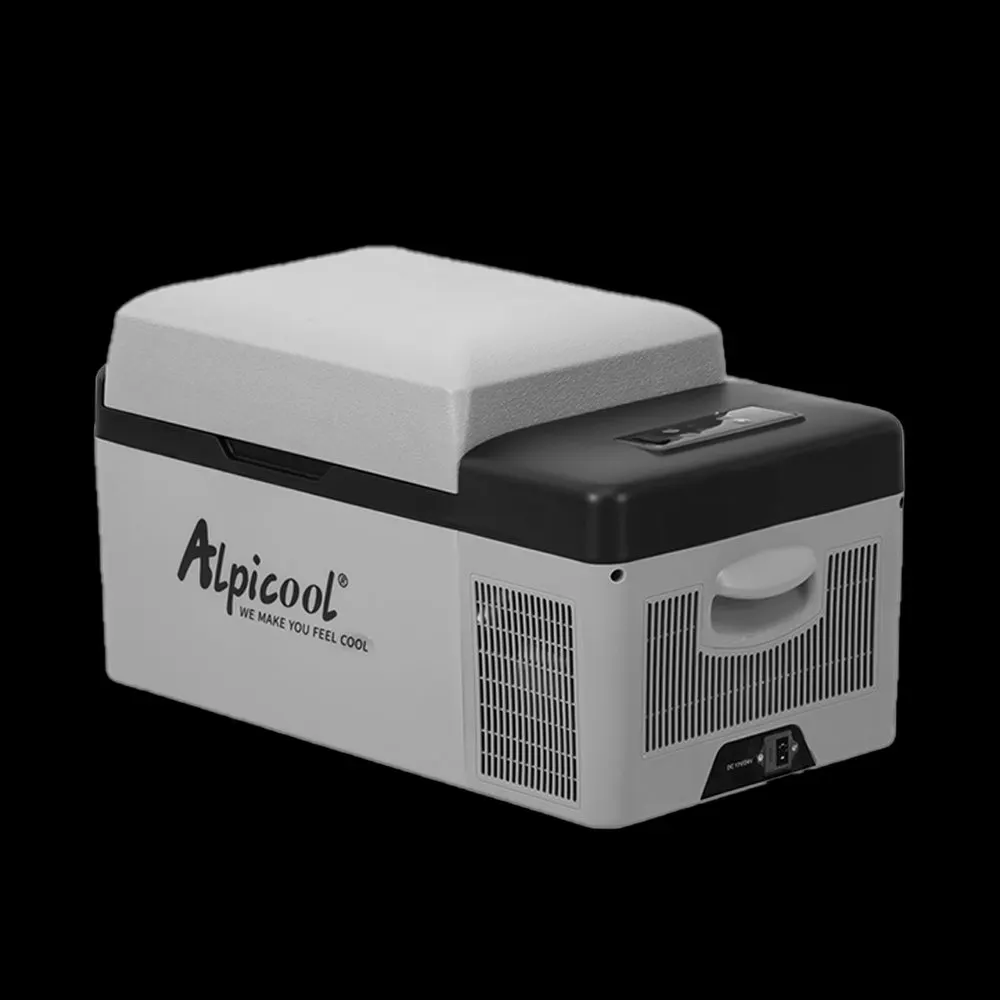
- Capacity
- 21 quarts (20 L)
- Dimensions
- 23.5 x 12.6 x 12.6 in
- Weight
- 19.8 lb net
- Power Source
- 12/24 V DC + 110 V AC
- Energy
- Alpicool: 1 kWh lasts 2–4 days (conditions not stated)
- Warranty
- 1 year unit / 2 years compressor (Alpicool FAQ)
Alpicool C20 Review: What You Get From One of Amazon's Most Common Budget Compressor Fridges
The Alpicool C20 is one of the smallest and lowest-priced compressor fridge-freezers on Amazon, which puts it on the shortlist of anyone furnishing a first van build on a budget. This review is for the builder trying to work out whether it's good or just cheap.
Short answer: for a small, occasional-use fridge it's a reasonable buy. But there are real compromises, and some of the specs that get repeated about it don't trace back to anything Alpicool publishes. We separate the two below.
What the Amazon link sells: "Alpicool C20 portable compressor fridge freezer 21Quart(20Liter) for car and home - 12V/24V DC and 110V AC" (ASIN B075R1LH8D, gray, Amazon model field KM15). VanLifeKitchens researches rather than tests. Specs here come from Alpicool's US store page, its spec images and its store FAQ, and from that Amazon listing. Each source is listed at the end.
Choose this if:
- You need a real compressor fridge for one person, or for weekends, on a tight budget.
- Space is tight. It's about 12.6 inches wide and 12.6 inches tall.
- You want something light. Alpicool lists it at 19.8 lbs net (the Amazon listing's weight field says about 21.6 lb, which may include packaging).
Skip this if:
- The fridge will run every day of the year in a full-time build.
- You need more than about 20 liters, or a fridge and a freezer at once.
- You want a published energy figure at stated conditions, a named compressor, or a long warranty.
Overview: What the Alpicool C20 Actually Is
The C20 is a single-zone portable compressor fridge-freezer. It runs on 12V or 24V DC, or on 110V AC through the included adapter. Alpicool's spec images and listing give a range of -4°F to 68°F, so you can use it as a fridge or as a freezer, but not both at once.
Alpicool also lists:
- ECO and MAX modes
- three levels of low-voltage battery protection
- a USB port
- 1.7 inches (44 mm) of insulation
Capacity, dimensions and clearance
These are three separate numbers.
- Interior capacity: Alpicool's store page says 19.8 L / 21 qt, and the Amazon title says 21 quarts (20 liters). Alpicool's image gives the interior as about 13.8 x 9.7 x 9.9 inches. That's roughly a few days of groceries for one person, or drinks and lunch for two.
- External dimensions: Alpicool's dimension image gives 23.5 x 12.6 x 12.6 inches. The dimension fields on the Amazon listing (about 13.8 x 8.3 x 9.8 inches) are close to the interior figure, not the outside of the box, so don't plan a cabinet around them. Use Alpicool's 23.5-inch length and add clearance. Its 12.6-inch height is the lowest in our lineup, which is why it fits behind a seat or under a low bench.
- Ventilation clearance: we could not find a C20 manual or any Alpicool figure for clearance. As a working assumption, leave at least the 2 inches (5 cm) per side that ICECO and Dometic ask for on their fridges. Keep the compressor-end vents fully open.
You load it from above. Alpicool's feature image shows a one-piece lid hinged along the long rear edge, with a latch at the front. We found no manufacturer statement that it can be removed or reversed. There are no wheels, just two handles.
Build Quality and the Compressor Question
Alpicool doesn't name the compressor maker for the C20. Its store FAQ says LG compressors are used only in certain larger LG-badged models and that its other models use a Chinese compressor. That implies, but doesn't state, that the C20 does not use an LG.
It is not a Secop (formerly Danfoss) unit, which is what ICECO uses in its VL and JP Pro fridges. That doesn't stop it cooling, but an unnamed compressor comes with less published service information and fewer independent repair options than a Secop. If a C20 fails out of warranty, you will usually be replacing the fridge rather than repairing it, so allow for that in a full-time build.
The shell is plastic over foam insulation. Alpicool lists 1.7 inches (44 mm) of insulation and says the fridge stays cold "over 10hrs after power off". Its own FAQ gives a more conservative "about 4 hours", so treat both as best-case claims.
The lid is a plastic moulding on a plastic hinge, the part of any budget chest fridge most exposed to abuse. Don't use it as a seat or as a shelf for heavy cargo on rough roads. Strap the fridge down so the lid isn't taking the load when the van brakes.
Transport and setup
Alpicool's FAQ says that if the fridge has been tilted beyond 45 degrees, you should leave it upright for at least 12 hours before switching it on, so the compressor oil can settle. Follow that when it first arrives and after any trip where it rode on its side. In the van, mount it level, with the compressor-end grille facing open air rather than a cabinet wall.
Performance: Cool-Down and Hold Temperature
Alpicool's chart claims 68°F to 32°F in 15 minutes and about -4°F after roughly an hour. That would be with an empty box in MAX mode; Alpicool doesn't state the test conditions. Loaded with room-temperature food, expect much longer.
Once it's cold, a compressor fridge cycles: it runs until the box reaches the setpoint, stops, and restarts when the inside warms a few degrees. How much of the day it runs (its duty cycle) is set by ambient heat, ventilation, lid openings and setpoint. In a hot van, a small box with modest insulation can end up running most of the time. That's physics, not a flaw unique to Alpicool.
Alpicool's lowest listed setting is -4°F, cold enough to freeze food solid. Running it as a freezer uses considerably more power than fridge mode.
Power Consumption: Published Claims vs Planning Estimates
Here, more than anywhere, keep published ratings apart from estimates.
Published power rating. We could not find a rated input wattage or current for the C20 on any Alpicool source. Figures you'll see elsewhere, such as "45W" or "60W", come from third-party pages, so we don't repeat them as specs. The often-quoted "about 1.2 Ah average" also doesn't appear in Alpicool's current materials, so we no longer list it.
Published daily energy. Alpicool's only figure is a marketing claim on its spec image: "Only 1kWH for 2-4 Days (depend on your settings)", with no ambient temperature, setpoint or door openings given. Taken at face value, that's about 250–500 Wh per day. At 12.8 V nominal (a lithium iron phosphate house battery), that is about 20–39 Ah per day.
| Basis | Wh/day | Ah/day at 12.8 V | Source |
|---|---|---|---|
| Alpicool claim, best case | ~250 | ~20 | Alpicool (no conditions) |
| Alpicool claim, worst case | ~500 | ~39 | Alpicool (no conditions) |
| Three-season planning | ~360 | ~28 | Our estimate |
| Heat or freezer mode | ~540–660 | ~42–52 | Our estimate |
Our planning number is about 360 Wh per day (28 Ah at 12.8 V, or 30 Ah counted at 12 V). That assumes fridge use at around 37°F, mild-to-warm weather and a few lid openings a day. For 90°F-plus heat or freezer mode, plan on 540–660 Wh per day. These are our estimates, not measurements, and we found no published measured figure for the C20.
On a 100 Ah lithium battery (about 1,280 Wh), roughly 90% is usable, or about 1,150 Wh. That covers about three days of mild-weather use with no charging, and less in heat. Model your own bank and climate in the fridge battery calculator. Our 12V fridge buying guide walks through battery and solar sizing.
App Control: Check Before You Count On It
Alpicool's store page for the C20 mentions app control, but its spec images and the Amazon listing we link don't clearly show Bluetooth or an app. If app control matters to you, confirm it on the current listing before you buy. Every setting is also available from the control panel on the fridge.
Battery Protection
Alpicool lists three battery-protection levels (H1, H2 and H3, from low to high) that switch the fridge off when the battery voltage drops to a set threshold. We could not find Alpicool's cut-off and restart voltages for the C20, so check the manual that ships with your unit.
How to use it:
- Set the highest level if the fridge could ever draw from a vehicle starting battery.
- Use a lower level on a dedicated house battery.
Battery protection reduces the risk of a flat starting battery, but it isn't a guarantee. Thin accessory-socket wiring and an engine-off drain over several days can still leave you stranded. For anything beyond day trips, run the fridge from a house battery charged by a DC-DC charger or isolator, wired and fused per the manufacturers' instructions.
Alpicool C20 vs BougeRV 30Qt vs Iceco VL35
These are the three closest alternatives on this site.
BougeRV 30Qt. The direct size-up. For a moderate step up in price, you get:
- 28 liters instead of about 20, roughly 40% more interior volume
- enough height for two 1-gallon jugs upright
- a body that's still light, at roughly 23–24 lbs
Like the Alpicool, it doesn't name its compressor maker. BougeRV publishes running wattage (45W ECO, 60W MAX), a clearance requirement and cut-off voltages, and it offers a 2-year warranty. If you're two people or you cook real meals, the BougeRV is the better fit. If you're solo or tight on space, the C20 wins on footprint and price.
Iceco VL35 ProS. A different class:
- a Secop compressor with a 5-year compressor warranty
- 35 liters in a metal cabinet
- a published 24-hour energy figure: 0.430 kWh, about 36 Ah/day
It also costs considerably more and weighs much more. If you're building a full-time van and plan to keep the fridge for years, the Iceco's compressor and warranty are worth paying for. If you're building your first van and would rather put money into insulation and solar, the C20 does the basic job.
Value for Money
As a budget-priced compressor fridge, the C20 gives you real refrigeration at a low price. Cheaper alternatives are mostly thermoelectric coolers, which can only cool a fixed amount below the air around them and can't freeze.
Alpicool's store FAQ gives a 1-year warranty on the whole machine and 2 years on the compressor. That is generic FAQ wording rather than C20-specific terms, so check the listing at purchase. Warranty claims on budget imports can involve shipping the unit back, so keep your receipt and packaging.
Who Should Skip the Alpicool C20
Skip it if:
- You're building a full-time rig and want to buy once.
- You regularly camp in 100°F+ heat, where the duty cycle runs close to continuous.
- You need a fridge and a freezer in one unit.
- You want a long warranty and US-based support.
Those buyers should look at the Iceco VL35 ProS, the ICECO JP40 Pro or a Dometic.
Also skip it if 21 quarts is obviously too small. Size up to the BougeRV 30Qt.
Final Verdict
The Alpicool C20 is a reasonable answer to the question "what's the smallest, cheapest compressor fridge that does the job in a van?" It isn't premium. The compressor maker isn't named, and Alpicool publishes less than the other brands we cover: no rated wattage, no cut-off voltages, no clearance figure, and only a no-conditions energy claim. But it's compact, light and a true compressor fridge-freezer.
For a first van build, a weekend rig, a truck cab, or a second drinks fridge, it earns its place. Plan your battery around our 30 Ah/day estimate, give it open airflow, and expect to upgrade if you go full-time.
FAQ
Is the Alpicool C20 loud? Alpicool doesn't publish a decibel figure for the C20. Its store FAQ says only that on 12V "the noise is almost imperceptible". Any compressor fridge hums while the compressor runs and goes quiet between cycles, and the fan at the compressor end makes most of the sound, so light sleepers should put that end away from the bed.
Can I run the C20 off a cigarette lighter socket? For driving and short stops, yes, with battery protection set to its highest level. For anything longer, wire it to a house battery. Accessory sockets often use thin wire that causes voltage drop and nuisance shutoffs, and leaving it running for days with the engine off can still flatten a starting battery.
Does the Alpicool C20 have an app? Alpicool's store page mentions app control, but the listing we link doesn't clearly show one. Confirm on the current listing if it matters to you. The fridge works fully from its own control panel.
How much power does the C20 use per day? Alpicool claims "1kWH for 2-4 days" with no test conditions, which is about 250–500 Wh, or 20–39 Ah per day at 12.8 V. Our planning estimate is about 360 Wh (28 Ah at 12.8 V) per day in mild-to-warm weather and 540–660 Wh in heat or freezer mode.
Will it freeze and refrigerate at the same time? No. The C20 is single-zone. You set one temperature for the whole interior.
How does the Alpicool compressor compare to Secop? Alpicool doesn't name the C20's compressor. It works as a real DC compressor, but it has a shorter track record and less field serviceability than the Secop units in ICECO's fridges.
Is the 1-year warranty enough? It's the minimum we'd accept on a compressor fridge. Alpicool's store FAQ adds 2 years on the compressor. Register the fridge and keep your proof of purchase.
What should I do when the fridge arrives? If it may have been tipped past 45 degrees in shipping, stand it upright and leave it switched off for at least 12 hours, as Alpicool's FAQ advises. Then run it on AC at home for a day to confirm it reaches and holds temperature before you rely on it on a trip.
Sources and verification
- Alpicool C20 product page, https://carfridge.alpicool.com/products/alpicool-c20: capacity (19.8 L / 21 qt), app control, and warranty and cold-retention wording. The spec images on that page give the external dimensions (23.5 x 12.6 x 12.6 in), interior dimensions (13.8 x 9.7 x 9.9 in), net weight (19.8 lb), 1.7 in (44 mm) insulation, the "over 10hrs" hold claim, the 68°F-to-32°F cool-down chart, the "1kWH for 2-4 Days" claim and the three battery-protection modes (checked 2026-10-12).
- Alpicool store FAQ, https://carfridge.alpicool.com/pages/faq: LG compressors only in the LGT50, LGT60, LGCF45 and LGCF55; 1-year whole-machine and 2-year compressor warranty; "about 4 hours" cold retention; noise wording; the 12-hour wait after tilting past 45 degrees (checked 2026-10-12).
- Amazon listing, ASIN B075R1LH8D: exact title, model field, color, and the listing's dimension and weight fields (checked 2026-10-12).
- Not found from Alpicool: a C20 user manual, a rated input wattage, low-voltage cut-off thresholds or a ventilation clearance.
Compare with similar products
See how this stacks up against the other 12v fridges we've reviewed.
Related Reviews
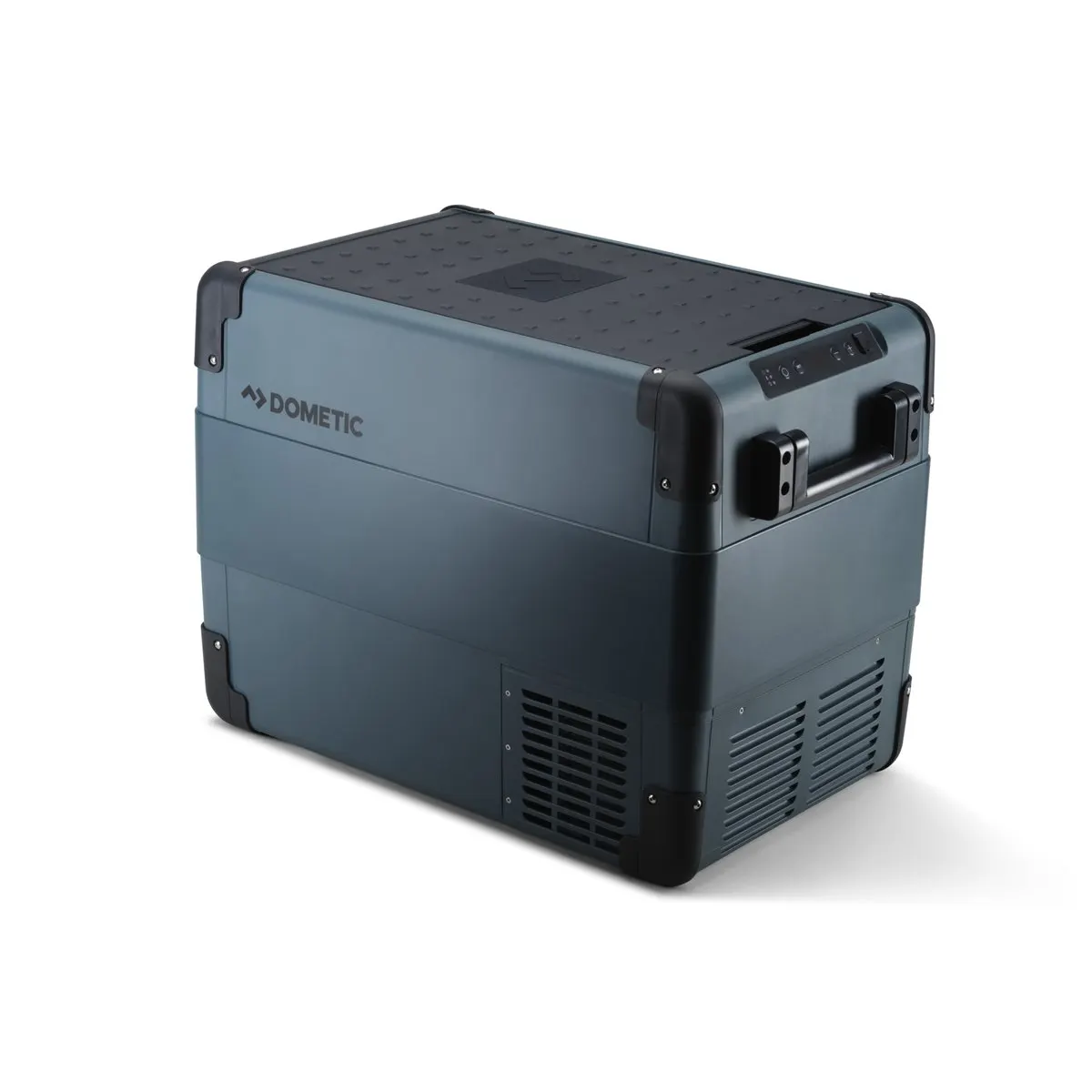
For: Simple single-zone 45L
Dometic CFX2 45 Electric Cooler
A roomy, simple 45L Dometic with a low rated efficiency figure for its Australian model, but a step down from the CFX3 and CFX5 in display and app features, at a premium price.
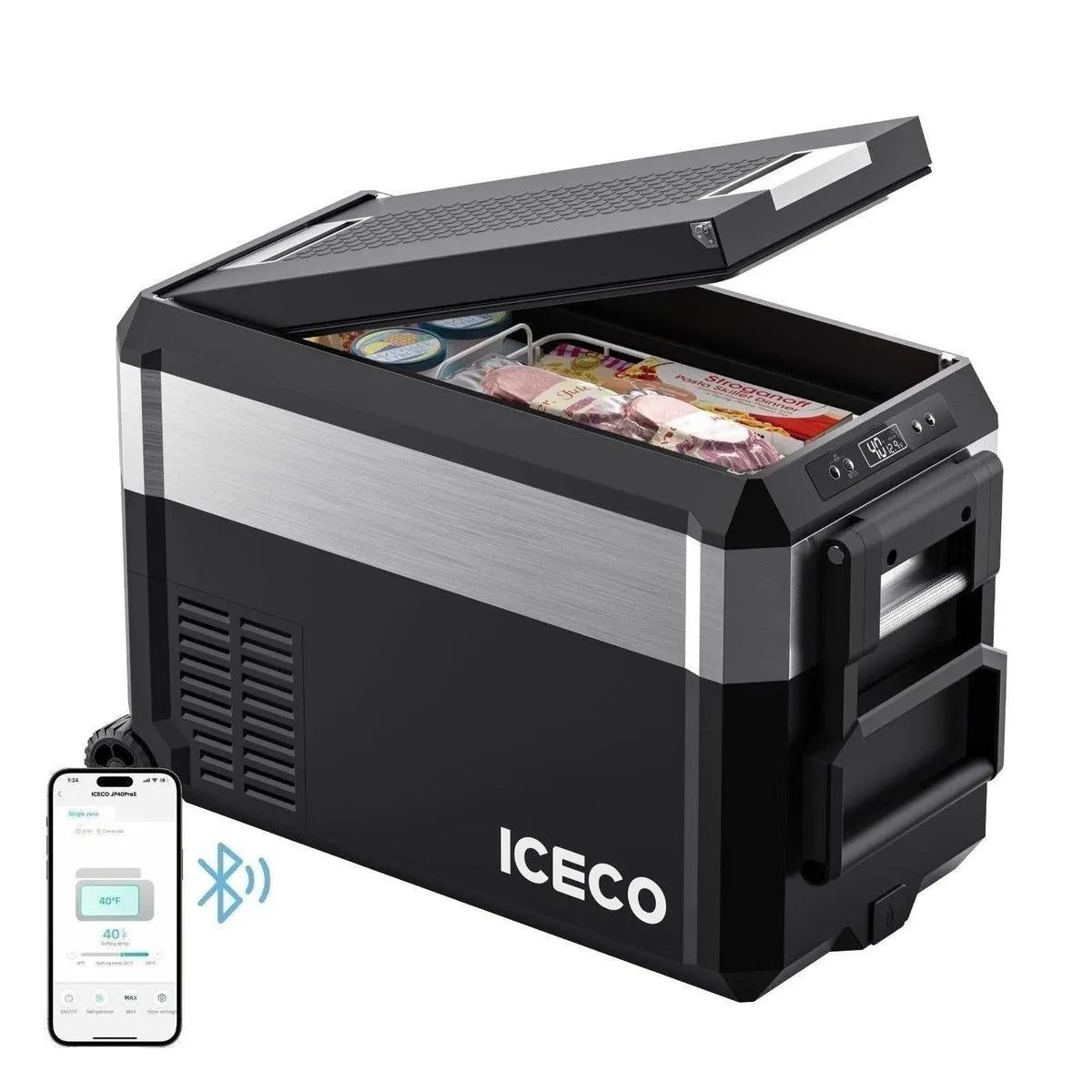
For: Wheeled 40L, narrow bays
ICECO JP40 Pro 37L (40 qt) Wheeled 12V Fridge Freezer
A 40L single-zone Secop fridge with wheels, a reversible lid and Bluetooth app at a mid-range price. Same footprint as the old JP30 Pro, 10 liters more inside.

For: Checking fridge temperatures
AcuRite 00986M Wireless Refrigerator and Freezer Thermometer
Two wireless sensors and one display that show current, high and low temperatures with an out-of-range alarm. It's an independent check on a 12V fridge's own display, and since the sensors are wireless, no probe wire has to run under the lid seal. A dual-zone fridge can have one sensor in each zone.