Gas One GS-1000G Portable Butane Stove
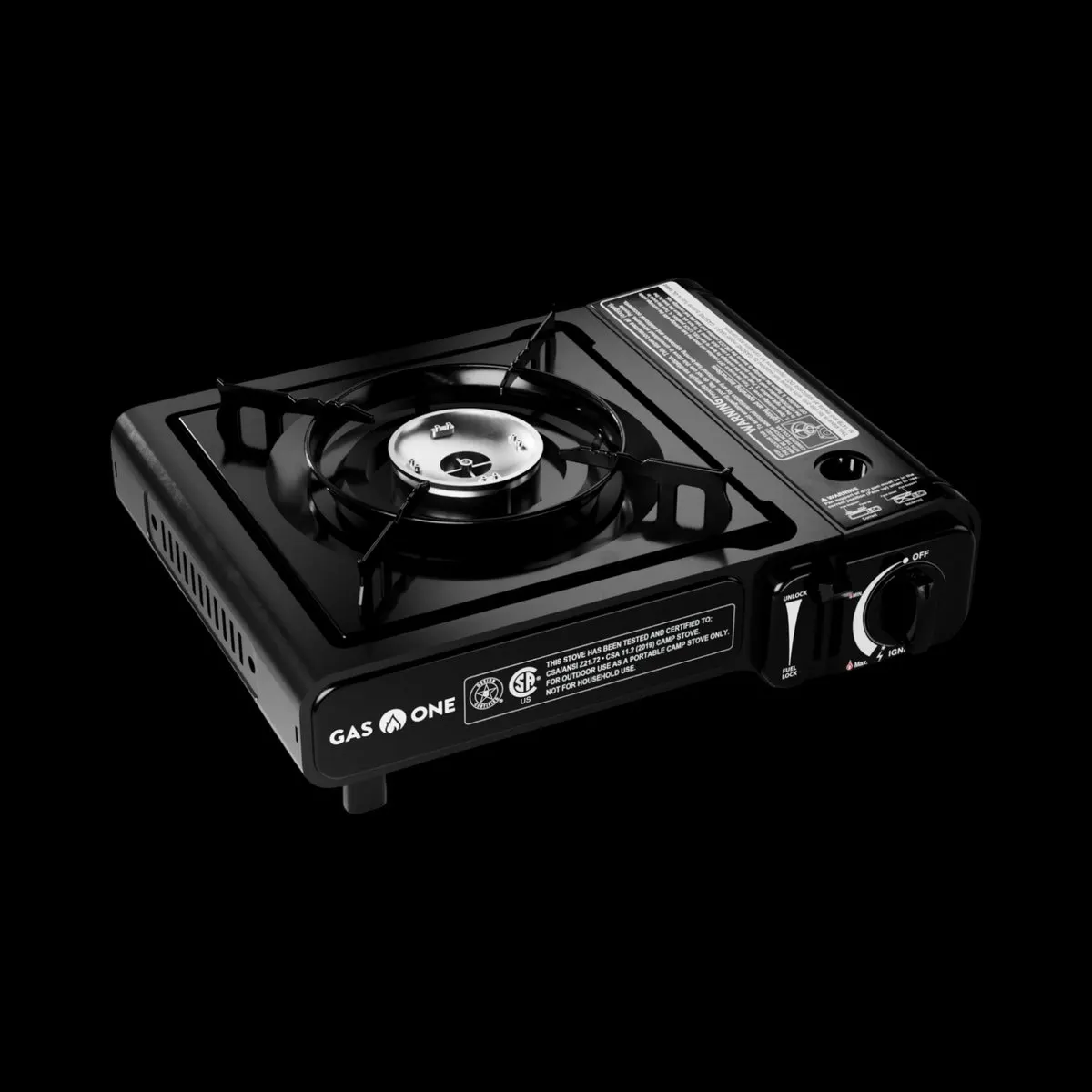
- Model
- GS-1000G
- Power Source
- Butane (8 oz cartridges only, per listing)
- Output
- 7,650 BTU (per listing)
- Ignition
- Piezo, with safety shut-off (per listing)
- Certification
- CSA (per listing)
- Dimensions
- 13.5 x 11.2 x 4.4 in (listing)
- Weight
- 3.1 lb (listing)
- Warranty
- 1 year (listing)
- Use
- Outdoor use only (per listing)
Overview: who is this for?
This review covers the budget single-burner Gas One butane stove that the "Check price on Amazon" button on this page links to. The URL of this page says GS-3000 because that is the model it was first written about, but the Amazon listing it links to is the Gas One GS-1000G, and Amazon has no GS-3000 listing. Everything below describes the GS-1000G as Gas One lists it: a 7,650 BTU butane burner with piezo ignition, a safety shut-off system, CSA approval and a hard carrying case.
Operating location: outdoor use only. Gas One's own listing for this stove says "OUTDOOR USE ONLY". In a van, that means you cook on a table outside the vehicle or at the open slider with the stove itself outside the cabin, never on the galley counter with the doors shut, and never inside with a fan or a CO alarm standing in for the manufacturer's instruction. More on that in the safety section.
Choose this if:
- you want a cheap backup stove that works when your battery, inverter or solar is down;
- you are a weekend or fair-weather camper who cooks outdoors anyway;
- you want something that fits in a drawer and needs no installation.
Skip this if:
- you need to cook inside the van, because the manufacturer's labelling does not allow it;
- you cook regularly below freezing (butane struggles in the cold);
- you want fast boils or two burners: 7,650 BTU is modest, and this is a one-pot stove.
The frame for this review is the backup stove: the one that lives in a cabinet next to the first aid kit and comes out when the electrical system misbehaves or when you are parked somewhere you would rather cook outside. For weekenders without any electric kitchen, it can also be the whole kitchen, as long as "kitchen" means a camp table outside. The weekend car-camping kitchen checklist lists what else that outdoor kitchen needs for a one-to-three-night trip.
Specifications from the listing
| Spec | Gas One GS-1000G (listing) |
|---|---|
| Rated output | 7,650 BTU |
| Fuel | 8 oz butane canisters only |
| Ignition | Piezo, with safety shut-off |
| Size | 13.5 x 11.2 x 4.4 in |
| Weight | 3.1 lb |
| Approval | CSA |
| Warranty | 1 year (per listing) |
| Location | Outdoor use only |
Gas One does not publish a boil time for this stove, so we don't quote one. We couldn't find a Gas One manual for the GS-1000G online: ManualsLib's Gas One stove list has other GS models but not this one, and Gas One's US website was showing an under-construction page when we checked. The listing says a user manual ships in the box. Everything in this review about the stove itself is therefore from the Amazon listing, and we say so where it matters. Read it before first use, because it is the document that governs how and where you may use the stove.
Design and build
The GS-1000G follows the standard cassette-stove layout used by most budget butane burners: a stamped steel body, a single burner in the centre, a wire or pressed pot support, and a side compartment for the 8 oz canister with a locking lever. A rotary knob both lights the stove (via the piezo spark) and sets the flame. It packs into the included hard case, which keeps the stove from rattling around in a tote and protects the burner and pot supports.
At 13.5 by 11.2 by 4.4 inches and 3.1 pounds (listing figures, which may include the case) it is drawer-sized. That compactness is the main reason it suits a van: it needs no fixed mounting, no gas line and no wiring, and it comes out only when you need it.
A piezo igniter is a small mechanical spark part, and on any stove it can wear, get damp or misalign. If it stops sparking, a long lighter lights the burner and the stove keeps working, so it is a nuisance rather than a failure. Keep a long-reach lighter in the case from day one.
Performance
At 7,650 BTU, this is a modest burner. For comparison, the Iwatani Cassette Feu on this site is rated at 12,000 BTU/hr, and a single burner on the Camp Chef Everest 2X is rated at 20,000 BTU. In practice, lower output means longer waits to boil a large pot and less ability to sear, but it is enough for coffee water, oatmeal, eggs, pasta for one or two, and reheating.
Two things affect real output more than the nameplate:
- Wind. Budget cassette stoves have exposed burners. Outdoors, even a light breeze bends the flame away from the pot and slows everything down. Set up in the lee of the van, or use a windscreen that does not enclose or overhang the canister compartment.
- Canister temperature. Butane output falls as the canister cools, both from cold air and from the canister chilling itself as fuel evaporates during long boils.
Flame adjustment on cassette stoves of this type goes from a low flame to full output on one knob; the listing calls it "precise heat control" but Gas One doesn't publish a minimum output. Expect a low setting that works for simmering with a heavy-based pot and some stirring, and don't expect the steadier output of a premium stove with a heat-panel design like the Iwatani.
Fuel use and runtime (estimate)
Gas One does not publish a burn time for this stove, so here is our estimate and its assumptions. A standard 8 oz (227 g) butane canister holds roughly 10,000 BTU of fuel energy, based on butane's typical heating value. At the full rated 7,650 BTU per hour, that works out to roughly 75 to 80 minutes of burn on high, assuming the canister stays warm enough to deliver full output. At a low flame, one canister lasts considerably longer. In the cold, or as the canister chills during a long boil, you get less heat per minute, and some fuel may remain unusable until the can warms up.
For a solo cook making coffee and one simple hot meal a day, that is several days per canister. For two people cooking more involved dinners, plan on going through canisters faster. Canisters are cheap and sold widely, but the cost and waste add up if butane becomes your daily fuel. For how butane compares with induction and propane over a whole year, see the induction vs butane vs propane guide.
Cold weather
Butane's weakness is temperature. Pure n-butane boils at about 31°F, so as a canister approaches freezing it stops vaporizing fast enough to feed the burner, and the flame shrinks. Many canisters sold in North America are labelled as butane, and some are blends; check the canister label rather than assuming. Either way, expect noticeably weaker output in the 40s °F and unreliable performance near freezing.
Practical steps that help:
- Store canisters somewhere above freezing overnight. Inside the van is fine for storage as long as they're away from heaters, sun on the dashboard and other heat sources, and the stove itself is still used outside.
- Avoid very long high-heat sessions on one canister in cold weather, since the canister chills itself.
- For regular sub-freezing cooking, use a propane stove instead. The cold-weather van cooking guide covers the winter playbook.
Safety
Where you can use it. Gas One's listing for this stove says "OUTDOOR USE ONLY". We take that at face value. Every combustion stove consumes oxygen and produces carbon monoxide (CO), carbon dioxide, nitrogen dioxide and water vapour. In a space the size of a van cabin those build up quickly. A cracked window, a roof fan or a CO alarm does not turn an outdoor-only appliance into an indoor one. A CO alarm is a last-line warning device, worth having in any van, but it is not permission to cook inside.
In practice, outdoor use from a van looks like this:
- a folding table or the ground (on a stable, non-combustible surface) a few feet from the vehicle, for example the GCI Compact Camp Table 20, whose aluminium top GCI says can take a small camp stove;
- the stove outside on a table at the open slider or rear doors, with you standing outside, rather than the stove sitting inside on the counter;
- keeping awnings, curtains and the van's interior well clear of the flame and the hot pot.
Two kinds of ventilation. It helps to separate combustion ventilation (supplying air to a flame and carrying away CO, CO₂, NO₂ and water vapour) from general cooking ventilation (removing steam, grease, odour and heat). A roof fan is useful for the second, for any kind of cooking including induction. It is not a substitute for the manufacturer's outdoor-only instruction for the first.
Canister safety. Gas One lists a "fuel cartridge injection" safety feature: if pressure in the canister rises past a set point, the stove ejects the canister. That protects against the classic butane-stove failure, which is a canister overheating. You still need to avoid causing it:
- never use a pan, griddle or windscreen that overhangs or encloses the canister compartment, because reflected heat onto the canister is a known cause of failures;
- never use two butane stoves side by side, or put a hot pan down over a second stove;
- store spare canisters out of direct sun and away from heaters;
- follow the canister-loading and storage steps in the manual that ships with the stove.
General fire safety. Keep flammables, paper towels and fabric away from the burner, never leave the stove unattended while lit, and let it cool before packing it back in the case. The van cooking safety guide covers CO, fire and burns in more detail.
Backup strategy: butane, propane or a second induction plate
There are three realistic backup cooking options for an induction-first van.
A butane stove like the GS-1000G protects against an electrical failure for very little money and space. You give up cold-weather reliability and high output, and you have to cook outside.
A two-burner propane stove like the Coleman Triton+ handles cold weather far better and has much more output, but it is bulkier and costs more. Coleman's manual also says it is for outdoor use only.
A second induction plate like the Duxtop 9100MC can be used inside, and has no fuel logistics. It does not protect against the failure a backup exists for: a flat battery, a tripped inverter or an electrical fault.
The butane stove's niche is that it protects against electrical failure cheaply, takes almost no space, and needs nothing installed. That is the trade.
Value
This is one of the lowest-cost ways to add a working stove to a van, and the carry case is included. You get a modest burner and basic build quality in exchange. For a backup that sits in a drawer most of the year, that is a sensible trade. If butane is going to be your main stove, the Iwatani Cassette Feu has higher rated output, a built-in windbreaker and a heat panel that keeps output steadier as the can empties, at a noticeably higher price.
Who should skip this
Skip it if you need a stove you can use inside the van: this one is labelled outdoor-only, and so is every other fuel stove on this site. For indoor cooking, the realistic answer is induction backed by an adequate electrical system. Skip it if you regularly cook below freezing. Skip it if you already carry a propane two-burner and have no electrical kitchen to back up. And skip it if you cook two-pot meals: this is a one-burner stove.
Final verdict
The Gas One GS-1000G answers one question well: what is the cheapest, smallest way to cook a hot meal outdoors when a van's electrical system isn't cooperating? It is modest in output (7,650 BTU), basic in build, weak in the cold, and labelled by its maker for outdoor use only. Within those limits it lights with a click, adjusts down to a low flame, ejects the canister if pressure climbs, and packs into a hard case. Treat it as an outdoor backup and it does the job.
FAQ
Is this stove a Gas One GS-3000? No. This page's URL mentions the GS-3000, but the Amazon listing our button links to is the Gas One GS-1000G, rated at 7,650 BTU. The specs on this page describe the GS-1000G.
Can I use this Gas One stove inside my van? No. Gas One's listing says "OUTDOOR USE ONLY". Cook outside the van, for example on a table at the open slider, with the stove outside the cabin. A roof fan, an open window or a CO alarm does not make indoor use acceptable.
Does it work in cold weather? Poorly near freezing. Butane output drops noticeably in the 40s °F and becomes unreliable around 32°F because the fuel can't vaporize fast enough. Keeping canisters above freezing helps; for regular sub-freezing cooking, use propane.
How long does an 8 oz canister last? Gas One doesn't publish a burn time. Our estimate is roughly 75 to 80 minutes at the full rated 7,650 BTU, based on a typical 8 oz canister holding about 10,000 BTU of fuel. It lasts longer at low flame and gives less heat when cold.
Is the piezo igniter reliable? It has a safety shut-off per the listing, and Gas One doesn't publish an igniter life. Like any piezo, it can wear or get damp; a long-reach lighter lights the burner if that happens, so keep one in the case.
What pan sizes are safe? Use pans that sit fully on the pot support and do not overhang the canister compartment. A pan that reflects heat onto the canister can overheat it. Check the manual in the box for any maximum pan size.
How does it compare to induction for daily cooking? Induction can be used inside, produces no combustion gases and costs nothing per meal on solar, but needs a large battery and inverter. Butane needs no electrical system but must be used outdoors and struggles in the cold. In most vans, the Gas One is a complement to induction, not a replacement.
Sources and verification
- Amazon listing, ASIN B08WTNVPB7: title (Gas One Portable Butane Camping Stove with Case), part and model number GS-1000G, 7,650 BTU, 8 oz butane canisters only, CSA approval, fuel cartridge ejection feature, piezo ignition with safety shut-off, "OUTDOOR USE ONLY", carry case and user manual included, 13.5 x 11.2 x 4.4 in, 3.1 lb, 1-year warranty, in stock (checked 2026-10-12).
- ManualsLib Gas One stove manual index, https://www.manualslib.com/brand/gas-one/stove.html: checked for a GS-1000G manual; none listed (checked 2026-10-12).
- Gas One US website, https://www.gasoneusa.com/: checked for a GS-1000G product page; the site showed only an under-construction placeholder (checked 2026-10-12).
Compare with similar products
See how this stacks up against the other cooktops we've reviewed.
Related Reviews
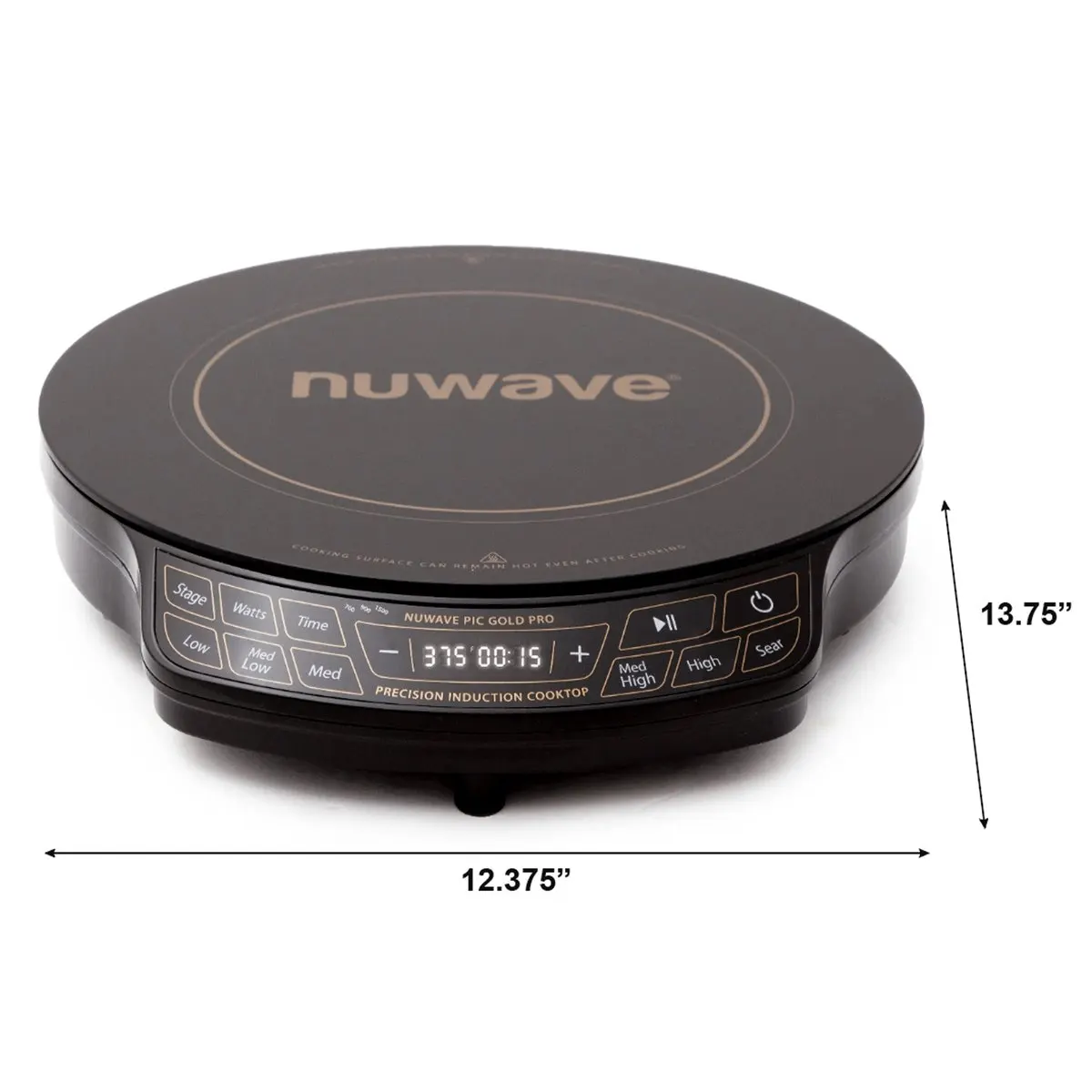
For: Precise low-heat induction
NUWAVE PIC Gold (Gold Precision) 1500W Induction Cooktop
Nuwave's PIC Gold, now sold as the Gold Precision: 1,500 W with 900 and 600 W settings and 100–575°F temperature control. The lower-wattage modes make it easier on a smaller inverter.
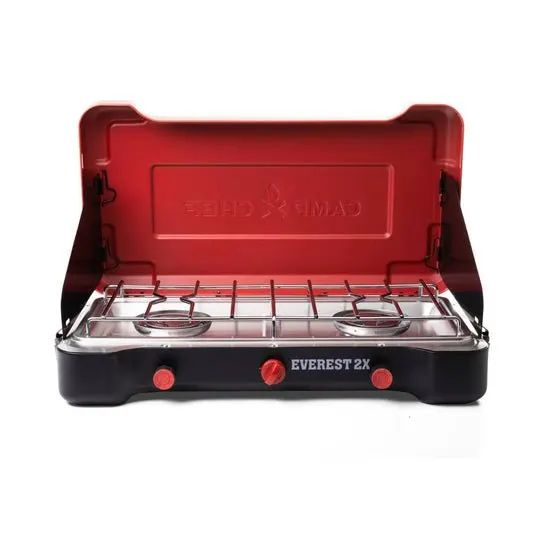 Outdoor use only
For: High-output outdoor propane cooking
Camp Chef Everest 2X 2-Burner Propane Stove
A higher-output two-burner propane stove: Camp Chef rates each burner at 20,000 BTU, with matchless ignition on both. Its manual says outdoor use only and not in or on recreational vehicles.
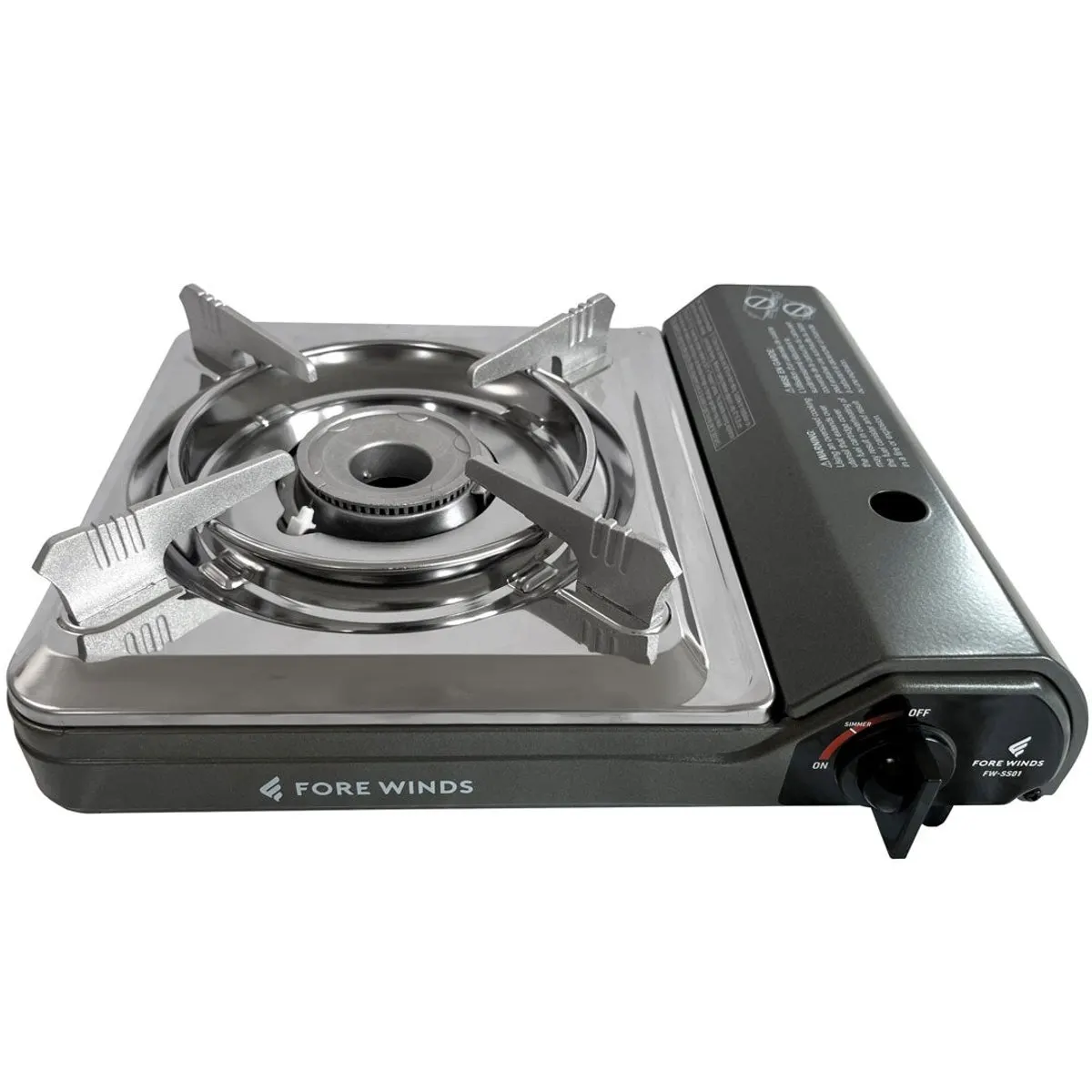 Outdoor use only
For: Outdoor butane cooking
Iwatani Cassette Feu Butane Camp Stove (Gray)
Iwatani's current 12,000 BTU cassette stove adds a built-in windbreaker and lever-free magnetic canister lock over the ZA-3HP. A well-built butane option that costs considerably more than the ZA-3HP. Iwatani warns never to use cassette appliances in enclosed spaces such as a car or tent, so cook with it outdoors.