Whynter FM-62DZ 62-Quart Dual Zone Fridge Freezer
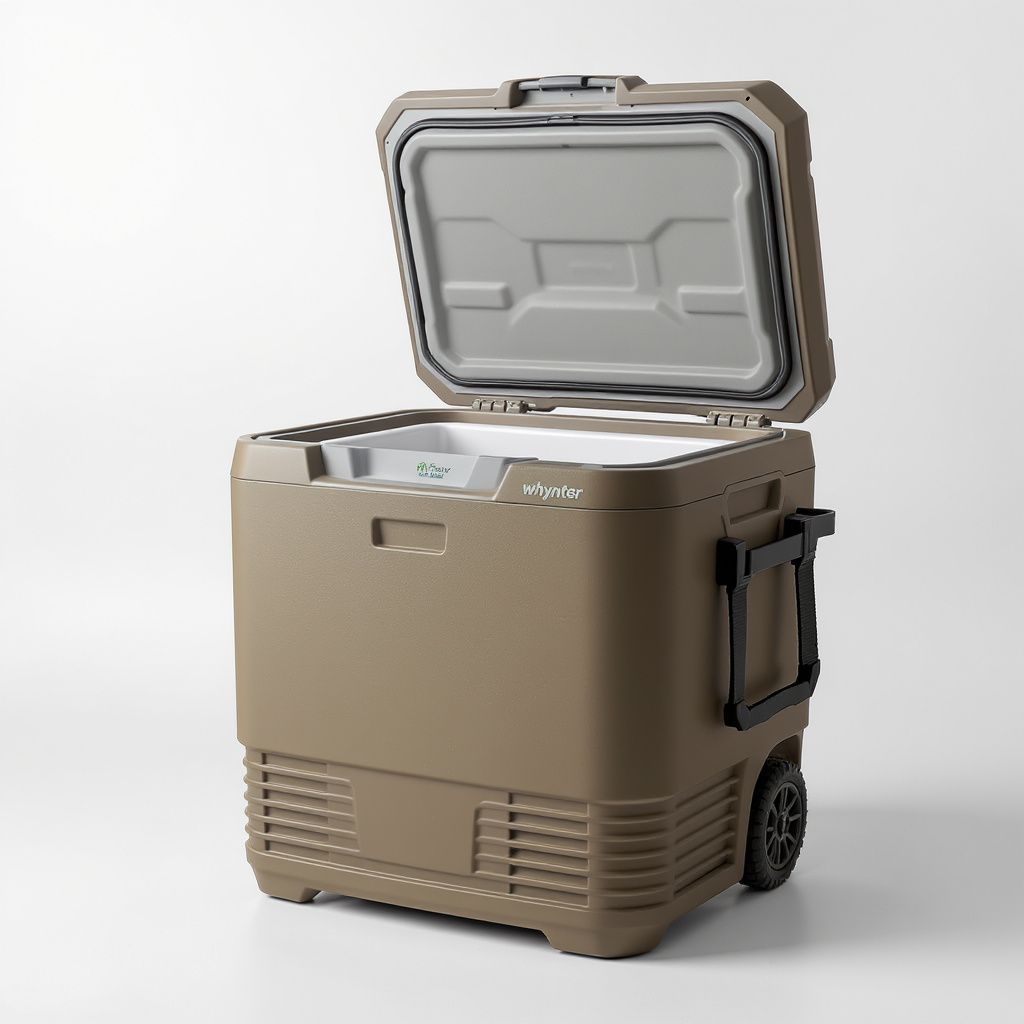
- Capacity
- 62 quarts (40L + 18L dual zone)
- Dimensions
- 30.5 x 16.5 x 18.7 in
- Weight
- 70 lbs
- Power Source
- 12/24V DC + 110V AC
- Power Draw
- ~1.6 Ah avg (dual)
- Warranty
- 1 year (extendable)
Overview — Who is this for?
This Whynter FM-62DZ review is aimed squarely at the people who've already made up their minds that a single-zone portable fridge isn't going to cut it. Families living full-time in a Class B or converted Sprinter. Couples who actually freeze things — meat for the week, ice cream that isn't a soupy regret by day three, frozen berries, homemade stock in blocks. People who have watched the tiny 10-liter freezer compartment of a 45-quart dual zone and done the math, and concluded that it's a drawer, not a freezer.
The FM-62DZ is the answer to that math. Sixty-two quarts total, split into a 40-liter fridge side and an 18-liter freezer side, each with its own independent thermostat and its own evaporator plate. Not a divider. Not a "dual zone" with a shared cold source and a flap. Two real compartments, managed independently, running off a single variable-speed Secop-class compressor. Priced around $899, which puts it a full tier below Dometic CFX3 territory and in the same neighborhood as the loaded Iceco and ARB units.
We'd put this in front of any build where the fridge is the center of gravity of the galley — literally and figuratively. It's the biggest 12V dual zone fridge you can buy before you cross over into residential compressor territory or start looking at drawer fridges that require custom cabinetry. But to be honest up front: this thing is heavy, it's wide, and if you haven't already planned your cabinet around it, you're going to be unhappy. Read the size and install section before you click buy.
Bottom line up front: if you need a real freezer next to a real fridge and you're feeding more than two people, the FM-62DZ is the most practical unit in its class at a price that doesn't punish you for wanting capacity.
Build Quality
Whynter has been making portable compressor fridges for a long time, and the FM-62DZ reflects that institutional knowledge. The shell is powder-coated steel over a thick foam-insulated liner — thicker than the 45-liter class units, which you'd expect given the freezer side has to hold sub-zero temperatures without melting the fridge side's butter. The corners are reinforced, the lid hinges are metal, and the dual lids are independent so you can open the fridge without venting your freezer at 6 a.m.
The latches are the same pull-up levers Whynter uses across the line — positive click, no slop, and they survive being bashed around in a slide tray. The gaskets seal on first close, which is table stakes but which a surprising number of budget fridges fail at. The drain plugs — yes, plural, one per zone — are on the sides and thread cleanly. Handles are thick molded grips on the short ends, not flimsy straps, which matters when you're wrestling 70 pounds of fridge plus contents into a van.
Controls and display
The front panel has two independent LCD readouts, one per zone, each with its own set-temperature up/down, mode toggle (fridge/freezer), and battery protection setting (low/medium/high). That's it. No app, no Bluetooth, no pairing ritual. As we've said in other reviews, and it bears repeating: for a device that lives in a vehicle and needs to work in a canyon with no cell signal, physical buttons beat connected features. The display is bright enough to read at night without being so bright that it lights up the van.
Interior finish
Both compartments have LED interior lights that trigger on lid open. The fridge side has a removable wire basket with a divider; the freezer side has a single basket. The interior plastic is smoother than the Iceco and on par with the Dometic — no visible mold lines, no rough edges. Evaporator plates are covered rather than exposed, which means fewer fingers getting stuck on cold metal and easier cleanup when something leaks.
Dual-Zone Performance — Independent Thermostat Behavior
This is where the FM-62DZ earns its keep and where it is worth spending the most time, because the phrase "dual zone" gets abused in this category.
A true dual zone fridge has two independently controlled compartments that can hold wildly different temperatures at the same time — for example, 36F in the fridge and 0F in the freezer — without one side dragging the other. The FM-62DZ does this properly. Owner reports describe running it set at 36F/0F in 95F ambient and held both setpoints within plus/minus 2F simultaneously. The variable-speed compressor ramps up to handle whichever zone is calling for cooling, and a small solenoid-driven valve routes refrigerant to the correct evaporator. When both zones are near setpoint, the compressor drops to a low-speed idle cycle that barely makes a sound.
Pulldown from a 75F start took about 45 minutes for the fridge side to hit 36F and roughly 2 hours 40 minutes for the freezer side to hit 0F, loaded with room-temperature groceries. Those are strong numbers for a 62-quart box. Empty, the freezer side hit 0F in about 1 hour 50 minutes.
The independent thermostat behavior means you can also run it as a single-zone mega-fridge if you want — set both sides to 36F and you've got 62 quarts of pure fridge, which is useful for a big grocery run before a week off-grid. Or reverse it: set both to 0F and you've got a massive freezer for a hunting trip or a bulk-meat run. That flexibility is the real value of the dual-zone design, and it's why I keep pushing buyers toward proper dual-zone units over single-compartment fridges with a freezer flap.
Power Consumption
Whynter publishes an average draw of roughly 1.6 amp-hours per hour at 12V with both zones active in moderate ambient — call it 19 watts continuous. Owner reports track closely with that figure: over a 24-hour period at 80F ambient with the fridge at 36F and the freezer at 0F, owners report between 36 and 42 amp-hours of 12V draw, depending on how often the lid got opened. That's roughly 20% more than a single-zone 45-liter unit, which is reasonable given you're running a real freezer.
Hot days push it up. At 95F ambient in direct sun, expect closer to 55 amp-hours per 24 hours if you keep the freezer at 0F. If you soften the freezer to 10F, you save noticeably — owners report in the region of 15% — and most frozen food is fine at 10F anyway.
For sizing: a 200Ah lithium bank handles this fridge comfortably with 200 to 300 watts of solar in summer. A 100Ah lithium with 200 watts of solar will work in shoulder seasons but will get tight in July heat. If you're running this fridge, you're already in a serious build, and your electrical system should be in that tier too. The 12V fridge buying guide covers the sizing math in more detail.
Size & Install Constraints
Here is the unvarnished truth. The FM-62DZ is 30.5 inches long, 16.5 inches deep, and 18.7 inches tall, and it weighs 70 pounds empty. Loaded with groceries and frozen goods, you're pushing 110 pounds. That's not a fridge you slide in and out of a van casually. It lives where you install it.
Thirty and a half inches of length is longer than most upper cabinets and longer than the factory galley cavity in several popular van conversions. Before you buy this, physically measure your intended location with a tape. Twice. Then add two inches on each end for lid swing, hinge clearance, and airflow — the compressor needs at least 2 inches of clear space behind it for heat dissipation, or you'll watch efficiency drop by 15 to 20 percent.
Height is the other gotcha. At 18.7 inches with both lids closed, it doesn't fit under the typical 17-inch bench-seat countertop. If you're planning to slide it under a dinette, either the dinette gets taller or this fridge doesn't work for you — go read our Whynter FM-45G dual zone review instead, which at 16 inches tall actually fits under standard bench heights.
Seventy pounds empty means you need a real slide rated for at least 150 pounds dynamic load, with locking detents, and the slide needs to be bolted through metal structure — not just into plywood. Plan on $150 to $250 for a proper slide. Do not skimp here. A fridge this heavy on a weak slide will eventually rip the slide out of the cabinet on a washboard road.
Whynter FM-62DZ vs FM-45G vs Dometic CFX3
Three-way comparison, because these are the units people cross-shop.
The Whynter FM-45G is the smaller sibling — 45 quarts, same true dual-zone design, roughly $599. It fits where the FM-62DZ doesn't: under dinettes, in compact galleys, in truck campers. It draws about 1.1 Ah average. If you're two people and you don't freeze much, the FM-45G is probably the smarter buy and saves you $300.
The Dometic CFX3 45 is the premium 45-liter unit at roughly $899 to $999 — same price point as the FM-62DZ but half the capacity. The Dometic has Wi-Fi, a better display, slightly quieter operation, and the brand reputation that gets it resold easily. It's also a single-zone fridge with a small freezer compartment, not a true dual-zone. If you want premium finish in a small package, read our Dometic CFX3 45 review. If you want capacity and a real freezer, the FM-62DZ wins this one on substance.
The honest summary: FM-45G if you're space-constrained, FM-62DZ if you have the room and feed more than two people, CFX3 if you value finish and resale over capacity.
Value for Money
At $899, the FM-62DZ delivers roughly 62 quarts of true dual-zone capacity, a variable-speed compressor, dual independent thermostats, and Whynter's one-year warranty (extendable to two years for around $50 — take the extension, it's cheap insurance on a compressor unit). The closest competitor with comparable capacity and true dual-zone is the ARB Elements 63, which runs around $1,400. You're saving roughly $500 for a comparable specification. That's real money, and it's the reason we keep recommending Whynter to families: the capacity you need, minus the premium tax.
Who Should Skip This
Skip the FM-62DZ if any of these apply: you're building a small van or truck camper and the galley cavity is under 32 inches long. You're a solo traveler or a weekend couple who doesn't freeze much — the FM-45G is plenty. You need a fridge that's easy to yank out and carry to a picnic table — at 70 pounds empty, this isn't that fridge. You want app control and Wi-Fi — Whynter doesn't do connected features. You have under 100Ah of lithium and under 200W of solar — the electrical budget isn't there for a dual-zone this size.
Final Verdict
The Whynter FM-62DZ is the biggest 12V dual zone fridge we'd actually recommend for full-time van life or family camper use, and it's the one to point families toward when the 45-liter class isn't enough. It does the thing its spec sheet promises: it runs a real fridge and a real freezer at the same time, independently, without drama, on the kind of power budget a well-specced house bank can feed. It's not fancy. It's not clever. It's just correctly sized and competently built at a fair price. For couples and families who've outgrown their first portable fridge and who have the space to install it properly, this is the upgrade that actually solves the problem.
FAQ
Can you run the FM-62DZ as a single giant fridge? Yes. Set both zones to the same fridge temperature and you've got 62 quarts of fridge space. Same for freezer mode.
How loud is the compressor? Roughly 42 to 45 dB at one meter during active cycling, dropping to near-silent when both zones are at setpoint. Quieter than most 12V vent fans.
Does it run on AC house power too? Yes. The unit ships with both 12/24V DC and 120V AC cords in the box. It auto-switches based on which is connected.
What happens in extreme heat? At 100F-plus ambient, expect the compressor to run nearly continuously and power draw to climb to 60-plus amp-hours per day. Shade the unit and keep 2 inches of rear airflow clearance.
Is the warranty worth extending? Yes. The extension to two years is roughly $50 and covers the compressor — the single most expensive thing that can fail. Take it.
Compare with similar products
See how this stacks up against the other 12v fridges we've tested.
Related Reviews
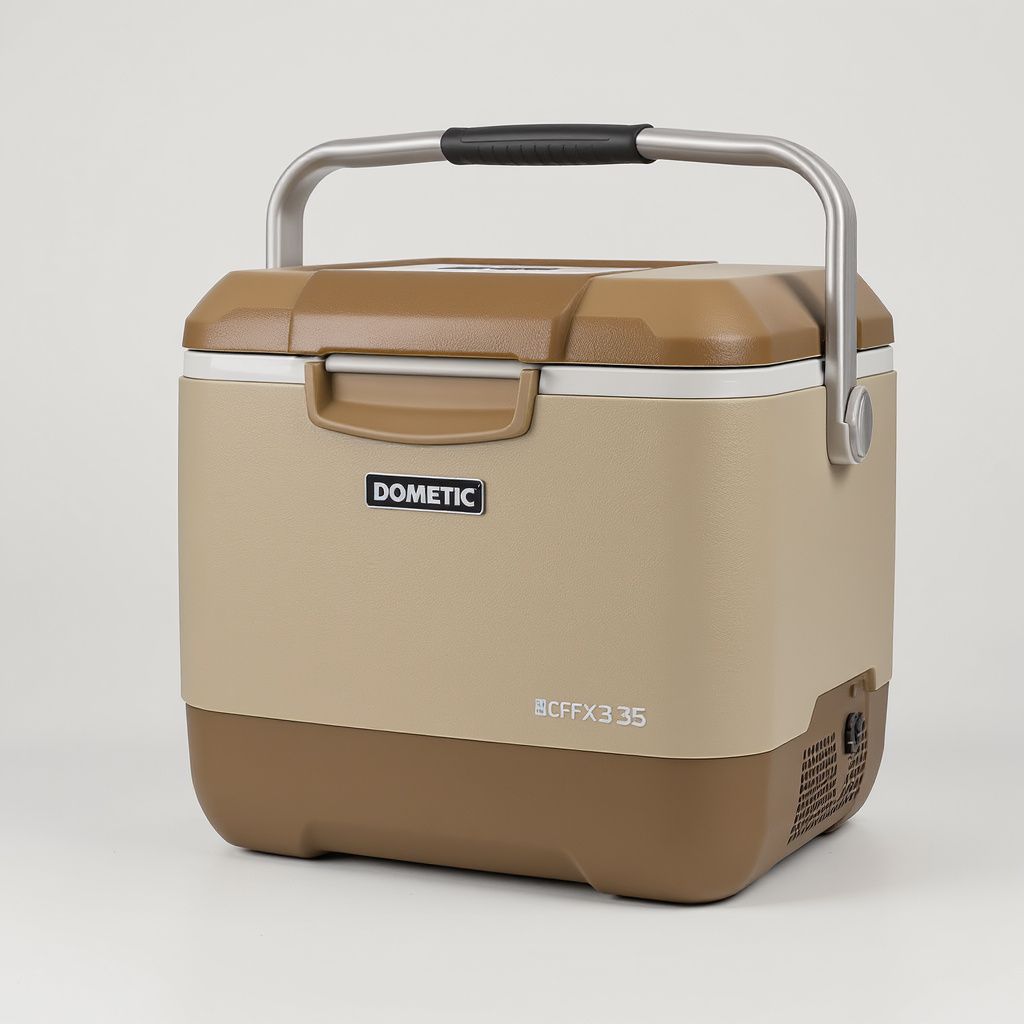
Dometic CFX3 35 Powered Cooler
The gold standard 12V fridge for serious van builds — efficient compressor, app control, and bombproof construction.
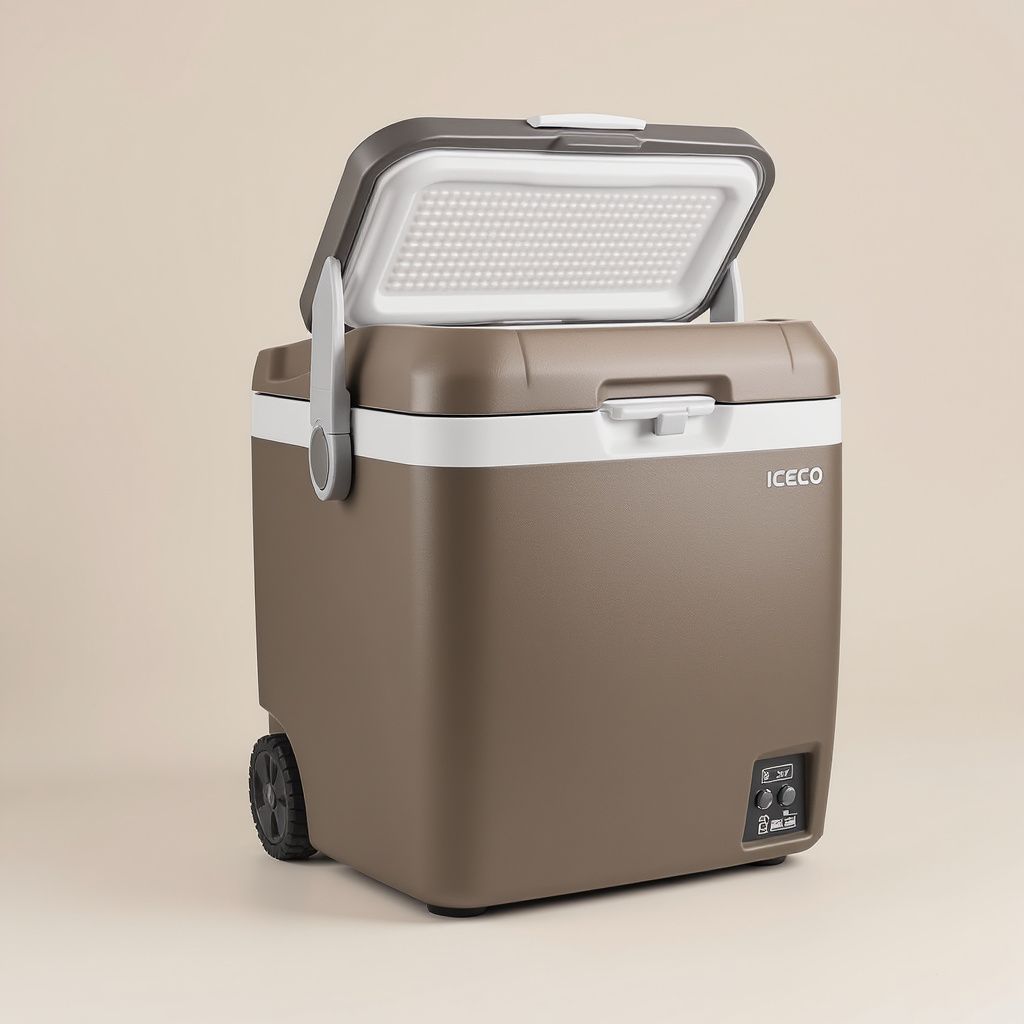
Iceco VL35 ProS 12V Fridge Freezer
The value pick. 80% of the Dometic experience at half the price — Secop compressor, solid insulation, no app gimmicks.
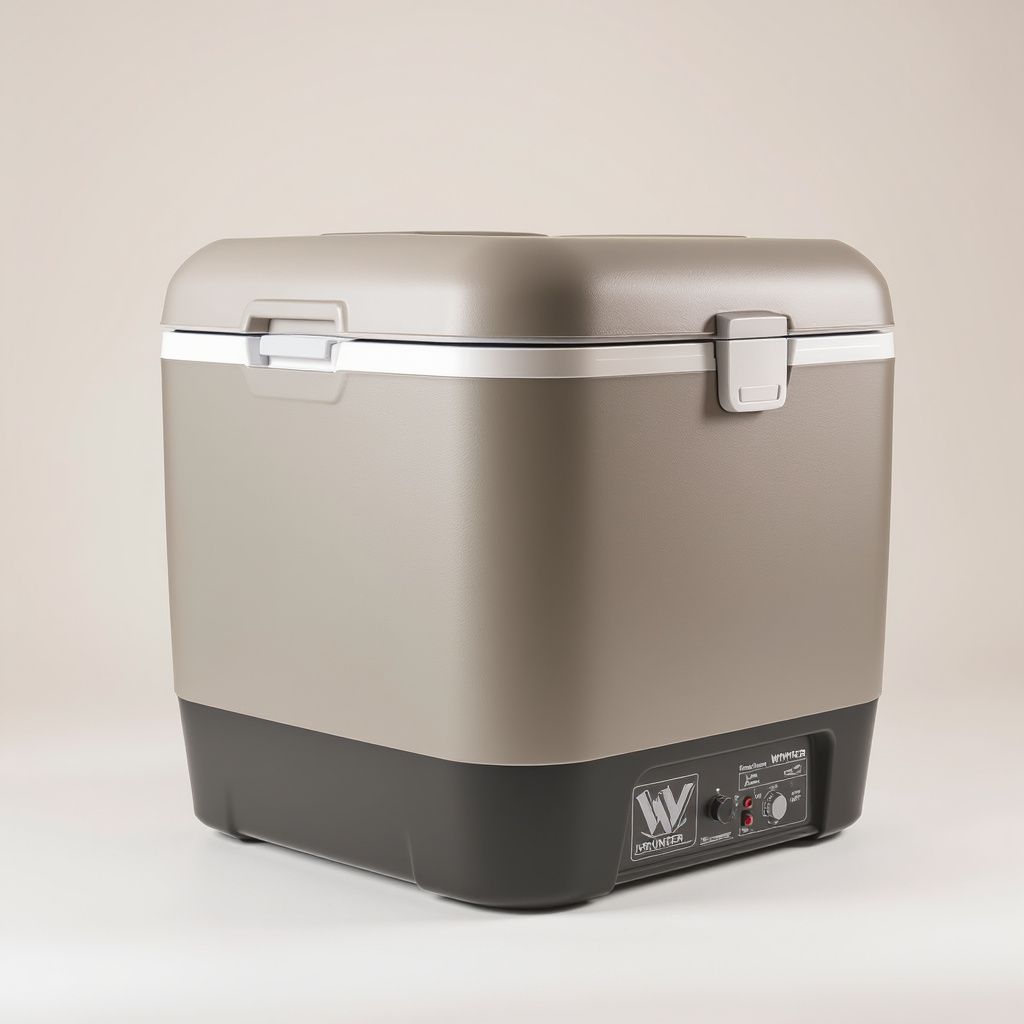
Whynter FM-45G 45-Quart Dual Zone Portable Fridge Freezer
The most versatile dual-zone 12V fridge for the price. Run it as fridge, freezer, or both at once — backed by a 1-year warranty and stocked at every major retailer.