Benriner Classic Japanese Mandoline Slicer
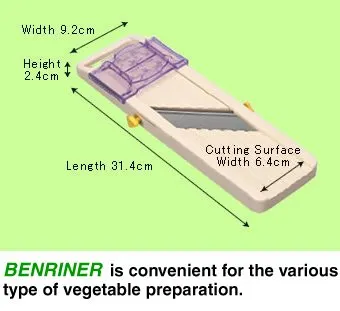
- Model
- BN-64W-1 (Amazon)
- Slicing Width
- 64 mm / 2.5 in
- Thickness Adjustment
- 0.5-8 mm dial (Amazon listing)
- Blades
- Straight plus coarse, medium, fine toothed
- Body
- ABS plastic (Benriner)
- Dimensions
- 12.75 x 3.625 in (Amazon)
- Origin
- Made in Japan
Overview — Who is this for?
The Benriner Japanese Mandoline Slicer is a slim, plastic-bodied hand mandoline with Japanese stainless steel blades, made by a company that has been making slicers in Japan for nearly a century. It isn't pretty or premium. It is a fast way to make even slices: paper-thin radishes, uniform potato slices for a one-pan gratin, julienned carrots for a stir-fry. It does this in a tool that fits in a galley drawer. It also needs respect. Mandolines are a common cause of kitchen cuts, and the finger guard isn't optional.
What the Amazon link sells: the Benriner Japanese Mandoline Slicer, "Classic Slicer, White," model BN-64W-1, listed as the "Official US Version with Authentic Retail Packaging." The listing says it comes with four stainless blades: one fixed straight blade plus coarse, medium and fine toothed blades.
Choose this if:
- You regularly slice firm vegetables (potatoes, carrots, cucumbers, radishes, cabbage) and want even, thin slices fast.
- You want a slim mandoline that fits a galley drawer.
- You will use the finger guard every time.
Skip this if:
- You mostly cook one-pot meals where rough knife cuts are fine.
- You won't commit to using the guard.
- You need thick cuts, or you mostly slice soft foods like ripe tomatoes.
What you are actually getting
The listing and Benriner's own Japanese catalog describe the slicer slightly differently, so here are both.
| Spec | Amazon listing (BN-64W-1) | Benriner catalog, Classic |
|---|---|---|
| Size | 12.75 x 3.625 in | 320 x 113 x 24 mm |
| Slicing width | 2.5 in | 64 mm |
| Thickness control | Easy-turn dial, 0.5 to 8 mm | Screw-type adjuster |
| Base | Non-skid rubber | Not listed |
| Blades | Straight plus 3 toothed | Flat plus 3 comb |
Both sources agree on the essentials: a 64 mm (2.5-inch) slicing surface, a plastic body (Benriner gives ABS resin, with a PP resin safety guard), stainless steel blades, a flat blade plus three interchangeable toothed blades, and manufacture in Japan. The Amazon listing gives a listed weight of about 0.7 lb. It also says the guard "hooks onto bowls," the slicer comes apart for cleaning, and it is top-rack dishwasher safe.
One discrepancy to know about. Benriner's Japanese catalog lists two 64 mm models: the "Classic," with a screw adjuster and a 24 mm-high body, and the "No.64 Pro," with a dial adjuster, a non-slip elastomer base and a 35 mm-high body. The Amazon listing is titled "Classic Slicer" but describes a dial and a rubber base, which match the Pro in Benriner's catalog. Either is the same basic Benriner design, but if the adjuster type matters to you, read the listing photos before you buy. The earlier version of this review gave a 0.5 to 5 mm range and a 7 oz weight. The listing now says 0.5 to 8 mm and about 0.7 lb, so we've changed those figures.
How it performs in a van kitchen
A mandoline does three things a knife does poorly.
Consistent thickness. A fixed blade height gives slices that are nearly identical. That matters for anything that cooks in layers or in one pan. Even potato slices cook through at the same time in a skillet, so you don't get burnt edges and raw centres. It matters for pickles and salads too.
Very thin slices. Cutting a radish or cucumber into slices well under a millimetre thick, consistently, is slow with a knife. On a mandoline it takes seconds per vegetable. That makes fresh salads, quick pickles and garnishes practical in a small kitchen.
Speed for a batch. Slicing a few potatoes or a bag of carrots goes much faster than knife work, which helps when you're cooking with one burner and limited time. Speed is also where cuts happen, so go steady and keep the guard on.
Space it needs. At about 12.75 inches long, the slicer can rest across a bowl or pot and slice straight into it. The listing says the guard hooks onto bowls. You need roughly the length of the slicer plus a hand's width of clear space. Never use it in a moving vehicle, and set it on a stable, flat surface or a bowl rim that won't slide.
What vegetables work best
Works well: potatoes, carrots, radishes, cucumbers, onions, apples, beets, turnips, zucchini, fennel, cabbage wedges, sweet potatoes, jicama and kohlrabi. Anything firm and reasonably even in shape.
Workable but awkward: ripe tomatoes (soft skin; a serrated knife is easier), very small items the guard can't grip, and anything wider than the 64 mm slicing surface, which you'll need to halve first.
Use a knife instead for: leafy greens, soft herbs, meat and fish, and the last small piece of any vegetable.
Why it suits a van
Size. At about 12.75 x 3.6 inches (per the listing), it lies flat in a galley drawer next to spatulas. Large restaurant-style mandolines with frames and legs don't fit most van drawers.
Simple parts. A plastic body, a fixed blade, three swap-in toothed blades and a guard. The listing says it comes apart for cleaning. Store the toothed blades in a small case or a zip bag so they don't rattle loose on rough roads.
Low cost. It sits at the budget end, so it's a tool you'll actually use rather than keep for best. A low price doesn't make it safer, though. The blade is as sharp as on a costly slicer.
Low water. Rinse it straight after use and the slices don't stick. A brush and a small amount of water clean it. The van kitchen dishwashing system covers low-water routines.
The safety conversation — read this
Mandolines are a well-known cause of serious cuts in home and professional kitchens. The blade is very sharp, the food moves fast over it, and your fingers approach the edge where you can't see it well. The guard is your main protection. A cut-resistant glove on the hand that holds the guard adds a second layer and costs little.
Rules for using it safely:
- Always use the finger guard. That includes small jobs you think aren't worth it. The listing says the guard "holds smaller pieces and protects fingers."
- Stop before the last piece. When the guard can't grip the remaining stub, put it aside for the knife or the stock pot. Never push the last piece across the blade with your palm.
- Clean with a brush, not fingers. Rinse it immediately, then use a dish brush across the blade, never a sponge wiped along the edge. If you remove the toothed blades for cleaning, handle them by their ends.
- Lower the setting before you pass it on or put it away. Turn the thickness to its thinnest setting, so less blade is exposed.
- Stow it in a drawer between uses. It isn't a countertop tool, especially if children or pets move through the van.
- Never use it in a moving vehicle or on a surface that slides.
Used carefully with the guard, it's manageable. Used carelessly, it's one of the most dangerous tools in the galley.
What it is NOT good at
Very thick cuts. The listing gives a maximum of 8 mm. Thicker steak fries or chunky vegetables are knife work.
Very small ingredients. Shallots, single garlic cloves and the last inch of a carrot are hard to hold securely in the guard. Use a knife.
Soft or leafy foods. Soft greens crumple against the ramp instead of slicing cleanly.
Large volumes for a crowd. It handles a family-sized batch, but a hand mandoline is slower than a framed slicer for big quantities.
How it compares with other slicing options
Rather than compare it with other mandolines we haven't sourced, here is how it fits with the site's own prep tools.
- A chef's knife. The Victorinox Fibrox 8-inch chef knife handles everything a mandoline can't: small pieces, soft foods, meat and big squash. The mandoline only wins on repeatable thin slices and speed.
- A santoku. The MAC Superior santoku is a thin, hard knife for vegetable prep on a small counter, and it gets closer to mandoline-thin slices by hand than a heavier blade does.
- A cutting board. The mandoline slices into a bowl, but you'll still want a board for the knife work around it. The John Boos R-Board is our hardwood pick.
When choosing between mandolines in general, look at:
- the slicing width, which here is 64 mm;
- the thickness range and how it's adjusted;
- whether the blades are steel or ceramic (ceramic can chip if dropped);
- how good the guard is;
- whether it fits your drawer.
Care and blade life
- Rinse it immediately after use, before starch dries on.
- The listing says the slicer is top-rack dishwasher safe. In a van, a rinse and a brush are usually enough.
- Dry it fully before storing, so the blade and fittings don't spot.
- Keep the toothed blades together in a small case.
- When the main blade starts to drag or tear rather than slice, it's dull. Replace it if replacement blades are available for your model, or replace the slicer. Don't try to sharpen a mandoline blade by hand in a moving van.
See the van knife storage and safety guide for how to stow a mandoline and its blades safely between uses.
The verdict
The Benriner Japanese Mandoline is a compact, budget-priced slicer that does a narrow job well: even, thin slices of firm vegetables, fast, in a tool that fits a drawer. The Amazon listing describes the four-blade set, a 0.5 to 8 mm dial, a 64 mm (2.5-inch) slicing surface and a guard that hooks onto bowls. Benriner's own catalog confirms the Japanese manufacture, the materials and the 64 mm width. Check the listing photos if you care which adjuster you get. Buy it if you cook vegetables often and will use the guard every single time. Skip it if knife cuts already cover your cooking.
FAQ
What thickness range does it slice? The Amazon listing gives 0.5 to 8 mm, set with a dial. Benriner's Japanese catalog lists the Classic with a screw adjuster and doesn't give a range, so check the listing for the unit you buy.
Is it dishwasher safe? The Amazon listing says it is top-rack dishwasher safe and comes apart for cleaning. Rinsing it right after use and brushing the blade is enough most of the time.
Do I really need to use the guard? Yes, every time. Mandolines are a common cause of serious kitchen cuts. A cut-resistant glove adds a second layer of protection.
Will it fit in a van drawer? Usually. The listing gives about 12.75 x 3.6 inches, and Benriner's catalog lists the Classic at 320 x 113 x 24 mm. Measure your drawer against those figures.
Can it julienne? Yes. The listing includes three toothed blades (coarse, medium and fine) for julienne and matchstick cuts, as well as the straight slicing blade.
Sources and verification
- https://www.benriner.co.jp/product/: Benriner's official product catalog (Japanese). Classic: 320 x 113 x 24 mm, 64 mm slicing width, screw-type adjuster, ABS body, PP guard, stainless flat and comb blades, made in Japan. No.64 Pro: 323.5 x 113 x 35 mm, dial adjuster, elastomer non-slip base (checked 2026-10-12)
- https://www.benriner.co.jp/: confirms the official Benriner site and the company's history of nearly 100 years (checked 2026-10-12)
- Amazon listing ASIN B01CZXJJBU: model BN-64W-1, "Classic Slicer, White", Official US Version, four stainless blades, BPA-free plastic body, 12.75 x 3.625 in, 2.5 in slicing surface, non-skid rubber base, guard that hooks onto bowls, dial adjustment from 0.5 to 8 mm, disassembles, top-rack dishwasher safe, listed weight (checked 2026-10-12)
Compare with similar products
See how this stacks up against the other knives & prep we've reviewed.
Related Reviews
For: Primary galley knife
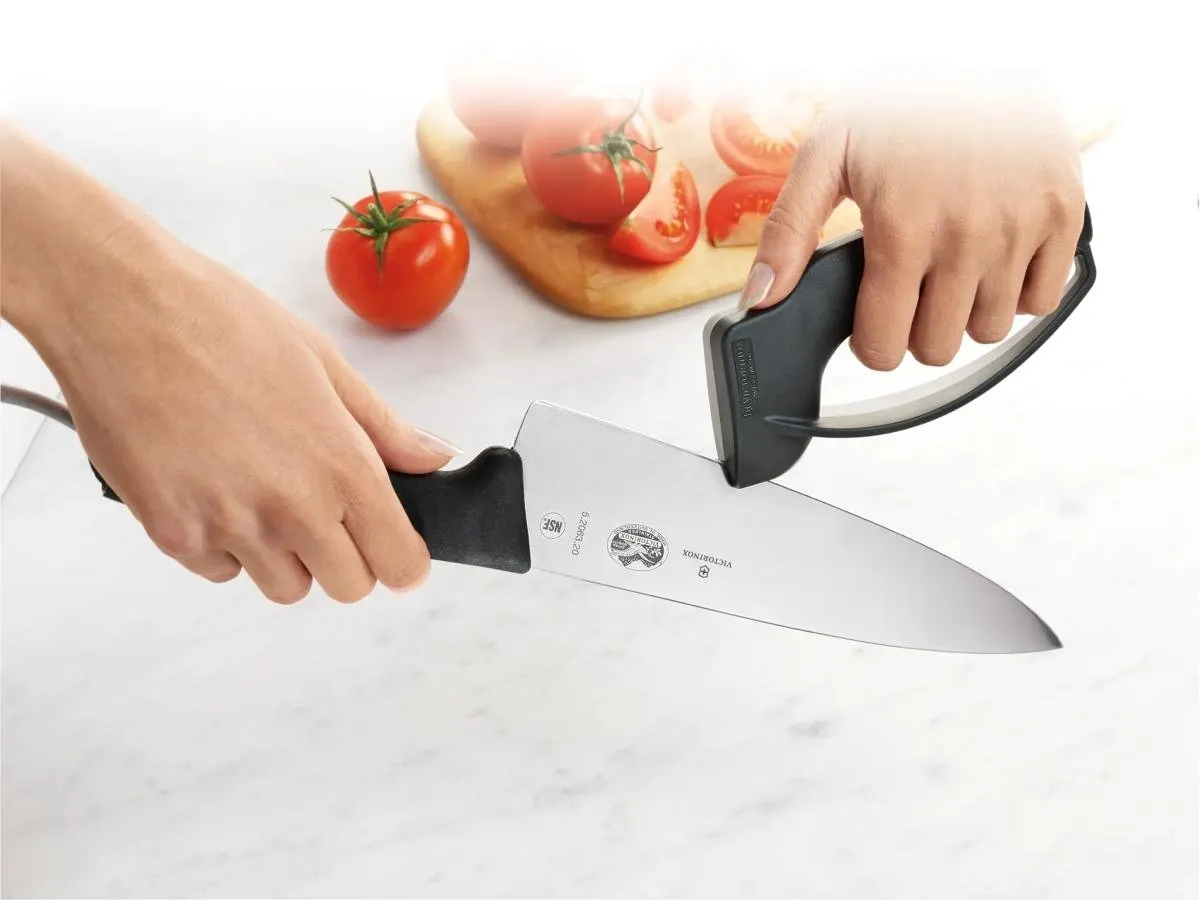
Victorinox Fibrox 8-Inch Chef Knife
A stamped Swiss chef knife common in commercial kitchens. A modest price for a 7.9-inch high-carbon stainless blade that is easy to resharpen, and the textured Fibrox handle grips even with wet hands. Victorinox lists it as dishwasher safe; hand washing is kinder to the edge. It covers nearly all galley prep on its own.
For: Folding knife for picnics, trail
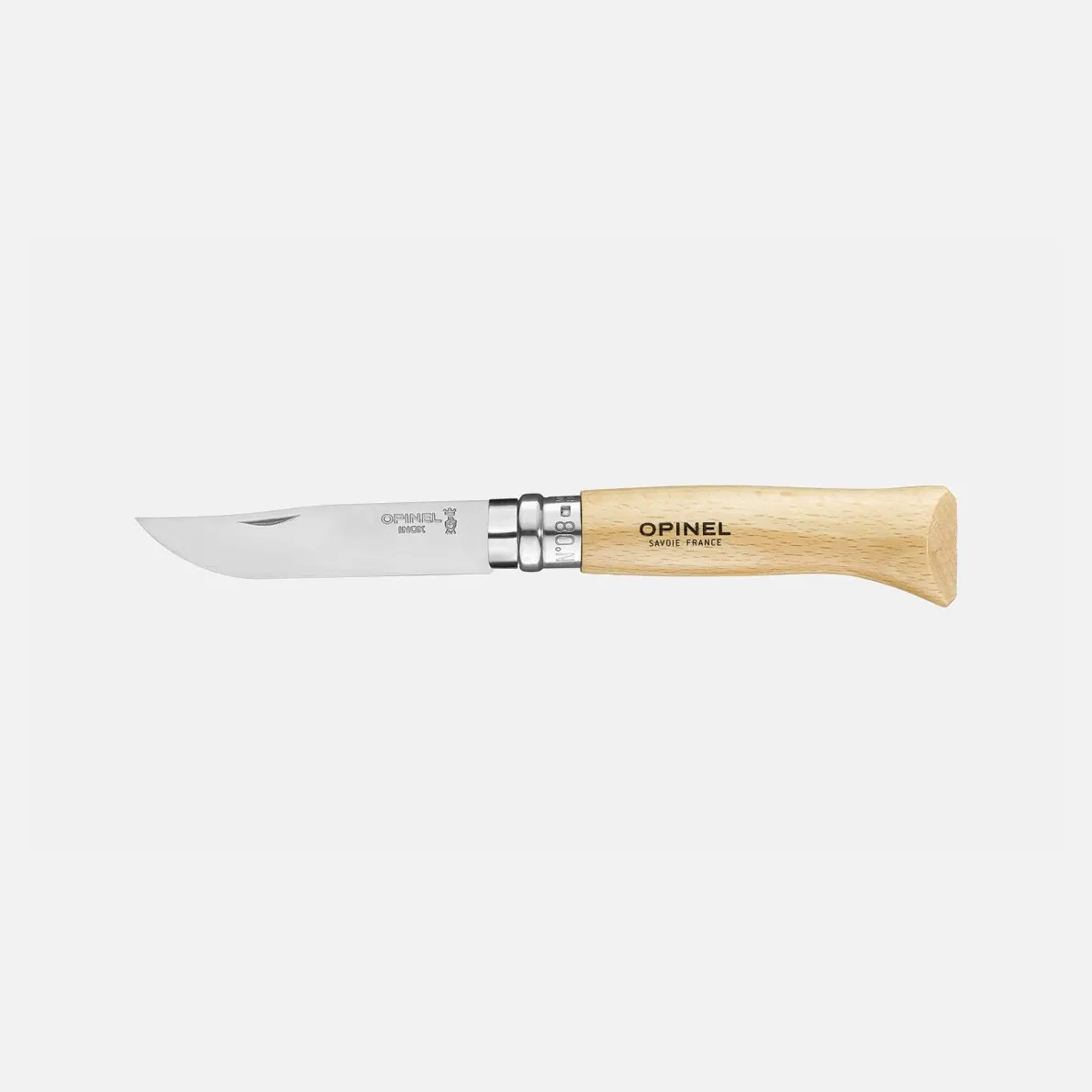
Opinel No. 8 Stainless Folding Knife
A French folding knife made since 1890: a 3.28-inch Sandvik 12C27 stainless blade, beechwood handle and Virobloc ring that locks the blade open or closed. This listing includes a faux-leather sheath. Pocket-friendly and good for cheese, fruit and trail lunches; a practical second knife for a van.
For: Checking meat doneness
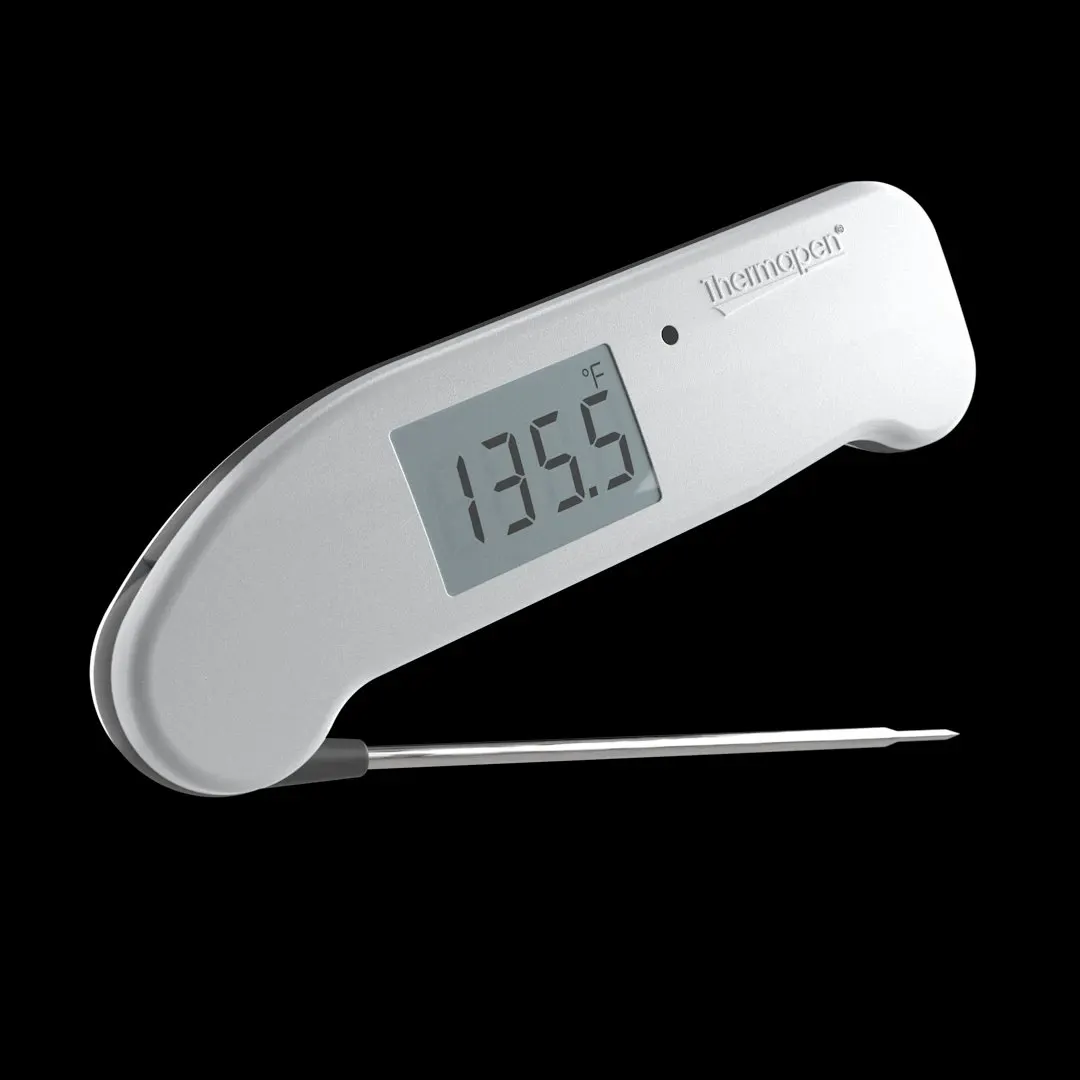
ThermoWorks Thermapen ONE Instant-Read Thermometer
A fold-out instant-read thermometer that ThermoWorks rates at about one second and ±0.5°F in key temperature ranges, with IP67 sealing, a NIST-traceable certificate and a five-year warranty. Worth the cost for anyone who cooks protein often; keep it off hot surfaces and out of the dishwasher.