John Boos R-Board Edge-Grain Maple Cutting Board 18x12

- Model
- R01
- Dimensions
- 18 x 12 x 1.5 in
- Weight
- 10 lb (Boos); 4 lb (Amazon listing)
- Material
- Edge-grain Northern hard rock maple, NSF certified (Boos)
- Finish
- Oil finish
- Origin
- Made in USA with domestic and imported materials (Boos)
- Warranty
- 1-year against defects (Amazon listing)
Overview — Who is this for?
The John Boos R-Board Edge-Grain Maple Cutting Board (18x12) is a thick, reversible hardwood board from a company that has made butcher blocks and boards in the USA since 1887. In a van it's a heavy, rigid object that needs a dedicated storage spot. In exchange you get a stable, knife-friendly cutting surface that you can sand smooth and re-oil instead of replacing.
This review is for van cooks who prep real food most days and want a board that won't skate around the counter or dull their knives. If you only need to cut an apple on weekend trips, a thin plastic board is lighter and fine.
What the Amazon link sells: the John Boos R-Board Series rectangular maple board, 18 x 12 inches, model R01.
Choose this if:
- You cook from scratch most days and want a stable, knife-friendly surface.
- You have a dedicated spot to store a heavy, rigid 18x12 board.
- You're fine with hand-washing and oiling it at least monthly.
Skip this if:
- Weight matters. This is a solid 1.5-inch maple slab, and the sources below put it at 4 to 10 lb.
- You want a board you can put in a dishwasher.
- You only cook occasionally on weekend trips.
Specs and sources
| Spec | John Boos product page | Amazon listing |
|---|---|---|
| Size | 18 x 12 x 1-1/2 in (R01) | 18 x 12 x 1.5 in |
| Weight | 10 lb | 4 lb |
| Wood | Northern hard rock maple, NSF certified | Maple |
| Construction | Edge grain, reversible | Edge grain, reversible |
| Warranty | Linked, not stated | 1-year, defects |
Both sources describe recessed finger grips on the ends and an oil finish. Boos says the board is "Made in the USA with domestic and imported materials." The Amazon listing says hand-wash only and recommends Boos Mystery Oil and Board Cream, which are sold separately.
On weight. The two published figures disagree, 10 lb from Boos and 4 lb from Amazon. As a cross-check, a solid hard-maple slab of 18 x 12 x 1.5 inches works out at roughly 8 lb, using a typical density for hard maple. Plan for something in the 8 to 10 lb range rather than the lower listing figure. We previously listed it at 1.25 inches thick and about 5 lb, and gave a lifetime warranty. Those were wrong for this model and have been corrected to Boos's 1.5 inches and the Amazon listing's 1-year warranty.
What edge grain means
Boos's FAQ describes edge-grain boards as "full length wood rails approximately 1-3/4″ wide that span the entire length of the board," giving "a uniform thickness and true flat cutting surface." The alternative is end grain, where short blocks stand on end so the knife cuts into the fibres' ends. Boos says end grain fibres "absorb the impact of the knife blade, allowing your knife to stay sharper." End grain is the more knife-friendly option. It's also usually thicker, heavier and more expensive.
For a van, edge grain is the practical compromise. It's flat and stiff, kinder to a knife edge than glass, stone or very hard composite surfaces, and lighter than a comparable end-grain block.
How it performs in a van kitchen
Stability. A heavy board doesn't slide around on a van counter, even one with a slight tilt. A thin plastic board on a slick countertop often needs a damp cloth underneath to stay put.
Knife feel. Maple is hard enough to resist deep gouges but gives slightly under the edge, so knives stay sharp longer than on very hard surfaces. That pairs well with a softer, easy-to-sharpen blade like the Victorinox Fibrox, or a thin, harder blade like the MAC Superior santoku.
Reversible. Both faces are cutting surfaces. Keeping one side for raw meat and the other for vegetables and bread is a reasonable habit. Wash both sides properly whatever you do.
Sanding and renewal. Scarring on a hardwood board can be sanded out. Sand with the grain, wipe off the dust, and re-oil. Each sanding removes a little thickness, which a 1.5-inch board can easily afford.
Size. 18 x 12 inches leaves room for prepped ingredients on one side and still fits many van counters. Measure your counter and your storage slot before buying. Boos also sells this board at 20 x 15 and 24 x 18 inches, which are too big for most van galleys.
Care: Boos's own instructions
Boos's FAQ is specific, and in a van it's worth following closely.
- Wash: "washing it with hot soapy water after each use and drying it with a clean paper towel or letting it air dry."
- Never dishwasher, never soak. Boos says wood boards are "NOT dishwasher safe" and warns, "Do not soak or submerge the board in water, as this will disrupt the moisture content causing the rails to split."
- Sanitize when needed: use "one teaspoon of liquid chlorine bleach in one quart of water or a one to five dilution of vinegar."
- Oil: "a minimum of once a month (depending upon the use and household conditions)," and whenever the board "becomes dry and lighter in color." Boos recommends its Mystery Oil and Board Cream. Food-grade mineral oil is the common substitute.
Van-specific notes.
- Dry it standing up. Dry the board on its edge so air reaches both faces. Drying flat on a damp counter is how one face swells more than the other and the board warps.
- Plan for dry heat. Desert heat and a van heater both dry wood out. Oil more often than monthly in those conditions. A board that looks pale and dull needs oil.
- Low water. Scrape scraps into the trash, wipe with a soapy cloth, rinse with a small cup of water, and dry. That uses far less water than rinsing under a running tap. See the van kitchen dishwashing system.
- After raw meat. Wash with hot soapy water. When hot water is limited, use Boos's bleach or vinegar dilution and let the board dry fully before you put it away.
Storing and securing it in a moving van
A board this heavy needs securing. Loose, it becomes a projectile under hard braking.
- Store it on edge. Stand it in a slot between a cabinet side and a divider, or behind a lipped rail, so it can't tip or slide.
- Strap it. If it lives flat on a counter while you drive, use a strap or a non-slip liner under it. Our stop van kitchen rattles guide covers liners and latches.
- Don't store it wet. Trapping a damp board in a closed cabinet risks mould and warping.
What the R-Board is NOT good at
Packing small. It doesn't fold. It needs a counter-sized shelf or an upright slot.
Ultralight builds. At 8 to 10 lb, it's the wrong board for a minimal car-camping kit. A thin plastic mat is the right answer there.
Dishwashers and soaking. Boos says no to both.
Long-term acid contact. Cutting a lemon is fine. Leaving acidic juices sitting on the wood isn't ideal, so wipe them up.
How it compares
- Plastic boards: lighter, cheaper and often dishwasher safe. They scar over time and need replacing once deeply grooved. They're the right choice for weekend kits and minimal builds.
- Bamboo boards: lighter than maple, but very hard on knife edges compared with maple. Their quality varies a lot by maker.
- End-grain blocks: kinder still to knives, per Boos, but thicker and heavier. They're a home-kitchen choice.
- A thin board plus a mandoline: if most of your prep is slicing vegetables, the Benriner mandoline slices straight into a bowl and reduces how much board space you need.
The verdict
The John Boos R-Board 18x12 is a 1.5-inch, edge-grain, reversible hard maple board, NSF certified per Boos, that gives a van cook a stable, knife-friendly surface that can be sanded and re-oiled rather than thrown away. It's heavy: Boos lists 10 lb, Amazon lists 4 lb, and the physics points to the higher end. Boos's care rules are firm: no dishwasher, no soaking, oil at least monthly. If you cook most days, have a secure place to store it on edge, and will do the oiling, it's a good board for a van. If weight or space is tight, a plastic board is the better choice.
See the van knife storage and safety guide for the knives that pair with this board, and the knives and prep complete guide for the full prep setup.
FAQ
How often should I oil it? John Boos says "a minimum of once a month," and whenever the board looks dry or lighter in colour. In a dry climate or with a heater running, oil it more often.
Can it go in the dishwasher? No. Boos says wood boards are "NOT dishwasher safe," and warns against soaking or submerging them because that can split the rails.
How do I sanitize it after raw chicken? Wash it with hot soapy water. To sanitize further, Boos suggests one teaspoon of liquid chlorine bleach per quart of water, or a one-to-five vinegar dilution. Dry it fully afterwards.
How heavy is it? John Boos's product page lists the 18x12 at 10 lb, and the Amazon listing says 4 lb. A maple slab this size works out at about 8 lb, so plan for 8 to 10 lb.
What warranty does it have? The Amazon listing gives a 1-year guarantee against defects in workmanship and material. Boos's product page links to its warranty without stating the terms.
Sources and verification
- https://www.johnboos.com/products/maple-cutting-boards-1-1-2-thick-r-board-series: R01 at 18 x 12 x 1-1/2 in, 10 lb, Northern hard rock maple (NSF certified), edge grain, reversible with recessed finger grips, oil finish, made in the USA with domestic and imported materials, other sizes (checked 2026-10-12)
- https://www.johnboos.com/resources/faqs/: washing, drying, oiling at least monthly, not dishwasher safe, do not soak, bleach and vinegar sanitizing ratios, edge grain vs end grain (checked 2026-10-12)
- https://www.johnboos.com/search?q=R01: R-Board series listings (checked 2026-10-12)
- Amazon listing ASIN B00063QBF4: John Boos R-Board Series 18 x 12 in, model R01, 1.5 in thick, edge grain, reversible, recessed grips, oil finish, hand-wash only, 4 lb listed weight, 1-year guarantee against defects (checked 2026-10-12)
Compare with similar products
See how this stacks up against the other knives & prep we've reviewed.
Head-to-head comparisons
Related Reviews
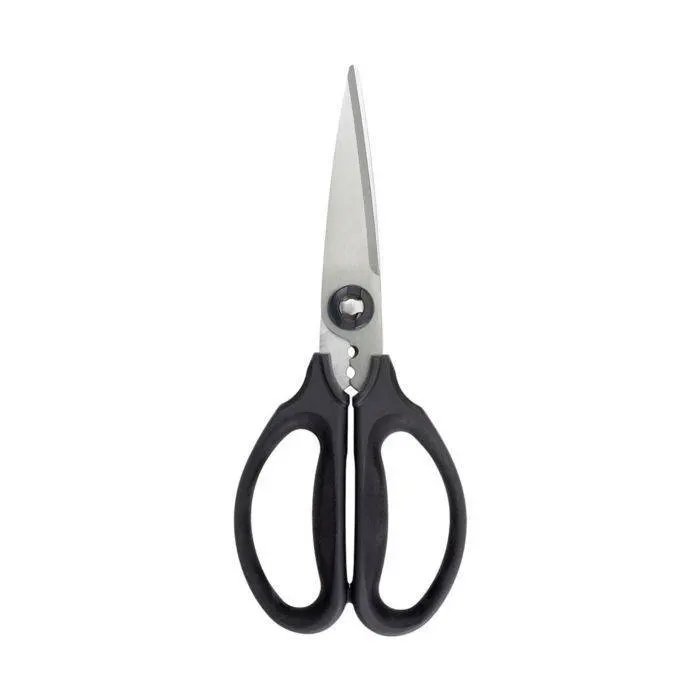
For: Herbs, packaging, light poultry
OXO Good Grips Multi-Purpose Kitchen Shears and Herb Scissors
The inexpensive kitchen tool that quietly does three jobs a knife would do badly in a cramped van galley — snipping herbs directly into a pot, spatchcocking a chicken, and opening stubborn clamshell packages without pulling out a blade. OXO's soft cushioned handles make these usable one-handed, and the take-apart design means you can actually clean them.
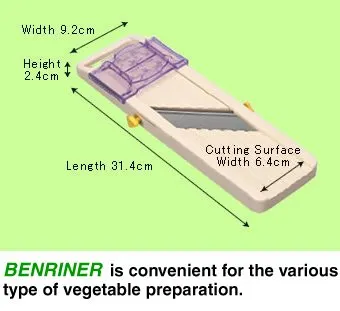
For: Fast, uniform vegetable slicing
Benriner Classic Japanese Mandoline Slicer
An affordable Japanese mandoline widely used by professional cooks. It makes paper-thin radishes, uniform potato slices for gratins and julienned carrots much faster than a knife, and it packs into a drawer. Use the finger guard every time.
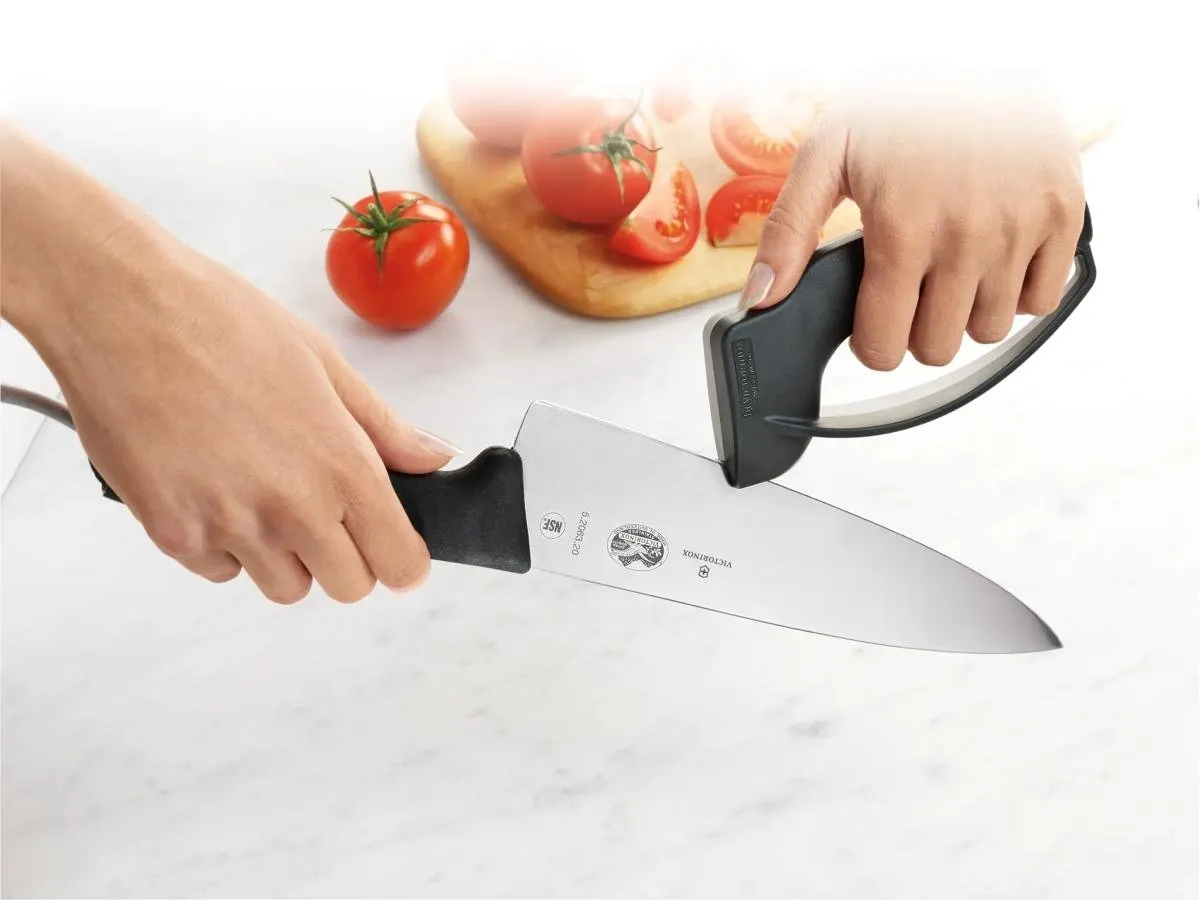
For: Primary galley knife
Victorinox Fibrox 8-Inch Chef Knife
A stamped Swiss chef knife common in commercial kitchens. A modest price for a 7.9-inch high-carbon stainless blade that is easy to resharpen, and the textured Fibrox handle grips even with wet hands. Victorinox lists it as dishwasher safe; hand washing is kinder to the edge. It covers nearly all galley prep on its own.