FoodSaver Compact Vacuum Sealer
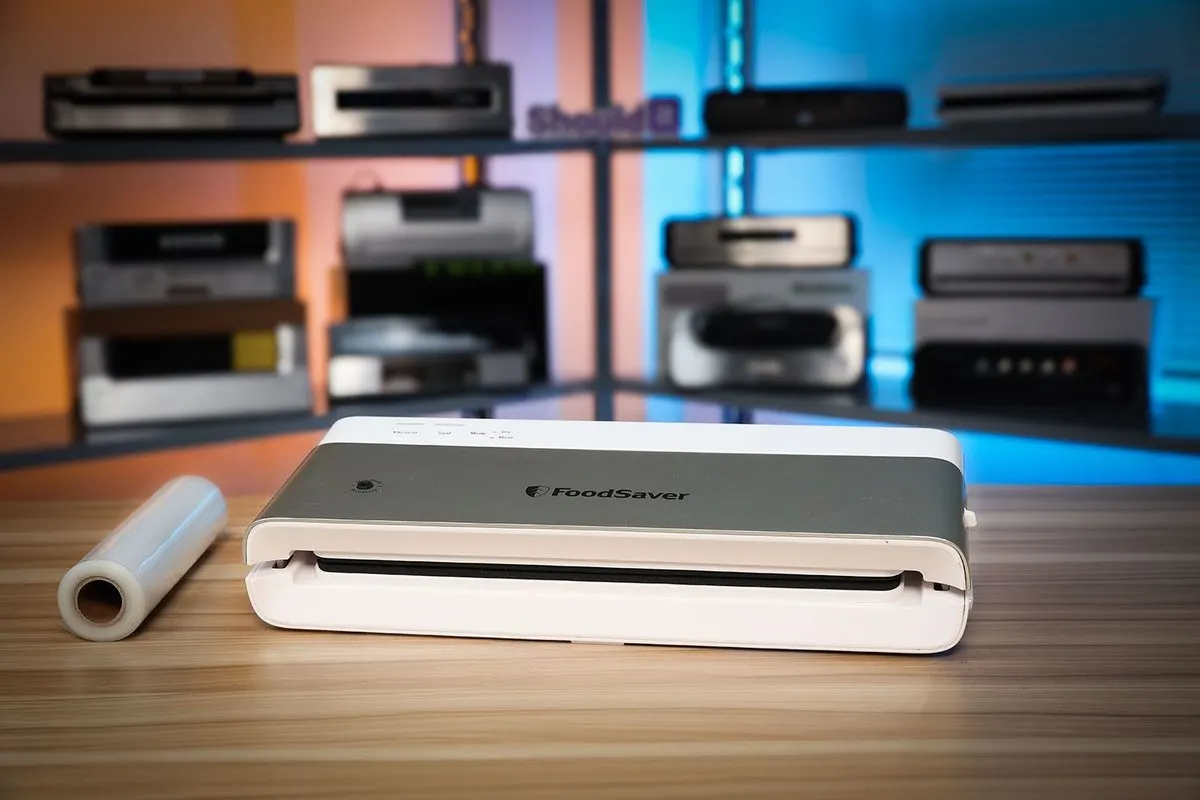
- Model
- 2115762
- Settings
- Dry / moist
- Storage
- Vertical
- Bags
- FoodSaver rolls and pre-cut bags (11 in roll included)
- Included
- 11 in x 8 ft roll, 3 quart bags, 2 gallon bags (listing)
- Power Source
- 120V AC (wattage not published; ~100 W assumed)
Overview — Who is this for?
This FoodSaver Compact Vacuum Sealer review is for the van lifer who has opened their 12V fridge one too many times to find a half-used block of cheese growing a fur coat, freezer-burned meat, or a bag of coffee gone stale. Food waste in a van is not just annoying. You paid for that food, drove to a grocery store to get it, and used scarce fridge space to store it. A compact vacuum sealer keeps cheese, cured meats, coffee and dry goods in good condition longer and makes freezer-zone meal prep practical.
What the Amazon link sells: "FoodSaver Compact Vacuum Sealer Machine with Airtight Bags and Roll - Ideal for Sous Vide and Airtight Food Storage, White" (ASIN B08BDHZ1PV, model 2115762). Per the listing, the kit includes one 11-inch x 8-foot roll, three quart bags and two gallon bags. It's a compact unit designed to store upright, with settings for dry and moist foods. Older versions of this page called it the VS0160; that's not the model this listing sells, and we've removed specs that came from it.
A note on sources: FoodSaver's own website refused our requests, so we could not open a FoodSaver spec page or manual for model 2115762. Product details below come from the Amazon listing, and food-storage times come from the FDA's refrigerator and freezer storage chart. Both are listed at the end.
Choose this if:
- You buy fresh groceries regularly and want them to keep longer
- You have a freezer zone and want to freeze portions without freezer burn
- You have at least a small pure sine wave inverter
Skip this if:
- You mostly eat out or eat canned and shelf-stable food
- You have no inverter or AC outlet at all
- You need to seal lots of liquids or large batches regularly
We want to be clear about what this product is and is not. It is not a freeze-dryer, it is not a canning system, and it does not make perishable food shelf-stable at room temperature. What it does is remove most of the air from a plastic bag and heat-seal it. That slows oxidation, mold, staling and freezer burn, which is a big deal for food quality. It does not make perishable food safe for longer in the fridge, a point covered in detail below.
The question is whether the workflow justifies the cabinet space and the ongoing bag cost. For anyone who buys fresh groceries regularly and has a freezer zone, we think it does, for the reasons below.
How Vacuum Sealing Extends Food Life
The science here is straightforward. Much food spoilage in a refrigerator is caused by mold and aerobic bacteria, which need oxygen. When you vacuum seal a piece of cheese or a bag of coffee, you remove most of the air around the food, and those organisms grow much more slowly. The food still deteriorates eventually (enzymes keep working). Here is the part most vacuum-sealer marketing skips: removing oxygen slows spoilage, but it does not stop the bacteria that make people sick. Listeria grows at fridge temperatures, and Clostridium botulinum actually prefers a low-oxygen environment. So vacuum sealing extends how long food keeps its quality — flavor, texture, no mold, no freezer burn — far more than it extends how long perishable food is safe in the fridge.
In practical terms, this is where vacuum sealing helps a van kitchen, and where it does not. Fridge-safety figures below follow the FDA's refrigerator and freezer storage chart (for food kept at 40°F or below), which doesn't change because a bag has the air pulled out:
Raw chicken breast: 1 to 2 days in the fridge for fresh poultry, whether it is vacuum sealed or not. The real win is the freezer. The FDA notes that food kept at 0°F stays safe indefinitely and that its freezer times are for quality only, and it advises overwrapping meat in airtight packaging if you freeze it for more than 2 months. A vacuum bag is exactly that kind of airtight wrap, and it is what keeps freezer burn away. If your 12V fridge has a freezer zone, seal and freeze portions on shopping day and move one to the fridge to thaw the night before you cook it. That is how you buy chicken on Sunday and still eat it on Friday.
Hard cheese (cheddar, gouda, parmesan): a low-risk food where sealing helps most. Hard cheese spoils mainly by mold and drying out, both of which need air, so a sealed block typically keeps its quality noticeably longer than one in loose plastic wrap. Cut and reseal in small blocks so each opened piece gets eaten quickly.
Cooked rice and grains: treat them like other cooked leftovers, which the FDA chart gives 3 to 4 days in the fridge, sealed or not. Cool rice quickly and freeze whatever you will not eat within that window. Vacuum-sealed flat bags of rice freeze and reheat well.
Fresh herbs: a few days in a damp paper towel; sealing can stretch that, but full vacuum crushes delicate herbs. A rigid container or a gentle partial vacuum works better than a hard seal.
Sliced deli meat: 3 to 5 days once opened, per the FDA chart, sealed or not. Deli meat is a classic Listeria risk, so do not stretch it. Resealing keeps slices from drying out within that window, and sealing in small portions for the freezer is the way to stock up.
Leftovers (soups, stews, chili): 3 to 4 days in the fridge, sealed or not, per the FDA chart, which gives soups and stews 2 to 3 months in the freezer for best quality. Freeze them flat in sealed bags and they stack like file folders. (Freeze liquids in the bag before final sealing, or the sealer can pull liquid toward the seal and the machine.)
These timelines assume your 12V fridge is holding at or below 40°F, ideally 34 to 38°F. If your fridge temperature drifts above 40°F — which happens in vans when a small battery bank trips the low-voltage cutoff — no packaging makes perishable food safe; a cheap fridge thermometer matters more than any sealer. Where vacuum sealing does help is everything else: hard cheese, cured meats, coffee, nuts, and every portion you freeze.
The Meal Prep Workflow
Here is where a vacuum sealer earns its place for full-time van lifers. Once a week, typically on a day when you have shore power or strong solar, cook a batch of two or three proteins and a few sides. Portion them into individual sealed bags, keep the first three days in the fridge, and freeze the rest.
A typical prep looks like this: grill four chicken breasts, cook a pot of rice, roast a pan of vegetables. Let everything cool. Seal portions — one chicken breast plus rice plus vegetables per bag, or separate bags by ingredient for more flexibility. Keep the first three days of portions in the fridge and put the rest straight into the freezer zone, since cooked food is only good for 3 to 4 days in the fridge. Flatten the bags and stack them. Each evening, move the next day's bag from freezer to fridge to thaw. Reheat in a pot of simmering water or tear it open and pan-fry. The Amazon listing markets the compact sealer for sous vide, but check that your specific bags are rated for simmering before reheating in them.
The sealer itself uses very little energy (see the power section). The energy cost on prep day is the cooking, not the sealing. The payoff is less daily cooking, less shopping, and less food thrown out.
For a broader grocery strategy that integrates vacuum sealing with shopping schedules and fridge management, our van life grocery shopping strategy guide covers the full picture.
Bag Cost Economics
The honest objection to vacuum sealing is the ongoing cost of bags. You cut bags to size from rolls, and a typical meal-portion bag uses roughly 12 to 14 inches of roll. If you seal ten portions a week, bags become a steady monthly expense.
Whether that's worth it depends on how much food you currently throw out. Food waste is common everywhere, and in a van, with a small fridge and less precise temperature control, it's often worse. If you regularly bin moldy cheese, freezer-burned meat and stale coffee, the bags are usually cheaper than what you're losing. If you shop small and eat everything within a few days, a sealer saves you little.
Buying rolls in multi-packs and cutting each bag only as long as you need bring the cost down. The listing says the machine works with all FoodSaver bags, rolls and accessories and seals with 35% less bag waste than FoodSaver's previous models. Third-party "FoodSaver-compatible" textured rolls exist, but FoodSaver doesn't vouch for them, so test one before buying in bulk.
One cost-saving tip: you can wash and reuse vacuum bags that held dry or low-risk foods. A bag that held cooked rice, cheese or bread can be turned inside out, washed with soap, dried completely, and re-sealed slightly shorter. Don't reuse bags that held raw meat, fish or greasy foods.
What Seals Well vs What Does Not
Dry and semi-dry foods are where any vacuum sealer works best: cheese, cured meat, coffee beans, nuts, grains, dried fruit, jerky. Raw meat seals well too, especially for freezing.
Moist and liquid foods are the challenge. This compact FoodSaver has a moist-food setting, which is designed for foods with surface moisture, such as marinated meat. It doesn't make free liquids sealable. Soups, stews and sauces get pulled toward the seal during the vacuum cycle, and liquid in the seal area causes a weak seal or no seal.
The workaround is the freeze-first method. Pour your soup or sauce into a bag, lay it flat in the freezer for a few hours until solid, then vacuum seal the frozen block. This requires freezer space and planning ahead, which isn't always available in a van.
Soft or crushable items — bread, chips, muffins — get flattened by a full vacuum. Freeze them briefly first so they hold their shape, or store them in a rigid container instead.
The Compact Design
FoodSaver's compact sealer is built for small kitchens: the listing says it "stores vertical to save valuable countertop space", so it can stand in a cabinet corner or slide into a gear bin. The listing's dimension fields give about 17.9 x 5.6 x 10.2 inches and 4.5 lb. Those may be box measurements, so treat them as the maximum space to plan for.
It works with FoodSaver bags and rolls, and the kit includes an 11-inch roll, so 11-inch rolls are the width to buy. Keep a pair of scissors with it for cutting roll stock to length. The listing also says it connects to a FoodSaver handheld sealer (sold separately) for zipper bags and canisters.
Compact sealers like this are designed for a handful of bags at a time. That suits a weekly prep session of several portions. If you regularly process twenty bags in a sitting, a larger countertop model is less tedious.
Power Requirements in a Van
The sealer runs on 120V AC, so in a van it needs an inverter.
Rated watts: the Amazon listing doesn't state a wattage, and FoodSaver's site refused our requests, so we couldn't confirm one. Small vacuum sealers of this type are low-power appliances; treat roughly 100 W as a working assumption and check the rating label on the unit when it arrives.
What that means in Wh (estimate): A vacuum-and-seal cycle runs for well under a minute. Assuming about 100 W for 30 to 40 seconds, one bag uses about 1 Wh at the outlet. Allowing for inverter losses (about 85 to 90 percent efficiency), that's roughly 1 to 1.5 Wh from the battery, or about 0.1 Ah at 12.8 V. A ten-bag prep session uses roughly 10 to 15 Wh, about 1 Ah.
Inverter size: a small pure sine wave inverter of about 300 W covers it with headroom. The sealer has a small pump motor and a heat-seal strip, so it doesn't have the large startup surge of a blender.
Is it realistic off-grid? Yes. This is one of the easiest kitchen appliances to run from a modest lithium battery and inverter. If your van has no inverter, a small plug-in inverter is enough; anything larger or hard-wired should follow the inverter manufacturer's installation instructions, using a qualified RV electrical technician where codes or insurers require one. For how this fits into a full electrical budget, see the power calculator.
Compact Storage Benefits
Beyond food preservation, vacuum sealing compresses food packages to close to their minimum volume, which matters in a van fridge where every cubic inch counts. A sealed chicken breast is shrink-wrapped to the shape of the meat, without the dead air space of a container or loosely filled zip-lock. Lay sealed bags flat and you can stack them like files in a cabinet.
How much space that saves depends on what you store. Round or square rigid containers waste the corners and the gaps between them; flat bags fill the box edge to edge and can be filed upright in a fridge basket. In a van, where a larger fridge means losing cabinet space, that's a meaningful gain.
Sealed bags also don't spill. A container of leftovers can tip and leak in your fridge; a sealed, frozen bag stays sealed no matter how much the van rocks on a dirt road.
Long-Term Storage and Freezer Use
If your van has a dual-zone fridge-freezer, the sealer becomes more valuable. The FDA notes that food kept at 0°F stays safe indefinitely; what packaging changes is quality. The Amazon listing claims the sealer "keeps food fresh in the freezer up to 5x longer", with no comparison stated; treat that as a best-case marketing figure. What is well established is that airtight packaging prevents the drying and oxidation that cause freezer burn.
This means you can stock your freezer compartment with several weeks of protein during a big resupply run without the quality dropping off. Many 12V fridge freezer zones run warmer than 0°F, so expect shorter quality windows if yours sits at 10 to 15°F. For van lifers who boondock for extended periods between town runs, a well-stocked freezer zone is the difference between eating well in week three and living on cans.
Who Should Skip This
Skip the FoodSaver Compact Vacuum Sealer if you eat out for most meals and rarely cook in your van. Skip it if you have no inverter or AC outlet at all and don't plan to add one. Skip it if you primarily eat canned, dehydrated or shelf-stable foods that don't benefit from sealing. And skip it if you shop daily and eat everything within a day or two — the sealer adds little.
Final Verdict
The FoodSaver Compact Vacuum Sealer is a useful tool once your van kitchen involves regular fresh groceries and a freezer zone. For a budget price and a modest ongoing bag cost, you get cheese and dry goods that keep far longer, freezer portions without freezer burn, less food waste, and a weekly meal prep routine that cuts down on daily cooking. The moist-food setting helps with marinated meats, but liquids still need the freeze-first workaround. The upright-storage design suits small kitchens, and the power draw is small enough for almost any van with an inverter.
It is not glamorous, but it will quietly make your food life on the road better, and that is what good van kitchen gear should do. Recommended for van lifers who cook regularly.
FAQ
Is this the FoodSaver VS0160? No. The Amazon listing this site links to is FoodSaver's Compact Vacuum Sealer Machine (model 2115762). We found no current VS0160 listing, so this review covers the compact model the link sells.
Does the FoodSaver Compact Vacuum Sealer work with off-brand bags? The listing promises compatibility with FoodSaver bags, rolls and accessories only. Third-party rolls sold as FoodSaver-compatible may work, but test one first. Whatever brand you buy, it must be the textured or channeled type; smooth bags don't let the pump pull air out.
Can I vacuum seal liquids? Not directly. The moist setting is for foods with surface moisture, not free liquid. Freeze liquids solid first, then seal the frozen block.
How much power does it draw? We couldn't confirm the rated wattage from FoodSaver or the Amazon listing, so assume about 100 W and check the label. Each seal uses roughly 1 to 1.5 Wh from your battery including inverter losses, and a small 300 W pure sine inverter is enough.
How long do vacuum-sealed foods actually last in a fridge? For low-risk foods like hard cheese, coffee and nuts, noticeably longer, because mold and staling need air. For perishables like raw meat, cooked leftovers and deli meat, vacuum sealing improves quality but not fridge safety, so follow the normal windows in the FDA's storage chart (1 to 2 days for fresh poultry, 3 to 4 days for leftovers, 3 to 5 days for opened lunch meat) and use the freezer to go longer.
Is the bag cost worth it? If you currently throw out food regularly, usually yes. Buying rolls in multi-packs or using compatible textured bags keeps the cost down. If you shop small and waste little, the benefit is smaller.
Can I reuse vacuum bags? Yes, for dry and low-risk foods. Turn the bag inside out, wash with warm soapy water, dry completely, and re-seal. Do not reuse bags that contained raw meat or fish.
Sources and verification
- Amazon listing, ASIN B08BDHZ1PV: exact title, model 2115762, white, dry and moist settings, vertical storage, "up to 5x longer" freezer claim, 35% less bag waste, handheld-sealer connection, included roll and bags, FoodSaver bag compatibility, dimension and weight fields (checked 2026-10-12).
- FDA "Refrigerator & Freezer Storage Chart" (March 2018), https://www.fda.gov/media/74435/download: refrigerator times at 40°F for fresh poultry, soups and stews, meat leftovers and opened lunch meat; freezer times for quality only; overwrap advice for meat frozen longer than 2 months (checked 2026-10-12).
- Not opened: FoodSaver's product pages and manuals (foodsaver.com returned an access error on every request), so the rated wattage and FoodSaver's own dimensions are unverified.
Compare with similar products
See how this stacks up against the other small appliances we've reviewed.
Head-to-head comparisons
Related Reviews
For: Jerky, dried fruit, shore power
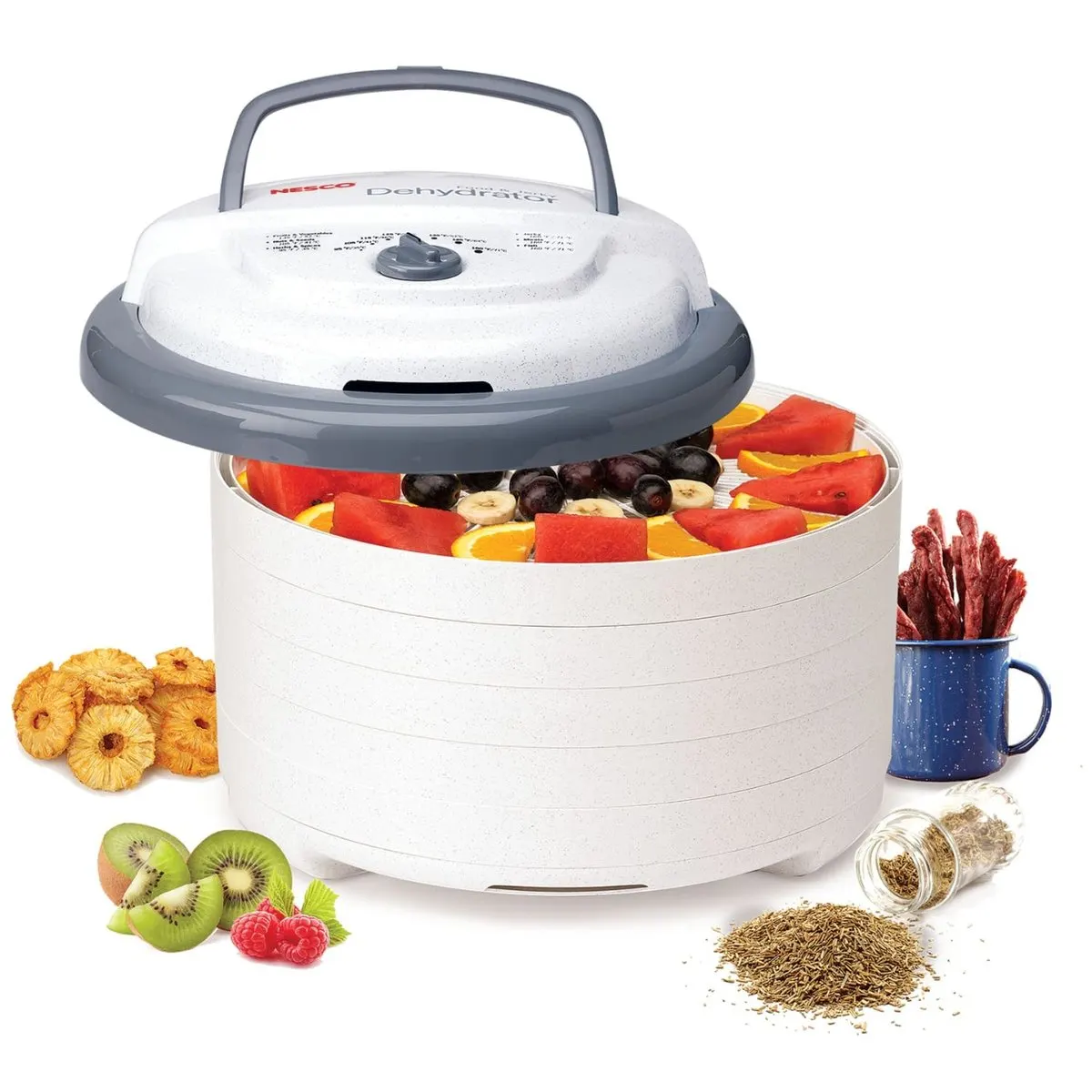
Nesco FD-75A Snackmaster Pro Food Dehydrator
A 5-tray food dehydrator for beef jerky, dried fruit, vegetable chips and herb blends, for less than buying them ready-made. It needs shore power or a large inverter for long drying cycles, and Nesco's current lineup lists the FD-75PR in its place.
For: Ice on shore power
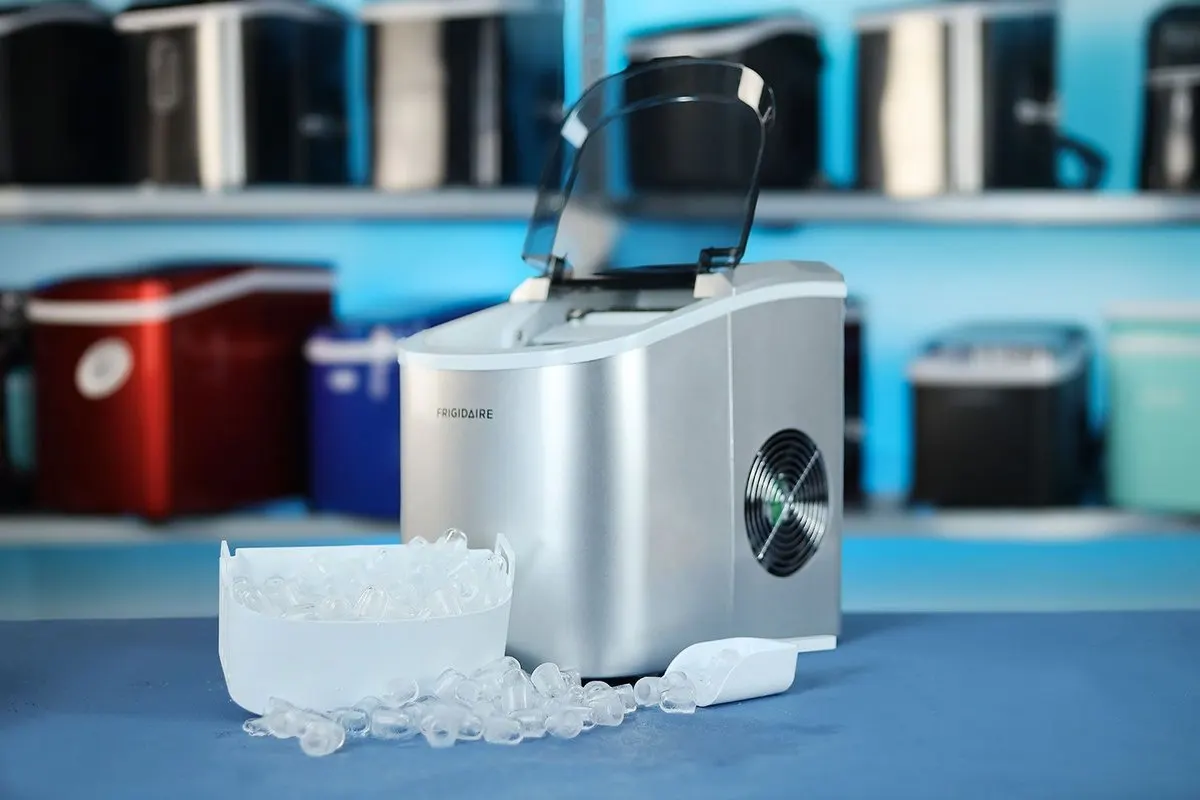
Frigidaire EFIC189 Countertop Ice Maker
A countertop ice maker rated for 26 lb of ice a day at 105 W, made under the Frigidaire license by Curtis International. Useful on hot-weather stops with shore power, but its manual says it works best below 90°F ambient and it doesn't keep ice frozen.
For: Rice on a small inverter
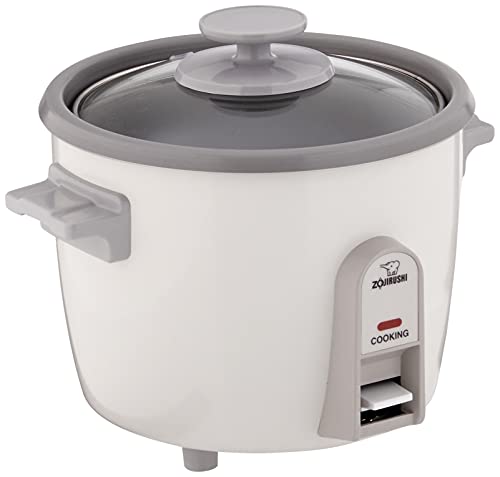
Zojirushi NHS-06 3-Cup Rice Cooker/Steamer, White
A simple one-switch rice cooker rated 120 V / 300 W, one of the lowest-wattage cookers a van inverter can run. It cooks up to 3 Zojirushi cups of raw rice, about 6 to 9 cups cooked. Zojirushi says the NHS-06 has no keep-warm and no steaming basket, unlike its larger siblings.