Nesco FD-75A Snackmaster Pro Food Dehydrator
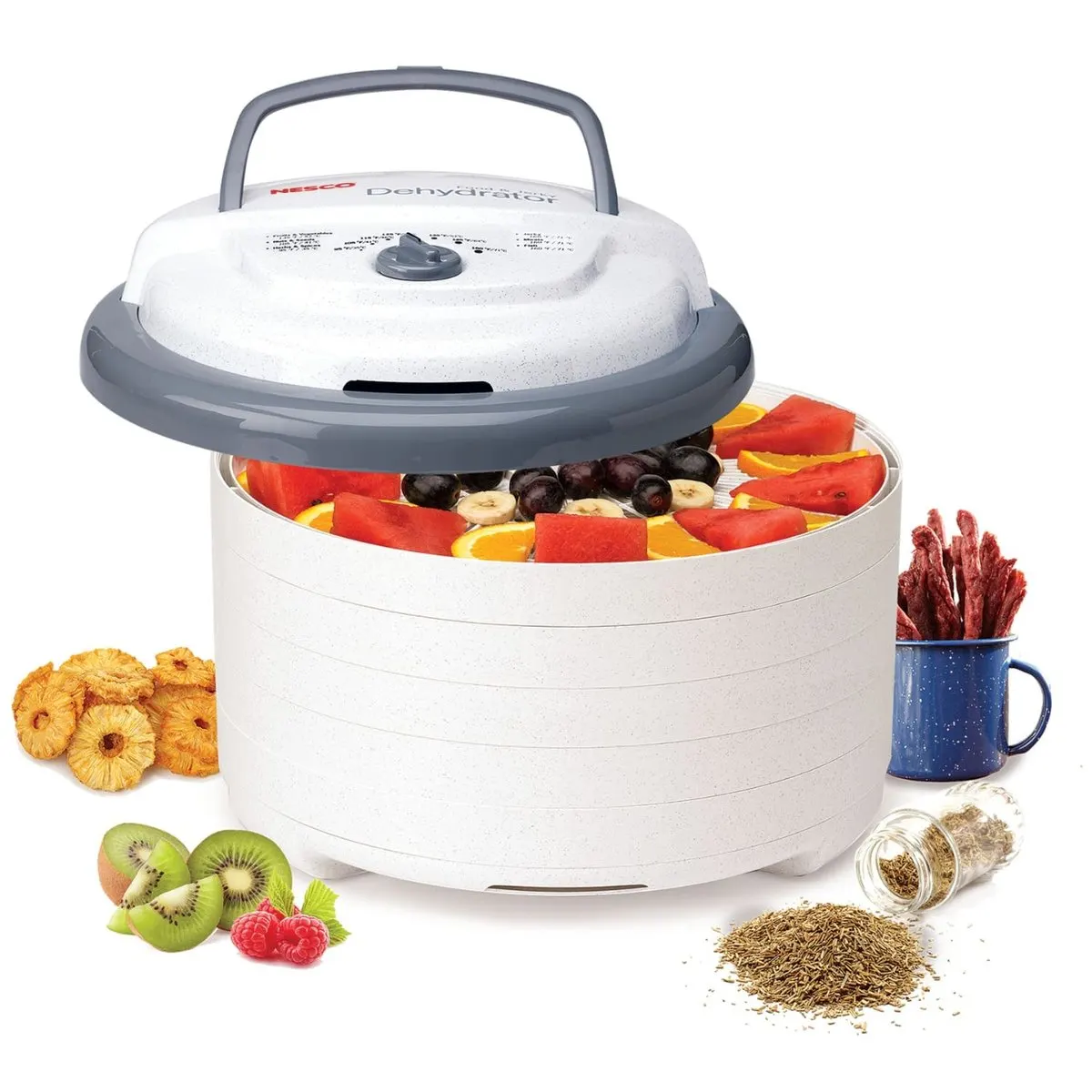
- Power
- 600 W rated (thermostat-cycled heater)
- Trays
- 5 (expandable to 12)
- Temperature
- 95-160°F adjustable
- Timer
- None
- Warranty
- 1 year limited (Amazon listing)
Overview — Who is this for?
This Nesco FD-75A Snackmaster Pro review is for the van lifer who wants to make their own jerky, dried fruit, trail meals and herb blends instead of buying small, expensive bags of them on the road. The FD-75A is a budget-priced round food dehydrator that turns a shore-power stop into a batch of shelf-stable snacks.
What the Amazon link sells: "NESCO FD-75A Snackmaster Pro Food Dehydrator, For Snacks, Fruit, Beef Jerky, Gray" (ASIN B0090WOCN0, model FD-75A), a 600-watt round dehydrator with 5 trays, expandable to 12, and an adjustable 95–160°F thermostat. The listing says it includes fruit roll sheets, Clean-A-Screens and a jerky seasoning sample, and that it is made in the USA of global and domestic components, with only the powerhead imported.
Availability note: Nesco's own US dehydrator lineup now lists the FD-75PR Snackmaster Pro rather than the FD-75A. The FD-75PR page gives the same 600 W, 5-to-12-tray and 95–160°F specs. The FD-75A was still buyable on Amazon when we checked, but stock looked limited.
Choose this if:
- You have regular shore power stops (RV parks, a home base, friends' driveways)
- You want homemade jerky, dried fruit and trail meals for long boondocking stretches
- You want a stackable unit that stores in a gear bin between sessions
Skip this if:
- You're off-grid almost all the time
- You don't eat much jerky or dried snacks
- You want a built-in timer (this model doesn't have one)
We want to be transparent about the biggest limitation right up front, because it determines whether this product is even viable for your setup: the FD-75A is rated at 600 watts and a batch runs for 6 to 12 hours. The heater cycles on its thermostat, so it doesn't pull the full 600 W the whole time, but by our estimate a batch still uses roughly 2 to 5 kWh. That is more than most van battery banks hold. For nearly every van, this is a shore-power appliance. You will use it when you are plugged in at an RV park, a friend's driveway, or during a home base stop. If you never have access to shore power, the Nesco is probably not for you.
With that caveat clearly stated, the FD-75A is a sensible budget dehydrator for van lifers who do have periodic shore power access. It produces lightweight food that needs little or no fridge space for short periods, which frees room in a small 12V fridge. For the van lifer who spends weeks boondocking between town runs, a cache of homemade jerky, dried fruit, and veggie chips is a logistics tool, not a luxury.
How Dehydrating Works
The physics are simple. You expose food to warm, moving air for an extended period. The warm air evaporates the moisture in the food, and the moving air carries it away from the surface so evaporation can continue. Once enough water is gone, bacteria and mold struggle to grow.
The Nesco FD-75A does this with a 600-watt heater and a top-mounted fan. The temperature is adjustable from 95 to 160 degrees Fahrenheit, from delicate herbs at the low end to meat at the top of the dial. Nesco describes its Converga-Flow system as forcing heated air down an exterior pressurized chamber, then horizontally across each tray to converge in the center, which it says avoids rotating trays. The Amazon listing notes that because the fan sits on top, liquids can't drip into the heating element.
Jerky safety: the National Center for Home Food Preservation (University of Georgia Extension) says meat for jerky should reach an internal temperature of 160°F, and recommends drying in a dehydrator preheated to 140°F. In practice, heat the strips first by simmering them in the marinade or in the oven, check with a thermometer, then dry. Setting the Nesco to 160°F is not the same as the meat reaching 160°F inside. For poultry jerky, the widely used safe internal temperature is 165°F.
The advantage for van life is the result: food that is light, compact and needs no fridge space for the short term. NCHFP says properly dried jerky keeps about two weeks at room temperature in a sealed container, and recommends the fridge or freezer for longer storage, which matters in a warm van.
The 12-Hour Jerky Cycle
Jerky is the flagship product for the FD-75A, and the process is straightforward but time-intensive. A typical workflow:
Day before (30 minutes of active work): Slice 2 to 3 pounds of lean beef (top round, bottom round, or eye of round — lean cuts are critical because fat does not dehydrate and will go rancid) into strips roughly one-quarter inch thick, against the grain. Partially freezing the meat for 60 to 90 minutes makes slicing dramatically easier. Marinate the sliced meat in a zip-lock bag overnight. A classic marinade is soy sauce, Worcestershire sauce, black pepper, garlic powder, onion powder, and a pinch of red pepper flake. The Amazon listing includes a jerky seasoning sample in the box.
Dehydrating day (30 minutes of active work, 8 to 12 hours of machine time): Following the NCHFP approach, bring the strips to 160°F internal first, for example by simmering them briefly in the marinade or heating them in an oven, and check with a thermometer. Then lay them on the trays in a single layer, not overlapping, and dry at 140°F or higher; the dial goes to 160°F. Nesco says tray rotation isn't required, but with a full stack it costs nothing to check the top and bottom trays and swap them if one is drying faster. Check at 8 hours — the jerky should be dark, dry, and bend without snapping. If it snaps, it is over-dried (still edible, just very crunchy). If it bends and shows moisture when you tear a piece in half, give it another 2 to 4 hours. Most batches finish between 8 and 12 hours depending on humidity, strip thickness, and how lean the meat is.
Yield: 2 to 3 pounds of raw meat produces roughly 8 to 12 ounces of finished jerky. The weight loss is almost entirely water. NCHFP says properly dried jerky keeps about two weeks at room temperature in a sealed container; for longer, refrigerate or freeze it. Vacuum sealing (see the FoodSaver compact sealer review) helps it keep its quality in the freezer zone of a 12V fridge.
Cost comparison: Good commercial jerky is expensive by the ounce. Making it yourself with sale-priced lean beef usually costs considerably less, even including marinade and electricity, so regular jerky makers recover the cost of the dehydrator over time.
Beyond Jerky — What Else to Dehydrate for the Road
Jerky gets all the attention, but the FD-75A does more. The times and temperatures below are typical starting points for home dehydrators, not Nesco test results; check the 52-page recipe and instruction book Nesco includes, and adjust for humidity and slice thickness.
Dried fruit is the easiest project. Sliced apples, bananas, mangoes, strawberries and pineapple typically take 8 to 12 hours at around 135 degrees. The result is chewy and intensely flavored, and you control whether any sugar or sulfites go in. The included fruit roll sheets handle sticky purées.
Vegetable chips work well too. Thinly sliced sweet potato, beet, zucchini and kale at 125 to 135 degrees for 6 to 10 hours give crisp chips. A simple seasoning of salt, garlic powder and nutritional yeast before drying works well.
Herb blends are cheap and useful. Buy fresh herbs when they are abundant, dry them at the low 95-degree end for 2 to 4 hours, crumble, and mix into custom blends in small jars.
Backpacking meals are the advanced project for long boondocking stretches. Dehydrate cooked rice, cooked beans, cooked vegetables, and ground meat separately. Package them in portioned zip-lock bags with seasoning. On the trail or at camp, add boiling water, wait 15 minutes, and you have a complete hot meal that weighs ounces and required no refrigeration during storage. This is essentially what commercial backpacking meals are, and homemade versions let you choose the ingredients and usually cost considerably less.
Yogurt drops and fruit leather round out the options. Yogurt drops (dollops of yogurt on parchment-lined trays, dried at 135 degrees for 8 to 10 hours) are a tangy, probiotic-rich snack. Fruit leather (pureed fruit spread thin on lined trays, dried at 135 degrees for 8 to 12 hours) is homemade fruit roll-ups without the corn syrup. Both store for weeks.
For a complete guide to high-protein, shelf-stable snack options for extended road trips, our van life protein snacks guide covers the full landscape including dehydrated options.
Power Requirements — The Hard Truth
Rated power: Nesco rates the FD-75A at 600 watts. That's the heater and fan at full output. The thermostat switches the heater on and off to hold your set temperature, so the average draw over a batch is lower than 600 W. How much lower depends on the setting, the room temperature and how wet the food is: a fresh, wet load at a high setting in a cool van keeps the heater on most of the time.
Typical use, in Wh (our estimate, not a measurement): assume the heater averages 50 to 90 percent of its rating, or about 300 to 540 W.
| Batch | Run time | AC energy | From a 12.8 V battery |
|---|---|---|---|
| Herbs | 2–4 h | 0.6–2.2 kWh | 55–195 Ah |
| Fruit or vegetables | 6–12 h | 1.8–6.5 kWh | 160–580 Ah |
| Jerky | 8–12 h | 2.4–6.5 kWh | 215–580 Ah |
The battery column assumes an inverter around 87 percent efficient and a 12.8 V lithium bank (AC Wh divided by 0.87, then by 12.8). Even the low end of a jerky batch uses most of a 200 Ah lithium bank, and the high end exceeds most van systems entirely.
Inverter size: the load is mostly a resistive heater, so the startup surge is small, but it runs for hours near the rating. If you do run it from an inverter, use a pure sine wave inverter rated comfortably above 600 W continuous, around 1,000 W, with wiring and fusing sized for roughly 50 to 60 A at 12 V. An inverter that size should be installed to the manufacturer's instructions, by a qualified RV electrical technician where codes or insurers require it.
Is it realistic off-grid? Not for most vans. A short herb batch on a very large lithium bank with strong summer solar is possible; regular jerky batches are not. The Nesco FD-75A is a shore-power appliance for the vast majority of van builds. Use it when you are plugged into shore power at an RV park, a friend's house, or any other 120V outlet. The power calculator helps you check your own system.
This isn't a flaw specific to the Nesco. Every electric dehydrator holds food warm with moving air for hours, and that takes energy. Plan your dehydrating sessions around your shore power access.
Round Stacking vs Box-Style Dehydrators
The main alternative to a round stacking unit like the Nesco is a box-style dehydrator with a rear fan and slide-in shelves, the layout Cosori and Excalibur use. We haven't reviewed those models, so this is a comparison of the two designs, not of specific products.
Box-style (rear fan): air blows horizontally across fixed shelves, and many models add a digital timer. The cabinet is a fixed size whether you dry one tray or nine, so it takes the same storage space every day it rides in the van.
Round stacking (top fan, like the Nesco): you run only the trays you need, and with five trays the FD-75A is about the size of a large pot. Nesco's page for the current FD-75PR lists 13½-inch trays with 0.8 square feet of drying area each, and the Amazon listing says the FD-75A expands from 5 to 12 trays. The trade-off is no timer on this model.
For a van, where storage beats capacity, the round stacking design is the easier one to live with.
Build Quality and Design Notes
The outer shell and trays are plastic, the trays have a grid that holds most sliced foods (fine items need the included Clean-A-Screen mesh sheets), and the heater and fan are enclosed in the top powerhead. The temperature control is a simple dial with no digital display, so there's little electronics to fail, which suits a van where humidity, vibration and temperature swings are hard on electronics.
The trays are about 13.5 inches across. Nesco's FD-75PR page lists that model at 12 x 14 x 14 inches and 9 lb; the FD-75A's Amazon listing gives about 7.7 lb, and its dimension fields (about 13.75 x 22.13 x 13.87 inches) look like box dimensions, so measure your storage against the 14-inch figure. The trays stack, so the unit stores as one compact cylinder rather than a box with fixed shelves. Wrap the stack in a towel or bag in a bin so the trays don't chafe on rough roads.
One design note: the FD-75A does not have a timer. You set the temperature and it runs until you unplug it. Set a phone alarm, or plug it into a timer outlet rated for its load. For jerky at 8 to 12 hours, that often means starting in the evening and checking in the morning. If you want a built-in timer, Nesco's FD-79 has digital time and temperature control with auto shut-off, per Nesco's page; we haven't reviewed it.
Workflow for Van Life
A practical dehydrating workflow revolves around shore power stops. When you know you will have 24 hours of shore power — an RV park stay, a visit to friends, a stopover at a house — plan a dehydrating session. Buy meat and produce the day before, prep and start the dehydrator in the evening, and pack up the finished product the next morning.
A single session typically produces enough dried food to last two to three weeks of boondocking. A batch of jerky, a batch of dried fruit, and a tray of herb blend gives you protein, snacks, and seasoning that require no fridge space and no special handling. Combined with shelf-stable staples like rice, beans, oats, and nut butter, the dehydrated food can form the backbone of an extended off-grid eating plan.
The dehydrator itself travels in a gear bin in the van's garage or under a bed platform. It is not an everyday countertop appliance — it comes out for dedicated prep sessions and goes back into storage immediately after. This means it does not compete for daily kitchen space, which is a critical consideration in a van where every surface has three competing uses.
Honest Limitations
Power draw is the elephant in the room. We have covered this in detail, but it bears repeating: a 600-watt heater cycling for 8 to 12 hours is a lot of energy. Shore power or bust.
Time commitment is real. You cannot rush dehydrating. Jerky takes 8 to 12 hours. Fruit takes 8 to 12 hours. Even herbs take 2 to 4 hours. This is not a "make dinner in 20 minutes" appliance. It is a prep tool that requires planning and patience.
The smell fills your van. Dehydrating jerky fills the entire vehicle with a smoky, meaty, delicious aroma that lingers for hours after you are done. Some people love this. Others find it makes them hungry long before the jerky is ready. If you are parked in a campground, your neighbors will also smell it.
Raw material quality matters. Garbage in, garbage out. Tough, fatty meat makes tough, greasy jerky. Under-ripe fruit makes bland dried fruit. The dehydrator concentrates flavors, both good and bad.
Noise is constant. The fan runs the entire drying cycle. Nesco doesn't publish a noise figure, and we haven't measured one, so if you'll sleep beside it, run batches during the day where you can.
Heat and moisture go into the van. Most of the 2 to 5 kWh ends up as warm, humid air. Open a window or run a roof fan while it works, or run it outside under cover at a campsite; see our van kitchen ventilation guide.
Who Should Skip This
Skip the Nesco FD-75A if you never have access to shore power. Full stop. Skip it if you do not eat much meat or snack food — the core value proposition is making jerky and dried snacks, and if your diet does not include those, the dehydrator sits unused. Skip it if you are unwilling to plan dehydrating sessions around shore power availability — the workflow requires forethought. And skip it if storage space in your van is so tight that an additional appliance, even one used occasionally, cannot be justified.
Final Verdict
The Nesco FD-75A Snackmaster Pro is our pick for a van life dehydrator, provided you have periodic shore power access: it's compact, stackable, expandable to 12 trays and budget-priced, with a simple dial that leaves little to fail. It produces jerky, dried fruit, vegetable chips, herb blends, and backpacking meals for considerably less than buying them. If the FD-75A is out of stock, Nesco's current FD-75PR has the same published specs. The power requirement limits it to shore-power sessions, and the time commitment requires planning ahead, but the output — pounds of shelf-stable, lightweight, calorie-dense food that travels without refrigeration — is a genuine logistics advantage for extended road trips and boondocking.
If you have ever done the math on gas station jerky and felt robbed, the FD-75A is a practical answer. Make jerky regularly and the dehydrator pays its way. Recommended for van lifers with regular shore power access; skip it if you're off-grid most of the time.
FAQ
How much jerky does one batch make? Starting with 2 to 3 pounds of raw lean beef, expect 8 to 12 ounces of finished jerky. The weight loss is almost entirely water evaporation.
Can I run the Nesco FD-75A on a van inverter? Technically yes, with a pure sine inverter of around 1,000 W. But it's rated at 600 W and, by our estimate, a jerky batch uses roughly 2.4 to 6.5 kWh, or about 215 to 580 Ah from a 12.8 V lithium bank through an inverter. For most van builds, this is a shore-power-only appliance.
How long does homemade jerky last? The National Center for Home Food Preservation says properly dried jerky keeps about two weeks at room temperature in a sealed container, and recommends refrigerating or freezing it for longer. Vacuum sealing helps it keep its quality. In a hot van, keep it in the fridge if you can and eat older batches first.
Is the Nesco better than an air fryer for dehydrating? Air fryers with dehydrate modes work but have tiny capacities — usually one tray. The Nesco has five trays (expandable to twelve) and is purpose-built for dehydrating. There is no comparison in batch size or consistency.
What is the best meat for jerky? Top round, bottom round, and eye of round. Lean cuts are essential because fat does not dehydrate properly and will cause the jerky to go rancid faster. Slice against the grain for tender jerky, with the grain for chewier jerky.
Does the dehydrator need to be level to work? It works best on a level surface so air circulates evenly, but slight angles typical of a parked van are not a problem. Avoid running it while driving — the vibration will shift food on the trays and the machine is not secured for motion.
Is the FD-75A still made? Nesco's current US dehydrator lineup lists the FD-75PR Snackmaster Pro instead, with the same published 600 W, 5-to-12-tray and 95–160°F specs. The FD-75A was still available on Amazon when we checked, with limited stock.
Sources and verification
- Nesco FD-75PR Snackmaster Pro product page, https://www.nesco.com/product/fd-75pr-5-tray-snackmaster-pro-food-dehydrator/: 600 W, 5 trays expandable to 12, 13½-inch trays with 0.8 sq ft each, 95–160°F, Converga-Flow description, 12 x 14 x 14 in, 9 lb, included accessories, made in USA wording (checked 2026-10-12).
- Nesco dehydrator category page, https://www.nesco.com/product-category/dehydrating/: current lineup lists the FD-75PR, not the FD-75A (checked 2026-10-12).
- Nesco FD-79 product page, https://www.nesco.com/product/snackmaster-pro-digital-food-dehydrator/: digital time and temperature control with auto shut-off (checked 2026-10-12).
- National Center for Home Food Preservation, jerky guidance, https://nchfp.uga.edu/how/dry/jerky: 160°F internal temperature, 140°F dehydrator setting, two weeks at room temperature (checked 2026-10-12).
- Amazon listing, ASIN B0090WOCN0: exact title, model FD-75A, 600 W, 5-to-12 trays, 95–160°F, top-mounted fan, included accessories, made in USA wording, 1-year limited warranty field, weight and dimension fields, availability (checked 2026-10-12).
- Not opened: a Nesco page or manual specific to the FD-75A, or the USDA FSIS jerky page (it refused our requests), so the USDA storage figure was replaced with NCHFP's.
Compare with similar products
See how this stacks up against the other small appliances we've reviewed.
Related Reviews
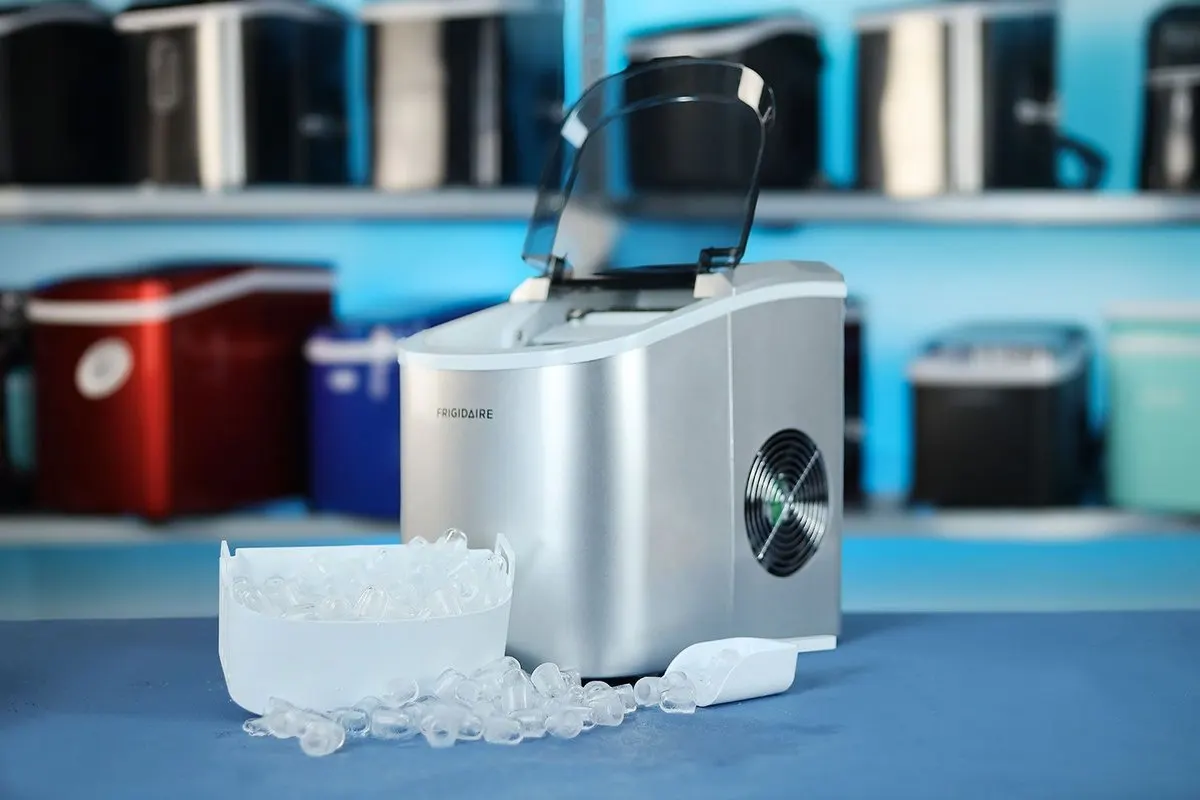
For: Ice on shore power
Frigidaire EFIC189 Countertop Ice Maker
A countertop ice maker rated for 26 lb of ice a day at 105 W, made under the Frigidaire license by Curtis International. Useful on hot-weather stops with shore power, but its manual says it works best below 90°F ambient and it doesn't keep ice frozen.
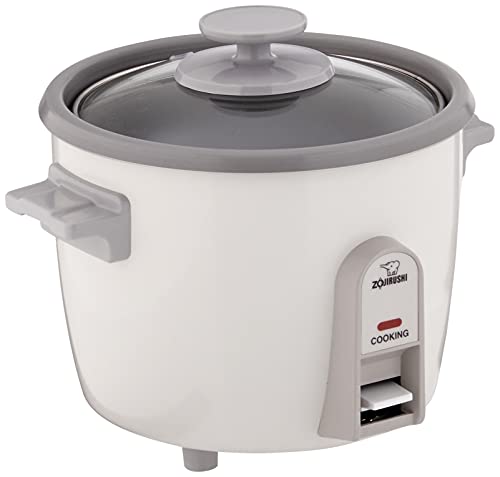
For: Rice on a small inverter
Zojirushi NHS-06 3-Cup Rice Cooker/Steamer, White
A simple one-switch rice cooker rated 120 V / 300 W, one of the lowest-wattage cookers a van inverter can run. It cooks up to 3 Zojirushi cups of raw rice, about 6 to 9 cups cooked. Zojirushi says the NHS-06 has no keep-warm and no steaming basket, unlike its larger siblings.
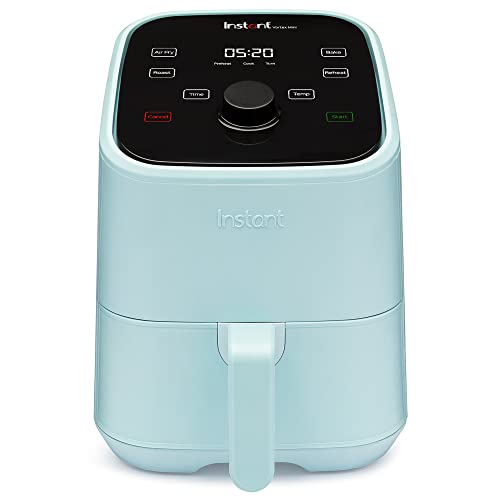
For: Crisping on a big inverter
Instant Vortex Mini 2-Quart Air Fryer (140-3013-01, Aqua)
A 2-quart air fryer that crisps, bakes, roasts and reheats for one or two people. Its manual rates it at 1,300 W, so in a van it needs an inverter or power station rated at least 1,500 W continuous and a battery that can supply roughly 110 A. Instant's manual also asks for 5 inches of clearance and a grounded outlet with no extension cord.