NutriBullet Pro 900W Compact Blender
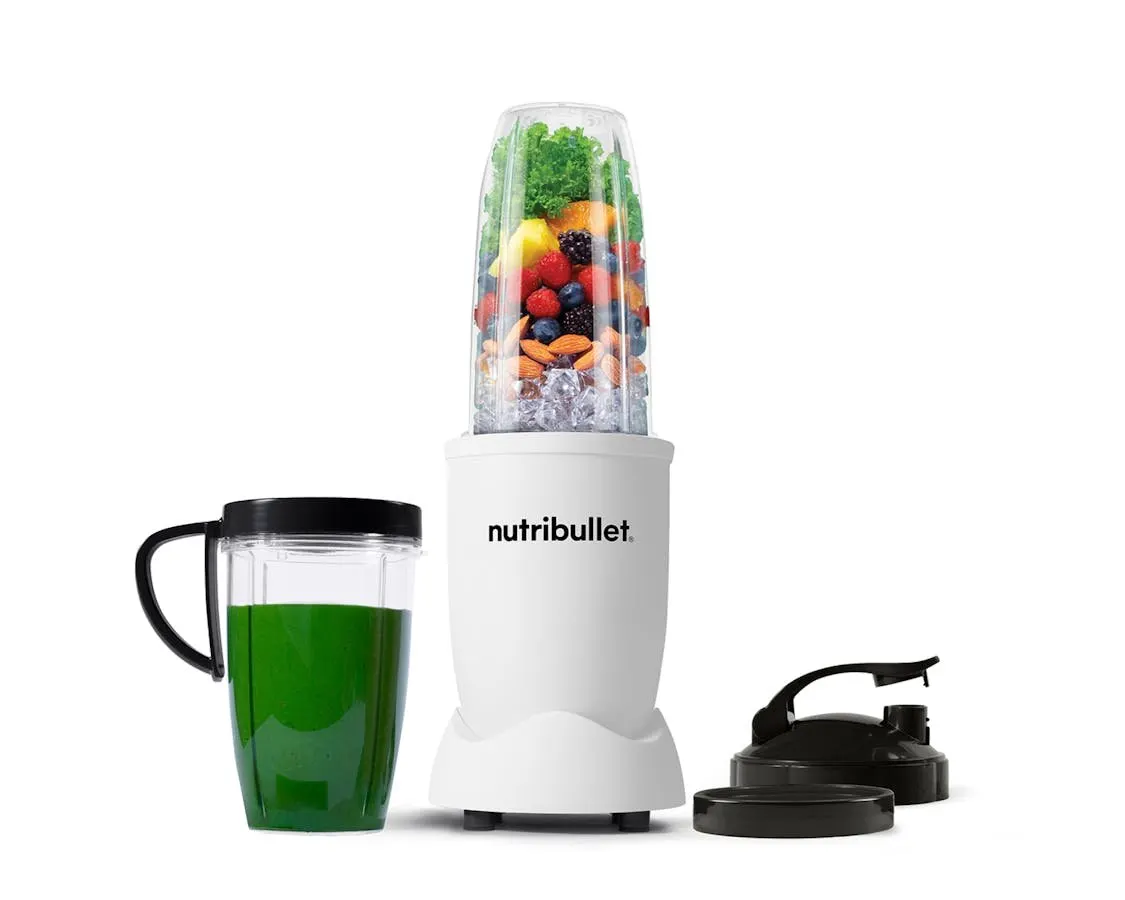
- Model
- NB9-0801 (Special Edition, matte black)
- Power
- 900 W rated (120 V)
- Energy per blend
- About 12-13 Wh for 45 s (estimate)
- Inverter
- Pure sine, 1,500 W minimum suggested
- Blade
- Stainless steel extractor (replace about every 6 months, per NutriBullet)
- Cups
- One 32 oz Colossal cup, two 24 oz tall cups, three flip-top lids
Overview — Who is this for?
This NutriBullet Pro 900W review is for the van lifer who wants smoothies, protein shakes and blended breakfasts on the road without hauling a full-size blender. The NutriBullet Pro is a compact personal blender: a 900-watt motor base, an extractor blade that screws onto the cup, and cups you drink straight from. That last point matters more in a van than it does at home, because it cuts the dishes, and the water, a smoothie costs you.
What the Amazon link sells: "NutriBullet Special Edition NutriBullet Pro 900 - Watt Blender (MatteBlack)" (ASIN B0BZK4TZJ2, model NB9-0801). Per the listing, this Special Edition kit includes one 900W motor base, one extractor blade, one 32 oz (900 ml) Colossal cup, two 24 oz (700 ml) tall cups, three flip-top to-go lids, a recipe book and a user guide. That differs from NutriBullet's standard Pro 900 kit, which its US page lists with two 32 oz cups, two to-go lids, cup rings and lip rings.
A note on sources: we read NutriBullet's US product page and its NB9 user guide, plus the Amazon listing. All three are listed at the end. VanLifeKitchens researches rather than tests, so where NutriBullet publishes nothing, we say so.
Choose this if:
- You make smoothies or blended breakfasts most days
- Your van has a pure sine wave inverter of 1,500 W or more and a lithium bank
- You want to minimise dishwashing water
Skip this if:
- Your inverter is small or you have no inverter
- You need to blend hot soups, grind coffee or make big batches
- Early-morning noise in quiet campsites is a concern
The NutriBullet Pro sits in the mid-range for personal blenders. It isn't the cheapest or the most powerful, but its trade-offs suit a van kitchen: enough motor for frozen fruit and greens, a footprint smaller than a full-size blender (NutriBullet lists the Pro at 12.01 x 7.72 x 15.94 inches and 4.7 lb), and no pitcher to wash.
The power requirement decides whether it works in your rig. NutriBullet rates the motor at 900 W at 120 V, so in a van you need an inverter with real headroom, at least 1,500 watts and ideally 2,000. A 12V-only system or a small 300-watt inverter won't run it. The power section below has the numbers.
What the 900 Watts Gets You
The Pro's 900-watt motor drives a stainless steel extractor blade, and NutriBullet's listing pitches it for turning "anything from strawberries to spinach" into a smooth drink. NutriBullet's user guide is specific about how to use that power:
- Always add liquid. The guide says the blender "is not intended to be used as an ice crusher or without liquids." Frozen fruit and a few ice cubes in a liquid-based smoothie are its job; a cup of dry ice cubes is not.
- Keep blends short. The guide says to blend in 1-minute intervals, let the motor stop and wait at least a minute between cycles, and run no more than three consecutive 1-minute cycles before letting the contents settle for 2 to 3 minutes. Most smoothies need well under a minute.
- Don't overfill. Keep ingredients and liquid below the MAX line on the cup to avoid leaks.
For a typical van breakfast smoothie of frozen fruit, greens, protein powder, a spoon of nut butter and water or oat milk, that is plenty. Protein powder mixes smoother than in a shaker bottle, and seeds and oats break down with enough liquid. Thick mixtures like hummus may need a pause and a shake to keep ingredients moving over the blade. Making nut butter from whole nuts is outside what this kind of short, liquid-based blender is designed for.
The Cup-as-Container System
You load ingredients into a cup, screw the extractor blade on top, flip it onto the motor base, blend, unscrew the blade, put on a flip-top to-go lid and drink from the same cup. At no point do you pour a smoothie from one vessel to another.
In a van, where every dish you dirty costs water, that matters. After a smoothie you wash the cup you drank from and the blade assembly, two pieces instead of a pitcher, lid, lid plug and blade.
The cups are plastic, with no glass to break. NutriBullet's guide says the cups and to-go lids are top-rack dishwasher safe, never on the sanitize cycle. The motor base and the extractor blade are not dishwasher safe: wash the blade by hand and dry it fully on its side so both faces dry. The guide says not to remove the blade's gasket, which permanently damages the blade, and suggests a 10% vinegar rinse if you want extra disinfecting. For stuck-on residue, it suggests filling the cup two-thirds with room-temperature water, screwing on the blade and running it for 20 to 30 seconds.
NutriBullet recommends replacing the cups every six months, and checking the three tabs on the side of each cup for cracking, crazing or rounding. It says never to use a cup with a broken or missing tab, because the cup and base could separate and expose the blade. In a van, where cups get knocked around in bins, check those tabs often.
Power Requirements — The Honest Math
Here is the make-or-break for most van setups.
Rated watts: NutriBullet's user guide lists 120 V, 60 Hz, 900 W maximum. That's the motor's rating; actual draw varies with the load and is highest with thick, frozen blends. Your inverter converts DC from your battery into 120 V AC at roughly 85 to 90 percent efficiency, so at full rating the battery side sees about 1,000 to 1,060 W, or roughly 80 to 85 A from a 12.8 V lithium bank, for as long as the motor runs.
Inverter size: motors draw a brief inrush current above their rating at startup. A 1,000 W inverter may trip or refuse to start the motor under a heavy load. Plan on a pure sine wave inverter of at least 1,500 W, with 2,000 W giving comfortable headroom, and battery cables and fusing sized for around 100 A at 12 V. Pure sine wave is the safer choice for motors. An inverter of this size should be installed to the manufacturer's instructions, by a qualified RV electrical technician where codes or insurers require it.
A warranty note: NutriBullet's US limited warranty excludes products "used with an adapter/converter", and the guide warns against plug adapters and voltage converters. It doesn't mention inverters. A pure sine inverter that delivers standard 120 V, 60 Hz isn't a plug adapter, but if the warranty matters to you, ask NutriBullet before relying on it.
Energy per smoothie (our estimate): assume 900 W for a 45-second blend. That's about 11 Wh at the outlet, or 12 to 13 Wh from the battery after inverter losses, roughly 1 Ah at 12.8 V. Two blends a day is about 25 Wh. Even a 100 Ah lithium battery covers dozens of smoothies.
Is it realistic off-grid? Yes, if you have the inverter and a lithium bank that can deliver the current. The issue is not total energy; it's the short, high peak draw, which your inverter, wiring and battery need to handle without tripping or sagging. Check your own system with the power calculator.
For how blenders and other kitchen appliances fit into an overall van power budget, our van kitchen power budget guide walks through the full calculation, including solar recharge.
Where to Use It
NutriBullet's guide includes "DO NOT USE OUTDOORS" among its general safety instructions, and says to run the blender on a level surface with space beneath and around the base for ventilation, never on top of towels, napkins or place mats. In a van, that means using it on the galley counter inside, not on a camp table outside, with the base clear of dish towels. Don't run it while driving.
Noise in a Van
NutriBullet doesn't publish a noise figure, and we haven't measured one. A 900-watt motor spinning a blade at high speed is loud, as any high-power personal blender is: inside a closed van it will interrupt a conversation for the 30 to 45 seconds it runs, and in a quiet campsite at dawn the sound carries.
Practical steps: keep blend times as short as the recipe allows, and avoid blending early in the morning in quiet camping areas. Letting very hard frozen fruit soften for a few minutes, or adding a little more liquid, reduces how hard the motor has to work.
NutriBullet Pro vs Full-Size and Smaller Blenders
We haven't reviewed other blenders, so this is a comparison of blender types rather than of specific models.
Full-size high-power blenders (the Vitamix class) use larger, heavier pitchers and bases, cost considerably more, and need a bigger inverter. They can handle very thick blends and, in some cases, heat soup by friction. In a van, the bulk, weight and power draw work against them unless blending is central to how you eat.
Lower-power personal blenders use the same cup-based idea with a smaller motor. They are fine for soft fruit, yogurt and juice. If your smoothies rely on frozen fruit, which keeps better than fresh in a van, the extra motor of a 900-watt unit is the safer choice.
The NutriBullet Pro sits between them: enough motor for frozen ingredients without the bulk, weight and cost of a full-size blender, and the drink-from-the-cup system that saves water.
What It Cannot Do
Hot liquids are a no-go. NutriBullet's guide says never to blend hot or carbonated ingredients in a sealed cup: heated ingredients can pressurize the cup and violently expel hot contents when it's opened. Start with room-temperature or refrigerated ingredients, 21°C (70°F) or cooler, per the guide. It also warns that long blending creates friction heat; if a cup feels warm, stop, let it cool, and open it pointed away from you. For blended soup, blend the ingredients cold, then heat the result in a pot. Don't leave blended mixtures sealed for long, either: the guide warns that sugars can ferment and build pressure.
Large batches are out. In this Special Edition, the largest cup is the 32 oz Colossal cup, and you have to stay below its MAX line, so a large single serving or two small ones is the practical limit. For a solo van lifer or a couple, this is fine. For groups, it gets tedious.
No dry grinding with this blade. NutriBullet's guide says not to use the extractor blade to grind dry ingredients such as grains, cereal or coffee, because it may damage the motor or blade. For coffee, a hand grinder like the 1Zpresso Q Air is the right tool.
It requires AC power. There is no 12V version. You need an inverter that can handle it. Check your inverter rating before you order.
Build Quality and Maintenance
The motor base is plastic, and the extractor blade is stainless steel with a gasket that seals it to the cup. NutriBullet treats the blade as a wear part: its guide recommends replacing the extractor blade every 6 months, depending on use, or when performance drops, and replacing the cups every six months. If the gasket becomes loose or damaged, the guide says to order a new extractor blade rather than repair it. Budget for blades and cups as consumables if you blend daily.
The guide also says the Pro has an internal thermal breaker that shuts the motor off if it overheats. If the motor stops, unplug it and let it cool for an hour; the breaker resets once it cools. Keeping to short 1-minute cycles avoids that.
Daily Workflow in a Van
A typical morning: pull the large cup from the cabinet, add frozen berries, half a frozen banana, a scoop of protein powder, a spoon of nut butter, a handful of spinach, and water or oat milk up to (not past) the MAX line. Screw on the blade, flip onto the base, blend for 30 to 45 seconds, unscrew the blade, put on the flip-top lid and drink. Rinse the blade and cup straight away with a splash of water before residue dries. The whole job takes a few minutes and very little water.
Who Should Skip This
Skip the NutriBullet Pro if your inverter is under 1,500 watts, or your battery bank can't handle short high-current loads. Skip it if you rarely make smoothies; a single-purpose appliance only earns its space if you use it. Skip it if noise is a serious concern for your camping style, such as long stays in quiet campgrounds. And skip it if you need to blend hot liquids or grind coffee; it is a cold, liquid-based blender.
Final Verdict
The NutriBullet Pro 900W is our pick for a van life blender, as long as your electrical system can support it. The 900-watt motor handles frozen fruit and greens in a short blend, the drink-from-the-cup system saves water, and the footprint is small enough to live in a cabinet. Follow NutriBullet's rules, cold ingredients, always some liquid and short cycles, and plan to replace the blade and cups as consumables.
The power requirement is the real barrier. If you have a 1,500-watt or larger pure sine wave inverter and a lithium battery bank, it's a practical daily appliance. If you don't, read our van kitchen power budget guide before you build.
FAQ
Can I run the NutriBullet Pro on a small inverter? Not reliably. The 900-watt motor draw plus inrush current calls for at least a 1,500-watt inverter. A 1,000-watt inverter may trip or refuse to start the motor. Stick with 1,500 watts minimum, 2,000 watts preferred.
How much battery does a single smoothie use? By our estimate, about 12 to 13 Wh, or roughly 1 Ah from a 12.8 V bank, for a 45-second blend at the 900 W rating including inverter losses. The energy is small; the peak power draw is the real consideration.
Is the NutriBullet Pro loud enough to bother campground neighbors? At full speed, yes, it is noticeable. A 30 to 45 second blend is brief, but avoiding early-morning blending is a good courtesy in quiet camping areas.
Can I blend ice in the NutriBullet Pro? Only with liquid. NutriBullet's guide says it is not intended to be used as an ice crusher or without liquids, so add liquid first and treat ice as one ingredient in a drink, not a load on its own.
How often do blade assemblies need replacing? NutriBullet recommends replacing the extractor blade about every 6 months, depending on use, and the cups every six months. Replace the blade sooner if the gasket loosens or it leaks.
Are the parts dishwasher safe? The cups and to-go lids are top-rack dishwasher safe, but not on the sanitize cycle. The extractor blade and motor base are not; wash the blade by hand and dry it fully.
Why not just use a shaker bottle? Shaker bottles can't break down frozen fruit or leafy greens, or incorporate nut butter smoothly. If your shakes are just protein powder and liquid, a shaker bottle is fine. If you use frozen ingredients or greens, you need a blender.
Sources and verification
- NutriBullet Pro 900 US product page, https://www.nutribullet.com/shop/blenders/nutribullet-pro/: 900 W, standard kit contents (two 32 oz cups, two to-go lids, cup rings, lip rings, one extractor blade), 12.01 x 7.72 x 15.94 in, 4.7 lb, 1-year warranty (checked 2026-10-12).
- NutriBullet NB9 user guide (US/Canada English-French edition), https://nbmedia.imgix.net/NBR-NB9_UG_FR-ENG_PROOF_F200430-2020-0520.pdf: hot and carbonated ingredient warning, 21°C/70°F starting temperature, 1-minute cycles and the three-cycle limit, not an ice crusher or for use without liquids, no dry grinding with the extractor blade, blade and cup replacement every 6 months, cleaning and dishwasher rules, gasket and tab checks, "DO NOT USE OUTDOORS", plug adapter and converter warnings, warranty exclusions (checked 2026-10-12).
- NutriBullet NB9 / NB-900 user guide (Mexico edition), https://nutribulletmexico.com/guia-de-usuario/NB9_NB_900_NB-201_UG_EN_SP_DL_LoRes-PROOF_F221213.pdf: 120 V, 60 Hz, 900 W maximum electrical rating, thermal breaker and one-hour cool-down, ventilation and placement guidance (checked 2026-10-12).
- Amazon listing, ASIN B0BZK4TZJ2: exact title, model NB9-0801, matte black, Special Edition kit contents (one 32 oz Colossal cup, two 24 oz tall cups, three flip-top lids), top-rack dishwasher wording for cups (checked 2026-10-12).
Compare with similar products
See how this stacks up against the other small appliances we've reviewed.
Related Reviews
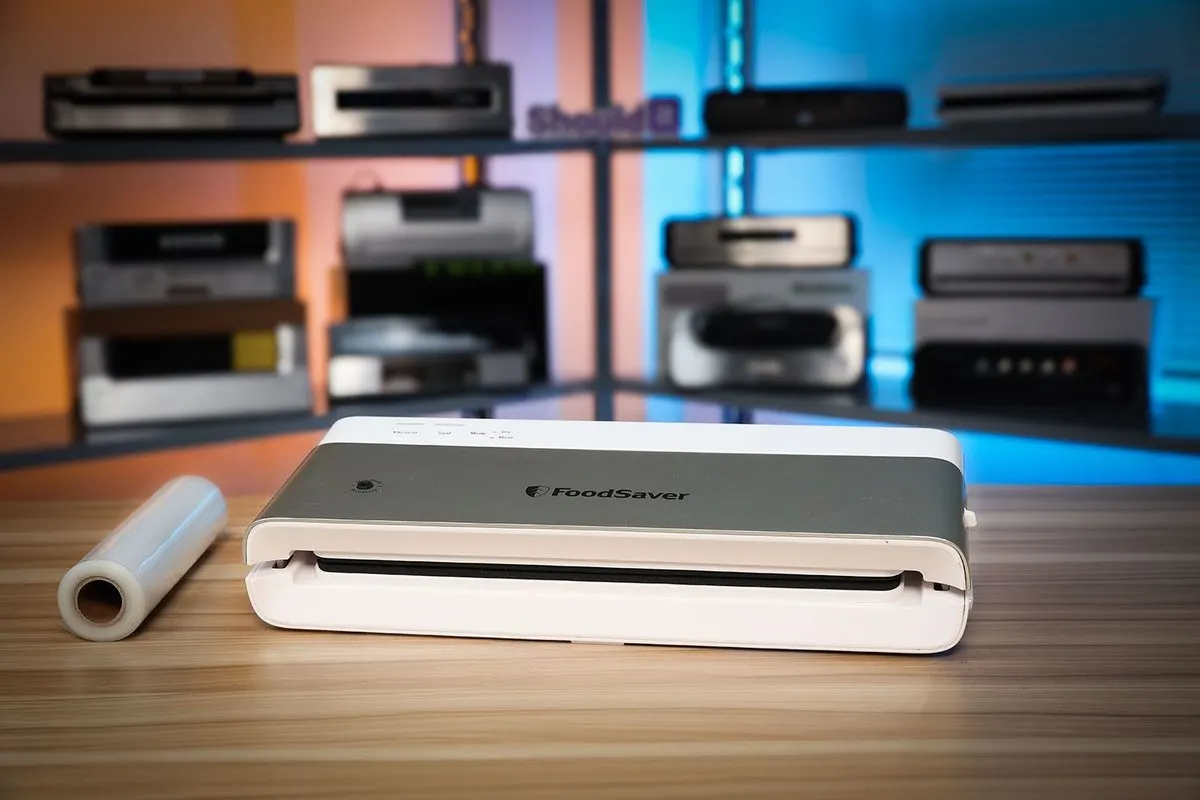
For: Vacuum-sealing fridge and freezer food
FoodSaver Compact Vacuum Sealer
A compact vacuum sealer with dry and moist settings that stores upright. It keeps cheese and dry goods fresh longer and helps prevent freezer burn, which makes freezer-zone meal prep practical in a van fridge. It runs on AC, so plan for inverter power.
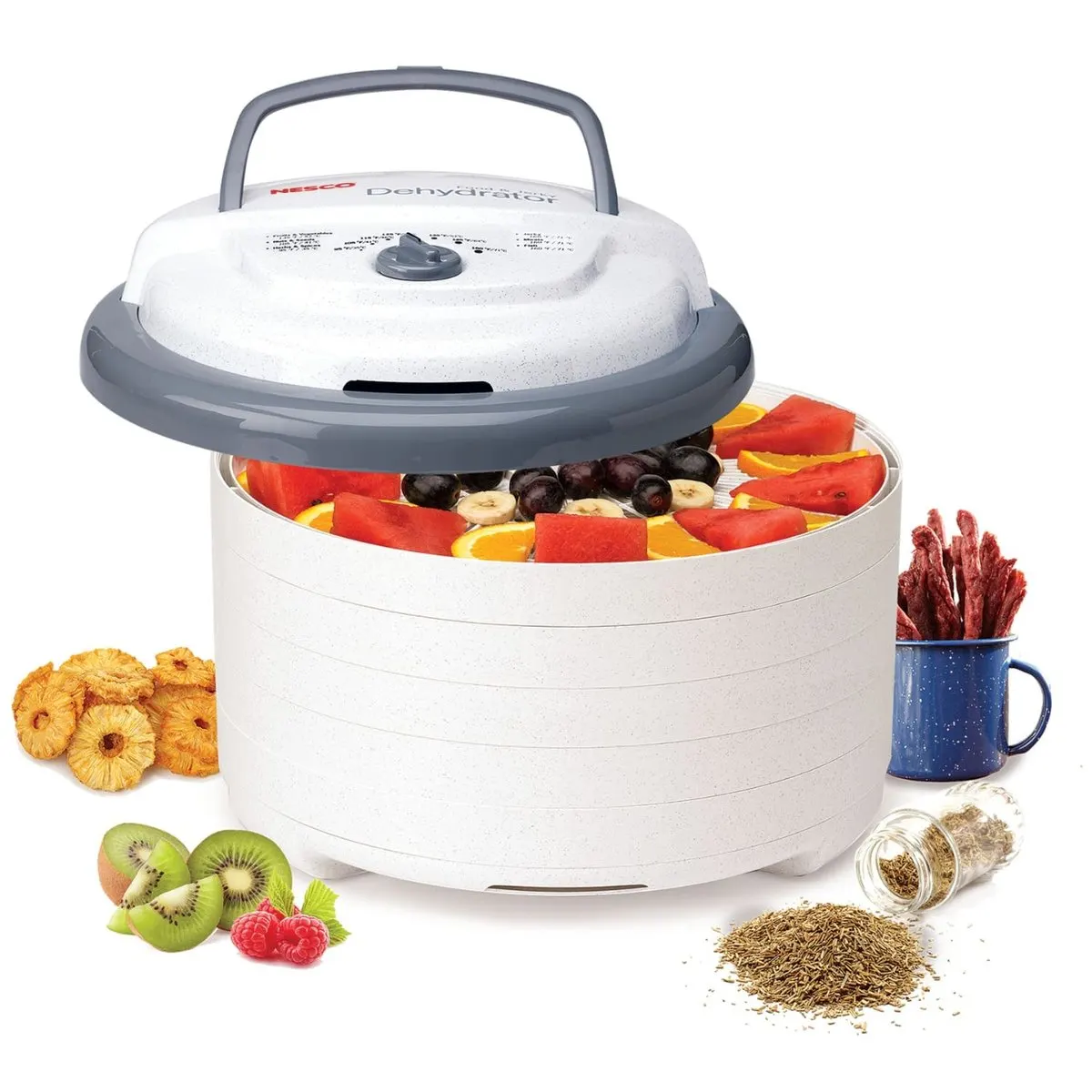
For: Jerky, dried fruit, shore power
Nesco FD-75A Snackmaster Pro Food Dehydrator
A 5-tray food dehydrator for beef jerky, dried fruit, vegetable chips and herb blends, for less than buying them ready-made. It needs shore power or a large inverter for long drying cycles, and Nesco's current lineup lists the FD-75PR in its place.
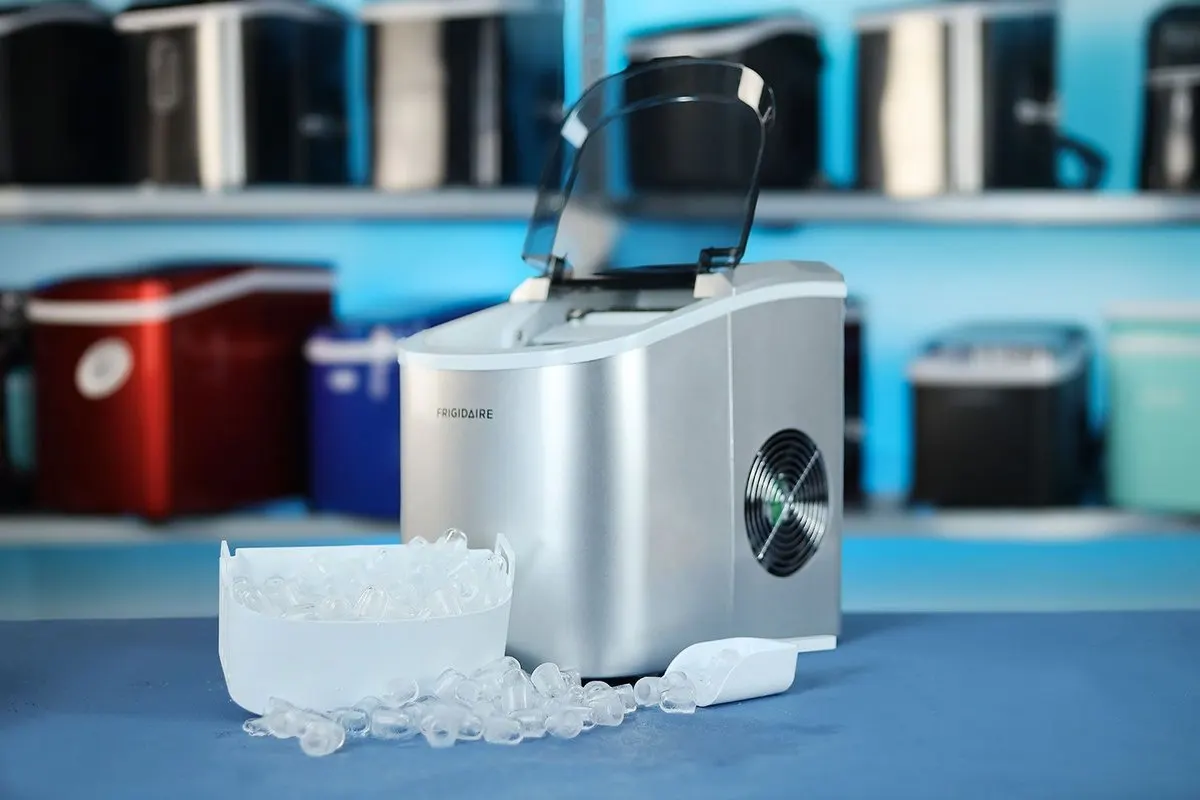
For: Ice on shore power
Frigidaire EFIC189 Countertop Ice Maker
A countertop ice maker rated for 26 lb of ice a day at 105 W, made under the Frigidaire license by Curtis International. Useful on hot-weather stops with shore power, but its manual says it works best below 90°F ambient and it doesn't keep ice frozen.