GoSun Fusion Hybrid Solar Oven
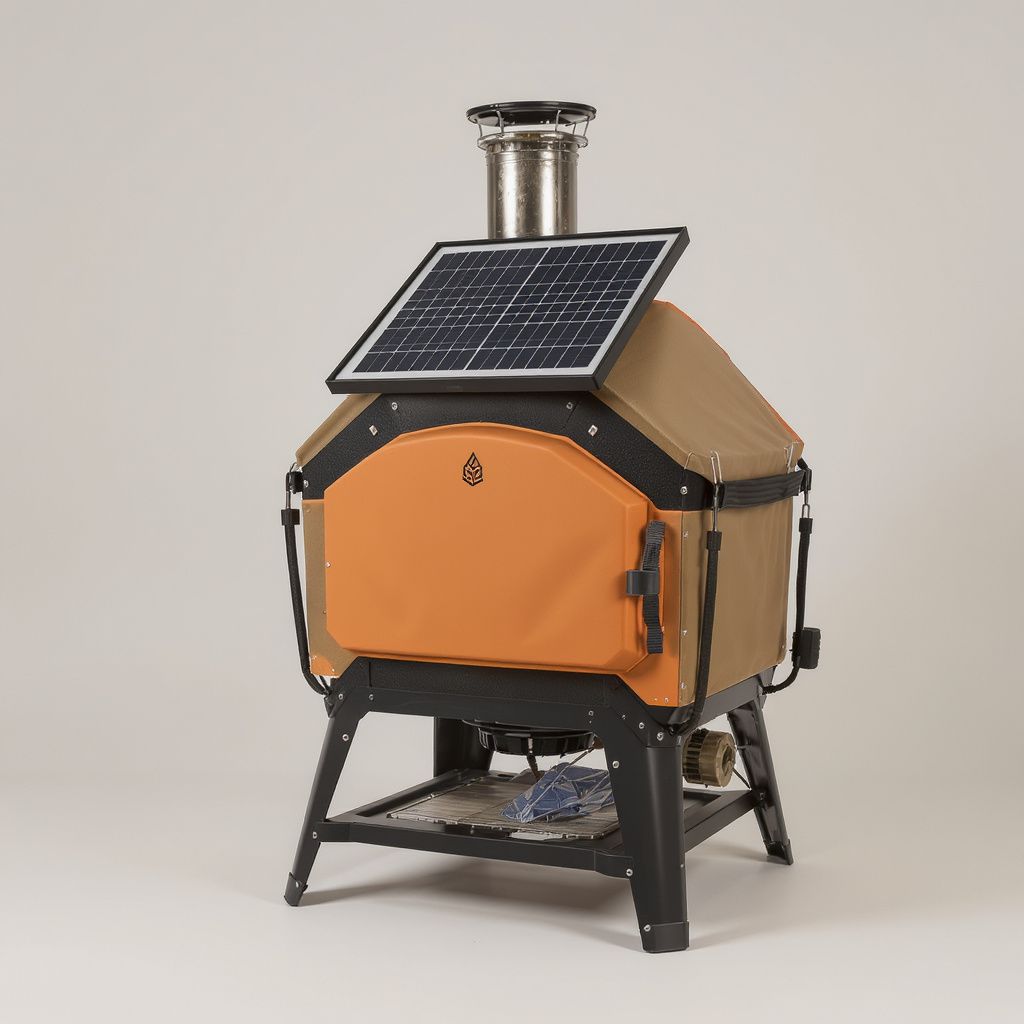
- Peak Temp
- 550°F (sun) / 350°F (12V)
- Dimensions
- 27 x 9 x 9 in
- Weight
- 8 lbs
- Power Source
- Solar + 12V DC
- Cook Capacity
- ~3 lb food
- Warranty
- 2 years
Overview — Who is this for?
The GoSun Fusion Hybrid Solar Oven is the specialty pick for van dwellers who want to cook with sunlight alone on clear days but refuse to be helpless when the weather turns. It is a hybrid — solar-powered by day, 12V-electric-powered by night or by clouds — and it is the only product in its category that makes that combination work in a real van kitchen. At about $449, it is not cheap, and it is not for everyone. It is for the cook who genuinely wants solar cooking to be a regular part of daily life, and who has had enough of pure-solar ovens that stop working the minute a single cloud rolls overhead.
If you are a minimalist weekender who just wants a curiosity solar oven for occasional use, the Sunflair Portable Solar Oven is the cheaper, lighter, simpler answer. If you are a serious full-timer who wants a cooking appliance you can rely on in Arizona summer, Utah spring, and rainy Oregon fall without having to switch to the stovetop, the Fusion is the correct pick. This review is the long version of why.
What you are actually getting
The GoSun Fusion is a tube-style evacuated-glass solar cooker with two reflective wings that concentrate sunlight onto a vacuum-sealed cooking chamber in the middle. The 4.5-liter cooking tube sits inside a borosilicate glass vacuum tube — essentially a giant thermos — which traps heat in the cooking area and can reach 500°F+ on a clear sunny day. Food goes into a removable stainless steel cooking tray that slides into the glass tube from the side. Close the door, point the wings at the sun, and cooking begins.
The hybrid part is what separates the Fusion from every other GoSun product: a 150W 12V DC heating element runs alongside the solar thermal cooking, so on cloudy days or after sundown, you can plug the oven into your van's 12V system (or a wall outlet with the included adapter) and cook electrically. The heating element doesn't replace solar cooking — it supplements it when solar isn't enough. On a perfect sunny day, the 12V heater doesn't turn on; on a partly cloudy day, it kicks in to hold cooking temperature; on a rainy day, the Fusion is effectively a slow-cooker running on battery power.
Total dimensions are about 32 × 15 × 8 inches with the wings closed for transport. With wings open for solar cooking, the footprint expands to about 32 × 36 inches — roughly the size of a small coffee table. It is designed to live outside the van during use, set up on a picnic table or on the ground, and stored inside the van during driving.
How it performs in a van kitchen
Three metrics matter for solar cooking: how hot it gets, how fast it cooks, and how reliable it is across varying sun conditions. The Fusion is strong on all three, but with caveats.
Temperature: On a clear sunny day in the 60°F-90°F ambient range, the Fusion hits 300-400°F inside the cooking tube within 20-30 minutes of alignment. On a perfect cloudless day in the American Southwest in summer, it will climb to 500°F+ if you leave it aligned with the sun for 45 minutes. That is real cooking temperature — enough to roast a chicken, bake bread, or slow-cook a stew to braising tenderness.
Speed: A chicken breast cooks in about 30-40 minutes at solar-peak temperatures. A pot of rice takes 45 minutes. A loaf of simple bread bakes in about an hour. This is slower than a conventional oven (a chicken breast takes 20 minutes at 400°F in a home oven) but not dramatically slower — and you are using free energy from the sky instead of propane or battery.
Reliability: This is where the Fusion earns its hybrid. A pure solar oven like the Sunflair becomes a paperweight the moment clouds roll in. The Fusion detects temperature drop and kicks in the 150W electric heater to hold cooking temp, drawing about 12 amps from a 12V battery. Over a 2-hour cloudy-day cook, that is 24 Ah from your bank, which is a real cost but substantially less than running a butane burner for the same duration or using induction cooking at 1500W+.
The downside of the hybrid heater is that it is truly a supplement, not a replacement. On a fully cloudy or rainy day, the 150W element alone cannot get the Fusion to full cooking temperature — the vacuum insulation is excellent, but 150W is not enough to heat a 4.5-liter chamber to 400°F from a cold start in ambient cool weather. You need at least partial solar to reach real roasting heat. For full-cloudy cooking, treat the Fusion as a 200°F slow-cooker rather than a 400°F oven. Stews, braises, and soups work great. Bread and high-temperature roasts do not.
What kinds of meals actually work
Excellent in the Fusion:
- Whole chicken (trimmed to fit the 4.5L tube — usually a 2-3 pound bird)
- Pork shoulder, chuck roast, any braise that wants 3-4 hours of low heat
- Rice, quinoa, grains (wet cooking, works great with ambient solar alone)
- Simple breads and flatbreads
- Baked beans, stews, soups
- Roasted vegetables (carrots, potatoes, onions, squash) either alone or alongside meat
- Hard-boiled eggs in bulk (12 at a time in about 25 minutes)
Mediocre in the Fusion:
- Anything that needs fast high-heat searing (the tube shape makes it hard to do direct-contact browning)
- Pizzas (the tube is too narrow for most pie shapes)
- Cookies or small baked goods (tray real estate is limited)
- Meals for more than 3 people at once (tube capacity caps out quickly)
Not in the Fusion:
- Anything that needs stirring during cooking (you cannot really open the tube mid-cook without losing 100°F of heat)
- Very watery soups (too hard to decant from the tube shape)
- Deep frying (obvious — not an oven-style cook)
Why it works for van life specifically
Three van-specific arguments for the Fusion beyond "solar cooking is cool."
First, it makes zero indoor heat. Butane, propane, and induction all dump waste heat into the van cabin during cooking. In Arizona summer, that is a real problem — cooking a one-hour meal on induction can raise the cabin temperature 5-10°F when outside is already 105°F. The Fusion cooks entirely outside the van, so no cooking heat enters the living space. In hot climates, this is a genuine quality-of-life improvement.
Second, it cooks while you are away from the van. Set up the Fusion, put a chicken and some potatoes in, point it at the sun, and go for a four-hour hike or bike ride. Come back to a cooked dinner. You cannot do this with any stovetop method — you cannot leave a butane burner unattended. The Fusion is the only van cooking method that truly runs while you are not watching it.
Third, it uses energy you are not otherwise using. Van life is increasingly solar-electric-first, but solar panels charge batteries that power induction cooktops at 1500W-1800W. A solar panel capturing 300W of sunlight cannot drive an induction cooktop in real time; it needs the battery as a buffer. The Fusion skips the battery entirely — it converts sunlight directly to cooking heat at roughly 80% efficiency, which is dramatically higher than the solar-panel-to-battery-to-inverter-to-induction path (maybe 15-20% end-to-end efficiency). For the same square feet of roof real estate, the Fusion delivers more cooked calories than any electric method.
What the Fusion is NOT good at
Speed. Even at peak sun, the Fusion is 50% slower than conventional cooking. If you need dinner in 20 minutes, use butane. If you have an afternoon and you want cooking to happen in the background, use the Fusion.
Cloudy-day solo operation. The 150W supplemental heater is not strong enough to cook from cloudy conditions alone. You need partial sun.
Crowd cooking. 4.5 liters of cooking capacity is enough for 2-3 people. For a family of 4+, you would need two Fusions, or the Fusion plus a conventional backup.
Wind. The Fusion's wings are lightweight reflective panels. Strong wind will tip them, which breaks the solar alignment and can dislodge the cooking tube from the frame. On windy days, you need to shelter the Fusion behind the van or in a wind-shadow, which limits setup location flexibility.
Humidity and rain. The glass is waterproof, but the heating element connections and the wing hinges are not IP67 rated. Do not leave the Fusion set up in a rainstorm. Bring it inside or cover it.
Comparison to alternatives in this category
Vs Sunflair Portable Solar Oven ($149): The Sunflair is half the price, folds flat, and works on pure solar. It has no electric hybrid, no vacuum tube, and maxes out at about 250°F in typical conditions — enough for slow cooking but not for real roasting. Pick the Sunflair if you want cheap occasional solar cooking and pack-flat storage. Pick the Fusion if you want a primary cooking appliance that works even on cloudy days.
Vs Solavore Sport Solar Oven ($199): The Solavore is a box-style solar oven (traditional design with reflectors around a glass-topped black box). Larger cooking capacity than the Fusion, simpler construction, no electronics. It cooks at 250-300°F, does not have a hybrid mode, and is bulky. Pick the Solavore for family-size cooking and set-it-and-forget-it simplicity. Pick the Fusion for compact size and cloudy-day reliability.
Vs a propane two-burner stove + RV oven setup ($300-500): A propane stove with a small oven is faster, uses more fuel, dumps heat into the van, and weighs more than the Fusion. For a buyer who wants cooking that works in any weather and doesn't care about solar ethos, the propane setup is the pragmatic answer. The Fusion is for people who want solar cooking to be part of the daily rhythm.
The verdict
The GoSun Fusion Hybrid Solar Oven is the correct pick for van dwellers who want solar cooking to be a real, daily-use appliance instead of a fair-weather curiosity. The hybrid electric backup is the feature that makes the whole category viable, because without it every cloudy day becomes a missed meal. At $449 it is expensive for a category most buyers treat as novelty, but as a primary cooking appliance for someone who cooks outside in sunny climates, it pays back its cost in saved propane and battery draw within a single season of heavy use.
Before buying, be honest with yourself about two things: Do you actually spend time in sunny climates (American Southwest, Mexico, California Central Valley, inland Australia)? And are you willing to plan meals two hours ahead instead of twenty minutes ahead? If both answers are yes, the Fusion earns its place in the van. If either answer is no, go cheaper or skip the category.
See the induction vs butane vs propane guide for the conventional cooking methods that should back up any solar oven in a van, and the van kitchen power budget guide for the electrical math behind the hybrid mode.
Compare with similar products
See how this stacks up against the other solar cooking we've tested.
Related Reviews
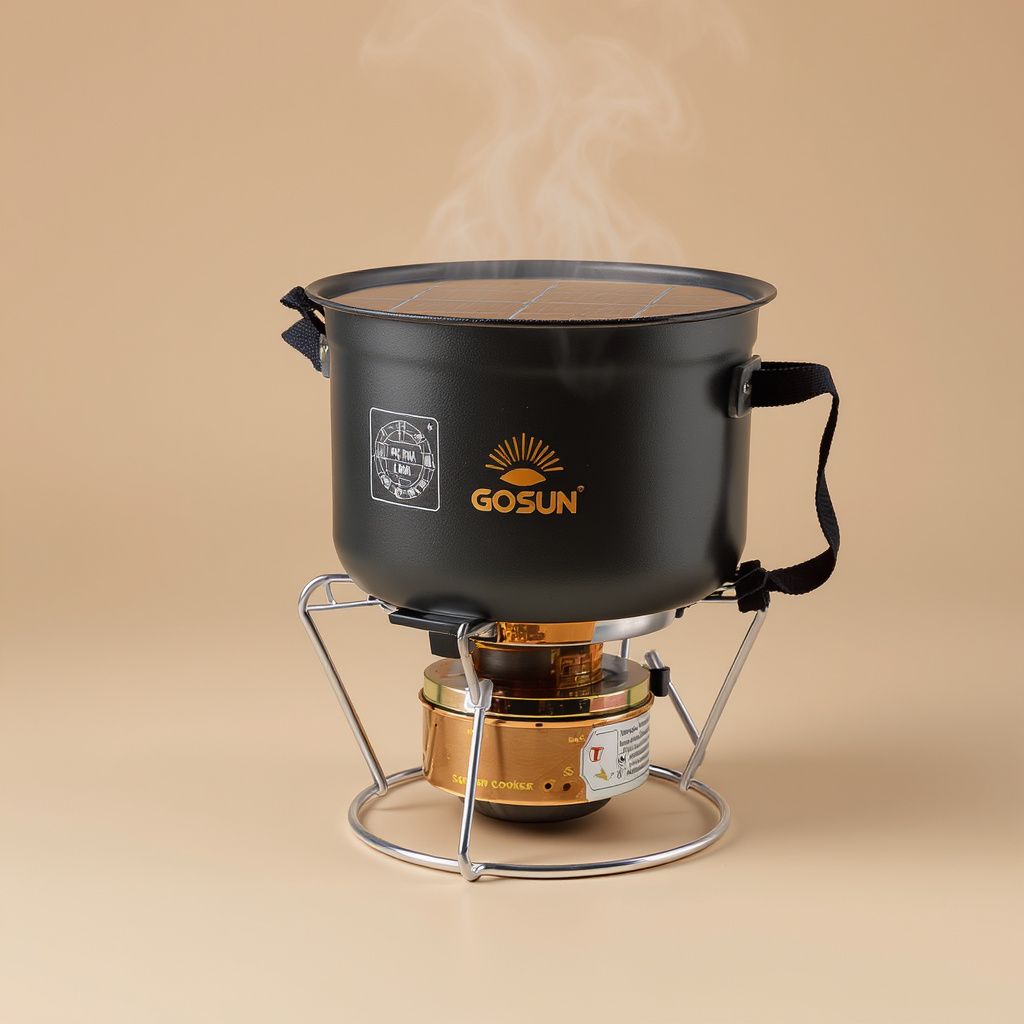
GoSun Sport Solar Cooker
The most efficient solar cooker we've tested. Cooks a full meal in 30 minutes of sun without any power draw.
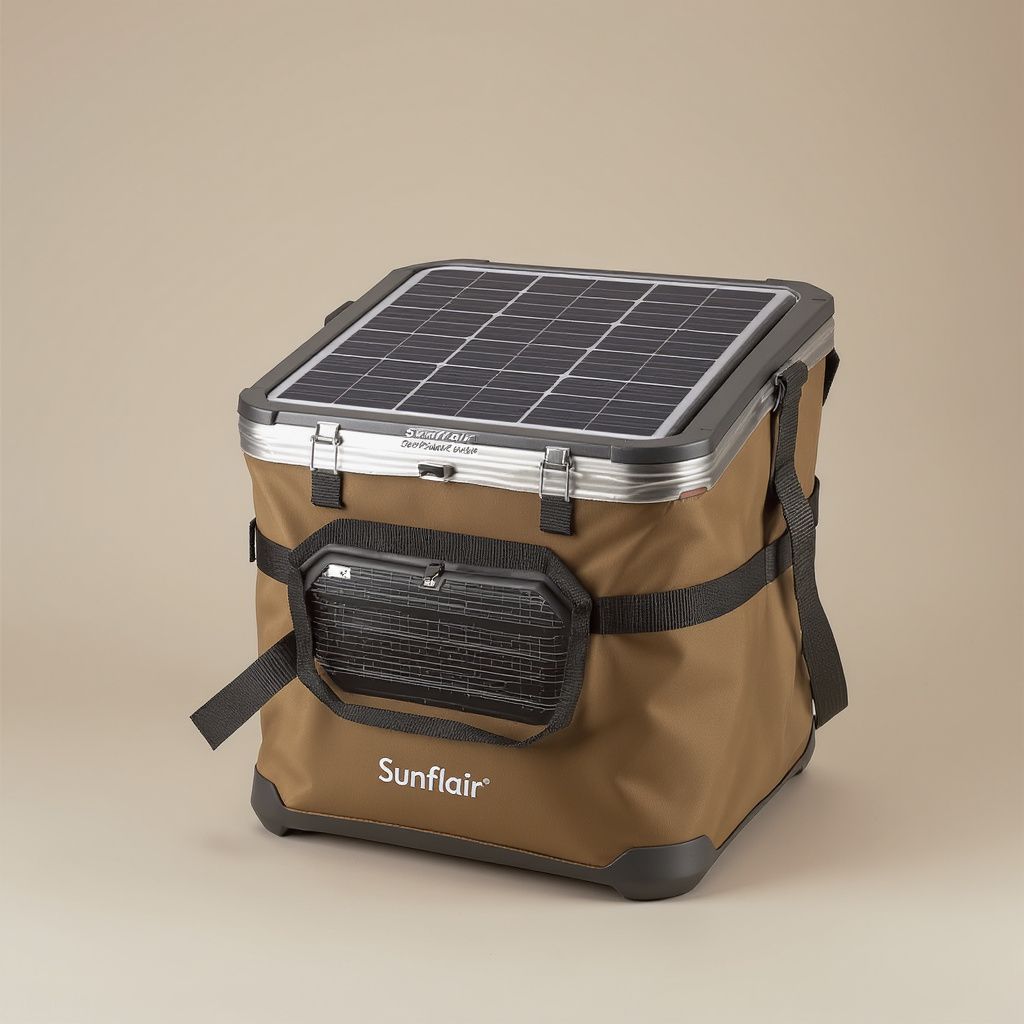
Sunflair Portable Solar Oven Deluxe
The soft-sided solar oven. Collapses flat for storage, cooks slow-roasted meals on long sunny stops.
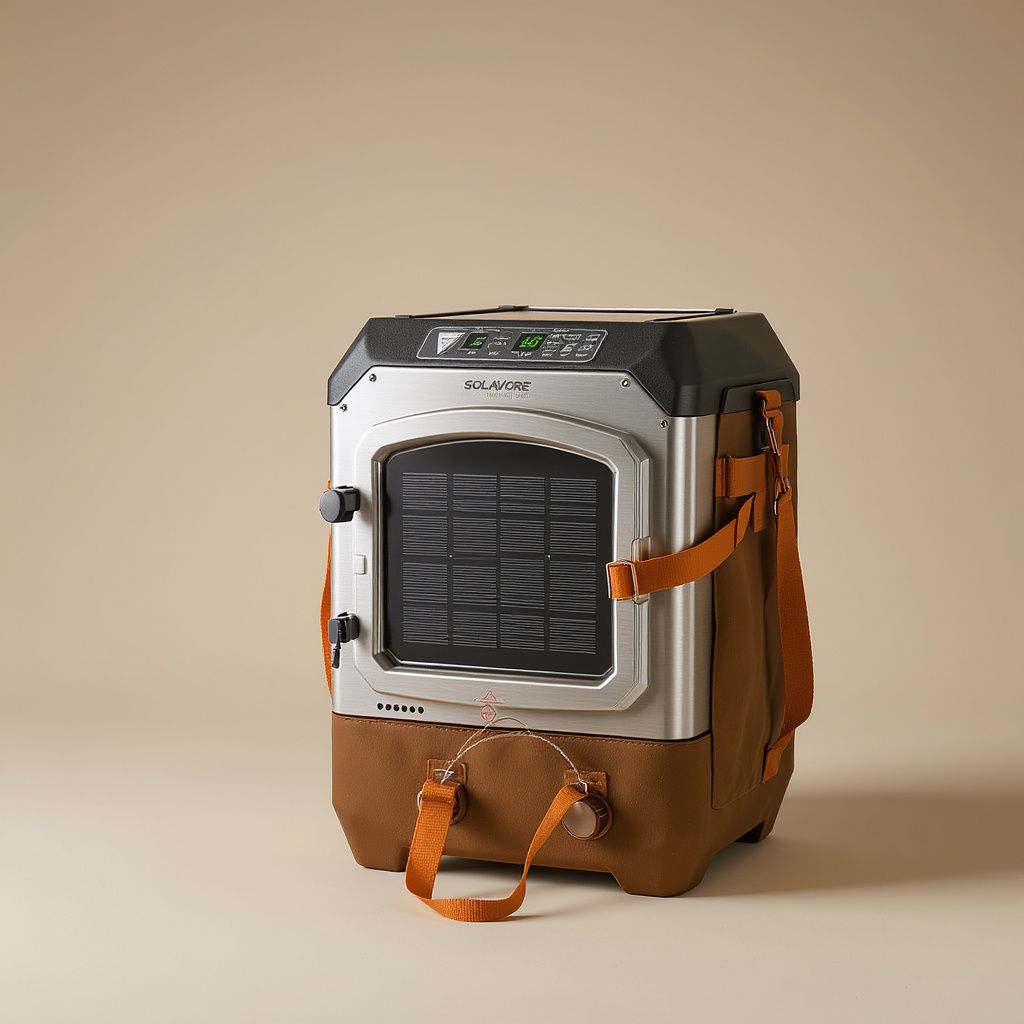
Solavore Sport Solar Oven
The classic box-style solar oven. Reaches 300°F in full sun, 4-quart cooking capacity, and the molded plastic shell is more durable than the fabric Sunflair. The right pick if you want to slow-roast a real Sunday dinner using only sunlight.