Induction vs Butane vs Propane: Which Wins in a Van?
An honest head-to-head of the three main van cooktop fuel sources — with real power, cost, and cold-weather numbers.
Disclosure: As an Amazon Associate I earn from qualifying purchases. Links to Amazon on this page are affiliate links: if you buy through one, VanLifeKitchens.com may earn a commission at no extra cost to you. Read our affiliate disclosure.
The three fuels that matter
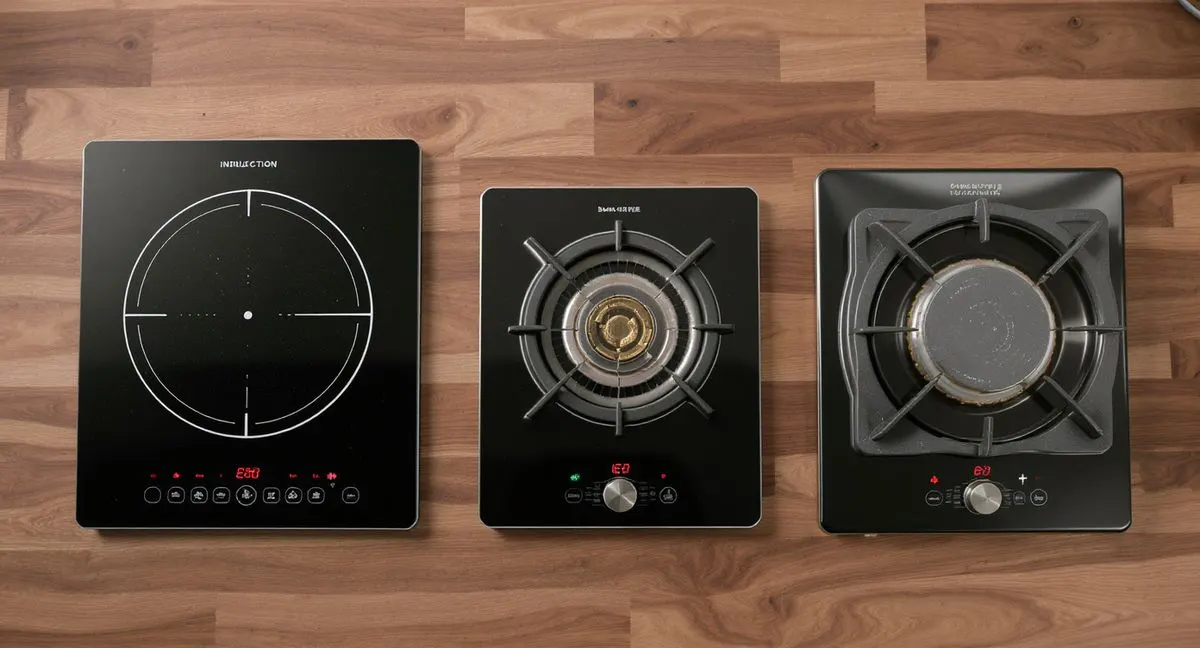
When you're building a van kitchen, the cooktop fuel decision is the second most important electrical/mechanical choice after the fridge. Almost every van dweller ends up choosing between three options: induction (electric, powered from your battery bank), butane (canister fuel, zero power draw), or propane (cylinder or tank fuel, zero power draw, higher output). Each has genuine advantages, and anyone telling you one is universally best is selling something.
There is also a fourth question that matters more than any of the numbers: where the cooktop is allowed to run. Induction can run inside the van. Portable butane and propane camp stoves are labelled by their manufacturers for outdoor use. A built-in propane cooktop certified for RV use can run inside, but only as part of a properly installed gas system. That single fact shapes the whole decision, so it comes first in every section below.
This guide is a head-to-head with stated assumptions: power draw, fuel use, boil times, cold-weather behaviour, and the practical trade-offs of living with each one. By the end you'll know which fuel matches your rig, your climate, and your cooking habits. In most cases, the answer is "one of these plus one of the others as backup."
Induction: the power-hungry option
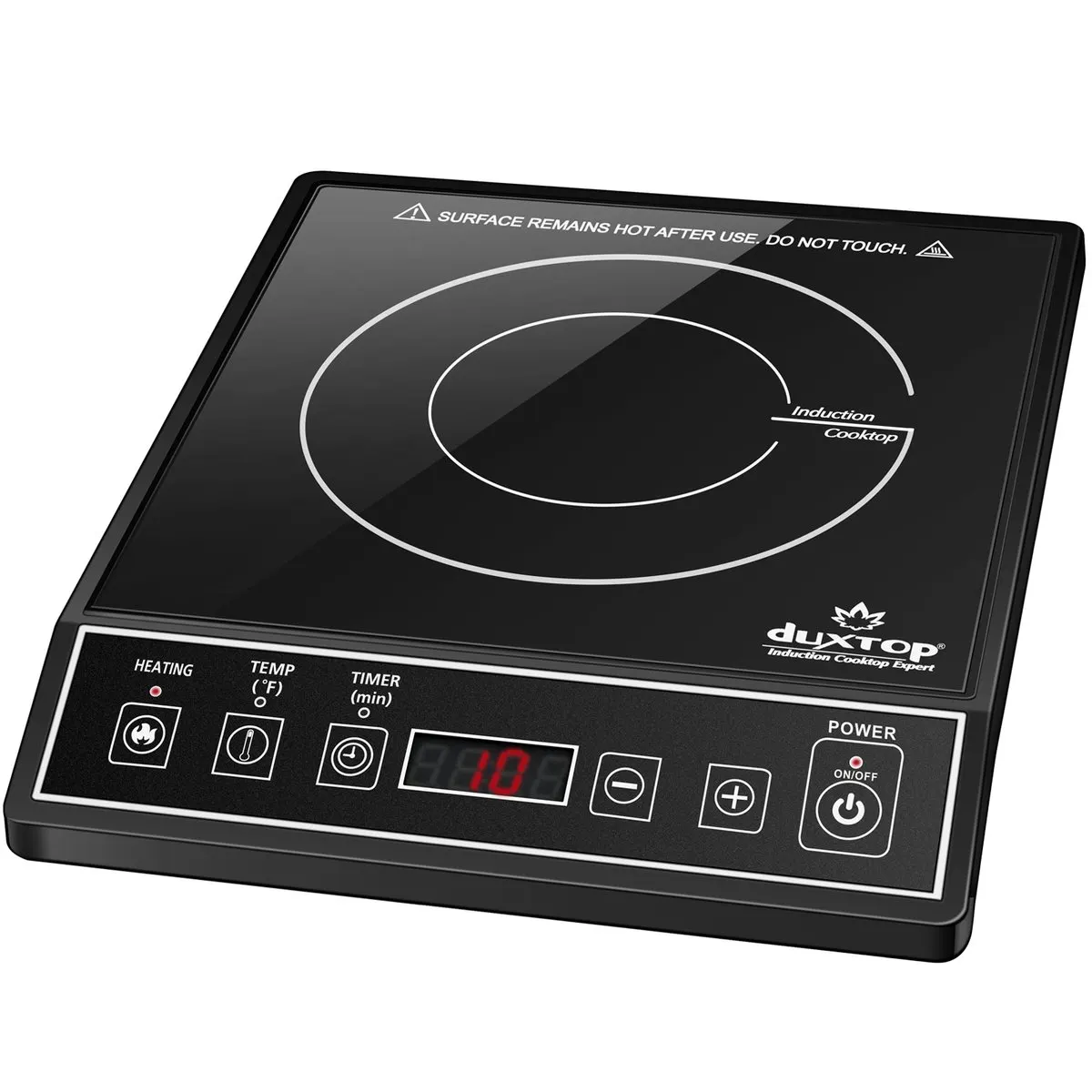
An 1800W portable induction cooktop like the Duxtop 9100MC is the fastest-boiling, most precise, and easiest-to-clean cooktop you can put in a van. It's also the one with the highest electrical demand.
How it works: an oscillating magnetic field induces eddy currents in a ferromagnetic pan. The pan becomes the heating element, so you need cookware with a magnetic base (if a fridge magnet sticks firmly to the bottom, it will work). The glass surface stays cooler than a gas grate, though it does get hot from the pan.
Where it runs: inside or outside. No combustion means no carbon monoxide, but cooking still produces steam, grease and odour, so a roof fan or range hood is still worth running.
Typical performance numbers (manufacturer ratings, plus estimates with assumptions stated):
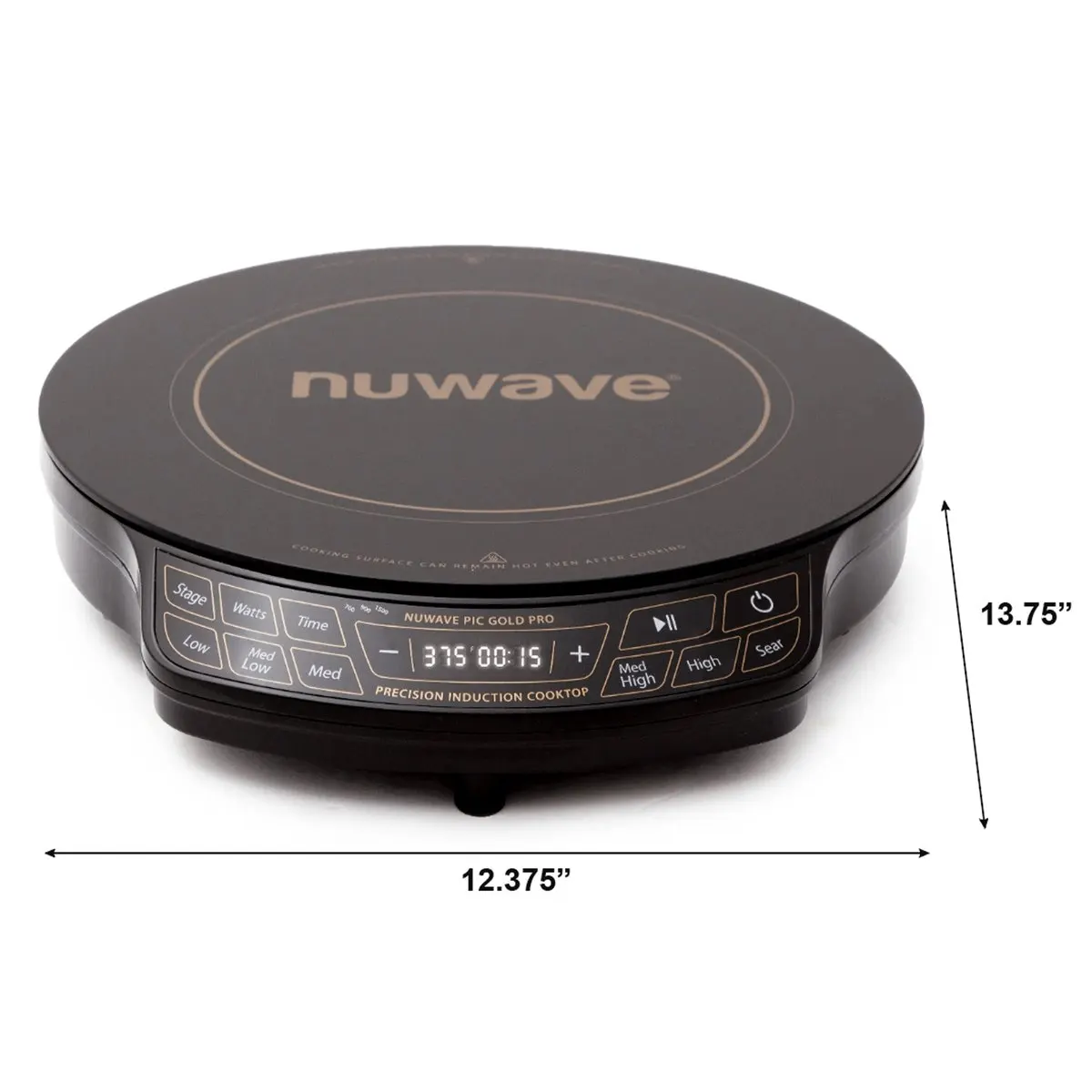
- Rated power: 1800W at 120V AC for the Duxtop 9100MC (Duxtop's published rating); the NuWave PIC Gold is rated at 1500W
- Boil time: 1 liter of water to a rolling boil in roughly 3 to 4 minutes at full power with a lid (owner-reported range, varies with pan and starting water temperature)
- DC draw at 12V through an inverter: about 170 A at full power, calculated from 1800W at 12V nominal and roughly 88% inverter efficiency. Average draw is lower because most cooking runs below full power
- Estimated daily energy for two-person cooking: roughly 720–1,100 Wh, or 60–90 Ah at 12V nominal. This assumes 40 to 60 minutes of cooking a day at an average of about 1,000W, plus inverter losses. Long simmers or big batch cooking will use more
- Simmer precision: good above about 400W; at very low settings many portable units pulse on and off
- Efficiency: commonly cited estimates put induction at around 85% of electrical input reaching the pan, well above an open flame
The catch: you need a pure sine wave inverter sized above the cooktop's rated draw (2000W continuous is a common minimum for an 1800W cooktop, 3000W if you run other loads at the same time), a lithium battery bank large enough to supply that current without voltage sag (200 Ah at 12V is a common starting point), and enough solar or alternator charging to replace the energy daily. Batteries, inverters, cabling and fusing at these currents should be installed per each manufacturer's instructions, and by a qualified installer where your insurer or local rules require it. Run your own numbers with the power calculator.
Induction wins when:
- You have 200+ Ah of lithium, a 2000W+ inverter, and 400W+ of solar.
- You cook in moderate-to-warm climates where solar harvest is reliable.
- You want to cook inside the van, especially in rain, wind or bug season.
- You want fast boils, precise simmer, and easy cleanup.
Induction loses when:
- Your battery bank is small or lead-acid.
- You boondock in winter with low solar output.
- You cook large meals that need 30+ minutes of sustained high heat.
- You're a weekender who doesn't want to build a big electrical system.
Butane: the budget backup most vans carry
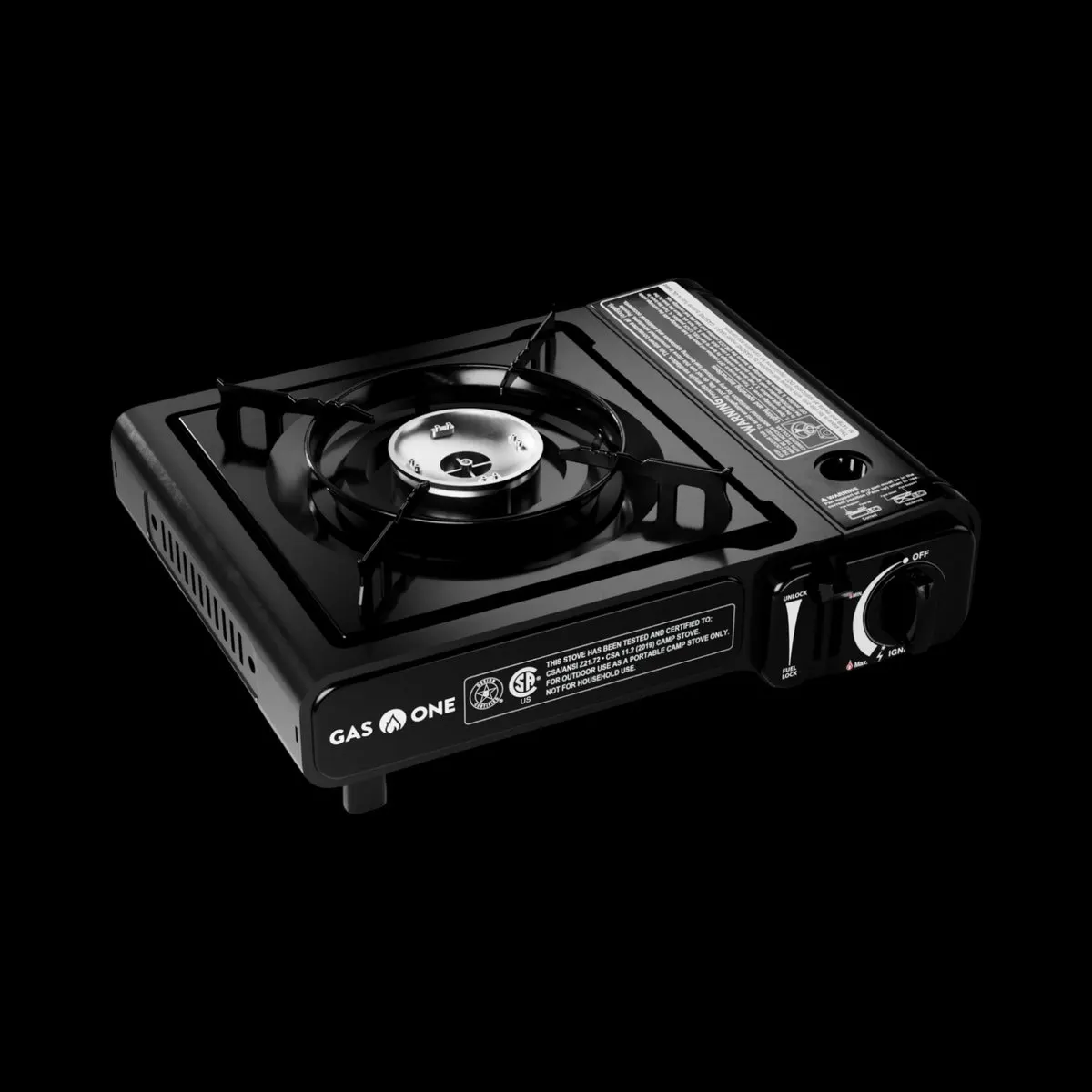
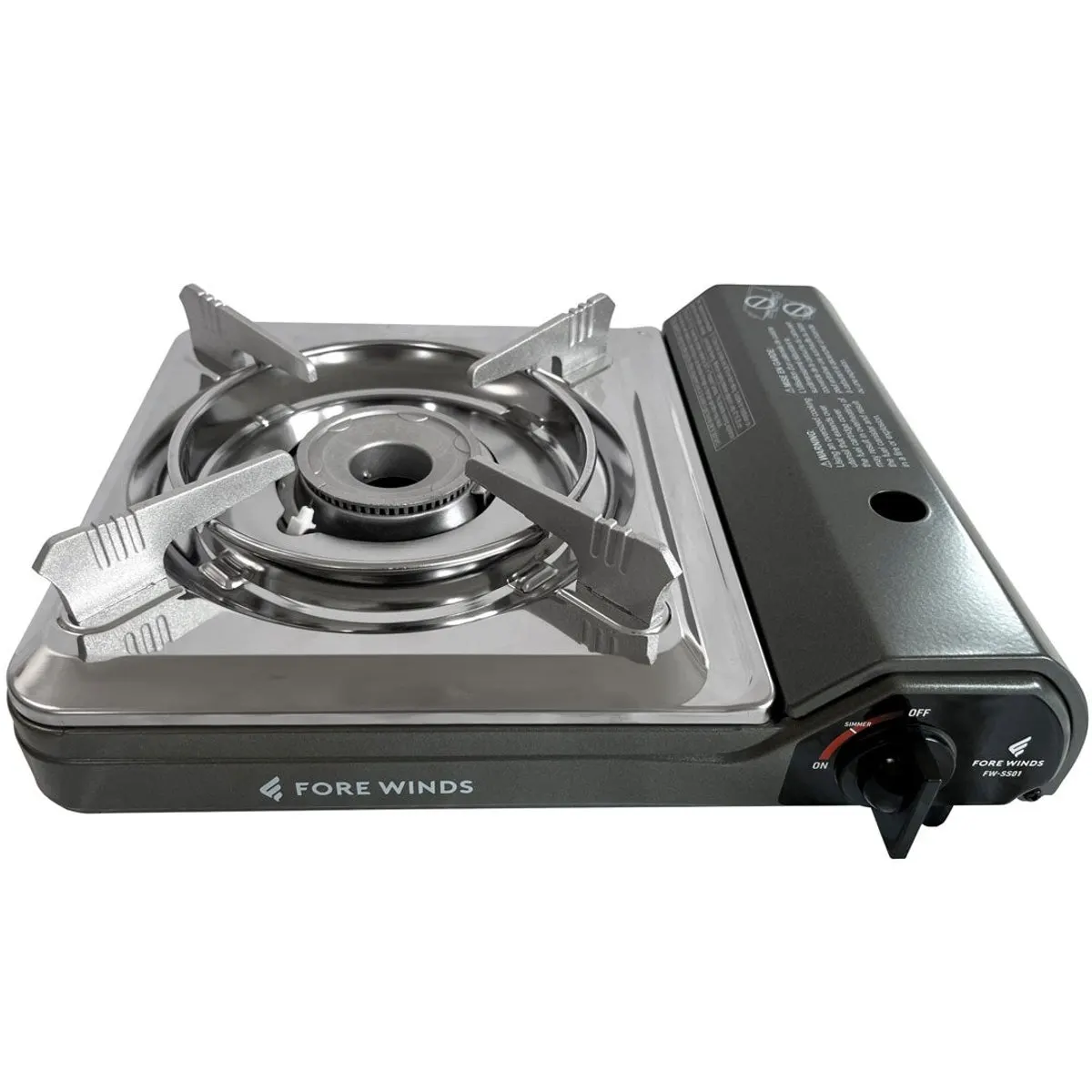
A butane portable stove like the Gas One GS-1000G is the cheapest serious cooking option for van life. It runs on widely sold 8 oz butane cartridges and draws zero electrical power. The Iwatani Cassette Feu is the better-built cassette option, with a windbreaker and a pressure-sensing safety shutoff.
Where it runs: outdoors. Iwatani's manual for its Cassette Feu says that as a camp appliance it is "for use as an outdoor only camp cooking appliance" and "may not be used indoors in tents, campers, apartments or other confined areas." Portable butane stoves generally carry the same carbon monoxide warning. Set it up on a folding table beside the open slider, on a tailgate, or at a picnic table, not on the counter inside the van. A CO alarm or roof fan does not change that rating.
How it works: butane is a liquefied petroleum gas that boils at about 31°F (−0.5°C) at sea-level pressure. The stove meters vapour from the cartridge into a burner, and a piezo igniter lights it.
Typical performance numbers (manufacturer ratings and estimates):
- Rated output: roughly 9,000–12,000 BTU/h for single-burner cassette stoves; Iwatani rates the Cassette Feu at 12,000 BTU/h. Check the exact rating on the listing you buy
- Boil time: 1 liter of water in roughly 4 to 5 minutes in mild, still air (owner-reported range; wind and cold slow it a lot)
- Power draw: zero
- Fuel use: an 8 oz (227 g) cartridge holds roughly 10,000 BTU of fuel, so at full output it lasts about an hour; Iwatani quotes about 55 minutes at maximum for the ZA-3HP at 68–77°F. Lower flame settings stretch that considerably
- Heat control: coarse on budget units, better on the Iwatani
- Efficiency: commonly cited estimates for open flames are around 30–40% of fuel energy reaching the food
The catch: butane performance falls off well before freezing as the cartridge cools, and below about 32°F pure-butane cartridges barely work. Cartridges are heat-sensitive in storage too: Iwatani says to store them below 104°F (40°C) away from direct sun, which a parked van in summer can exceed. Iwatani also warns against cookware that overhangs the canister cover and against placing two cassette stoves side by side, because both can overheat the canister.
Butane wins when:
- You want cheap, simple, zero-power cooking and are happy to cook outside.
- You're a weekender or part-timer who doesn't want to build a big electrical system.
- You need a backup for an induction cooktop.
- You cook in mild temperatures and don't need precision simmer.
Butane loses when:
- You want to cook inside the van.
- You camp in temperatures near or below freezing.
- You want a flame-free kitchen.
Propane: two very different categories
Propane is the fuel most RVs and many larger van builds run on, but "propane cooking" covers two different things, and the safety rules are different for each.
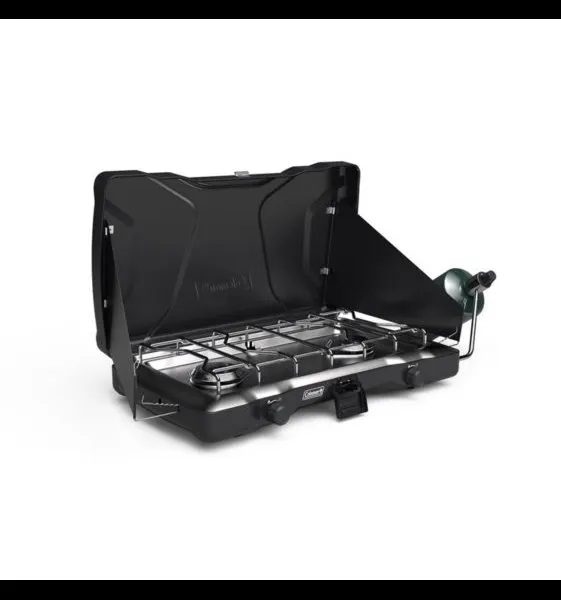
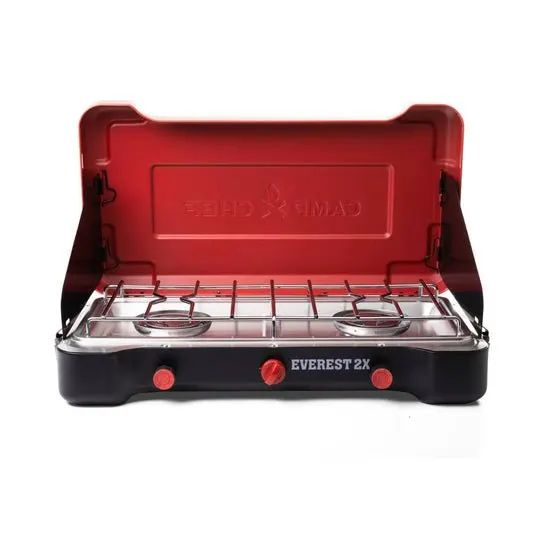
1. Portable propane camp stoves like the Coleman Triton+ (22,000 BTU/h across two burners, per Coleman) and the Camp Chef Everest 2X (20,000 BTU/h per burner, per Camp Chef) run from 1 lb cylinders or a bulk tank via an adapter hose. They are outdoor appliances. Coleman's propane stove instructions say "For outdoor use only" and "Never use inside house, camper, tent, vehicle or other unventilated or enclosed areas," and the Everest 2X instructions carry the standard warning never to use it "in an enclosed space such as a camper, tent, car or home." Cook with them outside the van.
2. Built-in, RV-certified propane cooktops are designed for installation in a vehicle. They can be used inside, but only as part of a complete system: an RV-rated cooktop installed per its instructions and clearances, a cylinder in a sealed propane locker vented to the outside at the bottom, proper gas lines and a two-stage regulator, an LP-gas leak detector mounted low, and a CO alarm listed for RV use. Where codes, inspections or insurers require it, the system should be installed or inspected by a qualified RV gas technician; in the US, NFPA 1192 is the standard for recreational vehicles. Even then, the cooktop needs combustion ventilation whenever it runs.
Typical performance numbers (manufacturer ratings and our estimates):
- Rated output: 10,000–20,000 BTU/h per burner depending on the stove
- Boil time: 1 liter of water in roughly 3 to 4 minutes on a high-output burner in mild conditions
- Power draw: zero, or a trivial amount for electronic ignition
- Fuel logistics: 1 lb cylinders are convenient but expensive per pound and mostly non-refillable; bulk tanks are far cheaper per pound and refill at any propane supplier
- Heat control: good, with usable low-end on most two-burners
- Cold weather: propane boils at about −44°F, so it keeps vaporizing in cold that stops butane, although cylinder pressure still drops as it cools
- Efficiency: similar to butane, roughly 30–40% by common estimates
The catch: a portable propane stove is an outdoor appliance, so in rain, wind or deep cold you are cooking outside or not cooking. A built-in system solves that, but it is a real installation with a locker, plumbing, detectors and often professional work. Leaks are serious: propane is heavier than air and pools in low spots, which is why the locker vents at the bottom.
Propane wins when:
- You're building a permanent van and are prepared to install an RV-certified cooktop and locker properly.
- You cook in cold climates where butane fails (outdoors with a camp stove, or inside with a certified built-in).
- You want high output for big pots or searing.
- You're already running a certified propane system for heat or hot water.
Propane loses when:
- You don't want to install, inspect and maintain a gas system.
- You want to cook inside without a built-in installation.
- You need to comply with fuel storage rules in certain parks, ferries or tunnels.
Head-to-head comparison
| Factor | Induction | Butane stove | Propane |
|---|---|---|---|
| Where it runs | Inside or out | Outdoors | Camp: outdoors. RV built-in: inside |
| Rated heat | 1,500–1,800W | 9,000–12,000 BTU/h | 10,000–20,000 BTU/h per burner |
| Boil 1L (approx.) | 3–4 min | 4–5 min | 3–4 min |
| Power draw | High (about 170A at 12V) | Zero | Zero |
| Cold weather | Fine, if the battery charges | Weak near freezing | Works well below freezing |
| Install | Plug-in, big electrical | None | None (camp) or full gas system (built-in) |
| Combustion products | None | CO, CO2, NO2, H2O | CO, CO2, NO2, H2O |
Boil times are owner-reported ranges for mild conditions. Induction "fuel" is battery energy, which costs little at the margin if you already own the electrical system and a lot if you have to build it.
Climate matters more than anything else
After the indoor/outdoor question, the biggest factor in choosing a van cooktop fuel is climate.
Hot, sunny climates (Southwest US, Baja, Mediterranean): induction does well. Solar production is high, and you'll often cook outside anyway to keep heat out of the cabin. A butane stove used outdoors is the usual backup for cloudy days.
Moderate climates (Pacific Coast, Southeast US, much of Europe): butane is the cheapest path if you're happy to cook outside. A budget Gas One GS-1000G on an outdoor table covers most meals. Add induction if you want to cook inside on rainy days and already have a big battery bank for other reasons.
Cold climates (Mountain West winter, Canada, Scandinavia): butane is weak, and lithium batteries can't charge below about 32°F without built-in heaters. Your options are a propane camp stove used outdoors (cold, windy, but it works), a built-in RV-certified propane cooktop installed with a proper locker and detectors, or induction backed by shore power or a heated battery. See the cold-weather van cooking guide for the winter-specific breakdown.
Mixed travel across seasons: two fuels often make sense, typically induction inside plus an outdoor butane or propane stove. Redundancy is cheap compared to not being able to cook.
The "just do induction" myth
You'll read a lot of van-life content that says "just install induction, problem solved." This advice is incomplete. Induction works well when the electrical system supports it, and it is the only common option that lets you cook inside without a gas installation. But the electrical system to support it comfortably (around 300 Ah lithium, a 2000W+ inverter, 600W of solar, an MPPT controller, wiring and fusing, plus install labour) is one of the most expensive parts of any van build. It costs many times more than the cooktop itself, which is a budget item.
A butane stove covers most everyday cooking for the price of a budget stove plus cartridges, with one big condition: you cook outside. If your build budget is tight and you're happy with an outdoor kitchen, butane is the smart play, and you can add induction later when the electrical system grows.
What many van dwellers run
In build threads and owner write-ups, three setups come up again and again (we have no hard survey numbers, so take this as a pattern, not a statistic):
- Induction as primary inside, plus a butane stove for outdoor cooking. Big electrical systems, sunny-climate travel.
- Butane or propane camp stove only, used outdoors. Smaller builds, simpler electrical, weekend use.
- Built-in RV propane cooktop as primary, induction as backup. Winter-capable rigs, RVs, skoolies with a proper gas system.
The "induction-only, no backup" build is less common. Dead batteries, a failed inverter, or a cloudy week are common enough that a budget butane stove for outdoor use is cheap insurance.
Final recommendation
If you're starting a van build and don't know what to buy:
- Start with a budget butane stove for outdoor cooking. It costs little and works as a backup to anything else.
- Add induction if you want to cook inside and your electrical system is sized for it. 200 Ah lithium, a 2000W inverter and 400W of solar are a common minimum.
- Consider a built-in propane cooktop only if you're installing a proper RV gas system (certified cooktop, vented locker, LP detector, CO alarm, qualified installer where required), usually because you travel in cold weather or already run propane for heat.
The question isn't "which fuel wins." It's "which combination matches my build, my climate, and my budget," and which of those lets you cook where you actually need to. In most cases the answer is two fuels, one primary and one backup.
FAQ
Is induction or butane cheaper to run in a van? On a marginal per-meal basis, induction costs very little if you already have the electrical system. On a total-system basis including battery and solar, butane is cheaper for light cooks. Heavy cooks who also want to cook inside often find the electrical system worth it.
Does butane work in cold weather? Poorly. Butane performance drops well before freezing and pure-butane cartridges barely work below about 32°F because the fuel can't vaporize fast enough. Propane keeps working in much colder conditions. Either way, portable butane and propane stoves are outdoor appliances.
Do I need a 2000W inverter for induction? For an 1800W cooktop, a 2000W continuous pure sine wave inverter is a common minimum; check the inverter maker's surge rating and cable sizing. An 1800W cooktop draws about 170 A at 12V through the inverter, so cables, fuses and connections must be sized for that current per the manufacturer's instructions. 3000W gives you headroom to run a kettle and the cooktop together.
Is propane safe to use inside a van? Only with a built-in cooktop certified for RV use, installed as a complete system: a sealed, vented propane locker, proper gas lines and regulator, an LP leak detector, a CO alarm listed for RV use, and installation or inspection by a qualified RV gas technician where codes or insurers require it. Portable propane camp stoves are not part of that category; their manufacturers label them for outdoor use.
Can I use a portable propane or butane camp stove inside a van if I have a CO alarm and a roof fan? No. The manufacturers of these stoves label them for outdoor use, and a CO alarm is a last-line warning, not permission. Cook outside with the stove on a table or tailgate, or use induction inside.
What's the best cooktop for van life overall? There isn't a single best answer. For cooking inside with a real electrical system, induction. For cold-climate travelers, propane, either a camp stove outdoors or a certified built-in. For budget builds and weekenders happy to cook outside, butane. Most full-timers run two: one primary and one backup.
Products covered in this guide
Disclosure: As an Amazon Associate I earn from qualifying purchases. Links to Amazon on this page are affiliate links: if you buy through one, VanLifeKitchens.com may earn a commission at no extra cost to you. Read our affiliate disclosure.
More in Buying Guides
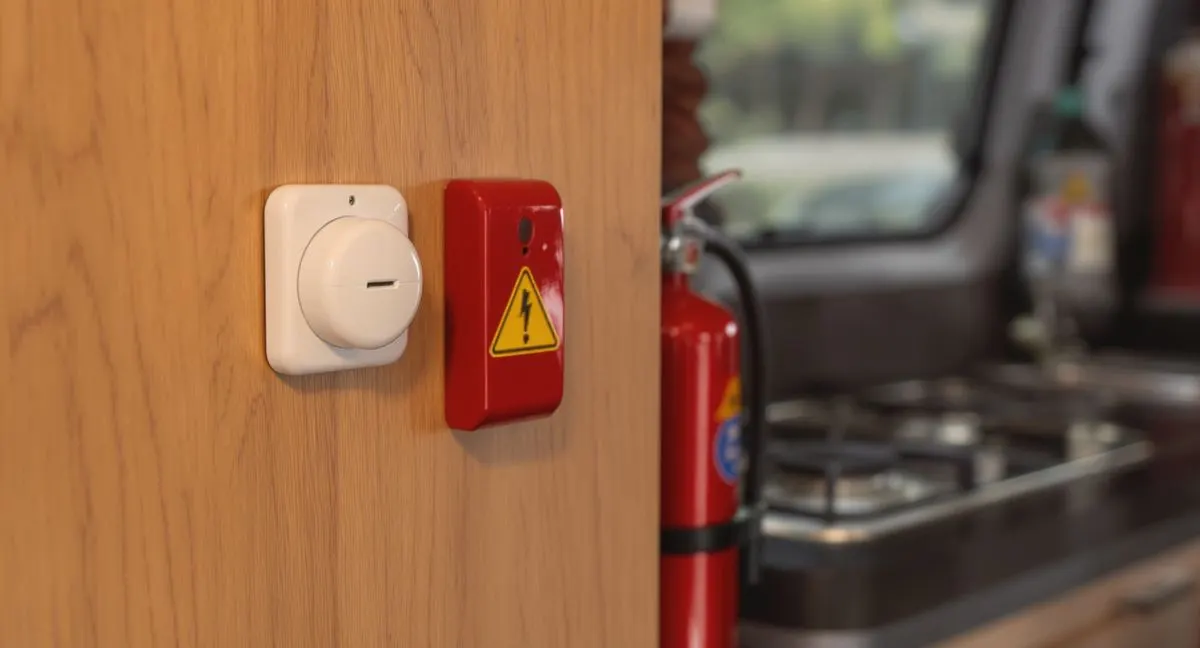
Van Cooking Safety: Carbon Monoxide, Fire, and Burns
The three safety risks every van cook needs to manage — CO from propane and butane, fire from grease and fabric, and burns from tight quarters. With the gear and habits that prevent each one.
Van Cookware Materials: Cast Iron vs Carbon Steel vs Stainless vs Titanium
The five cookware materials van dwellers actually choose between — cast iron, carbon steel, tri-ply stainless, hard-anodized nonstick, and titanium — with the two-pan kit recommendation that covers every cooking task.
What Size 12V Fridge Do You Need for One or Two People?
Size a 12V fridge by resupply interval, fresh vs shelf-stable food, usable space and freezer needs, not headcount alone. Worked examples, clearances and published energy figures.