GoSun Sport Solar Cooker
- Peak Temp
- 550°F (product page); manual: 700°F max, 200-550°F working
- Dimensions
- 29 x 12 x 6 in (GoSun)
- Weight
- 7 lbs (GoSun)
- Cook Capacity
- 40 oz / 1.2 L (meal for 2-3)
- Materials
- Borosilicate vacuum tube + anodized aluminum reflectors
- Warranty
- 1 year (GoSun; void via unauthorized resellers)
Seller and warranty note: GoSun's warranty is "voided if product is purchased from any unauthorized reseller or non-licensed GoSun dealer." At the time of checking, the Amazon offer was sold by GoSun itself. Confirm the seller on the listing before you buy.
Overview — Who is this for?
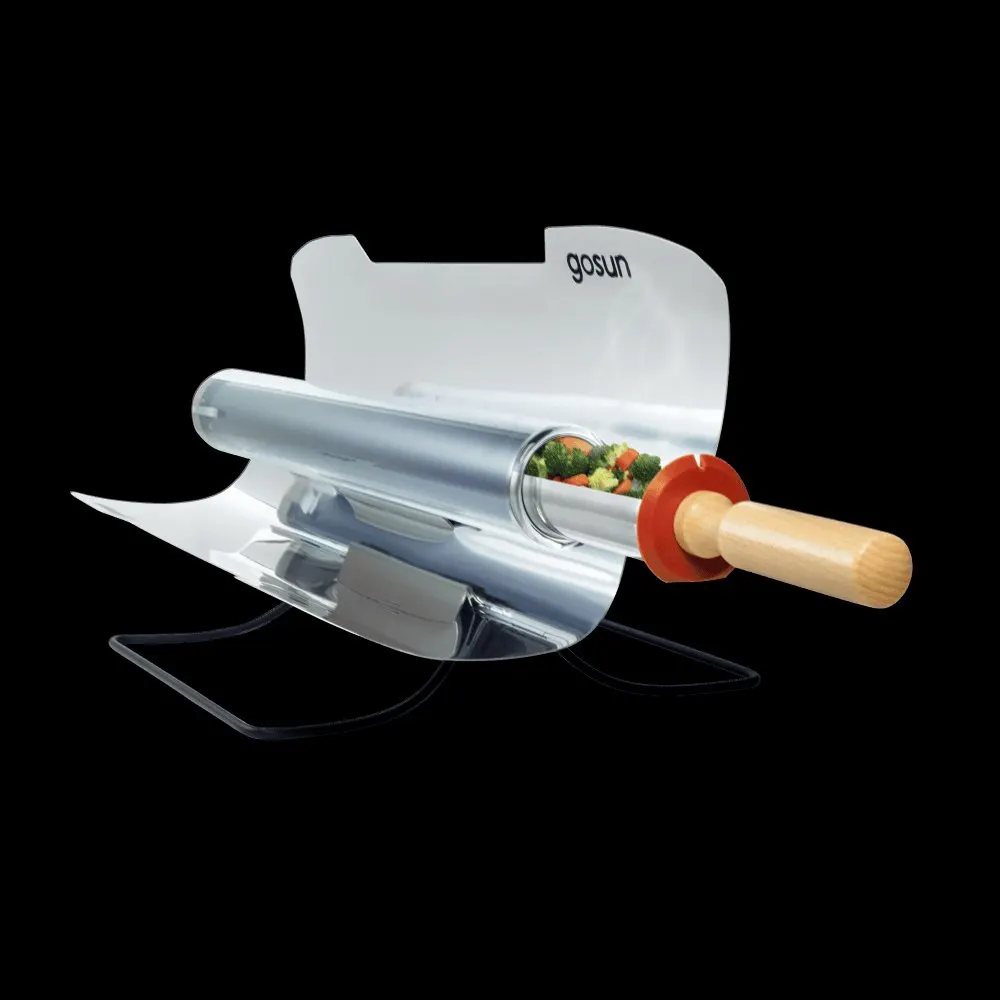
The GoSun Sport solar cooker is a vacuum-tube solar oven: a long, insulated glass tube with fold-out reflectors that concentrate sunlight onto it. GoSun's product page rates it to a maximum of 550°F. It says the Sport cooks "2-3 meals" in about 20 minutes under direct sun, with no power draw, no fuel and no emissions.
What the Amazon link sells: the GoSun Sport bundle (ASIN B00LD84EQE, model 3PP1D1P1, colour "Silver Brown") with a padded carrying case and non-stick silicone baking pans. GoSun sells its "Carry Case for Sport and Fusion" separately on its own site, so the case is a real addition in this bundle.
Choose this if:
- You spend long stretches in sunny, dry climates
- You want hot meals without touching your battery, propane or butane
- You cook small portions for one to three people
Skip this if:
- You travel mostly under cloud, in forest shade, or in northern winters
- You want to cook whenever you're hungry, including evenings
- You need to cook for a group or use your own pots
This review is for van dwellers, overlanders and off-grid full-timers who spend serious time in sunny climates and want a cooking option that doesn't draw on their battery, propane or butane. It's not a general-purpose cooktop and it doesn't replace a Duxtop induction cooktop. It's a specialist tool for specific conditions.
Specs: product page vs manual
GoSun publishes two sets of figures, and they don't fully agree. The current Sport user manual (V13) is more aggressive than the product page:
| Spec | GoSun product page | GoSun Sport manual |
|---|---|---|
| Max temperature | 550°F | 700°F (working range 200–550°F) |
| Cook time | ~20 min for 2–3 meals in direct sun | "As fast as 10 minutes" |
| Capacity | 40 oz (1.2 L) | Up to 3 lb of food |
| Weight | 7 lb | 7 lb dry weight |
| Size | 29 x 12 x 6 in | not stated |
The sensible reading: expect normal cooking in the 200–550°F range the manual calls "working temperature." The 700°F figure is what an empty or near-empty tube can reach, and that's exactly why the manual warns against preheating it (see below).
GoSun's box contents for the standard Sport are: the solar oven, cooking tray, cleaning brush, SolarDial (a small aiming aid), cookbook and user manual. The Amazon bundle adds the padded case and silicone pans. The listing says the reflectors are anodized aluminum with stainless steel hardware.
Design and build
The core of the Sport is an evacuated borosilicate glass tube, essentially a thermos with one open end. Two fold-out reflectors focus sunlight onto it, and food goes into a removable cooking tray that slides into the tube. The manual's parts list also shows a steam vent and handle on the tray, a cleaning attachment, a bracket, and fold-out legs that double as a carry handle.
The vacuum is what makes the design work. Once sunlight heats the inner wall, the vacuum sharply limits heat loss. GoSun's manual says that because of it, "you cannot be burned by touching any exterior part," while "components inside the Tube can be extremely hot." It's also why tube cookers cope with cool, breezy days better than open panel cookers.
Tube size. The current product page and manual don't give tube dimensions. An older GoSun Stove user's guide lists the Sport's tube at 2.8 inches outside diameter and 2.1 inches inside. Other figures in that guide (3.5 lb, 24 inches long) describe an earlier Sport, so treat the tube width as approximate. Either way, plan on food cut to fit a tray about 2 inches wide.
There are no electronics. The glass tube is the fragile component. The manual tells you to protect it "from impacts, scratches and other sources of stress" and to wear protective gloves if you ever have to remove a broken one.
Safety rules from GoSun's manual
These are the rules most likely to catch out a new owner. They come from the current GoSun Sport manual:
- Do not preheat. The manual's danger panel says "Do Not Preheat Stove" and, under loading, "do not allow the cooker to preheat in the Sun for more than 10 minutes before placing food." An empty tube in sun gets very hot.
- Avoid thermal shock. "Do not insert cold food into a hot Tube" and "Do Not Place Liquids Directly Inside Tube." Uneven heating can weaken the glass or break it.
- Keep the steam vent clear and facing up. Steam needs a path out of the tray end.
- Don't overload or force the tray. Food expands as it cooks and can jam in the tube. Forcing the tray can break the tube.
- Don't seal or pressurise the tube, and don't put plastic, paper or other non-edible items inside.
- Don't leave it deployed in the sun unattended, and don't transport the tray inside the tube.
- Hot contents. Anything that comes out of the tube "can be extremely hot and cause severe burns." Use heat-resistant gloves, set the tray on a heat-tolerant surface, and keep the open end pointed away from people.
- Supervise. The manual says the device isn't intended for use near or by young children without supervision.
It's an outdoor, sun-only cooker, so there's no combustion and no carbon monoxide. The hazards are heat, steam and broken glass, not fumes.
Performance: what to expect
GoSun's manual includes a cook-time chart for full, medium and low sun. In the Sport manual it's printed under a "GoSun Go" heading, so treat it as GoSun's general guidance for its tube cookers rather than Sport-specific measurements:
| Food | Full sun | Medium sun | Low sun |
|---|---|---|---|
| Steamed veggies | 20 min | 35 min | 1 hour |
| Baked goods | 25 min | 1 hour | 1.5 hours |
| Grains | 45 min | 1.3 hours | 2 hours |
| Meats | 55 min | 1.5 hours | 2.5 hours |
| Soups, hot water | 1 hour | 1.5 hours | 2.7 hours |
The same page says performance is "unaffected by ambient temperatures and wind." Humidity, pollution and diffuse light, however, "can significantly impact cooking times," and it "will not work in the shade." GoSun's product page says the Sport works under clouds ("If you can see a shadow, it will cook") but not at night.
Practical expectations:
- Strong midday sun: fast cooking for small portions, such as proteins cut to fit the tray, vegetables, eggs, bacon and fish.
- Hazy sky, late afternoon or low winter sun: expect cook times closer to the medium or low-sun columns.
- Heavy overcast, shade or night: not a realistic cooking option. Have a backup stove.
Aiming. The manual says to rotate the cooker until the reflectors face the sun, line up your head's shadow on the tube, and tilt until the reflectors show only the blue of the tube. It "only has to be readjusted every hour or so."
Wind. The tube loses little heat to wind, but the reflectors are a sail. A gust can shift the aim or tip the cooker. The manual says to place it on a flat surface, or securely fastened, with the legs locked. Set it in the lee of the van.
Cooking tips from the manual: foil, oil or butter on the tray reduces sticking. Food at the far end of the tray cooks better than food near the opening. Baked foods can more than double in volume, so start small. The tube traps moisture, which suits steaming; for crispier food, leave the tray slightly open and drain fluids. Cut sausages in half so they don't curl and jam.
Power consumption: zero
The GoSun draws zero amps from your battery, inverter or alternator. An induction cooktop can pull around 1,800 W at full power, and a butane stove burns consumable fuel, so a cooker that runs entirely on sunlight is genuinely different. Our van kitchen power budget guide and power calculator show what the same meals would cost in battery capacity.
"Free" is still misleading. You pay up front, and the value depends on how often you cook with it.
Cleanup with limited water
The manual's cleanup routine suits a van. Remove the cooker from the sun and let it cool completely, which "can take over an hour." Screw the cleaning attachment onto the tray, pour about half a litre of water and a squirt of dish soap into the tube, then twist and plunge the tray to scrub it. Rinse the tray and tube with water once the tube is cool. The manual warns against harsh abrasives, caustic cleaners and oven cleaners, and against cleaning the tube while it's hot. Clean the cooking tray after every use.
Cook capacity and meal planning
At 40 oz (1.2 L) per the product page, the Sport handles a meal for two, or one person with leftovers. It isn't built for a group of four. Larger meals mean cooking in batches, and because only one tray fits, you can't run two courses at once.
Tube geometry is the other constraint. Small pieces, sausages, fish portions, sliced vegetables and eggs work well. Wide or flat foods, such as pizza, sheet-pan meals or a whole roast, don't fit.
Durability and transport
The reflectors fold around the tube for travel, and the legs fold up as a handle. The glass is the part to protect. Pack the Sport where it can't slide or take impacts, keep it padded, and never transport it with the tray inside the tube. The padded case in this Amazon bundle is the right way to carry it in a moving van.
At 29 x 12 x 6 inches (GoSun), the Sport is a long, narrow package. That's its main storage trade-off against a flat-folding oven. Measure a spot before you buy.
GoSun's warranty is one year. Approved claims are converted to "a One-Time Credit to the purchaser" toward replacement parts, and GoSun says it "cannot guarantee the availability of an exact replacement." The warranty only covers units bought new from an authorised dealer.
GoSun Sport vs the alternatives we cover
- GoSun Sport (premium): vacuum-tube design, rated to 550°F on the product page, fast cooking in strong sun, 1.2 L capacity, 7 lb, 29 x 12 x 6 inches.
- Sunflair Portable Solar Oven (mid-range): a soft-sided fabric oven rated to about 285°F, with slow-cooker-style cook times. It folds to 2 inches thick, the Deluxe kit includes cookware, and Sunflair says it cooks for 4 to 8. See Sunflair vs GoSun Sport.
- Haines 2.0 SunUp: a fold-flat panel cooker that heats a dark pot, suited to slow pot meals on clear, calm days. See Haines 2.0 vs GoSun Sport.
If you're still deciding whether solar cooking makes sense for your rig, our solar cooking complete guide walks through the trade-offs between tube, panel and box designs.
Value for money
The GoSun Sport is a premium purchase for a cooker that only performs well in strong sun. Its value comes down to three questions:
- Are you in sunny climates most of the time? The desert Southwest, Baja, much of Australia and Mediterranean summers, yes. The Pacific Northwest in winter, no.
- Do you care about power draw and fuel? If you're on a tight battery budget, or tired of hauling fuel, solar cooking does real work.
- Will you plan meals around the sun? Cooking happens when the sun is up and strong, not whenever you're hungry, and the cooker shouldn't be left unattended.
If you answer yes to all three, the Sport earns its place. Check the current price with the button on this page, and confirm the seller on the listing.
Who should skip this
- Travelers in cloudy, shaded or forested regions with limited direct sun.
- Families or groups of three or more. 1.2 litres per load is too small.
- Anyone who doesn't want to plan meals around the sun, or to stay near the cooker while it's deployed.
- Winter travelers at higher latitudes. Short days and a low sun cut performance significantly.
- People who want to braise, simmer large batches or cook in normal pots. The tube only takes its own narrow tray.
Final Verdict
The GoSun Sport is a strong standalone solar cooker for van life in sunny climates. It reaches real oven temperatures, cooks small meals quickly in good sun, needs only about half a litre of water to clean, and draws nothing from your battery or fuel supply. The catch is that it's a premium purchase that only performs in strong sun, it holds one small tray, and the glass tube needs care: no preheating, no cold food in a hot tube, and padded transport.
For cloudy climates, families and people who cook on demand, it's the wrong tool. Get a Duxtop induction cooktop and a Gas One butane stove as an outdoor backup instead.
FAQ
How hot does the GoSun Sport get? GoSun's product page rates it to 550°F. The manual lists a 200–550°F working range and says the tube can reach up to 700°F, which is why it warns against preheating it empty.
How long does it take to cook with a GoSun Sport? GoSun says about 20 minutes for 2–3 meals in direct sun. Its manual's chart runs from about 20 minutes for steamed vegetables in full sun to 2.5 hours or more for meats in low sun. Check meat with a thermometer rather than relying on time.
Should I preheat the GoSun Sport? No. GoSun's manual says "Do Not Preheat Stove" and not to let it sit in the sun for more than 10 minutes before loading food. Don't put cold food into a hot tube; it can cause thermal shock and break the glass.
What comes in the bundle the Amazon link sells? The GoSun Sport (model 3PP1D1P1) with a padded carrying case and silicone baking pans. GoSun's standard box includes the oven, cooking tray, cleaning brush, SolarDial, cookbook and manual. Check the listing for the full contents and seller.
Does the GoSun work on cloudy days? GoSun says it works under clouds ("If you can see a shadow, it will cook") but not in shade or at night. Performance drops as light weakens, so plan on a backup stove under heavy overcast.
How big is the GoSun Sport when packed? GoSun lists it at 29 x 12 x 6 inches and 7 lb. The long, narrow shape is the main storage trade-off against a flat-folding oven like the Sunflair.
How much food does the GoSun Sport hold? About 40 oz (1.2 litres) per the product page, or up to 3 lb of food per the manual. Food needs to fit a narrow tray roughly 2 inches wide.
Is the GoSun tube fragile? The borosilicate glass tube is the fragile part. GoSun's manual says not to drop it and to protect it from impacts and scratches. Pack the cooker in its padded case, and never transport it with the tray inside the tube.
Sources and verification
- GoSun, Sport product page: 550°F, about 20 minutes for 2–3 meals in direct sun, 40 oz (1.2 L), 7 lb, 29 x 12 x 6 in, box contents, "If you can see a shadow, it will cook," works under clouds but not at night, carry case sold separately. https://www.gosun.co/products/sport (checked 2026-10-12)
- GoSun, GoSun Sport user manual V13 (linked from GoSun's product manuals page): parts list, 7 lb dry weight, up to 3 lb food, 700°F max and 200–550°F working range, danger and general safety warnings, preheat limit, steam vent, aiming, cook-time chart, cooking tips, cleanup procedure. https://cdn.shopify.com/s/files/1/0789/1333/files/GoSun_Sport_Manual_V13_Final_Size_1.pdf?v=1605018857 (checked 2026-10-12)
- GoSun, product manuals page. https://www.gosun.co/pages/product-manuals (checked 2026-10-12)
- GoSun, warranty page: 1-year warranty, one-time credit, void if bought from an unauthorised reseller. https://www.gosun.co/pages/new-warranty (checked 2026-10-12)
- GoSun Stove user's guide (older edition, hosted by Home Depot): Sport tube diameters (2.8 in outside, 2.1 in inside); other figures in this guide describe an earlier Sport. https://images.thdstatic.com/catalog/pdfImages/de/deb83f7a-09c2-4f36-85ff-095fe340aef2.pdf (checked 2026-10-12)
- Amazon listing for ASIN B00LD84EQE, the listing this review links to, via the Amazon Creators API: title, model 3PP1D1P1, bundle contents (padded case, silicone pans), anodized aluminum and stainless steel build, seller (GoSun), availability (checked 2026-10-12)
Compare with similar products
See how this stacks up against the other solar cooking we've reviewed.
Head-to-head comparisons
Related Reviews
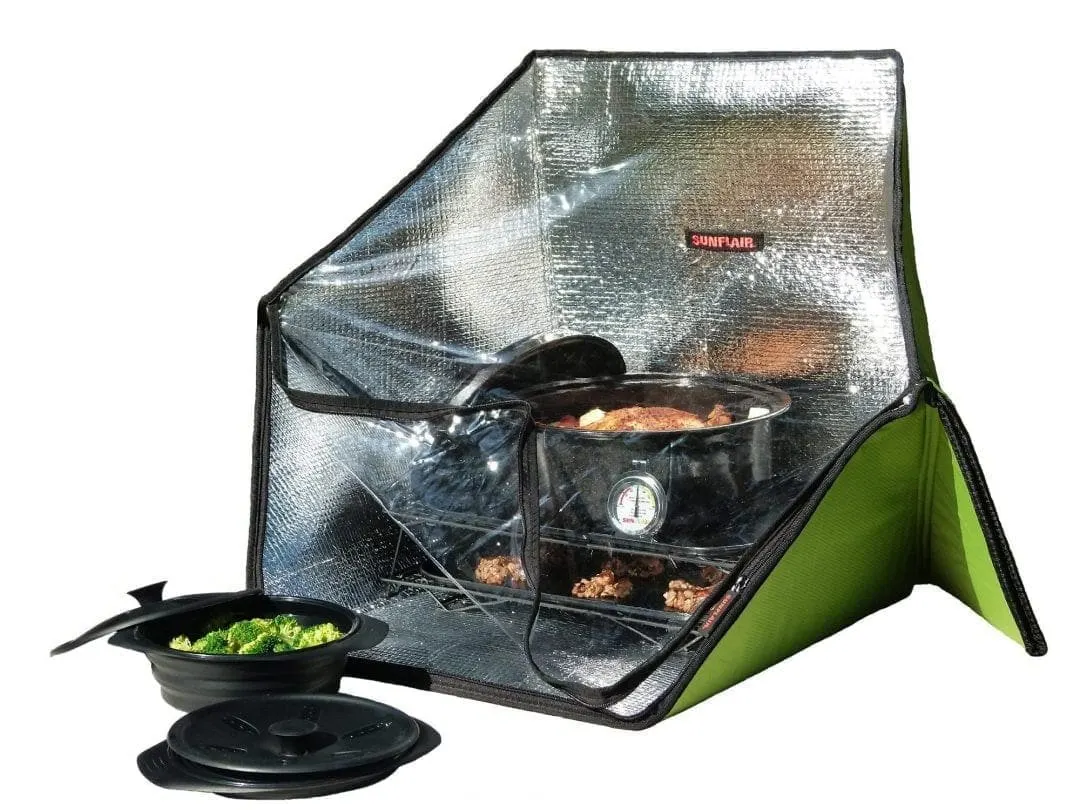
For: Flat-packing slow solar oven
Sunflair Portable Solar Oven Deluxe
The soft-sided solar oven. Collapses flat for storage, cooks slow-roasted meals on long sunny stops.
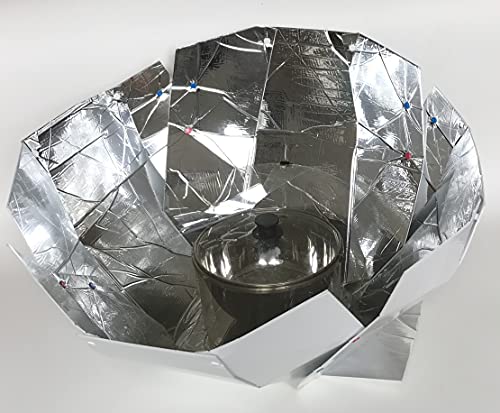
For: Slow pot meals in sun
Haines 2.0 SunUp Solar Cooker and Dutch Oven Kit
A fold-flat panel cooker that reflects sun onto a dark pot. A peer-reviewed study cited by its maker measured about 87 W of cooking power, and Haines says it can boil a quart of water in as little as 40 minutes. It suits slow pot meals on clear, calm days, not fast cooking or cloudy weather.

For: Solo one-pot solar meals
Sunflair Mini Portable Solar Oven Kit, Orange
An 8 oz soft solar oven that folds to 2 x 11 x 13 inches, with one collapsible pot, a trivet and a thermometer. On clear days it slow-cooks a one-pot meal for one or two with no fuel or battery use, but Sunflair says full cloud cover stops it and conventional recipes take double the time or more.