How to Size Your Van Kitchen Power Budget
A worked example of sizing a lithium battery and solar array around a realistic kitchen load — fridge, induction cooktop, water pump, and lights.
Disclosure: As an Amazon Associate I earn from qualifying purchases. Links to Amazon on this page are affiliate links: if you buy through one, VanLifeKitchens.com may earn a commission at no extra cost to you. Read our affiliate disclosure.
Why the kitchen decides your whole power system
Your van kitchen power budget is the number that determines every other electrical decision in your build. Before you size a battery bank, buy solar panels or pick an inverter, you need to know how much energy your kitchen uses per day. Get it wrong by 30% in either direction and you'll spend the next year either chasing sunlight or paying for capacity you don't need.
This guide walks through a worked example of sizing a lithium battery and solar array around a typical van kitchen: fridge, induction cooktop, water pump, lights, and the small daily loads that add up. Use the Power Calculator afterwards to plug in your own appliances.
Units and assumptions
- Watts (W) measure power: how hard something pulls right now. Watt-hours (Wh) measure energy: power multiplied by time. An 1,800 W cooktop for 10 minutes uses 300 Wh. This guide budgets in Wh, because Wh compare cleanly across 12 V and 120 V appliances.
- Amp-hours (Ah) are Wh divided by voltage. We convert at 12.8 V nominal for LiFePO4 (lead-acid would be 12 V). So 1,000 Wh ≈ 78 Ah at 12.8 V.
- Inverter efficiency: 90%. A 120 V appliance run through an inverter costs about 11% more from the battery than it uses (divide by 0.9).
- Usable depth of discharge: we plan on 80% of a LiFePO4 bank's rated capacity (makers typically allow 80–100%). For lead-acid/AGM, plan on about 50%.
- All daily figures here are estimates for one example van in moderate summer travel. They are not measurements. Where a manufacturer publishes a figure, we say so and give its test conditions.
Installation note: batteries, inverters and DC wiring should be installed to each manufacturer's instructions. Where codes, your insurer or a warranty require it, use a qualified RV or marine electrical technician.
Start with the fridge — it's the anchor
Refrigeration is the one kitchen load that never switches off. The fridge doesn't run flat-out all day, though: the compressor cycles on and off to hold the setpoint. That's why the nameplate rating (what the compressor pulls while running, often roughly 40–60 W for a 35–50 L 12 V fridge) is not the same as its daily energy use. Multiplying nameplate watts by 24 hours greatly overstates consumption.
Daily use depends on ambient temperature, setpoint, insulation, ventilation around the unit and how often you open the lid. Two published examples:
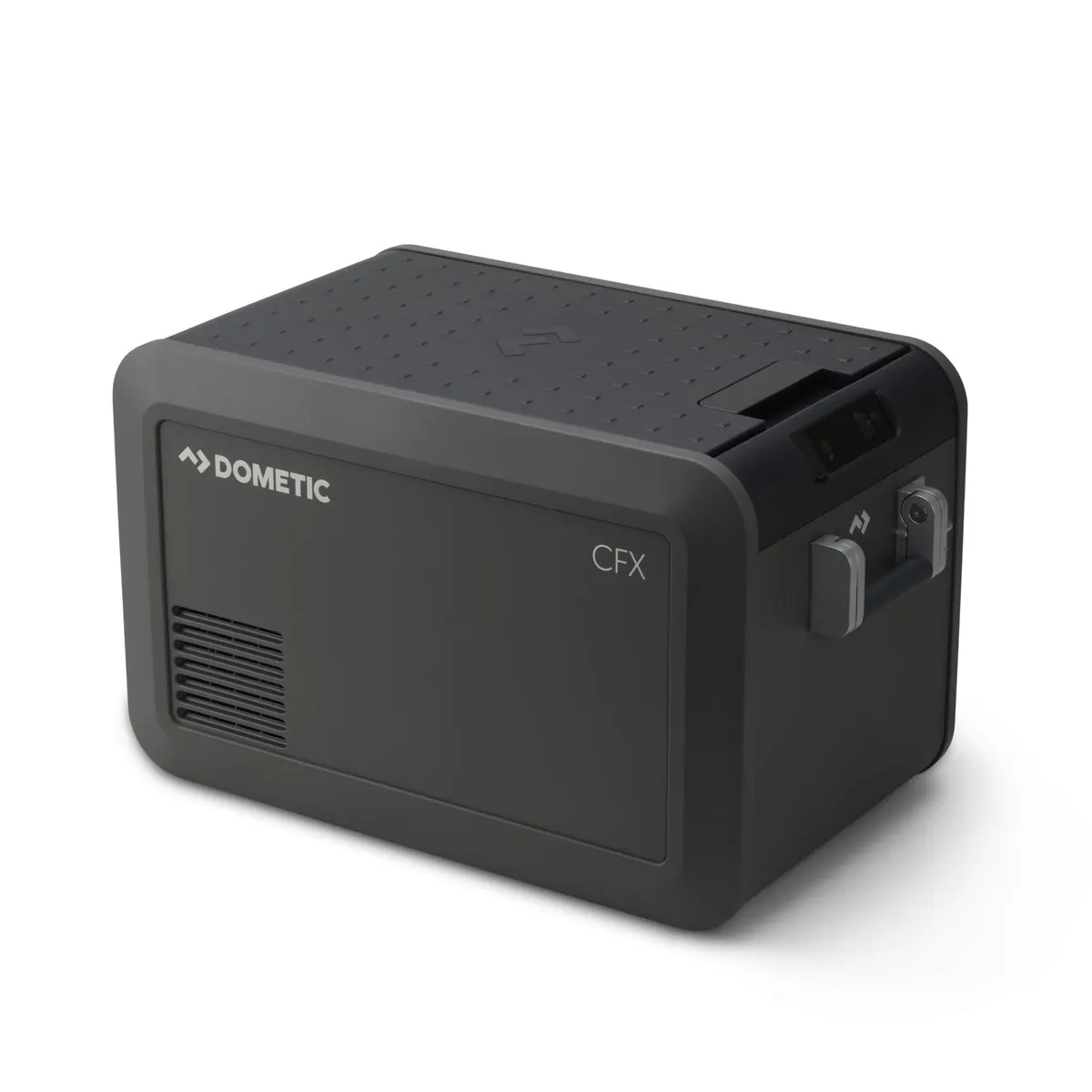
- Dometic's US page rates the CFX5 35 at 1.11 Ah per hour at 90°F ambient, about 27 Ah/day at 12 V, or about 320 Wh/day.
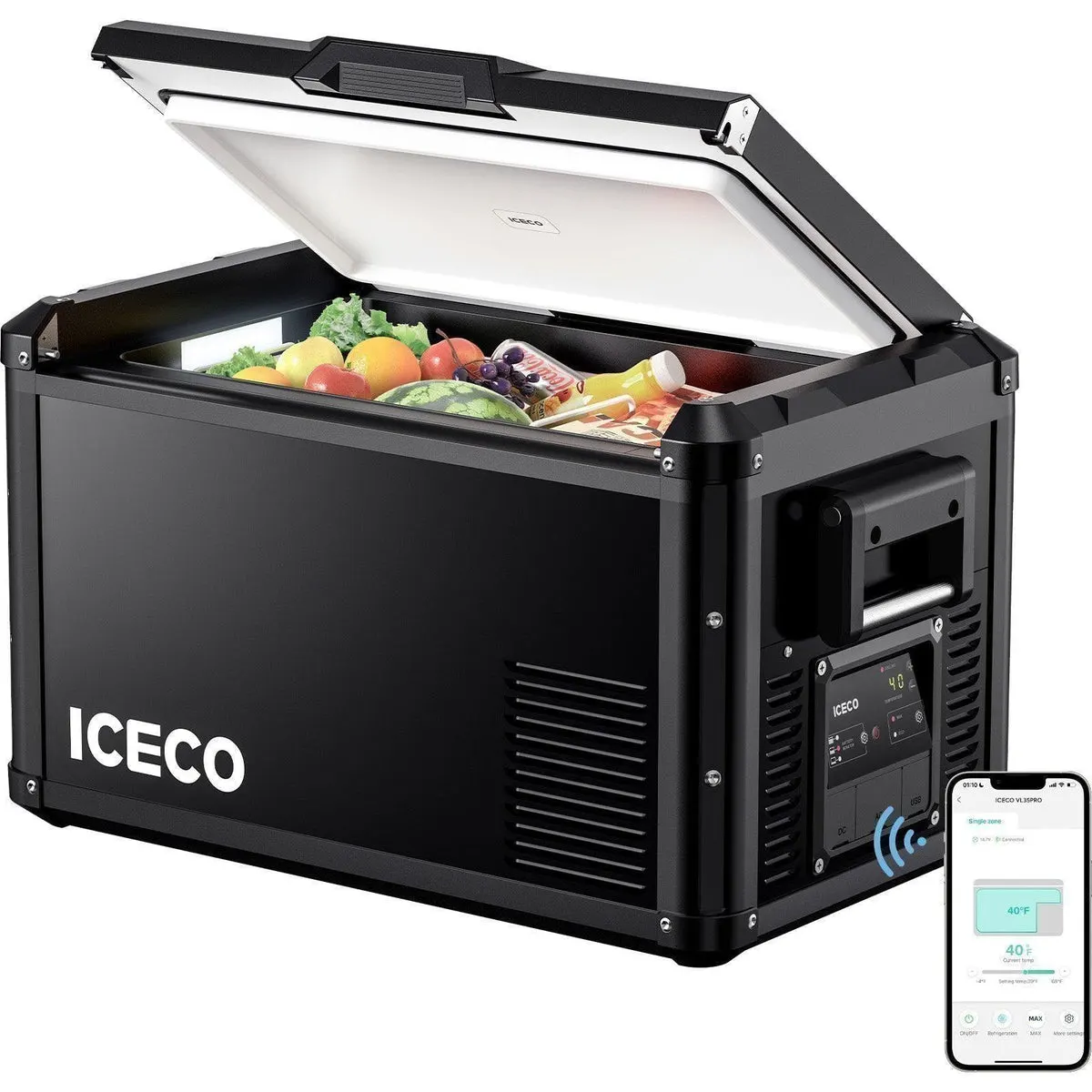
- ICECO's manual lists the VL35 ProS at 0.430 kWh per 24 hours as a lab figure, or 430 Wh/day (about 34 Ah at 12.8 V).
Thermoelectric coolers run continuously rather than cycling, so they typically use several times more energy for the same cooling; see the 12V fridge buying guide.
For this example, we'll assume: a 35 L single-zone compressor fridge such as the Iceco VL35 ProS or Dometic CFX5 35 averaging 360 Wh/day over a summer travel season, between those two published figures. In hotter places, or with frequent opening, plan on 430 Wh/day or more, and run your own fridge in the fridge battery calculator.
Add the cooktop next — induction is the wild card
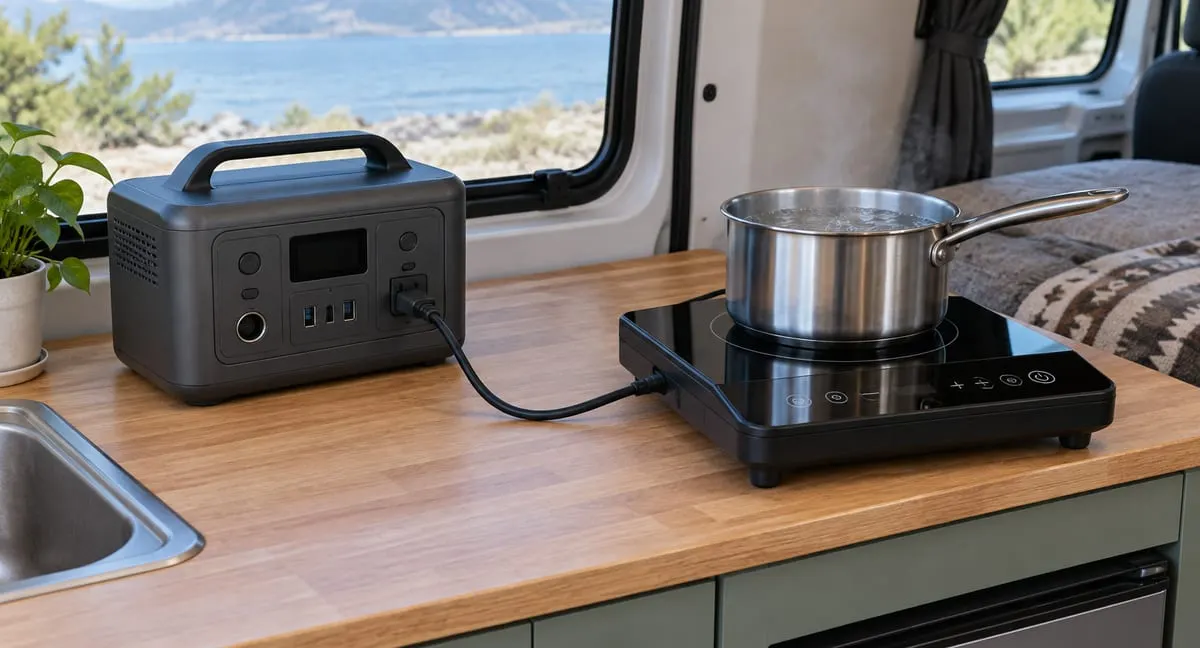
An 1,800 W portable induction cooktop like the Duxtop 9100MC, run through an inverter at full power, draws about 2,000 W from the battery (1,800 ÷ 0.9). At 12.8 V that is roughly 155–170 A DC, depending on battery voltage. That's a big current, but cooktops run for minutes, not hours. The daily energy is what matters, and real cooking spends much of its time at medium or low settings.
Estimates below assume full 1,800 W power for the stated minutes, so they are upper bounds:
- Minimal use: instant coffee plus one pot of rice, 8 to 12 minutes ≈ 270–400 Wh/day from the battery
- One person, moderate cooking: one hot meal plus coffee, 15 to 25 minutes ≈ 500–835 Wh/day
- Two people, active cooking: breakfast plus a full dinner, 35 to 50 minutes ≈ 1,165–1,665 Wh/day
(Example: 1,800 W × 25 min ÷ 60 = 750 Wh at the plug; ÷ 0.9 = 833 Wh from the battery.)
For this example, we'll assume: two people cooking normally, averaging 1,080 Wh/day from the battery for induction, equivalent to about 32 minutes at full power, or longer at lower settings.
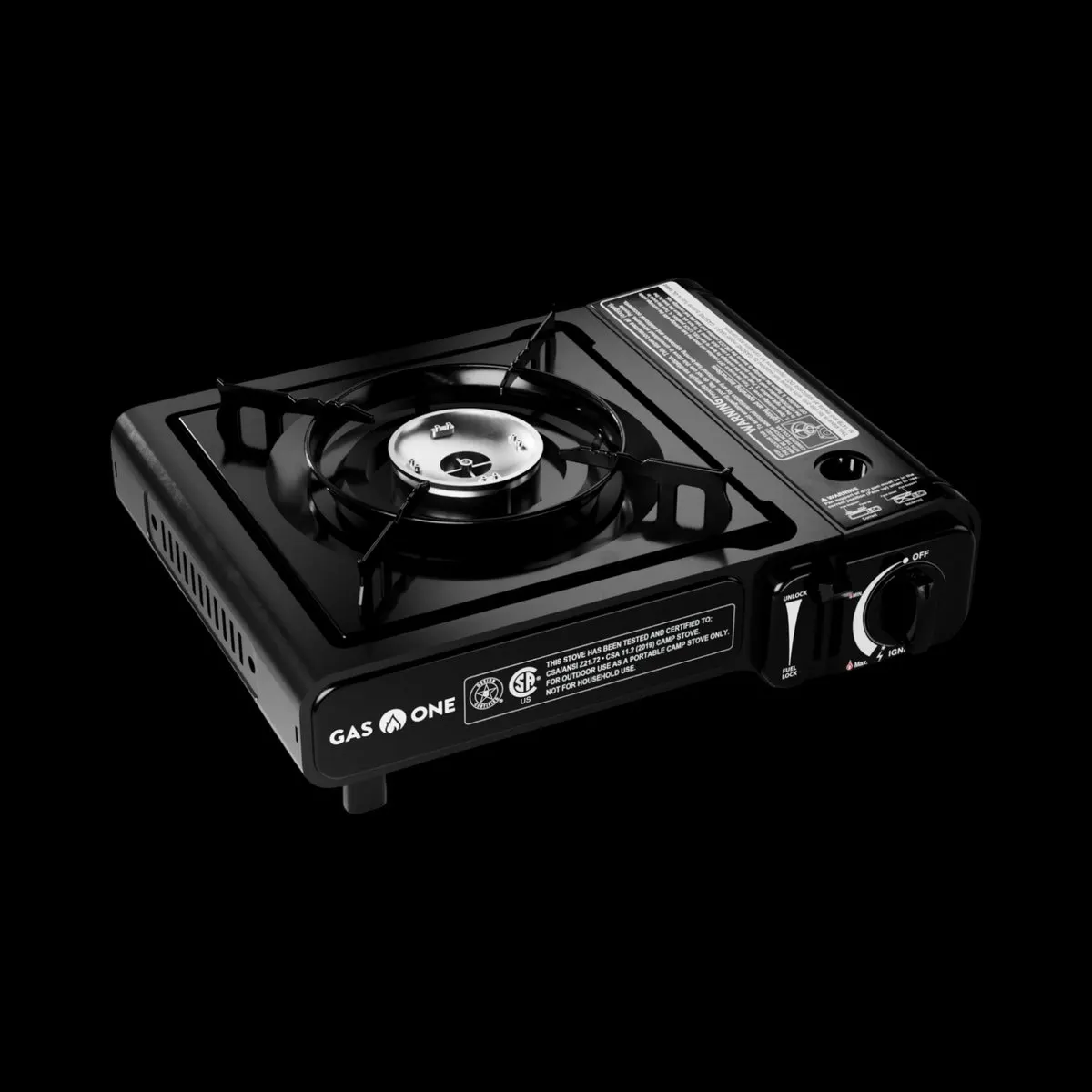
If that number worries you, a gas backup stove for heavy cooking days is one answer, but check how its maker allows it to be used. Gas One's listing for its budget butane stove says outdoor use only (see our Gas One review), which means cooking outside the van, not on the galley counter. A fan, an open window or a CO alarm does not change an outdoor-only label.
The small stuff that adds up
Individual small loads feel negligible. Added together, they matter.
Estimated daily energy for small kitchen loads (battery-side, inverter losses included where relevant):
- LED overhead lights (3 fixtures, 4 hours evening use): about 25 Wh/day
- Water pump (roughly 75 W while running, 8 minutes total per day): about 10 Wh/day
- USB charging (phone, headlamp, small devices): about 50 Wh/day
- 12 V roof fan on low (about 12 W, 8 hours overnight): about 95 Wh/day
- Bluetooth speaker: about 12 Wh/day
- Electric kettle (1,800 W for 2 minutes through the inverter): about 65 Wh/day
- Coffee grinder (150 W for 30 seconds through the inverter): about 1.5 Wh/day
Subtotal for small stuff: about 260 Wh/day (about 20 Ah at 12.8 V).
These are loads you can't skip. Budget for them from the start instead of discovering them when your battery is flat.
Some small appliances barely register. The Breville Control Grip stick blender, rated 280 W on its Amazon listing, uses about 2.3 Wh at the outlet for a 30-second job by our estimate, or about 0.2 Ah at 12.8 V including inverter losses. It still needs an inverter or power station AC outlet, and our guidance is a pure sine wave unit of about 500–600 W or more for the motor's start-up; switch the inverter off afterwards, because its idle draw can cost more than the blending. The Zwilling Fresh & Save handheld vacuum pump needs no inverter at all: it charges over USB at 5 V and up to 1 A, and a full charge takes roughly 0.4–0.5 Ah at 12.8 V by our estimate.
The worked total
| Load | Wh/day | Ah/day at 12.8 V |
|---|---|---|
| Fridge (35 L compressor, summer) | 360 | 28 |
| Induction (two people, normal) | 1,080 | 84 |
| Small loads | 260 | 20 |
| Daily kitchen total | 1,700 | 133 |
That's high, and it's honest. A van with a full induction kitchen and real cooking habits is a significant electrical load. It's higher than many online calculators show because those calculators often assume "coffee and one meal."
Rule of thumb: a kitchen that cooks on gas usually lands around 400–800 Wh/day. An induction kitchen that cooks twice a day often lands at 1,500 Wh/day or more.
Sizing the battery bank
With LiFePO4, we plan to use about 80% of rated capacity. For a two-day autonomy buffer:
Required battery capacity = (daily Wh × 2 days) ÷ 0.8
= (1,700 × 2) ÷ 0.8 = 4,250 Wh, or about 330 Ah at 12.8 V
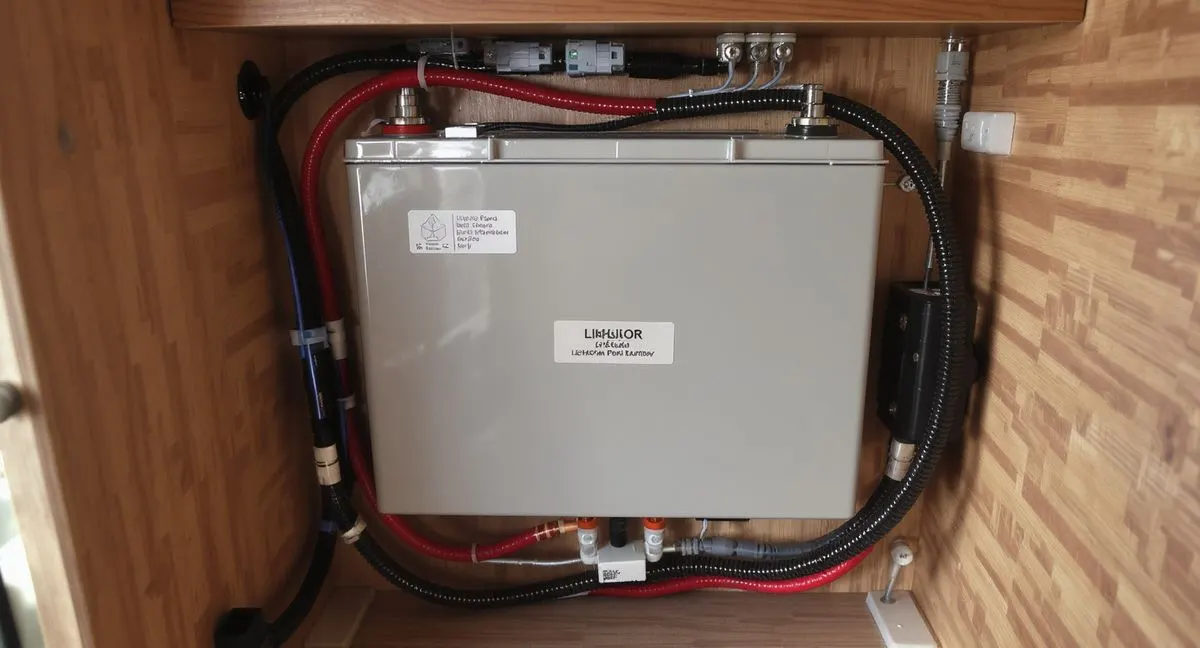
A 400 Ah LiFePO4 bank (about 5,120 Wh) covers the full two days. A 300 Ah bank (about 3,840 Wh, 3,070 Wh usable) gives about 1.8 days. Three cloudy days at this load would take about 6,400 Wh of rated capacity (about 500 Ah), so most builds cover long cloudy spells with alternator charging instead. If you switch to outdoor gas cooking on low-sun days, 200 Ah (about 2,050 Wh usable) can work with discipline.
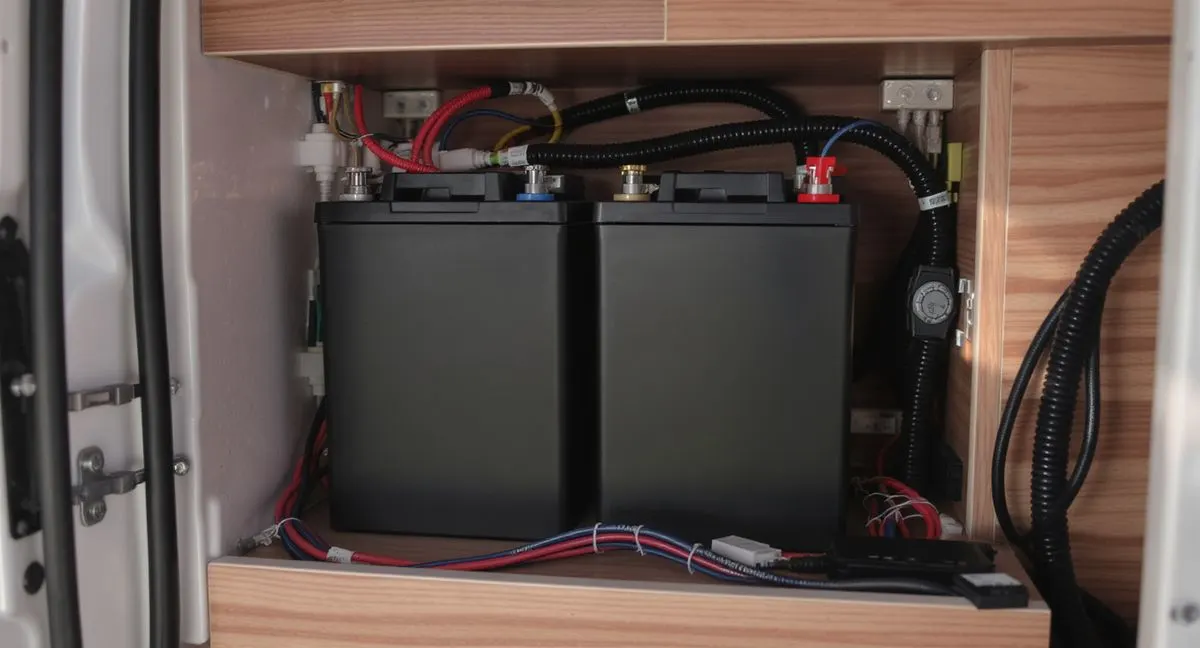
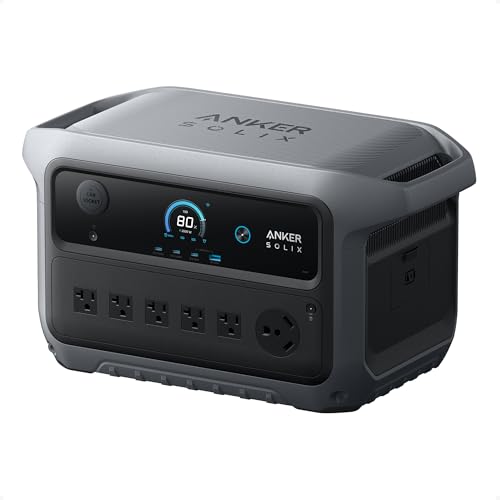
The inverter matters as much as the bank. An 1,800 W cooktop needs an inverter rated comfortably above 1,800 W continuous (a 2,000 W pure sine wave unit is common), and the battery's BMS continuous rating must exceed the inverter's maximum DC draw, roughly 160 A or more here. See the battery bank guide. If your battery and inverter are one portable power station, the same two limits apply in AC terms; the guide to running an induction cooktop from a power station shows how to check the continuous output rating and usable capacity. The Anker SOLIX C1000 vs EcoFlow DELTA 3 comparison applies those checks to two 1 kWh stations rated at 1,800 W continuous, which meets an 1,800 W cooktop with no headroom rather than comfortably above it, and about 1 kWh of storage is well under this example's 1,700 Wh daily total. A step up, Anker SOLIX C2000 Gen 2 vs EcoFlow DELTA 3 Max compares two 2,048 Wh stations rated at 2,400 W continuous, about 600 W above an 1,800 W cooktop. Even 2,048 Wh, about 1,741–1,843 Wh usable at 85–90% by our estimate, only roughly matches this example's 1,700 Wh day, so plan on recharging daily. The C2000 Gen 2 accepts one expansion battery, which takes it to 4,096 Wh.
Battery placement matters too. LiFePO4 makers generally say not to charge below 32°F (0°C) without heating. If you camp in winter, keep the battery in the heated cabin or use a self-heating model.
Sizing the solar array
Solar sizing needs a realistic number of peak-sun hours. In the western US in summer, plan for 4 to 5 peak-sun hours per day; in the Pacific Northwest in winter, plan for about 1.5. On a flat van roof, we assume the system harvests about 75% of rated panel output after heat, angle, shading, controller and cable losses (a typical planning range is 70–80%).
Required solar watts = daily Wh ÷ (peak-sun hours × harvest factor)
= 1,700 ÷ (4 × 0.75) = about 567 W
Round up to a 600 W solar array. If your roof can't fit it, you have three options: reduce cooking load, reduce fridge load, or add alternator charging.
Alternator charging as insurance
A 40 A DC-DC charger outputs about 40 A at roughly 14.2–14.6 V, about 570 W, so it can put roughly 550 Wh into the battery per hour of driving at full output. Two hours of driving replaces about 1,100 Wh, nearly two-thirds of the example kitchen's daily total. For nomads who move often, this can be a cheaper way to add daily energy than more solar.
The charger draws more than 40 A from the vehicle side, so follow its manual for input cable and fusing, and check it supports your vehicle's alternator type. For people who park for days, alternator charging contributes nothing; every Wh comes from solar or shore power.
Reducing the total if the math is scary
- Cook outdoors on gas on heavy-cooking days. Replacing three induction dinners a week with an outdoor butane or propane stove cuts a large share of the weekly kitchen load. Use the stove where its manufacturer says it can be used.
- Check the fridge setpoint and placement. Keep fresh food at or below 40°F (the USDA's recommended maximum for refrigerators); setting colder than you need, poor ventilation around the fridge and frequent opening all raise consumption. Don't set the fridge above 40°F to save power.
- Cook one-pot meals. Our one-pot meals guide can cut active cooktop time for many dinners.
Many experienced van dwellers combine all three.
Winter math is different
Everything above assumes moderate summer conditions. In winter:
- Solar harvest drops sharply at mid-latitudes because of lower sun angles and shorter days; a 50–70% drop from summer is a common planning assumption.
- Fridge load usually drops because ambient is cooler; as an estimate, 200 Wh/day for a 35 L fridge in a cool cabin.
- Heating loads appear: diesel heater fans and glow plugs, electric blankets, extra lighting for long nights.
- LiFePO4 can't be charged when cold without heating, so a self-heating pack or heated cabin becomes necessary.
Net effect: winter kitchen load is often lower, but total daily load can be higher. Budget for both seasons, or plan on more shore-power charging in winter.
Running your own numbers
The example is one van with specific appliances. Use the Power Calculator to plug in yours. The math is the same: daily Wh × 2 ÷ 0.8 = rated battery Wh (divide by 12.8 for Ah); daily Wh ÷ (peak-sun hours × 0.75) = solar watts.
The discipline is being honest about how much you actually cook. Plan for "coffee and toast" and cook real dinners, and you'll be power-limited all summer. Plan for a full induction kitchen and cook outside on gas most nights, and you've paid for battery you don't use.
Final word
A van kitchen power budget is not complicated math, but it is honest math. New builds commonly underestimate their daily use because they plan for best-case habits. A 20–30% margin on top of your calculated total, for behaviour rather than physics, is a sensible habit.
Start with the fridge's published or measured daily Wh, add the cooktop realistically, add about 250 Wh/day for small loads, multiply by 2.5 for your battery's rated Wh, and divide by peak-sun hours × 0.75 for your solar.
FAQ
How many watt-hours per day does a van kitchen use? As an estimate, a kitchen with a compressor fridge, occasional induction cooking, lights and a water pump uses roughly 1,100–1,900 Wh/day (about 85–150 Ah at 12.8 V). Kitchens that cook heavily on induction can exceed that. Kitchens that cook on gas often land at 400–800 Wh/day (about 30–60 Ah).
What size battery do I need for a van kitchen? Multiply your daily Wh by 2 (a two-day buffer) and divide by 0.8 (usable LiFePO4 depth of discharge). A 1,300 Wh/day kitchen needs about 3,250 Wh of rated capacity, or about 255 Ah at 12.8 V. A 1,900 Wh/day kitchen needs about 4,750 Wh, or about 370 Ah.
Can I run an induction cooktop in a van? Yes, but it needs an inverter rated above the cooktop's maximum input (commonly 2,000 W pure sine for an 1,800 W cooktop), a battery whose BMS can supply roughly 160 A or more continuously, a bank of at least 200 Ah in most cases, and honest accounting for daily energy. Have high-current wiring done to the inverter and battery makers' instructions. See our Duxtop induction cooktop review for spec-based and owner-reported usage.
How much solar do I need to run a van kitchen? Divide your daily Wh by (peak-sun hours × 0.75). A kitchen using about 1,700 Wh/day needs roughly 570 W of solar with 4 peak-sun hours. Round up to 600 W if roof space allows.
Is butane or induction cheaper to run in a van? Butane is an ongoing fuel cost, and the cassette stoves sold for camping are typically labelled for outdoor use. Induction's running cost is close to nothing once you've paid for the battery, inverter and solar to support it. On a marginal basis, induction is cheaper; on a total-system basis, outdoor gas cooking often wins for light users.
Do I need a DC-DC charger for a van kitchen? It's valuable if you move frequently. For rigs that stay put for days, solar and shore power matter more. Many full-time builds include both.
Products covered in this guide
Disclosure: As an Amazon Associate I earn from qualifying purchases. Links to Amazon on this page are affiliate links: if you buy through one, VanLifeKitchens.com may earn a commission at no extra cost to you. Read our affiliate disclosure.


More in Power & Solar

Cold-Weather Van Cooking: Gear & Power Strategy
Why butane fades and lithium won't charge below freezing, plus the winter gear kit and the cold-weather cooking setup that works.
Choosing a Battery Bank for Your Van Kitchen
How to size, spec, and install a lithium battery bank for a van kitchen running fridge, induction, and water pump. Includes 100Ah, 200Ah, and 300Ah build comparisons.
Can Your Power Station Run an Induction Cooktop?
Continuous vs surge watts, usable vs rated watt-hours, and worked runtime math for running the Duxtop 9100MC or Nuwave PIC Gold from a portable power station.