Solavore Sport Solar Oven
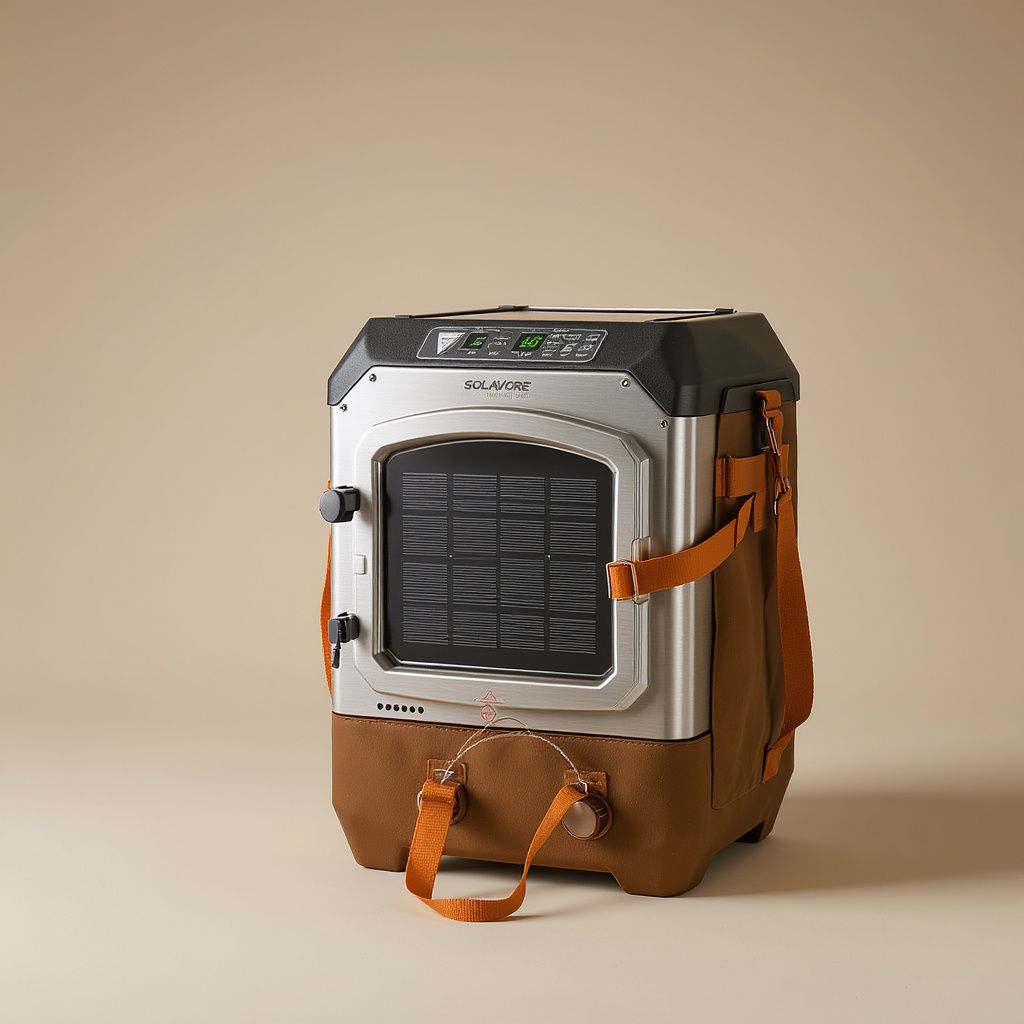
- Peak Temp
- 300°F
- Dimensions
- 19 x 14 x 11 in
- Weight
- 9 lbs
- Cook Capacity
- 4 quarts
- Materials
- UV-stable plastic + tempered glass
- Warranty
- 1 year
Overview — Who is this for?
The Solavore Sport Solar Oven is the family-sized, set-it-and-forget-it solar cooker for van dwellers who want real oven capacity and do not care about fast cooking. It is a traditional box-style solar oven — a black metal cooking chamber behind a clear polycarbonate window, surrounded by a reflective collar that concentrates sunlight onto the front glass — and it is the simplest, largest, lowest-fuss solar cooker that still works reliably in the American West. At about $199, it sits between the minimalist Sunflair Portable Solar Oven and the premium hybrid GoSun Fusion, and it is the correct pick for anyone who wants solar cooking at family scale without the complexity of a hybrid electric backup.
The Solavore is for the cook who already accepts that solar cooking is slow, and who wants to gain family-sized capacity and real pot-and-pan compatibility in exchange for giving up the ultralight packability of fabric ovens and the cloudy-day backup of hybrid ovens. It is the box-style oven in its classic American form, and it has been cooking meals in off-grid homes, school lunch programs, and long-haul RV kitchens for over a decade.
What you are actually getting
The Solavore Sport is a rigid-box solar oven measuring about 19 × 15 × 11 inches when closed, with the cooking chamber big enough to fit two 1-quart cooking pots side by side. The interior cooking area is roughly 14 × 10 × 6 inches — substantially larger than tube-style cookers like the GoSun Fusion (4.5L of usable volume vs the Solavore's roughly 8L of vertical cooking space).
The exterior is a nylon-and-fiberglass composite case with a reinforced base. The interior cooking chamber is black aluminum, which absorbs sunlight efficiently and radiates heat into the food. The transparent front is a high-temperature polycarbonate that lets visible light in and traps infrared radiation bouncing back out — the greenhouse effect that makes solar cooking work at all. A removable reflector panel clips onto the front of the oven, angled to bounce additional sunlight onto the cooking window.
Two black enamel 1-quart pots are included with the standard Solavore kit. The black color matters — light-colored pots reflect solar energy instead of absorbing it, which dramatically slows cooking. A built-in thermometer in the cooking chamber reads interior temperature through a small window so you do not have to open the oven to check heat (opening it costs 50-75°F of temperature immediately).
The whole oven weighs about 9 pounds, which is heavier than fabric ovens but substantially lighter than the GoSun Fusion and its heavy glass vacuum tubes.
How it performs in a van kitchen
Three metrics matter: temperature, capacity, and wind stability.
Temperature: On a clear sunny day in the 70-90°F ambient range, the Solavore Sport reaches 250-300°F in the cooking chamber within 30-40 minutes of alignment. Peak temperatures in American Southwest summer conditions hit 325°F occasionally, but 250-275°F is the sustainable working temperature for most of the year in most climates. This is lower than the tube-style GoSun Fusion's peak of 400°F+, but it is real cooking temperature — enough to slow-roast, braise, bake simple breads, and simmer stews for hours.
Capacity: The Solavore's biggest advantage over tube-style cookers is volume. Two 1-quart pots fit side by side, which is enough for separate main and side dishes cooking at once, or for a single larger dish in a bigger pot. A whole chicken fits (3-4 pound birds). A pot of beans plus a tray of roasted vegetables fits. You can cook for 4 people at once in the Solavore — a claim the Fusion cannot match.
Wind stability: The Solavore is heavier and lower-profile than any GoSun tube cooker. The reflector panel is the only wind-catcher, and it clips on flat against the oven during storage. On a windy day, the oven stays put on a picnic table with no additional anchoring; on a very windy day, you can remove the reflector and accept a 20% temperature drop in exchange for no wind catch. Tube-style ovens with big reflective wings cannot match this wind tolerance.
Heat-up time: About 30-40 minutes from ambient to cooking temperature on a clear day. Double that on a partly cloudy day. Plan your cooking accordingly — the Solavore is not a fast oven, and the heat-up time is before you even start cooking.
What kinds of meals actually work
Excellent in the Solavore:
- Whole roast chickens (3-4 pound birds fit comfortably)
- Slow-cooked stews, braises, chili
- Pot roasts and pulled pork (set it up at 9am, eat at 5pm)
- Baked beans, lentils, slow-cook legumes
- Casseroles (there is enough depth for a 9x9 casserole dish)
- Simple breads, biscuits, cornbread
- Rice, quinoa, grain dishes in the included black pots
- Hard-boiled eggs in bulk
- Roasted root vegetables
- Yogurt (held at 110°F for 4 hours — the Solavore can actually do this passively if you cover the top with a cloth to reduce solar gain)
Mediocre in the Solavore:
- High-temperature roasting (450°F+ operations like pizza, crispy-skinned roasts)
- Anything that needs a fast high-heat sear
- Very tall baked goods (cake pans over 4 inches hit the ceiling)
Not in the Solavore:
- Stovetop-only methods (sautéing, pan-frying, deep-frying)
- Wet methods like pasta boiling (the chamber is not pressurized; water takes a very long time to reach full boil at 250-275°F ambient interior)
- Fast meals of any kind — every meal in the Solavore is a 2+ hour commitment minimum
Why it works for van life specifically
Three van-specific advantages of the Solavore over other solar cookers.
First, true pot-and-pan compatibility. The Solavore cooks in real pots — not in a proprietary tube-shaped tray that only the manufacturer sells. This means every pot in your existing van kitchen can go into the Solavore, which dramatically expands the oven's usefulness. A Dutch oven, a cast iron skillet, a glass casserole, a stainless pot — all work. Tube-style cookers limit you to the shapes that fit the tube.
Second, it parallels with stovetop cooking. On a day when you are already cooking on butane or induction, the Solavore can be running a separate dish in the background. Put the chicken in the Solavore at noon, start the sides on the stove at 4:30pm, and everything arrives on the table at 5. The two cooking systems do not compete for attention; the Solavore just quietly makes dinner while you are doing other things.
Third, it is simpler than hybrid cookers. No electronics, no heating element, no power connections, nothing to break or maintain. The Solavore has exactly three moving parts: the reflector that clips on, the hinged lid, and the thermometer. Nothing else. For a tool that lives in a van, simplicity is a feature.
What the Solavore is NOT good at
Cloudy and rainy days. This is the critical limitation. Unlike the GoSun Fusion, the Solavore has no electric backup. On a fully cloudy day, it will reach maybe 150-180°F, which is warm-food-holding temperature but not real cooking temperature. On a rainy day, it does nothing useful. In climates where you routinely have multi-day overcast stretches (Pacific Northwest in winter, American Southeast in spring), the Solavore will spend a lot of time as a cabinet ornament.
Fast meals. Every cook in the Solavore is a 2+ hour affair. If you want to eat in an hour, use butane.
Night cooking. Obviously, the Solavore does not work after dark. Dinner cooked in the Solavore needs to be started by mid-afternoon at the latest to be ready by sundown.
High-wind conditions. The reflector catches wind. On days with sustained 15+ mph winds, you will either lose solar efficiency or lose the reflector. The oven is usable without it but cooking times extend significantly.
Air temperatures below 50°F. Solar cookers work best when they do not have to fight a cold environment for the heat they are generating. In cool fall and winter weather, even with perfect sun, the Solavore may only hit 200-225°F. For hot stews and slow braises, this is still usable. For baking, it becomes marginal.
Comparison to alternatives in this category
Vs Sunflair Portable Solar Oven ($149): The Sunflair is a fabric oven that folds flat for storage. It is lighter, cheaper, more packable, and uses less van space when not in use. It is also less durable (fabric tears over years), slightly cooler (peaks around 225°F vs the Solavore's 275°F), and smaller. Pick the Sunflair if storage space is the binding constraint. Pick the Solavore if you want more capacity and a rigid build.
Vs GoSun Fusion Hybrid ($449): The Fusion has the critical advantage of cloudy-day operation via its 12V electric backup. It is also more compact, reaches higher temperatures, and fits lifestyle cooks who want something that works in all weather. Its disadvantages are cost (2x the Solavore), smaller capacity (4.5L vs the Solavore's 8L), and proprietary cook-tube geometry. Pick the Fusion if weather reliability and maximum temperature matter. Pick the Solavore if family-size capacity and real pot compatibility matter.
Vs a propane oven + stove combo ($250-500): A propane oven works in any weather, cooks fast, and fits anywhere. It is also louder, dumps heat into the van, burns fuel, and lacks the ethos of solar cooking. The correct answer for any family van with a cooking-serious kitchen is probably both a propane oven and a solar oven, using the solar for slow background cooking and the propane for everything else.
The verdict
The Solavore Sport Solar Oven is the correct pick for van dwellers who want family-sized solar cooking with real pot compatibility and rigid, durable construction. It is the simplest and most capacious solar oven in this price range, and it is the right answer for households of 3-4 people who want to cook real meals in the sun without dealing with the complexity or cost of a hybrid cooker.
Before buying, confirm two things about your use pattern. First, do you spend most of your time in climates with reliable sunny afternoons? If you are east of the Mississippi or north of the 45th parallel half the year, the Solavore will be frustrating. Second, are you willing to plan meals hours in advance? If the answer is yes, the Solavore rewards the planning with genuinely excellent slow-cooked food. If the answer is no, skip this category and stick with conventional cooking.
See the van pantry shelf-stable staples guide for ingredients that suit slow-cook solar methods, and the cold-weather van cooking guide for how solar cookers fit into winter cooking strategy.
Compare with similar products
See how this stacks up against the other solar cooking we've tested.
Related Reviews
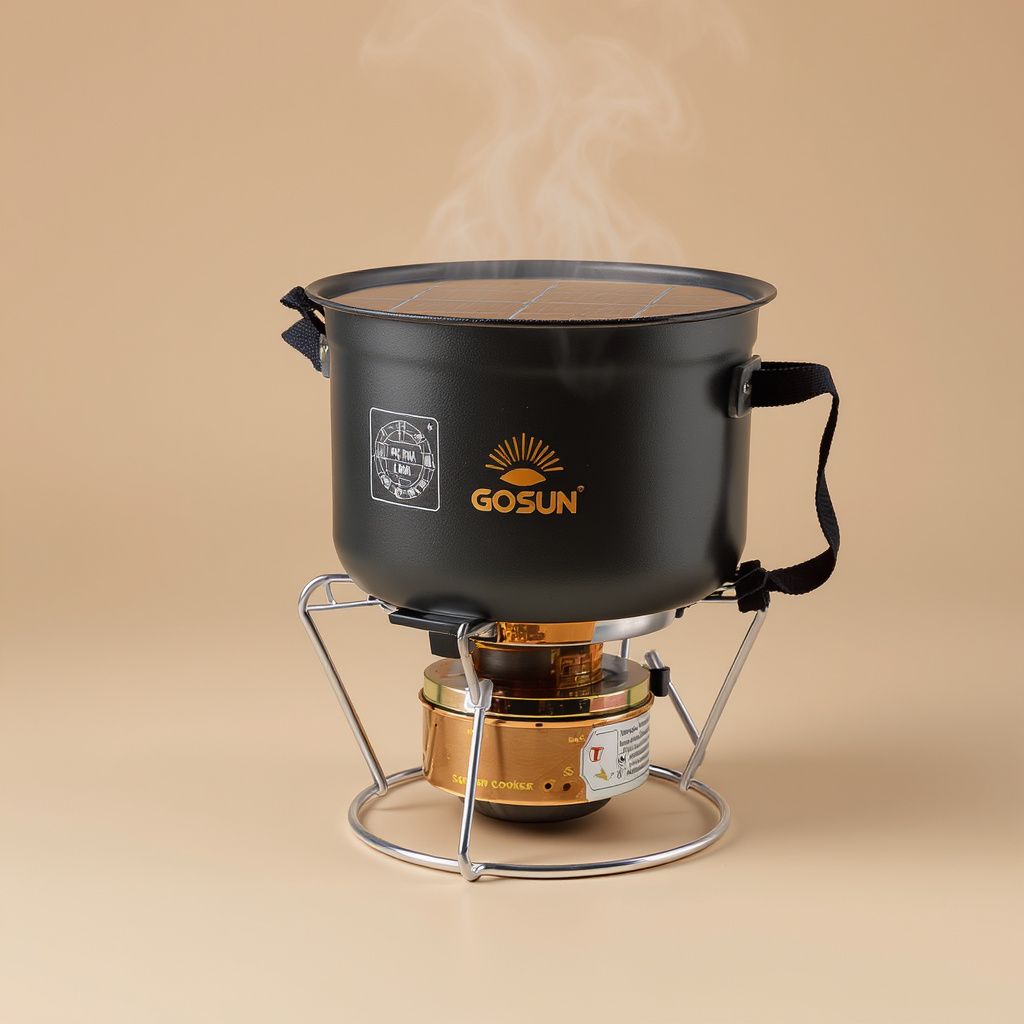
GoSun Sport Solar Cooker
The most efficient solar cooker we've tested. Cooks a full meal in 30 minutes of sun without any power draw.
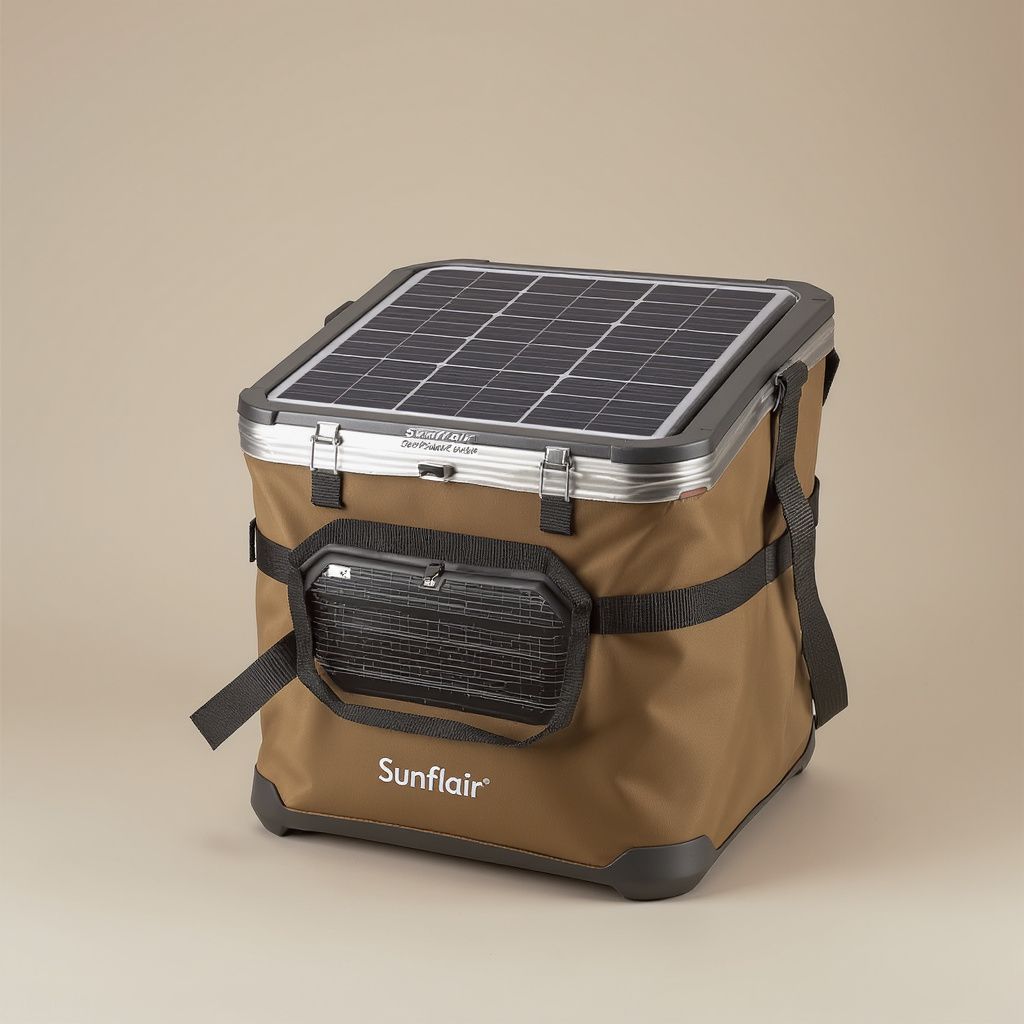
Sunflair Portable Solar Oven Deluxe
The soft-sided solar oven. Collapses flat for storage, cooks slow-roasted meals on long sunny stops.
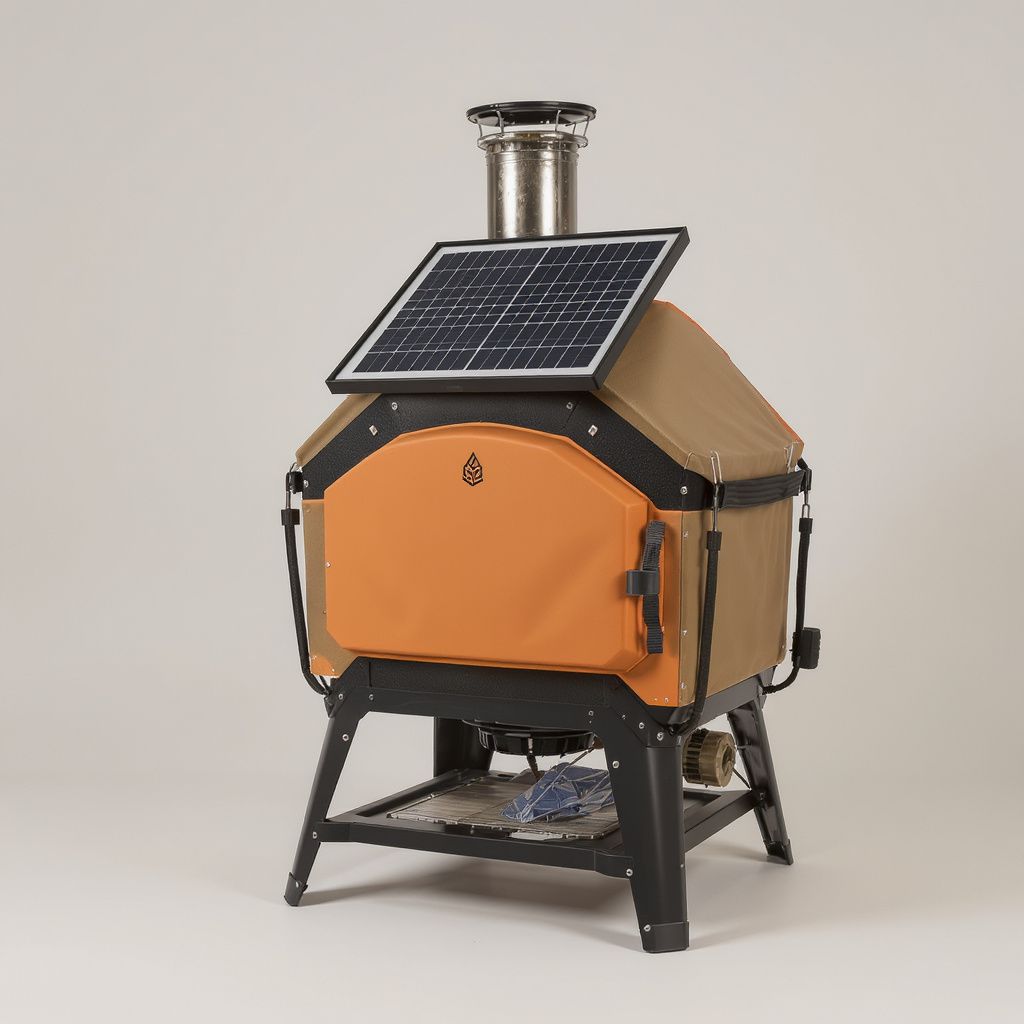
GoSun Fusion Hybrid Solar Oven
The hybrid solar oven. Cooks on sunlight when available, switches to 12V electric heating element when it's not. The right pick for serious solar cookers who want to keep cooking after the sun goes down.