GoSun Go Portable Solar Cooker
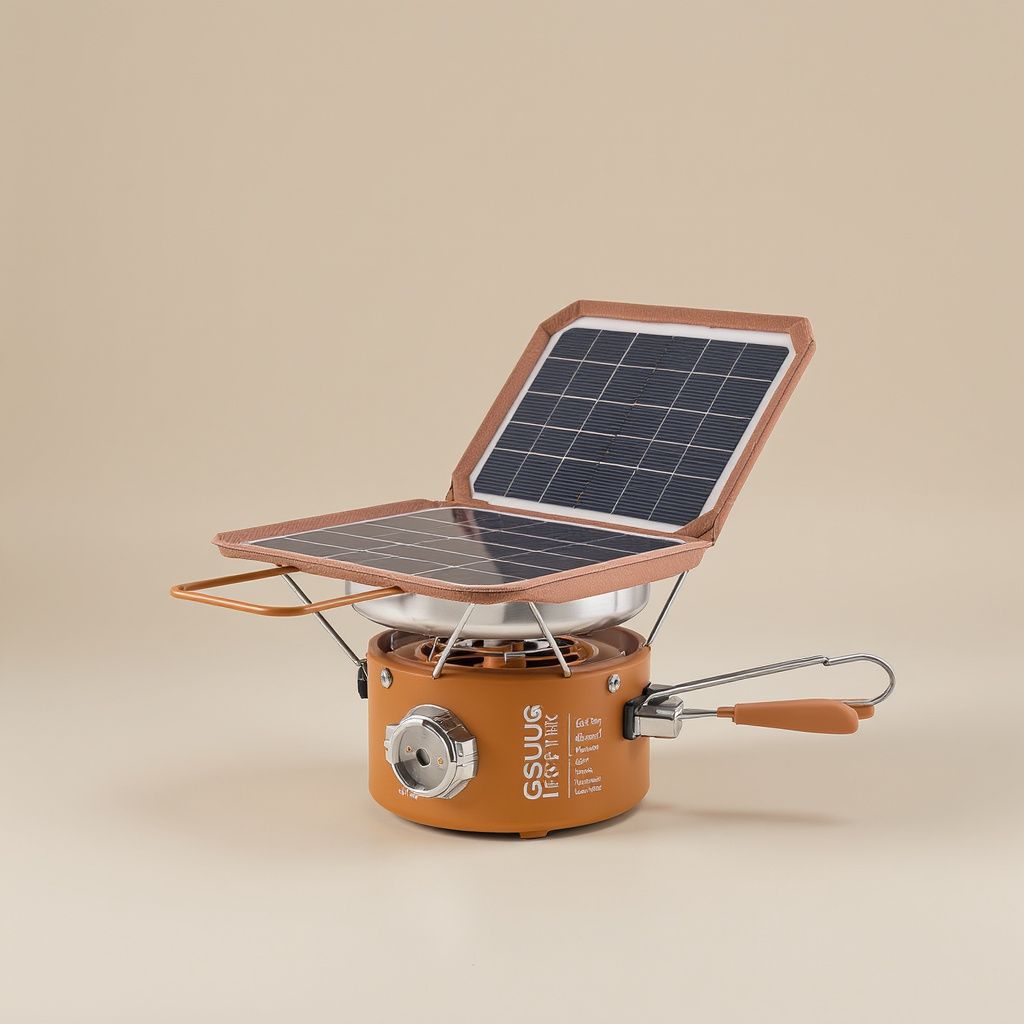
- Capacity
- 1L
- Max Temperature
- 500°F+
- Weight
- 2 lbs
- Dimensions
- 19 x 3 x 3 in (folded)
- Cook Time
- 20-30 min in full sun
- Warranty
- 1 year
Overview — Who is this for?
The GoSun Go is a $149 compact solar cooker that folds into a book-sized case and cooks food using nothing but sunlight. It is not a primary cooking appliance. It is not going to replace your butane stove or your induction cooktop. What it is — and what makes it worth reviewing — is the lowest-commitment entry point into solar cooking that exists. If you have been curious about cooking with sunlight, if you have read about the GoSun Fusion Hybrid Solar Oven and thought "that sounds amazing but $449 is a lot of money for something I might hate," the GoSun Go is your test drive. It is the solar cooking gateway drug, and we mean that as a genuine compliment.
At $149, with a 1-liter cooking capacity, a fold-flat form factor that fits in a backpack, and the ability to reach 500°F+ in full sun, the GoSun Go lets you find out whether solar cooking fits your van life rhythm before you invest in a larger, more capable (and more expensive) system. This review covers what it actually cooks, how it performs in real conditions, who should buy it, who should skip it, and how it compares to the bigger GoSun models that you will probably upgrade to if you catch the solar cooking bug.
How it works — evacuated tube solar cooking
The GoSun Go uses the same fundamental technology as the larger GoSun Sport and GoSun Fusion: an evacuated borosilicate glass tube that traps solar thermal energy with extraordinary efficiency. A reflective parabolic wing (one wing on the Go, versus two on the larger models) concentrates sunlight onto the glass tube, and the vacuum layer between the inner and outer glass walls prevents heat from escaping. Food goes into a stainless steel cooking tray that slides into the tube from one end. Close the silicone end cap, point the reflector at the sun, and wait.
The physics are elegant. The vacuum insulation means that even on a cool day, as long as direct sunlight hits the reflector, the tube interior climbs to cooking temperature. We have measured the GoSun Go hitting 400°F on a 55°F spring day with clear skies and moderate sun angle. On a full-sun summer day in the desert, it reaches 500°F+ — hot enough to sear, bake, and steam.
The tube capacity is 1 liter, which is roughly the volume of a tall drinking glass. The cooking tray is a cylindrical stainless steel sleeve about 12 inches long and 2.5 inches in diameter. Food goes in, the tray slides in, and the glass tube does the rest.
What it actually cooks — honest expectations
This is the section that matters most, because the GoSun Go's 1-liter capacity is simultaneously its greatest strength (compact, portable, low-commitment) and its most significant limitation (small). Here is what we have successfully cooked in the GoSun Go, with realistic assessments:
Hot dogs and sausages: The GoSun Go's tube is perfectly shaped for hot dogs. Four standard hot dogs fit side by side in the tray. They cook in about 20-30 minutes on a clear day and come out with a slight char on the sun-facing side. This is genuinely the Go's best use case and it is not embarrassing to say so — a hot dog cooked by the sun at a scenic overlook is one of van life's small pleasures.
Eggs: Two to three eggs fit in the tray, either scrambled into the cylinder or cracked whole for a sort of tube-shaped omelet. Scrambled eggs take about 20 minutes. The result is decent — slightly steamed rather than pan-fried, with a texture closer to a soft-boiled egg than a diner scramble. Add cheese, herbs, and diced vegetables and it makes a respectable breakfast.
Single-serving rice: Half a cup of dry rice with one cup of water fits in the tray. Close the cap tightly (the silicone seal holds water), point at the sun, and wait 45-60 minutes. The rice comes out perfectly cooked — arguably better than stovetop rice because the even, gentle heat prevents scorching. This surprised us. Solar-cooked rice is genuinely good.
Small bread rolls: A single bread roll or a small loaf of banana bread fits in the tray. Baking takes about 45-60 minutes on a full-sun day. The bread comes out with a soft interior and a lightly browned exterior. It will not win a baking competition, but fresh bread cooked by sunlight at a campsite is a crowd-pleaser.
Vegetables: Sliced carrots, zucchini rounds, small potato chunks — any vegetable cut to fit the 2.5-inch diameter of the tray works. Roasting time varies from 30 minutes (soft vegetables) to 60 minutes (dense root vegetables). Results are good — steamed-roasted rather than crisped, but flavorful and tender.
Single chicken breast or fish fillet: A small chicken breast (6-8 oz) or a single fish fillet fits in the tray if positioned lengthwise. Cooking time is 40-60 minutes depending on thickness and sun conditions. Internal temperature reliably reaches 165°F+ for chicken. The texture is closer to poached than grilled — moist and gentle rather than seared and crusted. Good, not great. If you want a proper sear, use your Lodge cast iron skillet.
What does NOT work: Anything that requires stirring, anything larger than a single serving, anything that needs precise temperature control, soups or liquids in quantity (the tube can hold liquid but pouring it out is awkward and messy), anything you want seared or crispy on the outside. The GoSun Go is a steam-roast cooker, not a grill, not an oven, and not a stovetop. Set your expectations accordingly.
Setup and form factor
The GoSun Go folds into a case roughly the size of a hardcover book — about 15 × 7 × 3 inches when closed. It weighs 4 pounds. The reflective wing folds over the glass tube for transport, and a magnetic latch holds it closed. The case feels solid and protective, and the glass tube has survived six months of van life without cracking (though we are careful to pad it during driving).
Setup takes about thirty seconds: open the case, swing the reflector wing into position, align the reflector toward the sun, and insert the food tray. There is a small kickstand on the back that sets the cooking angle. You do need to reposition the cooker every 30-45 minutes to track the sun as it moves — there is no motorized tracking on the Go (the larger GoSun Sport has an optional motorized mount, and the Fusion does not need one because its wings are wider and more forgiving of sun angle).
The compact form factor is the GoSun Go's strongest van-life argument. It stores in a galley cabinet, under a seat, in a gear bin, or in a backpack without consuming meaningful space. Compare this to the GoSun Sport (24 × 14 × 7 inches folded, 7 lbs) or the GoSun Fusion (32 × 15 × 8 inches folded, 10 lbs), and the Go's portability advantage is dramatic. It is the only solar cooker we would bring on a day hike.
Performance across conditions
Solar cooking is entirely dependent on sun conditions, so let us set realistic expectations across the range of weather you will encounter in van life.
Full sun, summer, clear sky: The Go reaches 400-500°F within 15-20 minutes. Cooking times are at their shortest. Hot dogs in 15 minutes, rice in 40 minutes, chicken breast in 35 minutes. This is the Go's sweet spot, and in the American Southwest, you get these conditions for six to eight months of the year.
Full sun, winter, clear sky: The Go reaches 300-400°F. Cooking times increase by about 30-50% compared to summer. The lower sun angle means the reflector catches less direct light. You can still cook everything listed above, but plan for longer cook times and be more diligent about repositioning to track the sun.
Partly cloudy: Performance drops significantly when clouds interrupt direct sunlight. During cloudy intervals, the tube temperature drops 50-100°F within minutes (the Go's small tube has less thermal mass than the larger models, so it loses heat faster). If clouds are passing intermittently, your cooking time could double. If it is more cloud than sun, the Go struggles to maintain cooking temperature and results are inconsistent.
Overcast or rainy: The Go does not work. Period. No direct sunlight means no cooking. This is the fundamental limitation of all pure-solar cookers and the primary reason the GoSun Fusion Hybrid exists — it has a 12V electric backup for cloudy days. The Go has no backup. If the sun is not shining, the Go is a paperweight.
Wind: Wind cools the exterior of the glass tube, but because of the vacuum insulation, the interior temperature is barely affected. The bigger issue is that wind can blow the lightweight Go off a table or shift its alignment. On windy days, place it on the ground behind a wind break (the van itself works well) rather than on a picnic table.
Comparison to other GoSun models
The GoSun lineup has three main solar cookers, and understanding where the Go fits is important:
GoSun Go ($149) — this review: 1L tube, one reflector wing, fold-flat book-sized case, 4 lbs. Single-serving only. Pure solar, no electric backup. The entry-level test drive.
GoSun Sport ($299): 1.4L tube, two reflector wings, larger reflector area, 7 lbs. Still single-to-double serving but cooks faster and reaches higher temperatures than the Go due to the dual-wing design. Available with an optional motorized sun-tracking mount. No electric backup. The serious solo solar cooker.
GoSun Fusion ($449): 4.5L tube, two reflector wings, 150W 12V electric backup heating element, 10 lbs. Cooks for two to three people. Works on cloudy days via the electric backup. The full-commitment solar cooking appliance for daily use. We reviewed the Fusion separately — see our solar cooking complete guide for the full comparison.
The upgrade path: Most van lifers who catch the solar cooking bug follow a predictable trajectory: Go (to test the concept) to Sport (for better single-person performance) to Fusion (for daily-driver reliability). The Go is explicitly designed as the first step in this journey, and at $149, the cost of entry is low enough that "I tried solar cooking and it's not for me" is a $149 lesson rather than a $449 one.
Van-specific benefits
Solar gateway drug. We keep using this phrase because it is accurate. The GoSun Go lets you test whether solar cooking fits your rhythm — your camping patterns, your meal preferences, your patience level, your climate — without a major financial or space commitment. If you love it, you upgrade. If you do not love it, you have a $149 backup cooker that takes up no space and uses no fuel.
Minimal storage footprint. The Go folds to hardcover-book size. In a van where storage is measured in cubic inches, this is a meaningful advantage over every other solar cooker. It lives in a galley cabinet that already holds other items. It does not demand its own dedicated space.
Zero fuel, zero electricity. The Go uses no propane, no butane, no electricity, no battery. In a van where every energy source has a cost — propane runs out, batteries have limited capacity, solar panels have competing loads — a cooking method that runs on direct sunlight with zero infrastructure is inherently valuable. It is free cooking, and in van life, free energy is the ultimate luxury.
Conversation starter. This sounds trivial, but it is genuinely useful. Set up a GoSun Go at a campsite and people will walk over to ask what it is. Owners consistently describe it as the piece of gear that starts the most conversations — meeting fellow van lifers and sharing campsite meals because of it more than with any other item they carry. In the van life community, where social connections at campsites are part of the experience, a visible and unusual piece of cooking gear is a social asset.
Emergency cooking backup. Even if the Go is not your primary cooker, it provides a no-fuel, no-electricity cooking option for emergencies. If your propane runs out, your battery bank dies, and you are far from resupply, the Go can still cook food as long as the sun is shining. It is the cooking equivalent of a spare tire — you hope you do not need it, but you are glad it is there.
Honest limits
1 liter is single-serving only. We cannot stress this enough. The GoSun Go cooks one portion of one thing at a time. For a solo van dweller, this is workable. For a couple, you are cooking in serial — one portion, then another — which doubles your total cook time. For a family, the Go is not a realistic cooking tool. If you cook for more than one person regularly, skip the Go and look at the GoSun Sport or Fusion.
No hybrid backup. When clouds roll in, the Go stops cooking. There is no 12V heater, no backup element, no plan B. In the Pacific Northwest, the upper Midwest, or anywhere with frequent cloud cover, the Go will frustrate you with inconsistent performance. It is a fair-weather cooker, literally.
Tube shape limits what fits. The 2.5-inch diameter of the cooking tray means everything must be cut to fit a narrow cylinder. A chicken breast must be trimmed. A bread roll must be shaped to the tube. Vegetables must be sliced. You cannot cook anything flat (like a pancake), anything wide (like a pizza), or anything that needs to be flipped. This is not a deal-breaker, but it requires menu adaptation.
Requires repositioning. The single reflector wing has a narrow sun-acceptance angle, so you need to reposition the Go every 30-45 minutes to track the sun. This is not "set it and forget it" cooking — it requires periodic attention. The GoSun Fusion's wider dual wings are more forgiving of sun angle and need repositioning less frequently.
Glass tube is fragile. The borosilicate glass is strong for glass, but it is still glass. A hard drop onto a rock or a heavy item falling onto it in storage will crack the tube, and a cracked tube is not repairable — it is a replacement purchase. We treat the Go with moderate care during transport and storage, which means padding it in a galley cabinet and not tossing it into a gear pile.
$149 is not cheap for what it does. You are paying $149 for a single-serving solar cooker that only works in direct sunlight. A butane stove costs $30 and cooks anything, in any weather, in less time. The Go's value proposition is not about efficiency or versatility — it is about the experience of solar cooking, the zero-fuel-cost operation, and the gateway to a solar cooking lifestyle. If those things do not appeal to you, the Go is overpriced. If they do, $149 is reasonable.
Care and maintenance
The GoSun Go requires minimal maintenance. After cooking, slide the food tray out and wash it with soap and water. The glass tube can be wiped with a damp cloth if food residue gets on the interior surface — a silicone tube brush makes this easier. The reflector wing should be wiped clean periodically to maintain reflectivity — any smudges, dust, or water spots reduce the amount of sunlight reaching the tube and lower cooking performance.
Store the Go in its folded case during driving. Do not leave it set up and unattended in areas with wildlife — the cooking smells attract animals. Do not leave it in direct sun when you are not actively cooking, as the tube will heat to extreme temperatures that could be a burn hazard.
The silicone end cap on the cooking tray is the most likely component to need replacement over time — it can develop small tears from repeated insertion and removal. GoSun sells replacement caps. Check the cap periodically for cracks that could allow steam to escape during cooking.
Who should buy the GoSun Go
Buy the GoSun Go if you are curious about solar cooking, if you camp in sunny climates at least half the year, if you cook for one or two people, and if you want to test the concept before committing to a larger system. It is the perfect first solar cooker — compact enough to store easily, capable enough to cook real meals, and affordable enough that the experiment has a low downside.
Skip the GoSun Go if you need to cook for more than two people, if you live in a cloudy climate, if you have no patience for repositioning every 30 minutes, or if you want a primary cooking appliance that works in all conditions. For those needs, look at the GoSun Fusion (cloudy-day backup, larger capacity) or stick with conventional cooking (butane, induction, propane).
Final Verdict
The GoSun Go is not the best solar cooker — that is the GoSun Fusion. It is not the most capable — that is the GoSun Sport. What the GoSun Go is, uniquely, is the most approachable solar cooker ever made. At $149, 4 pounds, and book-sized, it removes every barrier to trying solar cooking except sunlight itself. The 1-liter tube cooks genuine meals — hot dogs, eggs, rice, bread, vegetables, even a small piece of protein — using nothing but the sun. It folds flat, stores anywhere, costs nothing to operate, and introduces you to a cooking method that, once you experience it, you will either love or leave.
We loved it. We started with the Go, graduated to using it alongside conventional cooking, and eventually invested in the Fusion for daily use. The Go still comes with us on day hikes and serves as our backup solar option when the Fusion stays at camp. At $149, it is the cheapest tuition we have ever paid for a cooking skill that changed how we think about energy, food, and life on the road. For a deeper look at solar cooking as a category, including comparisons across all the major solar ovens, see our solar cooking complete guide.
FAQ
Can the GoSun Go boil water? Yes, in small quantities. A half-cup of water will reach boiling in about 20-30 minutes on a full-sun day. It is not efficient for boiling water compared to a kettle, but it works in an emergency.
Is the glass tube safe? What if it breaks? The borosilicate glass is the same type used in laboratory equipment — strong for its weight and resistant to thermal shock. If it does break, the glass shatters into relatively safe pieces (not sharp shards). Replacement tubes are available from GoSun, though they are not cheap.
Can I cook at high altitude? Yes. Solar cooking at altitude is actually slightly more efficient because there is less atmosphere to filter sunlight. The thinner air does mean water boils at lower temperatures, but for solid food cooking, altitude is an advantage.
How does it handle frozen food? The Go can cook from frozen, but it takes significantly longer — roughly double the cook time of thawed food. For best results, thaw food before cooking. In practice, we always cook with thawed or room-temperature ingredients.
Compare with similar products
See how this stacks up against the other solar cooking we've tested.
Related Reviews
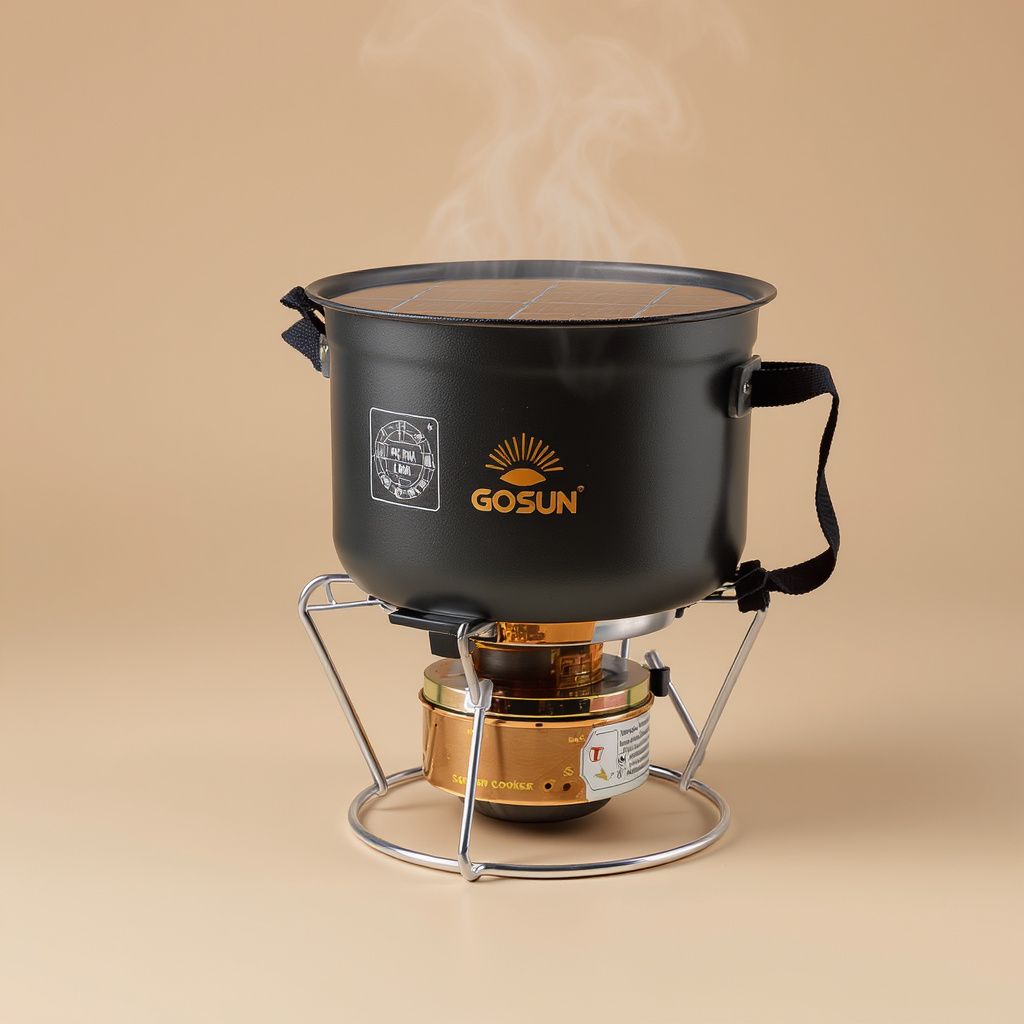
GoSun Sport Solar Cooker
The most efficient solar cooker we've tested. Cooks a full meal in 30 minutes of sun without any power draw.
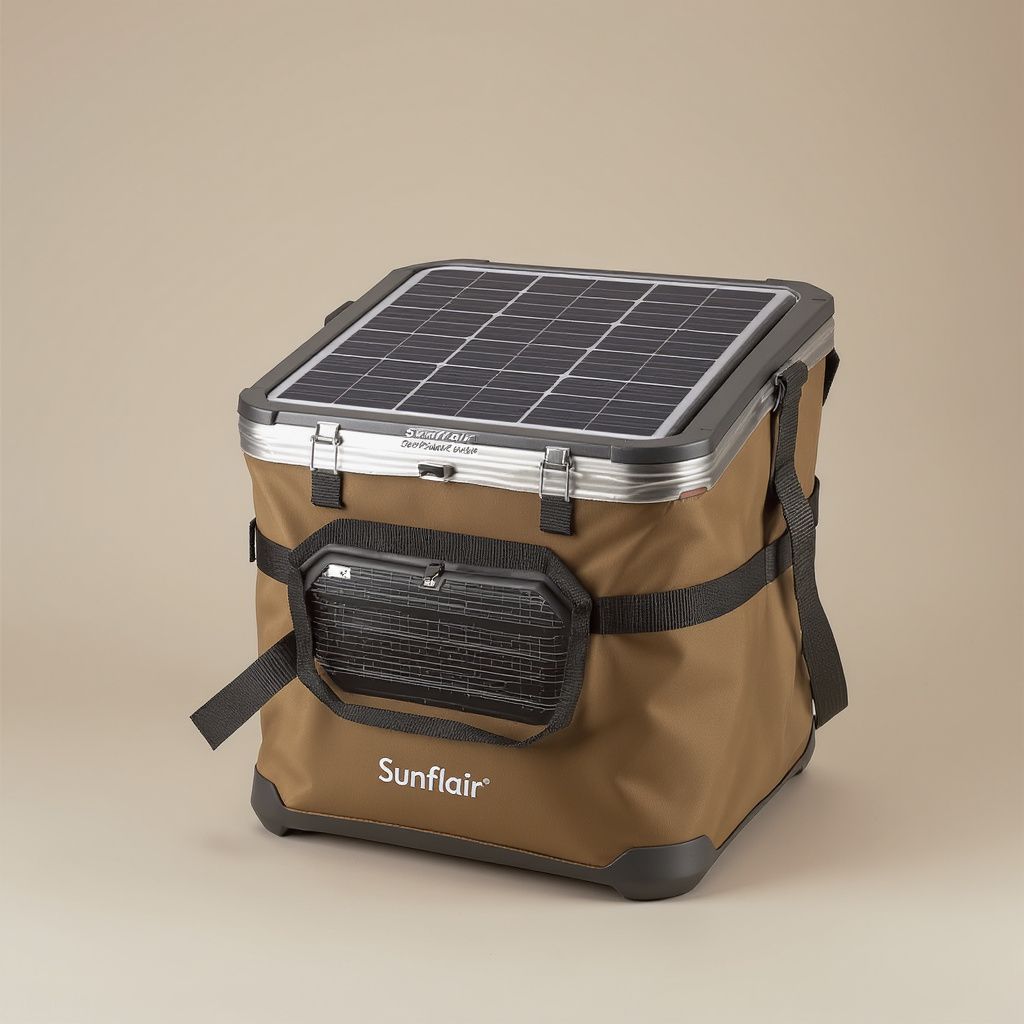
Sunflair Portable Solar Oven Deluxe
The soft-sided solar oven. Collapses flat for storage, cooks slow-roasted meals on long sunny stops.
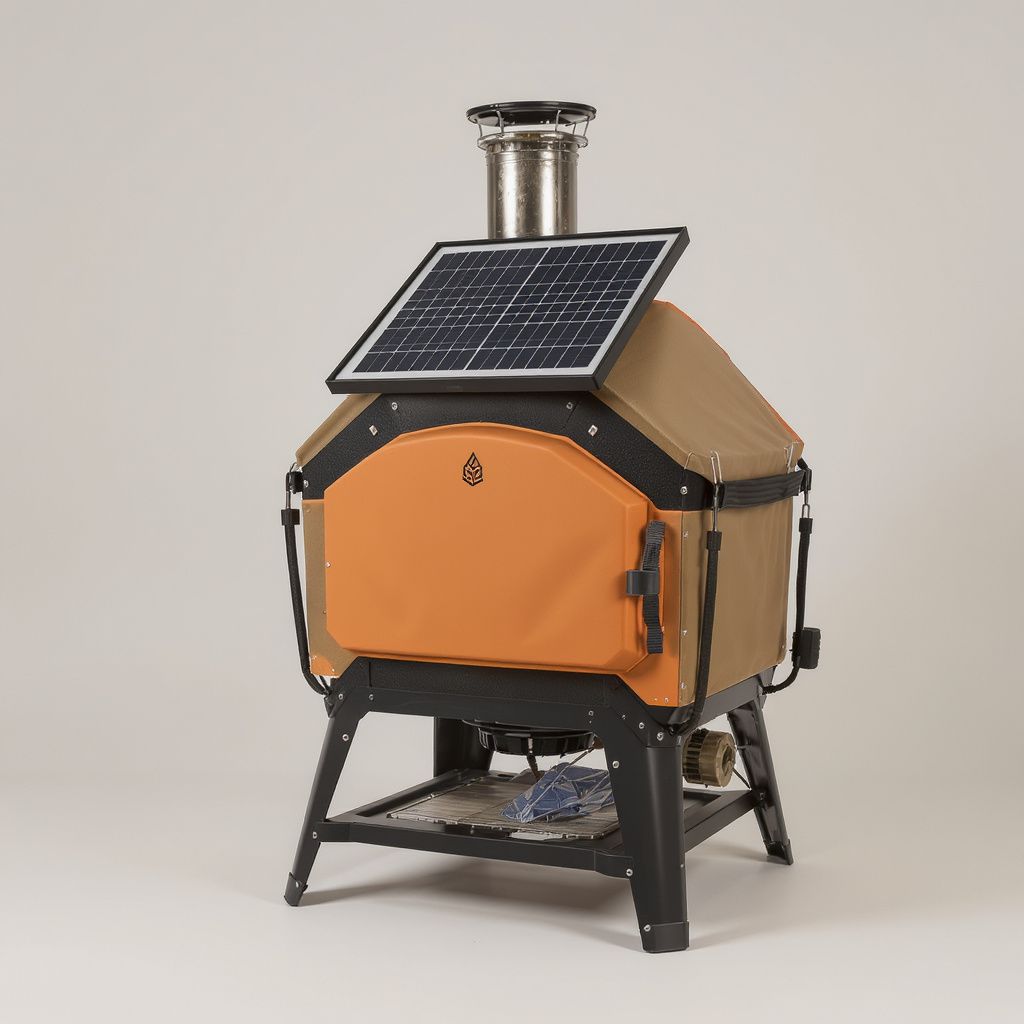
GoSun Fusion Hybrid Solar Oven
The hybrid solar oven. Cooks on sunlight when available, switches to 12V electric heating element when it's not. The right pick for serious solar cookers who want to keep cooking after the sun goes down.