GSI Outdoors Ultralight Java Drip Pour-Over Filter
- Model
- 79460, black (Amazon)
- Capacity
- 1 mug at a time
- Weight
- Under 0.5 oz (GSI)
- Packed Size
- 4.2 x 4.2 x 0.5 in (GSI)
- Materials
- Nylon filter, clear polypropylene frame (GSI)
- Filter
- Reusable nylon; accepts #2 or #4 paper (Amazon listing)
- Warranty
- Lifetime, material and workmanship defects (GSI)
Overview
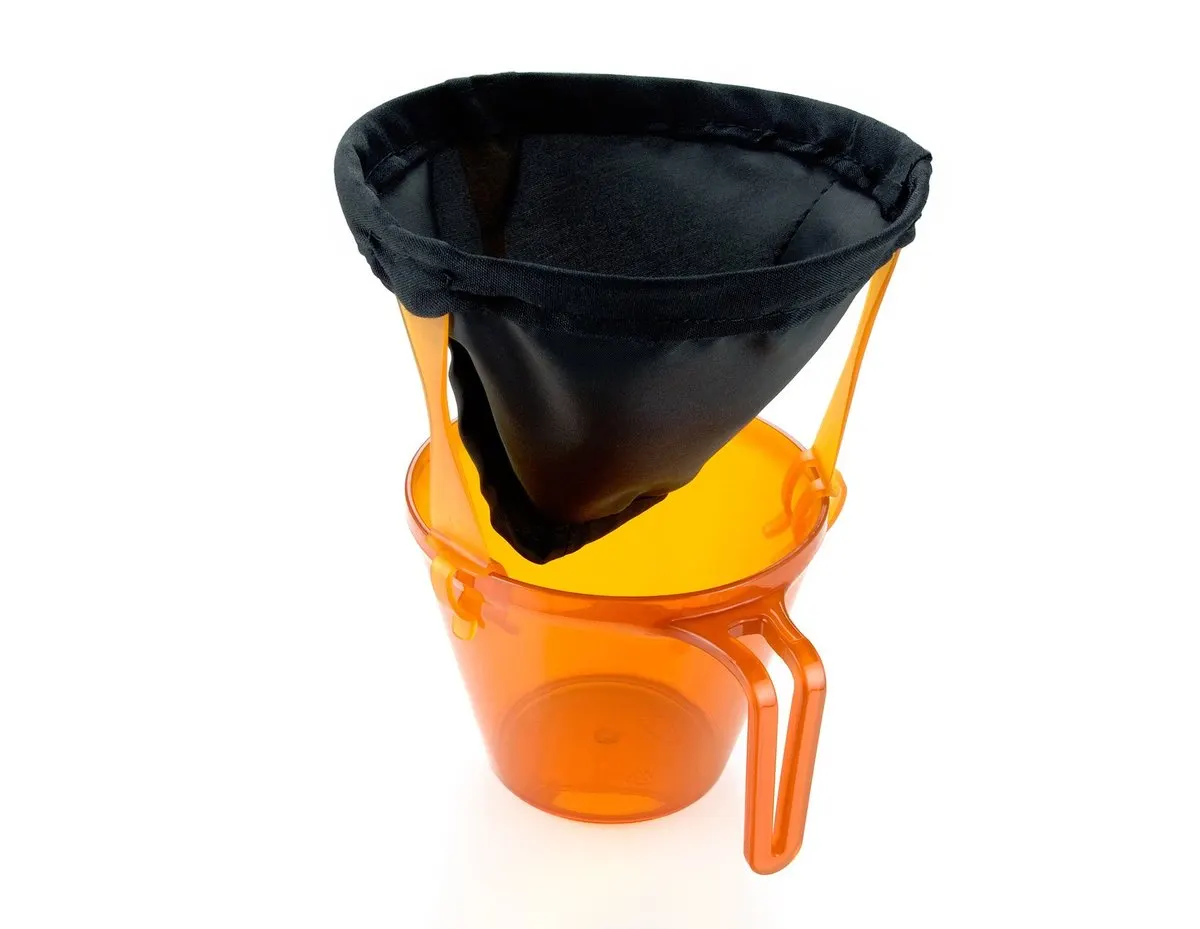
The GSI Outdoors Ultralight Java Drip is a reusable nylon filter cone on a clear polypropylene frame. Three legs clip onto the rim of a mug, and you pour hot water through ground coffee. It has no moving parts and nothing to heat or press, and you barely need to learn anything. GSI says it weighs less than half an ounce and lists it at 4.2 x 4.2 x 0.5 inches packed, so it folds nearly flat. The Amazon listing adds that it nests under a standard fuel canister. It's a backup or trail brewer, not a replacement for a proper kitchen setup, and it's useful in that role.
What the Amazon link sells: the GSI Outdoors Ultralight JavaDrip Pour-Over Coffee Cone in black, model 79460 (ASIN B001LF3ICU). At the last check, the listing showed availability by date rather than immediate stock, so check the delivery estimate on the Amazon page.
Choose this if:
- You want a backup brewer that weighs almost nothing and doesn't depend on paper filters.
- You make coffee away from the van, at trailheads or on day hikes.
- You drink medium or dark roasts and don't mind a heavier, slightly silty cup.
Skip this if:
- You want a clean, paper-filtered cup every day from a dedicated pour-over cone.
- You drink mostly light single-origin roasts.
- You're limiting unfiltered coffee for cholesterol reasons and don't want to carry paper filters.
Published specs
| Spec | Figure | Source |
|---|---|---|
| Weight | Under 0.5 oz | GSI, Amazon |
| Packed size | 4.2 x 4.2 x 0.5 in | GSI, Amazon |
| Frame | Clear polypropylene | GSI |
| Filter | Nylon, 3 legs | GSI |
| Warranty | Lifetime (materials and workmanship) | GSI, Amazon |
GSI describes the filter as "#2/#4 Filter Equivalent". The Amazon listing adds that the nylon filter "accommodates #2 or #4 paper filters or can be used alone". GSI doesn't give a volume. In practice it brews one mug at a time, and the size of your mug sets the limit.
Mesh vs paper, and the option to use both
A paper filter holds back fine particles and most of the coffee oils. That's why a Hario V60 cup tastes clean and light-bodied. The Java Drip's nylon mesh holds back the grounds but lets oils and the smallest fines through. The cup has more body and a rounder mouthfeel, with some silt in the last sip or two. How much silt depends mostly on grind size.
The listing points to a useful option: you can put a #2 or #4 paper cone filter inside the nylon one. With paper in, you get a cleaner, lower-sediment cup. On the trail, you can use the mesh alone and carry no paper. That flexibility is the Java Drip's main advantage over a single-purpose dripper.
A note on cholesterol. Unfiltered coffee from a French press, a metal mesh or a nylon mesh lets through coffee oils that contain diterpenes such as cafestol. Research has linked these to raised LDL cholesterol in people who drink a lot of unfiltered coffee. Paper filters retain most of them. If you've been advised to watch your cholesterol, use paper liners in the Java Drip, and ask your doctor what applies to you.
Build and setup
The frame is clear polypropylene. The nylon filter cone hangs inside it, held up by three legs that clip onto a mug rim. The Amazon listing says the legs clip onto "nearly any mug or wide-mouth bottle", without giving a size range. It suits typical coffee mugs and wide insulated mugs such as the YETI Rambler 14 oz mug. Narrow-mouth bottles won't hold it.
Setup takes seconds. Unfold it, set it on the mug, add grounds and pour. The thin plastic legs are the parts most likely to snap if it's crushed, so store it flat in a pocket or pouch rather than under heavy gear.
Cleanup is quick:
- Tip the wet grounds into a trash bag (or pack them out on the trail).
- Rinse the mesh with a small amount of water. As an estimate, a quarter cup is enough if you flick out the grounds first.
- Shake it dry.
GSI's care instructions say to hand wash with warm, soapy water, dry thoroughly and avoid abrasive cleaners. Nylon mesh tends to darken with coffee stains over time. That's cosmetic. Regular washing with soap stops oil build-up, which is what makes old mesh taste stale.
Coffee quality: the sediment question
Grind size matters more here than in any other brewer on the site:
- Too fine and silt pours through the mesh into the bottom of the cup, and the flow can stall.
- Too coarse and the water rushes through in under a minute, giving thin, sour coffee.
- Medium, slightly coarser than you'd use for a V60, lands in the acceptable zone.
A reasonable starting point is about 15 to 20 g of coffee for a 250 to 350 ml mug, poured slowly in two or three additions over two to three minutes. Medium and dark roasts suit the mesh best. Light roasts with delicate fruity or floral notes lose more of their character than they would through paper. Pre-ground supermarket coffee is usually finer than ideal and gives more sediment. That's another reason to keep a few paper filters in the pouch.
The backup use case
The Java Drip earns its place in three situations:
- Gear failure. If your primary brewer breaks mid-trip, a ceramic V60 cracking for example, the backup in the glove box keeps you making coffee until you reach a town.
- Guest overflow. If your setup makes one cup at a time and there's an extra person, they can brew their own at the same time.
- Trailheads and day trips. You won't want to carry the kitchen setup up a trail. The Java Drip, a bag of ground coffee and a way to boil water fit in a jacket pocket.
For trailhead mornings, the boiling is the part with safety rules. Canister stoves such as the Jetboil Flash are labelled for outdoor use only, which is where you'd use them on the trail anyway. Don't bring one back into the van to make a second cup.
GSI Java Drip vs AeroPress vs Hario V60
- AeroPress Original. It makes a cleaner cup with more control over extraction, and its polypropylene body handles travel knocks. It costs considerably more, weighs about 7.75 oz for the full set, and takes up real drawer space. It's a primary brewer, not a backup.
- Hario V60 02 ceramic. It gives the cleanest cup of the three with a gooseneck kettle, a scale and good beans. It's porcelain, weighs about 400 g and needs V60 02 paper filters, so it's a poor fit for a pocket or a backpack.
- Java Drip. Under half an ounce, flat-packing, mesh or paper. It gives the lowest flavour ceiling of the three, and takes the least space by far.
The best coffee setup for van life guide shows how a backup like this fits alongside a primary brewer.
Value
The Java Drip is at the budget end of the site's coffee gear. You can check the current price with the "Check price on Amazon" button. Used with the mesh alone, it has no consumables. GSI's lifetime warranty covers material and workmanship defects, which is different from wear or crush damage.
Limitations
- Mesh alone gives a silty, heavier cup with less clarity than paper.
- Single mug only. It can't batch brew.
- The thin plastic legs can snap if crushed.
- It needs a mug with a wide enough rim for the legs.
- Light roasts lose much of their character through the mesh.
Final verdict
The GSI Outdoors Ultralight Java Drip isn't trying to be your best cup of coffee. It's a contingency plan and a trail brewer, and at under half an ounce and 4.2 x 4.2 x 0.5 inches packed, it does that job well. The sediment is real when you use the mesh alone. Adding a #2 or #4 paper filter, as the listing says it accepts, cuts it down. Keep one in the glove box, with a few paper filters folded alongside it, and it'll be there when the main brewer isn't.
FAQ
Does the Java Drip make espresso? No. It's a gravity-drip pour-over with no pressure and no crema. For espresso, see the Wacaco Picopresso. For strong stovetop coffee, see the Bialetti Moka Express.
Can I use paper filters with it? Yes. The Amazon listing says the nylon filter accommodates #2 or #4 paper filters, or can be used alone. Paper gives a cleaner cup with less sediment.
Can I reuse the mesh indefinitely? For a long time, if you clean it. Follow GSI's care advice: hand wash with warm soapy water and dry thoroughly. Replace it if the mesh tears or a leg cracks. GSI's lifetime warranty covers manufacturing defects.
Will it fit my travel mug? The listing says it clips onto nearly any mug or wide-mouth bottle. Narrow-mouth bottles and some tall thermoses with small openings won't hold it.
How much coffee does it make? One mug at a time. The size of your mug, typically 8 to 14 oz, sets the limit.
Does it work with pre-ground supermarket coffee? Yes, but expect more sediment, because pre-ground is usually finer than ideal for mesh. A paper liner helps a lot.
Sources and verification
- https://gsioutdoors.com/products/ultralight-java-drip: under half an ounce, 4.2 x 4.2 x 0.5 in, clear polypropylene frame, nylon filter with 3 legs, #2/#4 filter equivalent, lifetime warranty, hand wash care instructions (checked 2026-10-12)
- Amazon listing ASIN B001LF3ICU: model 79460, black, clips to nearly any mug or wide-mouth bottle, nests under a standard fuel cartridge, accommodates #2 or #4 paper filters or can be used alone, lifetime warranty, availability shown by date (checked 2026-10-12)
Compare with similar products
See how this stacks up against the other coffee gear we've reviewed.
Related Reviews

For: Espresso and filter, one grinder
1Zpresso K-Ultra Manual Coffee Grinder (Iron Gray, with Carrying Case)
A full-size, all-round hand grinder with an external dial of 100 clicks per rotation at 20 microns per click, a heptagonal steel conical burr and a 35-40 g magnetic catch cup. It grinds fine enough for a Picopresso or Flair and coarse enough for French press, and holds two filter doses at once. It is premium-priced, about twice the weight of the Q Air, and too wide to nest inside an AeroPress.

For: Lever espresso with pressure gauge
Flair 2GO Portable Collapsible Lever Espresso Maker (Grounds Model)
A manual lever espresso maker that folds into a 9.5 x 5.25 x 4 in case. Flair rates it for 6-9 bar with a built-in pressure gauge, a 12-18 g dose and a 45 ml yield, and its thin-walled cylinder needs no preheating. It needs boiling water from a kettle and an espresso-capable burr grinder, and at 3.7 lb in its case it is much bulkier than a Picopresso.

For: Brewing and drinking in one mug
ESPRO Go P0 Ultralight Insulated Travel French Press, 16 oz (Steel)
A 16 oz vacuum-insulated travel mug with a built-in press. ESPRO says it brews 12 oz with its dual micro-filter in place, weighs 9.6 oz, accepts paper filters, and stops extraction after you plunge. It is a one-person brewer, and the Amazon listing's heat-retention figure of up to 6 hours is the maker's claim.