Hario V60 02 Ceramic Coffee Dripper
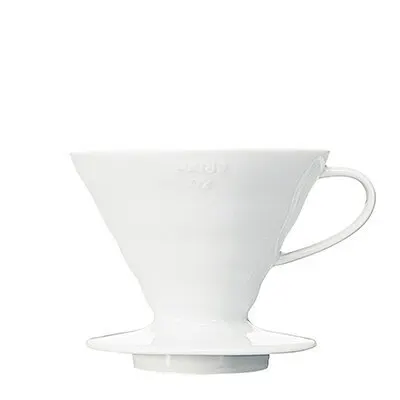
- Model
- VDCR-02-R, red (Amazon)
- Capacity
- 1-4 cups (Hario)
- Material
- Porcelain, Arita ware (Amazon, Hario)
- Cone Angle
- 60 degrees
- Size
- 140 x 120 x 102 mm (Hario Europe)
- Weight
- About 400 g / 14 oz (Amazon)
- Filter
- Hario V60 02 paper, sold separately
Hario V60 02 Ceramic Review: The Pour-Over Standard, and What It Asks of a Van Kitchen
If you already own an AeroPress and you're happy with it, you may not need a V60. The V60 isn't a more convenient AeroPress. It's a different tool with a different goal: a clean, paper-filtered cup that shows the character of the beans, at the cost of technique, extra gear and a body that breaks if you drop it.
What the Amazon link sells: the Hario V60 02 ceramic coffee dripper in red, model VDCR-02-R (ASIN B0BWH3K9Z9), rated for 1 to 4 cups. Hario Europe and Hario UK sell the same design under the code VDC-02. The difference is the regional model code, not the design.
Choose this if:
- You already own, or plan to buy, a burr grinder, a scale and a gooseneck kettle.
- You brew mostly light and medium roasts and want the clearest cup a simple dripper can give.
- You have padded storage or a fixed spot where a ceramic cone won't get knocked around.
Skip this if:
- Your coffee gear rides loose in a drawer or bin in a moving van. Porcelain chips and breaks if it's dropped.
- You want fast, forgiving coffee with no technique. An AeroPress is easier.
- You drink dark roasts almost exclusively.
Published specs
| Spec | Figure | Source |
|---|---|---|
| Capacity | 1–4 cups | Hario Europe, Amazon |
| Size | 140 x 120 x 102 mm | Hario Europe |
| Size (inches) | 5.5 x 4.7 x 4.0 in, 4.6 in diameter | Amazon |
| Weight | About 400 g | Amazon; Hario Europe (boxed) |
| Material | Porcelain (Arita ware) | Amazon, Hario Europe |
The listing says it's made in Japan. Hario Europe's figure of about 400 g includes the box, and the Amazon listing gives about 0.40 kg for the dripper, so plan on roughly 14 oz. That's about twice the weight of an AeroPress full set, and it's a rigid shape that doesn't nest with anything else in the site's coffee lineup.
The dripper uses Hario V60 02 paper filters, which are sold separately. There are no moving parts, seals or electronics. The only thing that can end its life is an impact.
The V60 geometry: why the cone matters
The V60 is a 60-degree cone with spiral ribs on the inside wall and a single large hole at the bottom. Each of these shapes how it brews:
- The cone makes a deeper coffee bed than a flat-bottom dripper, so the water passes through more grounds on its way down.
- The spiral ribs hold the paper off the wall so it can't seal flat against it, which leaves room for air to escape as the grounds expand during the bloom.
- The single large hole doesn't restrict flow much. Your pour rate and grind size control how long the water stays in contact with the coffee.
That last point is why the V60 has a reputation for being technical. You are the flow restrictor. Pour too fast or grind too coarse and the brew drains quickly and tastes sour and thin. Grind too fine and it stalls and turns bitter. Flat-bottom drippers with small holes, like the Kalita Wave, even out sloppy pours more. The V60 rewards a steady hand with a brighter, more separated cup.
Ceramic vs plastic, and the van question
Hario makes the V60 02 in several materials. The ceramic version linked here has more thermal mass than plastic. If you preheat it by rinsing the filter with hot water, it loses less heat from the brew during the first pours. Plastic V60s brew well too, especially if you rinse them with hot water first. Plastic is lighter and much harder to break.
For a van, that's the real trade-off. Porcelain is fine in a fixed, padded spot: a slot in a drawer divider, a foam cut-out or a soft pouch. If your coffee gear rides loose in a crate, a plastic dripper or the AeroPress Original is the safer choice. This page covers the ceramic model because that's what the link sells. If you need a dripper that survives being knocked around, it's the wrong pick.
How it tastes
The paper filter holds back most oils and fines, so V60 coffee is clean, light-bodied and often described as tea-like. A light-roasted coffee with fruity or floral notes shows them more clearly on a V60 than through an immersion brewer. The same beans in a French press come out heavier and rounder. In an AeroPress they're clean but somewhat less layered.
The trade-off is body. If you want something rich and heavy, a V60 is the wrong tool. Medium and dark roasts work fine, but the clarity advantage shrinks.
A starting recipe
A widely used starting point is 15 g of coffee to 250 g of water, ground medium-fine:
- Rinse the filter with hot water to warm the dripper and remove paper taste. Discard the rinse water.
- Add the coffee, level the bed and start a timer.
- Pour about 30 g of water to wet all the grounds and let it bloom for about 30 seconds.
- Pour the rest in two or three slow spirals, keeping the water off the paper walls.
- Aim for a total brew time of about 3 to 3.5 minutes. If it drains faster, grind finer. If it stalls, grind coarser.
You need a gooseneck kettle for this. A standard spout pours too fast and too wide to control. A scale makes the recipe repeatable. Paper filters are the consumable.
The gear around it, and its power cost
The dripper itself is inexpensive. The setup around it is what costs space, money and possibly power:
- Kettle. The Hario V60 Buono stovetop gooseneck works on gas, electric and induction hobs and needs no inverter. The Bonavita 1.0L electric gooseneck gives you exact temperature control but needs 120 V AC at 1200 W, which means shore power or a large inverter. By the estimate in that review, a 500 ml heat-up from cool water takes about 60 to 65 Wh from the battery, roughly 5 Ah at 12.8 V.
- Grinder. The 1Zpresso Q Air is built for pour-over and holds 15 to 20 g, which is right for one V60 cup.
- Scale. Any small kitchen scale that reads in 1 g steps will do.
- Stove location. If you heat water on a butane cassette or canister stove, follow its manual on where it can be used. Many are labelled for outdoor use only. In that case, heat the water outside and brew inside.
Hario V60 02 vs AeroPress vs Kalita Wave
The AeroPress Original is better for convenience, portability and forgiveness. Its polypropylene body has no glass or ceramic to break, and cleanup is a rinse. The V60 ceramic is the opposite on all of those points, but it has the higher ceiling for flavour detail. The AeroPress vs Hario V60 comparison sets the two side by side.
The Kalita Wave (not on this site) is the V60's usual alternative. It's a flat-bottom dripper with three small holes. It's more forgiving of uneven pours and gives a rounder, more consistent cup, but a less vivid one. If you're new to pour-over and want fewer bad cups, the Kalita is easier. If you want what a cone dripper can do at its best, choose the V60.
Many people keep a V60 for slow mornings and an AeroPress for travel days. In a van, that means two brewers to store, so decide whether you have the drawer space.
Maintenance
Rinse it after each brew. Wash off coffee oils with mild soap now and then. Let it dry before storing it, so a closed drawer doesn't trap moisture. There are no seals or gaskets to replace. Check the cone for chips around the rim now and then. A chip at the rim doesn't affect brewing, but a crack through the body means it's time to replace it.
Value
The dripper sits at the budget end of the site's coffee gear. You can check the current price with the "Check price on Amazon" button. The real cost of a V60 setup is the gooseneck kettle, the grinder, the scale and the beans. Paper filters are a small ongoing cost.
Limitations
- Porcelain can chip or crack if dropped. In a van it needs padded or fixed storage.
- It's technical. Without a gooseneck kettle, a scale and a burr grinder, it often makes worse coffee than an AeroPress.
- At about 400 g with a rigid cone shape, it's bulkier and heavier than the plastic alternatives.
- You need to restock V60 02 paper filters.
Final verdict
The Hario V60 02 ceramic is a widely used pour-over cone. Its 60-degree shape, spiral ribs and single hole give you a clean, transparent cup, as long as your technique, grinder and kettle are up to it. It suits a van with a fixed, padded spot for it and an owner who enjoys the ritual. If your coffee gear rides loose, or you want the fastest route to a good cup, the AeroPress is the better buy.
FAQ
Is the Hario V60 02 the right size for me? For most people, yes. Hario rates the 02 for 1 to 4 cups, which covers solo drinkers and couples. The 01 is smaller and the 03 is aimed at larger batches.
Can I use regular cone filters in a V60? Use Hario's V60 02 papers. Common #2 and #4 cone filters are a flat-bottomed wedge shape rather than a true cone. They tend to fold or sit unevenly in the V60, which leads to uneven extraction.
Ceramic or plastic V60? Ceramic holds heat a little better once it's preheated. Plastic is lighter and much harder to break. For a van where gear moves around, plastic or an AeroPress is the safer choice. Ceramic suits a fixed, padded spot.
Do I need a gooseneck kettle? Yes, for good results. A standard spout pours too fast and too wide to control the flow. The Hario V60 Buono is a stovetop option that needs no inverter.
How long does a ceramic V60 last? There are no wear parts, so its life depends on whether it gets dropped or knocked against hard surfaces. Store it padded or in a fixed spot and it can last many years.
Sources and verification
- https://www.hario-europe.com/products/v60-ceramic-colour-drippers-02: model code VDC-02, 1–4 cup capacity, W140 x L120 x H102 mm, about 400 g including box, porcelain body, made in Japan (checked 2026-10-12)
- https://www.hario.co.uk/products/hario-v60-ceramic-coffee-dripper-red-02: red 02 ceramic dripper (VDC-02R), ceramic body with spiral design, V60 filter papers sold separately (checked 2026-10-12)
- Amazon listing ASIN B0BWH3K9Z9: model VDCR-02-R, red, 1–4 cups, 5.5 x 4.7 x 4.0 in, about 0.40 kg, porcelain (Arita ware), made in Japan (checked 2026-10-12)
Compare with similar products
See how this stacks up against the other coffee gear we've reviewed.
Head-to-head comparisons
Related Reviews
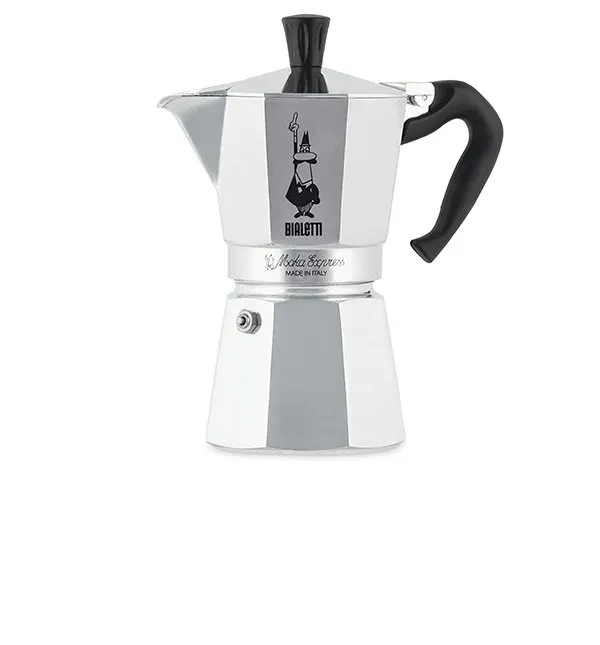
For: Strong stovetop coffee, gas hobs
Bialetti Moka Express 6-Cup Stovetop Espresso Maker
The Italian stovetop classic, made since 1933. Brews about 250 ml of strong coffee in around 5 minutes with no electricity on gas or electric hobs (induction only with Bialetti's adapter plate). The stove, not the pot, sets where it can be used: many portable camp stoves are outdoor-only.
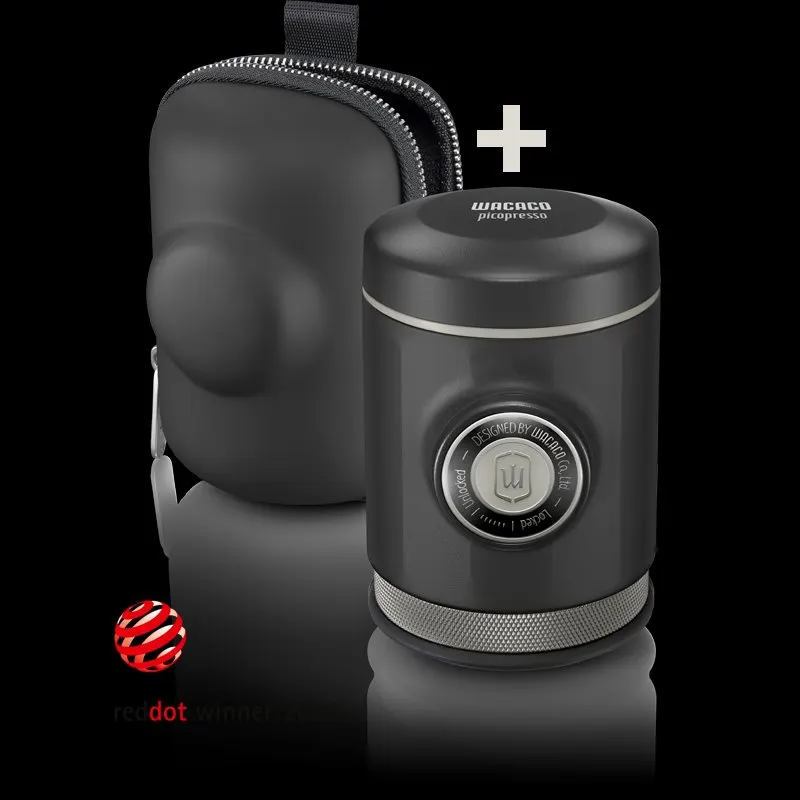
For: Manual espresso, no power
Wacaco Picopresso Portable Espresso Maker
Manual espresso in a van. Wacaco rates it at 18 bar, it pulls a double shot in about 30 seconds, fits in a coat pocket, and needs no electricity. A premium option for espresso in a small space.
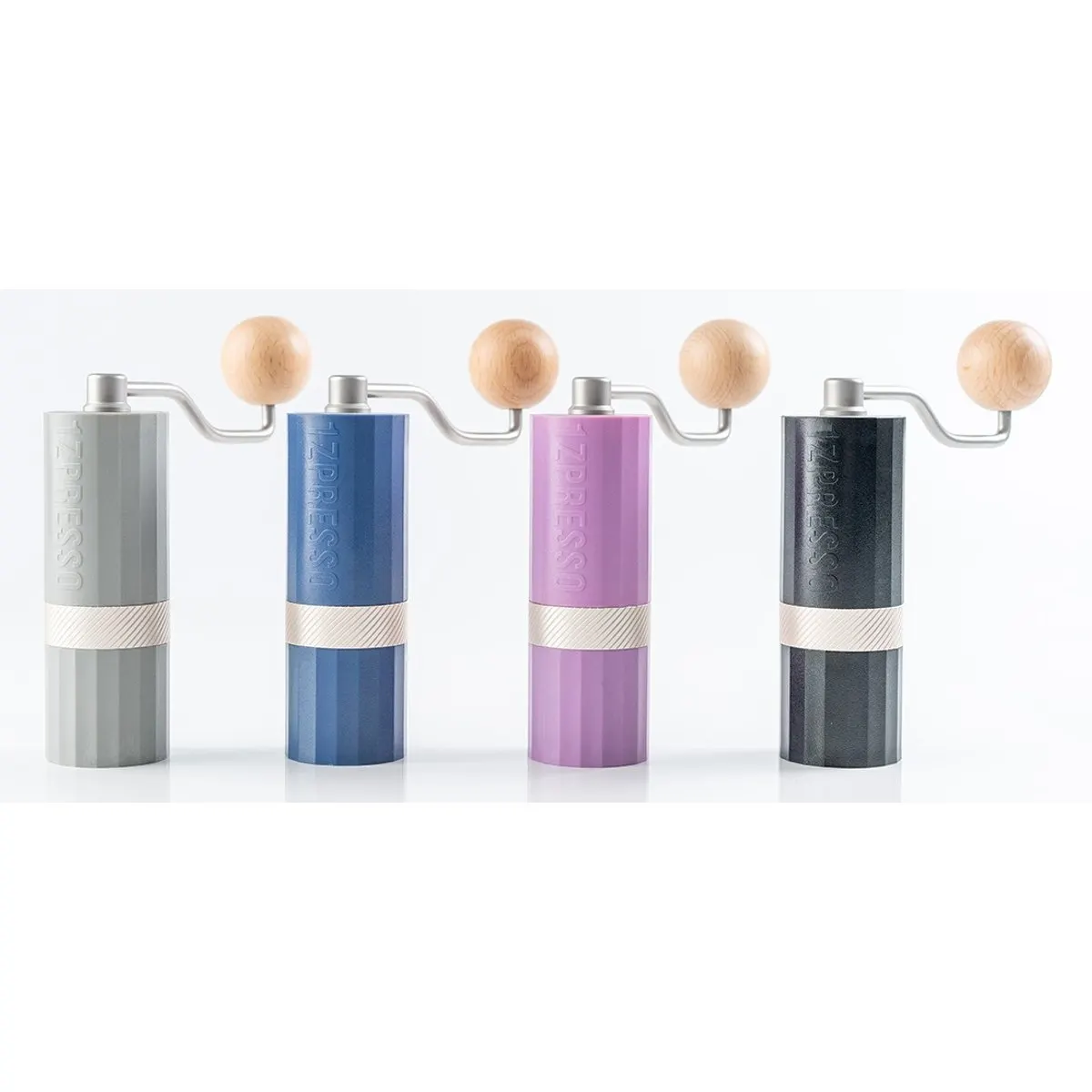
For: Hand-grinding one or two cups
1Zpresso Q Air Manual Coffee Grinder
A 365g steel-burr hand grinder that nests inside an AeroPress, with a 30-click numbered dial and no glass to break. Excellent for one or two pour-over cups, but it holds only 15–20g.