Van Water System Setup: Fresh, Grey, and Filtration
How to design a 20–40 gallon water system for a van kitchen: tanks, pumps, filters, and a grey water setup that won't stink.
Disclosure: As an Amazon Associate I earn from qualifying purchases. Links to Amazon on this page are affiliate links: if you buy through one, VanLifeKitchens.com may earn a commission at no extra cost to you. Read our affiliate disclosure.
The three problems a van water system has to solve
A van water system has to solve three problems at once: storing enough fresh water for your use pattern, delivering it to the sink at usable pressure, and managing the greywater that comes back out. Get any one of these wrong and you'll end up stopping for water every two days, fighting a moldy sink, or tracking soap residue into the galley every time you wash a dish.
This guide covers the realistic design of a 20–40 gallon fresh/grey water system for a van kitchen — the components, the plumbing, the filtration, and the mistakes that kill first-time builds. It assumes a mid-size van kitchen (Sprinter, Transit, Promaster) with one or two people living full-time, and an honest target of 3–5 days between water refills.
Fresh water: how much do you actually use?
The first mistake is guessing your daily water usage. Measure it instead: note your tank or jug level each morning for a week. Until you have your own numbers, here is our starting estimate per person. It is an estimate, not a measurement, and it assumes temperate weather, no indoor shower, coffee or tea most mornings, cooking one or two hot meals a day, and dishes washed with a basin or a foot pump rather than a running tap:
- Drinking and cooking water: 1.5 gallons (about 5.7 L) per person per day. That covers roughly 3 L of drinking water in warm weather plus coffee, pasta or rice water and rinsing produce; it is deliberately generous, and hot-climate travel or hard physical activity can push drinking water alone well past 3 L
- Dish washing (efficient): 0.5 gallons per person per day, assuming scraped plates and a wash-then-rinse basin method
- Hand washing and rinsing: 0.3 gallons per person per day
- Personal use (teeth, face): 0.2 gallons per person per day
Subtotal: 2.5 gallons per person per day for a frugal van life user under those assumptions. Two people: 5 gallons/day. Add 20% buffer: 6 gallons/day for two. A pressurised tap left running while you scrub can easily double the dishwashing figure.
Showering is not in that list because most van dwellers shower outside the van or at truck stops/gyms. If you do have an indoor shower, add 4–6 gallons per shower day.
Translating to tank size: at 6 gallons/day for two people, a 20-gallon fresh tank gives you 3.3 days. A 30-gallon tank gives you 5 days. A 40-gallon tank gives you 6.7 days. Match tank size to your actual refill cadence — if you're in civilization every 3 days anyway, 20 gallons is plenty. If you boondock for a week, go 40.
Tank types and placement
Van water tanks come in three main types:
Rigid plastic (HDPE or XLPE) rectangular tanks. The standard for permanent installs. Budget-friendly even at 20–40 gallons, food-grade, easy to plumb. Install under a bench, under a bed, or in a custom cabinet. Plan for a rectangular footprint and securely bolt it down — 30 gallons of water is 250 lbs.
Collapsible bladder tanks. Roll up when empty, expand as they fill. Work in non-rectangular spaces. Cheaper per gallon but harder to plumb reliably and can develop pinhole leaks over time. Best for weekend builds or as backup capacity.
DIY from food-grade containers. Multiple 5-gallon jugs or a 7-gallon Aqua-Tainer. Zero install cost, zero plumbing. Fill by swapping jugs at any potable tap. The drawback is manual pump requirement (foot pump or hand pump) and limited capacity. A spigot jug such as the Reliance Jumbo-Tainer 2.0 skips the pump: its tap stows inside the cap for travel, and it dispenses by gravity with the jug on its side. Reliance lists it at 7 gallons and 2.9 lb empty, so it's about 61 lb full by our estimate; strap it to a solid anchor through a handle, and plan to fill it in place. Reliance Jumbo-Tainer vs Scepter 5-gallon compares it with a narrower jerrycan that suits a foot pump. The no-plumbing campervan sink guide covers choosing a jug, pump and basin that fit together for this kind of setup.
Placement rules for rigid tanks:
- Low in the van for center of gravity.
- Protected from freezing (inside the heated cabin, not underneath).
- Accessible fill port from outside the van (through a deck fitting).
- Cleanout port for annual sanitizing.
- Vented so air can replace water as the tank drains.
Pumps: the heart of the system
You have three pump options:
12V diaphragm pump (most common). Shurflo, Flojet, Seaflo are the common brands. Typical published specs for van-sized models are roughly 4–8 amps while running (about 50–100 W at 12 V) and 1–3 GPM, with a pressure switch that shuts off somewhere around 45–60 psi; check the data sheet for the model you buy. Self-priming, runs on demand. Cost: mid-range. Noise: moderate. Service life varies with use and grit; check valves and diaphragms are the usual wear parts.
Foot pump (manual). Whale Babyfoot GP4618 or equivalent. Zero electrical draw. Delivers water only while you pump. Cost: budget. Best for budget builds and people who want to minimize electrical complexity.
Hand pump. Whale V-series. Zero electrical draw, mounts to sink deck. Best for backup or galley layouts where you don't want a foot pump.
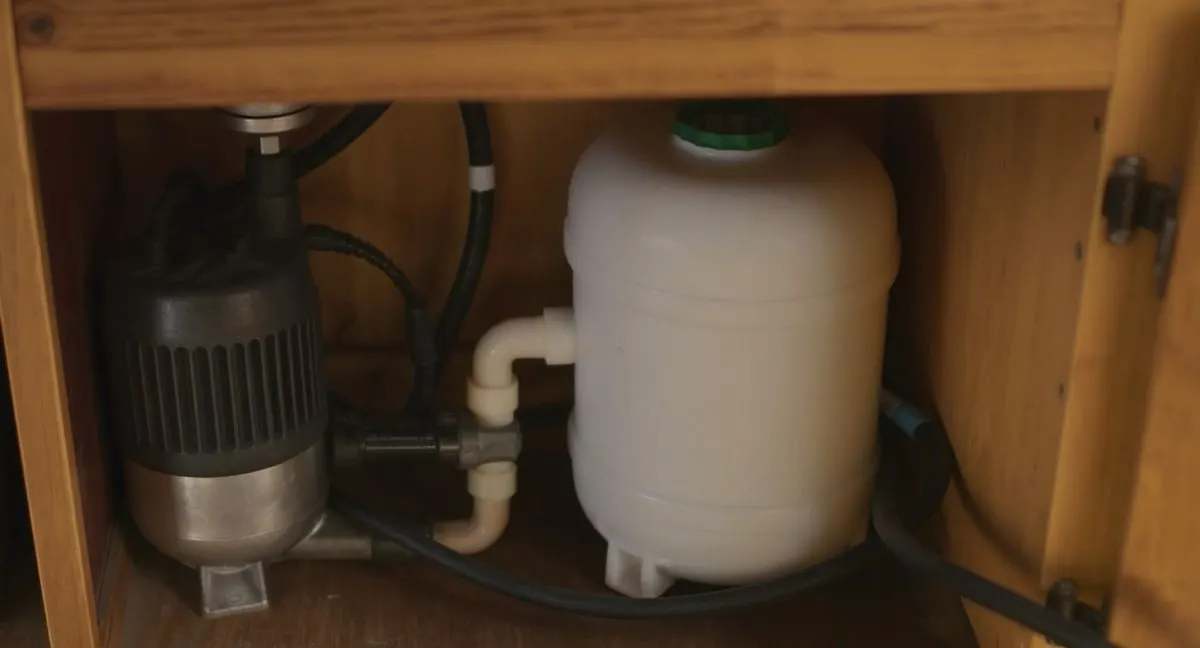
For a mid-size full-time van, a 12V diaphragm pump with an accumulator tank is the right answer. The accumulator smooths out the pulsing draw from the pump and reduces cycling (and noise). The cost is modest and the user experience is closest to a house kitchen.
Critical install details: put a strainer before the pump (most pump makers require one). Choose a pump whose pressure-switch shut-off suits your faucet and fittings, and use a pressure regulator on any city-water inlet (Clearsource, for example, notes that RV makers commonly recommend 40–60 psi). Mount the pump on rubber isolators to reduce vibration. Wire it with the fuse size and wire gauge the pump manufacturer specifies, on a fused circuit from your house battery; if your build has to meet a code, an insurer's requirements or a converter's warranty terms, have a qualified RV electrical technician check it. These are general practices, not a code-compliance checklist.
Filtration: where water quality gets real
A van water system needs filtration at two points: before the tank (coarse, to protect the pump from debris) and at the drinking tap (fine, for health).
Pre-tank filtration: a 5-micron sediment filter inline on the fill hose catches most of the grit and sand you'd get from unfamiliar spigots. Cost: inexpensive housing, cheap replacement cartridges. Change it on the cartridge maker's schedule or when flow slows. A multi-stage unit such as the Clearsource Ultra adds a carbon block and a microbiological stage at the fill, at a premium price and 28 lb of weight.
Drinking-tap filtration: here you have choices.
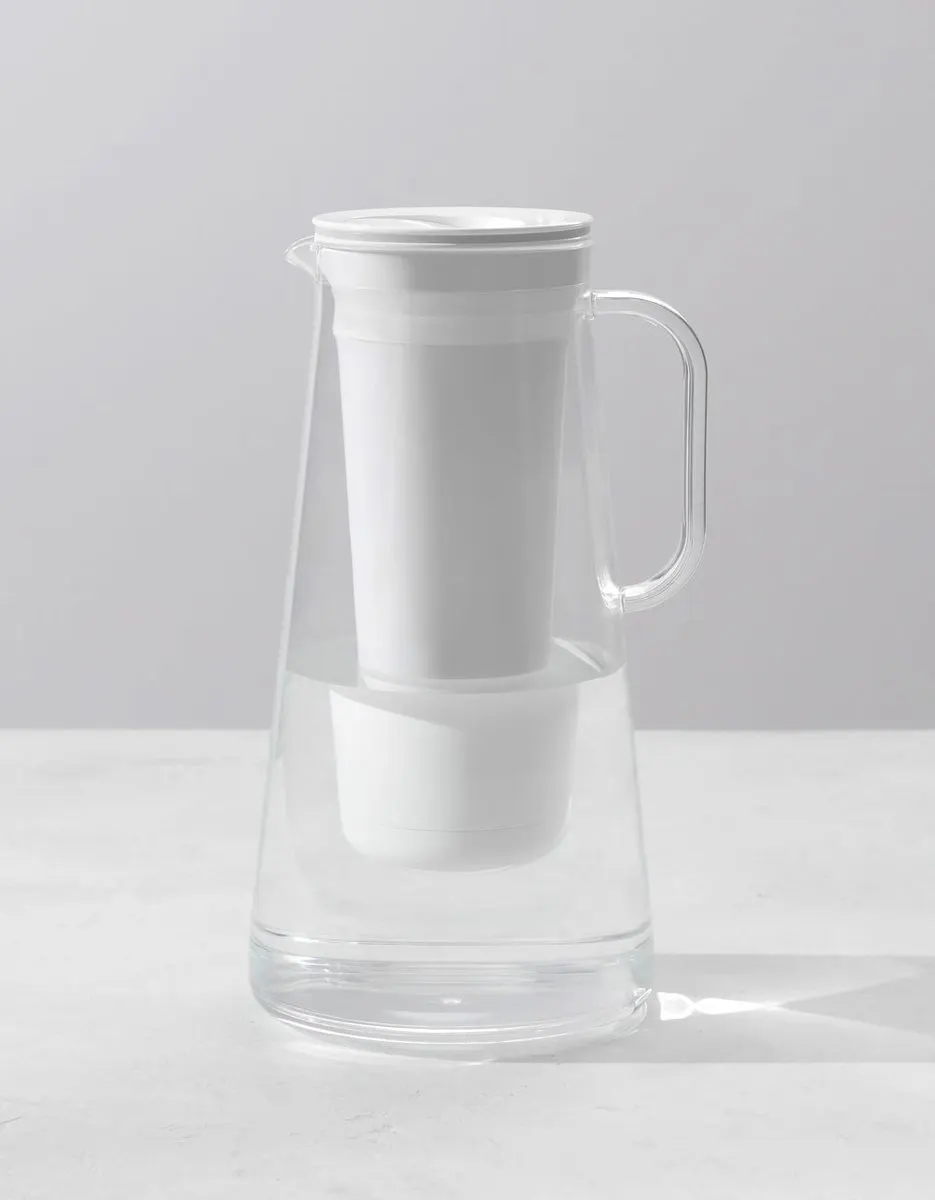
Gravity pitcher filter (LifeStraw Home or equivalent). Lives on the counter, filters water you pour in manually. Zero plumbing, zero power. LifeStraw says it is lab-tested to NSF/ANSI standards for bacteria, parasites, lead, mercury, microplastics and PFAS, among others; it makes no virus claim and is designed for tap water. The LifeStraw Home Gravity Pitcher review covers this in detail. This used to be the Berkey slot, but genuine Black Berkey elements have been scarce since EPA stop-sale orders that began in late 2022 (the dispute is still in court). Best for people who fill from campground and municipal taps and don't trust the plumbing or taste.
Inline carbon block filter. Plumbs directly into the cold water line before the faucet. Removes chlorine, taste, and sediment. Doesn't remove bacteria or viruses (so source water needs to be potable already). Cost: budget to mid-range. Easy install. Good for people who fill from municipal taps. The Aquasana Claryum Direct Connect is one example with published certification: Aquasana says IAPMO R&T certifies it to NSF/ANSI 42, 53 and 401. Its operating range is 10 to 125 psi, so it needs a pressurised 12 V pump system, not a foot pump or gravity jug. It filters every drop to that faucet, washing-up water included, against a 784-gallon or six-month cartridge life. Its kit assumes a threaded shut-off valve and 3/8-inch lines, so check what your plumbing ends in.
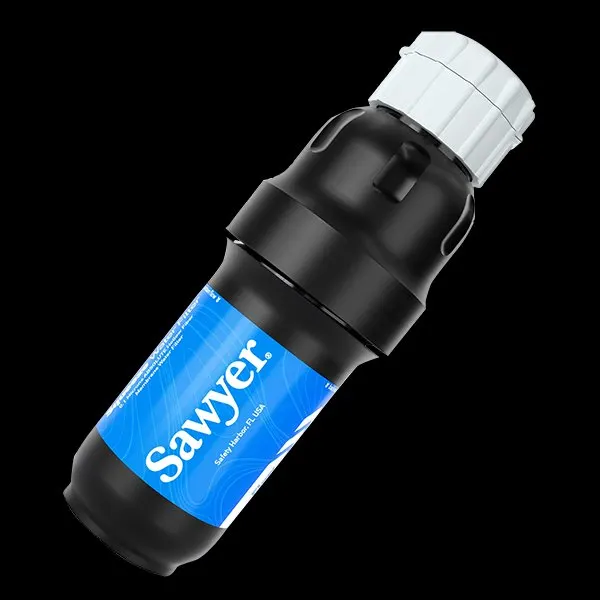
Low-pressure inline hollow-fibre filter (Sawyer Squeeze with its inline adapters, or similar). 0.1-micron hollow fibre removes bacteria and protozoa. Doesn't remove viruses or chemicals. Only for gravity or foot-pump lines: Sawyer doesn't publish a pressure rating for use after a pressurised 12 V pump. See the Sawyer Squeeze review for details. Best as a backup or for occasional sketchy source use. For untreated surface water where sewage is possible, add a virus step (boiling, or a purifier such as the Grayl GeoPress).
Multi-stage system (UV + RO or carbon + RO): overkill for most van builds. UV needs continuous power, RO produces reject water and needs good inlet pressure, and both add filters to maintain. Skip unless you have a specific use case.
Grey water: the forgotten problem
Greywater is the water that goes down your sink after dish washing. It's full of food particles, soap, and grease, and if you don't manage it, it becomes the most persistent smell in your van.
Grey tank options:
Dedicated grey tank (built-in). Mirror image of the fresh tank, plumbed from the sink drain, drained via an outlet valve. Cost: similar to fresh tank. Capacity should be at least equal to fresh water (you'll generate slightly less grey than fresh due to drinking water, but not much less).
Portable jug (5–7 gallons). A simple food-grade jug under the sink. Drain the sink trap into it. Dump it at a dump station or a designated grey-water drain. Rules on dumping grey water on the ground vary by land manager and campground and are often prohibited, so check local rules; never dump near a waterway or in urban areas. Cheapest option, works fine.
Direct drain (outside the van). Some builds route the sink drain directly outside. This is only legal and ethical in specific backcountry contexts and is banned in most developed campgrounds and all urban areas. Not recommended.
Smell management — the most important part:
- Scrape all food debris into the trash before dishwashing. Food particles in the grey tank are the primary source of smell.
- Add a tablespoon of baking soda to the grey tank weekly. Neutralizes acidic buildup.
- Empty the grey tank every 2–3 days, even if it's not full. Stagnant water smells worse than dirty water.
- Rinse the tank occasionally with hot water and a drop of bleach.
- Use a sink strainer. Catches everything above a millimeter, prevents pump clogs, saves your grey tank.
Sink and faucet selection
Van sinks are either single-basin bar sinks (10 x 12 inches, 5 inches deep) or compact full sinks (15 x 15 inches, 6 inches deep). The larger is better for dish washing but eats counter space.
Faucet selection matters more than you'd think. A low-profile gooseneck with a single lever gives you enough height to fit a 4-inch pot under the spout. A pull-out spray faucet makes rinsing easier but has more failure points. A foot-pump-only faucet works but requires the foot pump install.
Practical choice for most van builds: a 12V pressurized pump to a single-lever RV-style faucet in a 10x12 bar sink. A mid-range build that works like a house kitchen with minimal complexity.
Full system: what it looks like wired up
A complete mid-size van water system:
- 30-gallon fresh tank under the dinette bench, vented, with a cleanout port
- Exterior fill port with 5-micron sediment filter inline
- Shurflo 4008 diaphragm pump with 1-gallon accumulator tank, mounted on rubber isolators
- Inline carbon block filter on the cold line to the faucet
- Single-lever RV faucet in a 10x12 bar sink
- Sink strainer catching debris
- Sink drain into a 5-gallon jug (grey tank) under the sink
- LifeStraw Home Gravity Pitcher on the counter for drinking water from unknown sources
Total cost for components: a mid-range build, varying with brand choices — check current prices on Amazon, they move often. Install time for a competent DIYer: 1–2 weekends. Daily maintenance: clean the sink strainer, empty grey every 2–3 days.
Winterization
Water systems freeze. At 32°F and below, the water in tanks, pumps, and lines expands and splits whatever contains it. You have three options:
Drain the system. Remove all water before freezing temperatures. Bypass the pump and blow compressed air through the lines. Safe but inconvenient for daily use.
Heat the system. Install the tanks inside the heated cabin. Wrap lines with heat tape or tank heater pads rated for the job, installed and fused per their manufacturer's instructions. Works but adds electrical load (check the pad's wattage against your power budget) and complexity.
RV antifreeze. Propylene-glycol antifreeze labelled for potable RV water systems (never automotive antifreeze), pumped through the lines before cold snaps. Remove or bypass filter cartridges and hollow-fibre filters first, follow the pump and water heater makers' winterising instructions, and flush thoroughly before next use. Standard RV practice.
For van life crossing cold climates, plan for winterization from the start. See our cold-weather van cooking guide for the full winter operations playbook.
Final word
A van water system is not complicated, but it rewards discipline. The failures that show up most often are: guessing capacity instead of measuring, skipping pre-pump filtration, ignoring grey tank smell management, and not planning for winter. None of those are technical problems — they're discipline problems. If you size honestly, install with protection filters, empty grey regularly, and plan for freezing, a good water system disappears into the background of your build and just works.
FAQ
How many gallons of water do two people need in a van? Our estimate is about 5–6 gallons per day for efficient use (drinking, cooking, dish washing with a basin, hand washing, no shower, temperate weather), or 8–12 gallons per day if you shower indoors. Measure your own use for a week to confirm. A 20-gallon tank gives two people roughly 3 days of autonomy.
Do I need a 12V water pump for a van kitchen? Not strictly — foot pumps work fine and draw zero power. But a 12V diaphragm pump makes the kitchen feel like a house kitchen. A typical van pump draws roughly 4–8 A (about 50–100 W) only while running; as an estimate, 15 minutes of total run time a day at 6 A is 1.5 Ah, or about 19 Wh at 12.8 V. For full-time builds, it's usually worth it.
How do I keep the grey tank from smelling? Scrape food into the trash before dish washing, add a tablespoon of baking soda weekly, empty the grey tank every 2–3 days, and use a sink strainer. Stagnant water with food debris is the main cause of smell.
What's the best water filter for van life? For full-time use with potable source water, a simple inline carbon block filter handles chlorine and taste. For mixed campground and municipal fills, a gravity pitcher like the LifeStraw Home is our pick; LifeStraw says it is lab-tested to NSF/ANSI standards for bacteria, parasites, lead, microplastics and PFAS, though it makes no virus claim. For emergency backup, a Sawyer Squeeze handles bacteria and protozoa. No filter makes every source safe: for untreated water where viruses are possible, boil or use a purifier.
Can I use a water tank inside the van? Yes, and in most climates you should — it keeps the water from freezing. Place the tank low in the van for center of gravity, and bolt it down securely. Thirty gallons of water weighs 250 lbs and will become a projectile in an accident if not restrained.
How do I fill my van water tank? The cleanest setup uses an exterior fill port (a deck fitting you attach a garden hose to). Fill from taps labelled potable: campgrounds, state parks, or friendly homes. Treat an unlabelled spigot as untreated water. Use a dedicated drinking-water hose (white/blue) not a garden hose.
Products covered in this guide
Disclosure: As an Amazon Associate I earn from qualifying purchases. Links to Amazon on this page are affiliate links: if you buy through one, VanLifeKitchens.com may earn a commission at no extra cost to you. Read our affiliate disclosure.



More in Water Systems
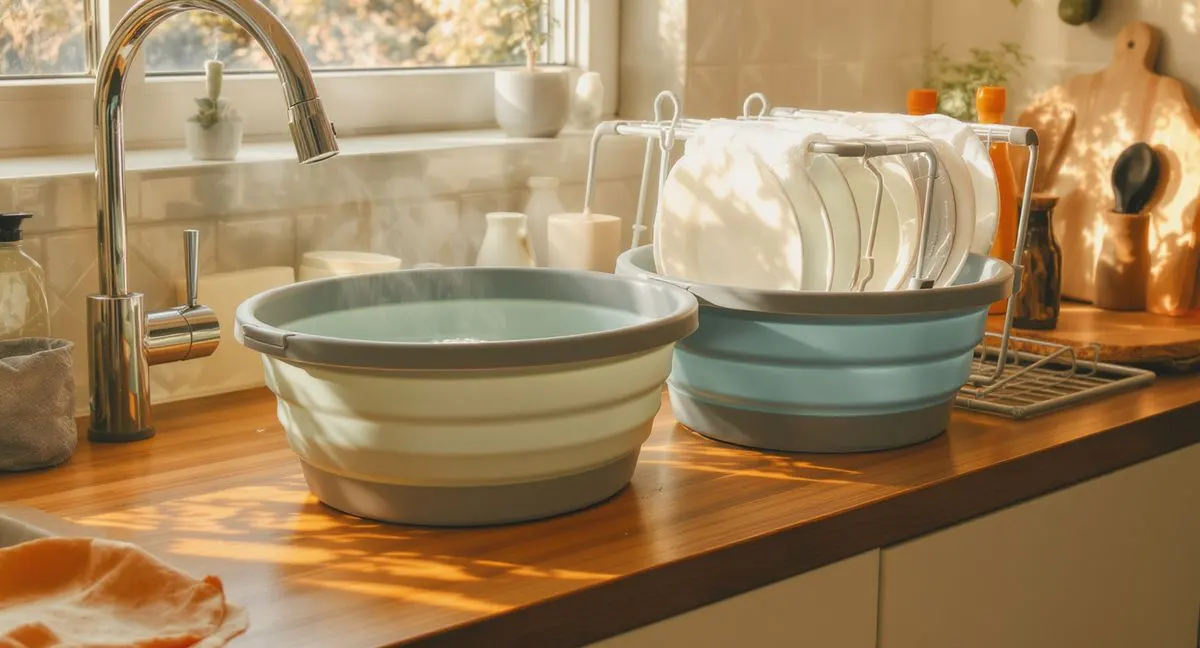
Van Kitchen Dish Washing: The System That Actually Works
How to clean dishes in a van without wasting water, smelling up the cabin, or driving yourself crazy. A real system, not a theory.
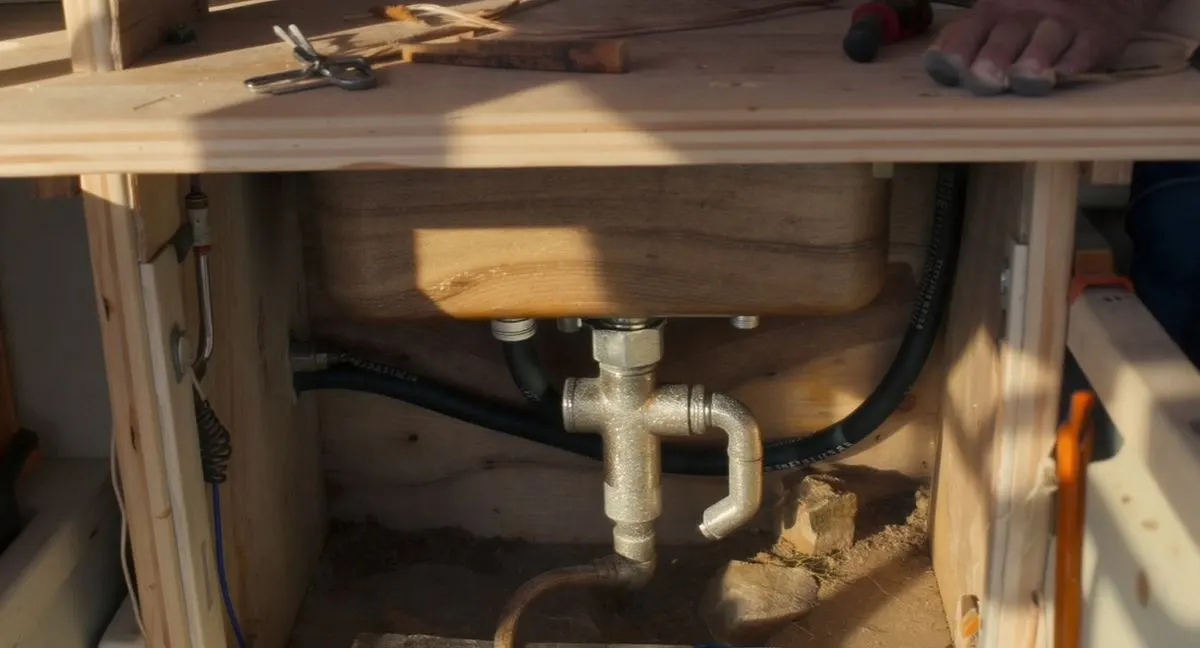
No-Plumbing Campervan Sink: Components and Compatibility
A jug-in, jug-out van sink with no fixed plumbing: who it suits, keeping fresh and grey water apart, and how to match jug openings, 1/2-inch pump barbs, hose and clamps before you buy.