LifeStraw Home 7-Cup Gravity-Fed Water Filter Pitcher
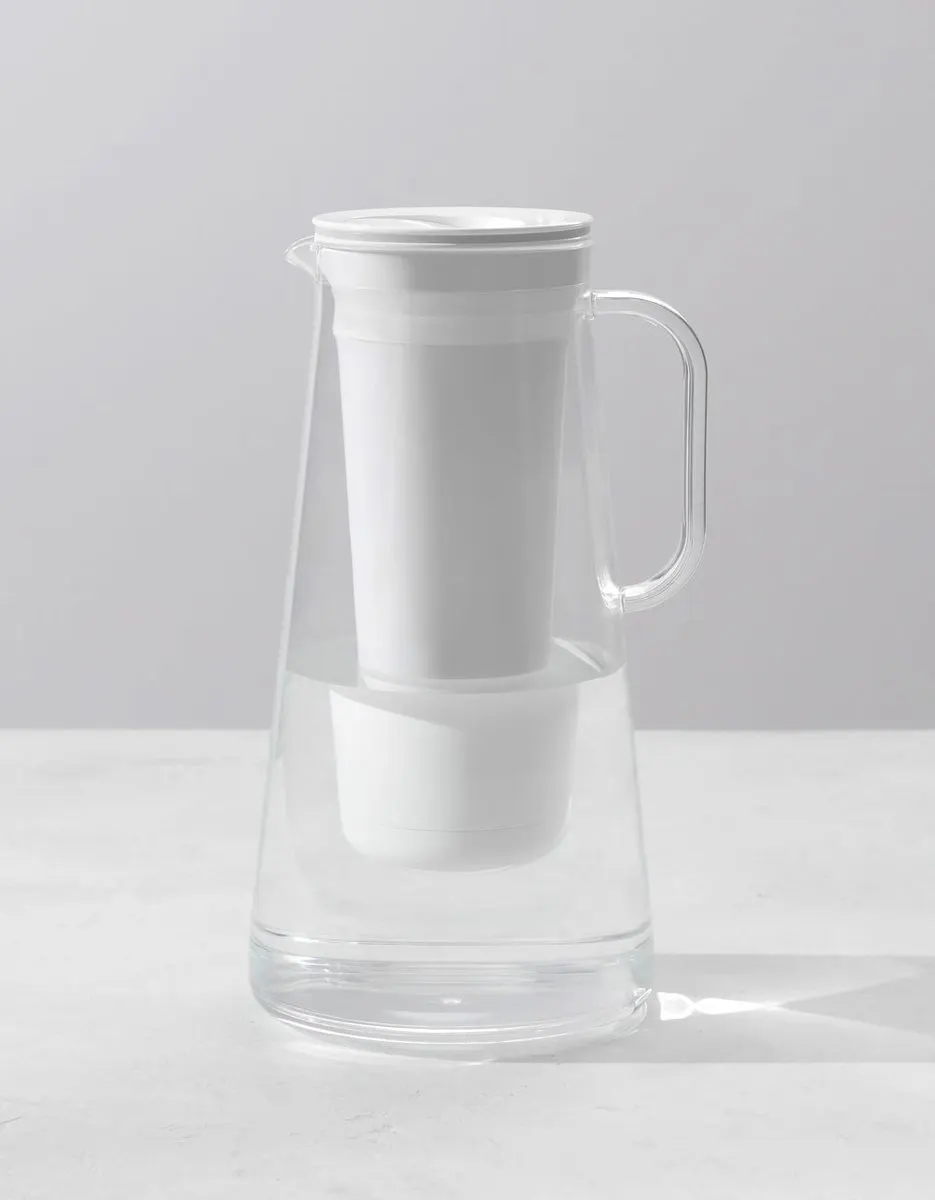
- Model
- LSH7PLPB41, 7-cup BPA-free plastic (Amazon listing)
- Capacity
- 7 cups (1.65 L)
- Dimensions
- 11.25 H x 9.44 W x 5.8 D in (Amazon listing)
- Weight
- About 2.3 lb empty (Amazon listing)
- Power Source
- None (gravity)
- Filter Life
- 264 gallons / about 1 year (membrane), 40 gallons / about 2 months (carbon + ion exchange)
- Does Not Remove
- Viruses, fluoride, nitrates, nitrites, phosphates (LifeStraw)
Overview — Who is this for?
What the Amazon link sells: the LifeStraw Home 7-Cup water filter pitcher in BPA-free plastic (ASIN B0BV13ZXV2), which Amazon titles "LifeStraw Home – Water Filter Pitcher, 7-Cup, Pebble", model LSH7PLPB41. LifeStraw also sells a 7-cup glass version of the Home pitcher and a separate "Home Essential" plastic line in 7-cup and 10-cup sizes. This review covers the 7-cup plastic Home pitcher. If you buy replacement filters, match them to the pitcher you own.
What it is, in one line: a two-stage countertop gravity pitcher, with a 0.2-micron membrane microfilter for bacteria, parasites and microplastics plus an activated carbon and ion-exchange stage for lead, mercury, PFAS, chlorine and other chemicals. LifeStraw positions it for tap water and does not claim virus removal.
Choose this if:
- you want one counter filter for drinking and cooking water for one or two people;
- you fill from campground taps, older plumbing or jugs and care about lead or chlorine taste;
- you are happy to replace the carbon stage on schedule.
Skip this if:
- you need virus protection, or you plan to treat creek, lake or other surface water as your main source;
- you need more than a litre and a half at a time, or water on demand;
- you won't keep up with carbon-filter replacements.
This review is for van lifers, off-gridders and anyone who wants broad filtration of tap or hookup water without plumbing, pumps or electricity. You get a 7-cup (about 1.65 L) pitcher and a two-stage filter that works by gravity alone. It is not a whole-van system and it is not a trail filter. It is a pitcher, and judged as a pitcher, it covers an unusually wide set of contaminants.
Why it replaced Berkey on this site
Berkey was the default gravity water filter for van setups for years: big, heavy, high volume. Starting in late 2022, the EPA issued stop-sale orders across the Berkey supply chain, taking the position that the silver-containing Black Berkey elements are unregistered pesticides, and Berkey's maker has contested that in court. The practical consequence for buyers is that genuine Black Berkey elements have been hard to find, and we can't point readers to a reliable Amazon source for them. That takes Berkey off our current list. It is not a judgement on whether the stainless chambers work.
The LifeStraw Home is much smaller than a Berkey and it is plastic rather than stainless steel. In return, LifeStraw publishes the standards behind its claims, the pitcher is straightforward to buy, and it fits a van shelf.
Filtration Performance
The LifeStraw Home uses a two-stage filter, and the stages do different jobs and wear out on different schedules.
Stage one: membrane microfilter. This 0.2-micron hollow-fibre membrane physically strains out biological contaminants. LifeStraw states it removes 99.999999% of bacteria, 99.999% of parasites and 99.999% of microplastics.
Stage two: activated carbon plus ion exchange. This is the chemistry stage. LifeStraw says it reduces lead, mercury, chromium III, cadmium, copper and other heavy metals, chlorine and odours, PFAS, pesticides and herbicides, while retaining minerals such as magnesium and potassium. This is the stage that handles chlorine taste.
Standards LifeStraw cites. LifeStraw's Home product pages list NSF/ANSI 42 (chlorine and particulates), NSF/ANSI 53 (heavy metals, PFOA and PFOS, VOCs), NSF/ANSI 401 (microplastics and emerging contaminants), NSF P473 (PFAS, which LifeStraw describes as more than 99% reduction) and the US EPA and NSF P231 protocol for bacteria and parasites. LifeStraw's 7-cup glass pitcher page describes the filters as WQA/NSF certified to those standards. Check the packaging on the pitcher you receive for the exact contaminant list.
What it does not do. It is not a purifier: LifeStraw makes no virus claim for the Home pitcher, and the CDC notes that portable filters do not remove viruses. LifeStraw states that the pitcher does not remove fluoride, nitrates, nitrites or phosphates. It does not desalinate or remove dissolved salts. That makes it a good fit for campground, municipal and hookup water whose taste, plumbing or lead you don't trust. It is not the right sole treatment for untreated surface water where sewage contamination is possible. For that, boil (the CDC advises a 1-minute rolling boil, or 3 minutes above 6,500 feet) or use a virus-rated purifier such as the Grayl GeoPress.
Capacity, Speed & Van Fit
Seven cups is not a lot. 1.65 litres is roughly two large water bottles. For a solo van lifer who makes coffee in the morning and refills a bottle at lunch, one full pitcher covers about half a day. For a couple, you are refilling it often. For a family of four, this pitcher is the wrong tool.
The second constraint is speed. LifeStraw's 7-cup glass pitcher page, which uses the same two filter stages, says a full reservoir typically takes about 20 to 25 minutes to filter once the filter is primed and broken in. The plastic pitcher's page doesn't state a time; expect something similar, and slower as the membrane loads up. You can't fill the top and pour a glass thirty seconds later.
Size. The Amazon listing gives the plastic 7-cup pitcher as about 11.25 inches tall, 9.44 inches wide (including the handle) and 5.8 inches deep, and about 2.3 lb empty. That height is the number to check against your van: measure the gap between your counter and any upper cabinet or shelf, and allow a little extra to lift the lid and pour into the top reservoir. Full, it weighs roughly 2 kg more, which matters on a shelf with a lip-less edge.
Securing it. A pitcher is a loose object in a moving vehicle. Store it empty or nearly empty while driving, in a fridge door shelf, a sink, or a cabinet with a raised lip or a strap. A full reservoir tipping over mid-filter spills unfiltered water into the filtered side, which means draining and starting again.
A workable van routine is to treat the pitcher as a background process. Top up the reservoir when you pass by while parked, keep some filtered water in the bottom, and empty the top before you drive. With that rhythm, the 7-cup capacity is manageable for one or two people. For pairing the pitcher with tanks and jerry cans, see the van water system setup guide.
Maintenance & Filter Life
LifeStraw rates the membrane microfilter at 264 gallons (about 1,000 litres), or about one year, and the activated carbon plus ion-exchange filter at 40 gallons (about 150 litres), or about two months.
What that means in a van depends on how much you push through it. These worked estimates assume drinking, coffee and cooking water only (not dishwashing), at about 3 litres per person per day:
- Solo, about 3 L/day: the carbon stage reaches 150 litres in about 50 days (150 ÷ 3), so roughly every 7 weeks; the membrane reaches 1,000 litres in about 333 days, so close to LifeStraw's one-year limit anyway.
- Couple, about 6 L/day: the carbon stage lasts about 25 days, so plan on a new one most months; the membrane lasts about 5–6 months on volume alone.
Replace each stage at whichever comes first, its volume or LifeStraw's time limit. The carbon stage is where most of the ongoing cost lives, and an exhausted carbon stage gives no visible sign that it has stopped reducing metals and chemicals. A dated sticker on the pitcher, or a note in your phone, is the simplest way to keep track.
Cleaning. LifeStraw's care guidance on its 7-cup glass pitcher page is to hand wash the pitcher and filter housing with the filters removed, with regular cleaning weekly and a deeper clean every one to two months. Follow the instructions in the box for the plastic pitcher and for flushing new filters before first use.
Freezing. The membrane is a hollow-fibre filter. As a general rule for hollow-fibre media, freezing while wet can damage the fibres without visible signs. Keep the pitcher in the heated living space in winter, and don't leave it in a van parked below freezing with water in it.
LifeStraw Home vs Sawyer Squeeze vs Platypus GravityWorks vs Grayl
The Sawyer Squeeze is a 0.1-micron hollow-fibre filter you attach to a squeeze pouch, a gravity bag or a hydration hose. It is inexpensive and light, but it has no carbon stage and does not handle chemical contaminants or taste. It is the right answer for hiking off the van and for backup duty, and the wrong answer for everyday galley drinking water if you care about lead or chlorine. See the Sawyer Squeeze review and the LifeStraw Home vs Sawyer Squeeze comparison.
The Platypus GravityWorks 4L is a two-bag gravity filter that Cascade Designs rates at up to 1.75 L/min. It moves far more water than the pitcher and suits creek and spring water, but like the Sawyer it has no chemical or taste stage. See the GravityWorks review.
The Grayl GeoPress is a portable purifier bottle that Grayl rates for viruses as well as bacteria and protozoa, with a carbon stage for some chemicals. It treats 24 oz at a time and its cartridge is rated at 65 gallons, so it is a travel tool, not a counter filter. See the Grayl GeoPress review.
Of these, the LifeStraw Home is the only one built as a countertop filter for both microbes and chemicals in tap water. That is why it is our pick for a van counter. A common pairing is the pitcher for galley drinking water plus a Sawyer or GravityWorks for untreated sources, with boiling or the Grayl where viruses are a concern.
Value for Money
The pitcher itself is budget-priced. Compared with a basic carbon-only pitcher, you pay a little more and get a membrane stage for bacteria and parasites plus a broader chemical claim list.
The carbon stage is the recurring expense, and over a couple of years of steady use you will likely spend more on replacement filters than you did on the pitcher. That's normal for chemical filtration; plan for it before you buy. Compared with a plumbed multi-stage RV system such as the Clearsource Ultra, it is far cheaper and needs no installation, at the cost of volume and convenience.
Who should skip this
- You have a family of four or more; the capacity is too small.
- You need filtered water on demand in under a minute.
- Your concern is viral contamination, untreated surface water, or brackish water; it is the wrong category of filter.
- You already run a plumbed under-sink filter in your van with the same certified contaminant list; you gain little by duplicating.
- You won't replace the carbon stage when it expires. An overdue carbon filter gives a false sense of protection.
Final Verdict
The LifeStraw Home 7-Cup pitcher is our recommendation for drinking water on a van counter. The 7-cup capacity and 20-plus-minute fill are real limitations. But LifeStraw's published claims cover the contaminants most van dwellers worry about at hookups, including bacteria, parasites, microplastics, lead, PFAS and chlorine, using gravity and no power. It does not cover viruses, fluoride or nitrates.
For a solo van lifer or a traveling couple, this is the pitcher we recommend for the counter. Pair it with a sensible fresh water setup and a realistic van kitchen dishwashing system and you have the drinking-water half of a van galley covered on a budget.
FAQ
Is the LifeStraw Home Pitcher as good as a Berkey? It is much smaller per cycle. LifeStraw lists NSF/ANSI 42, 53 and 401, NSF P473 and EPA/NSF P231 for bacteria, parasites, lead, mercury, microplastics and PFAS, among others. For most van lifers, the practical difference is capacity, and the fact that the pitcher is easy to buy.
How long does the filter last? LifeStraw rates the membrane at 264 gallons (about a year) and the carbon and ion-exchange stage at 40 gallons (about two months). At about 3 litres a day for one person, expect a new carbon stage roughly every seven weeks; a couple will replace it about monthly.
How long does it take to filter a full pitcher? LifeStraw's 7-cup glass pitcher page, which uses the same filters, says about 20 to 25 minutes per full reservoir once the filter is primed and broken in. Expect it to slow as the membrane loads.
Does it remove fluoride? No. LifeStraw states the Home pitcher does not remove fluoride, nitrates, nitrites or phosphates. If fluoride is a priority, look at a system specifically certified for it, such as reverse osmosis.
Can I use it with campground spigot water or well water? For campground and municipal taps, yes; that is what it is designed for. For a private well or an unlabelled spigot, have the water tested or treat it as untreated: the pitcher does not address viruses or nitrates, so boil or use a virus-rated purifier if contamination by sewage is possible.
Does it need electricity or a pump? No. It is entirely gravity-fed, which is why it suits off-grid van life and emergency kits.
Is the plastic safe? LifeStraw and the Amazon listing describe the plastic pitcher as BPA-free. If you prefer to avoid plastic, LifeStraw also sells a 7-cup glass Home pitcher in borosilicate glass; it is a different listing from the one this page links to.
Sources and verification
- LifeStraw Home product page, https://lifestraw.com/products/lifestraw-home: on the day we checked it displayed the Home Essential 10-cup plastic variant; used for membrane pore size and removal figures, carbon and ion-exchange contaminant list, filter lives, the NSF/ANSI and P231/P473 standards listed, and the statement that it does not remove fluoride, nitrates, nitrites or phosphates; no virus claim (checked 2026-10-12)
- LifeStraw Home 7-Cup Glass pitcher page, https://lifestraw.com/products/lifestraw-home-glass-pitcher: 7-cup (1.65 L) capacity, 20–25 minute filtration time, WQA/NSF certification wording, care instructions, existence of the glass version (checked 2026-10-12)
- CDC, How to Make Water Safe in an Emergency, https://www.cdc.gov/water-emergency/about/index.html (now served at https://www.cdc.gov/water-emergency/about/index.html): boiling times and the statement that portable filters do not remove viruses (checked 2026-10-12)
- Amazon listing ASIN B0BV13ZXV2: exact title, model LSH7PLPB41, 7-cup size, BPA-free plastic, listed dimensions and weight, filter-life feature text (checked 2026-10-12)
Compare with similar products
See how this stacks up against the other water & sink gear we've reviewed.
Head-to-head comparisons
Related Reviews
For: Pocket backup filter
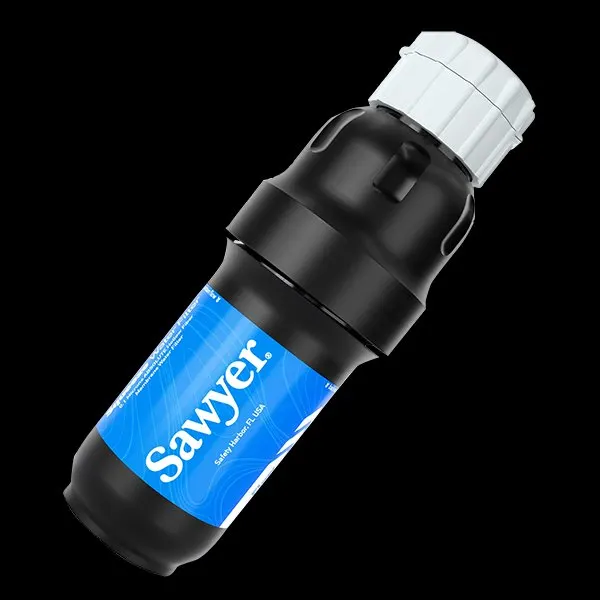
Sawyer Squeeze Water Filter
A pocket-size backup filter. Sawyer rates its 0.1-micron absolute hollow fibre to remove 99.99999% of bacteria and 99.9999% of protozoa, but it does not claim virus removal and has no carbon stage for chemicals or taste. Sawyer gives no end-of-life volume on its current page; backflush it and never let it freeze once wet.
For: Group gravity filtering at camp
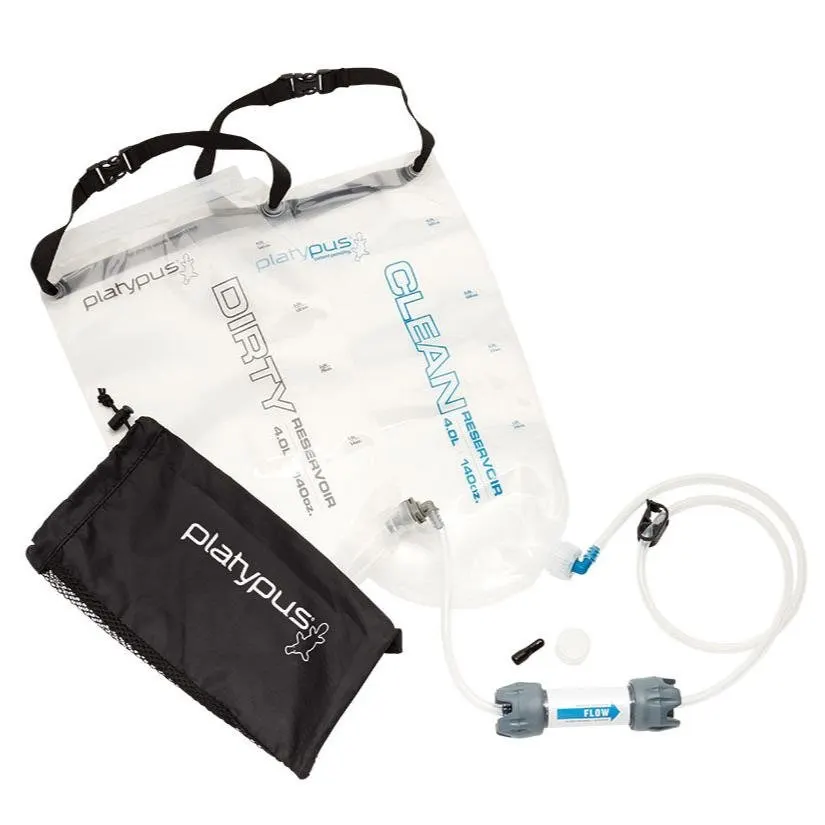
Platypus GravityWorks 4L Water Filter System
A 4-litre gravity filter with a 0.2-micron hollow-fibre element that Platypus says meets EPA/NSF guidelines for bacteria and protozoa, and removes particulates and microplastics. Fast and purely mechanical, with no pumping, but it does not remove viruses or chemicals, so it suits fresh-water sources and campground taps rather than water that may carry viruses.
For: Fast-flow squeeze bottle filter
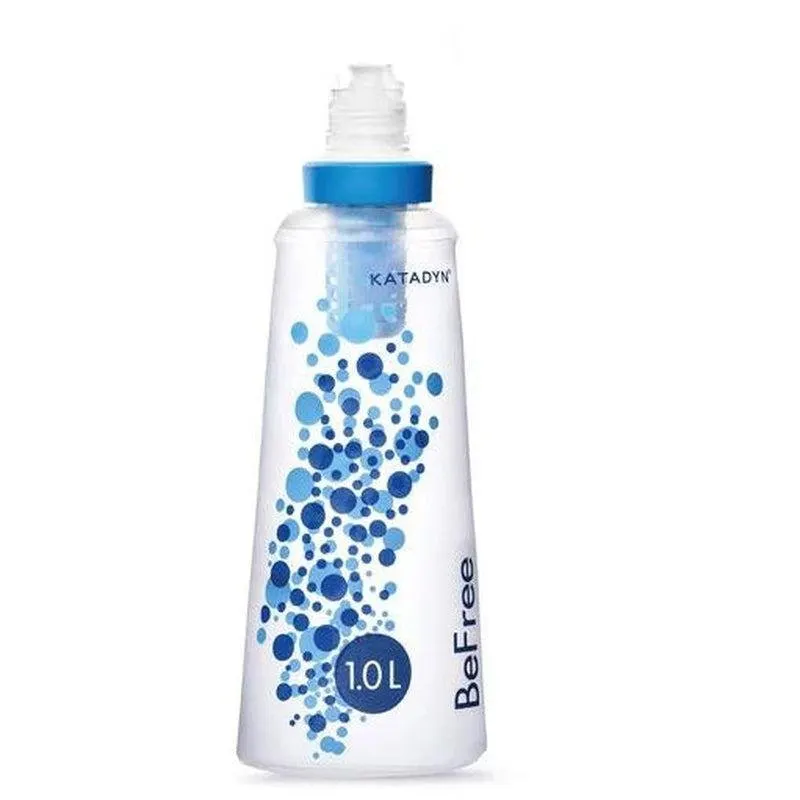
Katadyn BeFree 1.0L Collapsible Water Filter
A 1-litre soft flask with Katadyn's 0.1-micron hollow-fibre filter, which Katadyn says removes bacteria, protozoa and microplastics at up to 2 L/min. It does not remove viruses. The Amazon listing is titled "BeFree AC 2-Stage"; the activated-carbon insert in that version reduces chlorine, taste and odour but does not make it a purifier. A light backup for clear fresh-water sources.