Stanley Classic Stay Hot French Press
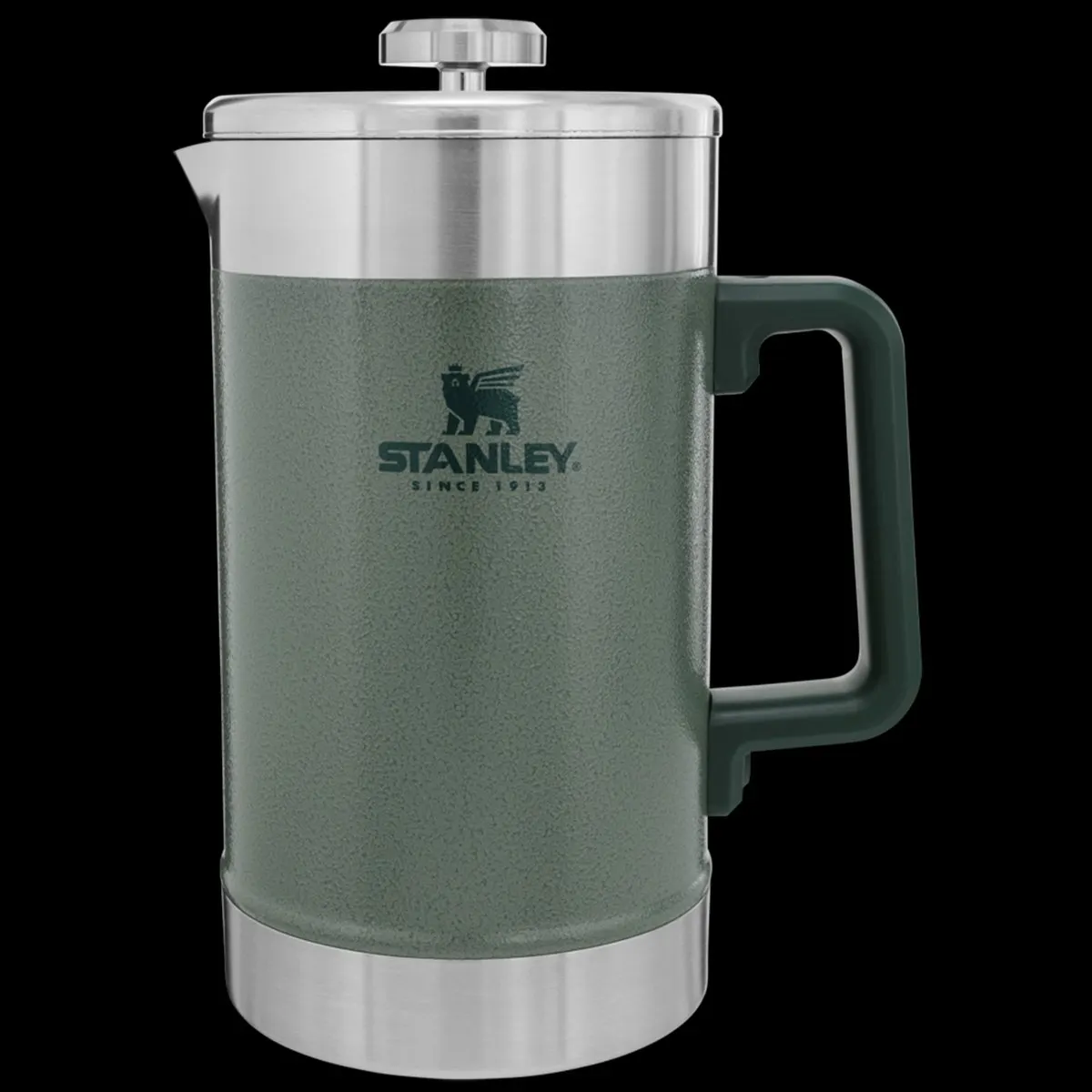
- Model
- Stay-Hot French Press 48 oz, Black 2.0 (Amazon)
- Capacity
- 48 oz (1.4 L)
- Dimensions
- 7.13 x 4.88 x 9.53 in (Stanley)
- Weight
- 2.5 lb (Stanley); Amazon lists 1.13 lb
- Materials
- 18/8 stainless steel, BPA-free (Stanley)
- Insulation
- Double-wall vacuum; hot 4 h (Stanley)
- Warranty
- Lifetime (Stanley, Amazon)
Overview
The Stanley Classic Stay Hot French Press is a 48 oz French press built like a thermos: double-wall vacuum-insulated 18/8 stainless steel, with no glass anywhere. Stanley rates it to keep coffee hot for 4 hours. In a van that changes how a French press gets used. You can brew a full pot, drink one cup, drive, and pour a second cup later from the same vessel. It's also the only brewer on this site that makes a full pot for two to four people in one go.
What the Amazon link sells: the STANLEY Stay-Hot French Press, 48 oz, in Black 2.0 (ASIN B0D856ZPMB, Stanley part 10-02888-084). Stanley sells the same press in several other colours.
Choose this if:
- You brew for two or more people, or want a second hot cup hours after the first.
- Your coffee gear rides loose in a bin or crate, and a glass carafe would be a liability.
- You like the full body of immersion coffee and don't mind a little silt.
Skip this if:
- You brew one cup at a time. An AeroPress is lighter, smaller and easier to clean.
- Storage space is tight. This is a roughly 9.5-inch-tall vessel, and Stanley lists it at 2.5 lb.
- You want a sediment-free, paper-filtered cup.
Published specs
| Spec | Figure | Source |
|---|---|---|
| Capacity | 48 oz (1.4 L) | Stanley, Amazon |
| Size | 7.13 x 4.88 x 9.53 in | Stanley |
| Weight | 2.5 lb (Stanley); 1.13 lb (Amazon) | Both, conflicting |
| Material | 18/8 stainless, BPA-free | Stanley, Amazon |
| Hot / cold | 4 h hot; cold figures differ | Stanley, Amazon |
Two of the published figures conflict. Stanley's product page gives a weight of 2.5 lb, while the Amazon listing data says 1.13 lb. A 48 oz double-wall steel vessel with a steel plunger is more likely near Stanley's figure, so plan storage around 2.5 lb. For cold drinks, Stanley's page says 24 hours with ice, and the Amazon listing says up to 9 hours. Both agree on 4 hours hot. The width figure includes the handle.
Stanley describes the press as having an integrated steel coffee press, a stainless steel mesh filter, an ergonomic pour handle and an "easy clean filter, dishwasher safe". The Amazon listing says every piece is dishwasher safe and names a lifetime warranty. Stanley's own cleaning guide says it offers "a lifetime warranty on every product we sell". Check Stanley's current terms for what counts as a defect rather than wear or damage.
Why vacuum insulation matters in a van
On a glass French press, heat starts leaving the moment you plunge, and the pot cools within the first half hour or so. That's fine at a kitchen counter. In a van, mornings are rarely that tidy. You brew, then deal with the dog, the windows or the bed, and then you want a second cup at a pullout an hour later.
Stanley's 4-hour hot rating means a full pot started with just-off-the-boil water should still be hot well into the morning, if the lid stays on. Several things shorten that window: brewing a partial pot, opening the lid often, starting with water well below boiling, and leaving the press in a cold van. Stanley doesn't publish the test conditions behind its rating, so treat it as a best case.
One caveat comes with the thermos-like design. If you leave the grounds in after plunging, they stay in contact with hot coffee under the mesh and keep extracting. Coffee left in for an hour or more turns more bitter. If you plan to drink slowly, pour the coffee into a second insulated vessel, or accept a stronger second cup.
Build and the no-glass factor
There's no glass in the product, so nothing can shatter on a pothole and no carafe can crack when the van swings from cold nights to warm afternoons. Steel also has no thermal-shock problem. You can pour boiling water into a cold press without worrying about cracking it.
Steel isn't damage-proof, though. A hard knock can dent the outer wall. A dent alone is cosmetic, but if one ever breached the vacuum, insulation would drop. The mesh plunger is the main wear part: bent edges let more grounds through. Store the press upright in a bin or deep drawer, where it can't roll into anything harder than itself.
At 7.13 x 4.88 x 9.53 inches, it needs a deep drawer or a spot in a gear tote. It's the largest coffee item on this site by a wide margin.
Brewing
A French press is a full-immersion method. The grounds steep in the water, and a mesh filter separates them at the end. The cup is heavier and more textured than paper-filtered coffee, with more oils and some fine sediment. The Amazon listing recommends a medium-coarse grind, boiling water, about 5 minutes of steeping and even pressure when you plunge.
A typical starting ratio is about 1:15 coffee to water. For a full 48 oz (about 1.4 L) pot, that's roughly 90 g of coffee. For half a pot, use about 45 g with 700 ml of water. If plunging is hard, the grind is too fine.
Mesh-filtered coffee always leaves some silt at the bottom of the mug. That's a limitation of the method, not of the Stanley.
Cleanup and water use
Cleanup is where a French press costs the most in a van. Here's a water-saving routine:
- Scoop or shake most of the wet grounds into a compost or trash bag.
- Wipe the remainder out with a paper towel.
- Swish a small amount of water in the vessel, about 250 ml, and pour it into your grey container.
- Wipe the mesh.
That's an estimate for careful cleanup, compared with the litre or more it can take to rinse a press under a running tap. The AeroPress, by contrast, ejects its grounds as a dry puck and needs only a rinse.
Stanley's cleaning guide advises against bleach or chlorine, which can degrade sealing parts and hurt temperature retention. It recommends mild dish soap and non-abrasive sponges. For stains or odour, it describes shaking uncooked rice and white vinegar inside a vessel, then rinsing thoroughly.
French press vs AeroPress vs pour-over vs travel press
- AeroPress Original. One mug at a time, a clean paper-filtered cup, about 7.75 oz and very little cleanup water. It's the better solo brewer. It can't make a pot to share.
- Hario V60 02 ceramic. The clearest cup of the group if you have a gooseneck kettle and a scale, but it brews one to four cups and the porcelain can break.
- ESPRO P0 Ultralight travel press. A 16 oz insulated mug-press for one person that brews up to 12 oz with its filter (see that review for ESPRO's specs). It suits a solo traveller who wants French press coffee and to drink from the same vessel.
- Stanley 48 oz. The only option here that makes a full pot for several people and keeps it hot for hours without breaking.
For the full picture across brew methods, grinders and kettles, see the best coffee setup for van life guide.
Fitting it into a van kitchen
- Grinder. A full pot needs about 90 g of coffee. The 1Zpresso Q Air holds 15 to 20 g per load, so filling this press means four to six grinds. A larger-capacity grinder, or buying coarse pre-ground coffee, suits a French press better. Pre-ground is more forgiving here than in any other method on this site.
- Hot water. You need about 1.4 L of near-boiling water for a full pot. On a stove, a 1.0 L kettle needs two fills. If your stove is a butane or canister model, follow its manual on where it can be used. Many, such as the Jetboil Flash, are labelled for outdoor use only.
- Electric heating. If you heat water electrically, 1.4 L from cool tap water takes an estimated 175 to 185 Wh from the battery, or about 14 Ah at 12.8 V. That assumes water starting at about 15°C, around 85% heating efficiency and a 90%-efficient inverter. That's a real chunk of a small battery bank. See the power calculator.
Value
The Stanley costs more than a basic glass French press and less than premium double-filter travel presses. You can check the current price with the "Check price on Amazon" button. It replaces two items, a press and a thermos, and its steel construction removes the most common way French presses fail.
Limitations
- It's big and heavy for a van: 9.5 inches tall, and Stanley lists 2.5 lb.
- Mesh filtration leaves silt in the cup.
- Cleanup uses more water than an AeroPress or a pour-over.
- Grounds left in the pot keep extracting, so held coffee turns stronger and more bitter.
- The mesh plunger is a wear part.
Final verdict
The Stanley Classic Stay Hot French Press 48 oz is the site's pick for brewing a full pot in a van. It's vacuum-insulated, made of stainless steel with no glass, rated by Stanley to keep coffee hot for 4 hours, and covered by Stanley's lifetime warranty. As a method, French press gives you body rather than clarity, and it costs more cleanup water. For two or more coffee drinkers, or anyone who wants hot coffee later in the morning without brewing again, it fits better than any single-cup brewer here.
FAQ
How long does the Stanley French press actually keep coffee hot? Stanley rates it for 4 hours hot. Stanley doesn't publish its test conditions. Expect less with a partial pot, frequent lid opening, cooler starting water or a cold van.
Can I leave the grounds in the pot after plunging? You can, but the coffee keeps extracting under the mesh and gets more bitter over time. If you won't drink it within about 30 minutes, pour it into a separate insulated bottle.
Is it safe to put in a dishwasher? Yes. Stanley lists the filter as dishwasher safe, and the Amazon listing says every piece is. Stanley advises against bleach or chlorine cleaners.
Does it fit standard cupholders? No. It's a 4.88 x 7.13-inch press, not a travel mug. You pour from it into a cup.
What grind size should I use? Medium-coarse to coarse, as the Amazon listing recommends. If the grind is too fine, the plunger is hard to press and more grounds get through the mesh.
Sources and verification
- https://www.stanley1913.com/products/classic-stay-hot-french-press-48-oz: 48 oz capacity, 7.13 x 4.88 x 9.53 in, 2.5 lb, 18/8 stainless BPA-free, double-wall vacuum insulation, 4 h hot and 24 h cold with ice, stainless mesh filter, dishwasher-safe filter, colour options (checked 2026-10-12)
- https://www.stanley1913.com/blogs/how-to-guides/how-to-properly-clean-your-stanley-products: no bleach or chlorine, mild soap and non-abrasive cleaning, rice and vinegar method, lifetime warranty statement (checked 2026-10-12)
- Amazon listing ASIN B0D856ZPMB: Black 2.0, 48 oz, part 10-02888-084, 1.13 lb listing weight, 4 h hot and 9 h cold, medium-coarse grind and 5-minute steep, all pieces dishwasher safe, lifetime warranty (checked 2026-10-12)
Compare with similar products
See how this stacks up against the other coffee gear we've reviewed.
Related Reviews
For: Pour-over on shore power
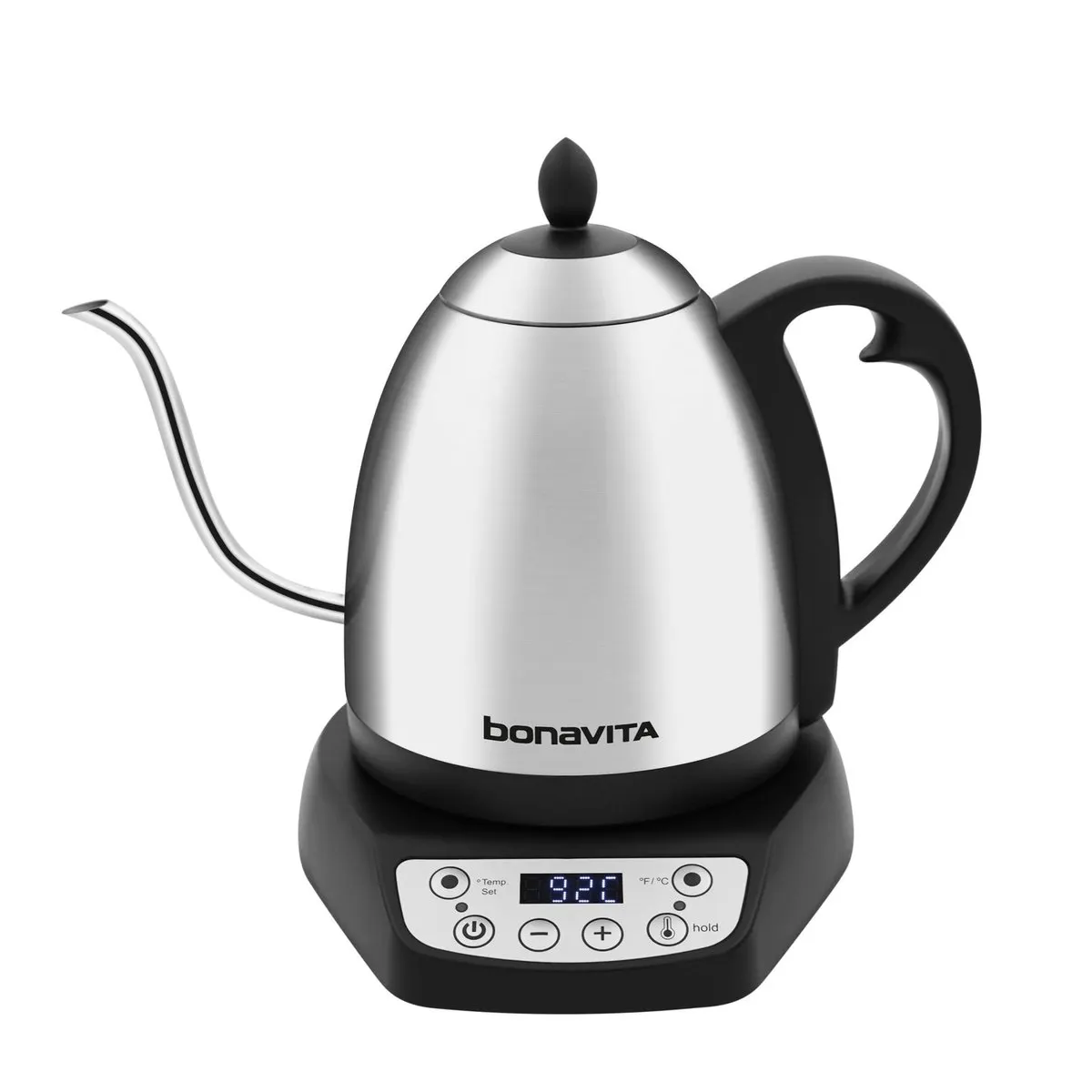
Bonavita 1.0L Electric Gooseneck Kettle
A pour-over kettle for vans with shore power or a large inverter. Gooseneck spout for a controlled pour, 1 L capacity, 1-degree temperature control and a 60-minute hold, but it needs 1200 W at 120 V AC and Bonavita's manual says household use only, not outdoors.
For: Backup single-cup pour-over
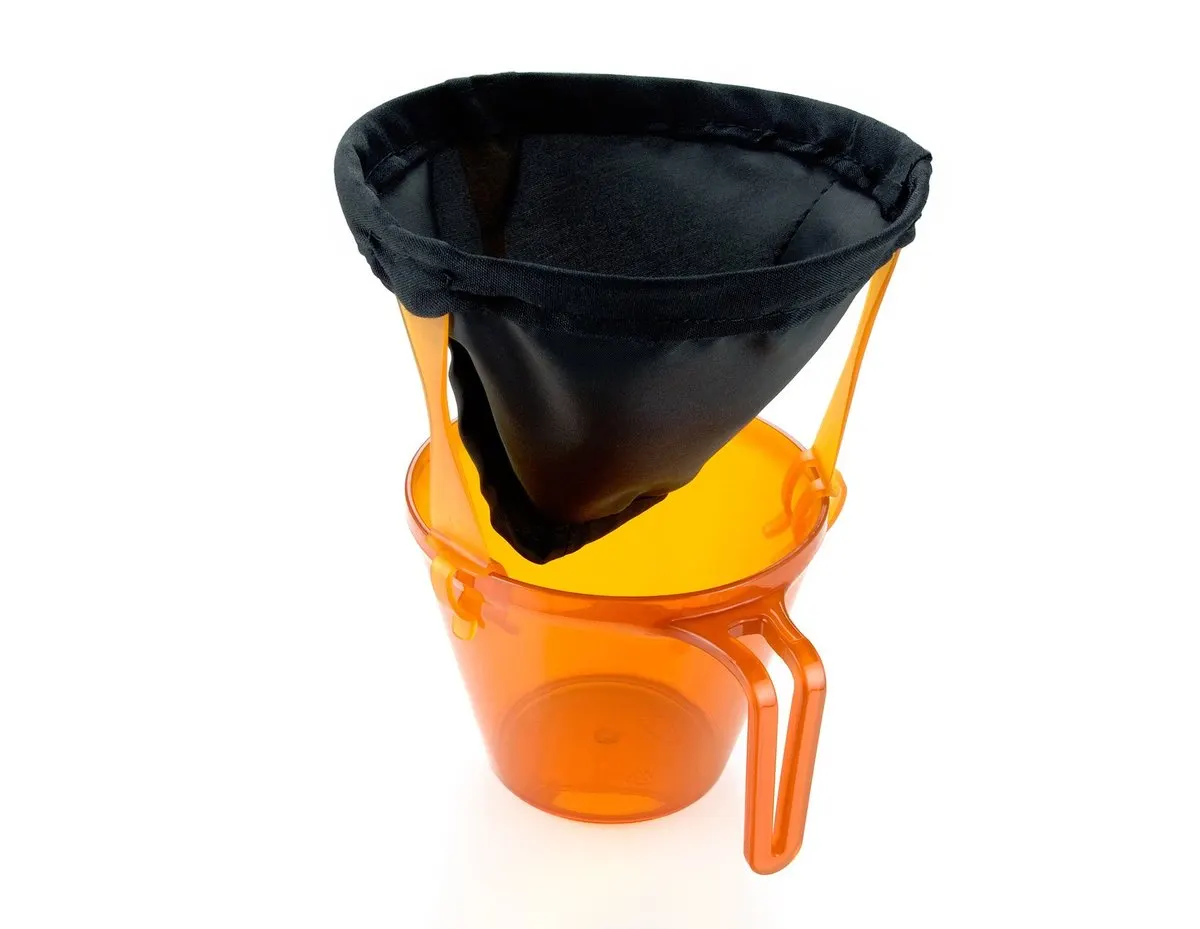
GSI Outdoors Ultralight Java Drip Pour-Over Filter
An inexpensive backup pour-over that fits in a glove box. Folds flat, weighs almost nothing, and clips onto a cup or thermos for a single-serving pour-over without paper filters. Useful when the kettle and dripper are packed away.

For: Espresso and filter, one grinder
1Zpresso K-Ultra Manual Coffee Grinder (Iron Gray, with Carrying Case)
A full-size, all-round hand grinder with an external dial of 100 clicks per rotation at 20 microns per click, a heptagonal steel conical burr and a 35-40 g magnetic catch cup. It grinds fine enough for a Picopresso or Flair and coarse enough for French press, and holds two filter doses at once. It is premium-priced, about twice the weight of the Q Air, and too wide to nest inside an AeroPress.