BioLite CampStove 2+
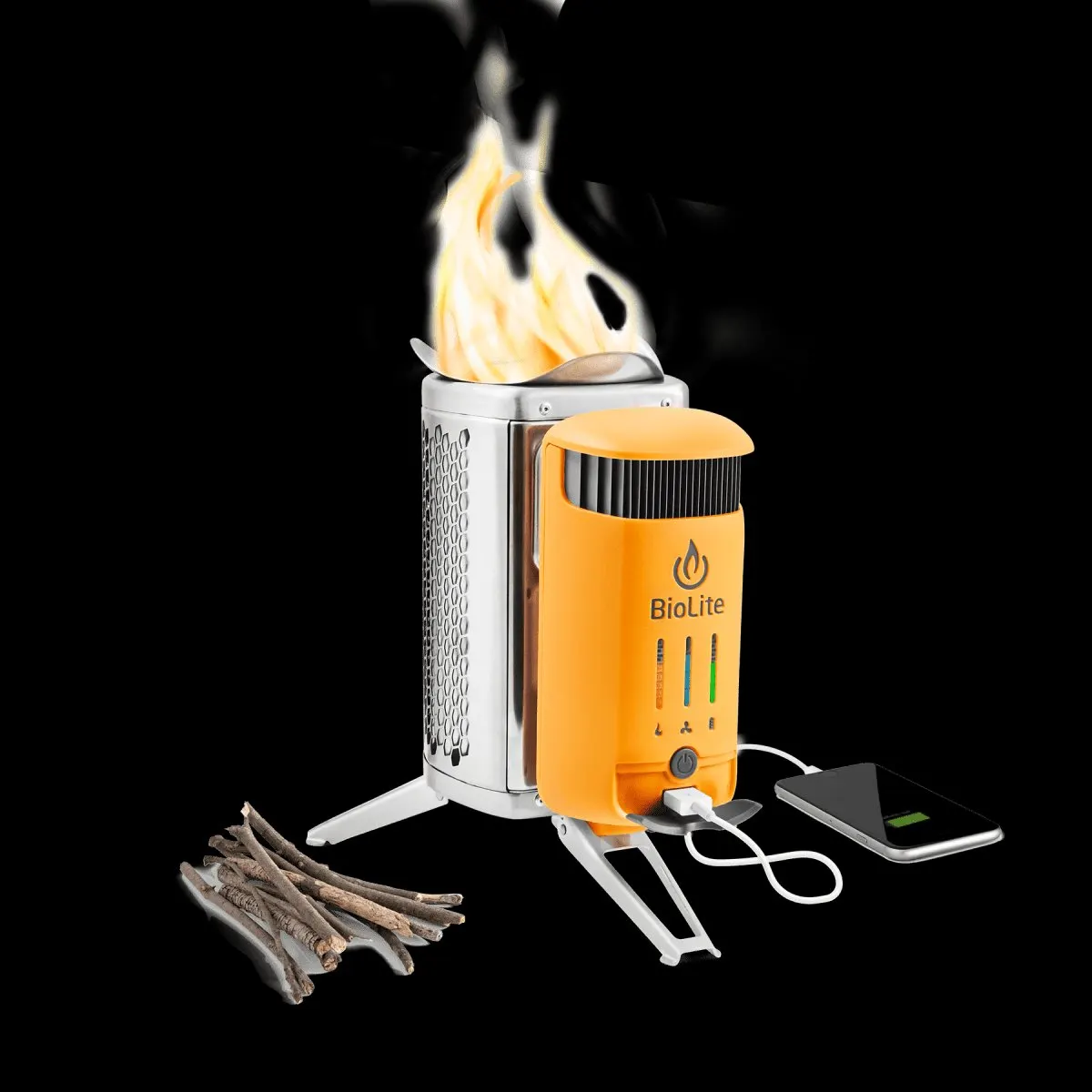
- Part Number
- CSC0200 (Stove Only)
- Boil Time
- 4.5 min / 1 L (BioLite)
- USB Output
- 3 W peak (BioLite)
- Battery
- 3,200 mAh onboard (BioLite)
- Fan Speeds
- 4 (BioLite)
- Weight
- 2.06 lb / 935 g (BioLite)
- Packed Size
- 5.0 x 7.91 in (BioLite)
- Fuel
- Biomass: sticks, twigs, pinecones, pellets (BioLite)
- Warranty
- 1 year (BioLite)
- Clearance
- 18 in sides, 48 in above (BioLite manual)
BioLite CampStove 2+ Review: Free Fuel and USB Charging From a Campfire in a Box
The BioLite CampStove 2+ pitch (burn sticks and charge your phone from the fire) sounds like a gimmick. Read against BioLite's specs and instructions, it's something narrower and more useful than that: a small, fan-assisted wood stove that cooks on found fuel and trickles a little charge into small USB devices. It is not a do-everything stove, and understanding its narrow use case before you buy is the difference between liking it and returning it.
Operating location: outdoor use only. BioLite's instructions for the CampStove 2 say: "DANGER: CARBON MONOXIDE HAZARD. This stove is for OUTDOOR USE ONLY. Never for use in tents, vehicles, indoors, or other places without fresh air. Carbon Monoxide inhalation can cause death or brain damage." The same instructions ask you to keep flammable materials at least 18 inches from the sides and 48 inches from the top of the stove, to place it on level ground away from overhanging branches, and to clear dry brush from around it. In a van context, it's a camp-side stove used on the ground or a non-combustible surface well away from the vehicle, never inside, under the awning or on the doorstep.
Choose this if:
- you camp for long stretches in forests with plenty of dry, legally gatherable wood;
- you want a small supplementary USB charge from cooking;
- you're happy to tend a small fire while you cook.
Skip this if:
- you need a stove that works in rain, wet seasons or treeless country;
- you camp where fire restrictions are common (wood stoves are often banned when gas stoves are still allowed);
- you need to cook inside the van, which BioLite prohibits.
What the Amazon link sells, and the specs
The button on this page links to the BioLite CampStove 2+, Stove Only (BioLite part number CSC0200). "Stove Only" means no KettlePot or grill accessory; the box contains the stove, a 100-lumen FlexLight, a stuff sack, a firestarter and a USB cord, according to both BioLite and the listing.
| Spec | CampStove 2+ (BioLite) |
|---|---|
| Weight | 2.06 lb (935 g) |
| Packed size | 5.0 x 7.91 in |
| Boil time | 4.5 min per 1 L |
| Electrical output | 3 W peak |
| Battery | 3,200 mAh |
| Fan speeds | Four |
| Warranty | 1 year |
BioLite's product page and the Amazon listing agree on all of these. The listing compares the packed size to a 32-ounce wide-mouth water bottle. BioLite doesn't publish a BTU rating on the pages we checked. (Earlier versions of this review quoted a 3,000 W maximum and about 10,200 BTU per hour, which we couldn't find in a current BioLite source, and an older battery figure of 2,600 mAh; the current figure is 3,200 mAh.)
Fuel: free, with conditions
BioLite lists the fuel as biomass: sticks, twigs, pinecones and wood pellets. Its instructions say dry, dense fuels burn hottest and longest (they name oak, maple, fir and birch), and to avoid wet or damp wood or leaves, which "will smoke and burn poorly". They also say: "NEVER use liquid fuels or charcoal", and never to add accelerants such as liquids, gels or plastics.
In a van context, free fuel is a real advantage where it applies. Canisters cost money, need resupply trips and take up storage. At a dispersed forest site where gathering dead and down wood is allowed, the fuel for dinner may be lying nearby. Check the land manager's rules first: some areas prohibit wood gathering entirely, and many restrict it near campsites.
The conditions are just as real:
- The fuel must be dry. After rain or heavy dew, ground litter is damp, and BioLite's own instructions say damp fuel smokes and burns poorly. Carrying a bag of dry pellets or kindling helps, but it erodes the "free fuel" point.
- You gather before you cook. Plan time to collect a pile of thin, dry sticks before you light it.
- You feed it while you cook. A small wood chamber burns through fuel quickly, so you add sticks every few minutes. There is no "set it and walk away", and an open wood fire shouldn't be left unattended anyway.
How the fan works
The fan is what separates the BioLite from burning sticks in a tin can. Powered by the onboard battery, it blows air into the combustion chamber, which helps the fuel burn more completely and with less smoke than an open fire of the same size. BioLite's listing describes the result as "smokeless flames"; in practice, expect less smoke rather than none, especially at startup and with damp fuel.
The fan has four speeds, which BioLite and the listing both describe as adjusting the flame. That's more control than a passive wood stove gives you, but less than a gas valve: output still rises and falls as fresh fuel catches and burns down.
For van life, less smoke matters because you don't want bedding and clothes smelling of campfire. Set up downwind of the van and well away from it. Less smoke is not no smoke, and the exhaust still contains carbon monoxide.
USB charging: 3 W from fire
The thermoelectric generator converts heat from the fire into electricity. BioLite rates it at 3 W at peak output, used for real-time charging and to top up the 3,200 mAh internal battery, which also runs the fan.
What 3 W means (our arithmetic, not a BioLite figure): a typical smartphone battery holds roughly 12 to 20 Wh. Even at a steady 3 W with some charging loss, a full phone charge would take five hours or more of hot fire, which is far longer than a meal. Realistic expectations:
- a partial phone top-up from a long dinner fire;
- more meaningful charges for small devices like headlamps and the included FlexLight;
- no laptops, and nothing high-draw.
For a van, that's a modest supplement, not a power system. During a cloudy week, it adds a little to a phone or headlamp; it won't replace solar, alternator charging or a power station. BioLite's listing says the battery stores power for use "even when fire isn't burning", so the stove can also act as a small power bank. BioLite's instructions say to charge the internal battery over USB before first use, and that the battery is not user-serviceable.
How it cooks
BioLite's figure is a 4.5-minute boil for one litre, which is a minute slower than the MSR PocketRocket 2's rated 3.5 minutes. That puts it in practical territory for coffee, tea, boiling pasta water, heating canned food and cooking simple one-pot meals.
The limitation is steadiness. Because heat rises and falls as fuel burns, wood stoves in general are harder to hold at a gentle simmer than a gas burner. Expect boiling and basic heating to be easy, and rice, sauces and anything that scorches to need close attention and stirring.
On cookware, use something small and stable. The pot stand is scalloped and the legs fold out, per the listing; a 1-litre pot or a small skillet suits a stove this size, while a large, full pot or heavy cast iron puts a lot of weight on a small stand. BioLite's instructions say to take extreme care when moving the pot or adding fuel, because the pot and contents are hot, and never to touch the metal parts of the stove while it's in use. Handle it only by the power module.
BioLite CampStove 2+ vs MSR PocketRocket 2
The MSR PocketRocket 2 is a canister stove. MSR gives it 2.6 ounces, a 3.5-minute litre and about 60 minutes of burn per 8 oz canister. It costs considerably less, it's tiny, and it depends entirely on purchased fuel.
The BioLite weighs 2.06 pounds (about 12 times as much), costs considerably more, boils a litre a minute slower by the makers' figures, and runs on fuel you find. It also charges small devices, which the MSR can't.
Both are outdoor-only by their manuals, and they behave differently under fire restrictions (below). For most van travellers who just need hot water quickly, the PocketRocket is the practical choice. The BioLite earns its place for slow travellers who spend weeks in forests where wood gathering is allowed. The full head-to-head is in the BioLite vs PocketRocket comparison.
BioLite CampStove 2+ vs a campfire
The BioLite uses far less wood than a fire ring for the same cooking, puts the heat in one place under the pot, and produces less smoke thanks to the fan. A campfire cooks larger quantities, needs no battery, and handles damp wood better once it's big and hot. They aren't really competitors: one is for cooking a meal, the other for sitting around afterwards. Both fall under the same fire rules.
Fire restrictions work against it
Don't assume a wood stove counts as a "camp stove" during fire restrictions. On many US public lands, restriction orders allow only stoves and devices fuelled by gas or liquid fuel that can be turned off with a valve, and prohibit wood- and charcoal-burning devices along with campfires. The BioLite burns wood and can't be shut off with a valve, so it is commonly banned exactly when the fire danger is high, while a propane or canister stove may still be allowed. Read the current restriction order for where you're camping, and carry a gas stove as well if you travel in the dry season.
Storage and care in a van
At 5 x 7.91 inches packed and just over 2 pounds, it fits a kitchen bin or a cabinet corner. BioLite's instructions say to store it somewhere cool, dry and well ventilated and to avoid excessive heat. They also warn that the rechargeable battery in the power module may present a risk of fire, explosion, leakage or chemical burn if mishandled. Don't leave it on the dashboard in summer sun or next to a heater, and keep the power module dry. One advantage over gas: there's no pressurised canister sitting in a hot van.
Ash and soot are the maintenance burden. Empty the chamber once it's completely cold, and pack the stove in its stuff sack so soot doesn't transfer to other gear.
When you finish cooking, BioLite's instructions say to let the fire burn down to ash or, for live embers, to pour them into a dug hole, extinguish them with water and cover them with dirt. Never pour water into the stove itself, which would also soak the electronics.
Limitations
- Dry fuel only. In wet seasons or damp climates it becomes unreliable as a primary stove.
- Active tending. You are the thermostat; distraction means the fire dies.
- Outdoor only. BioLite's instructions rule out tents, vehicles and indoor use. On a rainy day you need another plan: induction inside if your electrical system supports it, or a gas stove used outside under a freestanding shelter.
- Fire restrictions. Often banned when gas stoves aren't.
- Learning curve. Stick size, how to stack fuel for airflow and when to change fan speed all take a few cookouts to learn. Pencil- to thumb-thick sticks are the usual starting point for a stove this size.
- Modest charging. 3 W is a top-up, not a power source.
Who should buy the BioLite CampStove 2+
Buy it if you spend long stretches boondocking in forests where dry wood is plentiful and gathering is allowed. Buy it if you'd value a small, non-solar top-up for a phone or headlamp. Buy it as a second or third stove alongside a gas stove for restriction season and wet days.
Skip it if you need a primary stove that works in all conditions, if you camp mainly in deserts, grasslands or areas with routine fire restrictions, if you want set-and-forget cooking, or if you only cook inside the van. For the full range of van cooking setups, from canister stoves to two-burners to induction, see the cooktops complete guide.
Final verdict
The BioLite CampStove 2+ is the most specialised stove on this site. It suits one situation well: extended forest camping with dry wood, legal gathering and no fire restrictions. There it cooks on fuel picked up minutes earlier and adds a little charge to small devices. Everywhere else, simpler stoves are more practical. As a second or third stove, used outdoors as BioLite requires, it does something no other stove here does: it cooks on found wood and charges small devices at the same time.
FAQ
Can you use the BioLite CampStove 2+ inside a van? No. BioLite's instructions say it is for outdoor use only and "Never for use in tents, vehicles, indoors, or other places without fresh air," because burning wood produces carbon monoxide. Use it on level ground well away from the van, with 18 inches of clearance to the sides and 48 inches above.
How big is the onboard battery? BioLite and the current listing give 3,200 mAh. It powers the fan and stores charge from the thermoelectric generator. BioLite's instructions say to charge it over USB before first use.
What fuel can I burn? Dry biomass: sticks, twigs, pinecones and wood pellets. BioLite says never to use liquid fuels, charcoal or accelerants, and to avoid wet or damp wood and leaves.
Can you charge a laptop with the BioLite? No. Its 3 W peak output is far too low. It suits phones (as a top-up), headlamps, the included FlexLight and other small USB devices.
Is the BioLite allowed during fire bans? Often not. Many US fire restriction orders allow only gas or liquid-fuel stoves that can be shut off with a valve, and prohibit wood-burning stoves along with campfires. The BioLite burns wood and has no shut-off valve, so assume it's banned under restrictions unless the current order for your area says otherwise.
How do I put it out? Let the fire burn down to ash, or pour live embers into a dug hole, drown them with water and cover them with dirt, as BioLite's instructions say. Never pour water into the stove.
Sources and verification
- BioLite CampStove 2+ product page, https://www.bioliteenergy.com/products/campstove-2-plus: 2.06 lb (935 g), 5.0 x 7.91 in packed, 4.5-minute 1 L boil, 3 W peak electrical output, 3,200 mAh battery, four fan speeds, biomass fuel, 1-year warranty, what's included (checked 2026-10-12).
- BioLite CampStove 2 instruction manual on ManualsLib, https://www.manualslib.com/manual/1234213/Biolite-Campstove-2.html (pages 1 and 2): outdoor-only carbon monoxide danger statement, 18 in side and 48 in top clearances, level ground away from branches, fuel rules, no liquid fuels or charcoal, battery warning, charge before first use, extinguishing steps, storage (checked 2026-10-12).
- Amazon listing, ASIN B00FU8RBPE: title (BioLite CampStove 2+ Wood Burning, Electricity Generating & USB Charging Camp Stove, Stove Only), part number CSC0200, 3 W generator, 3,200 mAh battery, 4.5-minute boil, four fan speeds, 2.06 lb, packed size, included FlexLight and accessories, in stock (checked 2026-10-12).
Compare with similar products
See how this stacks up against the other cooktops we've reviewed.
Head-to-head comparisons
Related Reviews
 Outdoor use only
For: Van-and-backpacking canister stove
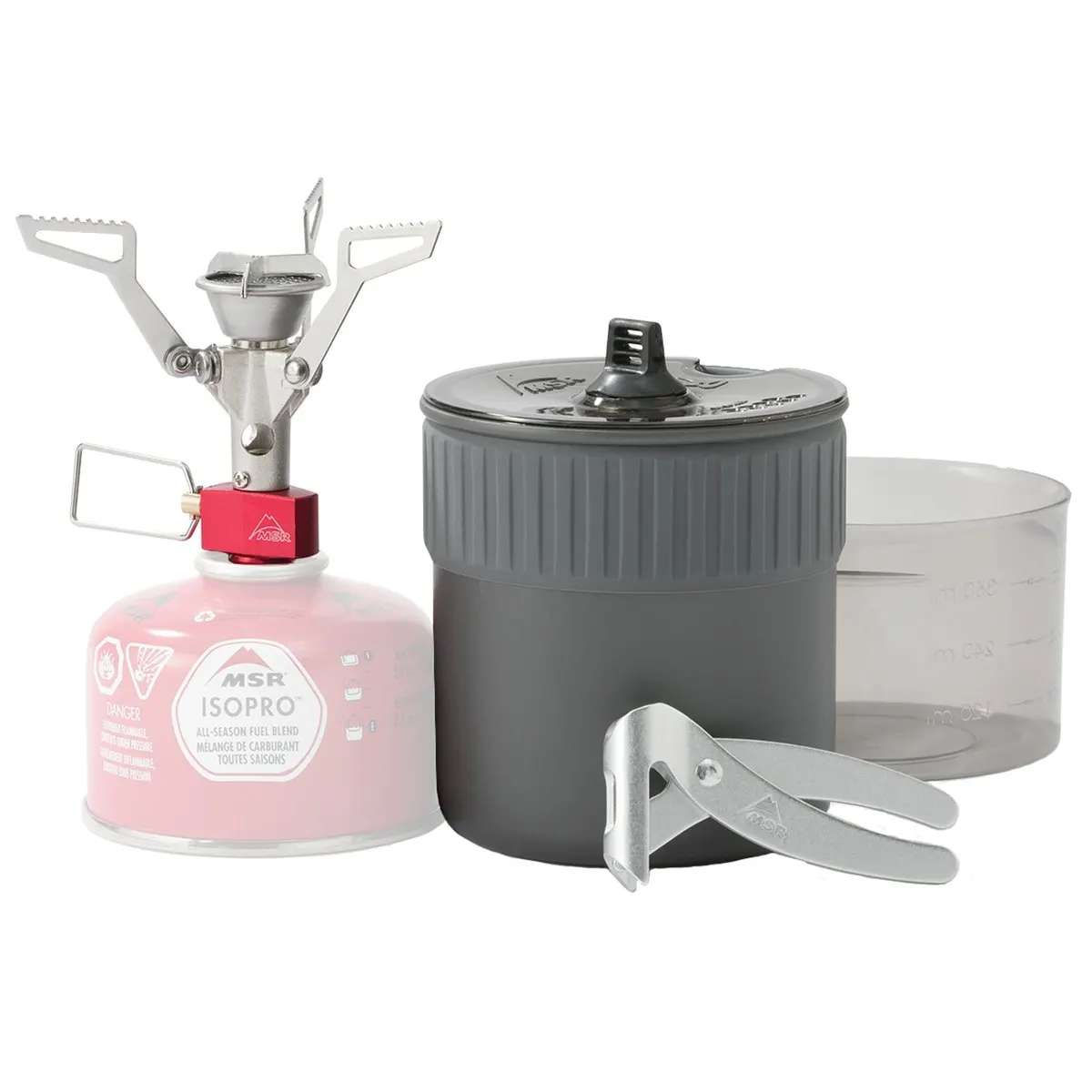
MSR PocketRocket 2 Mini Stove
An ultralight canister stove that weighs 2.6 ounces and, by MSR's rating, boils a liter in 3.5 minutes on IsoPro fuel. Suits hybrid van-and-backpacking builds where the same cooking gear goes from the van to the trailhead. MSR's manual says outdoor use only.

For: Two-pan induction cooking
Duxtop 9620LS (BT-350DZ) Portable Double Induction Cooktop, 1800W
Two induction zones on one 120 V outlet, sharing a single 1,800 W supply: the left zone reaches 1,800 W and the right 1,000 W, and together they never exceed 1,800 W. It lets you sear and simmer at once, but it needs the same inverter as a single-zone 1,800 W cooktop and about twice the counter space.
 Outdoor use only
For: Fast outdoor boiling
Jetboil Flash 1.0L Fast Boil System (FLMS3, Mountainscape)
An integrated canister stove built to boil water fast: Jetboil rates it at two minutes per half-litre, and the burner and a 100 g canister pack inside the 1-litre pot. It's a boil system rather than a frying stove, and Jetboil's manual says outdoor use only, never in a camper, car or tent.