Opinel No. 8 Stainless Folding Knife
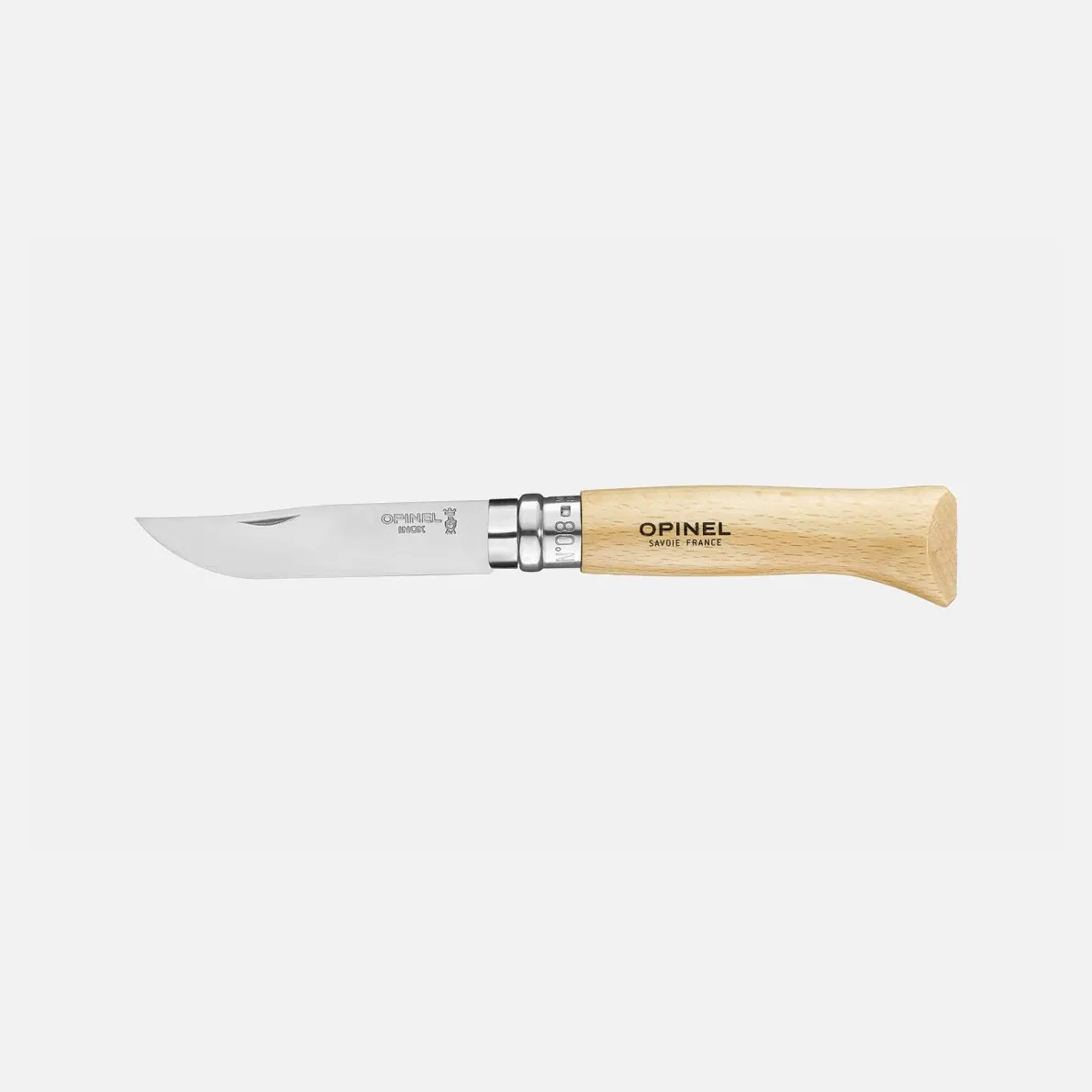
- Blade Length
- 3.28 in (Opinel USA)
- Total Length (open)
- 7.59 in (Opinel USA)
- Weight
- 1.6 oz
- Material
- Sandvik 12C27 modified stainless
- Handle
- Beechwood
- Included
- Faux-leather sheath (Amazon listing)
- Warranty
- Limited lifetime (Opinel USA)
Overview — Who is this for?
The Opinel No. 8 Stainless Folding Knife is a simple French folding knife. It has a stainless blade of about 3.3 inches, a beechwood handle, and a rotating metal ring, the Virobloc, that locks the blade open for use and closed for carrying. Opinel has made knives in the French Alps since 1890, and the No. 08 is its best-selling size. It's inexpensive, light, and a practical second knife for a van. For a weekend car-camping kit, it may be the only knife you need.
What the Amazon link sells: the OPINEL No. 08 Stainless Steel Folding Knife with a beechwood handle and a faux-leather sheath (listing model 1089). The listing says the sheath is made in France and also fits the No.7, No.9 and some Effilé models.
Choose this if:
- You want a light, pocketable knife for snacks, picnic tables and small prep.
- Your kitchen is minimal and you mostly cut bread, cheese, fruit and soft vegetables.
- You like a simple steel that's easy to sharpen, and a wooden handle.
Skip this if:
- You prep large vegetables, squash or roasts. Get a chef's knife.
- You need to open a knife one-handed.
- Your knife will often be left wet, because wood handles can swell.
The Opinel isn't a chef's knife. If you're building a full van kitchen with a cutting board and a real prep zone, make a Victorinox Fibrox 8-inch your main knife and the Opinel your pocket knife. Our Victorinox Fibrox vs Opinel No. 8 comparison covers that choice directly.
Specs and sources
| Spec | Opinel USA | Amazon listing |
|---|---|---|
| Blade length | 3.28 in | 3.35 in (8.5 cm) |
| Open length | 7.59 in | 7.5 in (19.5 cm) |
| Weight | 1.6 oz | About 0.18 lb listed |
| Steel | Sandvik 12C27 modified stainless | Same |
| Handle | Beech (other woods available) | Beech |
The small differences in length are rounding between inches and the 8.5 cm metric figure. Opinel USA describes the steel as anti-corrosive, thanks to added chromium, and says it "requires no special maintenance." The Amazon listing adds that its carbon content of at least 0.40% gives "an excellent cutting edge" that is "easily sharpened." Opinel USA gives a limited lifetime warranty on all Opinel products against manufacturing defects. The knives are made at Opinel's factory in Chambéry, France. The listing says the beech comes from managed woodlands in the French Alps and Jura.
Opinel doesn't publish a hardness (HRC) figure on the pages we checked. An earlier version of this review quoted one from secondary sources, and it has been removed.
The Virobloc lock
The Virobloc is a metal ring at the base of the blade. Opinel USA explains it this way: turn the ring clockwise into the closed position to lock the blade closed during transport, and turn it counterclockwise to stop the blade folding during use. It has no springs or small parts. In use:
- Opening takes two hands. Turn the ring, pull the blade out by the nail notch, then turn the ring back to lock it.
- It's a safety ring, not a heavy-duty lock. Don't pry or twist with the blade, and don't put hard sideways force on it.
- The ring can stiffen. In humid conditions the wood around the pivot can swell and make the ring or blade stiff. Dry the knife, work the blade gently open and closed, and keep the handle dry to prevent it.
How it performs in a van kitchen
What it handles well: tomatoes, onions (small to medium), garlic, thin carrots, cheese, bread rolls and baguettes, fruit, salami, mushrooms, peppers and soft herbs. In short, anything that fits on a small board and doesn't need a long, heavy blade.
What it struggles with: large cabbages, butternut squash, whole chickens, watermelons and roasts. The 3.3-inch blade is too short and too light to push through big, hard food efficiently, and forcing it puts load on the pivot.
Ergonomics. The handle is round and has no finger guard. That suits slicing toward a thumb, French-picnic style, and short cuts on a board. It's less secure than a chef's knife for forceful chopping. Keep your cuts controlled and your fingers behind the edge.
Blade shape. The blade has a pointed tip and a fairly flat edge. It's good for push-cuts and slicing soft food, and only adequate for rocking cuts to mince herbs.
Why it works for van life
It goes in a pocket. At 1.6 oz, it can be with you at a trailhead or a picnic table. A chef's knife stays in the van.
Inexpensive. It's at the budget end of the market, so losing one is an annoyance rather than a real cost.
It looks like a utensil, not a weapon. The traditional design draws less attention than a tactical folder. Knife carry laws vary by state, city and park, and some places restrict locking blades or blade length. Check local rules before carrying it in a pocket.
A serviceable handle. A beech handle can be lightly sanded and re-oiled if it gets rough or stained, which isn't possible with a sealed plastic handle.
Stainless or carbon?
Opinel also sells carbon steel versions of its knives. Carbon steel is traditionally prized for an easy, fine edge, but it stains and rusts readily, and a van galley is humid. For a knife that lives in a van, stainless is the practical choice. Opinel says the 12C27 "requires no special maintenance." That said, stainless resists rust; it doesn't make rust impossible. Dry the knife after washing, especially around the pivot.
Sharpening
Opinel's listing says the 12C27 blade is "easily sharpened." Practical options in a van:
- A combination whetstone (around 1000 grit for routine sharpening). It gives the best edge but needs a flat surface and some water.
- A pocket diamond sharpener. It needs no water and fits in a glovebox. Good for touch-ups between full sharpenings.
- A rolling sharpener. The HORL 3 Cruise uses a magnetic angle support and needs no water. Check that a short folding blade sits securely on the magnet before you rely on it.
Avoid coarse carbide pull-through sharpeners. They remove a lot of metal and can leave a rough edge on a thin blade.
Care in a damp van
- Wipe and dry the knife after each use. Don't put it in a dishwasher, and don't leave it in the wash bin. The wood can swell.
- Store it dry, with the blade locked closed.
- If the handle feels rough or grey, a light sand and a little food-safe oil restore it.
- If the blade gets stiff to open, dry the knife thoroughly first. Forcing a swollen pivot can bend the ring.
What the Opinel is NOT good at
Heavy kitchen work. Big cabbages, winter squash, roasts and whole birds need a chef's knife.
Prying. Folding knives are weaker than fixed blades under sideways loads. Don't use it as a screwdriver, chisel or lever.
One-handed opening. It always takes two hands.
Wet storage. The wood handle and pivot don't like prolonged moisture.
How it compares
- Victorinox Fibrox 8-inch: Victorinox lists a 7.9-inch blade and 6.4 oz. It's the main galley knife, and the Opinel isn't a substitute for it on real prep. See the Fibrox vs Opinel comparison.
- MAC Superior santoku: a thin, hard vegetable knife for small counters. It's a fixed blade for the galley, not a pocket knife.
- Swiss Army-style multi-tools: have a smaller blade plus other tools. The Opinel is the better cutting knife; a multi-tool is the better general gadget.
- Fixed-blade camp knives: stronger and quicker to deploy, but not pocketable. Carry one in a belt sheath for outdoor work and keep the Opinel for food.
The verdict
The Opinel No. 8 Stainless is a light, inexpensive folding knife that suits food tasks around a van: picnic-table lunches, trail snacks, cheese and fruit. Opinel documents it well: a 3.28-inch Sandvik 12C27 blade, 1.6 oz, the Virobloc locking ring, made in France, and a limited lifetime warranty. The Amazon listing adds a faux-leather sheath. Treat it as a second knife for a van with a real galley, or as the only knife for a minimal weekend kit, and keep it dry.
See the van knife storage and safety guide for how to carry and store folding knives safely.
FAQ
Does the Opinel No. 8 lock open? Yes. Turn the Virobloc ring counterclockwise to stop the blade folding during use, and clockwise to lock it closed for transport, per Opinel USA. It's a safety ring, so don't put hard sideways force on the blade.
Is the stainless version rust-proof? No knife steel is rust-proof. Opinel says its Sandvik 12C27 stainless is anti-corrosive and needs no special maintenance. Dry it after washing, especially in a humid van.
Can it go in the dishwasher? Don't put it in one. Hand wash it quickly, then dry it straight away. Soaking or long exposure to water can swell the wood handle.
Does the Amazon version come with a sheath? Yes. The listing we link includes a faux-leather sheath that the listing says is made in France.
Is it legal to carry? That depends on where you are. Laws on locking blades and blade length vary by state, city and park, so check local rules before carrying it.
Sources and verification
- https://www.opinel-usa.com/products/no-8-opinel-stainless-steel-blade: 3.28 in blade, 7.59 in overall, 1.6 oz, Sandvik 12C27 modified stainless steel, anti-corrosive, "requires no special maintenance", Virobloc operation, limited lifetime warranty, made in Chambéry, France, handle wood options (checked 2026-10-12)
- https://www.opinel-usa.com/products/no-8-opinel-stainless-steel-gift-boxed-with-sheath: No.08 with synthetic leather sheath, the same blade specs and Virobloc description (checked 2026-10-12)
- https://www.opinel-usa.com/search?q=no+08+stainless: current No.08 stainless variants, including beech, walnut, olive and oak handles (checked 2026-10-12)
- Amazon listing ASIN B00025ZCEW: model 1089, No. 08 stainless with beechwood handle and faux-leather sheath, 3.35 in (8.5 cm) blade, 7.5 in (19.5 cm) open, Sandvik 12C27 with at least 0.40% carbon, beech from the French Alps and Jura, made in the French Alps since 1890 (checked 2026-10-12)
- https://www.swissarmy.com/us/en/Products/Kitchen-Knives/Chefs-Knives/Fibrox-Pro-Chef%27s-Knife/p/5.2063.20: Fibrox Pro blade length and weight, used in the comparison (checked 2026-10-12)
Compare with similar products
See how this stacks up against the other knives & prep we've reviewed.
Head-to-head comparisons
Related Reviews
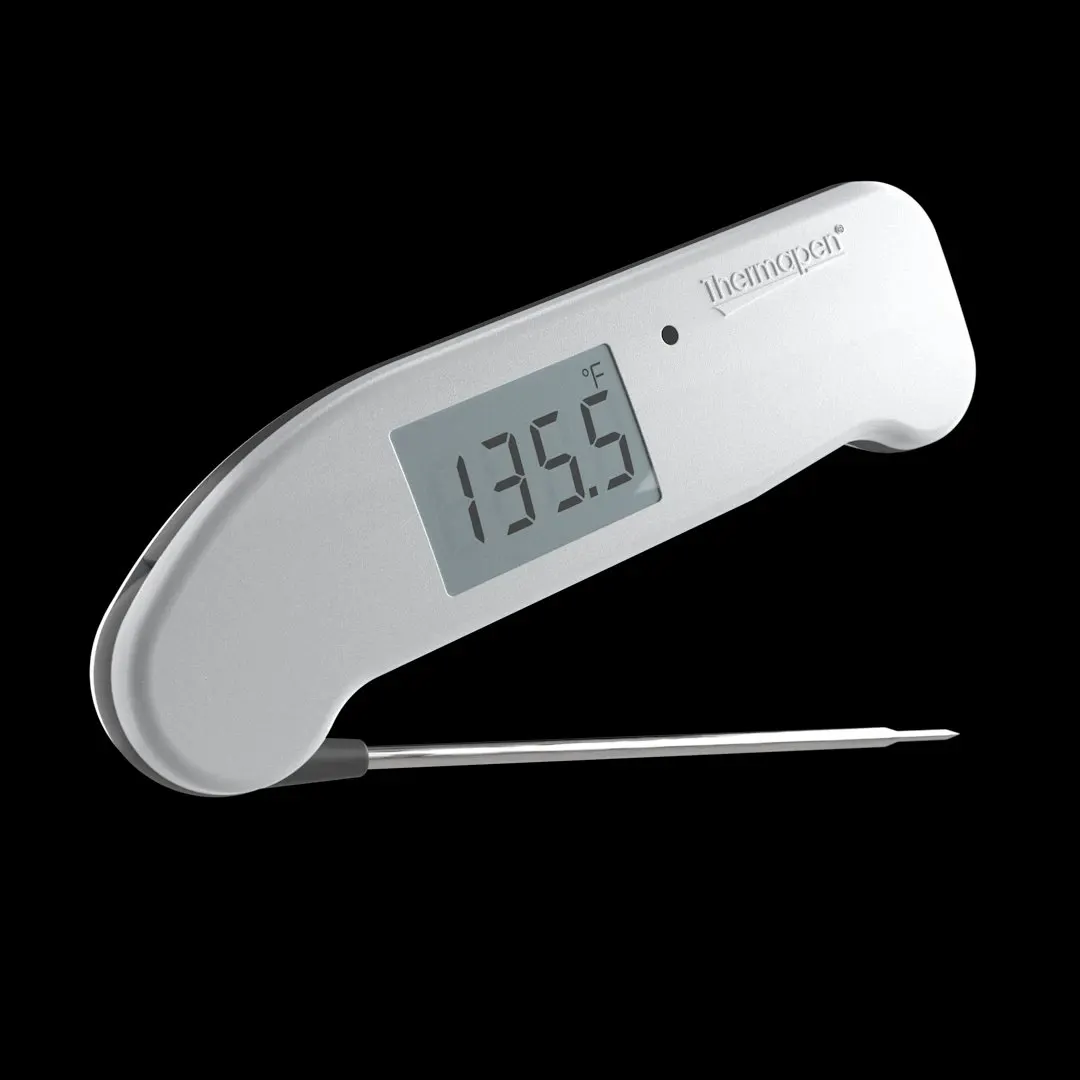
For: Checking meat doneness
ThermoWorks Thermapen ONE Instant-Read Thermometer
A fold-out instant-read thermometer that ThermoWorks rates at about one second and ±0.5°F in key temperature ranges, with IP67 sealing, a NIST-traceable certificate and a five-year warranty. Worth the cost for anyone who cooks protein often; keep it off hot surfaces and out of the dishwasher.
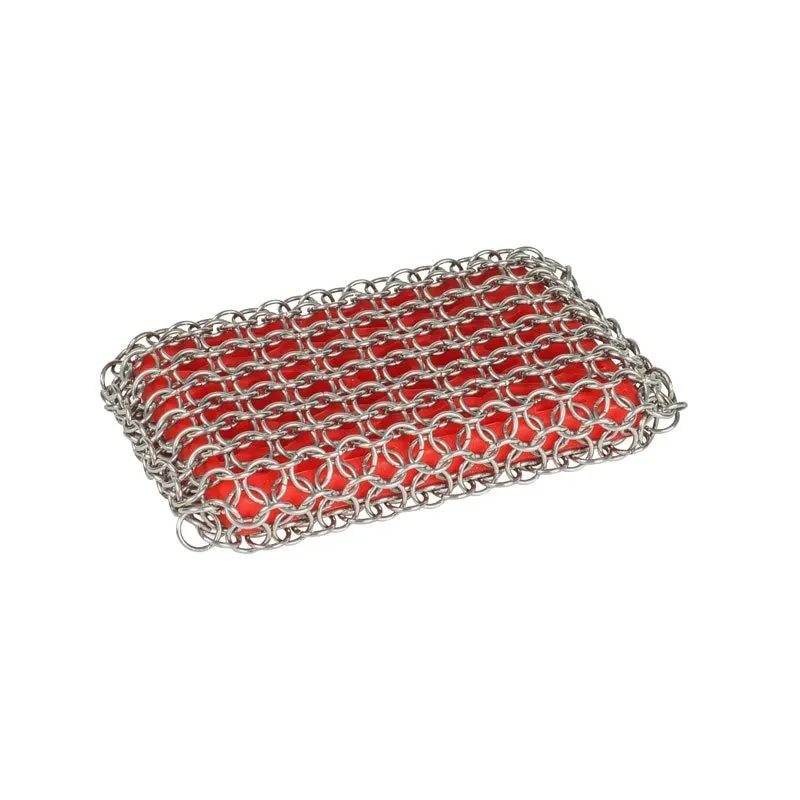
For: Cleaning cast iron
Lodge Chainmail Cast Iron Scrubber
A stainless chainmail scrubber with a silicone core for cleaning cast iron. It lifts stuck food with hot water and leaves seasoning largely intact; Lodge says a little mild soap is fine.

For: Vegetable prep on small counters
MAC Superior Series 6.5-Inch Santoku Knife (SK-65)
A thin, light, Japanese-made santoku: MAC lists a 6.75 in blade, 2.0 mm thickness and 5.4 oz. Its shorter, flatter blade suits a narrow van counter and push-cutting vegetables, and MAC sharpens its knives at 15 degrees per side. Harder, thinner steel means more care than a Victorinox: no bones, no frozen food, no dishwasher.