Platypus GravityWorks 4L Water Filter System
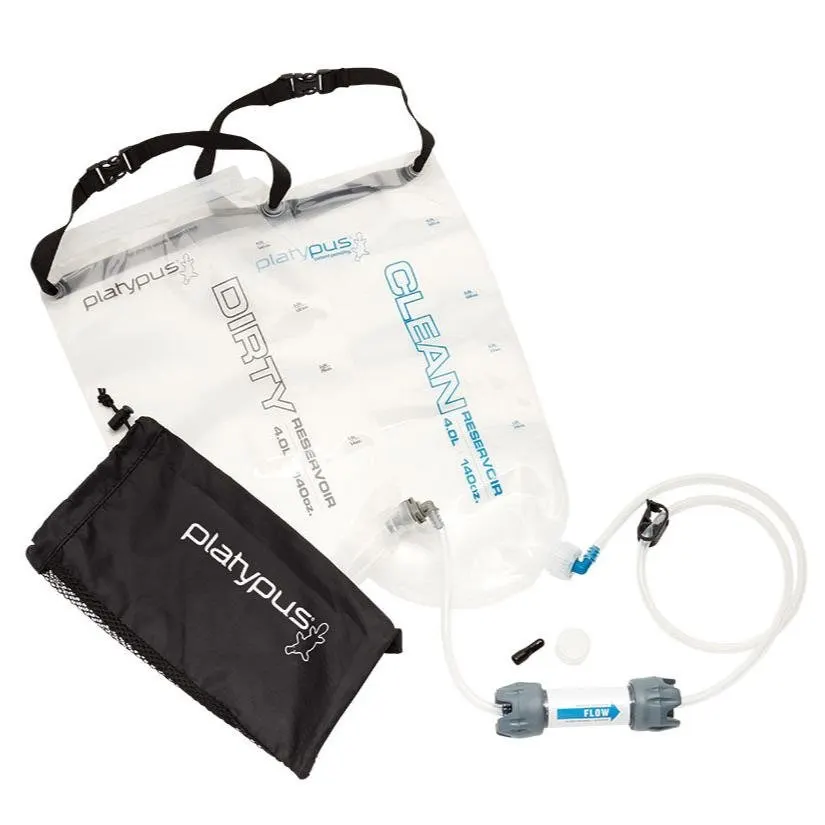
- Capacity
- 4L dirty + 4L clean reservoirs
- Filter Rating
- 0.2 micron hollow fiber
- Filter Life
- 1,500 L (~400 gallons) per Cascade Designs; Amazon listing says 1,500 gallons
- Flow Rate
- Up to 1.75 L/min (Cascade Designs)
- Weight
- 11.5 oz (326 g)
- Power Source
- None (gravity)
- Warranty
- Limited lifetime (Platypus warranty page); Amazon lists 3-year
Platypus GravityWorks 4L Review: A Gravity Filter With Its Paperwork in Order
What the Amazon link sells: the Platypus GravityWorks 4.0L Water Filter System (ASIN B0CV9RPT8Y), which Amazon titles "Platypus GravityWorks Group Camping Water Filter System, 4-Liter", part number 14240. Cascade Designs (Platypus's parent company) also sells a 6.0L version; this review covers the 4.0L kit.
What it is, in one line: a two-bag gravity filter with a 0.2-micron hollow-fibre cartridge. Cascade Designs says it removes 99.9999% of bacteria and 99.9% of protozoa, and lists viruses and chemicals or toxins as things it does not remove. It has no carbon stage.
Choose this if:
- you filter several litres at a time from creeks, springs or questionable spigots;
- you want hands-free filtering for two or more people;
- you want something that packs flat when you're not using it.
Skip this if:
- you need virus protection or lead and chemical reduction;
- your water is already treated and you only want better taste (get a carbon filter);
- you can't keep a wet filter from freezing in winter.
Berkey spent years as the default gravity-fed water filter for off-gridders and van lifers. Starting in late 2022, the EPA issued stop-sale orders across the Berkey supply chain, taking the position that the silver-containing Black Berkey elements are unregistered pesticides, a position Berkey's maker has contested in court. The practical result is that many people in vans, buses and skoolies want a gravity filter that is easy to buy and clearly documented.
The GravityWorks is one. Cascade Designs, which also owns MSR and Therm-a-Rest, says every microfilter is individually tested to ensure it meets EPA and NSF guidelines for removing 99.9999% of bacteria and 99.9% of protozoa. It rates the filter at up to 1.75 litres per minute with no pumping, no electricity and no moving parts. This review works from those published specs and the instructions Cascade Designs publishes.
Overview
The GravityWorks 4L is a two-bag gravity filter system. You have a dirty reservoir (the 4-litre bag you fill from a stream, a campground spigot or your own jugs), a 0.2-micron hollow-fibre filter cartridge in the middle, and a 4-litre clean reservoir that catches filtered water, for 8 litres of total bag capacity. Cascade Designs lists the kit as the clean and dirty reservoirs, the hollow-fibre microfilter, hoses, a shutoff clamp and a storage sack. You hang the dirty bag from a branch, a cabinet handle or a hook in your van, and gravity does the rest.
Weight. Cascade Designs lists the 4.0L system at 11.5 ounces (326 g), and the 6.0L at 12.3 ounces (349 g).
Filter life. Cascade Designs rates the cartridge at 1,500 litres (about 400 gallons). The Amazon listing's feature text says "up to 1,500 gallons", which is almost four times as much. We use the manufacturer's 1,500-litre figure. As a worked example, filtering 6 litres a day for two people's drinking and cooking water would reach 1,500 litres in about 250 days (1,500 ÷ 6), so roughly eight months; dirty source water will clog it sooner.
This is not a complicated product: a bag, a hose, a filter and another bag. That simplicity suits a vehicle that bounces down washboard forest roads, as long as the filter itself is protected from impacts and frost.
Why We Recommend This Over Berkey
First, Berkey's stainless canisters were not designed for vehicles. They are tall, heavy when full, and need to be lashed down. The GravityWorks bags collapse when empty and pack into a sack.
Second, the GravityWorks is quick. At Cascade Designs' rated 1.75 L/min, it filters 4 litres in a little over two minutes (4 ÷ 1.75 ≈ 2.3 minutes) when the filter is clean and the dirty bag hangs well above the clean one; the Amazon listing quotes 2.5 minutes for four litres. Gravity pitchers and canister systems with ceramic or carbon elements typically take far longer per fill.
Third, the GravityWorks is a purely mechanical filter: a 0.2-micron hollow-fibre membrane with no silver or other chemical treatment, so the regulatory dispute that took Berkey elements off the market doesn't apply to it.
Finally, it is a smaller outlay than a full Berkey system, and the replacement part is a single cartridge. If you built your water system around a Berkey and you're reading the van water system setup guide to decide what's next, the GravityWorks is the least disruptive swap for source-water filtering. A Berkey was also sold as reducing some chemicals; the GravityWorks does not, so pair it with a carbon filter if chemicals or taste matter to you.
Filtration Performance: What It Removes, What It Doesn't
Water filtration claims are medically serious, so here is exactly what the manufacturer says.
Cascade Designs says the GravityWorks microfilter meets EPA and NSF guidelines for removing:
- Bacteria at 99.9999% (a 6-log reduction); the Amazon listing names E. coli, salmonella and cholera
- Protozoa such as Giardia and Cryptosporidium at 99.9% (a 3-log reduction)
- Particulates, including sediment
Cascade Designs does not quote a specific NSF/ANSI standard number (such as P231) on its product page, so we don't either.
What it does not remove, per Cascade Designs: viruses and chemicals or toxins. That includes heavy metals, PFAS, pesticides, pharmaceutical residue and dissolved solids. It has no carbon, so it won't change taste or remove chlorine. The CDC's guidance on making water safe says the same about portable filters in general: they will not remove viruses. A 0.2-micron absolute pore is inside the CDC's thresholds for bacteria (0.3 micron or smaller) and parasites (1 micron or smaller), which is why the bacteria and protozoa claims are plausible and the virus claim is absent.
For North American backcountry water, Giardia and Cryptosporidium are among the most likely problems, and those are what this filter is built for. If you're traveling where hepatitis A, rotavirus or norovirus are realistic waterborne concerns, or a source could carry sewage, add a virus step: boiling (the CDC advises a 1-minute rolling boil, or 3 minutes above 6,500 feet), a UV device in clear water, a chemical disinfectant used to its label, or a purifier such as the Grayl GeoPress. Filtering first and then disinfecting works well together, because the CDC notes chemical disinfectants may not kill parasites, and UV works poorly in cloudy water. If chemical contamination is your concern (agricultural runoff, industrial pollution, old plumbing), add a carbon filter certified for the contaminants you care about, downstream of this one.
The filter will not make ocean or brackish water drinkable.
Setup and Daily Use in a Van
Setup is quick. Fill the dirty reservoir, connect the hose and filter, hang the dirty bag higher than the clean bag, and open the shutoff clamp. Before first use, follow Platypus's instructions for flushing the filter.
Where to hang it. Flow depends on the height difference between the two bags, so the more drop you can give it, the faster it runs. In a van, a natural setup is to hang the dirty bag from an upper cabinet handle, a grab handle, or a roof-rack crossbar with the side door open, and rest the clean bag in the galley sink or on the floor. A full 4-litre dirty bag weighs about 4 kg, so use a hook or handle that can take that load without bending; a cabinet door hinge is not a good anchor. Outside, a tree branch or the rear door works.
Filling it. The dirty bag is a wide bag, not a bottle, so it fills easily from a stream or bucket and less easily from a low spigot. Filling from a jug, or from a Scepter 5-gallon container of untreated water, is often simpler at a spigot.
Where the clean water goes. The clean reservoir's hose lets you fill a bottle, a pot or a jug directly. Or you can pour the filtered water into your onboard fresh tank if this is your source-water treatment step. A tank can recontaminate filtered water, so keep the tank and lines sanitised, and keep a container used only for clean water.
Packing. The bags fold flat and the whole kit goes into its storage sack. Keep the dirty and clean sides from touching in storage, so the clean outlet isn't contaminated.
Filter Maintenance
Hollow-fibre filters need two things: backflushing to clear trapped sediment, and protection from freezing.
Backflushing keeps the flow rate up. Cascade Designs says the microfilter can be backflushed in about 4 seconds, by sending clean water back through the filter (follow the steps in the Platypus instructions), and recommends backflushing about a quarter litre for every 6 litres filtered. No tools or chemicals are needed.
Pre-filtering. Silt is what shortens cartridge life. Collect from the clearest part of a source, and let cloudy water settle or strain it through a clean cloth before it goes into the dirty bag, which the CDC also recommends for cloudy water before treatment.
Freezing is the one thing that will permanently damage the filter. Cascade Designs says it is important to prevent hollow-fibre filters from freezing, because wet filter media can freeze and break the fibres. In cold conditions keep the filter close to your body or in your sleeping bag; if you live in your van year-round in a cold climate, keep it in the heated cabin, not in an exterior locker.
Impacts. Treat a filter that has had a hard drop onto rock or concrete with suspicion, and follow Platypus's instructions for checking it before trusting it.
Replacement. There's no indicator, so keep a rough tally and replace the cartridge at the rated 1,500 litres, when flow stays slow even after backflushing, or if it may have frozen.
Platypus GravityWorks vs LifeStraw Home vs Sawyer Squeeze vs Katadyn BeFree
The LifeStraw Home gravity pitcher is a countertop pitcher with a membrane plus a carbon and ion-exchange stage. LifeStraw says that stage reduces lead, mercury, PFAS and chlorine, which the GravityWorks does not. It suits campground and municipal hookup water where taste and metals are the concern. It is much slower and holds only 7 cups, and it is designed for tap water rather than creeks. Neither claims virus removal.
The Sawyer Squeeze is a smaller 0.1-micron hollow-fibre filter aimed at backpackers. You squeeze a pouch to push water through, or hang it on a gravity bag. It costs considerably less and Sawyer sets no end-of-life volume on its current product page, but squeezing a one-litre pouch twenty times to fill a jug gets old. It makes sense as a backup emergency filter or for a solo van lifer who mostly drinks treated water.
The Katadyn BeFree 1.0L is a soft-flask squeeze filter for single litres on the move. It is the better hiking companion and the worse bulk filter.
The GravityWorks makes sense if filtering untreated water is part of your weekly routine and you want volume without effort. A common pairing is GravityWorks for bulk camp water, LifeStraw Home for galley drinking water from taps, and a BeFree or Sawyer in the daypack.
Value for Money
The GravityWorks is a mid-range purchase by backcountry filter standards; a Sawyer Squeeze costs considerably less. Against bottled water, the cost per litre over the 1,500-litre cartridge life is low. The filter cartridge is the only regular replacement part.
Warranty. Platypus's warranty page states a limited lifetime warranty on all Platypus products against manufacturer defects, excluding normal wear, puncture, abrasion, misuse and abuse. The Amazon listing shows "3 Year Manufacturer" in its warranty field. If warranty length matters to you, go by Platypus's own terms and keep your proof of purchase.
Who Should Skip This
Skip the GravityWorks if you already have good treated water and your only concern is taste or chlorine; you need a carbon filter, not a hollow-fibre gravity system. Skip it if you travel in freezing conditions and can't keep the filter above 32°F. Skip it if you need virus protection without a second treatment step. And skip it if you're solo and filter less than a litre a day; a Sawyer Squeeze will do.
Final Verdict
The Platypus GravityWorks 4L is the gravity filter we recommend for van lifers replacing a Berkey for untreated source water. It is fast for a gravity system, light, and its maker publishes clear statements of what it does and doesn't remove. It won't solve every water problem: viruses and chemicals need other tools. But for bacteria and protozoa in the creek, spring and spigot water you're likely to meet in North America, it is a good fit. Backflush it, don't freeze it, don't drop it on rock, and replace the cartridge at its rated volume.
FAQ
Does the Platypus GravityWorks remove viruses? No. Cascade Designs says it does not remove viruses. For travel or sources where viruses are a concern, add boiling, UV or chemical treatment, or use a purifier.
How long does the filter cartridge last? Cascade Designs rates it at 1,500 litres (about 400 gallons); the Amazon listing says 1,500 gallons, and we go by the manufacturer's figure. At 6 litres a day that is roughly eight months; silty water shortens it.
Can I use it with my van's onboard water tank? Yes, as a source-water filtering step: filter into the clean reservoir, then pour it into your fresh tank. It is a gravity filter, not a pressurised inline filter, so don't plumb it after a 12 V pump.
What happens if the filter freezes? Cascade Designs warns that wet hollow-fibre media can freeze and break the fibres. Treat a filter that may have frozen as unsafe and replace it.
Is it EPA-registered? Not in the way the question usually assumes. Cascade Designs says the filter meets EPA and NSF guidelines for bacteria and protozoa removal. The Berkey dispute was about the EPA treating silver-containing Black Berkey elements as unregistered pesticides; the GravityWorks is a mechanical filter with no silver or chemical treatment.
How does it compare to boiling water? Boiling kills or inactivates bacteria, protozoa and viruses but doesn't remove sediment or microplastics. The GravityWorks removes sediment, bacteria and protozoa but not viruses. They solve different parts of the problem, and they combine well.
Sources and verification
- Cascade Designs GravityWorks product page, https://www.cascadedesigns.com/products/gravityworks-water-filter-system: 4.0L and 6.0L capacities and weights, 1.75 L/min flow, 0.2-micron hollow fibre, 1,500 L filter life, removal claims and EPA/NSF guideline wording, no virus or chemical removal, kit contents, backflushing method and frequency, freezing warning (checked 2026-10-12)
- Platypus warranty page, https://www.cascadedesigns.com/pages/platypus-warranty: limited lifetime warranty on all Platypus products and its exclusions (checked 2026-10-12)
- CDC, How to Make Water Safe in an Emergency, https://www.cdc.gov/water-emergency/about/index.html (now served at https://www.cdc.gov/water-emergency/about/index.html): filter pore-size thresholds, portable filters not removing viruses, boiling times, limits of chemical and UV treatment, pre-filtering cloudy water (checked 2026-10-12)
- Amazon listing ASIN B0CV9RPT8Y: exact title, part number 14240, kit contents, "2.5 minutes" for four litres, "1,500 gallons" feature text, "3 Year Manufacturer" warranty field (checked 2026-10-12)
Compare with similar products
See how this stacks up against the other water & sink gear we've reviewed.
Related Reviews
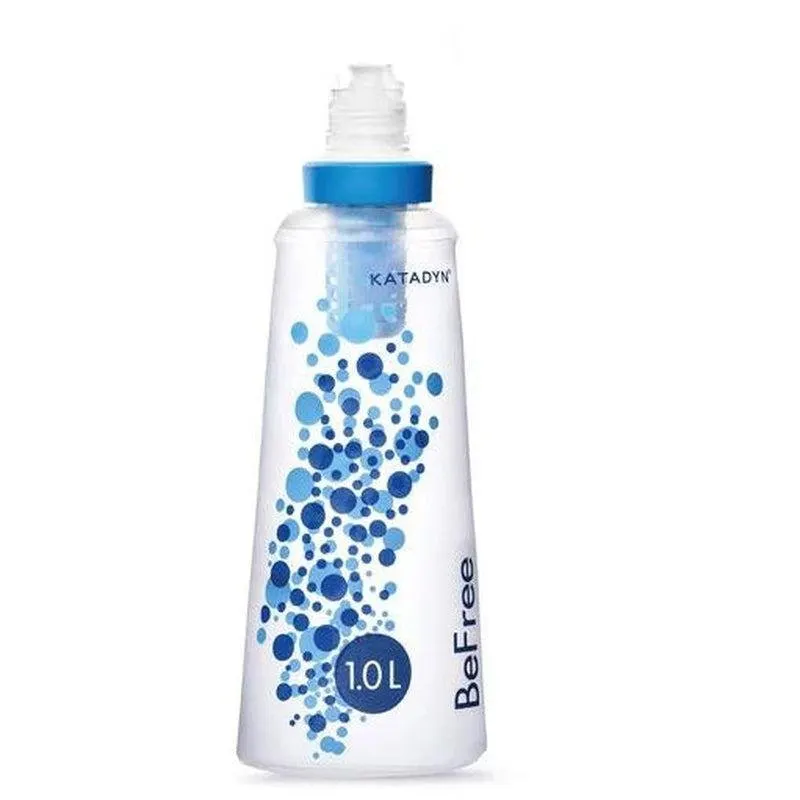
For: Fast-flow squeeze bottle filter
Katadyn BeFree 1.0L Collapsible Water Filter
A 1-litre soft flask with Katadyn's 0.1-micron hollow-fibre filter, which Katadyn says removes bacteria, protozoa and microplastics at up to 2 L/min. It does not remove viruses. The Amazon listing is titled "BeFree AC 2-Stage"; the activated-carbon insert in that version reduces chlorine, taste and odour but does not make it a purifier. A light backup for clear fresh-water sources.

For: No-wiring jug sinks
Whale Babyfoot GP4618 Manual Galley Foot Pump
A self-priming, foot-operated galley pump with 1/2-inch hose connections that delivers water only while you press it. It's the simplest way to get water from a jug to a van sink with no wiring, but its 5 ft suction lift and lack of a published potable certification set its limits.

For: Fresh-water jug storage
Scepter 05177 5 Gallon (20 L) Military Water Container, Green
A narrow, military-pattern 20-litre water can made from food-grade, BPA-free polyethylene, with a carry handle, a pour spout and a separate breather. Its slim 6.8-inch profile suits van cabinets better than cube jugs, but it has no spigot and no hose port, so a foot-pump intake has to go in through the cap opening.