Van Cooking Safety: Carbon Monoxide, Fire, and Burns
The three safety risks every van cook needs to manage — CO from propane and butane, fire from grease and fabric, and burns from tight quarters. With the gear and habits that prevent each one.
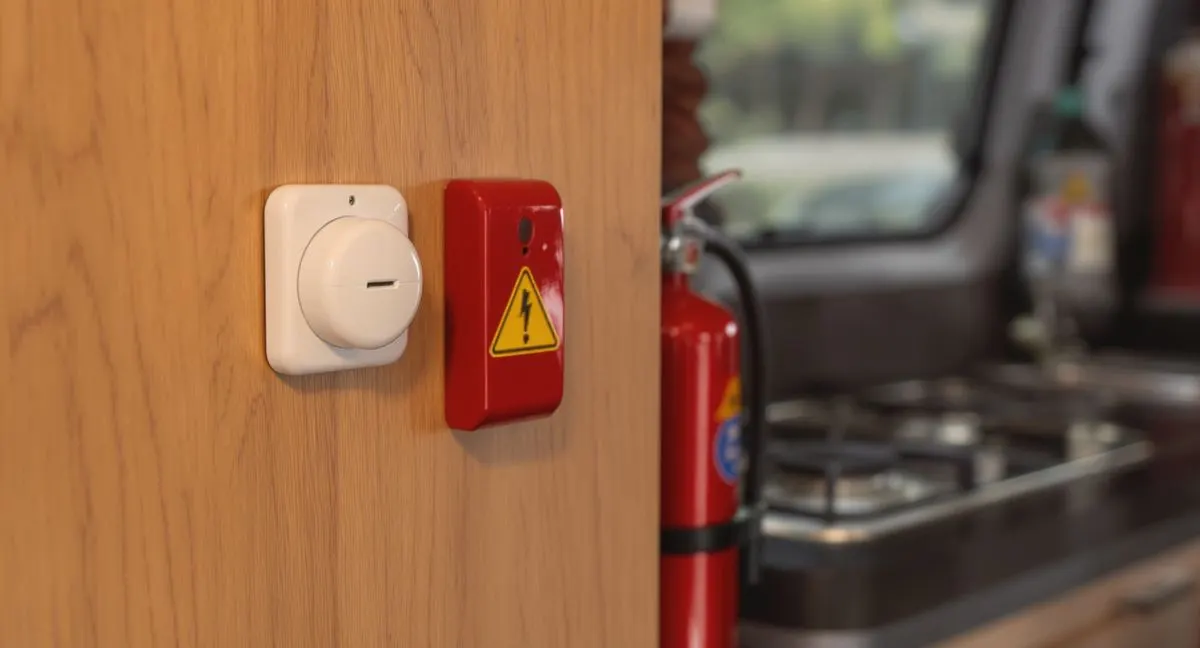
Disclosure: As an Amazon Associate I earn from qualifying purchases. Links to Amazon on this page are affiliate links: if you buy through one, VanLifeKitchens.com may earn a commission at no extra cost to you. Read our affiliate disclosure.
The Three Risks, Ranked By Frequency
Van kitchen incidents cluster around three hazards. In rough order of how often they hurt people: burns, fires, and carbon monoxide poisoning. Burns are the most common by a wide margin because tight quarters make contact with hot pans and spilled water easy. Fires are less frequent but cause the most property loss, and a fire inside a van can spread through a small cabin very quickly. Carbon monoxide poisoning is the rarest of the three, but it is the one most likely to kill, because it can overcome people while they sleep and early symptoms are easy to mistake for tiredness.
That ranking matters for how you spend money and attention. A van dweller is far more likely to grab a hot handle than to suffer CO poisoning. But CO has such a bad failure mode that it demands the strictest rules regardless of frequency. Burns demand habit solutions. Fires sit in between: you need a smoke alarm, an extinguisher or fire blanket, and the discipline to never leave a burner unattended.
This guide walks each risk in order of severity per incident, not frequency. It starts with the decision that prevents most serious CO incidents before any alarm is needed: knowing which stoves are allowed inside a vehicle at all.
First Rule: Know Where Your Stove Is Allowed To Run
Most stoves sold for camping are labelled by their manufacturers for outdoor use. That label is the single most important safety fact about the appliance, and no fan, cracked window or alarm changes it.
What the manuals we checked actually say:
- MSR PocketRocket 2 (canister stove): "FOR OUTDOOR USE ONLY" and "Never use this stove in an enclosed space such as a camper, tent, car, or home." MSR's original PocketRocket instructions add vestibules to that list.
- Coleman propane camp stoves: Coleman's propane stove instructions say "For outdoor use only" and "Never use inside house, camper, tent, vehicle or other unventilated or enclosed areas." Coleman's 5461-series propane stove manual adds "Not for home or recreational vehicle use." We could not retrieve the Triton-specific manual, so check the sheet that comes with your stove. The site's Coleman Triton+ review treats it as outdoor-only.
- Camp Chef Everest 2X (propane): the Everest 2X instructions, as indexed from Camp Chef's site, carry the standard warning that the appliance "can produce carbon monoxide which has no odor," that "using it in an enclosed space can kill you," and "never use this appliance in an enclosed space such as a camper, tent, car or home." Treat it as outdoor-only.
- Iwatani Cassette Feu (butane cassette): Iwatani's manual for the Cassette Feu ZA-3HP says that as a camp cooking appliance it is "for use as an outdoor only camp cooking appliance" and "may not be used indoors in tents, campers, apartments or other confined areas." Its indoor rating applies to commercial restaurants, not vehicles. We could not retrieve a separate manual for the newer gray Cassette Feu the site links, so assume the same restriction.
- BioLite wood stoves: BioLite's stove manual says "This stove is for OUTDOOR USE ONLY. Never for use in tents, vehicles, indoors, or other places without fresh air."
- Gas One butane stove: we could not find a Gas One GS-1000G manual online. The Amazon listing the site links for it currently sells the Gas One GS-1000G and marks it "OUTDOOR USE ONLY". Read the label on yours, and treat it as an outdoor stove.
So for every portable stove on this site, the safe operating location is outside the vehicle: on a folding table beside the open slider, on a tailgate or drawer extended fully outside the vehicle, at a picnic table, or under an awning with the manufacturer's clearance to the fabric. If you want to cook inside the van, the options are induction (no combustion at all) or a built-in, RV-certified cooktop installed to code, covered below. To choose between these options, the cooktops complete guide compares each stove on this site by where its maker allows it to run, the power or fuel it needs and the cookware it takes.
Manufacturers also publish clearances to combustible materials. Coleman's 5461-series propane stove manual gives 12 inches from the sides and 48 inches above; MSR asks for 4 feet (1.2 m) from the top and sides. Awnings, hatch lids, curtains and the inside of a cargo area are combustible, so keep a lit stove well away from all of them.
Carbon Monoxide: Silent And Most Dangerous
Carbon monoxide is produced any time a carbon-based fuel burns with insufficient oxygen. Propane, butane, gasoline, diesel, wood and alcohol all produce it. A clean blue flame on a well-maintained burner produces less than a yellow, sooty or flickering one, but every combustion appliance produces some, which is why manufacturers restrict where portable stoves run.
Commonly cited exposure figures: the US OSHA permissible exposure limit is 50 ppm averaged over eight hours. Around 200 ppm, mild headache and fatigue typically develop within two to three hours. Around 400 ppm, headache develops within one to two hours and the exposure becomes life-threatening after about three. Around 800 ppm, dizziness and nausea can appear within 45 minutes and unconsciousness within two hours. At 1,600 ppm, symptoms can begin within 20 minutes and death within an hour. A small, closed vehicle has very little air to dilute combustion products, so concentrations can climb much faster than in a house.
Your body has no reliable warning for CO. Early symptoms (headache, nausea, mild confusion) feel like being tired and hungry after a long drive. People can lie down "for a minute" and not wake up. This is why the outdoor-only labels exist and why they are not negotiable.
The conditions that cause dangerous CO buildup in a vehicle are: any outdoor-only combustion appliance run inside, combustion with inadequate air supply, a malfunctioning burner (clogged jet, wrong fuel pressure, damaged regulator), and exhaust from engines, generators or heaters drifting into the cabin. None of them can be reliably detected by feel.
Built-In RV Cooktops Are A Different Category
A built-in propane cooktop designed and certified for RV use is not the same thing as a camp stove set on a counter. RV appliances are built for installation in a vehicle, and the system around them matters as much as the cooktop. If you want gas cooking inside the van, a compliant setup typically includes:
- An RV-certified cooktop, installed per the manufacturer's installation instructions, including its required clearances.
- A sealed, vented propane locker: the cylinder sits in a compartment that is sealed from the living space and vented to the outside at the bottom, because propane is heavier than air. Cylinders never go loose inside the cabin.
- Proper gas lines, regulator and fittings, leak-tested at installation and periodically after.
- An LP-gas leak detector mounted low, near floor level, plus a CO alarm listed for RV use.
- Installation by a qualified RV gas technician where local codes, inspections, registration or insurers require one. In the US, NFPA 1192 is the standard for recreational vehicles and covers LP-gas systems and safety alarms; requirements for converted vans vary by state, country and insurer, so check before you build.
Even a correctly installed cooktop still needs combustion ventilation whenever it runs (see below). And this guide is not an installation manual. Treat the list above as what to ask about, not as a code-compliant design.
CO Alarm Specs And Placement
Every van with any fuel-burning appliance (a cooktop, a diesel or propane heater, a generator nearby) should have a working CO alarm before the first night. Even an induction-only van benefits from one, because heaters, generators and nearby vehicles also produce CO.
A CO alarm is a last-line warning device, not permission. It tells you that something has already gone wrong. It does not make an outdoor-only stove acceptable indoors, it does not tell you how long you have, and an alarm that sounds while you are asleep may come too late for someone already affected.
Spec requirements: look for a unit listed to UL 2034 (or CSA 6.19), and for a vehicle choose one the manufacturer says is suitable for RV use; NFPA 1192 references CO alarms listed for RV use. A digital ppm display is useful because standard alarms are designed to tolerate low levels for some time before sounding, to avoid nuisance alarms in houses. Seeing a low reading lets you shut off appliances and ventilate before the alarm logic trips. Sealed-battery units rated for seven to ten years are the simplest install; hardwired 12V units should be wired per the alarm maker's instructions.
Placement: follow the alarm manufacturer's placement instructions. CO mixes with cabin air rather than settling, and a common recommendation is to mount the alarm in the sleeping area at roughly breathing height when lying down. Avoid mounting it directly over the stove, inside a cabinet, or in the direct airflow of a roof fan.
Test it monthly. Replace it on the end-of-life date printed on the unit; the sensor degrades whether or not it has ever alarmed.
For how airflow interacts with combustion products and cooking steam, see our van kitchen ventilation guide.
Kitchen Fires: Grease And Fabric
Van kitchen fires usually start from one of two sources: overheated oil, or fabric or paper contacting a heat source. Both are easy to prevent and serious when they happen, because a small cabin fills with smoke quickly.
Cooking oils begin to smoke at roughly 200 to 230°C and can ignite at higher temperatures, depending on the oil. An empty or nearly empty pan on a high burner can get there in a few minutes. The common failure pattern is preheating a pan, getting distracted, and coming back to flames. The prevention is behavioural (never leave a hot pan unattended) and mechanical (keep a lid within reach). A lid or fire blanket smothers a small pan fire. Water does not; water on burning oil flashes to steam and throws burning oil outward.
Fabric fires happen when a curtain, dish towel, paper towel roll or sleeve drifts over a burner, or when a stove is set too close to an awning or hatch. For flame stoves, use the clearances in the manufacturer's manual, which are often far larger than people expect (24 to 48 inches in the Coleman and MSR manuals). Induction has no flame, but the pan is still hot enough to scorch fabric, so keep towels and curtains away from it too. Roll up loose sleeves and tie back loose clothing while cooking.
A smoke alarm belongs in the van near the kitchen but not directly above the cooktop. Combined smoke and CO units are fine if they carry both listings (UL 217 for smoke, UL 2034 for CO).
Fire Extinguisher Selection
Keep an extinguisher within easy reach of the cooking area and the door, not buried in a rear cabinet.
Ratings: Class K (Class F in Europe) wet-chemical extinguishers are made for cooking-oil fires. Dry-chemical ABC extinguishers are rated for ordinary combustibles, flammable liquids and electrical fires, and are the general-purpose choice for a vehicle, but discharging one at close range into a pan of oil can splash it. A practical van setup is a fire blanket for pan fires plus a compact ABC extinguisher for everything else. Read the extinguisher's label for its rating and the distance it should be used from.
A fire blanket is often more useful than any extinguisher for a contained pan fire. It smothers, makes no mess, and is simple to use. Mount it beside the cooking area where you can pull it without reaching over the flame.
Check the gauge on pressurised extinguishers monthly and follow the manufacturer's service and replacement schedule. Vibration and temperature swings are harder on extinguishers than household conditions.
Burns: The Underrated Risk
Burns rarely send people to hospital, but they are frequent, they ruin trips, and in a remote location an infected burn is a real problem.
The geometry of a small kitchen makes contact burns easy: reaching across a hot pan, turning with a pot in a narrow aisle, touching a kettle that has been sitting on residual heat. Induction glass also stays hot after cooking because the pan heats it.
Prevention is gear plus habits. Gear: silicone handle covers, a pair of heat-resistant gloves you can grip with, and a trivet or heat mat for setting hot pans down. Habits: say "hot" when moving a pan in shared space. Turn pot handles inward. Check a metal handle before grabbing it.
Scalds from boiling water are the worst of the category because vehicle floors are rarely level and outdoor tables wobble. Keep pots under half full when the surface is uneven, set stoves on a stable, level surface (manufacturers specify this), and drain pasta into a sink or bin, not over your lap.
Two Kinds Of Ventilation
Ventilation does two separate jobs, and it helps to keep them apart.
Combustion ventilation supplies fresh air to a flame and removes its products: carbon monoxide, carbon dioxide, nitrogen dioxide and water vapour. It is relevant only to appliances designed and certified to burn fuel inside a vehicle, such as a properly installed RV cooktop or a correctly vented heater, and it follows that appliance's installation instructions. For outdoor-only camp stoves the answer is not more ventilation; it is running the stove outside.
General cooking ventilation removes steam, grease aerosols, odour and heat. It applies to every cooking method, including induction. A roof fan with a window open on the opposite side moves air across the cabin; a range hood captures steam and grease at the source. This keeps condensation, mould and grease film down and makes the cabin more comfortable in hot weather.
A roof fan does both jobs reasonably well for an appliance that is allowed indoors. It does not convert an outdoor-only stove into an indoor one. Cold weather tempts people to close everything up and cook inside; see the cold weather van cooking guide for winter strategies that do not involve running camp stoves in a sealed van.
Propane Vs Butane Vs Induction Safety Profiles
Fuel choice changes your risk profile.
Propane's flammable range in air is roughly 2.1 to 9.5 percent. It is heavier than air, so leaks pool in low spots (footwells, under beds, storage bays) until something ignites them. That is why built-in systems need a sealed, bottom-vented locker and a low-mounted LP detector, and why connections are leak-tested with soapy water. Portable propane camp stoves on 1 lb cylinders are outdoor appliances; the cylinders should be stored where a leak can vent outside, and disconnected from the stove when not in use, as Coleman and MSR both instruct.
Butane is also heavier than air with the same pooling behaviour. Canisters are sensitive to heat. MSR's instructions say to store canisters where temperatures do not exceed 120°F (49°C); Iwatani says to store them below 104°F (40°C) in an airy place away from direct sun. A parked vehicle in summer can exceed both, so do not leave canisters on the dash or in a closed car in the sun. Cassette stoves have their own rules: Iwatani's manual warns against cookware that extends over the canister cover, against placing two stoves side by side, and against covering the grate with foil, all of which can overheat the canister. Butane performance falls off sharply near freezing.
Induction eliminates combustion. No CO, no flame. The remaining risks are electrical and thermal: the inverter, battery and wiring must be sized and installed per the manufacturers' instructions (a qualified installer is worth paying for where your insurer or local rules require one), and the pan and glass stay hot after cooking. For a full comparison see our induction vs butane vs propane guide. On CO and open-flame fire risk, induction is the clear safety winner; burn risk is similar to any cooktop.
Pre-Launch Safety Checklist
Before your first cook, confirm every item below.
- Every flame stove you own is identified as outdoor-only or RV-certified, and outdoor-only stoves have a planned outdoor spot (table, tailgate, extended drawer) with the manual's clearances.
- CO alarm installed, tested, within its end-of-life date, listed for RV use where possible, mounted per its instructions in the sleeping area.
- Smoke alarm installed, tested, not directly above the cooktop.
- Fire blanket and extinguisher mounted within reach, gauge in the green, within service date.
- Roof fan and an opposite window working for general cooking ventilation.
- If you have a built-in propane system: sealed, vented locker; LP detector working; connections leak-tested; installation inspected by a qualified technician where required.
- Butane and propane canisters stored away from heat and sun, within the temperature limits in the manuals, and disconnected from stoves when not in use.
- Induction setup: inverter, cables and fuses sized for the cooktop's rated draw per the inverter maker's instructions.
- Handle covers or heat gloves, a trivet, and a lid for every pan.
If any item is missing, fix it before cooking. In the meantime, cook outside.
FAQ
How long can I cook inside a sealed van before CO becomes dangerous? There is no safe duration for a portable camp stove inside a closed vehicle; the manufacturers of the stoves on this site label them for outdoor use. Cook outside with them. Inside the van, use induction, or a built-in RV cooktop installed to code with its required ventilation, LP detector and CO alarm.
Is a CO alarm and a roof fan enough to cook with a camp stove inside? No. A CO alarm only warns you after CO has built up, and a fan does not change the manufacturer's outdoor-only rating. Move the stove outside: a folding table beside the open slider or a tailgate works well.
Is a combined smoke/CO detector good enough? Yes, if it is listed to both UL 217 (smoke) and UL 2034 (CO), suitable for RV use, and mounted where both functions work. A digital ppm display is a useful extra.
Can I use a household fire extinguisher in my van? You can, if it fits and mounts securely. Many household units are heavy and awkward to secure in a vehicle; a compact ABC extinguisher plus a fire blanket is a common van choice. Check the rating on the label.
What do I do if my CO alarm sounds? Get everyone out into fresh air immediately and open doors as you leave. Do not go back for possessions. Shut off fuel appliances only if you can do so safely from outside. If anyone has symptoms (headache, nausea, dizziness, confusion), call emergency services. Do not use any fuel appliance again until you have found the cause.
Is induction actually safer than propane, or is that marketing? It is genuinely safer on CO (none produced) and on open-flame fires (no flame). You still have burn risk from hot pans and glass, and electrical risk if the inverter and wiring are undersized or badly installed. On balance, induction is the lowest-risk option for cooking inside a van.
Should I worry about my propane tank in summer heat? Cylinders have pressure relief valves, but they are designed to be stored in a ventilated location away from heat sources, which is why built-in systems use a vented locker. Inspect regulators and hoses for cracking and UV damage, and replace them on the manufacturer's schedule.
Sources and verification
Manufacturer instructions we read for the warnings quoted above (copies hosted by retailers where the maker's own link was unavailable), checked 2026-10-09:
More in Buying Guides
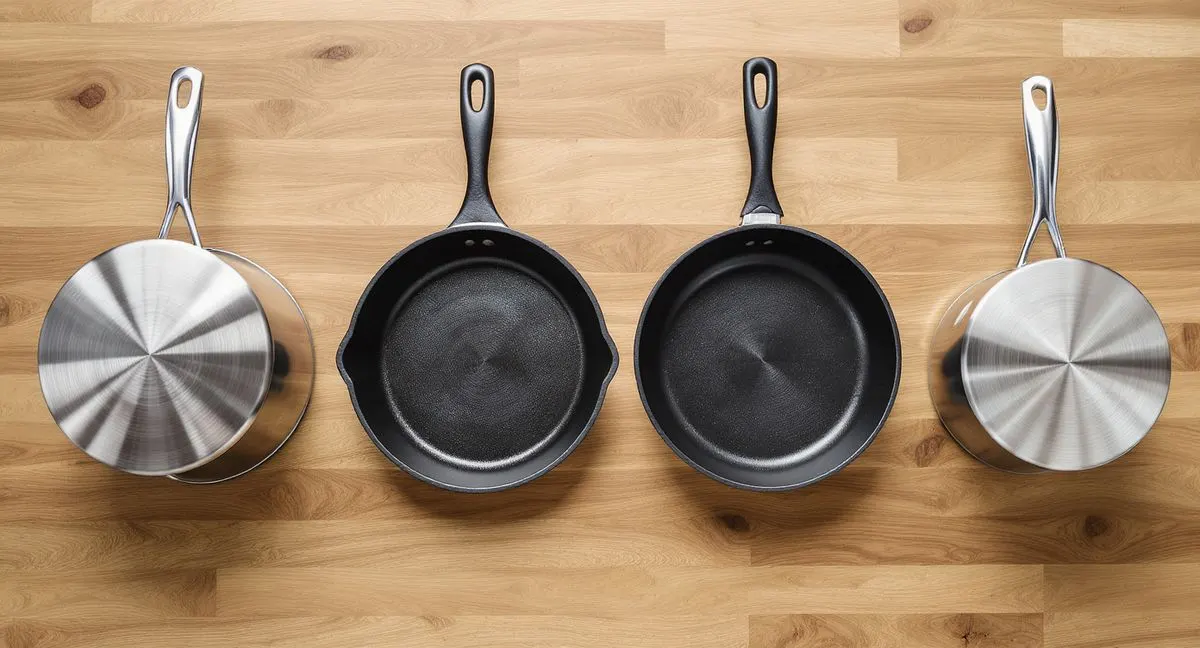
Van Cookware Materials: Cast Iron vs Carbon Steel vs Stainless vs Titanium
The five cookware materials van dwellers actually choose between — cast iron, carbon steel, tri-ply stainless, hard-anodized nonstick, and titanium — with the two-pan kit recommendation that covers every cooking task.
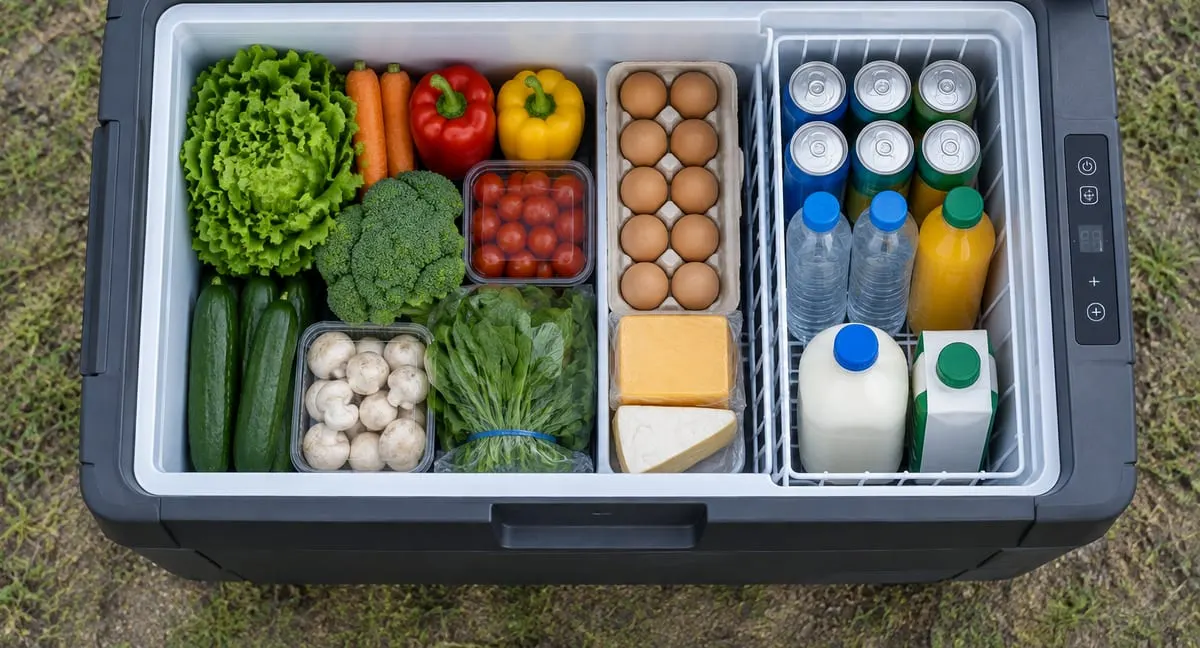
What Size 12V Fridge Do You Need for One or Two People?
Size a 12V fridge by resupply interval, fresh vs shelf-stable food, usable space and freezer needs, not headcount alone. Worked examples, clearances and published energy figures.
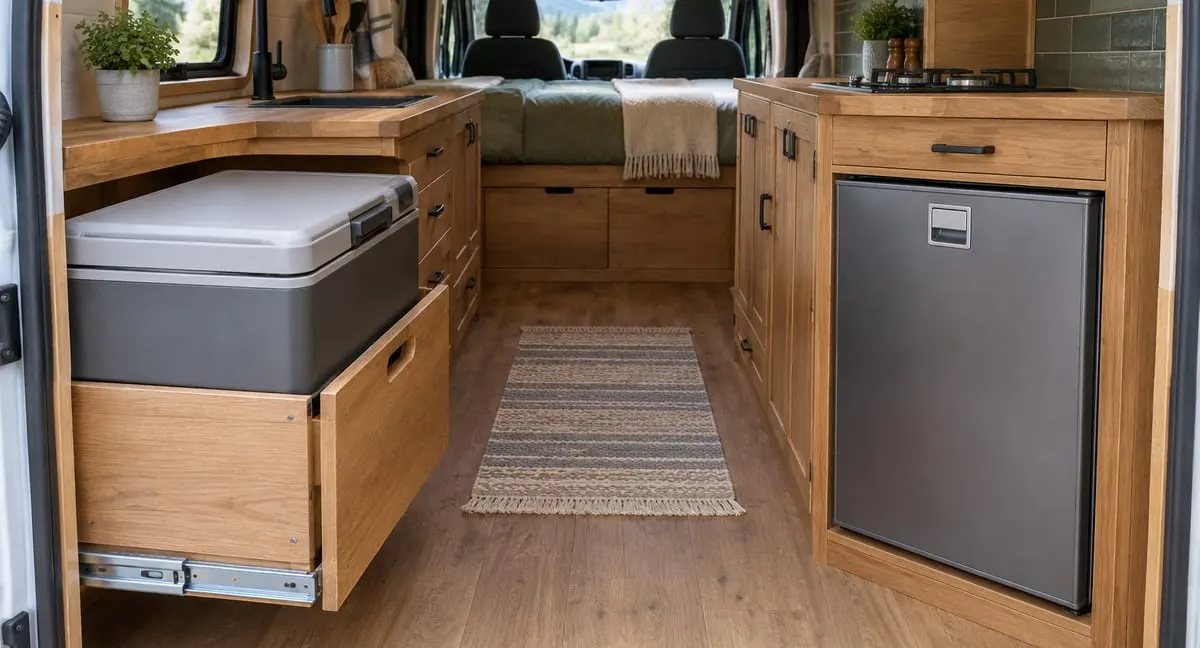
Chest vs Upright Fridge for a Campervan
Chest or front-opening 12V fridge? Floor space, lid vs door clearance, ventilation per the manuals, slides and tie-downs each maker offers, and model-specific energy figures.