BougeRV CR 30 Quart (28L) 12V Portable Fridge Freezer
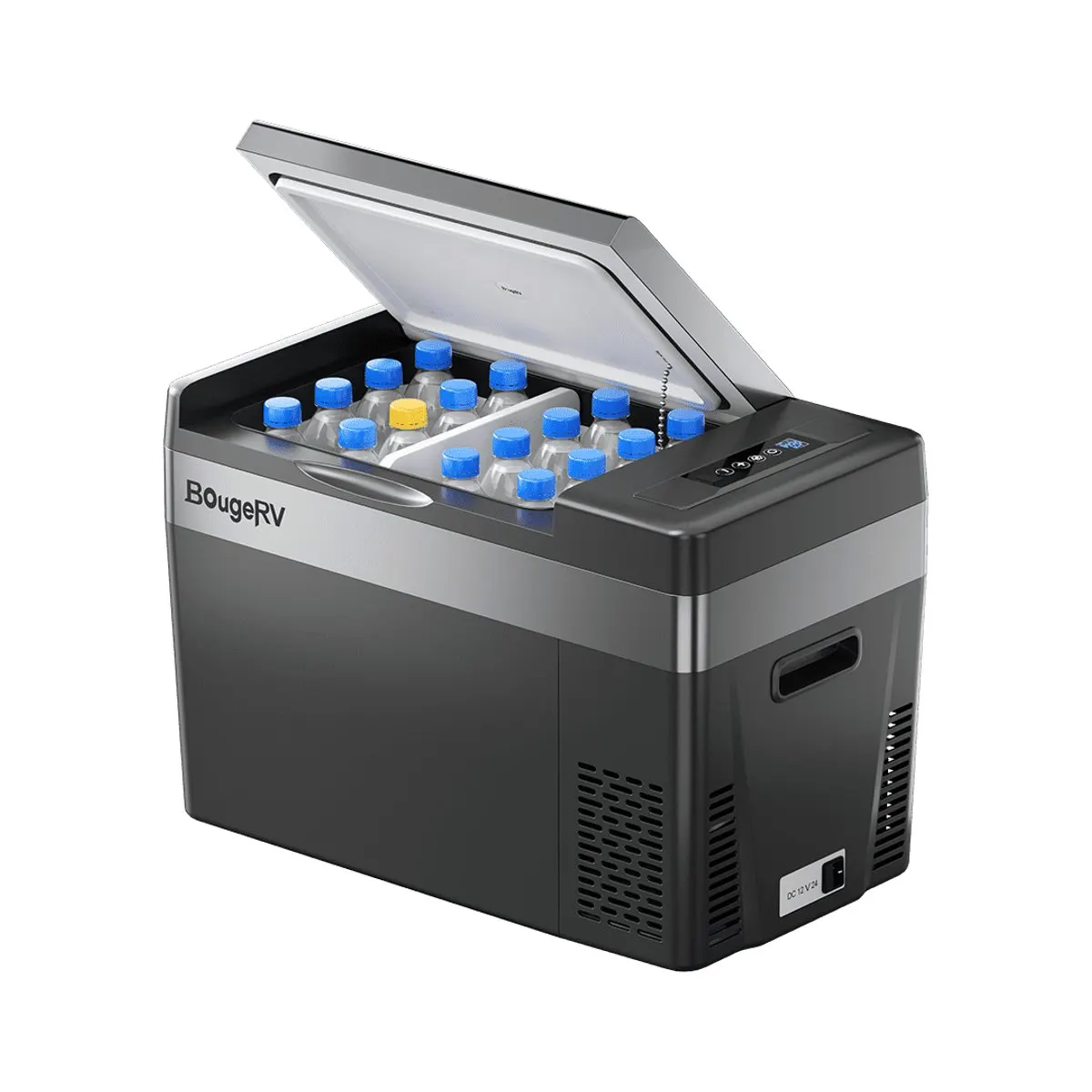
- Capacity
- 30 quarts (28L)
- Dimensions
- 22.7 x 12.6 x 15.5 in
- Weight
- About 24 lb (BougeRV figures vary)
- Power Source
- 12/24V DC + 100-240V AC
- Power Draw
- 45W ECO / 60W MAX (rated)
- Compressor
- Not disclosed (not Secop)
- Warranty
- 2 years, 3 with registration (BougeRV)
- Temp Range
- -8°F to 50°F
- Ventilation
- At least 20 cm behind, 10 cm at the sides (BougeRV manual)
Overview — Who Is This For?
The BougeRV 30 Quart 12V fridge (sold as the CR 30QT, and listed on Amazon under the CR28 name) is a single-zone compressor fridge-freezer at a budget price. It is for the shopper who wants a real 12V compressor fridge, not a thermoelectric cooler that can only manage 30 or 40 degrees below the air around it, and who does not want to pay premium prices for an Iceco or a Dometic to get one.
That puts it squarely in the budget tier. It is the right fit for weekend campers, first van builds where nobody yet knows if the lifestyle will stick, overlanders who need a small second fridge or a dedicated freezer, truck drivers who want fresh food in the cab, and anyone building a rig on a tight total budget. It is a poor fit for full-time van dwellers who need a fridge to run 24 hours a day, every day, for years, in hot climates. For those buyers, the extra money for a fridge with a Secop compressor and a longer track record is worth spending.
The headline facts from BougeRV's listing: 30 quarts (28 liters), a -8°F to 50°F (-22°C to 10°C) range, 45W in ECO mode and 60W in MAX mode, 12/24V DC plus 100–240V AC input, three-level battery protection, a rated noise level of 45 dB or less, and a listed weight of 24.3 pounds. That is 24.26 lb on Amazon; BougeRV's own page gives 23.8 lb in its spec table and 22.8 lb in its comparison block. No app, no Bluetooth, no interior light. It is a plain cold box, and at this price that is mostly fine.
Choose this if:
- You camp on weekends or a few weeks a year, or this is a first build.
- You need a narrow (12.6-inch), light box you can carry in and out.
- You want a second fridge or a dedicated freezer at a budget price.
Skip this if:
- The fridge will run every day, year-round, in a full-time build.
- You can't give it the clearance BougeRV requires: about 8 inches behind and 4 inches at the sides.
- You want an app, an interior light or a named compressor.
If you are working out whether a 12V compressor fridge makes sense for your build at all, start with our complete guide to 12V fridges. It covers compressor versus thermoelectric, single versus dual zone, and how to size the battery bank.
What It Replaces and What Changed
This review replaces our old Costway 30Qt 12V portable refrigerator review. The Costway model we covered is no longer sold on Amazon, so if you arrived here looking for it, the BougeRV is the closest current match. It sits in the same 30-quart, budget compressor-fridge slot.
Here is what is different, going by each brand's published specs:
- Weight. The Costway was listed at about 31 pounds. BougeRV's Amazon listing gives 24.26 pounds for the CR28 (30-quart) model, so it is noticeably lighter, which matters if you carry it in and out of a vehicle instead of mounting it.
- Footprint. The BougeRV measures 22.68 x 12.60 x 15.53 inches, a little narrower and a little taller than the Costway's listed 23.5 x 14 x 14.5 inches. The narrower width helps it fit between wheel wells and into tight galley cabinets.
- No app. The Costway we reviewed had Bluetooth app control. The BougeRV does not. You set the temperature from the control panel on top of the compressor housing. Most people stop opening fridge apps after the first week, but if remote monitoring matters to you, this is a real step back.
- Single zone. The BougeRV ships with a removable partition board for organizing the interior, but it is one compartment at one temperature. It does not run as a fridge and a freezer at the same time.
- Warranty. BougeRV's manual gives 2 years, extendable to 3 with owner registration. That beats the 1-year warranty we listed for the Costway.
In short, the BougeRV gives up the app and the dual-zone marketing in exchange for a lighter, more compact box from a brand that sells a lot of portable fridges and has a support operation behind them.
Capacity and Layout
Keep three numbers apart when planning the install:
- Interior capacity: 30 quarts (28 liters, 0.99 cu ft), per BougeRV's product page and manual. BougeRV lists the interior at about 13.8 x 9.8 x 12.4 inches (L x W x D).
- External dimensions: 22.7 x 12.6 x 15.5 inches (57 x 31.5 x 39 cm in the manual's diagram).
- Ventilation clearance: BougeRV's current manual asks for at least 7.9 inches (20 cm) behind the fridge and at least 3.9 inches (10 cm) at the sides. That is more than ICECO or Dometic ask for. The real footprint is closer to 30 x 20 inches than 22.7 x 12.6.
The manual's diagram shows a single top-opening lid hinged along the long rear edge. BougeRV doesn't say the lid can be reversed or removed, so plan for access from the front edge. There are no wheels, just side handles.
Thirty quarts is the size where a 12V fridge stops feeling like a lunchbox and starts working as a real food fridge for one or two people. Its own capacity graphics show the box holding 35 twelve-ounce cans, nine one-liter water bottles, or two one-gallon milk jugs standing upright.
The layout follows the usual chest-fridge pattern. The compressor and electronics sit under a raised step at one end, and the main well takes up the rest of the box. That step costs some floor space, but it also gives you a shallow shelf area over the compressor bay. The included partition lets you split the well into two sections. That helps keep raw meat away from produce, or keep drinks from burying the cheese, but both sides share one temperature.
In practice, a 30-quart single-zone fridge suits:
- One person on a trip of four to six days with occasional resupply
- Two people on a weekend trip, or longer if you shop every few days
- A dedicated freezer for meat or ice cream alongside a separate fridge (set it to the low end of its range)
Two people cooking most meals from the fridge for a week or more without resupply will probably find 30 quarts tight. Look at the 35-liter and larger options in the alternatives section below.
The depth of about 12.4 inches lets tall bottles stand upright, but items at the bottom are a reach. Owners of chest fridges in this size commonly use small bins or baskets to lift out layers. That is worth planning for, because the box does not come with a wire basket.
Power Draw and Battery Sizing
BougeRV rates the CR 30QT at 45W in ECO mode and 60W in MAX mode. At 12V, that works out to:
- ECO mode: 45W / 12V ≈ 3.75 A while the compressor runs
- MAX mode: 60W / 12V = 5 A while the compressor runs
Those are running figures, not daily averages. A compressor fridge cycles: it runs until the box reaches its set temperature, then stops, then starts again once the interior warms by a few degrees. BougeRV's manual describes a typical cycle as roughly 10 minutes off while the interior warms 3–5°C, then about 15 minutes running. Your daily battery use therefore depends on what share of the day the compressor runs (its duty cycle). That share rises with ambient heat, how often you open the lid, how warm the food is when it goes in, and how cold you set it.
Here is a planning estimate in amp-hours per day. These are our assumptions, not measurements. Duty cycles are typical ranges for small compressor fridges at fridge temperatures (around 37°F). Freezer setpoints will run higher.
| Scenario | Mode | Duty cycle | Wh/day | Ah/day at 12V |
|---|---|---|---|---|
| Mild (~70°F), few openings | ECO, 45W | ~30% | ~325 | ~27 |
| Warm (~85°F) | ECO, 45W | ~45% | ~485 | ~40 |
| Hot (90°F+), frequent use | MAX, 60W | ~60% | ~865 | ~72 |
The math: amps × 24 hours × duty cycle. For example, 3.75 A × 24 × 0.30 ≈ 27 Ah.
Some outside numbers help check these assumptions. BougeRV's own FAQ says a 12V fridge "usually uses 30-55 Amps/h on average per day." The Amazon listing says that even in MAX mode the fridge uses "far less than 1kWh/day," which is about 83 Ah at 12V, so it is a ceiling and not much of a planning number. The independent review site Footprint Hero reported that the 30-quart fridge ran for three days of continuous use on a 100Ah LiFePO4 battery, with battery protection on its high setting and ambient temperatures from about 35°F to 99°F during the trip. That is one reviewer's real-world result, not a lab figure. It works out to roughly 27–33 Ah (about 325–400 Wh) per day, depending on how much of the battery was usable, which fits the mild-weather row above.
For sizing:
- 100Ah lithium battery: about two to three days in mild weather with no charging, and less in heat. Paired with a 100–200W solar panel or a DC-DC charger that tops it up while driving, it is a sensible weekend-to-week setup.
- Hot-climate summer use: plan for a 200Ah bank and 200W or more of solar if the fridge will sit in a parked vehicle in the sun.
- Starting battery only: use the battery protection on its highest setting (see below), and do not count on more than overnight.
Pre-chilling food at home and keeping the fridge out of direct sun both cut energy use noticeably. BougeRV specifically warns against direct sunlight, saying it can deform the lid. Use our van power calculator to plug the fridge into your full electrical budget alongside lights, fans, and cooking loads.
Cooling Performance
BougeRV claims the CR 30QT pulls down from 77°F to 32°F in about 15 minutes, and from 77°F to -4°F in about 50 minutes (the Amazon listing says -5°F). Treat those as best-case, empty-box figures from the manufacturer. Footprint Hero estimated, rather than timed, a cool-down of about 25 to 30 minutes in ECO mode. The same reviewer reported the fridge kept cooling in ambient temperatures up to about 99°F and at about 9,000 feet of elevation.
Two practical notes from BougeRV's FAQ:
- After unboxing, let the fridge stand level before switching it on, so the compressor oil can settle after shipping. BougeRV's current manual says 12 hours, while its website FAQ says more than 6 hours. Go with the manual.
- The temperature sensor sits at the bottom of the cabinet. The display therefore shows the temperature near the floor of the box, and items near the top will usually run a little warmer.
BougeRV does not name the compressor manufacturer on its product listing, and we could not confirm it. What we can say is that it is not marketed as a Secop (formerly Danfoss) unit, which is what you pay for in the Iceco and higher-end Dometic models. Budget compressors have improved a lot, but their long-term record under heavy daily use is shorter. BougeRV doesn't disclose the compressor maker, so the warranty (2 years, 3 with registration) is the protection you can count on.
Build, Lid and Controls
From BougeRV's product photos and specs:
-
Shell: molded plastic body with a contrasting band and a recessed carry handle at each end. At about 24 pounds empty, one person can carry it, though a loaded 30-quart fridge is a two-hand job.
-
Lid: a top-opening lid with an inner gasket and a short tether that limits how far it opens. The lid is the part BougeRV warns can deform in direct sun, so do not leave it on a dashboard or a sun-baked tailgate.
-
Controls: a small button panel with a digital temperature display on top of the compressor step. It covers power, mode (ECO/MAX), temperature, and battery-protection setting. No app and no remote monitoring.
-
Battery protection: three selectable levels. BougeRV's current manual lists these 12V cut-out / cut-in voltages:
- H: 11.3V / 12.5V
- M: 10.1V / 11.4V
- L: 8.5V / 9.6V
The fridge restarts 2 minutes after the cut-in voltage is reached, and the factory default is M. Use H if the fridge could draw from a vehicle starting battery. An older version of the manual lists different values, so check the one that ships with your unit.
-
Power: a 12/24V DC socket on the end panel, a 12/24V DC cord, and a 100–240V AC adapter in the box.
-
Off-road tolerance: the Amazon listing says it runs at up to a 30° tilt. BougeRV's manual is more conservative: under 5° for long-term running, and under 45° only briefly. Mount it level.
What it lacks compared with the step-up BougeRV CRPRO 30 (and the newer CRPRO VIP): no interior light and no built-in bottle opener. The CRPRO 30 is also listed slightly heavier, at about 27.6 pounds. BougeRV's comparison table shows no app on either model.
Noise and Ventilation
BougeRV rates the fridge at 45 dB or less. Footprint Hero measured about 53 dB in MAX mode at the lowest temperature setting, the hardest-working condition, so expect it to be audible in a small van when it is pulling down hard. In ECO mode, with the fridge holding a fridge temperature, it will run quieter and cycle off for stretches. Light sleepers will still want it at the far end of the van from the bed.
The compressor bay has vent grilles on the end and side panels. To let it get rid of heat, BougeRV's manual asks for at least 7.9 inches behind and 3.9 inches at the sides. Boxing it tightly into a cabinet with no airflow will raise its duty cycle and its battery use. If you build it into a cabinet, leave a vent path or add a small fan.
Who Should Skip It
Skip the BougeRV 30 Quart if:
- You live in your vehicle full-time. A fridge that runs every day for years justifies a Secop compressor and a longer warranty. Look at the Iceco options below.
- You want a fridge and freezer at the same time. This is single-zone. You need a true dual-zone fridge with two compartments and separate controls.
- You want app monitoring. There is none.
- You need more than 30 quarts for two people for a week. Size up to 35–45 liters or more.
- You hate gambling on longevity. Owner durability reports at this price are mixed. If a failure in year two or three would leave you stuck, spend more.
Alternatives
- Iceco VL35 ProS — mid-range. Secop compressor, sturdier build, 35 liters. The sensible step up for anyone who will use a fridge heavily.
- ICECO JP40 Pro — mid-range. A 37-liter (40-quart) wheeled fridge with a Secop compressor and an app. Probably the best upgrade path if you want more space and a proven compressor.
- Alpicool C20 — budget. Smaller (20 liters) and cheaper, with Bluetooth app control. Good for solo weekenders or as a small drinks fridge.
- Dometic CFX5 35 — premium. Vacuum insulated panels, an app and a published 90°F energy rating, for full-timers who want the most refined 35-liter box.
- Dometic CFX2 45 — premium. A larger Dometic for buyers who want 45 liters and the Dometic ecosystem.
- Iceco VL60 Dual Zone — mid-range. Separate fridge and freezer compartments, for buyers who need both at once.
Verdict
The BougeRV 30 Quart is an honest budget compressor fridge. It is light, compact, quick to cool by the manufacturer's numbers and one independent review's account, and modest enough on power that a single 100Ah lithium battery can carry it through a mild-weather weekend. It drops the app the old Costway had and makes no dual-zone claims, but for most weekend campers those features matter less than the price.
The trade-offs are the usual ones at this price: an unnamed compressor without a Secop's track record, mixed long-term durability reports, and a plastic lid you need to keep out of the sun. Buy it for weekend trips, a first build, or as a second fridge or dedicated freezer. If the fridge will run every day of the year, spend the extra on an Iceco JP40 Pro or VL35.
FAQ
Is the BougeRV 30 Quart fridge a compressor fridge or thermoelectric? It is a compressor fridge. That is why it can reach freezer temperatures (down to -8°F per BougeRV's listing) regardless of the outside temperature, unlike thermoelectric coolers, which can only cool a set amount below ambient.
How many amp-hours per day does the BougeRV 30 Quart use? Its rated power is 45W in ECO mode and 60W in MAX mode, about 3.75 A and 5 A at 12V, but only while the compressor runs. Assuming typical duty cycles, plan for roughly 25–30 Ah (300–360 Wh) per day in mild weather and 40 Ah (about 480 Wh) or more in heat. These are our estimates. BougeRV's own guidance for 12V fridges is 30–55 Ah per day. Actual use depends on ambient temperature, setpoint, and how often you open the lid.
Can I run the BougeRV 30 Quart directly from a solar panel? No. BougeRV says panel voltage fluctuates too much for direct connection. Run solar through a charge controller into a battery or a portable power station, and power the fridge from that.
Can it be a fridge and freezer at the same time? No. It is single-zone. The included partition board divides the space, but both sides hold the same temperature. If you need both at once, look at a true dual-zone model such as the Iceco VL60.
Does the BougeRV 30 Quart have an app or Bluetooth? No. BougeRV's comparison table lists no app for this model. All settings are on the control panel on top of the fridge.
What warranty does it come with? BougeRV's manual and product page give 2 years (24 months), extendable to 3 years if you register through BougeRV's owner program. The Amazon listing mentions 2 years of tech support. Keep your receipt, since claims go through BougeRV.
How long should I wait before turning it on after delivery? BougeRV's current manual says to let it stand level for 12 hours after unpacking before you switch it on, so the compressor oil can settle. Its website FAQ says more than 6 hours; the manual's longer figure is the safer one.
Compare with similar products
See how this stacks up against the other 12v fridges we've reviewed.
Head-to-head comparisons
Related Reviews
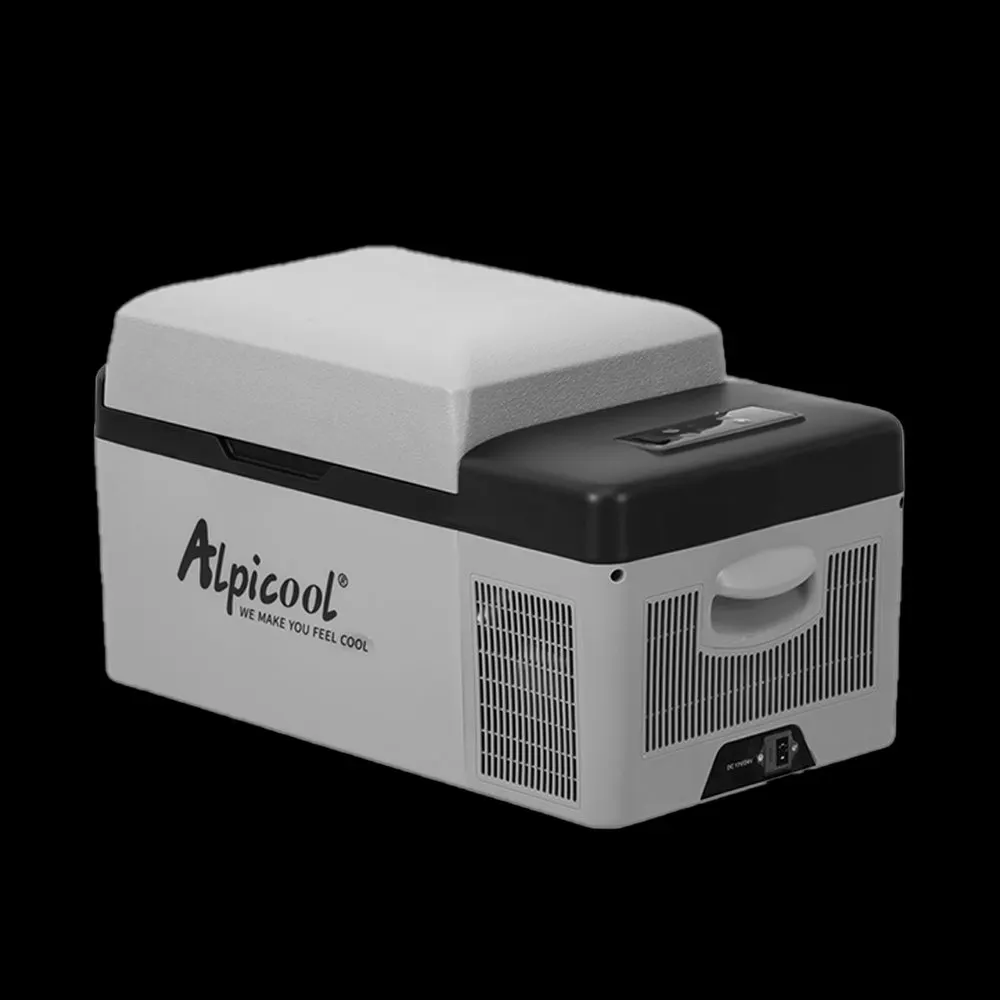
For: Small vans, low power draw
Alpicool C20 12V Portable Compressor Fridge
A smaller step down from the BougeRV 30 qt: 21 quarts, compressor cooling and a low-voltage cutoff at a budget price. Alpicool publishes no rated wattage or ventilation clearance, so plan with margin.
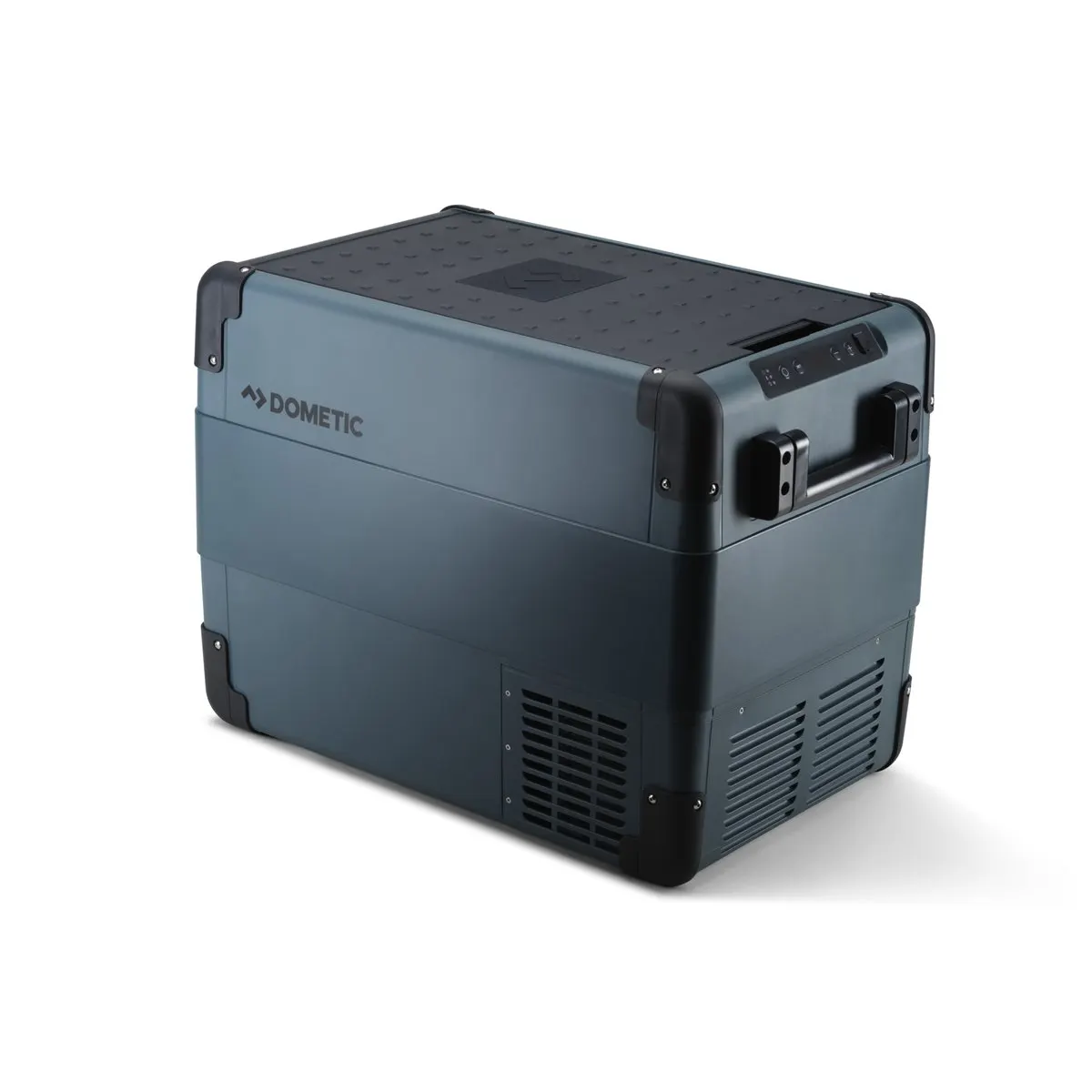
For: Simple single-zone 45L
Dometic CFX2 45 Electric Cooler
A roomy, simple 45L Dometic with a solid rated efficiency figure, but a step down from the CFX3 and CFX5 in display and app features, at a premium price.
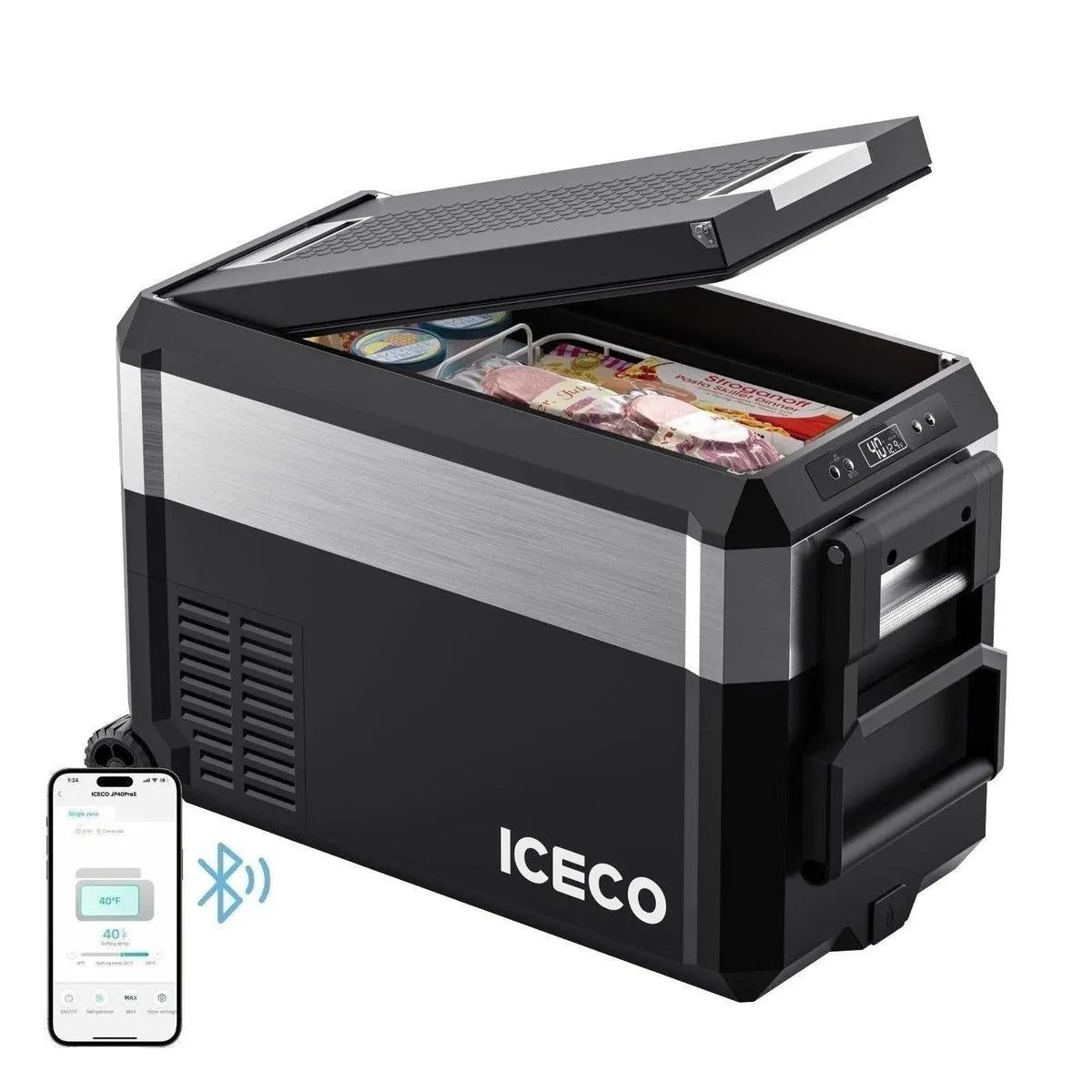
For: Wheeled 40L, narrow bays
ICECO JP40 Pro 37L (40 qt) Wheeled 12V Fridge Freezer
A 40L single-zone Secop fridge with wheels, a reversible lid and Bluetooth app at a mid-range price. Same footprint as the old JP30 Pro, 10 liters more inside.