ICECO VL60 Dual Zone 60L 12V Fridge Freezer
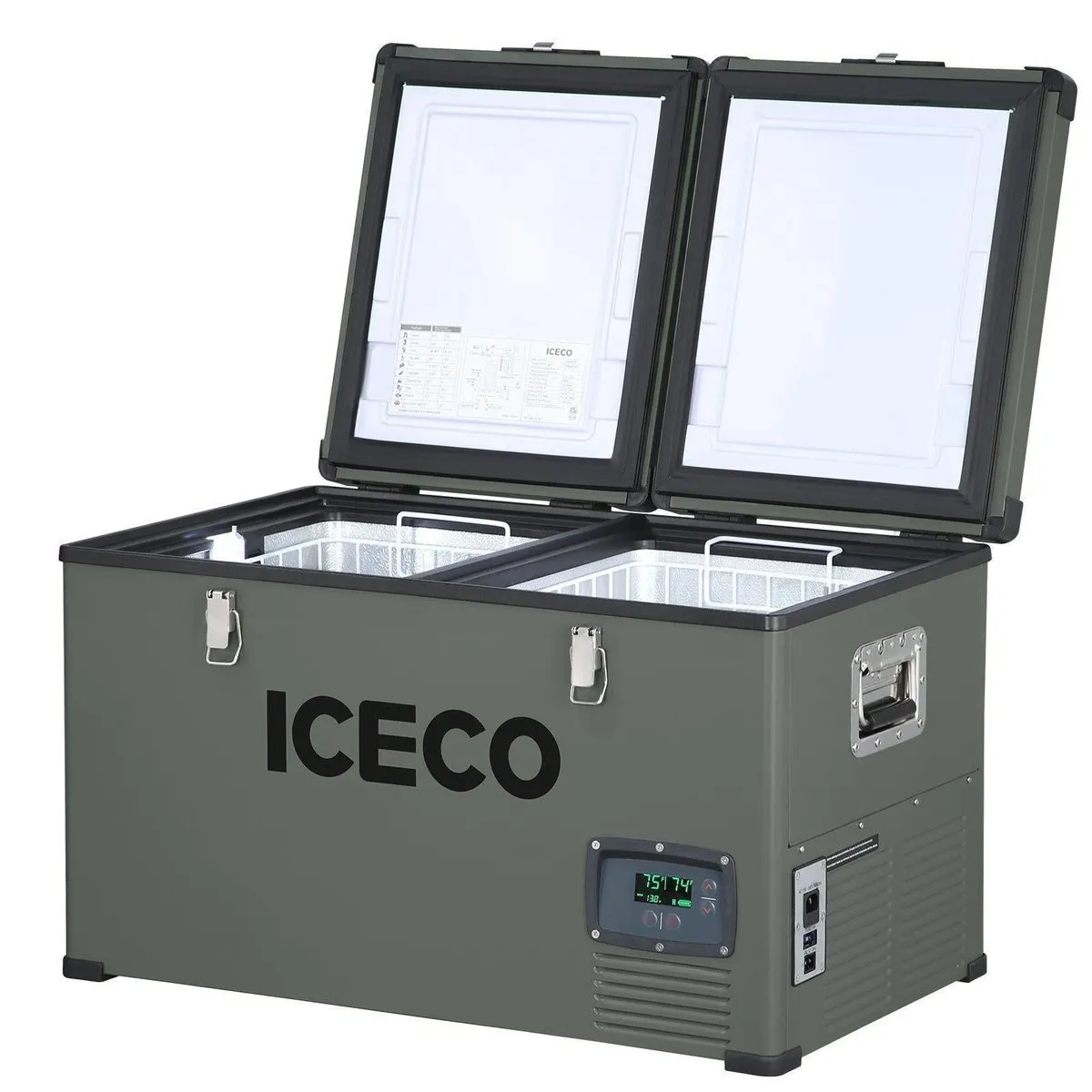
- Capacity
- 60 L / 63 qt (dual zone)
- Dimensions
- 31.2 x 19.5 x 18.9 in
- Weight
- 64 lbs
- Power Source
- 12/24V DC + 110-240V AC
- Power Draw
- 0.545 kWh/24h (ICECO catalog page and Amazon; ~45 Ah/day at 12 V)
- Compressor
- Secop
- Warranty
- 5 yr compressor / 1 yr parts
Overview — who it's for
The ICECO VL60 (model VL60D) is a 60-liter (63.4-quart) dual-zone 12V compressor fridge-freezer: two separate compartments with separate lids and separate setpoints, cooled by one Secop compressor in a steel cabinet. It sits at the affordable end of dual-zone fridges, and ICECO includes its insulated protective cover.
The reason to buy a dual zone is simple: you want a real fridge and a real freezer at the same time. Frozen meat for the week next to fresh produce. Ice cream that's still ice cream on day four. Fridge food on one side and drinks kept just above freezing on the other. The VL60 is for:
- Full-time couples and families who shop once a week or less and want both zones running.
- Long trips away from resupply, like overlanding, remote camping or hunting trips, where frozen protein extends how long you can stay out.
- Truck and trailer owners with room for a big box. ICECO designed it at about 18.8–18.9 inches tall to fit under a pickup tonneau cover.
It's not for small vans with tight galleys, people who carry the fridge in and out often (it's heavy), or small electrical systems.
Choose this if:
- You want a fridge and a freezer running at the same time, each with its own lid and setpoint.
- You're feeding two or more people for a week or longer between shops.
- You have about 200 Ah of lithium and solid charging, and room for a 31 x 20 inch box plus ventilation space.
Skip this if:
- One zone is enough. The ICECO JP40 Pro is smaller, lighter and needs less battery.
- You move the fridge often. It weighs 64 lbs empty and has no wheels.
- You need deep-freeze temperatures. The floor is 0°F.
Choose this if:
- You want a fridge and a freezer running at the same time, each with its own lid and setpoint.
- You're feeding two or more people for a week or longer between shops.
- You have about 200 Ah of lithium and solid charging, and room for a 31 x 20 inch box plus ventilation space.
Skip this if:
- One zone is enough. The ICECO JP40 Pro is smaller, lighter and needs less battery.
- You move the fridge often. It weighs 64 lbs empty and has no wheels.
- You need deep-freeze temperatures. The floor is 0°F.
How we researched it: VanLifeKitchens doesn't test products hands-on. The specs below come from ICECO's VL60/65 manual, its product page and spec graphics, and the Amazon listing we link ("ICECO VL60 Dual Zone Portable Refrigerator with SECOP Compressor, 60 Liters"). Observations about real-world behavior come from owner reports and published third-party reviews, and we say whose they are. Where a number isn't published, we leave it out.
Bottom line up front: the VL60 gives you a true dual-zone fridge with a Secop compressor, a steel cabinet and a five-year compressor warranty, which is far less than premium dual-zone brands charge. You trade some size, weight and battery capacity for it.
What it replaces and what changed
If you arrived from our old Whynter FM-62DZ or Whynter FM-45G reviews, here's why. Both Whynter dual-zone fridges are no longer available on Amazon, so we've retired those pages and pointed them here. The VL60 is the closest current match: a large dual-zone portable fridge in the same general price range that you can still buy.
How it compares to what you were looking at:
- Capacity. The FM-62DZ was a 62-quart dual zone, so the VL60's 63.4 quarts is essentially the same size. If you were looking at the smaller 45-quart FM-45G, the VL60 is a clear size step up. That's good if you're feeding more than two people, and less good if space is tight.
- Weight. Both are heavy. ICECO's VL60 manual lists 64.0 lb (29.0 kg) net, in the same range as the FM-62DZ. Either way, it's a two-person lift once loaded.
- Compressor. ICECO specifies a Secop compressor, the brand most premium 12V fridges use.
- Warranty. ICECO covers the Secop compressor for 5 years and other parts for 1 year.
- Dual-zone flexibility. Each VL60 compartment has its own lid and setpoint, and you can switch one zone off completely to run it as a single-zone fridge when you don't need the freezer. That saves energy.
The main thing that didn't change: like the big Whynter, the VL60 is a box you plan your layout around. It doesn't go into whatever space happens to be left over.
Capacity & layout
Keep three numbers apart:
- Interior capacity: ICECO's manual lists 60.0 liters (63.0 quarts; the product page says 63.4). ICECO rates it at roughly 89–91 standard 12-oz cans (89 on the product page, 91 on the spec graphic), 50 half-liter water bottles or 20 wine bottles.
- External dimensions: 31.2 x 19.5 x 18.9 inches (792 x 495 x 480 mm), per ICECO's manual.
- Ventilation clearance: ICECO's manual asks for more than 5 cm (about 2 inches) on the left and right sides and 10 cm (about 4 inches) at the front air outlet. It gives that figure as the fix for its E4/E5 error codes. So plan on roughly 35 x 23.5 inches of floor space, not 31.2 x 19.5.
You load each zone from above through its own lid. ICECO's manual doesn't describe the hinge direction or say whether the lids can be removed. The Amazon listing mentions metal hinges and a reversible door orientation, so check the listing photos against your layout. There are no wheels; ICECO fits built-in spring steel handles.
The two zones are not the same size. ICECO's internal dimension graphic shows one compartment as a full-depth box of about 14 x 12.3 x 14 inches. The other has the usual step over the compressor, with a shelf section of about 7.7 by 7.9 inches. ICECO doesn't publish a per-zone volume, so we won't make one up, but the graphic makes it clear that the full-height compartment is the larger of the two. Its spec graphic shows both arrangements, freezer on one side or the other.
Practical ways to set it up:
- Bigger side as fridge, smaller side as freezer. The usual choice for most travelers: a week of fresh food plus a solid freezer for meat, frozen vegetables and treats.
- Bigger side as freezer. Useful for long remote trips where frozen protein is what lets you stay out longer.
- Both sides as fridges at different temperatures. For example, one side at 34°F for meat and dairy, the other in the 40s for produce and drinks that shouldn't freeze.
- One zone off. Run only one side in shoulder seasons or on short trips to cut power use.
ICECO lists a cooling range of 0°F to 50°F. That's a narrower freezer floor than the -4°F to -8°F some single-zone fridges list. One published long-term review, Camp Addict's VL60D write-up, noted that 0°F doesn't keep ice cream rock-hard. Everything else freezes fine.
Removable wire baskets are included. ICECO's manual lists three and the Amazon listing says two, so expect at least one per zone. The Amazon listing also describes an interior LED light that comes on when a lid opens.
Power draw & battery sizing
First, keep the published power rating separate from daily energy use. ICECO doesn't publish a nameplate wattage or current for the VL60. Its website claims 60–65 W while running, and Camp Addict measured 40–45 W on 12V. Those are running figures, never 24-hour figures.
For daily energy, ICECO's own numbers conflict. The catalog page of its VL60/65 manual lists 0.545 kWh per 24 hours for the VL60. Its Amazon listing gives 199 kWh a year, which is the same figure. But the manual's consumption FAQ table lists the VL60 at 0.416 kWh. That table appears to be shifted by one row, because the catalog gives 0.416 to the VL74 and 0.545 to the VL60. ICECO labels all of these laboratory figures and doesn't state the ambient temperature or setpoints. For battery sizing we plan around 0.545 kWh (545 Wh, about 45 Ah at 12V), which is both the better-supported figure and the more cautious one.
Converting it into planning numbers:
Assumptions: 12V system (we divide watt-hours by 12 to get amp-hours; a 12.8V lithium bank comes out slightly lower). Both zones running, one as a fridge around 37°F and one as a freezer around 0°F. Planning numbers rounded.
| Conditions | Basis | Wh/day | Ah/day at 12V |
|---|---|---|---|
| ICECO catalog / Amazon | 0.545 kWh/24h | ~545 | ~45 |
| Camp Addict 24h run | 40% of a Jackery 1500 | ~600 | ~50 |
| Mild / one zone off | ~60–70% of rated | ~330–380 | ~27–32 |
| Hot, 95°F+, frequent use | ~1.5x rated | ~820 | ~68 |
The mild and hot rows are our estimates, not ICECO figures. They follow how compressor fridges generally behave: energy use rises with the gap between ambient and setpoint, and a freezer zone at 0°F widens that gap a lot. The Camp Addict row is our conversion of a reviewer's result. They measured roughly 40–45 W while the compressor was running on 12V. With one side at 0°F and the other at 38°F, they reported the fridge used about 40% of a Jackery 1500 in 24 hours. If that unit was the 1,534 Wh Explorer 1500, it works out to roughly 600 Wh, or about 50 Ah at 12V. That is close to the 0.545 kWh figure, which is why we size around it.
Duty cycle and battery protection. One compressor serves both zones, so the duty cycle rises quickly in heat. ICECO's manual lists three battery-protection levels at 12V, as cut-off / restart voltages:
- Low: 9.6V / 10.9V
- Medium: 10.4V / 11.7V
- High: 11.1V / 12.4V
Use High if it could draw from a starting battery. Check how many days your bank lasts in the fridge battery calculator.
What that means for your electrical system:
- 100Ah LiFePO4 can run it, but it's tight. In moderate weather that's about two days with no charging, and in hot weather barely more than one. Only workable with daily solar or alternator charging.
- 200Ah LiFePO4 + 300–400W solar is our realistic recommendation for running both zones full-time.
- Lead-acid or AGM: plan for at least double the amp-hours.
This is the main cost of going dual zone at 60 liters. You need about a third to a half more battery than a 37-liter (40-quart) single zone fridge like the ICECO JP40 Pro. Run your own setup through our van power calculator, and see the 12V fridge complete guide for more on sizing batteries and solar around a compressor fridge.
ICECO's manual also describes MAX and ECO compressor-speed modes. Use MAX for the first pull-down and ECO day to day.
Build, lid & controls
This is where the VL60 justifies its price. The cabinet is a painted steel shell that ICECO calls "shockproof," with heavy-duty corner caps, recessed spring-loaded steel handles at each end and stainless-look latches on each lid. ICECO also notes an extra-thick insulation layer in its spec graphics. Camp Addict described the build as "almost military-like," and owner reports generally say the same. The common complaints are about weight and temperature accuracy, not durability.
Two lids, two latches. Each zone has its own lid, so opening the fridge side doesn't vent the freezer. That helps both temperature stability and power use.
Controls. A single front panel shows both zone temperatures and battery voltage, with mode, power and up/down buttons. ICECO's product page doesn't list Bluetooth or an app for the VL60, so plan on using the physical panel. For a fridge that sits in a truck bed or trailer, that's a reasonable trade.
Power inputs. The side panel has a 12/24V DC input, an AC input with a built-in AC adapter (110–240V, no external power brick) and a USB port. ICECO includes both cables.
Tilt and certification. ICECO rates it to run at up to 40° of tilt, and it's ETL certified.
Temperature accuracy. This is the most consistent caveat. In Camp Addict's review, the left-hand zone fluctuated up to 8°F from its setpoint while the right-hand (freezer) zone stayed within about 2°F of a 0°F setting, and their thermometers read 5–6°F warmer than the digital display. Owners commonly suggest checking each zone with a cheap standalone thermometer for the first few days and adjusting the setpoint to match. It's not unusual for dual-zone portable fridges, but you should know about it.
Noise & ventilation
ICECO doesn't publish a noise rating for the VL60, and we haven't measured one. Owners describe it as quiet, with the usual Secop-fridge low hum during run cycles and clicks at start and stop. In a large truck, trailer or van it rarely comes up as a complaint.
Ventilation matters more with this fridge than with smaller ones, because one compressor is serving two zones and works harder:
- Keep the compressor-side vents and the side power panel clear. ICECO's manual asks for more than 5 cm at the left and right sides and 10 cm at the front air outlet.
- ICECO says the compressor can fail at ambient temperatures above 55°C (131°F), and a closed vehicle in sun can get that hot.
- Don't run it in a closed, hot vehicle without airflow. Camp Addict reported that leaving the VL60 running in a 100°F+ vehicle without ventilation produced an electrical burning smell. The unit kept working, but that's a clear warning about heat in the compressor bay.
- Keep it out of direct sun, and use the included insulated cover in a truck bed. It reduces how much the compressor has to run.
Who should skip it
- Small vans and tight galleys. At 31.2 x 19.5 x 18.9 inches, it takes up a lot of floor space. A 37-liter single zone like the ICECO JP40 Pro uses far less.
- People who move the fridge a lot. At 64 lb empty and much more loaded, with no wheels, it's meant to stay put on a slide or truck-bed mount.
- Small electrical systems. If you have one 100Ah battery and little solar, run a single zone or buy a smaller fridge.
- Hard-freeze needs. If you want ice cream rock-hard or need deep-freeze temperatures, the 0°F floor is limiting.
- App users. No app or Bluetooth is listed. The Dometic CFX2 45 and Dometic CFX5 35 cover the connected, premium end, at a higher price.
Alternatives
- Dometic CFX2 45: a smaller single-zone fridge from Dometic, for buyers who don't need a separate freezer and want the brand in a more compact box.
- ICECO JP40 Pro: 37-liter (40-quart) single zone with wheels, a reversible lid and an app, for less money. The better choice if you don't need fridge and freezer at the same time.
- ICECO VL35 ProS: the compact steel-cabinet single zone in the same VL family.
- Dometic CFX5 35: premium single zone for buyers who care most about refinement and connected features.
- BougeRV 30 Qt and Alpicool C20: much smaller, cheaper single-zone fridges if a dual zone is more than you need.
Verdict
The ICECO VL60 is a strong value in dual-zone 12V fridges. For a mid-range price you get 60 liters split into two compartments with separate lids and setpoints, a Secop compressor, a tough steel cabinet with a built-in AC adapter, an insulated cover and a five-year compressor warranty. If you're coming from the Whynter FM-62DZ, it's essentially the same size class in a box you can actually buy, with a well-regarded compressor.
The compromises are size, weight and power. It needs a lot of floor space, plus ventilation gaps, and a battery bank sized for about 45 Ah (545 Wh) a day or more. The 0°F freezer floor isn't true deep-freeze. And one published review found the zone temperatures drift enough that you should check them with a thermometer. If you have the space and the electrical system, those are reasonable trade-offs for a real fridge and freezer at this price.
FAQ
What does the ICECO VL60 replace?
It replaces the Whynter FM-62DZ and FM-45G dual-zone fridges, which are no longer sold on Amazon. The VL60 is 63.4 quarts, essentially the same size as the 62-quart FM-62DZ, and uses a Secop compressor with ICECO's 5-year compressor warranty.
How much power does the ICECO VL60 use?
ICECO's manual catalog and its Amazon listing give 0.545 kWh per 24 hours, about 545 Wh or 45 Ah at 12V. One table in the manual says 0.416 kWh, but it appears to be misaligned. Plan around 45 Ah per day with both zones running in moderate conditions. Expect roughly 27–32 Ah a day in mild weather or with one zone off, and 65 Ah or more in hot weather. Camp Addict measured about 40–45 W while the compressor was running on 12V, and its 24-hour run works out to roughly 50 Ah.
Can I run the VL60 as a fridge and freezer at the same time?
Yes. That's the point of the dual-zone design. Each compartment has its own lid and setpoint, so one side can be a freezer while the other is a fridge, or both can be fridges at different temperatures. You can also switch one zone off to save power.
How cold does the ICECO VL60 get?
ICECO lists a range of 0°F to 50°F. That's cold enough to freeze food solid, but it's not deep-freeze, and one published review noted ice cream doesn't stay rock-hard at 0°F.
How big and heavy is the ICECO VL60?
ICECO's VL60 manual gives exterior dimensions of 31.2 x 19.5 x 18.9 inches (792 x 495 x 480 mm) and a net weight of 64.0 lb (29.0 kg). Add ICECO's ventilation gaps, more than 5 cm at each side and 10 cm at the front air outlet. It's sized to fit under a pickup tonneau cover, but plan for two people to lift it once it's loaded.
Does the ICECO VL60 have an app?
ICECO's product page doesn't list Bluetooth or app control for the VL60. You control it from the front panel, which shows both zones' temperatures and battery voltage.
What battery do I need to run the VL60?
To run both zones full-time, plan for about 200Ah of LiFePO4 with 300–400W of solar. A 100Ah lithium battery works only with daily charging or one zone switched off. Lead-acid banks need about double the amp-hours.
Compare with similar products
See how this stacks up against the other 12v fridges we've reviewed.
Head-to-head comparisons
Related Reviews
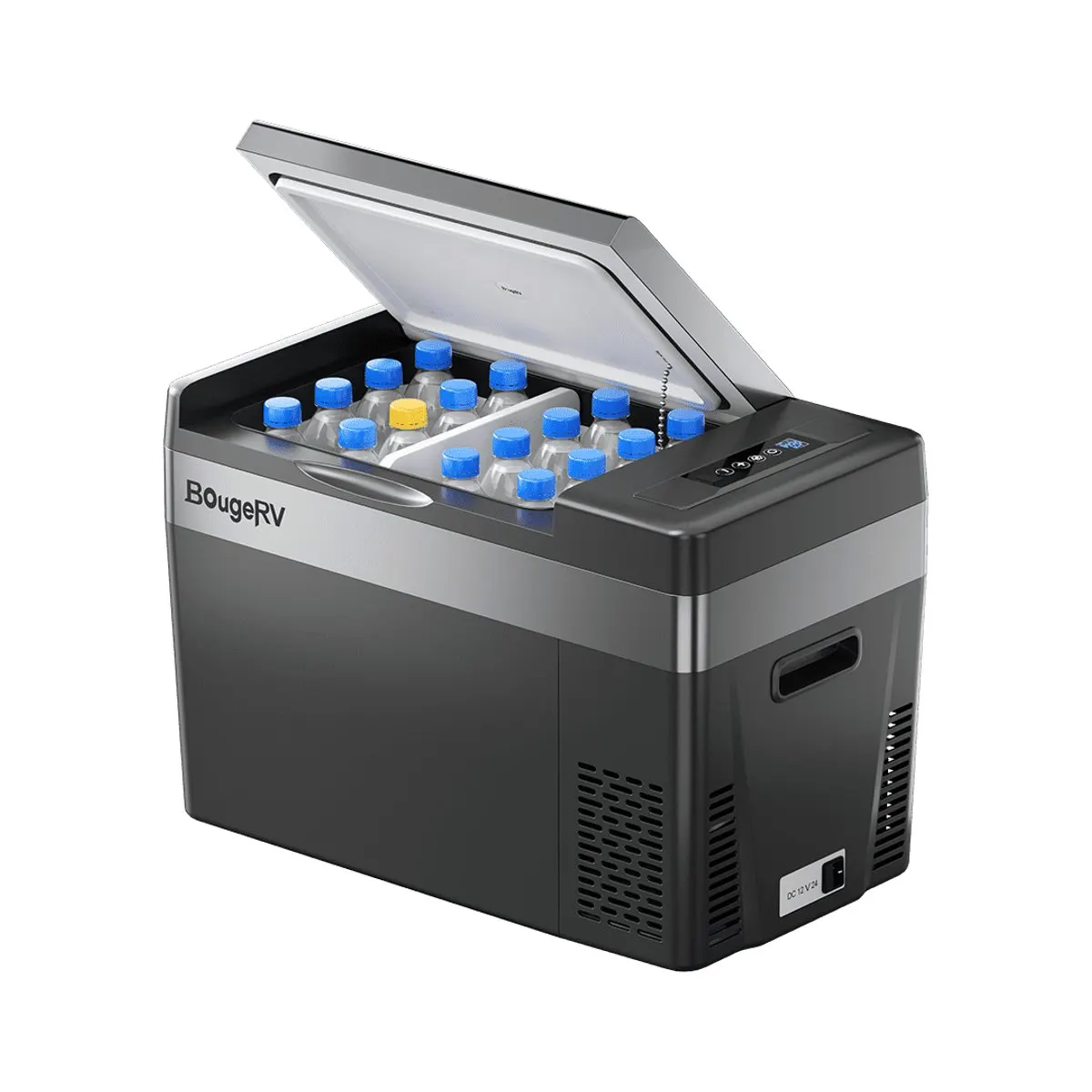
For: Weekend trips, first builds
BougeRV CR 30 Quart (28L) 12V Portable Fridge Freezer
A light, compact 30-quart compressor fridge-freezer at a budget price. No app and not a Secop, but a sensible budget pick for weekend trips and first builds.
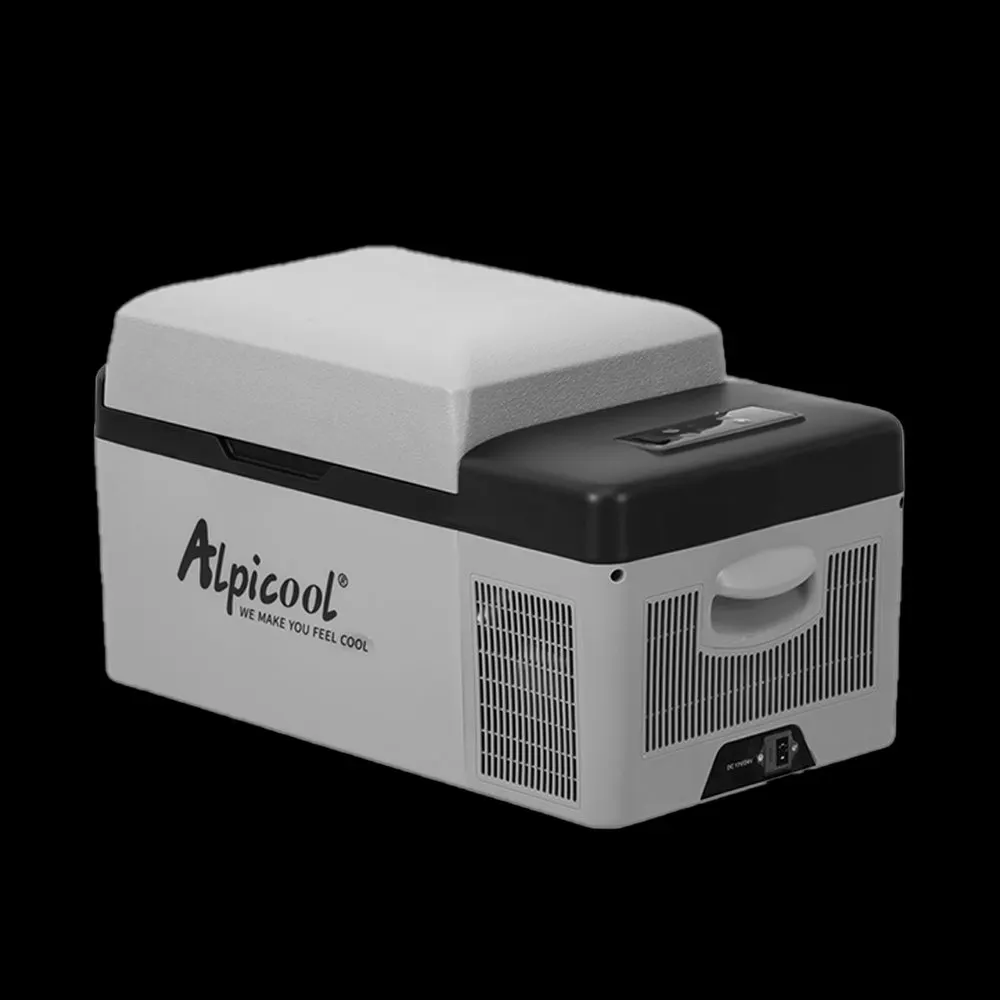
For: Small vans, low power draw
Alpicool C20 12V Portable Compressor Fridge
A smaller step down from the BougeRV 30 qt: 21 quarts, compressor cooling and a low-voltage cutoff at a budget price. Alpicool publishes no rated wattage or ventilation clearance, so plan with margin.
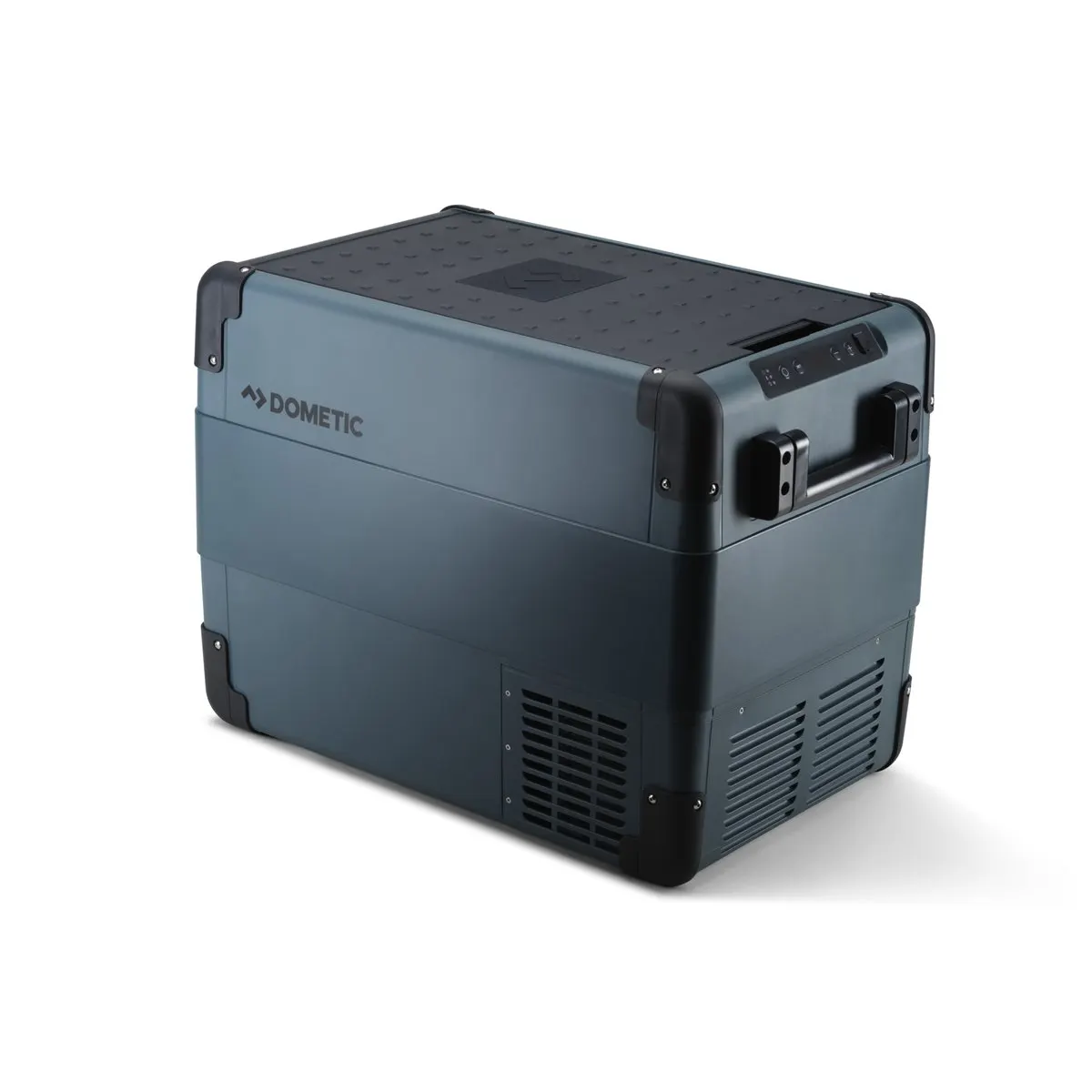
For: Simple single-zone 45L
Dometic CFX2 45 Electric Cooler
A roomy, simple 45L Dometic with a solid rated efficiency figure, but a step down from the CFX3 and CFX5 in display and app features, at a premium price.