Dometic CFX5 35 Electric Cooler
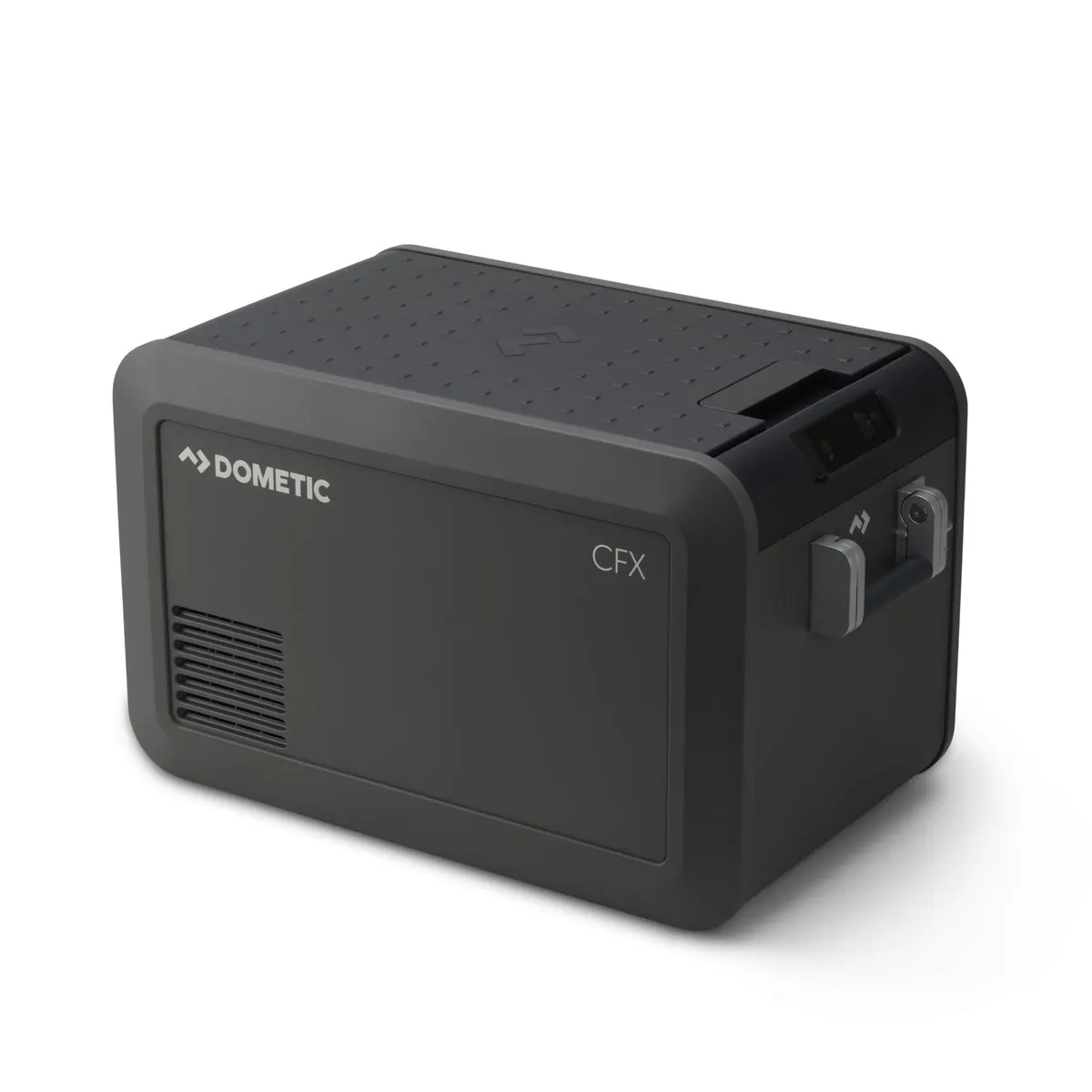
- Capacity
- 36L / 50 cans
- Dimensions
- 27.3 x 15.7 x 16.0 in
- Weight
- 36.5 lbs
- Power Source
- 12/24V DC + 100-240V AC
- Power Draw
- 1.11 Ah/h rated (US spec, 90°F amb.)
- Compressor
- Dometic VMSO 3.5 variable-speed
- Warranty
- Confirm US term with Dometic (EU page: 3 years)
- Ventilation
- At least 50 mm on all sides (US manual)
Overview — Who the CFX5 35 Is For
The Dometic CFX5 35 is Dometic's current top-tier 35-liter single-zone compressor fridge, and it is the most expensive fridge in its size class that most van builders will seriously consider. It is a 12/24V DC and 100–240V AC electric cooler that can run anywhere from 68°F down to -7°F, it holds up to 50 twelve-ounce cans, and it adds two things the older CFX3 never had: vacuum insulated panels in the walls and a revised VMSO 3.5 compressor.
It is built for the same buyer the CFX3 35 always served: a solo traveler or a couple living out of a Sprinter, Transit, ProMaster, or truck camper, running a lithium house battery, who wants one box that keeps a week of perishables cold (or works as a dedicated freezer) without ever thinking about it. If that is you and the budget is already set aside for a premium fridge, this is the 35-liter Dometic to buy today.
If you are earlier in the process and still deciding whether you even need a compressor fridge, or what size, start with our 12V fridge buying guide. This review assumes you have narrowed things down to the premium 35-liter class and want to know whether the CFX5 35 earns its price over cheaper fridges.
A note on method: VanLifeKitchens researches products rather than lab-testing them. Every spec below comes from Dometic's own product listings, spec tables and US operating manual, and anything about day-to-day behavior is drawn from owner reports and is labeled that way. The Amazon listing we link sells the US model, "Dometic CFX5 35L Electric Cooler" (Dometic SKU 97000050754).
Choose this if:
- You want a 36-liter single-zone fridge with vacuum insulated panels and Dometic's app.
- Your bay is low (about 16 inches tall) and you can leave 2 inches of air on every side.
- You want a lighter box: 36.5 lbs empty, about 12 lbs less than the Iceco VL35 ProS.
Skip this if:
- Budget matters more than refinement; the Iceco VL35 ProS covers the core job for considerably less.
- You need a fridge and a freezer at once (it is single-zone).
- You want wheels; it has carry handles only.
Size, Fit and Ventilation Clearance
Three different numbers decide whether this fridge fits, and they are easy to confuse:
- Interior capacity: 36 liters total volume (IEC 62552-3), which Dometic says holds up to 50 twelve-ounce cans.
- External dimensions: 27.32 x 15.67 x 16.02 inches (694 x 398 x 407 mm, L x W x H, including handles), per Dometic's US page and US operating manual.
- Ventilation clearance: Dometic's US operating manual says to keep "a minimum of 50 mm (1.97 in) ventilation on all sides" and not to use the fridge in closed compartments with little or no airflow. So the space you actually need is roughly 31.3 x 19.6 inches of floor, plus room above for the lid.
The lid is removable, and you load it from above like any chest fridge. Dometic does not list the CFX5 35 among the models whose lid opening can be reversed, so plan for the hinge side it ships with. There are no wheels; the self-folding aluminum handles are how you move it. Dometic's European CFX5 manual allows only short-term operation at up to a 30° tilt, so mount it level.
What It Replaces and What Changed
If you are comparing it with the Dometic CFX3 35, the CFX5 35 is its successor at the top of Dometic's 35-liter range. The CFX3 35 is still listed on Amazon with limited stock; see the Dometic CFX3 35 review. Dometic sells three CFX tiers: the CFX2, the CFX3 and the premium CFX5.
Here is what is actually different on the CFX5 35, based on Dometic's listings:
- Vacuum insulated panels (VIP). This is the headline change. Dometic pairs vacuum panels with polyurethane foam in the walls, where the CFX3 used polyurethane alone. Better insulation means the compressor has less heat to pump out, which is where efficiency gains in a fridge actually come from.
- VMSO 3.5 compressor. An updated version of the variable-speed VMSO3 used in the CFX3. Retailers market it as quieter than the CFX3 line, and European retail listings give the CFX5 35 a noise figure of 41 dB; Dometic's US page does not list a noise figure.
- Weatherproof high-resolution TFT color display with soft-touch buttons, plus an 18W Quick Charge 3.0 USB port for fast-charging a phone.
- Self-folding aluminum alloy handles with an integrated bottle opener, a removable textured non-slip lid, TPE gaskets, and an anti-condensation coil.
- App changes. The CFX5 uses Dometic's Bluetooth Mobile Cooling app to set temperature, monitor it, and track energy use. Dometic's US listing describes Bluetooth only. The CFX3's Wi-Fi mode is not listed for the CFX5, so if remote monitoring over Wi-Fi mattered to you, note that.
Physically, the two are close. The CFX5 35 measures 27.32 x 15.67 x 16.02 inches (L x W x H) and weighs 36.5 lbs (16.57 kg) empty, according to Dometic's US listing. Dometic lists the CFX3 35 at the same 27.32 x 15.67 x 16.02 inches and about 37.3 lbs, so a space or slide that fits one should fit the other; still check the ventilation gap and the handle and lid clearance before swapping. Capacity is essentially unchanged: Dometic lists 36 liters total volume (IEC 62552-3) and 50 cans for both.
Price is up too: the CFX5 35 costs more than the CFX3 35 did.
Capacity & Layout
Thirty-six liters is the size most couples land on for 3–5 day stretches between grocery stops, and what a solo traveler can stretch to a week. The CFX5 35 is a single-zone box: one compartment you set as a fridge or a freezer, not both at once. Dometic lists a removable wire divider and an interior LED light, and the drain plug is retained for cleaning. If you're unsure whether you need a freezer at the same time as a fridge, or more than 36 liters, see what size 12V fridge you need.
Two practical layout notes worth knowing before you buy:
- Upright bottles. The 16-inch exterior height leaves less interior height than the 45-liter and larger models. Owners commonly report that wine bottles and tall two-liter bottles need to lie down. If you carry a lot of tall containers, the 45-liter size is easier to live with.
- Front-loading reach. A long, narrow box like this means the far end can be a reach in a deep slide-out or under a bench. Using the divider to keep everyday items (milk, butter, drinks) at the near end and longer-term items at the far end is the usual owner strategy.
If you are regularly feeding two people for more than five days, or want a freezer section and a fridge section at the same time, 36 liters is undersized. See the alternatives section below.
Power Draw & Battery Sizing
This is the section that decides whether a fridge fits your electrical system, so here is exactly what Dometic publishes and how to turn it into a battery plan. If you want to run your own numbers with your other loads, use our van power calculator.
Keep two kinds of number apart here. The nameplate rating is what the fridge can draw while the compressor runs flat out. The daily energy use is what it averages over 24 hours as the compressor cycles on and off. Never multiply the nameplate figure by 24.
Nameplate rating (Dometic US page):
- Rated input power: 47W
- Rated DC input current: 7.6A at 12V, 3.4A at 24V. This is the maximum draw, used for fuse and wire sizing, not what it pulls on average.
Published daily energy use (Dometic US page):
- 1.11 Ah/h at 12V, with 90°F (32°C) ambient and 39°F (4°C) inside, lid closed, at steady state. Dometic publishes the figure; it doesn't say how many lid openings, if any, the test included.
That 1.11 Ah/h is the figure Dometic publishes for the US model, which uses R1234yf refrigerant, so it is the one we use for battery sizing below. Dometic's European listing shows a lower 0.77 Ah/h, but that is for the European model, which uses R600a refrigerant and a 42W rating; for a US-bought fridge, plan around the US number. For context, Dometic rated the outgoing CFX3 35 at 0.98 Ah/h under the same 32°C/4°C conditions.
Converting to daily figures. Multiply the hourly average by 24, then by 12V nominal for watt-hours:
| Basis | Ah/day at 12V | Wh/day | Who says |
|---|---|---|---|
| Dometic US rating, 90°F ambient | ~27 | ~320 | Dometic (rated) |
| Summer van use, lid openings | ~30–35 | ~360–420 | Our estimate |
| Freezer mode near 0°F | higher | higher | Not published |
Our planning assumptions on top of that: lid openings, loading warm groceries, and a van cabin that runs hotter than 90°F in summer sun all add load, so we budget roughly 20–30% above the rated figure for a summer fridge setting. That puts a conservative summer planning number at roughly 30–35 Ah/day at 12V. In cooler weather the compressor runs less, and the draw drops well below the rating. Running it as a freezer near 0°F will draw considerably more than fridge mode, so size for the freezer case if that is how you will use it.
What that means for battery size (12V lithium, using about 90% of rated capacity):
- 100 Ah lithium: roughly 2.5–3 days of the fridge alone in summer at the conservative planning number, with no charging. Workable for weekends, tight for anything else once lights, fans, and devices share the bank.
- 200 Ah lithium: comfortable for full-time use with solar or alternator charging, and enough buffer to ride out a cloudy day or two.
- 300 Ah and up: the fridge stops being a planning concern.
Solar: a 30–35 Ah/day load is roughly 400–450 Wh/day. A 200W panel in good summer sun can typically cover the fridge with room left over; a 100W panel will struggle in hot weather. Dometic's 3-stage dynamic battery protection (LOW, MED, HIGH) shuts the compressor off before it drains the battery too far. Dometic's manual says to use HIGH on a vehicle starting battery and LOW on a separate house battery. The CFX5 manual shows the cut-out voltages only in a graphic, so we haven't reproduced them here; check the chart in your manual or the app. On lithium, use the lowest cutoff your battery maker allows so the fridge does not quit early. Our fridge battery calculator shows how many days a given bank lasts.
Duty cycle in plain terms. The compressor runs only when the inside warms past the setpoint. At 1.11 Ah/h against a 7.6A maximum, the rated figure implies the compressor averages well under a fifth of its maximum draw at 90°F ambient. In hotter air, in a poorly ventilated bay, or with frequent lid openings, it runs longer, and that's why the summer row above is higher.
Build, Lid & Controls
The CFX5 keeps Dometic's ExoFrame-style construction, with rounded, reinforced corners and an exterior that is meant to be slid across a van floor or strapped into a truck bed. The handles are self-folding aluminum alloy and include a bottle opener; the CFX3 35 also has aluminum alloy handles, per Dometic.
The lid is removable, with a textured non-slip top so gear stacked on it is less likely to slide, and the seal uses TPE gaskets. Dometic also lists an anti-condensation coil, which helps keep moisture from forming around the lid seal in humid weather, a frequent complaint on budget fridges.
Controls are a weatherproof high-resolution color TFT display with soft-touch buttons on the end of the unit, plus the Bluetooth app. Through the app you can set temperature, monitor it, and watch energy consumption. Retailer comparisons also mention a lid-open alarm on the CFX5. Owners of Dometic's touch-button displays have commonly reported that soft-touch buttons can be fussy with wet or greasy hands, which is one reason many people end up using the app for adjustments.
The 18W QC 3.0 USB port is genuinely useful in a small van: it can fast-charge a phone at the fridge, which matters when the fridge is the one device that is always powered.
Noise & Ventilation
European retail listings give the CFX5 35 a noise figure of 41 dB, and retailers market the VMSO 3.5 compressor as quieter than the CFX3. Dometic's US page doesn't list a noise figure, so treat 41 dB as the European model's rating. For perspective, 41 dB is in the range of a quiet library. Variable-speed compressors like this one ramp up and down rather than slamming on and off, so the noise is usually a low hum rather than a startup thump. Owners of variable-speed Dometic fridges generally describe them as quiet enough to sleep next to.
Ventilation matters more than most people think, and it affects both noise and power. The compressor and condenser sit behind the vented panel at one end, and Dometic's US manual asks for at least 50 mm (about 2 inches) of clearance on all sides. If you box the fridge into a cabinet or under a bench, give that end real airflow: a cramped, hot compartment forces the compressor to run harder and longer, which costs power and makes it louder. Dometic lists an operating ambient range of 61°F to 109°F (16°C to 43°C), climate class N/T, so it is rated for hot-climate use, but performance near the top of that range depends heavily on airflow.
Who Should Skip It
The CFX5 35 is an excellent fridge, but it is not the right buy for everyone.
- Budget-first builders. The CFX5 35 costs considerably more than the Iceco VL35 ProS. The Iceco uses a Secop compressor and covers the core job. You give up the vacuum insulation, the app, the refined display, and some polish.
- Anyone who needs fridge and freezer at once. This is single-zone. Look at the Iceco VL60 dual-zone instead.
- Couples on week-long trips. 36 liters fills up fast. The 45-liter Dometic CFX2 45 gives you more room; the ICECO JP40 Pro adds only about a liter but fits taller bottles.
- Weekend and occasional campers. If you camp a handful of weekends a year, a smaller, cheaper compressor fridge like the BougeRV 30qt or the Alpicool C20 makes more sense.
- People who relied on CFX3 Wi-Fi. The CFX5 is listed with Bluetooth app control only.
Alternatives
- Iceco VL35 ProS (mid-range): same capacity, Secop compressor, simpler controls, no app. The value pick for people who mainly want a reliable cold box.
- Dometic CFX2 45 (premium): Dometic's budget line in a larger size. More space for less money, but a basic LED display, standard polyurethane insulation, and plastic handles.
- ICECO JP40 Pro (mid-range): a wheeled 37-liter single-zone fridge with a Secop compressor and Bluetooth app for far less than the CFX5 35. It is narrower but taller.
- Iceco VL60 Dual Zone (mid-range): if you want a fridge and a freezer running at the same time.
- BougeRV 30qt and Alpicool C20: smaller, cheaper fridges for weekend use and light-duty builds.
Verdict
The Dometic CFX5 35 is Dometic's top 35-liter line and the only fridge in our lineup with vacuum insulated panels, and it is a straightforward, sensible replacement for the CFX3 35. The vacuum insulated panels are a real engineering upgrade, the VMSO 3.5 compressor is marketed as quieter, the display is now weatherproof, the handles are aluminum, and the USB port supports 18W QC 3.0 fast charging.
The caveats are price and power draw. It costs more than the CFX3 35 did, and Dometic's US rating of 1.11 Ah/h at 90°F ambient is higher than the CFX3 35's 0.98 Ah/h, so size your battery around that US figure rather than expecting the vacuum panels to cut consumption. Dometic's European page lists a 3-year warranty; the US manual points to an online limited-warranty page, so confirm the US term before you buy. If you want the premium 35-liter fridge and are building for years of full-time use, the CFX5 35 is the one to get. If the fridge budget is tight, the Iceco VL35 ProS does the core job for considerably less money.
FAQ
Is the Dometic CFX5 35 the replacement for the CFX3 35?
Yes. The CFX5 35 is Dometic's current premium 35-liter single-zone fridge and takes the CFX3 35's place in the lineup. It adds vacuum insulated panels, a VMSO 3.5 compressor, a weatherproof TFT display, an 18W QC 3.0 USB port, and aluminum self-folding handles. Dometic lists the same outside dimensions as the CFX3 35, but check ventilation clearance in your mounting space.
How much power does the Dometic CFX5 35 use per day?
Dometic's US product page rates it at 1.11 Ah/h at 12V with 90°F ambient and 39°F inside. That works out to about 27 Ah/day under those conditions. For summer van use with lid openings and warm groceries, we suggest planning around 30–35 Ah/day.
What size battery do I need for the CFX5 35?
A 100 Ah lithium battery can run it alone for roughly two and a half to three days in summer without charging. For full-time use with other loads, 200 Ah of lithium plus solar or alternator charging is the comfortable minimum.
What warranty does the Dometic CFX5 35 have in the US?
Dometic's European page lists 3 years. The US operating manual refers buyers to Dometic's online limited-warranty page rather than printing a term, and we could not load that page, so confirm the US term with Dometic before you buy and register the fridge after purchase.
Does the CFX5 35 have Wi-Fi?
Dometic's US listing describes Bluetooth app control through the Dometic Mobile Cooling app, not Wi-Fi. You can set and monitor temperature and track energy use from your phone when you are within Bluetooth range.
Can the CFX5 35 be a fridge and a freezer at the same time?
No. It is single-zone, so the whole compartment runs at one temperature, anywhere from 68°F down to -7°F. If you want both at once, look at a dual-zone model such as the Iceco VL60.
How loud is the Dometic CFX5 35?
European retail listings give it 41 dB; Dometic's US page lists no noise figure. Give it the 50 mm (about 2 inches) of clearance on all sides that Dometic's manual asks for, because a fridge in a cramped, hot space runs longer and louder.
Is the CFX5 35 worth it over the Iceco VL35 ProS?
Only if you value the vacuum insulation, app, display, and finish enough to pay considerably more. The Iceco covers the core job of keeping food cold for much less. The CFX5 35 is the better fridge, but not the better value.
Compare with similar products
See how this stacks up against the other 12v fridges we've reviewed.
Head-to-head comparisons
Related Reviews
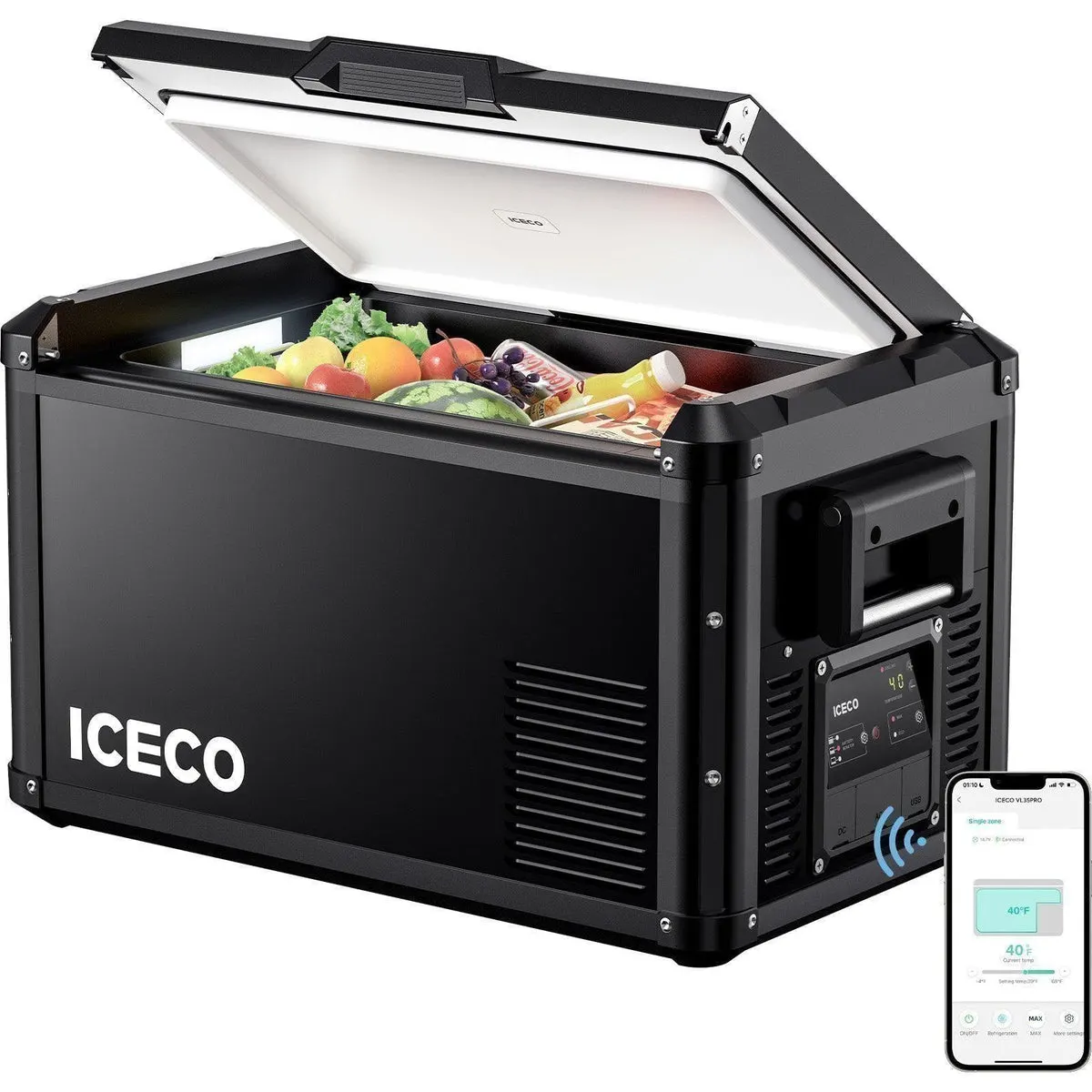
For: Steel-cased 35L single zone
Iceco VL35 ProS 12V Fridge Freezer
The value 35L option: a Secop compressor, solid insulation and simple controls for considerably less than the Dometic CFX5 35, without an app.
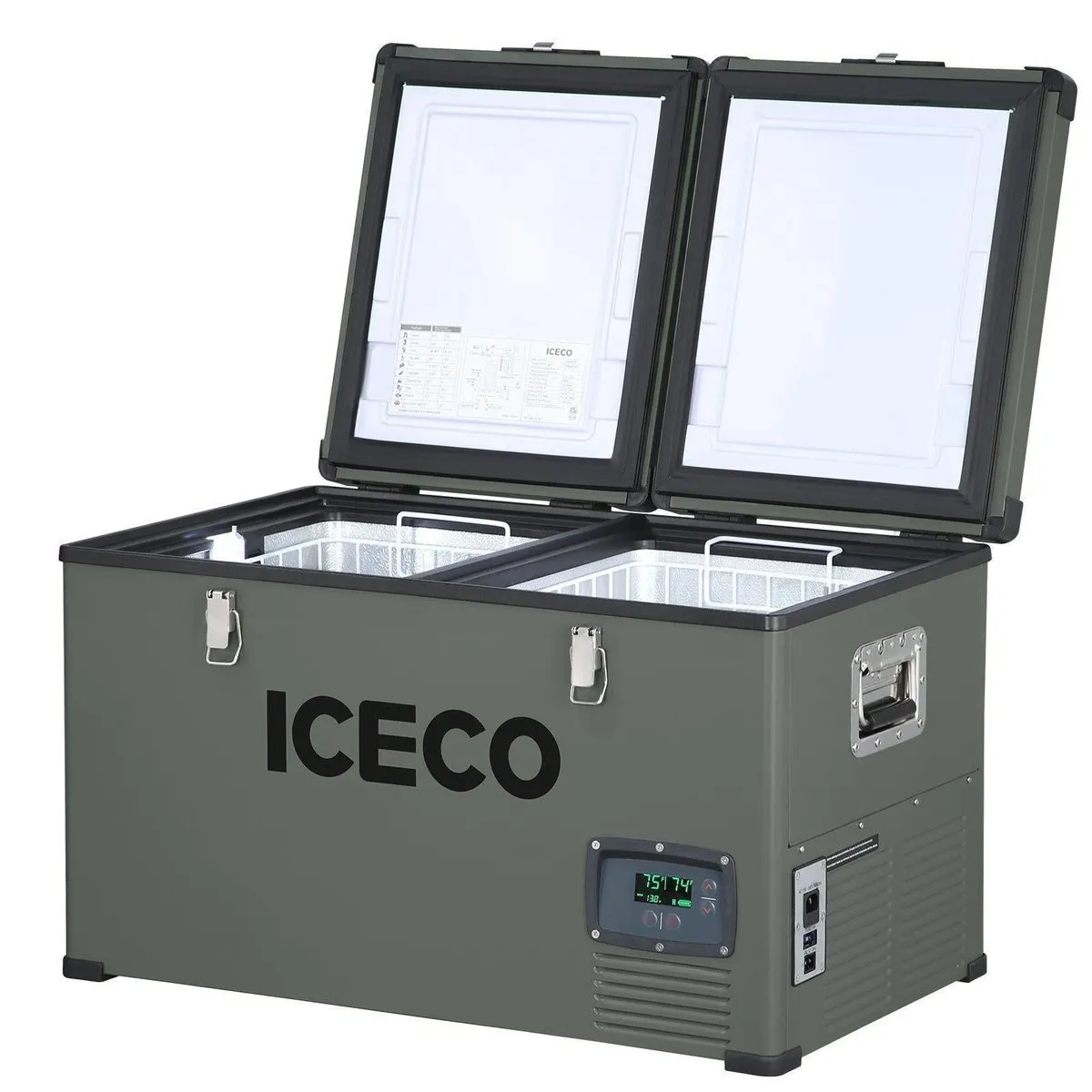
For: Full-time dual-zone cooling
ICECO VL60 Dual Zone 60L 12V Fridge Freezer
True dual zone at a mid-range price: 60L, two lids and setpoints, Secop compressor and a steel cabinet. Heavy and power-hungry, but strong value for families.
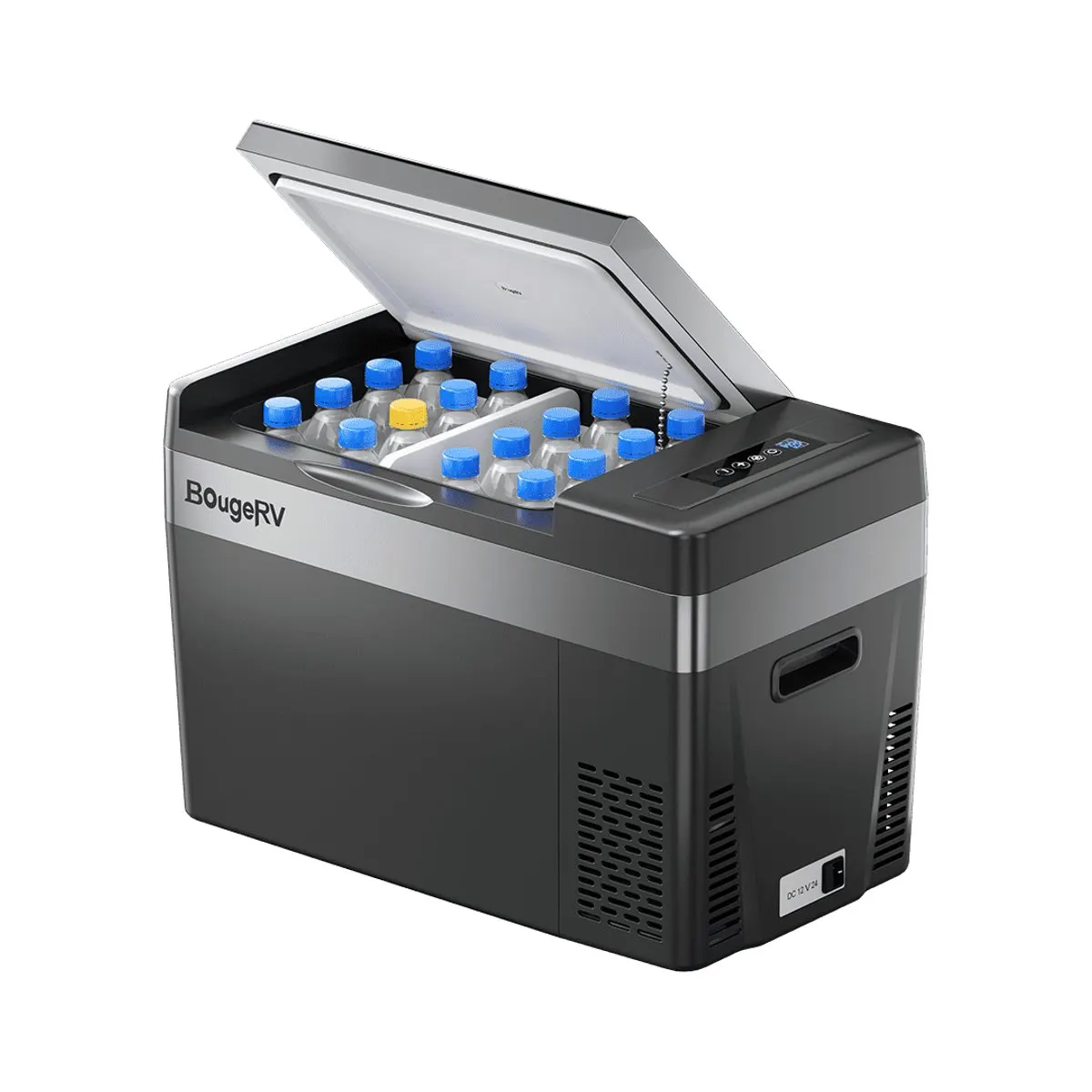
For: Weekend trips, first builds
BougeRV CR 30 Quart (28L) 12V Portable Fridge Freezer
A light, compact 30-quart compressor fridge-freezer at a budget price. No app and not a Secop, but a sensible budget pick for weekend trips and first builds.