Camp Chef Everest 2X 2-Burner Propane Stove
- Model
- MSHPX
- Burners
- 2
- Output
- 40,000 BTU/hr total (20,000 each, Camp Chef)
- Cook Area
- 215 sq in (Camp Chef)
- Fuel
- Propane, 16.4 oz cylinders or up to a 20 lb tank with Camp Chef HRDSP hose (manual)
- Warranty
- 1 year (Camp Chef booklet; listing)
- Clearance
- 2 ft sides, front and back; nothing overhead (manual)
Overview
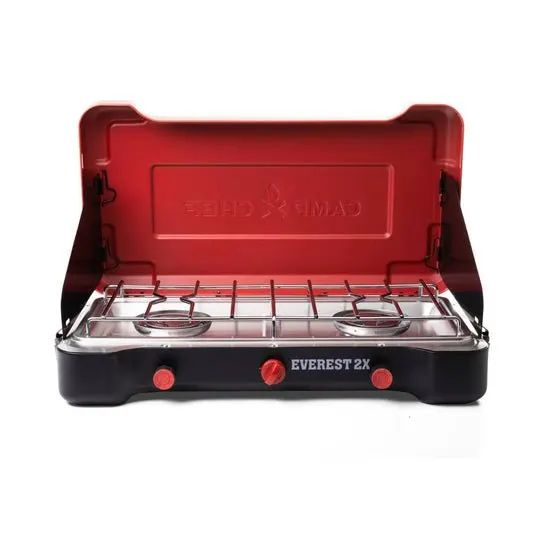
The Camp Chef Everest 2X (Camp Chef model MSHPX) is a premium two-burner propane camp stove: two 20,000 BTU burners (40,000 BTU total), matchless ignition, 215 square inches of cooking area, and a lid that doubles as a windscreen. It costs noticeably more than the Coleman Triton+, and the question this review answers is what the extra money buys you in a van-based kitchen.
Operating location: outdoor use only, and not in or on an RV. Camp Chef's Warning & Instruction Booklet for the MSHPX is the strictest of any stove on this site. It says: "For OUTDOOR use only. DO NOT use in a building, garage or any other enclosed area. Do NOT use in or on recreational vehicles or boats. NEVER use this appliance as a heater." Its carbon monoxide danger label adds: "Never use this appliance in an enclosed space such as a camper, tent, car or home." It also asks for at least 2 feet of clearance from the sides, front and back to any construction, and no overhead construction at all. For a van, that means the Everest belongs on a freestanding camp table set away from the vehicle, not on the galley counter, not on a slide-out attached to the van, and not under the awning.
Choose this if:
- you cook substantial meals for two or more outdoors and want high output on both burners;
- you want the option of running from a refillable propane tank (the manual allows up to 20 lb with Camp Chef's adapter hose);
- you cook in cold weather, where propane outperforms butane.
Skip this if:
- you want to cook inside or attached to the van: Camp Chef's manual rules out use in or on recreational vehicles;
- you mostly boil water for coffee and simple meals;
- storage space is tight: this is a wide, bulky stove.
Specifications
| Spec | Camp Chef Everest 2X (MSHPX) |
|---|---|
| Output | 40,000 BTU/hr (20,000 per burner) |
| Cook area | 215 sq in |
| Ignition | Matchless (built-in igniter) |
| Fuel | 1 lb cylinders; bulk tank up to 20 lb via HRDSP hose |
| Clearance | 2 ft sides, front, back; none overhead |
| Location | Outdoor only; not in or on RVs |
Burner output, cooking area, model number and ignition come from Camp Chef's Everest 2X product page and the Amazon listing; fuel, clearance and location rules come from Camp Chef's MSHPX booklet. The Amazon listing gives 27 x 15.5 x 8.25 inches and 15 lb, figures that look like shipping dimensions. Camp Chef's product page, as we read it, didn't show dimensions or weight, so we can't give a confirmed packed size. Plan for a stove a little over two feet wide.
Warranty. The Amazon listing says one year, and the warranty table in Camp Chef's MSHPX booklet (2020 edition) lists 1 year for "Cooking Systems". (An earlier version of this review said five years, which neither source supports.)
Build and parts
The MSHPX booklet's parts list is short: one pot grate, two high-pressure burners, one regulator, a two-prong igniter with its igniter knob, two burner knobs and two latches. The Amazon listing adds a drip tray and carry handle, and a folding lid that forms the windscreen. There isn't much to go wrong beyond the igniter and the regulator, and Camp Chef lists part numbers for each, which helps if you need a replacement years from now.
The booklet calls it "a High Output stove" and says to use low heat with griddles and never to put empty cookware over a burner. That's a hint about how it behaves: the burners are built for big pots and fast boils, so a thin griddle on high is easy to warp.
Performance
Camp Chef rates each burner at 20,000 BTU, nearly double the Coleman Triton+'s 11,000 BTU per burner. More heat per burner means a big pot of pasta water reaches a boil sooner. Camp Chef doesn't publish boil times, so we don't quote one.
The extra output also helps when you sear. A preheated cast iron pan recovers temperature faster after the food goes in, so you get browning rather than steaming. Camp Chef doesn't publish a minimum output either. High-output burners are generally harder to turn down to a gentle simmer than smaller ones, so for rice and sauces, plan on a heavy-based pot and some practice with the knob.
One limitation from the manual: "If using both burners on high for an extended period, the output may decrease. This is caused by a build-up of frost in the tank connection." That's a 1 lb cylinder chilling itself as it vaporizes fuel fast. Camp Chef says a 20 lb bulk tank with its HRDSP adapter hose avoids it.
Wind
The lid and side panels form a three-sided windscreen, which Camp Chef's page and the listing both describe. Three walls block wind from three directions, but the front is open, so it isn't an enclosure. In strong gusts, you'll still want shelter. Because the manual asks for 2 feet of clearance from construction (which includes your van), position the stove's table so the van blocks the wind from a distance rather than cooking right against the vehicle.
Fuel and runtime
The Everest 2X runs on standard 1 lb propane cylinders, or a refillable tank of up to 20 lb with Camp Chef's HRDSP bulk tank adapter hose, according to the manual.
Runtime estimate (our arithmetic, not a Camp Chef figure): a 1 lb cylinder holds roughly 21,000–22,000 BTU of propane. At the full 40,000 BTU/hr on both burners, that's around 30 minutes; with one burner on high, around an hour. Real cooking at mixed settings lasts longer, and cold cylinders deliver less. A 20 lb tank holds about 20 times as much.
Bulk tanks come with their own rules in the manual: refillable cylinders must be stored outdoors in a well-ventilated space, "must not be stored in a building, garage or any other enclosed area", and you should "never leave an LP tank inside a vehicle, which may become overheated by the sun." In practice, that means a 20 lb tank shouldn't ride inside the van's living space. A permanently mounted, externally vented LP locker is a different kind of installation; follow applicable RV LP-gas standards and use a qualified RV gas technician for that. Even then, this stove's manual doesn't allow it to be used in or on the RV.
For a wider look at propane against the alternatives, see the induction vs butane vs propane guide.
Safety
Location first. Camp Chef says outdoor use only, not in or on recreational vehicles or boats, never in an enclosed space such as a camper or car, never under overhead construction, and at least 2 feet from construction on the sides, front and back. A roof fan, an open slider or a CO alarm does not change any of that. A CO alarm is a last-line warning device, worth having in any van, not permission to cook inside.
Combustion vs cooking ventilation. Combustion ventilation means getting air to the flame and carrying away CO, CO₂, NO₂ and water vapour; for this stove, the manufacturer's answer is open air away from structures. General cooking ventilation (steam, grease, odour) is what a range hood or roof fan does for an induction cooktop. The two aren't interchangeable.
Gas handling. The manual asks for leak checks outdoors with soapy water, never a flame; for the cylinder connection to be checked so it isn't cross-threaded; and for the hose to be inspected before every use when running a bulk tank. Turn off fuel at the cylinder after cooking, never put empty cookware on a burner, and let the stove cool to 115°F before moving or storing it, as the booklet says.
Ignition. The built-in igniter lights the burners without a match. If it doesn't light within 5 seconds, the manual says to turn the burner off, wait 5 minutes for gas to clear, and try again. A long lighter works if the igniter fails.
The van cooking safety guide covers fire extinguishers and fuel storage.
Camp Chef vs Coleman vs Iwatani
These three stoves are aimed at different buyers, and all three are labelled by their makers for outdoor use.
The Coleman Triton+ gives you two 11,000 BTU burners, a PerfectFlow regulator and InstaStart ignition at a mid-range price. Its manual says to use only 16 oz disposable cylinders, so no bulk tank. It's enough for most one-pot and two-pan cooking for two.
The Iwatani Cassette Feu is a single 12,000 BTU/hr butane burner with a windbreaker, magnetic canister lock and pressure-sensing safety stop. It's compact, but it's one burner and butane fades in the cold.
The Everest 2X is the pick when two high-output burners and the option of a bulk tank matter. It's the highest-output stove on this site, and the biggest.
If you need to cook inside the van, none of these is the answer; induction, like the Duxtop 9100MC, is.
Value for money
The Everest 2X costs noticeably more than the Coleman Triton+. For the extra money you get nearly double the output per burner, a larger cooking area, matchless ignition, and a manual that allows a bulk tank. If you cook substantial meals outdoors most days, those differences show up every evening. If you cook once a weekend, the Triton+ handles that workload for less.
Who should skip this
Skip the Everest 2X if you mostly boil water for coffee and freeze-dried meals; the Iwatani or the Gas One GS-1000G does that for far less, and the Coleman Triton+ covers two burners at a mid-range price.
Skip it if storage is tight. Skip it if you cook on induction inside and don't want a separate outdoor kitchen. And skip it if your plan is to cook on a slide-out or counter in the van, because Camp Chef's manual rules out use in or on recreational vehicles.
Final verdict
The Camp Chef Everest 2X is the highest-output two-burner on this site, with 20,000 BTU per burner, 215 square inches of cooking area, matchless ignition and bulk-tank capability. It suits van travellers who set up a real outdoor kitchen at camp: a freestanding table, 2 feet clear of the van, with nothing overhead. Used that way, it's a fast, capable stove. It's the wrong stove for anyone planning to cook in or on the van itself, because its manual is explicit that it isn't for RV use.
FAQ
Can I use the Camp Chef Everest 2X inside my van? No. Camp Chef's MSHPX manual says "For OUTDOOR use only" and "Do NOT use in or on recreational vehicles or boats," and warns never to use it in a camper, tent, car or home because of carbon monoxide. Use it on a freestanding table outdoors, at least 2 feet from the van, with nothing overhead.
Can I use it on a slide-out attached to my van? The manual says not to use it "in or on" recreational vehicles and asks for 2 feet of clearance from construction, so we don't recommend a van-mounted slide-out. Use a separate camp table.
Does the Everest 2X work with a 20 lb propane tank? Yes. The manual allows refillable tanks up to 20 lb with Camp Chef's HRDSP bulk tank adapter hose, and says a bulk tank avoids the output drop that 1 lb cylinders can show when both burners run on high. Store the tank outdoors, never inside the vehicle.
How does it compare to the Coleman Triton+ for boiling water? The Everest has 20,000 BTU per burner against the Triton+'s 11,000, so it boils large pots noticeably sooner. Neither maker publishes boil times.
What clearance does it need? Camp Chef asks for at least 2 feet from the sides, front and back to any construction, and no overhead construction. Keep combustible material clear of the area.
What warranty does it have? The warranty table in Camp Chef's 2020 MSHPX booklet lists 1 year for cooking systems. Check Camp Chef's current terms, as they may have changed.
What if the matchless ignition doesn't light? If a burner doesn't light within 5 seconds, turn it off and wait 5 minutes before trying again, as the manual instructs. If the igniter fails altogether, a long lighter works; the igniter is a listed replacement part.
Sources and verification
- Camp Chef Everest High Pressure Stove Warning & Instruction Booklet, model MSHPX (2020), https://images.thdstatic.com/catalog/pdfImages/75/75758a59-2a11-4cc1-aace-9f7ff75513f3.pdf: outdoor-only and "not in or on recreational vehicles" rules, 2 ft clearances and no overhead construction, 40K BTU/hr output, 16.4 oz cylinders or up to 20 lb bulk tank with HRDSP hose, frost build-up note, parts list, warranty table (checked 2026-10-12).
- Camp Chef Everest 2X product page, https://campchef.com/products/everest-2x: model MSHPX, two 20,000 BTU burners, 215 sq in cook space, matchless ignition, folding lid windscreen (checked 2026-10-12).
- Amazon listing, ASIN B09KNVRDNQ: title (Camp Chef Everest 2X 2-Burner Portable Camping Stove, 40,000 BTUs, Propane), part number MSHPX, 215 sq in, drip tray, one-year warranty, 27 x 15.5 x 8.25 in and 15 lb listed dimensions, in stock (checked 2026-10-12).
Compare with similar products
See how this stacks up against the other cooktops we've reviewed.
Related Reviews
 Outdoor use only
For: Outdoor butane cooking
Iwatani Cassette Feu Butane Camp Stove (Gray)
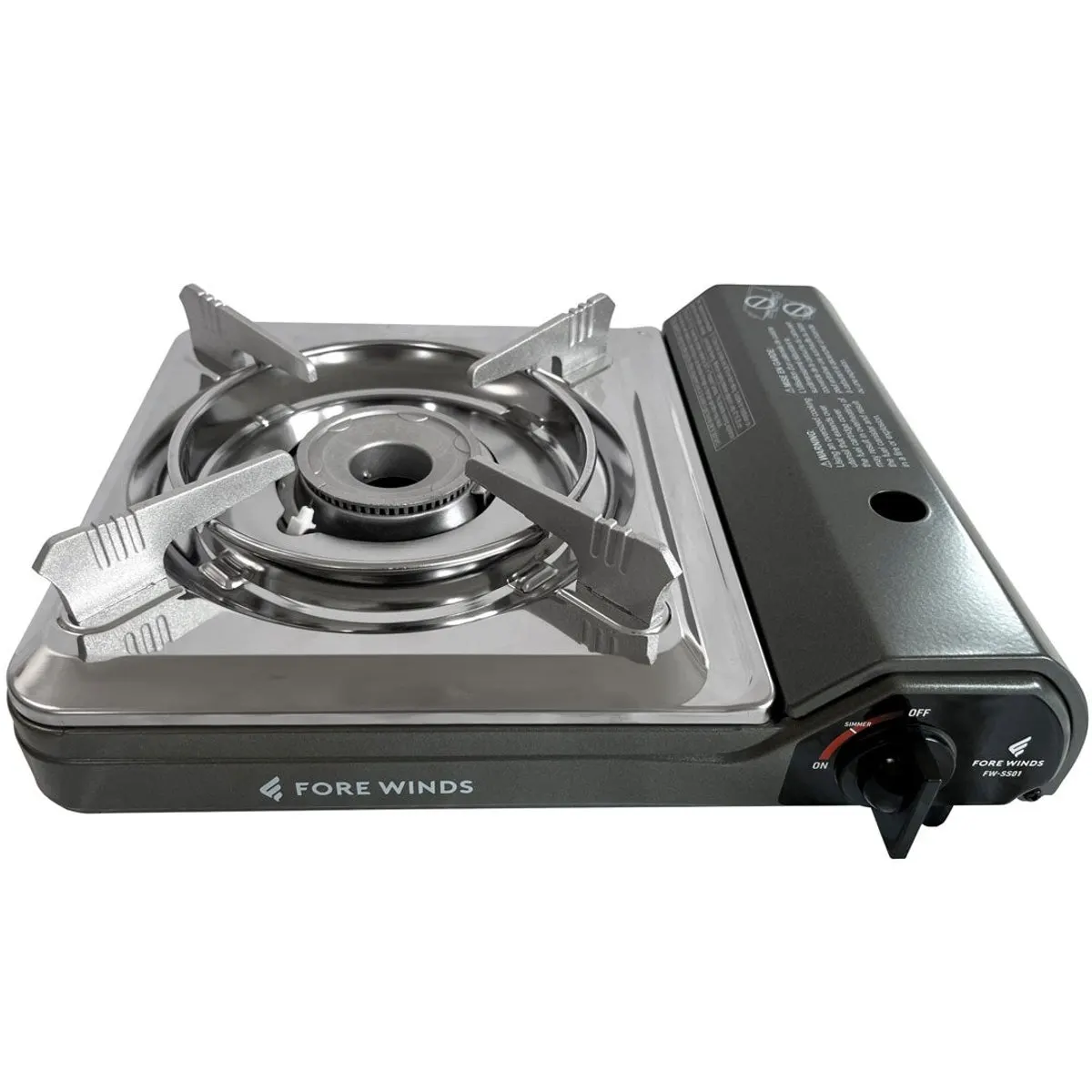
Iwatani's current 12,000 BTU cassette stove adds a built-in windbreaker and lever-free magnetic canister lock over the ZA-3HP. A well-built butane option that costs considerably more than the ZA-3HP. Iwatani warns never to use cassette appliances in enclosed spaces such as a car or tent, so cook with it outdoors.
 Outdoor use only
For: Regulated outdoor propane, two burners
Coleman Triton+ 2-Burner Propane Stove
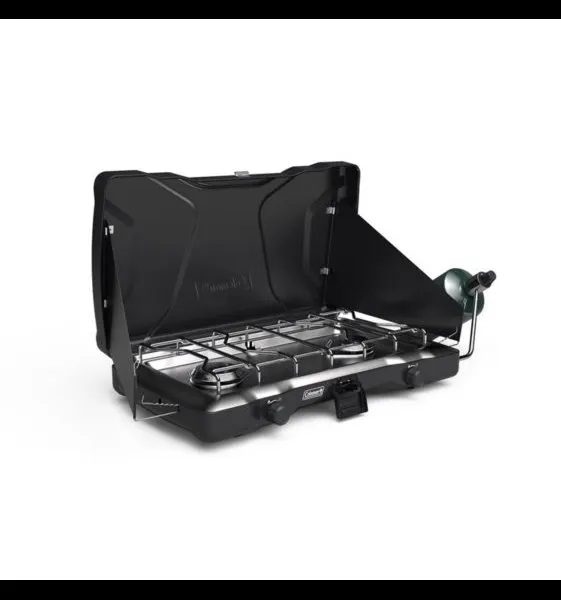
Coleman's regulated Triton+ two-burner with InstaStart push-button ignition, rated at 22,000 BTU across two adjustable burners. Coleman labels it for outdoor use only and not for RV use.
 Outdoor use only
For: Outdoor wood-fuel cooking
BioLite CampStove 2+
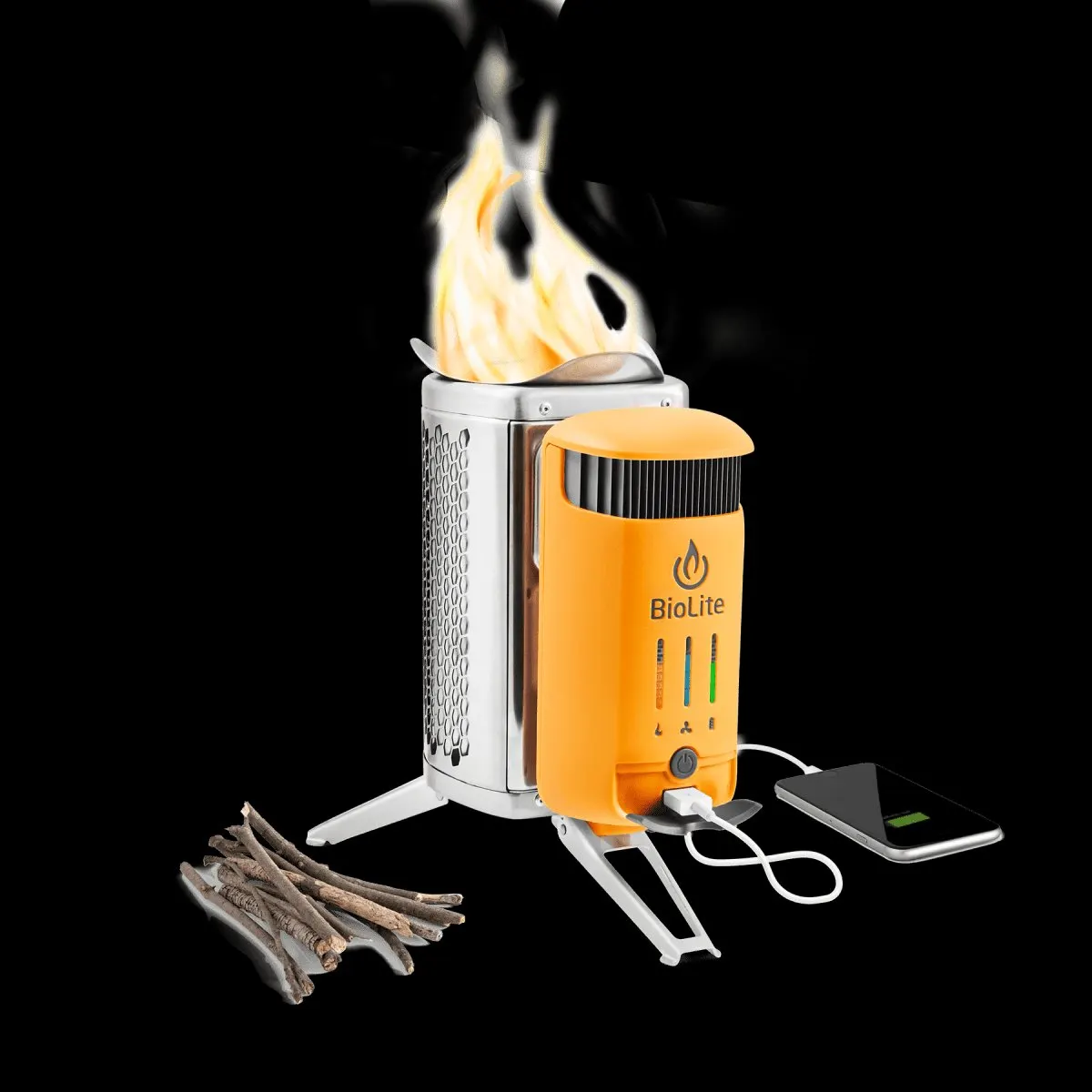
A wood-burning camp stove that generates electricity from fire. Burn sticks, pinecones and other biomass to cook a meal while charging a phone from the built-in 3W thermoelectric generator. Outdoor use only.