Coleman Triton+ 2-Burner Propane Stove
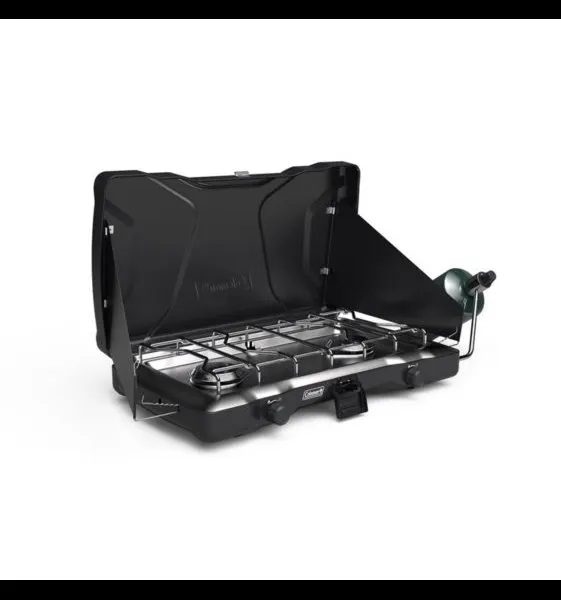
- Model
- 2157318 (5461 Series manual)
- Burners
- 2
- Output
- 22,000 BTU total (11,000 BTU/h each, Coleman manual)
- Ignition
- InstaStart push-button
- Fuel
- Propane, 16 oz disposable cylinders only (Coleman manual)
- Burn Time
- Up to 1 hr on high per 16 oz cylinder (listing)
- Dimensions
- 23 x 13.75 x 5.75 in (Amazon listing)
- Pan Fit
- One 12 in plus one 10 in (listing)
- Warranty
- 3-year limited (Coleman manual)
- Clearance
- 12 in sides, 48 in above (Coleman manual)
Overview
This review covers the Coleman Triton+ 2-Burner Propane Camping Stove with InstaStart (Coleman model 2157318), which is the exact stove the button on this page links to. The page URL says "Triton" because it was first written about the plain Triton; the "+" version adds Coleman's InstaStart push-button ignition, so you can light both burners without a match.
The Triton+ is a mid-range, regulated, two-burner propane stove in Coleman's familiar folding-suitcase format: 22,000 BTU in total (11,000 BTU per burner), PerfectFlow and PerfectHeat regulation for steadier output, a removable chrome-plated grate, an aluminized steel cooktop and dual wind guards. It runs on 16 oz disposable propane cylinders.
Operating location: outdoor use only. Coleman's instructions for this stove (the 5461 Series manual attached to the Amazon listing) say: "For outdoor use only. Never use inside house, camper, tent, vehicle or other unventilated or enclosed areas. This stove consumes air (oxygen) and produces carbon monoxide (CO)." The carbon monoxide danger label repeats: "Never use this appliance in an enclosed space such as a camper, tent, car or home." The manual also says plainly: "Not for home or recreational vehicle use." In a van, the Triton+ goes on a folding table, a tailgate or a slide-out in open air, not on the galley counter.
Choose this if:
- you want two burners for outdoor cooking and propane's better cold-weather behaviour than butane;
- you cook in shoulder seasons or at altitude, where a regulator helps;
- you want push-button ignition and a mid-range price.
Skip this if:
- you need to cook inside the van (Coleman's manual prohibits it);
- you want to run it from a bulk tank (the manual says 16 oz disposable cylinders only);
- you cook for groups and want more heat (look at the Camp Chef Everest 2X).
Specifications
| Spec | Coleman Triton+ (2157318) |
|---|---|
| Output | 22,000 BTU (11,000 per burner) |
| Fuel | 16 oz disposable propane cylinders |
| Ignition | InstaStart push-button |
| Pans | One 12 in plus one 10 in |
| Warranty | 3-year limited |
| Location | Outdoor use only |
The specs come from the Amazon listing and Coleman's manual. The manual gives an input of 11,000 BTU/h per burner, "pressure regulated propane", and a three-year limited warranty. (An older version of this review said five years; the current manual says three.) The listing says the stove fits a 12-inch and a 10-inch pan, and gives up to one hour of burn time on high from one 16 oz cylinder.
Design and build
The Triton+ folds into a latching metal case with a carry handle. Open it, and the lid and side panels form the wind guards around the two burners. The cooktop is aluminized steel, which Coleman describes as rust-resistant, and the grate is chrome-plated and removable for cleaning. Two front knobs control the burners independently, and the InstaStart button lights them electronically.
An electronic igniter is one more part that can wear or get wet, and if it stops sparking, a long lighter still lights the burner. Keep one in the stove kit regardless.
The Amazon listing gives item dimensions of 23 x 13.75 x 5.75 inches, so plan a dedicated storage spot about two feet long: a deep cabinet base, a garage bay under the bed, or a slot beside a fridge slide. It won't go in a drawer the way a cassette stove does. The listing's weight field reads 1 pound, which is plainly wrong for a steel two-burner, so we don't quote a weight; expect it to be in the same class as the other full-size two-burners on this site.
The regulator: PerfectFlow and PerfectHeat
The headline feature is regulation. A propane stove's flame depends on the pressure of the gas reaching the burner. As a cylinder gets colder, or emptier, its pressure drops. An unregulated stove passes that drop straight through to the burner, so the flame weakens. Coleman's PerfectFlow regulator holds the burner pressure steadier across a wider range of cylinder pressures, and PerfectHeat is Coleman's name for its burner design aimed at using less fuel for the same cooking.
Coleman doesn't publish cold-weather boil times, so there are no official numbers to quote. What a regulator should do, in principle, is matter most with a part-used cylinder on a cold morning, when cylinder pressure is lowest; with a fresh, warm cylinder, an unregulated stove sees plenty of pressure anyway, so the difference shrinks. A regulator can't create pressure that isn't in the cylinder, so in severe cold a 1 lb cylinder still loses output.
Propane itself is the bigger cold-weather advantage. It boils at about −44°F, so it keeps vaporizing well below freezing, where butane quits. That's why a propane two-burner is the usual answer for winter vans that cook outdoors.
Performance
At 11,000 BTU per burner, the Triton+ is a mid-output stove. It's a little below the 12,000 BTU/hr of a single Iwatani butane burner and well below the 20,000 BTU per burner of the Camp Chef Everest 2X. Its advantage over a single-burner stove is that you get two burners: a pan and a pot going at the same time, which matters once you're cooking real meals for two.
The listing describes independently adjustable burners "for precise temperature", but Coleman doesn't publish a minimum output, so treat the low end as something to learn on your own stove: eggs, pancakes and sauces on any camp burner need attention and a pan with a reasonably thick base to spread the heat. The wind guards help when the wind comes from the side they cover; in gusty or shifting wind, put the table where the van blocks the wind from a distance, keeping the clearances below.
The listing says the stove fits a 12-inch pan and a 10-inch pan together. That's the combination to plan around: two 12-inch pans, or a wide griddle plus a pot, won't sit side by side on a grate this size.
Fuel: cylinders only, per the manual
Coleman's manual for this stove says: "Use only 16 oz. disposable propane cylinders." That matters, because a lot of camp-stove advice (including an older version of this review) suggests running a Coleman two-burner from a 5 lb or 20 lb refillable tank with an adapter hose. This manual doesn't approve that, and it also says to use the preset regulator that came with the stove and not to adjust it, and to use only Coleman accessories or parts. If running from a bulk tank matters to you, the Camp Chef Everest 2X's manual does allow a refillable tank up to 20 lb with Camp Chef's adapter hose.
Burn time: Coleman's listing says up to one hour on high from one 16 oz cylinder. That matches the arithmetic for both burners on high: a 1 lb cylinder holds roughly 21,000–22,000 BTU of propane, and the stove burns 22,000 BTU an hour flat out. Mixed cooking at medium settings lasts longer. One-pound cylinders cost more per meal than bulk propane and create waste; check your local rules for disposal or recycling, and never refill disposable cylinders (the manual says so too).
Safety
Location. Coleman's manual is explicit: outdoor use only; never inside a house, camper, tent, vehicle or other unventilated or enclosed area. It also states the stove is "Not for home or recreational vehicle use." Opening the doors, running a roof fan or fitting a CO alarm does not make indoor use acceptable. A CO alarm is a last-line warning device, worth having in any van with a fuel appliance, not permission. Practical outdoor setups: a folding table a few feet from the van, a tailgate, a slide-out that puts the stove outside the body of the van, or a table at the open slider with both the stove and the cook outside.
Combustion ventilation vs general cooking ventilation. Combustion ventilation is about supplying air to the flame and carrying away CO, CO₂, NO₂ and water vapour; Coleman's answer to that is "outdoors". General cooking ventilation (steam, grease, odour) is what a roof fan does in an induction van. One doesn't substitute for the other.
Clearances. The manual sets minimum clearances from combustible materials of 12 inches from the sides and 48 inches from the top. Under an awning, or close to the van's open doorway, that 48 inches above the stove is the one people miss. Keep curtains, awning fabric and paper towels out of that space.
Gas handling. The manual says to perform leak tests outdoors with soapy water, never a flame; to never install or remove a cylinder while the stove is lit, hot or near ignition sources; and to keep the flow of combustion and ventilation air unobstructed. Propane is heavier than air and pools low if it leaks, so store cylinders according to the manual and local rules, out of the sun and never near heat.
The van cooking safety guide covers fire extinguishers and galley layout.
Triton+ vs Gas One vs Camp Chef Everest 2X
The Gas One GS-1000G is the budget answer: a single 7,650 BTU butane burner with piezo ignition and a carry case. It packs smaller than any two-burner, but butane weakens below about 40°F. Buy it if you camp in warm weather and cook simple meals.
The Coleman Triton+ gives you two regulated propane burners, push-button ignition and cold-weather behaviour butane can't match, at a mid-range price. It suits anyone who cooks real meals outdoors in variable conditions.
The Camp Chef Everest 2X is the premium option: 20,000 BTU per burner, 215 square inches of cooking area, and a manual that allows a bulk tank via an adapter hose. It's bulkier and costs noticeably more. For one or two people cooking simple meals, the Triton+ is usually enough.
All three are outdoor-only stoves according to their makers. If you need to cook inside the van, the answer is induction, like the Duxtop 9100MC; see the Duxtop vs Coleman comparison.
Value for money
You're paying a mid-range price for regulation, push-button ignition and two burners, backed by a three-year limited warranty. Those are useful upgrades over an unregulated stove if you cook in the cold or at altitude. If you only cook in warm weather, a cheaper stove covers it.
Who should skip this
Skip the Triton+ if you camp only in warm weather and cook for one (a butane single-burner is cheaper and smaller); if you cook for four or more regularly (the Everest 2X has nearly double the output); if you want to run a bulk tank; or if you want a backpacking-size stove. And skip it if your plan involves cooking inside the van, because the manual rules that out.
Final verdict
The Coleman Triton+ is a sensible mid-range two-burner: 22,000 BTU across two regulated burners, InstaStart ignition, a rust-resistant cooktop and a three-year warranty. Its regulator helps most when you cook on cold mornings or at altitude. It's a stove for outdoor cooking beside the van, which is exactly what Coleman's manual says it is.
FAQ
Is this the Triton or the Triton+? The Amazon listing this page links to is the Coleman Triton+ 2-Burner Propane Camping Stove with InstaStart, model 2157318. The "+" adds push-button electronic ignition.
Can I use the Triton+ inside my van? No. Coleman's manual says "For outdoor use only", "Never use inside house, camper, tent, vehicle or other unventilated or enclosed areas" and "Not for home or recreational vehicle use." Cook outside the van, for example on a table at the open slider or on a tailgate, with at least 12 inches of side and 48 inches of overhead clearance from anything combustible.
What is the PerfectFlow regulator doing? It holds gas pressure at the burner steadier as cylinder pressure falls from cold or a nearly empty cylinder, so the flame stays more consistent than on an unregulated stove. It can't overcome severe cold on a 1 lb cylinder.
Can I use the Triton+ with a 20 lb propane tank? Coleman's manual for this stove says to use only 16 oz disposable propane cylinders, so we don't recommend adapting it. If you want to cook from a bulk tank, the Camp Chef Everest 2X's manual allows a refillable tank up to 20 lb with Camp Chef's adapter hose.
How long does a 1 lb cylinder last? Coleman's listing says up to one hour on high per 16 oz cylinder. Medium settings last longer; cold weather reduces usable output.
Does it have an igniter? Yes. The Triton+ has InstaStart push-button ignition. If it ever stops sparking, light the burner with a long lighter.
Is 22,000 BTU enough for two people? Yes, for most meals. For three or four, it works but is slower. For regular group cooking, the Camp Chef Everest 2X's 40,000 BTU total is the step up.
Sources and verification
- Coleman 5461 Series Propane Stoves instructions (PDF attached to the Amazon listing), https://m.media-amazon.com/images/I/D1pBE60Z1eL.pdf: outdoor-only and "Not for home or recreational vehicle use" warnings, 11,000 BTU/h per burner input, 16 oz disposable cylinders only, 12 in side and 48 in top clearances, leak-test and cylinder rules, three-year limited warranty (checked 2026-10-12).
- Amazon listing, ASIN B09HN1YW6V: title (Coleman Triton+ 2-Burner Propane Camping Stove with InstaStart), model 2157318, 22,000 BTU total, up to 1 hour on high per 16 oz cylinder, 12 in plus 10 in pan fit, 23 x 13.75 x 5.75 in item dimensions, 3-year limited warranty, in stock (checked 2026-10-12).
Compare with similar products
See how this stacks up against the other cooktops we've reviewed.
Head-to-head comparisons
Related Reviews
 Outdoor use only
For: Outdoor wood-fuel cooking
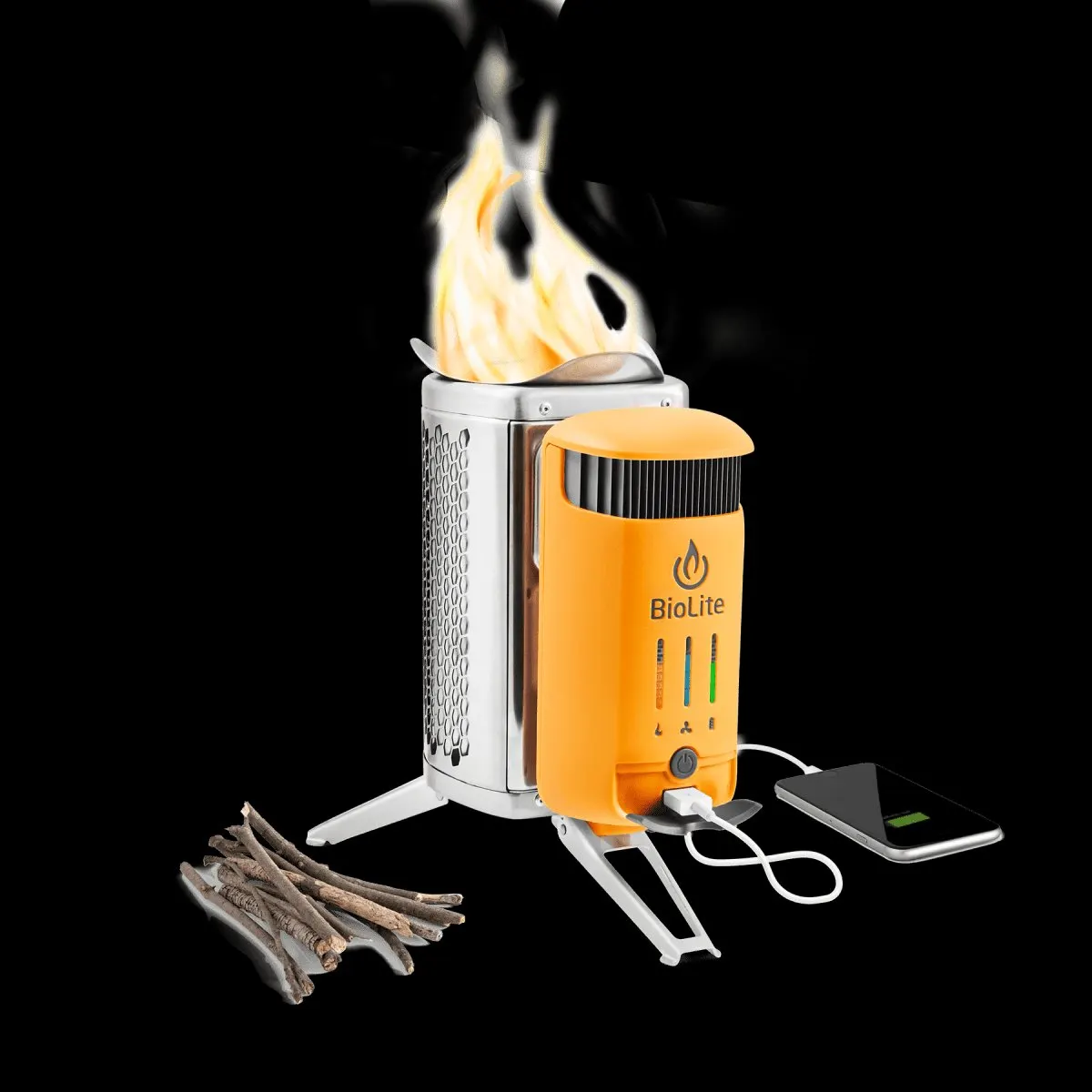
BioLite CampStove 2+
A wood-burning camp stove that generates electricity from fire. Burn sticks, pinecones and other biomass to cook a meal while charging a phone from the built-in 3W thermoelectric generator. Outdoor use only.
 Outdoor use only
For: Van-and-backpacking canister stove
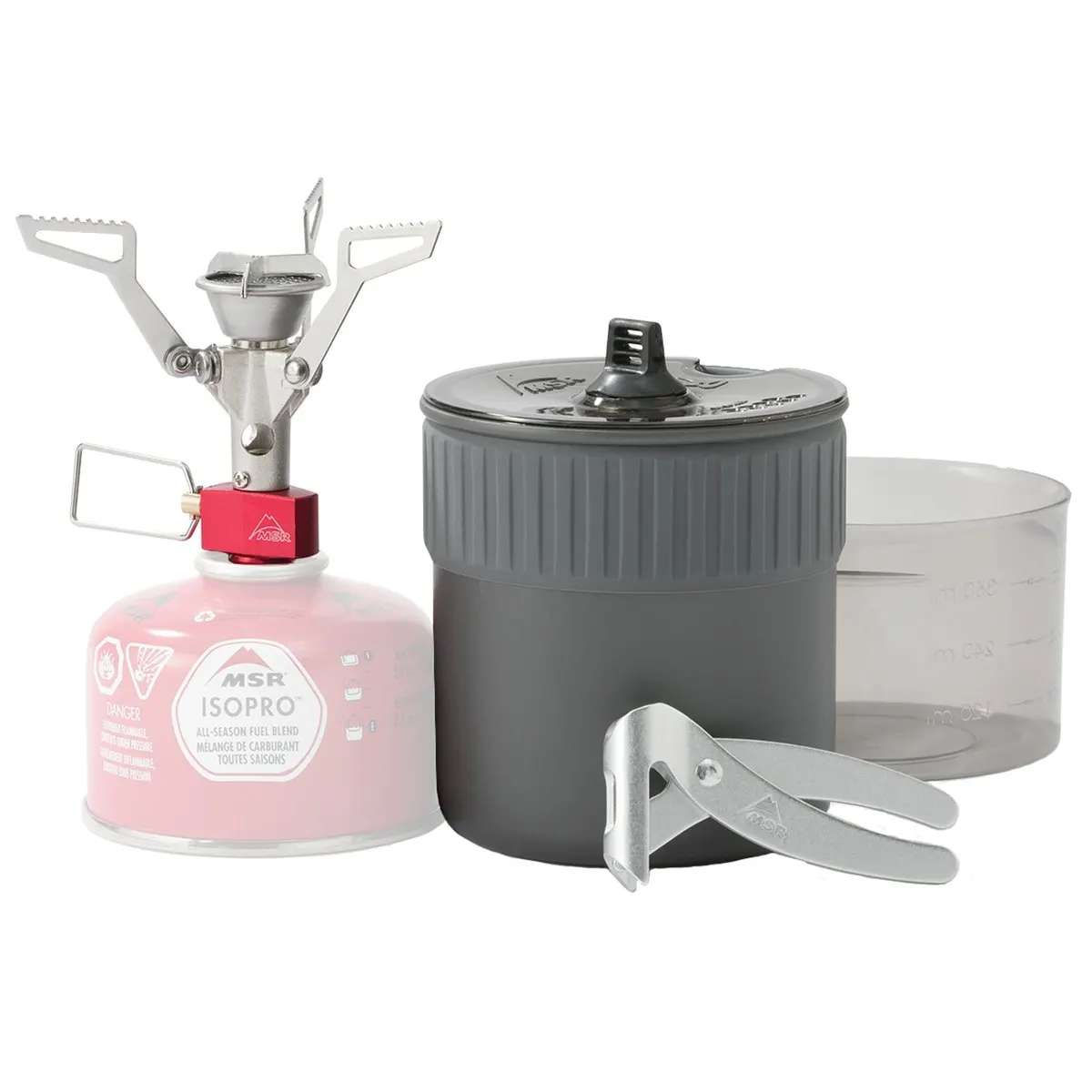
MSR PocketRocket 2 Mini Stove
An ultralight canister stove that weighs 2.6 ounces and, by MSR's rating, boils a liter in 3.5 minutes on IsoPro fuel. Suits hybrid van-and-backpacking builds where the same cooking gear goes from the van to the trailhead. MSR's manual says outdoor use only.

For: Two-pan induction cooking
Duxtop 9620LS (BT-350DZ) Portable Double Induction Cooktop, 1800W
Two induction zones on one 120 V outlet, sharing a single 1,800 W supply: the left zone reaches 1,800 W and the right 1,000 W, and together they never exceed 1,800 W. It lets you sear and simmer at once, but it needs the same inverter as a single-zone 1,800 W cooktop and about twice the counter space.