GSI Outdoors Pinnacle Ceramic Camper Cookset (4-Person)
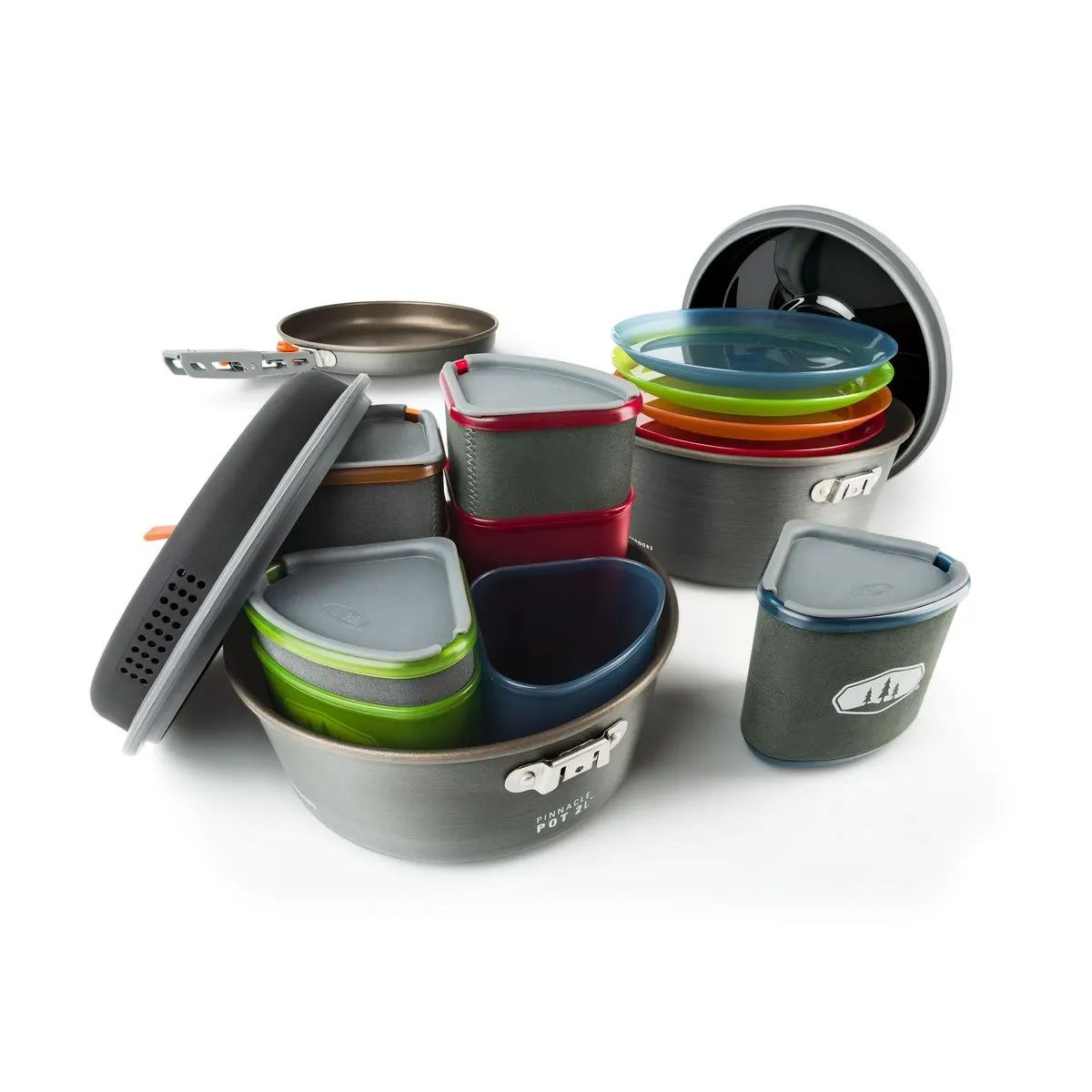
- Contents
- 3L + 2L pots, 9 in frypan, 4 mugs, 4 bowls, 4 plates
- Weight
- 58.1 oz (3 lb 10 oz)
- Packed Size
- 9.1 x 9.1 x 5.8 in
- Materials
- Hard-anodized aluminum, ceramic nonstick
- Compatibility
- Camp stoves (gas); not induction
- Care
- Hand wash only
- Warranty
- Lifetime (materials and workmanship)
Overview — Who is this for?
The GSI Outdoors Pinnacle Ceramic Camper is a complete four-person cook-and-eat kit that nests into one bag: two hard-anodized aluminum pots, a frypan, a strainer lid, a folding pot gripper, four insulated mugs, four bowls, four plates, and a welded storage bag that doubles as a camp sink. GSI lists the whole thing at 58.1 ounces (about 3 lbs 10 oz) and 9.1 x 9.1 x 5.8 inches packed. That's roughly the footprint of a small mixing bowl, holding the cookware and dishware for a family of four.
It's built for a particular van kitchen: a propane or butane stove, a couple or small family who eat most meals at the rig, and a galley where one drawer or cubby has to hold everything. If you cook on induction, stop here — this is aluminum and it won't work on your cooktop. Skip to the alternatives section.
Choose this if:
- You cook gently (medium heat or lower) for two to four people on a camp stove, outdoors.
- You want the lightest complete cook-and-eat kit on this site at 58.1 oz, packed to 9.1 x 9.1 x 5.8 in.
- You want easy-release surfaces that wipe clean with very little water.
Skip this if:
- You cook on induction (aluminum is not magnetic) or over a campfire (GSI says it is not designed for open campfires).
- You sear on high heat most nights; ceramic coatings are heat-sensitive.
- You want cookware with no coating to wear out.
Cooktops at a glance: GSI approves it for camp stove use only; not for in-home ranges, open campfires, ovens or microwaves; not induction.
The price is the big change. This set costs a lot more than the earlier version used to sell for, and that shapes the verdict below. Check the current price on Amazon, since it moves often.
What it replaces and what changed
If a search for the "GSI Pinnacle Camper" sent you here, that original set (GSI item 50181) has dropped off Amazon. The Pinnacle Ceramic Camper (item 50281) is the current version, and it's the same kit in almost every way that matters:
- Same contents. Two pots (owners and retailers list them as 3L and 2L), a frypan (an owner review measures it at 9 inches), the strainer lid, the pot gripper, four 14 oz insulated mugs with sip-through lids, four 14 oz bowls, four color-coded plates, and the sink bag.
- Same weight and packed size. GSI lists 58.1 oz and 9.1 x 9.1 x 5.8 inches for both versions.
- Different coating. This is the real change. GSI describes the original Pinnacle Camper as using Teflon with Radiance Technology, a PTFE-based nonstick. The Pinnacle Ceramic Camper uses a ceramic nonstick coating instead. GSI still claims faster heat transfer (it says the coating reaches temperature 25% faster than other coatings) and easy cleaning.
- Higher price. The ceramic version costs considerably more than the old set usually sold for.
A correction for anyone who read our earlier review: it called the original set's interior "ceramic-coated." GSI's own listing for the 50181 says Teflon Radiance. Only the 50281 has the ceramic coating.
So what are you actually choosing? Mostly a coating and a price. If you wanted out of PTFE nonstick, this is the version that gets you there. Note that GSI's product page doesn't publish a PFAS-free certification for the coating. If that label matters to you, ask GSI directly before you buy.
Design & build
The pots and pan. GSI calls the hard-anodized aluminum "garnet hard" and scratch-resistant. Hard anodizing is an electrochemical treatment that gives aluminum a much harder, corrosion-resistant surface. On top of that sits the ceramic nonstick coating on the cooking surfaces. Aluminum is the reason this set weighs so little. A stainless kit with the same pot volumes and dishware would weigh noticeably more. Compare the Magma Nesting 10-Piece Set, which Magma lists at 13 lb for the cookware alone.
The handles. The pots have no fixed handles. A single folding pot gripper clips onto the rim of whichever pot or pan you're using. One owner says they like the clip-on handle a lot. The trade-off is the usual one: you get one gripper for three vessels, so plan your cooking order. Keep track of the gripper too. If it goes missing, the set gets awkward fast.
The dishware. The mugs come with insulated sleeves and sip-through lids. Mugs and bowls are 14 oz each. Everything is color-coded so each person keeps their own set. The dishware is polypropylene plastic. One owner calls the plates and bowls "not the nicest experience when eating" while still praising the convenience. That's fair: these are camp dishes, not ceramic plates. Another owner notes the mugs have an unusual shape that takes a little getting used to. That shape is what lets them nest efficiently inside the pots.
The sink bag. Everything packs into a welded storage bag that also works as a camp sink. Welded seams hold water better than stitched ones, which is why the sink function works at all. In a van without a plumbed sink, or one where you want to save fresh water, a collapsible basin is something you'd otherwise have to buy and store separately.
Performance in a van
Heat. Aluminum heats fast and spreads heat well across the base, and GSI markets the ceramic coating as adding faster heat transfer. One owner who also has a heavy stainless car-camping set says the heat distribution is good despite the low weight. Another owner disagrees: they wish the pot bottoms were thicker, and say the walls are thin enough that you need low heat to avoid burning food.
Both of those can be true. Thin aluminum heats quickly and responds quickly. It also scorches quickly if you run a powerful two-burner propane stove on high. Typical van burners, whether a cassette butane stove or a propane two-burner, put out plenty of heat for thin aluminum, so the practical advice is simple: cook at medium or lower, and don't preheat an empty pan on full flame.
Nonstick. Owner reports on the ceramic coating are mixed. One says the nonstick "works very well." Another says the cookware doesn't "take heat well" and that eggs and fajitas needed real scrubbing even with oil. Ceramic nonstick coatings are known to be more sensitive to high heat than PTFE, and they generally lose their release faster when they're overheated or scrubbed with abrasives. Those two reports fit that pattern: treat the coating gently and it does well, push it with high-heat searing and it struggles.
If high-heat searing is a big part of how you cook, pair this set with a Lodge 10.25" cast iron skillet and let the Pinnacle handle boiling, simmering, eggs, and pancakes.
Capacity. A 3L pot covers a pasta dinner or a pot of chili for four. The 2L pot handles rice, sauce, or hot water at the same time. That two-pots-and-a-pan combination is the minimum for a real dinner without cooking in shifts.
Stove compatibility. GSI says Pinnacle cookware is "expressly approved for camp stove use" and "not approved for in-home use." It's built for portable camp stoves (canister, cassette butane, and propane two-burners), not a residential range, and GSI says it isn't designed for open campfires, conventional ovens or microwaves. It won't work on induction, because aluminum isn't magnetic. The camp stoves it's made for are themselves typically labelled by their makers for outdoor use; the Gas One GS-1000G butane stove this site links to, for example, is labelled for outdoor use only. Cook outside the van with them. If you're still deciding on a heat source, our induction vs butane vs propane guide covers the trade-offs.
Living with it
Storage. Nesting is the reason to buy this set. Everything packs into one 9.1 x 9.1 x 5.8-inch unit. One owner calls it "a really clever design." A van drawer that would otherwise hold two loose pots and a stack of dishes holds the whole kit, with room left over. Pack it the way it came, with the dishware inside the pots and the lid on top. Things are less likely to shift and scratch each other on rough roads than when they're loose in a cabinet.
Rattle and scratching. With a nonstick interior, the main long-term risk in a moving vehicle is items rubbing against the coating. The nested dishware is plastic, which helps. If you add your own metal utensils or a stove part to the stack, wrap them or keep them out of the pots.
Cleaning. GSI's instructions are to hand wash with warm, soapy water, dry thoroughly, and avoid abrasive cleaners. It's not a dishwasher set. In a van that's an advantage of nonstick: a wipe with a paper towel and a small splash of water usually handles light cooking, so you use less of your fresh-water supply. Use silicone, wood, or nylon utensils, not steel. Skip abrasive pads, and let the pan cool before you rinse it. Sudden temperature changes are hard on any coated pan.
Durability and warranty. GSI backs the set with a lifetime warranty against material and workmanship defects. That language covers defects, so check with GSI how they handle a coating that has simply worn out from use. Hard-anodized aluminum bodies last a long time. With any nonstick set, the coating is the part that wears out, and how long it lasts depends mostly on how hot you cook and how you clean.
Who should skip it
- Induction kitchens. Aluminum won't work on induction. Look at the Magma set or a stainless pot.
- High-heat cooks. If you sear steaks or char fajitas on a high-output propane burner several nights a week, a ceramic coating is the wrong surface. Owner reports already show it struggling with that kind of cooking.
- Solo travelers and couples who don't need dishware. Four mugs, bowls, and plates are dead weight if it's just you. A single pot like the MSR Alpine Stowaway plus a skillet takes less space and costs far less.
- Value shoppers. At its current premium price you're paying a lot for aluminum cookware and plastic dishware. The stainless GSI Glacier Stainless Camper has a similar four-person layout and costs less.
- Anyone who wants cookware for decades. Stainless and cast iron have no coating to wear out, so they typically stay in service far longer than coated pans.
Alternatives
- Magma Nesting 10-Piece Set. 18-10 stainless that Magma lists as induction-compatible, designed for boat galleys. Heavier, and it includes no dishware, but there's no coating to wear out. The pick for induction vans.
- Snow Peak Titanium Cookset. Very light titanium pots for one or two people. Smaller capacity and less even heat, but tiny, and titanium has no coating to wear off and doesn't rust.
- MSR Alpine Stowaway Pot. A single 1.6L stainless pot whose handle locks the lid shut. MSR doesn't list induction compatibility, so test it with a magnet. A good base for a solo kit.
- Lodge 5-Quart Cast Iron Dutch Oven. The heavy-duty option if you cook big one-pot meals and have the payload for it.
For a broader look at how van cooksets compare by material, see our van cookware materials guide, and our complete van cookware guide for building a full galley kit.
Verdict
The Pinnacle Ceramic Camper is the lightest complete four-person cook-and-eat kit on this site. You get two real pots, a pan, insulated mugs, bowls, plates, and a sink, all in a package under 4 lbs that fits in one drawer. The switch to a ceramic coating is good news if you wanted to move away from PTFE.
Two things hold it back from a top score. First, owner reports on the ceramic nonstick are mixed, and thin aluminum walls punish high heat. Second, the price jumped considerably for what is essentially the same kit. For vans that cook gently on a camp stove outdoors for three or four people, it's still a strong buy. Solo travelers, induction kitchens, and high-heat cooks should look elsewhere.
FAQ
What's the difference between the GSI Pinnacle Camper and the Pinnacle Ceramic Camper? The coating and the price. GSI describes the original Pinnacle Camper (50181) as using Teflon with Radiance Technology, a PTFE nonstick. The Pinnacle Ceramic Camper (50281) uses a ceramic nonstick coating. GSI lists the same 58.1 oz weight, the same 9.1 x 9.1 x 5.8-inch packed size, and the same four-person contents for both.
Is the Pinnacle Ceramic Camper induction compatible? No. The pots and frypan are hard-anodized aluminum, which isn't magnetic, so induction cooktops won't detect them. GSI approves the set for camp stove use.
Is the ceramic coating PFAS-free? GSI's product page describes the coating as ceramic but doesn't publish a PFAS-free certification. The earlier version used Teflon Radiance, which is PTFE-based. If a certified PFAS-free claim matters to you, confirm it with GSI before you buy.
Can I put it in the dishwasher? No. GSI says to hand wash with warm, soapy water, dry thoroughly, and avoid abrasive cleaners. Use non-metal utensils to protect the coating.
What size are the pots and pan? Retailers and owners list the pots as 3 liters and 2 liters. An owner review measures the frypan at 9 inches. The mugs and bowls are 14 oz each.
How much does the full set weigh? GSI lists 58.1 oz, about 3 lbs 10 oz, for the complete set, including cookware, dishware, and the sink bag.
Can I use it on a home stove in my van build? GSI says Pinnacle cookware is approved for camp stove use and not for in-home use, so a residential-style range isn't what it's designed for. Portable butane and propane camp stoves are typically labelled by their makers for outdoor use, so cook outside the van with them. A CO alarm is a last-line warning device, not permission to run an outdoor-only stove indoors. If you need to cook inside, use an electric cooktop with cookware it supports. This aluminum set won't work on induction.
Compare with similar products
See how this stacks up against the other compact cookware we've reviewed.
Head-to-head comparisons
Related Reviews
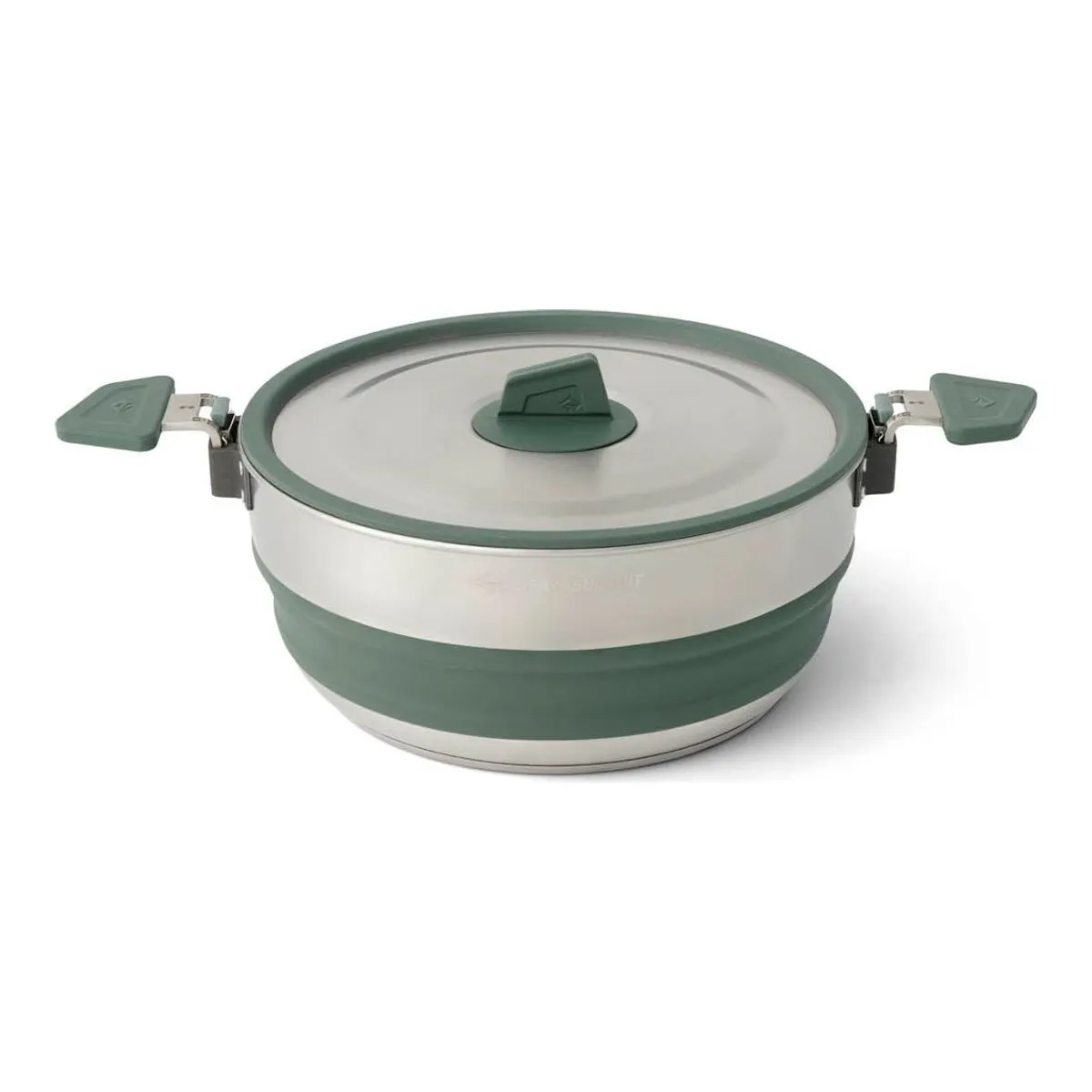
For: Collapsible pot for induction
Sea to Summit Detour Stainless Steel Collapsible Pot 3L
The X-Pot's successor fixes its biggest flaw: a three-ply stainless base that works on induction. Collapses to 2.5 in with a lockable lid, but it's over twice as heavy and not for campfires.
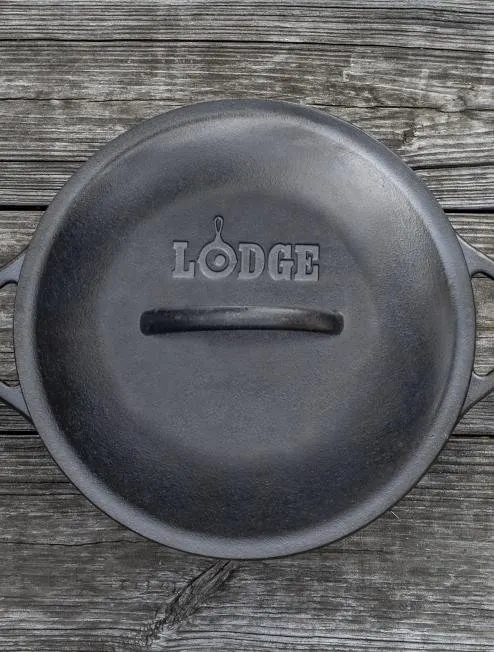
For: Braising, baking, one-pot meals
Lodge L8DOL3 5-Quart Cast Iron Dutch Oven
A 5-quart cast iron Dutch oven for roasting, baking bread and simmering stews. With no coating to wear off it is hard to damage in normal use. Heavy at 11 lbs, so it suits vans that cook big one-pot meals often.
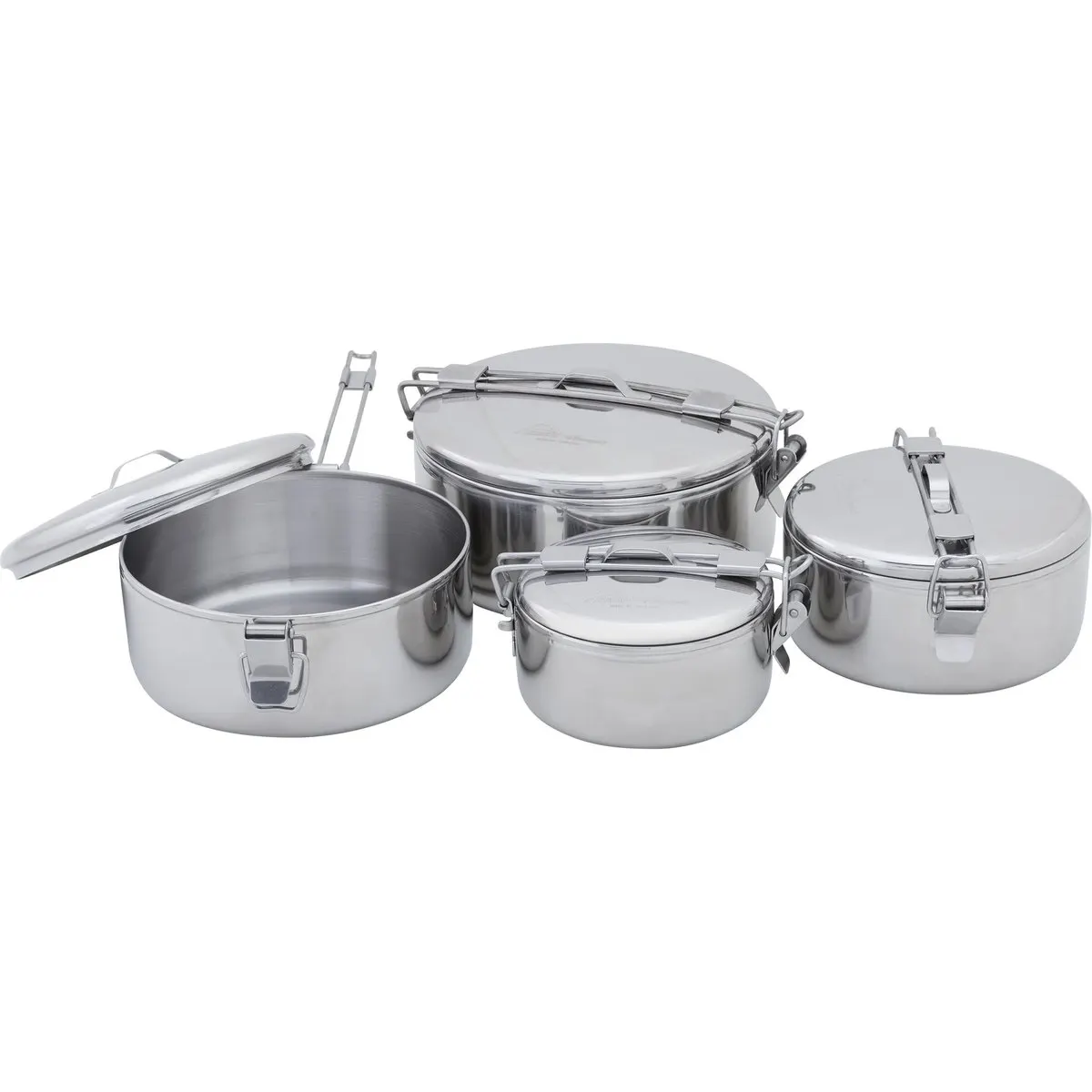
For: Solo stainless pot
MSR Alpine Stowaway 1.6L Stainless Pot
A 1.6 L stainless pot with a lid that the folding handle holds shut for transport. MSR's all-stainless build has no coating to wear out. MSR doesn't list induction compatibility, so check with a magnet.