GSI Outdoors Glacier Stainless Camper Cookset
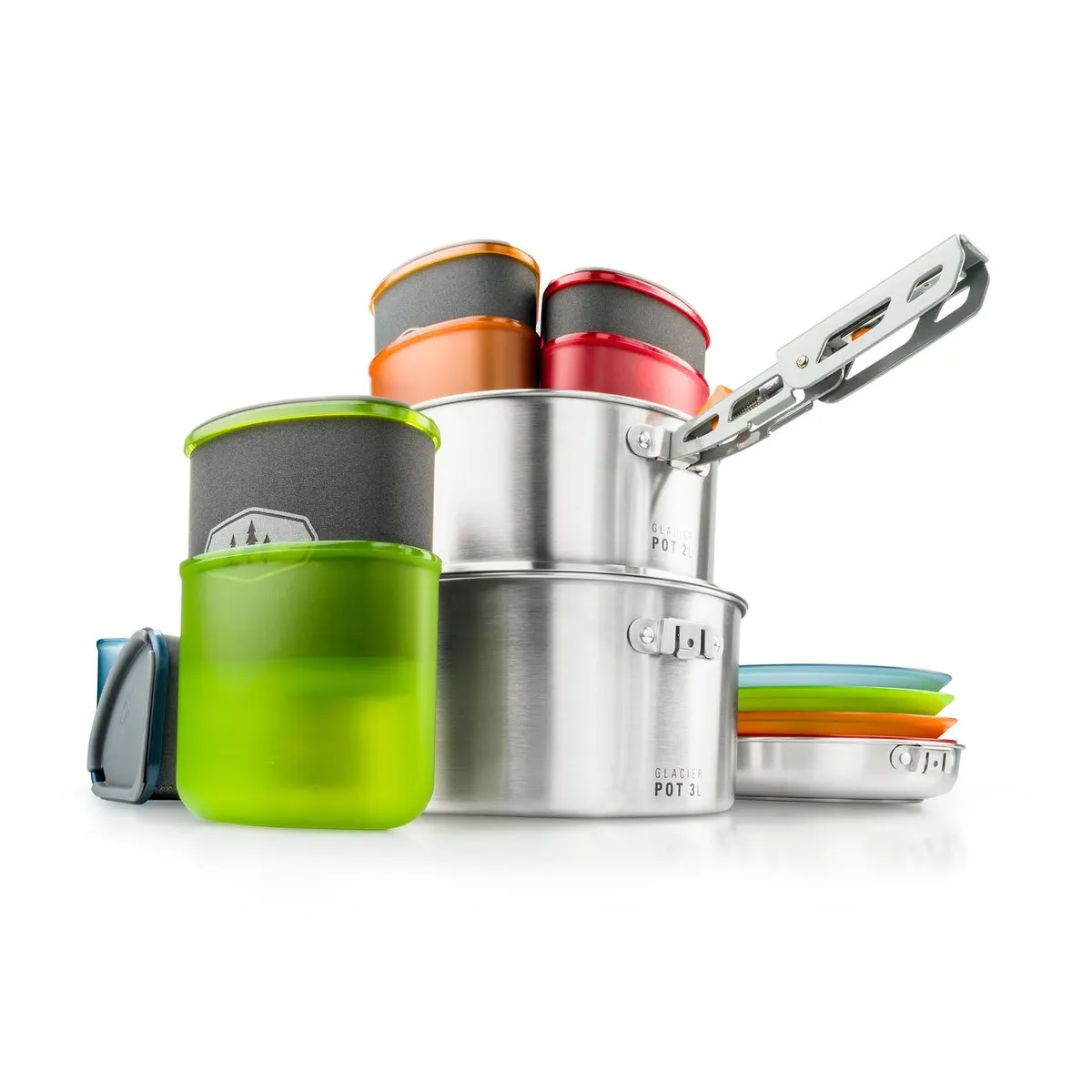
- Pots
- 3L + 2L stainless, 9" fry pan
- Materials
- Clad 304 (18/8) stainless + polypropylene
- Serves
- 4
- Packed Size
- 8.4 x 8.4 x 5.4 in
- Weight
- 56.8 oz
- Warranty
- Lifetime
Overview — Who is this for?
The GSI Outdoors Glacier Stainless Camper is a four-person cook-and-eat kit that nests into one welded sack. It includes two stainless pots (3 liter and 2 liter), a 9-inch stainless fry pan, a strainer lid, a folding pot gripper, four 14 fl oz insulated mugs with sip-through lids, four 14 fl oz bowls, and four 7.5-inch plates. GSI lists the packed size at 8.4 x 8.4 x 5.4 inches. The Amazon listing ("Glacier Stainless Camper 4 Person") gives the weight as 56.8 oz, which is about 3 lb 9 oz. Don't confuse it with GSI's Glacier Stainless Base Camper sets, which are pot-and-pan sets without the dinnerware and come in different sizes.
It's a mid-priced kit: it costs considerably more than the budget kit it replaces here, and noticeably less than GSI's own nonstick Pinnacle Camper. You're paying for stainless where it matters: the pots and the pan. The dinnerware is still plastic.
It fits a particular van kitchen: a couple or small family who cook most meals on a propane or butane stove, want cookware that won't wear out, and don't want to think about protecting a nonstick coating. It's a poor fit if you cook on induction. More on that below, because it's the most important caveat in this review.
Choose this if:
- You cook for two to four on a propane or butane camp stove, outdoors.
- You want stainless pots with no coating to wear out, plus dishes and mugs, in one 8.4 x 8.4 x 5.4 in bundle.
- You want to cook over coals as well as on a stove (GSI says the stainless pieces are durable enough for open flame or coals).
Skip this if:
- You cook on induction. GSI does not list induction compatibility, and owners report the steel is not magnetic enough.
- You cook solo; four sets of plastic dishes are dead weight.
- You want easy-release eggs without learning stainless technique.
Cooktops at a glance: gas camp stoves and coals per GSI; assume no induction. Cleanup: hand wash only per GSI; stainless tolerates scrubbing, but sticks more than nonstick.
What it replaces and what changed
If you came here looking for the Stanley Adventure Base Camp 21-Piece Cookset, it's no longer available on Amazon. The Glacier Stainless Camper is the closest current kit that does the same job: feed four people out of a single nested bundle. It's a different kind of product, though, not a newer Stanley.
- Two pots instead of one. The Stanley gave you one 3.5L pot and a frying pan. The Glacier gives you a 3L pot, a 2L pot, and a 9-inch fry pan. That second pot is the biggest practical upgrade. You can cook rice or pasta in one while a sauce, soup, or vegetables go in the other.
- Stainless grade and build. Both kits use 18/8 (304) stainless for the cookware. GSI describes the Glacier's as "heavy-duty, clad" stainless and calls this line its most rugged cookware.
- Handles. The Stanley had a fixed folding handle on its pan. The Glacier pots and pan have no permanent handles. You use one folding pot gripper that clamps onto brackets on each piece, and you can only move one hot piece at a time.
- Dinnerware. Both kits use plastic plates and bowls. The Glacier adds four insulated mugs with sip-through lids, which the Stanley didn't include. It drops the Stanley's sporks, spatula, serving spoon, and cutting board, so budget for utensils separately.
- Cleaning. The Stanley was dishwasher safe. GSI says to hand wash the Glacier, and warns that a dishwasher can age the components early. In a van that rarely matters.
- Size and weight. The Glacier packs a little smaller in diameter (8.4 inches vs about 9) and weighs about the same, around 3.5 lb.
- Price. The Stanley was a budget kit; the Glacier costs considerably more. Check current prices on Amazon, since they move often.
Put simply, the Stanley was a cheap starter kit that happened to have a decent pot. The Glacier is a mid-priced kit built around more serious cookware, with the same compromise on plates and bowls.
Design & build
The cookware. Both pots and the fry pan are 304 (18/8) stainless steel, which is the standard food-grade stainless used in home kitchens. GSI says the clad construction gives "incredibly even, controlled heat" and calls the finish rust-proof. The pots have volume graduations molded into the walls, so you can measure water for rice, oats, or dehydrated meals without a measuring cup. GSI also lists a "spiral turned base," a machined bottom pattern meant to help the pot grip a stove grate instead of skating around on it. Both pots and the pan are listed as safe over coals as well as on a stove.
The strainer lid. One lid with a strainer pattern serves the pots. It has a silicone ring and silicone thumb pads so you can hold it while draining pasta water. There's one lid, not two, so if both pots need covering at once, you'll need a plate or a second lid.
The pot gripper. This is the design choice to understand before you buy. Instead of handles riveted to each pot, GSI gives you one folding gripper that locks onto exterior brackets. That's why everything nests so tightly. With no handles sticking out, the pieces stack cleanly. The cost is that you use one gripper for three pieces of cookware. If you're juggling a pan and a pot at once, you're moving the gripper back and forth. Some owners buy a second gripper. One reviewer mentions buying an extra handle, which is an inexpensive add-on. Clamp the gripper firmly before lifting a full 3L pot of boiling water. A clamp-on handle depends on being seated correctly, so check it every time.
The dinnerware. The plates, bowls, and mug bodies are BPA-free plastic. GSI's materials list includes clear polypropylene and silicone. The mugs have insulated sleeves and sip-through lids, which helps on a cold morning or a bumpy road. One reviewer pointed out they won't compete with a YETI tumbler for keeping coffee hot. That's a fair expectation. They're camp mugs with a sleeve, not vacuum-insulated steel.
The stuff sack. The whole set nests into a welded sack that doubles as a camp sink or wash basin. In a van without a plumbed sink, that's genuinely useful. You can fill it with warm, soapy water outside and wash dishes on the step.
Warranty. GSI covers the set with a lifetime warranty against defects in materials and workmanship. It will repair or replace parts at its discretion.
Performance in a van
On propane or butane. This is where the Glacier makes sense. It works on a two-burner propane stove or a single-burner butane cassette stove like the Iwatani Cassette Feu. Use those stoves outdoors: Iwatani's US manual for its ZA-3HP butane stove, for example, calls it an outdoor-only camp cooking appliance and warns never to use it in a camper, tent or car, and the Gas One GS-1000G butane stove this site links to is labelled for outdoor use only. Check your own stove's manual before cooking. Stainless handles high heat without worrying about coatings, so you can boil hard, sear, and scrub. Keep the flame inside the base footprint. On a wide propane burner turned to max, flames licking up the side heat the walls and the gripper brackets for no benefit. Use the gripper or a dry towel. The cookware itself gets hot all over, because there are no insulated handles.
On induction: probably not. GSI's product page doesn't list induction compatibility, and at least one owner of a Glacier stainless set reports that the steel isn't magnetic enough to work on an induction hob. That's common with 18/8 stainless camp cookware, which is usually non-magnetic unless the base has a magnetic layer. If you cook on a portable induction plate like the Duxtop portable induction cooktop, assume this set won't work. If you already own one, stick a fridge magnet to the base. If it doesn't grab firmly, it won't heat on induction.
The fry pan. A 9-inch stainless pan with no nonstick coating behaves like any stainless pan. Preheat it, add oil, then add the food, and it handles eggs, pancakes, and quesadillas well enough. Put cold eggs in a cold pan and they'll weld to it. One reviewer describes the pan as having a substantial, thickened bottom, which helps with hot spots over a narrow camp-stove flame. If you want truly easy eggs, a seasoned Lodge 10.25" cast iron skillet is a cheap addition, or look at the nonstick Pinnacle kit below.
What it cooks well. Pasta and sauce for four, rice and curry, chili, soups, oatmeal, boiled potatoes, blanched vegetables, and hot water for dishes or drinks. The 3L pot is a realistic size for pasta for three or four. Like most camp pots, it's more comfortable at two-thirds full than at the brim, especially on an uneven surface.
Owner reports. Amazon reviews praise its ruggedness, how tightly it packs, and the strainer lid with its silicone thumb pads. The recurring complaints are the single gripper, the mugs being merely okay at holding heat, and induction incompatibility.
For more on how stainless compares with aluminum, titanium, and cast iron in a van, see our van cookware materials guide.
Living with it
Storage. Packed, it's an 8.4-inch-wide, 5.4-inch-tall cylinder. That fits in most galley drawers, a crate, or a cubby under the bench. Everything nests inside the 3L pot, so the whole kitchen comes out of the cabinet in one grab. For ideas on where a nested kit lives best in a small build, see our van kitchen storage guide.
In a moving vehicle. Stainless is less prone to denting than thin aluminum, and there's no coating to chip when the set rattles over washboard roads. Nested pieces can still clink, though. Keep the set in its sack and wedge it into a drawer or cubby so it can't slide. Make sure the pots are completely dry before you nest them. Moisture trapped between stacked pieces and inside a closed sack is how camp kits start to smell.
Cleaning. Hand wash with warm, soapy water, dry thoroughly, and avoid abrasive cleaners, per GSI. Stainless forgives burnt-on food better than nonstick does, because there is no coating to damage. The trade-off with limited water is that stuck rice or eggs often need a soak in hot water before a non-scratch scrubber clears them, while a nonstick pan would wipe clean. Deglazing the hot pan with a splash of water right after cooking saves most of that soak. The plastic bowls and mugs will pick up stains from turmeric and tomato over time, like any plastic dinnerware. Our van kitchen dishwashing guide covers low-water washing that suits this kind of set.
Durability. The pots and pan have no coating to wear off, so they are the long-lived part of the kit. The plastic pieces are the consumables, and they're the parts most likely to crack, warp, or stain first. The lifetime warranty covers defects, not wear.
Who should skip it
- Induction cooks. This is the big one. Look at the Magma set or the Sea to Summit Detour pot below.
- Solo travelers. Four plates, bowls, and mugs is dead weight for one person. A single quality pot and a skillet will serve you better.
- Nonstick lovers. If your morning is eggs every day and you don't want to learn stainless technique, the Pinnacle's ceramic nonstick is easier.
- Anyone who wants a complete kitchen in a box. There are no utensils, spatula, or cutting board. The Stanley included them. The Glacier doesn't.
- Strict budget builds. This isn't the cheapest way to feed four. It's the durable way.
Alternatives
- GSI Pinnacle Ceramic Camper. It's the same idea from the same brand, with hard-anodized aluminum and ceramic nonstick instead of stainless. Eggs are easier and it's lighter on heat, but it's aluminum (no induction), the coating needs care, and it costs noticeably more.
- Magma Nesting 10-Piece Set. For full-timers on induction, this is the step up. It's 18-8 stainless with a tri-clad disk bottom that's rated for induction, plus detachable handles. It's cookware only, with no dinnerware, and costs considerably more.
- Sea to Summit Detour Stainless Pot 3L. A single collapsible stainless pot with a three-ply base that works on induction. It's not a family kit, but it's the answer if induction is non-negotiable.
- MSR Alpine Stowaway Pot. An 18/8 stainless pot at a fraction of the price, for a solo cook who just needs one rugged pot.
- Snow Peak Titanium Cookset. Ultralight titanium for people who care about grams. Not for family cooking.
For the full picture of building a cookware kit, see our van cookware complete guide.
Verdict
The GSI Glacier Stainless Camper is a sturdy, well-packed four-person kit for van kitchens that run on gas. Its strengths are the cookware. You get two stainless pots instead of one, a heavy-bottomed fry pan, molded graduations, a strainer lid that works, and a lifetime warranty. Its weaknesses are the single clip-on gripper, plain plastic dinnerware, no utensils, and the near-certainty that it won't work on induction.
Compared with the Stanley Base Camp it replaces on this page, it costs considerably more and gives you a better cooking setup. You get a second pot, sturdier stainless, and insulated mugs, but you lose the utensils, the cutting board, and dishwasher safety. If you're a couple or small family cooking on propane or butane outdoors and want cookware with no coating to wear out, it's a strong choice. If you cook on induction, skip it and buy induction-ready stainless instead.
FAQ
What replaced the Stanley Adventure Base Camp cookset? The Stanley 21-piece set is no longer available on Amazon. The GSI Glacier Stainless Camper is the closest current four-person nested kit we recommend. It adds a second stainless pot and insulated mugs but drops the Stanley's utensils and cutting board, and it costs considerably more.
Does the GSI Glacier Stainless Camper work on induction? Assume it doesn't. GSI doesn't list induction compatibility, and at least one owner reports the steel isn't magnetic enough for an induction hob. Test with a fridge magnet. If it doesn't stick firmly to the base, the pot won't heat on induction.
What's included in the set? A 3L pot, a 2L pot, a strainer lid, a 9-inch fry pan, four 14 fl oz mugs with insulated sleeves and sip-through lids, four 14 fl oz bowls, four 7.5-inch plates, a folding pot gripper, and a welded storage sack that doubles as a sink.
How much does it weigh and how big is it packed? Packed, it measures 8.4 x 8.4 x 5.4 inches. The Amazon listing gives the weight as 56.8 oz, about 3.5 lb. That's heavy for backpacking but compact for a four-person van kitchen.
Is the GSI Glacier Stainless Camper dishwasher safe? GSI says to hand wash it with warm, soapy water, dry it thoroughly, and avoid abrasive cleaners, and warns that dishwashers can age the components early. The stainless cookware handles soaking and non-scratch scrubbing well.
Can I use it over a campfire? GSI lists the stainless cookware as safe over coals as well as on a stove. Keep the plastic dinnerware, mug sleeves, and silicone parts well away from the fire, and use the gripper or gloves. The pots have no insulated handles.
Does it come with utensils? No. There are no sporks, spatula, or serving spoon, so add your own. A stainless or wooden spatula works well with stainless cookware.
Compare with similar products
See how this stacks up against the other compact cookware we've reviewed.
Head-to-head comparisons
Related Reviews
For: Ultralight solo or duo cooking
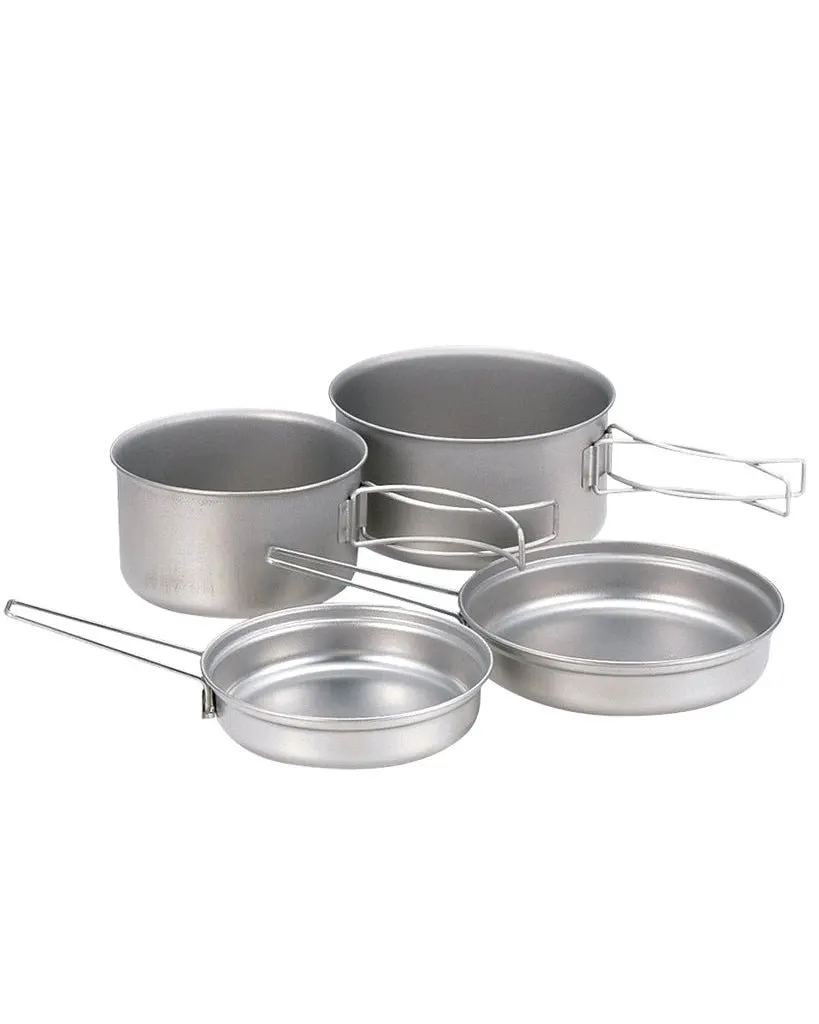
Snow Peak Titanium Multi Compact Cookset
The lightest cookware set on this site: a 4-piece titanium set of two pots whose lids double as small frying pans, at 11.6 oz. It suits weight-conscious van dwellers and backpackers who mostly boil water and cook simple meals; thin titanium heats unevenly and does not work on induction.
For: Searing on any cooktop
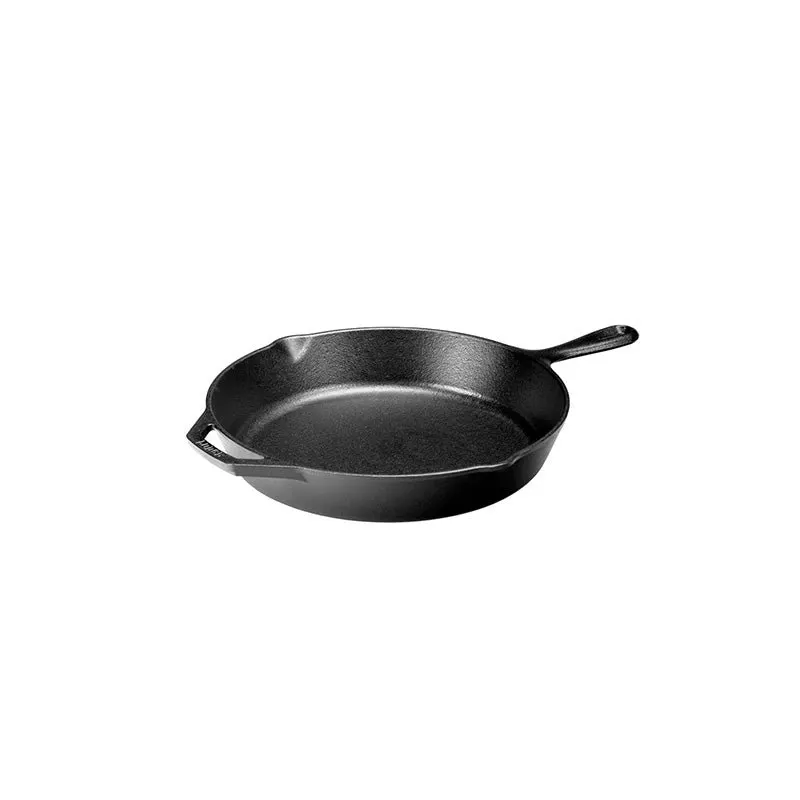
Lodge L8SK3 10.25-inch Cast Iron Skillet
One of the most versatile pans for a van kitchen. Pre-seasoned cast iron with no coating to wear off, induction-compatible, hard to damage in normal use, and inexpensive. Lodge cast iron is commonly used for decades with basic care, which makes it a sensible first pan.
For: Light 4-person kit (gas)
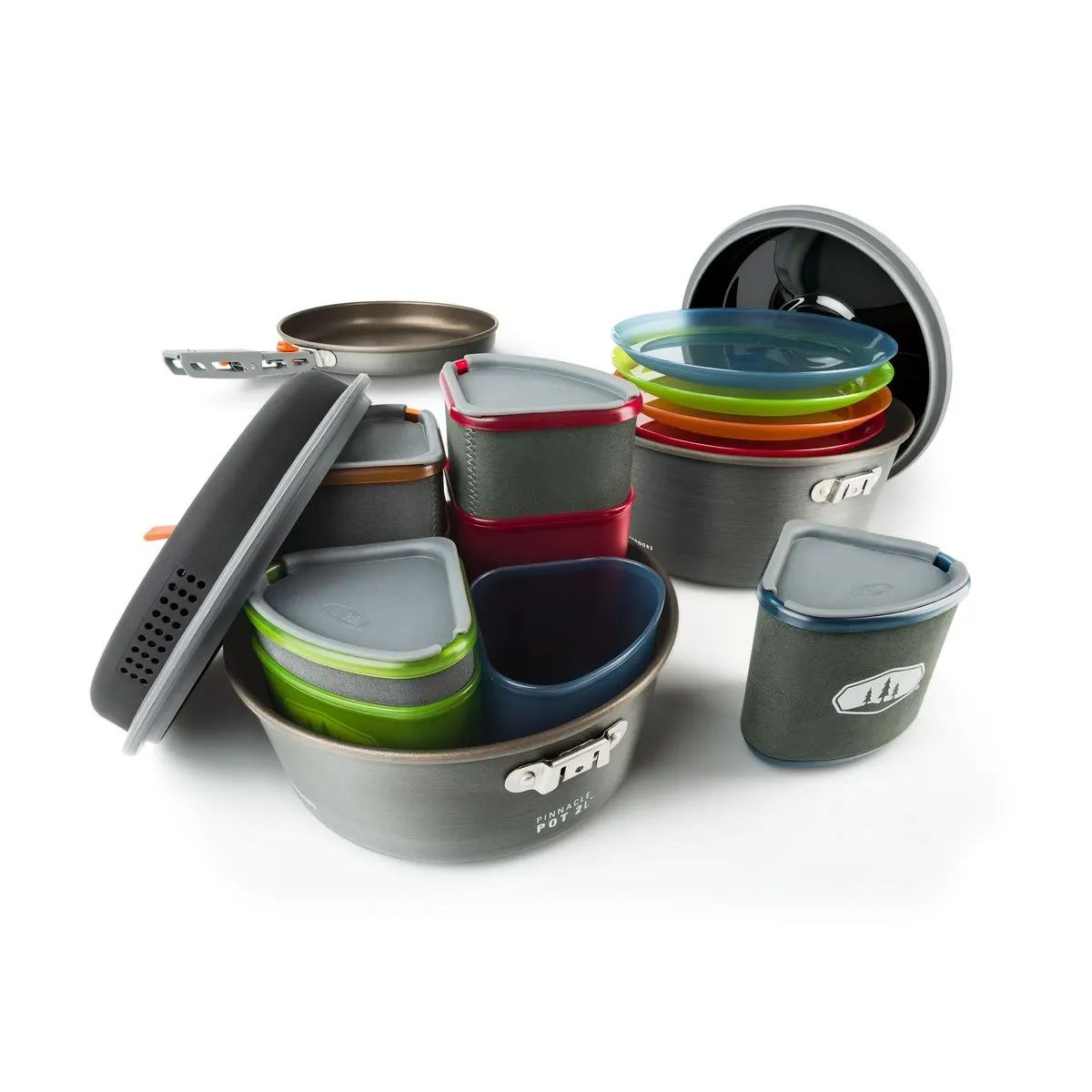
GSI Outdoors Pinnacle Ceramic Camper Cookset (4-Person)
The same nesting 4-person kit as the old Pinnacle Camper with a ceramic coating instead of Teflon. Light and complete, but no induction, mixed nonstick reports, and a much higher price.