How to Make Real Espresso in a Van (Without an Expensive Machine)
The three methods that actually produce real espresso in a van kitchen — the Wacaco Picopresso lever press, the Bialetti stovetop moka, and the AeroPress with a Prismo adapter. Plus the grinder question that matters more than the machine.
Disclosure: As an Amazon Associate I earn from qualifying purchases. Links to Amazon on this page are affiliate links: if you buy through one, VanLifeKitchens.com may earn a commission at no extra cost to you. Read our affiliate disclosure.
Can you actually make real espresso in a van?
Short answer: yes, if you are honest about what "real espresso" means. Real espresso is pressurized extraction — 9 bars of water pressure driven through 18 grams of finely ground coffee in about 25 seconds. That definition matters because it tells you what is possible in a van and what is not.
What you cannot do in a van: run a 1500W plumbed commercial-style espresso machine with a boiler that needs 20 minutes to heat up. That setup is a premium purchase, draws power your battery cannot spare, and needs plumbed water your kitchen probably does not have. Those are the machines coffee snobs mean when they say "real espresso," and they are the wrong tool for van life.
What you absolutely can do: pull 9-bar, properly extracted, rich, crema-topped shots that owners routinely compare to a cafe shot — using a manual lever-press portable espresso maker that costs a small fraction of a home machine, weighs under a pound, and uses hot water you already have for anything else. That is what this guide is about.
Below are the three methods that actually work for van espresso, in order from most real to least real, plus the grinder question (which matters more than the machine), plus how to adapt each method to induction, butane, and propane heat sources, including where each heat source can safely be used. If you are deciding between the Wacaco Picopresso and the Bialetti Moka Express for your next trip, skip to the head-to-head at the end.
Method 1: Manual espresso press (the real espresso answer)
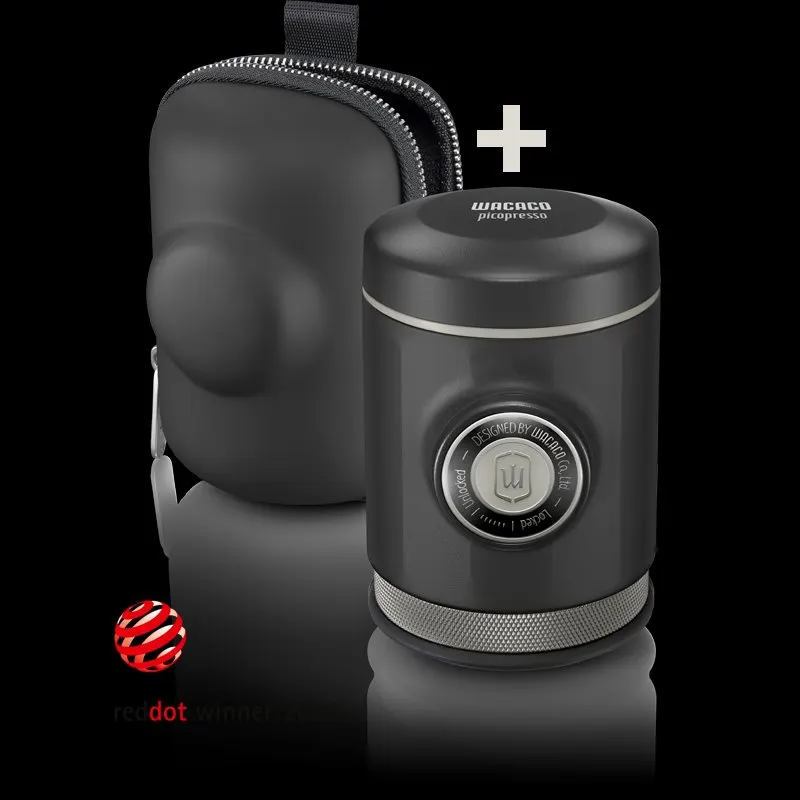
The best van espresso — real espresso, real crema, 9-bar-class extraction — comes from a hand-powered espresso maker. The common portable options are the Wacaco Nanopresso and Wacaco Picopresso (both hand-pumped) and the Flair Neo Flex (a lever press). They all work on the same principle: you grind fine, dose the basket, tamp, add hot water from a kettle, and pump or press by hand to generate espresso-level pressure.
Gear cost: mid-range to premium. The maker itself (the Picopresso sits at the premium end of portable lever makers) is only half the story — a decent hand grinder often costs about as much again (see grinder section below). Check current prices on Amazon, since they move often.
Workflow, start to finish:
- Heat water to about 93°C (200°F) on whatever heat source you have — a kettle on an induction hob inside, or a kettle or saucepan on a butane or propane camp stove set up outdoors. You do not need a thermometer; water just off the boil is close enough.
- Grind 16–18 grams of coffee at a fine espresso setting (finer than pour-over, about the texture of powdered sugar). This is where most beginners go wrong — the grind has to be fine enough that the press builds real pressure.
- Dose the ground coffee into the basket, level with a finger, and tamp firmly. Even pressure, flat surface.
- Pour hot water into the reservoir, screw on the brew chamber, invert over a cup, and pump (Picopresso, Nanopresso) or press the lever (Flair) in long, steady strokes. You are trying for a 25-second extraction time. If it gushes out in 10 seconds, the grind is too coarse. If it takes 45 seconds of heavy pressing, the grind is too fine.
- Taste. Adjust grind size next shot if needed.
The Picopresso is our pick for van use. It has a larger 18-gram basket, better pressure consistency than the older Nanopresso, and it nests into a compact case that lives in a drawer or on a shelf without any custom storage. Shot quality depends heavily on the grinder and on dialing in.
Advantages: real 9-bar extraction, real crema, fast once the water is hot (under two minutes from grind to shot), no electricity, no plumbing, easy cleanup (rinse the basket, wipe the gasket), compact storage. Works with any heat source because the espresso maker itself is unheated.
Disadvantages: one shot at a time (making two drinks is two workflows back-to-back), requires a good hand grinder (see below), requires learning the grind-dose-tamp-press routine, cannot make long drinks directly without rebrewing.
Method 2: The stovetop moka pot (the traditional van answer)
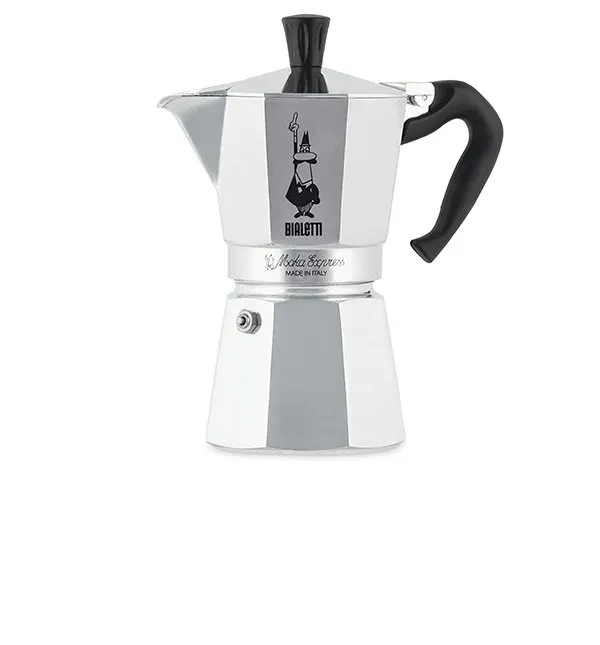
The moka pot is the pre-van-life van-life espresso maker. It has been in Italian kitchens for a hundred years and in camp kitchens for almost as long. The Bialetti Moka Express is the canonical example — aluminum, hexagonal, recognizable from across a campsite. The 6-cup version makes about 9 oz of concentrated coffee, enough for two people.
A moka pot makes concentrated, espresso-style coffee, but it is not real espresso. The pressure is about 1.5 bars, not 9 bars. The extraction is slower, hotter, and more forgiving than real espresso, which means the flavor is more bitter and less sweet. Some people love moka pot coffee exactly because it tastes different from espresso. Some people dismiss it for exactly the same reason. Both are defensible opinions.
Gear cost: budget — a Bialetti Moka Express 6-cup is one of the cheapest brewers here. Add a hand grinder if you do not already have one (you can also buy pre-ground, but fresh-ground is substantially better).
Workflow:
- Fill the bottom chamber with cold water to the safety valve line.
- Fill the filter basket with medium-fine ground coffee (a hair coarser than real espresso grind, about the texture of table salt). Do not tamp — tamping increases pressure beyond what the moka pot is designed for and can cause the safety valve to blow.
- Assemble and place on medium heat. On a butane or propane camp stove, do this outdoors: those stoves are manufacturer-labelled for outdoor use (see the heat source section below). A flame heats the aluminum base evenly. Induction works fine as long as the pot has a stainless steel base (most do not — the classic Bialetti Moka Express is aluminum and will not work on induction unless placed on an adapter plate).
- When the coffee starts flowing into the top chamber (about 4–5 minutes from cold), wait until you hear the sputtering sound, then remove from heat immediately. Running the pot too long scorches the coffee and ruins the shot.
- Serve into preheated cups. Drink immediately — moka pot coffee goes cold and bitter if it sits.
The biggest mistake beginners make is over-extracting by leaving the pot on the heat too long. The second biggest is tamping, which is what you do for real espresso but not for moka. The third is using bad coffee — moka pots amplify what is in the beans, so stale or bitter coffee tastes worse through a moka than through a pour-over.
Advantages: cheap, simple and hard to break (the gasket and filter plate are the usual replacement parts), no electricity, makes multiple servings at once, familiar workflow if you already make moka at home, works on outdoor propane and butane stoves with no adaptation.
Disadvantages: not real 9-bar espresso, the aluminum Bialetti does not work on induction (the stainless Bialetti Venus does), slower than the lever-press methods, the flavor profile is polarizing.
Method 3: AeroPress with an espresso adapter (the hack)
The AeroPress is not really an espresso maker, but with a fine grind, a firm press, and optional pressure adapters like the Fellow Prismo, it produces a concentrated espresso-like shot that works for lattes and cappuccinos when you need one fast.
This is a legitimate third option for van life because the AeroPress is a pan-dimensional workhorse — it makes drip-style coffee, French press-style coffee, and espresso-adjacent shots from the same budget-friendly device. If you are already bringing one for regular coffee (see the van life coffee setup guide for why you probably should), adding an inexpensive Prismo adapter gives you quasi-espresso on no extra gear.
The catch: the pressure an AeroPress with a Prismo generates by hand is modest — somewhat more than a moka pot, nowhere near the 9 bar of real espresso. The crema is thin. The shot is drinkable, works in a latte, but it is not the same as what the Picopresso produces. Think of the AeroPress-Prismo combo as "a better moka" rather than "as good as a lever press."
The grinder question (it matters more than the machine)
Any espresso method, real or quasi, is bottlenecked by the grinder. Cheap blade grinders produce inconsistent particle sizes — some dust, some chunks, no middle — and espresso extraction is incredibly sensitive to grind uniformity. A cheap blade grinder ruins a premium Picopresso. A decent burr grinder makes both the Picopresso and the moka pot noticeably better.
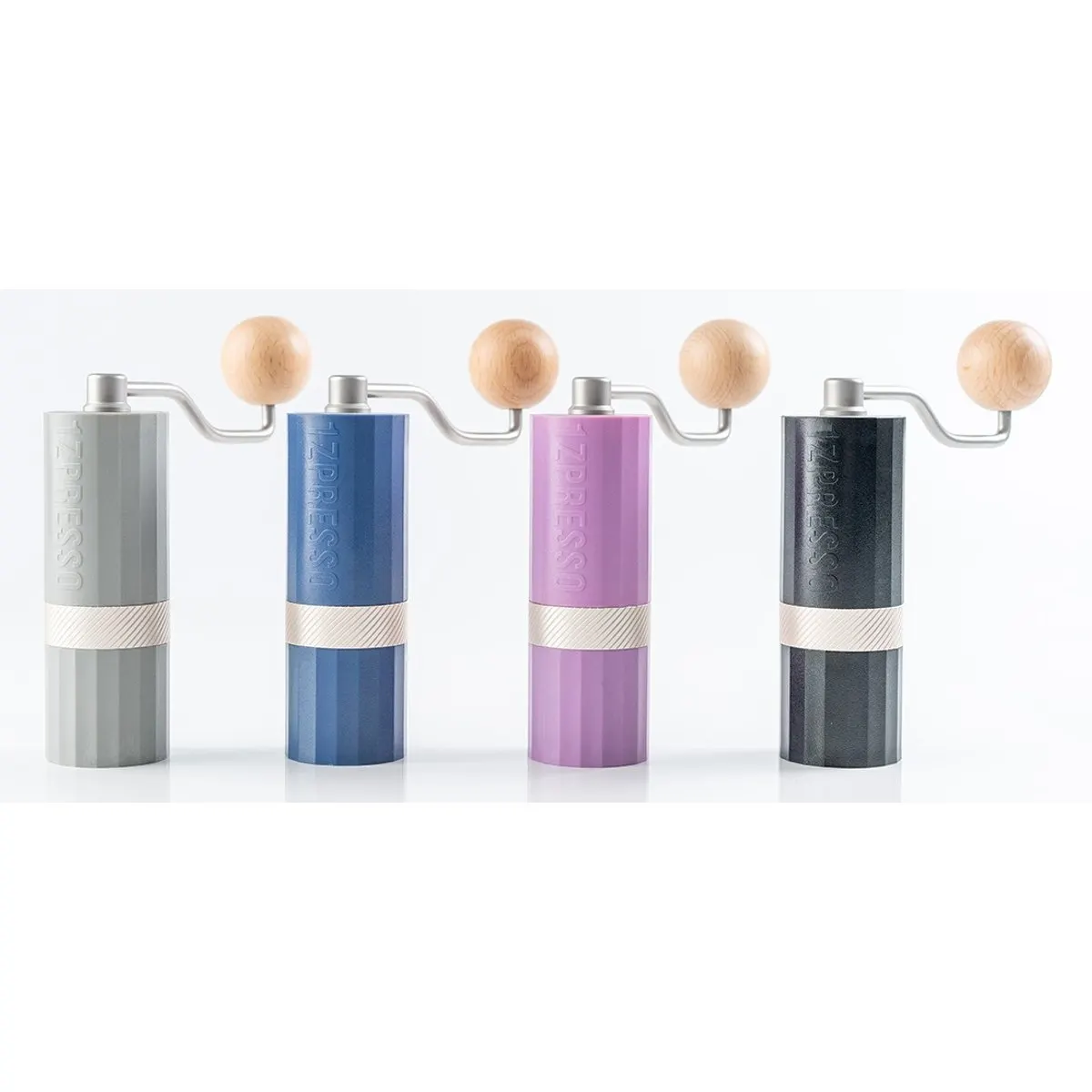
For van use, the 1Zpresso Q Air is the entry pick — a stainless steel conical burr, a numbered 30-click dial, hand crank, no power, and small enough to nest inside an AeroPress plunger. It holds 15–20 g, which is enough for a double shot, but it is slow and only average at espresso fineness, so treat it as a starting point rather than an espresso specialist. For serious espresso work, a 1Zpresso JX-Pro or a Timemore Chestnut C2 is the step up (and costs noticeably more): tighter tolerances, finer adjustment, faster grinding, and better shot-to-shot consistency.
Whatever you buy, make sure it adjusts fine enough for espresso. Some hand grinders cap out at pour-over grind and cannot grind fine enough for real espresso work — check specs before buying.
Heat source compatibility
Butane (Gas One GS-1000G, Iwatani and similar cassette stoves): outdoors only. Compatible with every method: boil water in a kettle for the Picopresso, or put the moka pot directly on the burner. Cassette stove manufacturers label them for outdoor or well-ventilated use and warn against using them in enclosed spaces such as cars and tents because of carbon monoxide; Iwatani's warnings name cars and tents specifically. Treat the inside of a van as an enclosed space, set the stove up on a table or tailgate outside, and remember butane loses pressure in cold weather.
Propane: outdoors only. Same as butane for brewing. Coleman's manuals label its propane camp stoves for outdoor use only and warn against using them inside campers, tents or vehicles. A short coffee brew carries the same carbon monoxide risk as a long meal, and a cracked window, roof fan or CO alarm does not make an outdoor-only stove safe inside; the alarm is a last-line warning device.
Induction: the indoor option. Works with kettle-boil methods (fast), works with a stainless steel moka pot (the Bialetti Venus, NOT the aluminum Moka Express), does not work with the classic aluminum moka pot unless you use a magnetic adapter disc. Induction has no combustion, but boiling still makes steam, so run a roof fan for general ventilation. Check that your inverter and battery can handle the hob's draw using the power calculator. Induction has no combustion, but boiling still makes steam, so run a roof fan for general ventilation. Check that your inverter and battery can handle the hob's draw using the power calculator.
Campfire/wood (outdoors, where fires are permitted): works with the moka pot in a pinch, works with kettle-boil methods for lever press, not recommended for the AeroPress (too much heat variation).
Picopresso or moka pot? The short version
The full spec-by-spec comparison, with sizes, cleanup water and heat-source fit, is on the Picopresso vs Moka Express comparison. The short version:
If you care about shot quality and are willing to learn the grind-tamp-press workflow, the Picopresso wins. It produces real espresso, it works with water from any heat source, the extra cost over a moka pot buys real pressure-extracted espresso, and the cleanup is faster.
If you care about tradition, you are making coffee for two people at once, and you do not want to learn a new workflow, the moka pot wins. It is the Italian grandmother answer to van espresso. It makes multiple drinks at once, the aluminum body has little to break beyond a replaceable gasket, and the flavor profile, if you like it, is distinctive.
If you already own an AeroPress and do not make espresso drinks often, the Prismo adapter is the cheapest way to get quasi-espresso into your rotation without adding gear.
One combination to avoid: any real espresso setup without a burr grinder. The grinder is the difference between a shot that is actually good and a shot that is just hot bitter coffee. Spend the grinder money or skip the espresso category entirely.
See the van life coffee setup guide for the five regular (non-espresso) coffee methods that work in vans, and the induction vs butane vs propane guide for the heat source tradeoffs that affect every coffee method.
Products covered in this guide
Disclosure: As an Amazon Associate I earn from qualifying purchases. Links to Amazon on this page are affiliate links: if you buy through one, VanLifeKitchens.com may earn a commission at no extra cost to you. Read our affiliate disclosure.
Frequently asked questions
Can you make real espresso in a van without electricity?
Yes. The Wacaco Picopresso is a manual lever press that generates 9 bars of pressure using only hot water and hand force. It produces real espresso with crema, no electricity or plumbing needed.
More in Meal Prep
5 One-Pot Meals for Life on the Road
Real recipes for van kitchens — fast, delicious, one pan, and built around shelf-stable pantries.

The Van Pantry: 25 Shelf-Stable Staples for Real Meals
A shelf-stable van pantry: 25 staple ingredients that combine into 30+ meals without refrigeration, with storage and restocking tips.
Van Life Grocery Shopping: A Practical Strategy
How to grocery shop efficiently when your fridge is 35 liters and your nearest store is two hours away. Frequency, what to buy fresh vs shelf-stable, and the apps that find rural grocery stores.