Haines 2.0 Solar Cooker vs GoSun Sport Solar Cooker
A slow, fold-flat panel cooker against a fast vacuum-tube cooker. Capacity, storage and wind tolerance separate them more than heat alone.
Disclosure: As an Amazon Associate I earn from qualifying purchases. Links to Amazon on this page are affiliate links: if you buy through one, VanLifeKitchens.com may earn a commission at no extra cost to you. Read our affiliate disclosure.
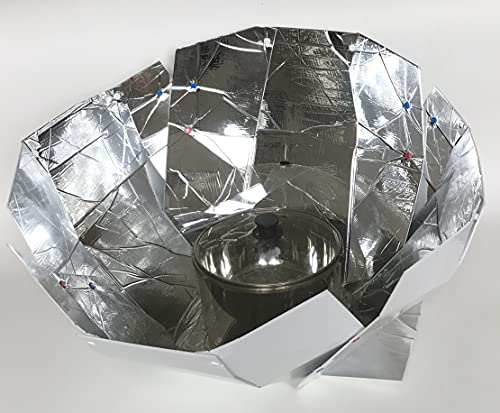
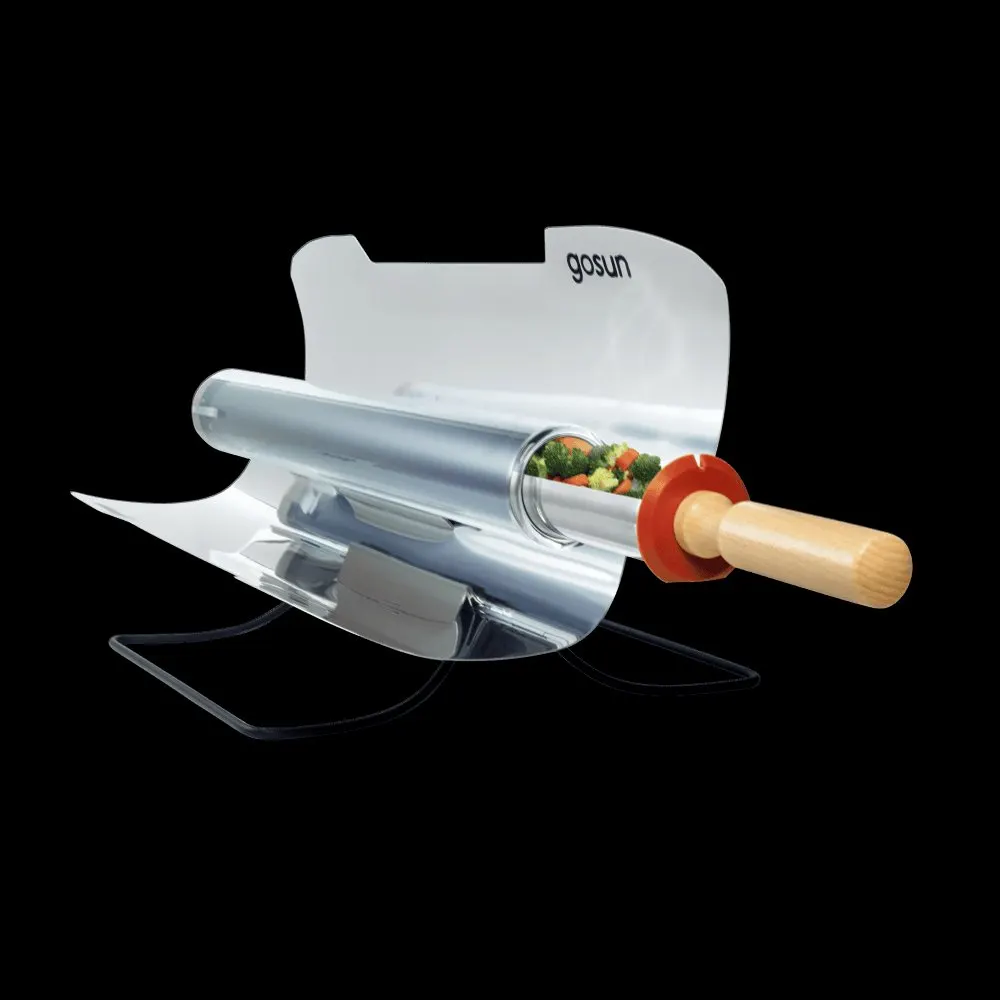
We recommend the Haines 2.0 SunUp Solar Cooker and Dutch Oven Kit
“For most van travellers, the Haines 2.0 SunUp kit. Its reflector folds flat and weighs 29 oz without the pot, it cooks in a full-size pot (Haines's own kit pairs it with a 4.5-quart Dutch oven), and it costs considerably less. It's slow, with about 87 W of measured cooking power. The GoSun Sport is the pick for speed and wind: rated to 550°F, with 2–3 meals in about 20 minutes of direct sun per GoSun's product page, but only about 40 oz per cook in a rigid 7 lb package.”
Read the full Haines 2.0 SunUp Solar Cooker and Dutch Oven Kit reviewSpecifications
| Spec | Haines 2.0 SunUp Solar Cooker and Dutch Oven Kit | GoSun Sport Solar Cooker |
|---|---|---|
| Best for | Slow pot meals in sun | Fast cooking in strong sun |
| Model | H20 (part 1509) | — |
| Type | Panel/funnel reflector cooker | — |
| Cooking Power | 87.7 W at 3.5 kg load, 70° sun altitude (study); 82 W (SCI PEP test) | — |
| Boil Time | 1 quart in as little as 40 min (Haines) | — |
| Reflector Weight | 29 oz without pot (Haines) | — |
| Reflector | Mylar bonded to polyethylene foam | — |
| Pot | Dutch oven pot included; confirm size on listing | — |
| Peak Temp | — | 550°F (product page); manual: 700°F max, 200-550°F working |
| Dimensions | — | 29 x 12 x 6 in (GoSun) |
| Weight | — | 7 lbs (GoSun) |
| Cook Capacity | — | 40 oz / 1.2 L (meal for 2-3) |
| Materials | — | Borosilicate vacuum tube + anodized aluminum reflectors |
| Warranty | — | 1 year (GoSun; void via unauthorized resellers) |
Haines 2.0 SunUp Solar Cooker and Dutch Oven Kit
- About 87 W measured cooking power (University of Malaga study)
- Reflector is 29 oz without the pot and folds flat (Haines)
- Adjusts for low and high sun angles (Haines)
- Petals fold up to keep food hot for hours (SHE)
- Needs strong, direct sun; slow in haze, wind or low sun
- Much slower than a tube cooker such as the GoSun Sport
- Haines doesn't publish a folded size on the page we checked
GoSun Sport Solar Cooker
- Rated to 550°F max in direct sun
- About 20-30 min for a meal for two in strong sun (GoSun)
- Zero power draw
- Tube design retains heat well
- Needs direct sun; won't cook in shade or at night
- Long tube is awkward to store
- Glass tube: no preheating and no cold food in a hot tube (GoSun manual)
The short answer
For most van travellers who want to cook real meals with the sun, the Haines 2.0 SunUp Solar Cooker is the better fit. Its reflector folds flat and weighs 29 oz without the pot, according to Haines. It cooks in a pot big enough for a stew for several people (Haines's own kit pairs it with a 4.5-quart Dutch oven; the Amazon kit listing doesn't describe its pot in detail). And it costs considerably less than the GoSun. The trade-off is speed: it's a slow cooker for clear, calm days, with about 87 W of cooking power in a University of Malaga study and 82 W in Solar Cookers International's PEP test.
Buy the GoSun Sport if speed matters more than capacity and storage. Its vacuum-insulated glass tube is rated to 550°F on GoSun's product page, and GoSun says it cooks 2–3 meals in about 20 minutes of direct sun. GoSun's manual says performance is unaffected by ambient temperature and wind, which an open panel cooker can't claim. But it holds about 40 oz (1.2 L) per cook per the product page, and GoSun lists it as a rigid 29 x 12 x 6 inch, 7 lb package to store.
Our Haines 2.0 review and GoSun Sport review cover each in depth, and the solar cooking complete guide explains when solar cooking makes sense at all. VanLifeKitchens doesn't test cookers hands-on. Figures come from the manufacturers' pages and manuals and, for the Haines, from published independent tests, as cited in each review.
Specs side by side
| Haines 2.0 SunUp kit | GoSun Sport | |
|---|---|---|
| Type | Panel reflector + dark pot | Evacuated glass tube |
| Published heat | 87 W study; 82 W SCI test | 550°F (page); 700°F max (manual) |
| Capacity | 4.5 qt pot (Haines kit) | 40 oz / 1.2 L (page) |
| Weight | 29 oz without pot | About 7 lb |
| Stored shape | Reflector folds flat | Rigid, 29 x 12 x 6 in |
The two makers publish different kinds of figures. Haines publishes cooking power in watts, measured by heating a known water load in standardised sun. GoSun publishes a peak temperature. You can't convert one into the other, but both point the same way: the GoSun is the hotter, faster cooker.
Speed and heat
GoSun Sport. Parabolic reflectors focus sunlight onto a black-coated tube inside an evacuated glass tube, which works like a thermos with one open end. Because the vacuum loses very little heat, the tube gets very hot. GoSun's product page rates it to 550°F; its manual gives a 200–550°F working range and says the tube can reach 700°F, which is why it warns against preheating it empty. GoSun says it cooks 2–3 meals in about 20 minutes of direct sun, and the manual's cook-time chart (printed under a GoSun Go heading) runs from 20 minutes for steamed vegetables to about an hour for soups in full sun, and longer in weaker sun. That's a weeknight dinner on a clear day.
Haines 2.0. Foam reflector panels bounce sunlight onto a dark pot sitting in a clear insulating sleeve. A University of Malaga study, summarised by Solar Household Energy, measured 87.7 W of cooking power at a 3.5 kg load and 70° sun. Haines says it can boil a quart of water in as little as 40 minutes. Full meals take longer, often hours. That's a slow cooker you start late in the morning.
Edge: GoSun Sport, by a wide margin, for heat and speed.
Capacity and what you can cook
The Haines cooks in an ordinary pot. With the 4.5-quart Dutch oven Haines sells it with, that's enough for a stew, rice, beans or a small roast for several people. You can also use your own dark, lidded pot, as long as it fits the sleeve.
The GoSun Sport's cooking tray is about 2 inches wide and slides into the tube. GoSun's product page gives 40 oz (1.2 L) per cook, and its manual says up to 3 lb of food. That's a meal for two, or two meals for one. Long, thin and small foods work well. A whole chicken, a pot of beans for four, or anything that needs a wide pan won't fit.
Edge: Haines 2.0, for several times the capacity and a normal pot.
Storage and weight in a van
The Haines reflector weighs 29 oz, per Haines, and folds flat to slide behind a seat or under a mattress. The pot is the bulky part. A 4.5-quart Dutch oven needs a cabinet slot like any large pot, but it can double as your everyday stew pot on a stove. Haines doesn't publish a folded size on the page we checked.
GoSun lists the Sport at 7 lb and 29 x 12 x 6 inches. It stays that shape and needs a dedicated spot, with the glass tube kept in its padded case.
Edge: Haines 2.0, lighter and flatter, though the pot takes room.
Sun, wind and attention
Both need strong, direct sun. Neither cooks under thick cloud.
Wind. This is the GoSun's big advantage. Its vacuum tube loses little heat to moving air, and GoSun's manual says performance is unaffected by ambient temperature and wind. The reflectors still act as a sail, so a gust can shift the aim or tip it; GoSun says to set it on a flat surface or fasten it, with the legs locked. The Haines is an open panel cooker. Wind carries heat away from the pot and sleeve, and the light foam reflector can blow over. Use it in the lee of the van and weigh it down.
Tracking. GoSun's manual says the Sport "only has to be readjusted every hour or so." The Haines also needs re-aiming as the sun moves, and its adjustable panels let it work with low and high sun, according to Haines. On a long cook, expect to turn it every hour or so.
Keeping food warm. Solar Household Energy describes folding the Haines petals up into a basket around the pot, keeping food hot for 4 to 6 hours. The GoSun's vacuum tube limits heat loss once the sun fades, but GoSun's manual says not to leave it deployed in the sun unattended, and its small capacity limits how useful it is for a group.
Edge: GoSun Sport for wind and cold. Haines 2.0 for keeping a big pot hot into the evening.
Durability and parts
The GoSun's borosilicate glass tube is its main fragile part. GoSun's manual says to protect it from impacts and scratches, not to put cold food or liquids straight into a hot tube, and never to transport it with the tray inside. The Amazon bundle includes a padded case, which is the way to carry it in a moving van. GoSun's warranty is one year. Approved claims become a one-time credit toward replacement parts, GoSun says it can't guarantee an exact replacement will be available, and the warranty is void for units bought from an unauthorized reseller. When our GoSun review checked, the Amazon offer was sold by GoSun itself, so confirm the seller on the listing.
The Haines has no glass apart from the pot lid. Haines says the reflector "will not scratch or oxidize and is not affected by spilled boiling water." Foam can crease or tear if it's crushed, so store it flat. Haines doesn't publish a warranty term on the page we checked.
Edge: roughly even. The Haines has no glass tube to break, but the page we checked publishes no warranty term. The GoSun's tube needs care, and its one-year warranty is published but limited to a one-time credit toward parts.
Value
The Haines 2.0 kit costs considerably less than the GoSun Sport. Check current prices with the buttons on each review, since they change.
What the extra money buys is speed and wind tolerance. If you'll mostly cook for one or two, want dinner fast, and often camp where it's sunny but cool or breezy, that's worth paying for. If you cook for more people, prefer one-pot meals, and are happy to plan around the sun, the Haines does more cooking for less money. Both are fuel savers, not stove replacements. You'll still need a stove for cloudy days, and every fuel-burning stove on this site is labelled by its maker for outdoor use.
Which one should you buy?
Buy the Haines 2.0 SunUp kit if:
- You cook stews, rice, beans and roasts for two or more.
- You want a cooker that folds flat and weighs under 2 lb without its pot.
- You're happy to start cooking late morning and eat mid-afternoon or evening.
- You want the lower-cost way into solar cooking.
Buy the GoSun Sport if:
- You want small meals cooked in roughly 20 minutes to an hour of strong sun, per GoSun's figures.
- You cook for one or two.
- You camp where it's sunny but often cool or breezy.
- You have a dedicated spot for a rigid 29 x 12 x 6 inch package.
FAQ
Which is faster, the Haines 2.0 or the GoSun Sport? The GoSun Sport, by a wide margin. GoSun says it cooks 2–3 meals in about 20 minutes of direct sun, and its manual's chart runs up to about an hour in full sun for soups. Haines says its cooker can boil a quart of water in as little as 40 minutes, and full meals take longer.
Which holds more food? The Haines 2.0. It cooks in a pot, and Haines's own kit pairs it with a 4.5-quart Dutch oven (check the Amazon kit listing for the pot it includes). The GoSun Sport holds about 40 oz (1.2 L) per cook, per GoSun's product page.
Which is better in wind? The GoSun Sport. Its vacuum tube loses little heat to wind, and GoSun's manual says performance is unaffected by wind, though the reflectors can still catch a gust. The Haines is an open panel cooker that cools in wind and needs to be weighed down.
Which is easier to store in a van? The Haines reflector folds flat and weighs 29 oz, but you also store the pot. GoSun lists the Sport as a rigid 29 x 12 x 6 inch, 7 lb package.
Can either one replace my stove? No. Both need strong, direct sun. Use them to save fuel or battery on sunny days, and keep a stove for cloudy ones.
Sources and verification
- Haines 2.0 SunUp Solar Cooker review: specs and sources for the Haines 2.0 kit (checked 2026-10-12)
- GoSun Sport review: specs and sources for the GoSun Sport (checked 2026-10-12)
- Haines Solar Cookers, Haines 2.0 Solar Cooker with Cooking Pot product page: 29 oz without pot, reflector materials, 4.5-quart black stainless Dutch oven, boil time, 87 W and 82 W ratings, sun-angle adjustment; also cited in the Haines review. https://www.hainessolarcookers.com/products/haines-2-solar-cooker (checked 2026-10-11)
- Solar Household Energy, University of Malaga study summary: 87.7 W at 3.5 kg load and 70° solar altitude; also cited in the Haines review. https://www.she-inc.org/?p=3510 (checked 2026-10-11)
- Solar Household Energy, heat-retention article: petals fold into a basket, food kept hot 4 to 6 hours; also cited in the Haines review. https://www.she-inc.org/?p=3534 (checked 2026-10-11)
- GoSun, Sport product page: 550°F, about 20 minutes for 2–3 meals, 40 oz (1.2 L), 7 lb, 29 x 12 x 6 in; cited in the GoSun review (checked there 2026-10-12). https://www.gosun.co/products/sport
- GoSun, Sport user manual V13: 700°F maximum and 200–550°F working range, up to 3 lb of food, aiming interval, wind statement, cook-time chart, safety warnings; cited in the GoSun review (checked there 2026-10-12). https://cdn.shopify.com/s/files/1/0789/1333/files/GoSun_Sport_Manual_V13_Final_Size_1.pdf?v=1605018857
- GoSun, warranty page: 1-year warranty, one-time credit, void if bought from an unauthorized reseller; cited in the GoSun review (checked there 2026-10-12). https://www.gosun.co/pages/new-warranty