All Reviews
Coolers

Best Coolers for Van Life

4 products, each labelled with who it suits. Compared on published specifications and owner reports — no sponsored rankings.

Plenty of van and car campers keep food cold with a passive cooler instead of a 12V fridge, or alongside one. A good cooler needs no battery, no wiring and no ventilation gap, and it costs considerably less than a fridge and the power system to run it. The trade-off is ice: you restock it every few days, most of the box is ice if you pack it properly, and the food inside only stays safe while the ice lasts.

— BuyingWhat to Look For

Size the cooler to your trip length and your floor space, not to the number on the label. Most makers recommend about twice as much ice as contents, so roughly a third of the interior holds food. Hard coolers with up to three inches of insulation hold ice longest; soft coolers are lighter and easier to carry but hold ice for less time. Check the exterior dimensions and the height with the lid open against your van or cargo area, and work out the weight full with ice: for a hard cooler that is often two to three times the empty weight or more. If you camp in grizzly country, look for an IGBC bear-resistant certification and note any padlock condition. Treat ice-retention claims as best cases under the maker's stated conditions.

— MethodHow We Evaluate

We don't run our own ice-retention tests. We compare manufacturer dimensions, interior space, empty weight, ice capacity, insulation, latches, drains and certifications, read each maker's ice-retention claim alongside the conditions it states, and use owner reports to check how coolers hold up in vehicles.

How to choose

Cooler or 12V fridge?

A cooler suits weekends, car camping and builds without a house battery. A 12V compressor fridge suits trips longer than a few days and full-time travel, because the whole interior holds food and there's no ice to buy, but it needs a house battery and charging.

Hard or soft?

Hard coolers have thicker insulation, a drain and, on some models, bear certification, so they last longer between ice runs. Soft coolers weigh a fraction as much, carry on a shoulder and fit odd gaps. Many campers use a hard cooler for food and a soft one for drinks.

How big?

At the usual 2:1 ice ratio, a 35-to-45-quart cooler holds a long weekend of food for two. A 50-quart-plus cooler holds more ice, lasts longer and suits longer gaps between towns, but it is bigger outside and heavier full.

Which one is for you

ProductSuits
RTIC 52 QT Ultra-Light CoolerMost space per pound
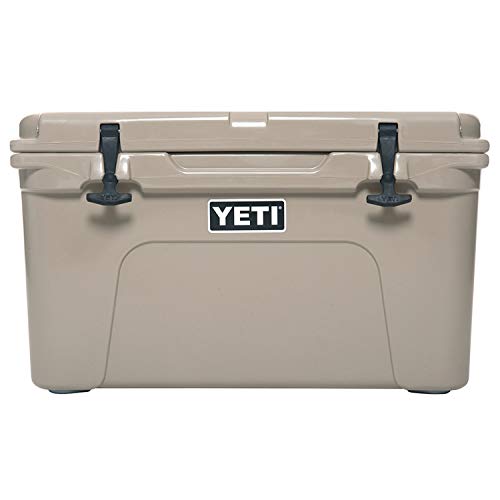
YETI Tundra 45 CoolerBear country weekend trips
Engel 35 Rotomolded CoolerCompact bear-certified cooler
YETI Hopper M30 Soft CoolerCarry-out and drinks cooler

Check before you buy

  • Exterior dimensions and lid-open height against your floor space, bed platform or cargo cover
  • Weight full with ice, not just the empty weight
  • The maker's ice-retention claim and the conditions it depends on
  • Drain position, tie-down points, and bear certification with any padlock requirement

Next step

Not sure whether you need a cooler or a 12V fridge? Compare them on power, ice, space and trip length.

Cooler vs 12V fridge

Coolers reviews

Disclosure: As an Amazon Associate I earn from qualifying purchases. Links to Amazon on this page are affiliate links: if you buy through one, VanLifeKitchens.com may earn a commission at no extra cost to you. Read our affiliate disclosure.