What Size 12V Fridge Do You Need for One or Two People?
Size a 12V fridge by resupply interval, fresh vs shelf-stable food, usable space and freezer needs, not headcount alone. Worked examples, clearances and published energy figures.
Disclosure: As an Amazon Associate I earn from qualifying purchases. Links to Amazon on this page are affiliate links: if you buy through one, VanLifeKitchens.com may earn a commission at no extra cost to you. Read our affiliate disclosure.
The short answer
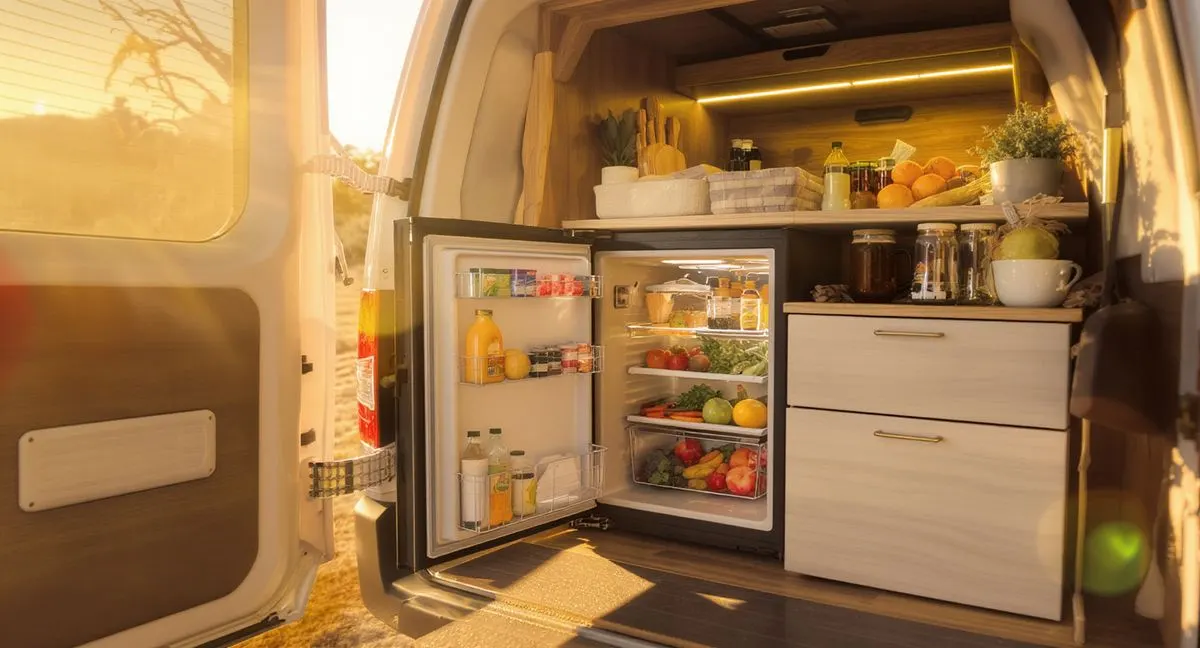
The number of people in the van is only one input. What decides the size is how many days of cold food you carry between shops, how much of it is fresh rather than shelf-stable, and whether you need frozen food at the same time as chilled food. Then you check that the fridge fits the space with the ventilation gap its maker asks for.
As a starting point, using the assumptions in the worked examples below:
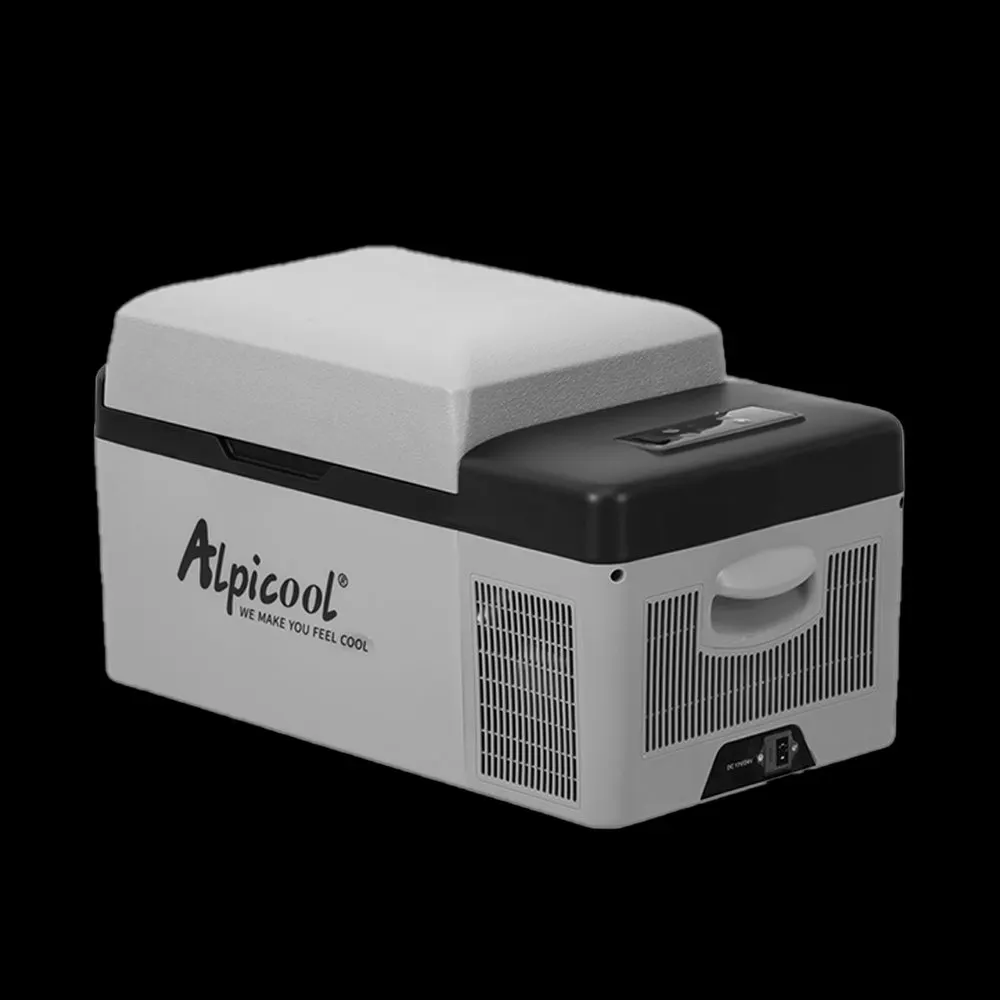
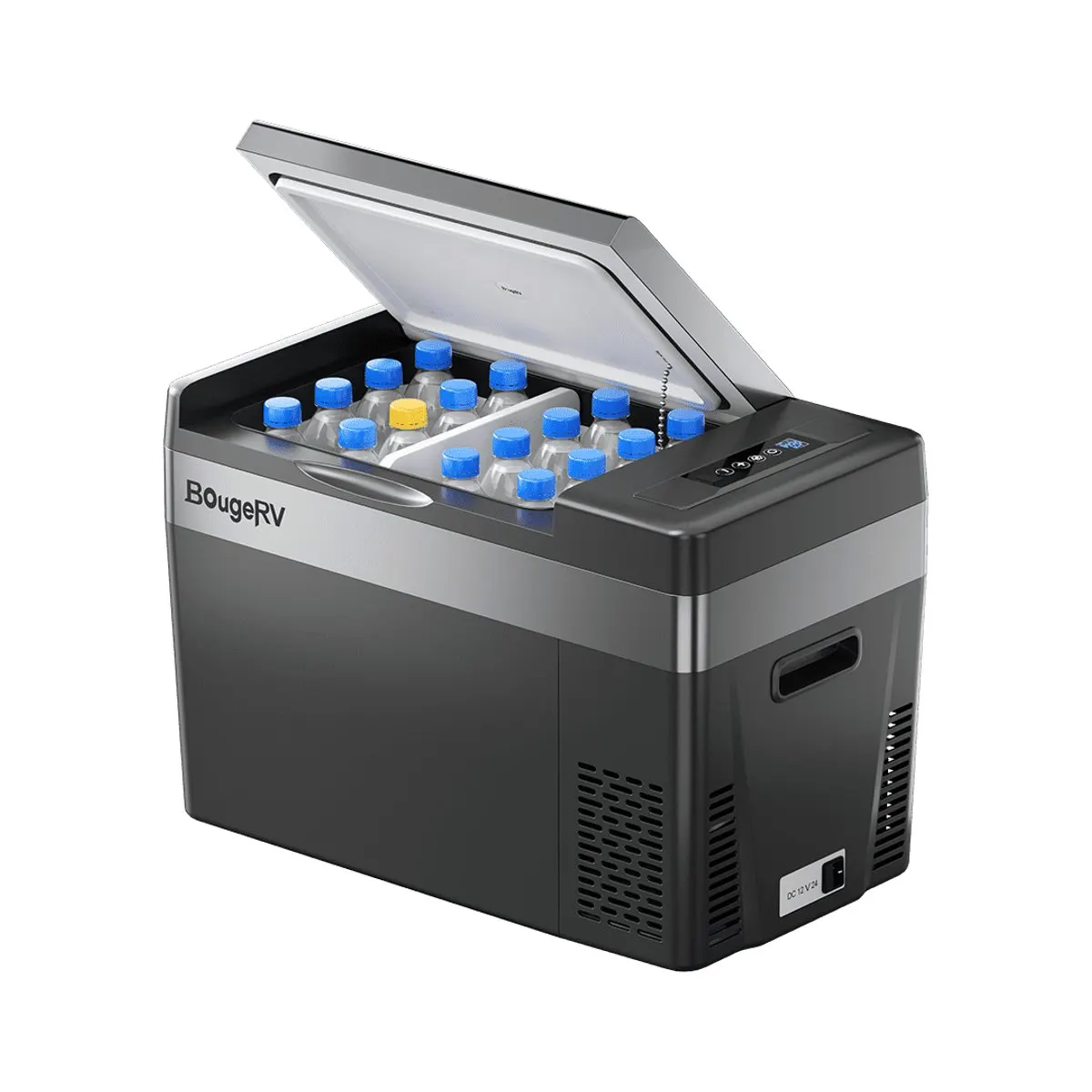
- Solo, resupplying every 2 to 4 days: a 20 to 30 litre single-zone fridge is usually enough. On this site that means the Alpicool C20 or the BougeRV CR 30 Quart.
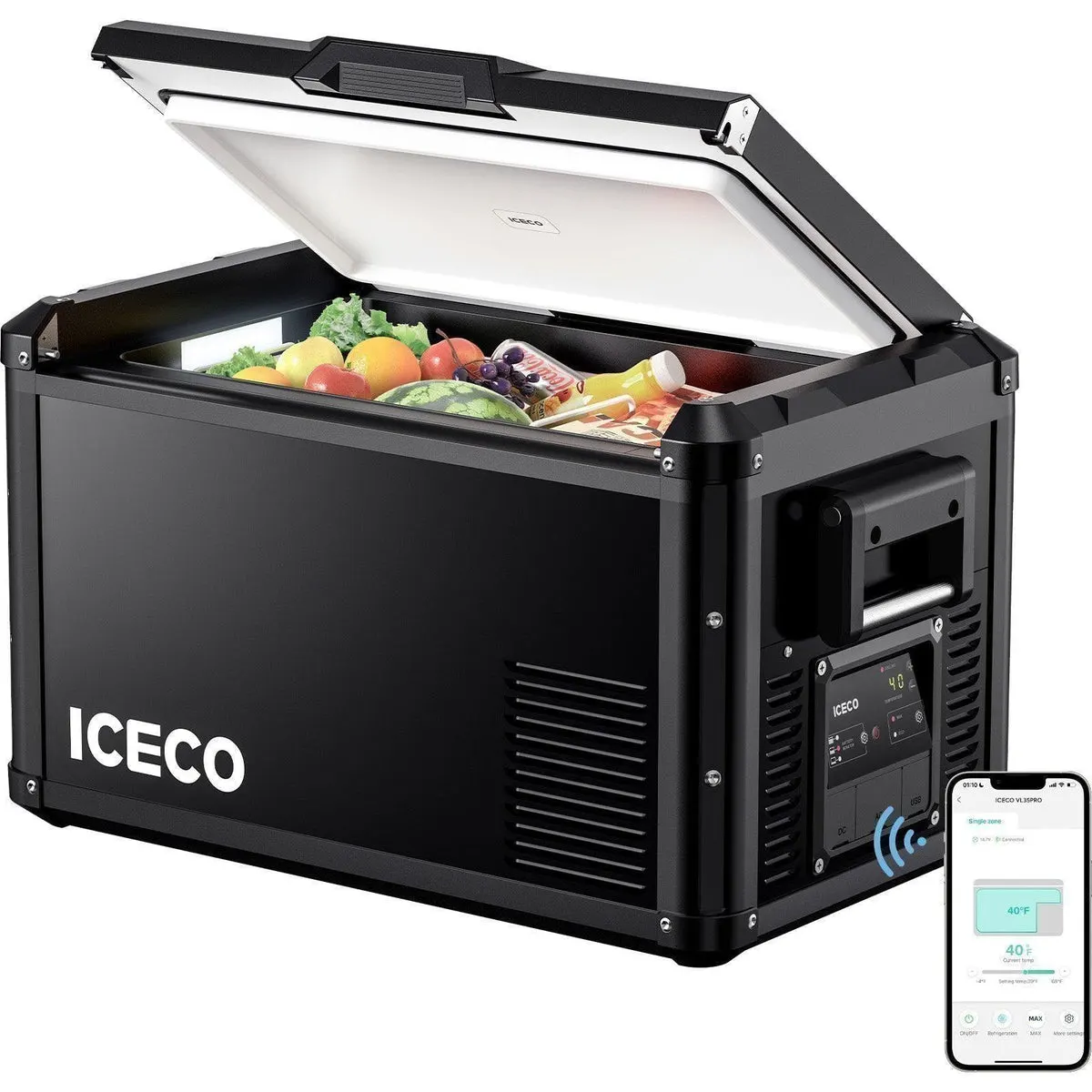
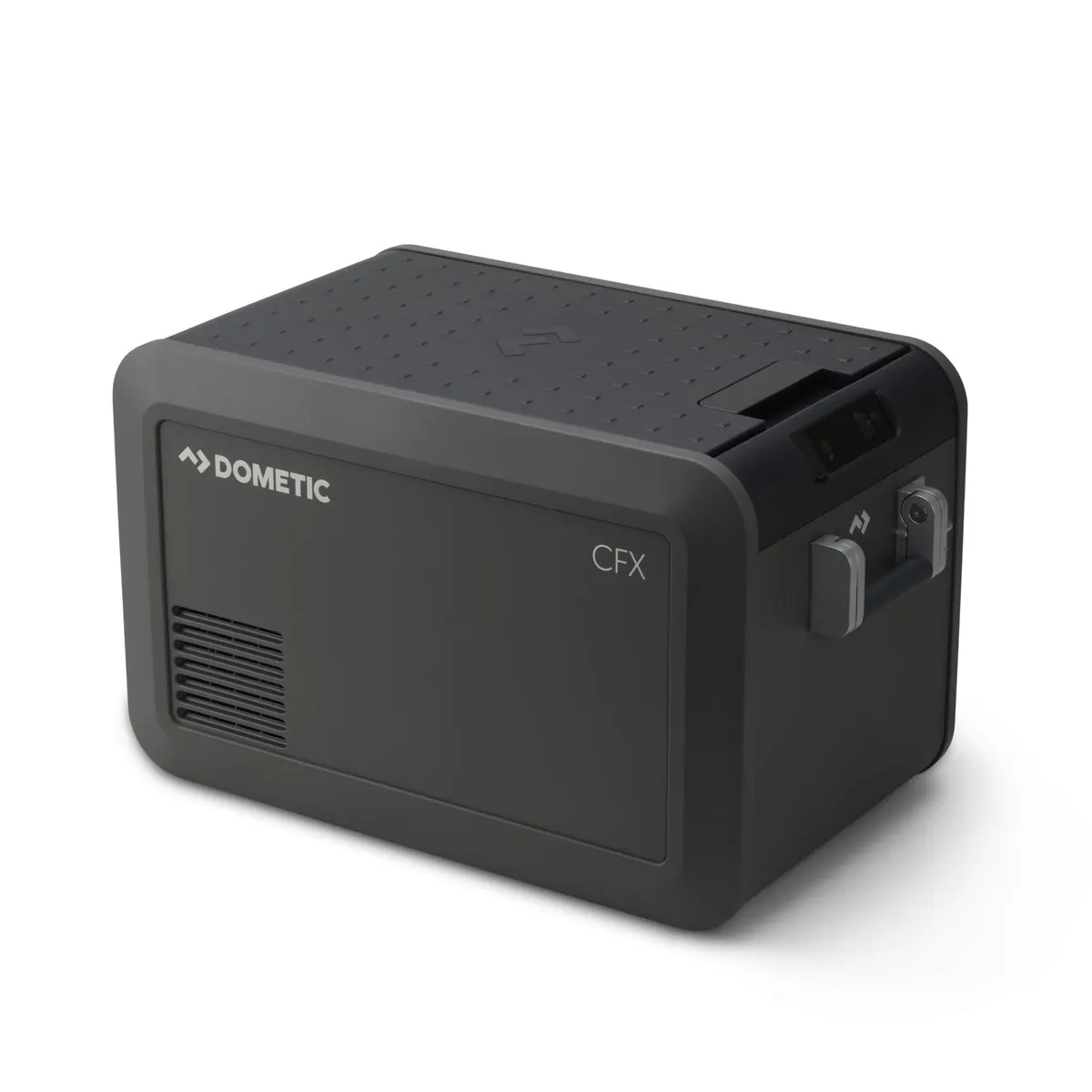
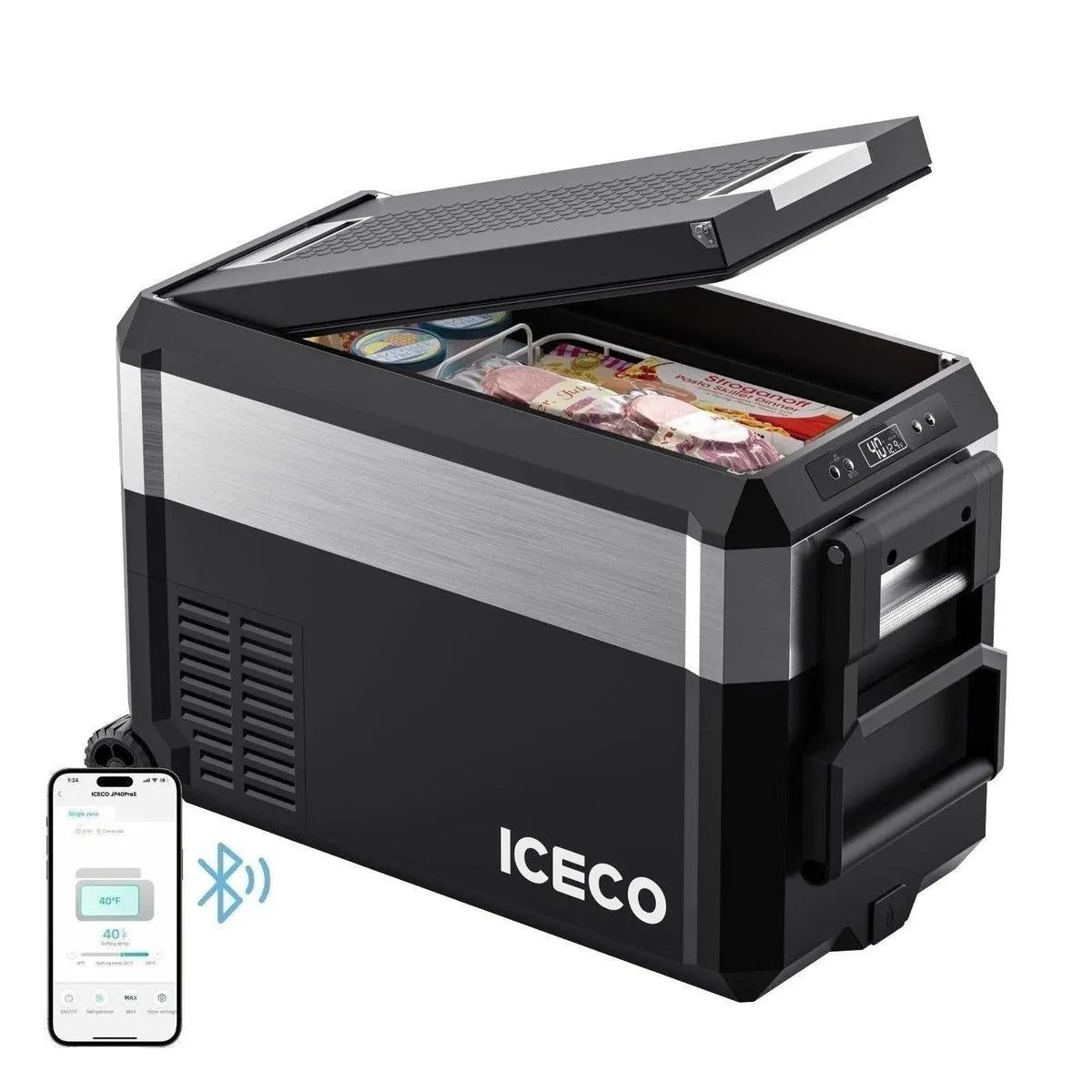
- Solo for a week, or a couple resupplying every 3 to 5 days: 35 to 40 litres. That is the ICECO VL35 ProS, Dometic CFX5 35 or ICECO JP40 Pro.
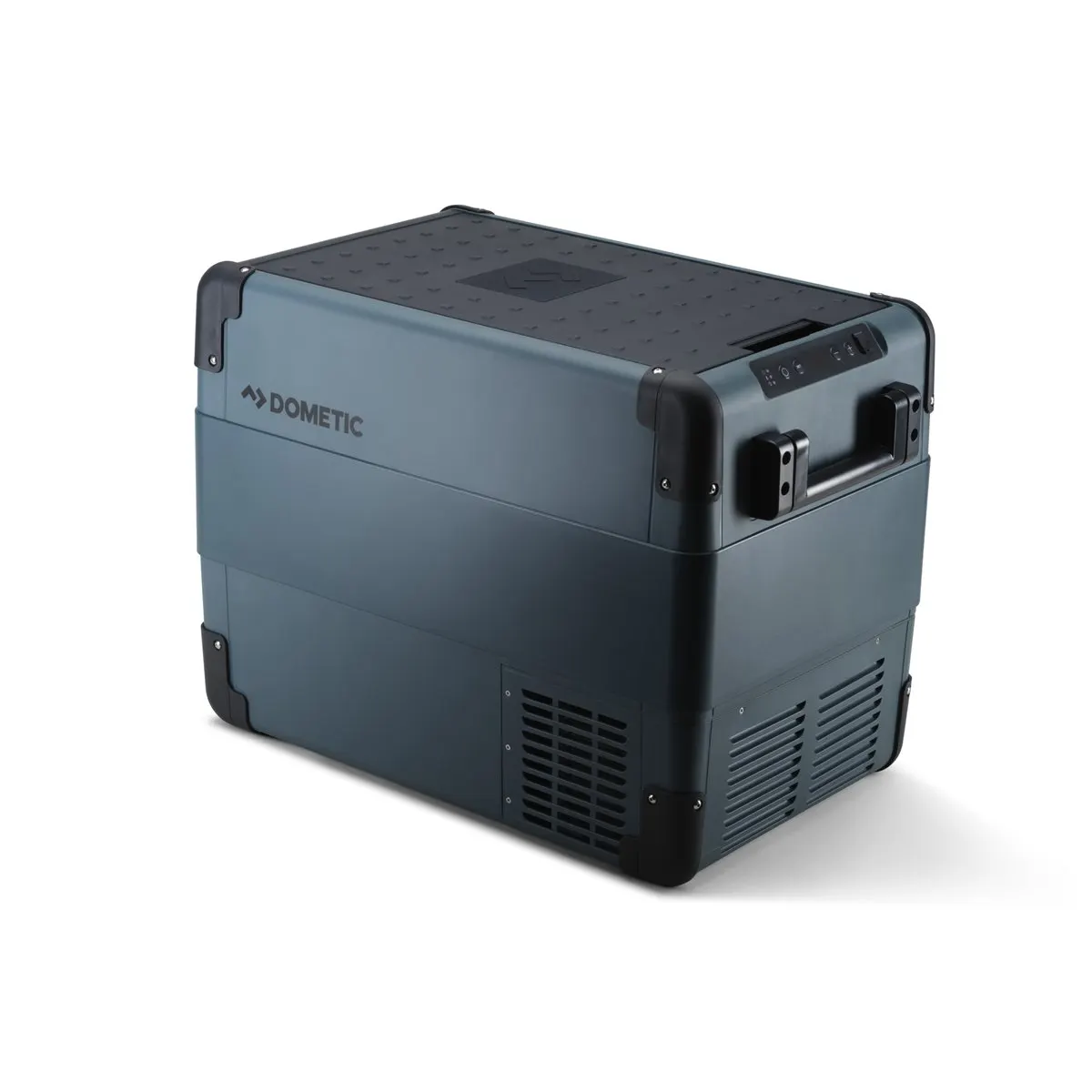
- A couple resupplying weekly who eat a lot of fresh food: about 45 litres, for example the Dometic CFX2 45.
- Anyone who needs a freezer and a fridge running at once: a dual-zone unit such as the ICECO VL60 Dual Zone, or two separate fridges.
These ranges are planning estimates, not rules. A couple who eat mostly from the pantry and shop every three days can live with 30 litres. A solo traveller who keeps a week of fresh food and cold drinks may want 45. The sections below show how to work out your own number.
Why "litres per person" doesn't work on its own
You'll find simple rules online, such as a set number of litres per person per day. They are a reasonable sanity check, but they hide the things that actually change the answer:
- Resupply interval. Someone who passes a grocery store every two days carries half the food of someone who shops weekly. That changes the answer far more than adding a second person does.
- Diet. Produce, dairy, meat and leftovers need cold space. Rice, pasta, tinned food, oats, nut butters and UHT milk don't. Our shelf-stable pantry guide covers what can live in a cupboard.
- Drinks. Cans and bottles take up a lot of room. If cold drinks matter to you, they can take as much space as the food.
- Frozen food. A single-zone fridge runs at one temperature, so it is either a fridge or a freezer. If you want frozen meat and fresh milk, the zone layout matters more than the total litres.
- Climate and power. A bigger box usually uses more energy, so the right size is also the largest one your battery and charging can support.
Step 1: Trip length and resupply frequency
Start with the longest normal gap between shops, not the average. If you usually shop every four days but sometimes spend six days somewhere remote, size for the six-day trips or plan to carry more shelf-stable food on them.
A useful way to think about it:
| Resupply gap | What's usually in the fridge | Typical pressure on space |
|---|---|---|
| 1–3 days | Today's and tomorrow's meals, drinks | Low. Drinks often dominate |
| 4–5 days | Mid-week produce, dairy, some meat | Moderate |
| 6–8 days | A full week of perishables | High. Packing efficiency matters |
| 9+ days | Freezer stock plus late-week fresh food | Usually needs frozen storage |
Our grocery shopping strategy guide covers how to shop so that a smaller fridge lasts longer, for example by buying hard vegetables that keep without refrigeration.
Step 2: Fresh vs shelf-stable habits
Write down what actually needs to be cold in a normal week. For most travellers it's some mix of:
- dairy (milk, yoghurt, butter, cheese)
- eggs (refrigerated eggs should stay refrigerated)
- meat or fish
- soft produce, salad and herbs
- leftovers and opened jars
- drinks
Then move whatever you can to the pantry. UHT milk until opened, hard cheeses, cured meats, tinned fish, shelf-stable tofu and hardy vegetables such as onions, potatoes and carrots all reduce fridge demand. A household that does this can often drop one size class. A household that cooks mostly from fresh ingredients may need to go up one.
Step 3: Rated litres vs what actually fits
The capacity on the box is the gross internal volume. Dometic, for example, gives its totals to IEC 62552-3. That figure includes every corner, including space you can't fill neatly. Three things take some of it away:
- The compressor step. Most chest fridges put the compressor in a raised step at one end, so the floor isn't flat across the whole length. The step is good for short items such as butter or yoghurt and useless for anything tall.
- Baskets and dividers. Removable wire baskets make loading easier but take a little space and don't reach every corner.
- Packaging shapes. Round bottles, egg cartons and bags of salad leave air gaps. Square, stackable containers waste much less.
Our planning estimate: expect to fill roughly 60 to 75 percent of the rated litres with food and drink in practice. Boxy containers get you nearer the top of that range. Loose produce and round bottles push you towards the bottom. This is our estimate for planning, not a manufacturer figure.
Check tall items separately. A 2-litre soda bottle and a standard wine bottle are each roughly 12 inches (about 30 cm) tall, and a gallon milk jug is roughly 10 inches. Take the fridge's external height, subtract the floor and lid insulation (a few inches in total on most chest fridges), and you have the most the main well can take. Then check the maker's internal dimension drawing if there is one. Shorter 35-litre boxes such as the CFX5 35, which Dometic lists at 16.02 inches tall overall, may not hold tall bottles standing up. Taller boxes such as the 18-inch JP40 Pro or the 19.4-inch CFX2 45 are more likely to. If you always carry tall bottles, height matters more than litres.
Step 4: Do you need a freezer, and at the same time?
- No frozen food, or only occasionally: a single-zone fridge. You can still set it to freezer temperatures for a trip, but then everything in it is frozen.
- Frozen food only on some trips: a single-zone fridge is still fine. Some people run one fridge as a freezer for the first half of a remote trip, then turn it up to fridge temperatures as the stock thaws.
- Frozen and chilled food every day: you need either a dual-zone fridge (one box, two compartments, two setpoints) or two fridges.
Dual-zone compartments are often unequal, because one of them usually sits over the compressor step. ICECO's VL60 manual lists 60 litres (63 quarts) in total, not per zone, so check the internal drawing before assuming half of it is freezer. The VL60 review describes its layout. A two-fridge setup gives you more control and redundancy, but it takes more floor space and uses two sets of ventilation clearance.
Running a compartment as a freezer raises daily energy use, because the gap between ambient and setpoint is much larger. Size the battery for the freezer case if you'll use it.
Step 5: External dimensions and installation clearance
Measure the space, then subtract the ventilation gap the manufacturer asks for. The table shows external dimensions (length x width x height) from the manufacturer pages and manuals we opened. The clearance column is the published requirement.
| Fridge | Rated volume | External L x W x H | Ventilation the maker asks for |
|---|---|---|---|
| Dometic CFX5 35 | 36 L | 27.3 x 15.7 x 16.0 in | At least 50 mm (about 2 in) on all sides |
| Dometic CFX2 45 | 45 L | 26.7 x 15.8 x 19.4 in | "Sufficient" on all four sides; no figure given |
| ICECO VL35 ProS | 35 L / 37 qt | 28.1 x 15.9 x 15.7 in | 5 cm left and right, 10 cm at the front air outlet |
| ICECO JP40 Pro | 40 qt (37 L in ICECO's manual) | 28.5 x 13.8 x 18.0 in | 5 cm left and right, 10 cm at the front air outlet |
| ICECO VL60 Dual Zone | 60 L / 63 qt | 31.2 x 19.5 x 18.9 in | 5 cm left and right, 10 cm at the front air outlet |
Notes on the table:
- The Dometic CFX5 figures come from Dometic's US product page (dimensions and volume) and its CFX5 operating manual (the 50 mm clearance). The CFX2 45 figures come from Dometic's APAC product page and manual, so check the manual that comes with a US-market unit.
- The ICECO clearances are in the troubleshooting sections of the VL35/45/60 ProS, JP30/40/50 ProS and VL60/65 manuals. They're given as advice for preventing overheating faults, so treat them as minimums.
- For the BougeRV CR 30 Quart, the BougeRV 30/23 Quart manual we opened marks the ventilation port and lists poor ventilation as a cause of faults, but its text gives no clearance distance. We couldn't open a manufacturer manual for the Alpicool C20. For both, follow the clearance printed in the manual that ships with the unit, and leave at least as much as the larger brands ask for.
Also allow:
- Lid clearance above the fridge. A chest lid needs open space above it, or the fridge has to slide out before you can open it. ICECO's VL ProS and JP Pro lids open from either side or lift off completely, which helps under a low counter.
- Room for the slide, if you use one. ICECO's slide for the JP Pro and VL35/45 Pro models is 27.55 inches long closed and 52.9 inches extended, so you need that length of clear aisle.
- Handles, wheels and plugs. The JP40 Pro's wheels and handle are part of its 28.5-inch length. Power plugs and cable bends need space at the connection panel.
Step 6: Check the energy budget
A bigger or dual-zone fridge needs more battery. Published figures use different test conditions, so they are not directly comparable, but they give a starting point. Converted at 12 V nominal (Wh ÷ 12 = Ah):
| Fridge | Published figure | Wh/day | Ah/day at 12 V | Conditions, per maker |
|---|---|---|---|---|
| Dometic CFX5 35 (US) | 1.11 Ah/h | ~320 | ~27 | 90°F ambient, 39°F inside, 12 V DC |
| Dometic CFX2 45 (APAC) | 0.86 Ah/h | ~250 | ~21 | 32°C ambient, 4°C inside, 12 V DC |
| ICECO JP40 ProS | 0.323 kWh/24 h | 323 | ~27 | "Laboratory" figure; conditions not stated |
| ICECO VL35 ProS | 0.430 kWh/24 h | 430 | ~36 | "Laboratory" figure; conditions not stated |
| ICECO VL60 Dual Zone | 0.416 or 0.545 kWh/24 h | 416–545 | ~35–45 | ICECO's manual gives both figures in different tables; conditions not stated |
| BougeRV CR 30 Quart | 45 W ECO / 60 W MAX | Not published | Not published | These are power ratings, not daily use |
These are steady-state or lab figures. Lid openings, warm groceries, a van parked in the sun, poor ventilation and freezer setpoints all raise real use, often well above the rating. A compressor fridge cycles on and off, so a nameplate wattage multiplied by 24 hours overstates daily use. A daily figure measured with the lid shut in a lab will understate a hot week of real use. Put your fridge and climate into the fridge battery calculator, and see the van kitchen power budget for how the fridge fits with everything else.
Worked examples
Each example states its assumptions. Change any of them and the answer changes.
Example 1: Solo weekend traveller, resupplying every 3 days
Assumptions: one person; trips of two or three nights, or longer trips with a shop every three days; one cooked meal a day; breakfast is oats with UHT milk from the pantry; a few cold drinks; no frozen food; mild to warm weather.
What needs to be cold: a small block of cheese, yoghurt, a pack of meat or tofu for two dinners, salad and soft vegetables, butter, opened sauces, four to six cans.
Estimate: about 10 to 14 litres of actual food and drink. At 60 to 75 percent packing efficiency, that's roughly 14 to 23 rated litres.
Fits: the Alpicool C20 at 20 litres if drinks are kept to a minimum. The BougeRV CR 30 Quart at 28 litres if you want more cold drinks or more slack. See ICECO VL35 vs BougeRV 30 Qt if you're deciding whether to step up to a 35-litre box.
Example 2: Couple, full-time, resupplying weekly, mostly fresh food
Assumptions: two people; one big shop a week; cooking most meals from fresh ingredients; dairy, eggs, meat for four or five dinners, lots of produce; some cold drinks; no frozen stock; warm climate.
What needs to be cold: a week of perishables for two, with produce taking up more room than its weight suggests.
Estimate: about 26 to 32 litres of actual contents, or roughly 35 to 53 rated litres.
Fits: a 45-litre box such as the Dometic CFX2 45. A 35 to 40-litre fridge, such as the ICECO JP40 Pro, works if the couple moves more food to the pantry or shops twice a week. Compare the two in ICECO JP40 Pro vs Dometic CFX2 45. Check the 19.4-inch height of the CFX2 45 against your bench before you choose it.
Example 3: Couple who freeze meat
Assumptions: two people; buying meat in bulk for one to two weeks and freezing it; also carrying a week of fresh dairy and produce; boondocking with solar.
What's needed: a freezer and a fridge running at the same time. A single-zone fridge can't do both at once, however big it is.
Fits: the ICECO VL60 Dual Zone, with the larger compartment as the fridge and the smaller one as the freezer, or the other way round for long remote stretches. It's 31.2 inches long and 64 lb empty per ICECO's manual, so check floor space and how you'll secure it. The alternative is two single-zone fridges, one set as a freezer. Read Dometic CFX2 45 vs ICECO VL60 and ICECO VL60 vs ICECO JP40 Pro for the trade-offs.
Power: plan on at least the higher of ICECO's two VL60 figures (about 45 Ah/day at 12 V) before allowing for heat and lid openings.
Example 4: Couple, pantry-heavy, resupplying every 3 to 4 days
Assumptions: two people; mostly shelf-stable cooking (grains, tins, UHT milk); cold storage for cheese, eggs, a few vegetables and leftovers; few drinks.
Estimate: about 15 to 20 litres of contents, or roughly 20 to 33 rated litres.
Fits: a 30 to 36-litre fridge such as the ICECO VL35 ProS or Dometic CFX5 35. This is the same number of people as Example 2 with a smaller fridge, which shows why counting people isn't enough. See Dometic CFX5 35 vs ICECO VL35, Dometic CFX5 35 vs Dometic CFX2 45 and ICECO JP40 Pro vs ICECO VL35.
When to size up, and when not to
Size up if:
- you regularly go longer between shops than you planned for
- tall bottles must stand upright and the smaller box is too short
- you want a freezer on some trips and a fridge on others, and need the space to work in both modes
Don't size up "just in case" if:
- your battery and charging are already tight. A larger box has more surface area and more air to cool
- the bigger fridge leaves no room for the ventilation gap
- you'd mostly fill the extra space with drinks that could stay in a cooler
For the full background on compressor fridges, battery sizing and installation, read the 12V fridge buying guide.
FAQ
How many litres does one person need in a 12V fridge? It depends on how often you shop and how much fresh food you eat. As a planning estimate, a solo traveller resupplying every two to four days usually manages with 20 to 30 litres. A solo traveller carrying a week of fresh food may want 35 to 45 litres.
Is a 35-litre fridge enough for two people? Often, if you shop every three to five days and keep staples in the pantry. If you shop weekly and cook mostly from fresh ingredients, 45 litres is more comfortable.
Why can't I fit as much as the rated capacity suggests? The rated volume includes the compressor step, corners and the space around round packaging. As a planning estimate, expect to fill roughly 60 to 75 percent of it in practice.
Do I need a dual-zone fridge? Only if you need frozen and chilled food at the same time. If you only freeze on some trips, a single-zone fridge you set as either a fridge or a freezer is simpler and usually uses less power.
Will a 2-litre bottle stand up in a 35-litre chest fridge? Not always. Two-litre and wine bottles are roughly 12 inches tall. Lower 35-litre boxes may not take them upright, so check the internal height on the maker's drawing.
How much clearance does a 12V fridge need around it? Follow the manual. Dometic's CFX5 manual asks for at least 50 mm on all sides. ICECO's VL ProS, JP Pro and VL60 manuals ask for more than 5 cm on the left and right and 10 cm at the front air outlet.
Does a bigger fridge use more battery? Usually, especially with a freezer zone. Compare published daily figures under their stated conditions, then use the fridge battery calculator to size your battery.
Sources and verification
Manufacturer pages and manuals we opened for the figures above, each checked 2026-10-09:
- Dometic CFX5 35 US product page: 36 L total volume (IEC 62552-3), 27.32 x 15.67 x 16.02 in, 36.52 lb, 1.11 Ah/h at 90°F ambient and 39°F inside. Checked 2026-10-09.
- Dometic CFX5 operating manual (EMEA): minimum 50 mm ventilation on all sides, short-term 30° inclination, accessory list. Checked 2026-10-09.
- Dometic CFX2 45 product page: 45 L, 0.86 Ah/h at 32°C ambient and 4°C inside. Checked 2026-10-09.
- Dometic CFX2 operating manual (APAC): dimensions 678 x 493 x 401 mm, ventilation on all four sides, battery monitor voltages. Checked 2026-10-09.
- ICECO VL35/45/60 ProS manual: VL35 ProS dimensions, 35 L / 37 qt, 0.430 kWh/24 h lab figure, 5 cm and 10 cm clearance, multi-directional lid. Checked 2026-10-09.
- ICECO JP30/40/50 ProS manual: JP40 ProS 28.5 x 13.8 x 18.0 in, 40 qt (37 L), 0.323 kWh/24 h lab figure, clearance. Checked 2026-10-09.
- ICECO VL60/65 manual: VL60 31.2 x 19.5 x 18.9 in, 60 L / 63 qt, 64 lb, 0.416 kWh/24 h in the consumption table and 0.545 kWh/24 h on the catalog page, clearance. Checked 2026-10-09.
- ICECO slide mount for APL35/JP Pro/VL45/VL35 Pro: closed and open lengths. Checked 2026-10-09.
- BougeRV 30 Quart / 23 Quart user manual: 28 L, 45 W ECO and 60 W MAX, ventilation port. Checked 2026-10-09.
Products covered in this guide
Disclosure: As an Amazon Associate I earn from qualifying purchases. Links to Amazon on this page are affiliate links: if you buy through one, VanLifeKitchens.com may earn a commission at no extra cost to you. Read our affiliate disclosure.
More in Buying Guides
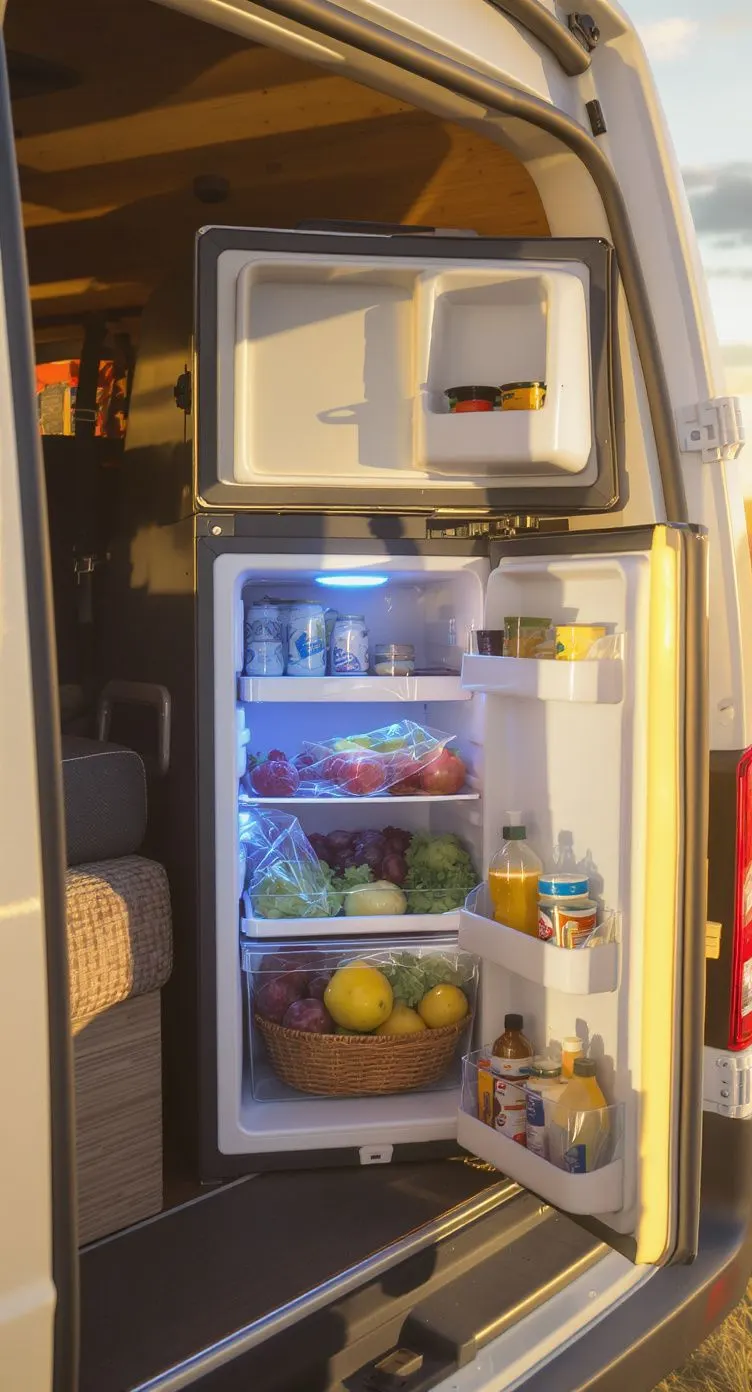
Chest vs Upright Fridge for a Campervan
Chest or front-opening 12V fridge? Floor space, lid vs door clearance, ventilation per the manuals, slides and tie-downs each maker offers, and model-specific energy figures.
Nesting Cookware for Induction: Compatibility and Storage
Which nesting and packable pots actually work on a portable induction hob, per their makers: magnet tests, pan-size limits for the Duxtop and NUWAVE, what nests inside what, handles, lids and glass-top care.
Best 12V Fridges for Van Life (2026): Complete Guide
How 12V compression fridges work, how to read spec sheets, size the fridge, battery and solar, install and wire it, plus our best budget, mid-range and premium picks.