Iwatani Cassette Feu Butane Camp Stove (Gray)
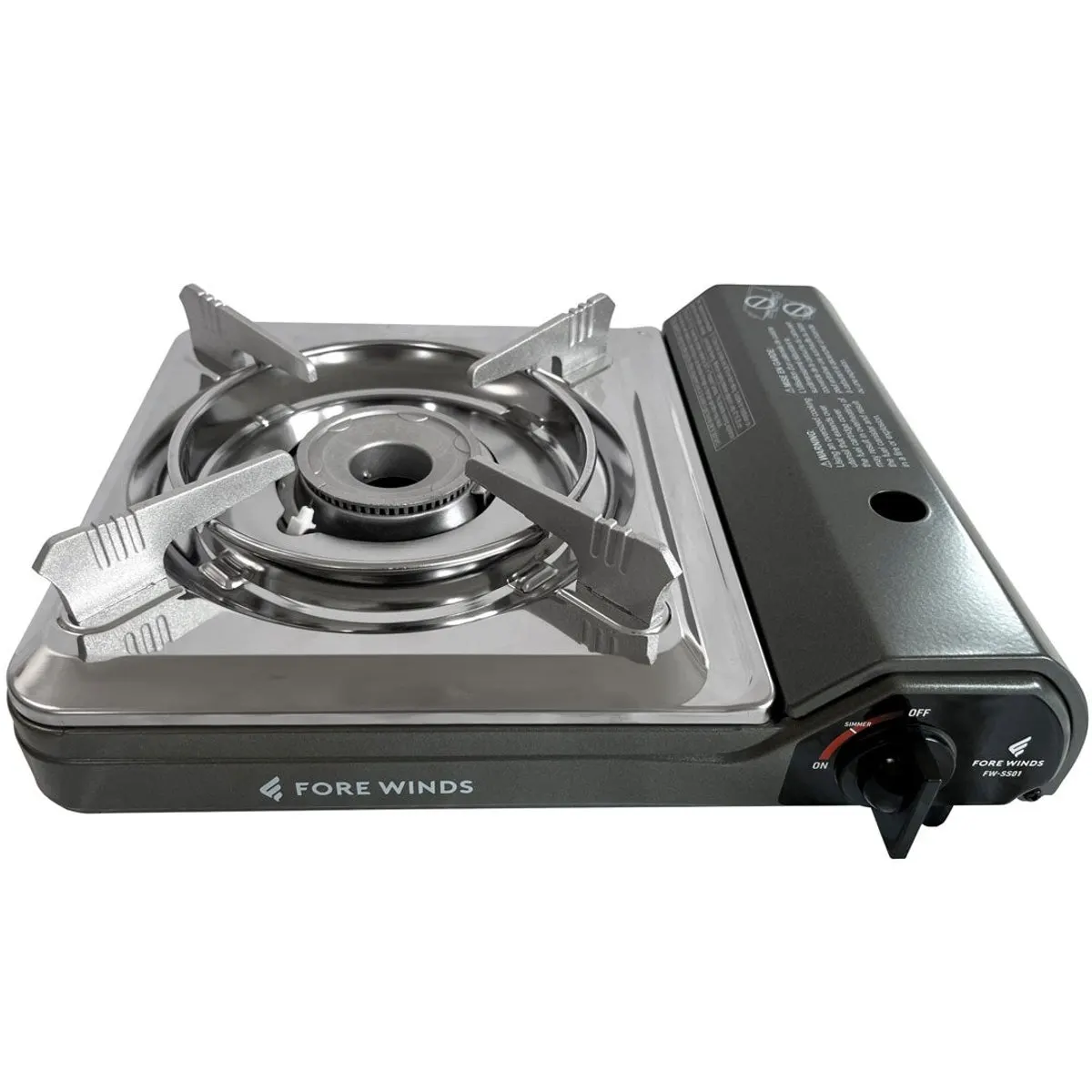
- Output
- 12,000 BTU/hr
- Fuel
- Butane (8 oz cassette)
- Dimensions
- 13 x 11 x 3.8 in
- Burn Time
- About 70 min at max
- Ignition
- Piezo
- Included
- Hard carrying case
- Weight
- 3.1 lbs (no canister)
Overview: Who It's For
Searching for the Iwatani ZA-3HP? When we checked on 2026-10-10, Amazon's US listing for the ZA-3HP showed "Currently unavailable", with no date for restock. The stove on this page is the Iwatani Cassette Feu (gray, model VA-30 on the listing) that Iwatani sells on Amazon now. It has the same 12,000 BTU/hr rating and burns the same 8 oz butane cassettes. The differences: a built-in windbreaker, a magnetic canister lock instead of the ZA-3HP's locking lever, and a smaller, lighter body. It also costs considerably more. Iwatani limits both stoves to outdoor use for camp cooking, so neither one goes inside a van. The "Looking for the Iwatani ZA-3HP?" section below sets the two side by side, using the figures in Iwatani's ZA-3HP manual.
The Iwatani Cassette Feu butane stove (sold on Amazon in gray) is Iwatani's current single-burner cassette stove for the North American market. It's the same kind of stove as the ZA-3HP: a tabletop burner that runs on an 8 oz butane cassette, made by the Japanese company that's been building these for decades. The design is newer, with a built-in windbreaker and a lever-free magnetic canister lock.
It's for van lifers who want a better-built butane stove than the budget models: people who cook real meals on butane outdoors at camp, or who run induction as the main stove and want a backup they trust. It's not for anyone cooking in freezing weather, anyone who needs two burners at once, or anyone who'd rather spend budget money on a stove that sits in a cabinet for emergencies.
Operating location: outdoors for camp cooking. Iwatani's US manual for the Cassette Feu (the ZA-3HP edition, the one we could find online) says the stove "is for use indoors and outdoors in commercial restaurants" and "is also for use as an outdoor only camp cooking appliance. It may not be used indoors in tents, campers, apartments or other confined areas." Its carbon monoxide warning adds: "Never use this appliance in an enclosed space such as a camper, tent, car or home." A van counts as a camper here. The "indoor and outdoor" wording on retail listings refers to commercial restaurant kitchens, which have mechanical exhaust, not to vehicles. We couldn't find a separate manual for the VA-30/FW-SS01 version described below, so check the one in the box, but expect the same rule.
Choose this if:
- butane is your main stove for outdoor cooking at camp, and you want steadier output and a built-in windbreaker;
- you want a quality backup for an induction van, used outside;
- you value the magnetic canister lock and Iwatani's pressure-sensing safety stop.
Skip this if:
- you need a stove you can use inside the van (induction is the answer there);
- you cook mostly below freezing;
- you only need an emergency backup, where the cheaper Gas One GS-1000G does the job.
Looking for the Iwatani ZA-3HP?
The ZA-3HP was Iwatani Corporation of America's single-burner Cassette Feu portable butane stove, and for years it was the Iwatani cassette stove Amazon US sold. Iwatani's US manual lists it under two CSA standards: ANSI Z21.72 / CSA 11.2 for camp stoves and ANSI Z83.11 / CSA 1.8 for food service equipment. That dual listing is why retail copy describes Iwatani stoves as "indoor and outdoor."
Is it still sold? When we checked on 2026-10-10, Amazon's US listing for the ZA-3HP showed "Currently unavailable. We don't know when or if this item will be back in stock." The gray Cassette Feu reviewed here is the Iwatani cassette stove Amazon currently stocks, and it's the one this page links to.
Where Iwatani allows it. The ZA-3HP manual's opening page says: "This appliance is for use indoors and outdoors in commercial restaurants. This appliance is also for use as an outdoor only camp cooking appliance. It may not be used indoors in tents, campers, apartments or other confined areas." If you already own a ZA-3HP, that rule applies to it in a van just as it applies to the newer stove. The indoor rating covers commercial restaurant kitchens. It doesn't cover vehicles.
ZA-3HP vs Cassette Feu, spec by spec. ZA-3HP figures are from Iwatani's ZA-3HP manual. Cassette Feu figures are from the Amazon listing and from VA-30 spec sheets reproduced by Iwatani's commercial suppliers.
| Spec | ZA-3HP | Cassette Feu (VA-30) |
|---|---|---|
| Rated output | 12,000 BTU/h at 68–77°F | 12,000 BTU/hr |
| Size in use | 14.0 x 11.0 x 4.3 in | about 13 x 11 x 3.8 in |
| Weight, no canister | about 4.9 lb (2.2 kg) | 3.1 lb (1.4 kg) |
| Burn time, full power | about 55 min | about 70 min |
| Canister lock | Locking lever | Magnet, no lever |
| Windbreaker | None in the parts list | Built-in stainless ring |
Two notes on that table. The ZA-3HP's 55 minutes is Iwatani's figure for a new Iwatani canister at maximum heat and 68–77°F. The suppliers don't state test conditions for the Cassette Feu's 70 minutes, so part of that gap may come from different testing rather than a real difference in efficiency. The ZA-3HP manual gives its size as 356 x 279 x 108 mm. Its inch figure is misprinted as "140.2", and the millimetres convert to about 14.0 x 11.0 x 4.3 inches.
What the ZA-3HP manual also tells you. These figures are for the ZA-3HP. They're sensible starting points for any cassette stove, but follow the manual that comes in the Cassette Feu's box where it differs.
- Pot size. The bottom of the pot should be less than 9.5 inches (24 cm) across, and more than 6 inches (16 cm) for small pots. The outside of the pot must not touch the canister cover. A 10-inch skillet with a roughly 8-inch flat base, such as the Lodge L8SK3, is inside that range, though you should still check that its rim clears the canister cover. A wide griddle isn't.
- Clearance. The minimum clearance to combustible construction is 6 inches on the right and left. That matters if your outdoor setup is a slide-out or a table pushed against a cabinet.
- Fuel. Iwatani tells ZA-3HP owners to use only Iwatani Butane Fuel (model BU-6), on canisters that comply with UL 147B and carry DOT 2P or 2Q markings. It also says not to use a canister that has been stored for more than about six or seven years.
- Shutoff and reset. On the ZA-3HP, the automatic shutoff disconnects the canister when the stove body gets abnormally hot. To reset it, turn the knob off, move the locking lever to off, take out the canister, fit a new or cooled one, and press the red reset lever. The Cassette Feu listing describes a safety stop that cuts the gas when canister pressure rises to unsafe levels. Its manual will give the reset steps.
- Wind and rain. The manual says not to use the stove in strong wind or where a wind is blowing. If the stove gets rained or snowed on, it may not light until the burner ports and spark electrode are dry. It also says to store the stove in its box, with the canister removed.
What this means if you're deciding.
- You own a working ZA-3HP: nothing here forces an upgrade. Rated heat and fuel are the same. The Cassette Feu gets you the windbreaker, easier canister loading and about 1.8 lb less weight.
- Your ZA-3HP has died: going by the figures above, the Cassette Feu is no larger than the ZA-3HP in any dimension and takes the same 8 oz cassettes. Measure your storage slot against the published sizes anyway.
- The ZA-3HP appealed to you because it was inexpensive: the Cassette Feu costs considerably more. The Gas One GS-1000G is the budget-tier butane stove on this site, at a lower 7,650 BTU rating.
What It Replaces and What Changed
First, what the unit actually is. The Amazon listing (ASIN B0B7YKLTG1) is titled "Iwatani Cassette Feu Butane gas Camp Stove." Its spec table lists a model number of VA-30, but the product photos show the gray stove branded Fore Winds, model FW-SS01. Iwatani sells the Fore Winds line in North America, and commercial suppliers list the FW-SS01 and VA-30 with matching numbers: 12,000 BTU/hr, about 13 x 11 x 3.8 inches, about 70 minutes of burn at full power. Treat this listing as the current Fore Winds/VA-30-class stove. It's in the same Cassette Feu family as the ZA-3HP, but it's a newer body, not a renamed ZA-3HP.
Heat output: the same, not more. Iwatani rates this stove at 12,000 BTU/hr. Iwatani's US manual for the ZA-3HP gives the same figure: 12,000 BTU/h at an ambient temperature of 68–77°F. Our earlier ZA-3HP review listed 15,000 BTU, which is the rating for a different Iwatani model (the higher-output 35FW). In raw heat this replacement is a like-for-like swap.
A built-in windbreaker. The biggest functional change. The FW-SS01/VA-30 has a stainless steel windbreaker around the burner, which Iwatani says protects the flame from wind and air conditioning drafts. The ZA-3HP had an open burner. Since this is an outdoor camp stove, wind is the condition you'll actually cook in, so a built-in shield is a real advantage.
Magnetic canister lock, no lever. The ZA-3HP used a one-push locking lever. On this stove you push the canister onto a magnet and it seats. Iwatani says the design makes it hard to load the can wrong, and it removes a plastic lever that can wear out. You still have to line up the can's notch with the guide, as on every cassette stove.
Safety stop carried over. Both stoves have an automatic shutoff. The ZA-3HP manual describes it as cutting the gas when the stove body gets abnormally hot, with a pressure sensor device in the canister bay and a manual reset lever. The Cassette Feu listing says its stop shuts off the butane and puts out the flame if canister pressure rises to unsafe levels. Supplier spec sheets for the FW-SS01 say the pressure-sensing device activates at 60 to 90 psi, and also list an O-ring-sealed receiving guide and a device that prevents the drip pan from being installed upside down.
Price. This is the catch. The ZA-3HP was a budget-friendly stove; this one costs considerably more on Amazon. You get the windbreaker, the magnetic lock and a heavier-duty build, but you pay for them.
Design & Build
The cooking surface is a stainless steel drip pan with four pot supports set around a recessed burner, with the windbreaker ring inside. The burner housing and canister compartment are a gray metal body. The canister bay is on the right under a hinged cover, with the knob and piezo igniter on the front. The knob runs from off through a marked simmer range to full.
Product dimensions are about 13 x 11 x 3.8 inches, roughly the same footprint as most cassette stoves, so it slides into the same cabinet slot. Iwatani's VA-30 spec sheet, as reproduced by its commercial suppliers, lists the stove at 3.1 lb (1.4 kg) without a canister; heavier figures on some listings include the case and packaging. (The Amazon listing's "8 ounces" weight is clearly not the stove.) It's a tabletop stove, not a backpacking one. A hard plastic carrying case comes in the box, and it's worth using: it keeps pot supports from catching on other gear and keeps grease off whatever is stored next to the stove.
Iwatani's "heat panel" system is the engineering idea behind its cassette stoves. A plate carries a small amount of heat from the burner area back to the canister. That offsets the cooling that happens as butane evaporates, so pressure, and the flame, hold up better as the can empties. Iwatani says this lets the stove use the whole canister at steady output instead of fading toward the end. Owners of Iwatani stoves commonly say flame strength drops off less late in a can than it does on budget stoves.
Performance at Camp
Heat. At 12,000 BTU/hr, this stove runs at full cassette-stove output, the same rated heat as the ZA-3HP and well above the 7,650 BTU the budget Gas One GS-1000G is rated at. Expect normal butane-stove performance: fast enough to boil water for coffee or pasta, hot enough to sear in a preheated cast iron skillet, and a usable low end for simmering. Owners describe the simmer as steady, with the flame holding at low settings instead of sputtering out, which is where owners most often say Iwatani stoves are better than budget models.
Wind. Because the manual limits camp use to outdoors, you'll be cooking on a table outside the van or at the open slider with the stove outside, and outdoor air is what hurts butane flames. The built-in windbreaker is the most useful upgrade over the ZA-3HP. It won't make the stove work in a real gale, but for ordinary breezes it's a clear improvement over an open burner. Parking so the van body shelters your cooking table helps too.
Burn time. Iwatani's figure is about 70 minutes at full power from one 8 oz canister. Most cooking happens below full power, so a can lasts longer than that in practice, but plan on carrying spares and swapping cans between meals rather than in the middle of a sear.
Cold weather. No butane stove gets around the physics. Standard n-butane boils at about 31°F, and below that it struggles to vaporize. Output drops sharply, and in real cold the stove may not light. Iwatani's own BTU rating is quoted at 68–77°F ambient. The heat panel helps keep a can working once the stove is running, but it can't fix a canister that started out frozen. Storing canisters overnight in the warm part of the van (away from heaters and sun) helps; you then take them outside to cook. If you cook through real winters, read our cold weather van cooking guide and our induction vs butane vs propane breakdown before you commit to butane.
Safety: Read This Part
Where to use it. Iwatani's manual allows camp use outdoors only, and specifically rules out campers, tents, cars and other confined areas. Retail listings describe Iwatani stoves as CSA-approved for indoor use in commercial restaurants. That approval assumes a commercial kitchen with mechanical exhaust and doesn't extend to a van. Opening a roof vent, running a fan or fitting a CO alarm does not change what the manual says. A CO alarm is a last-line warning device that every van with any fuel appliance should have, but it isn't permission to cook inside.
Practical outdoor setups from a van: a folding table beside the vehicle, a slide-out that puts the stove outside the body of the van, or a table at the open side door with the stove and the cook outside. Keep awnings, curtains and the van's interior clear of the flame.
Two kinds of ventilation. Combustion ventilation means supplying air to the flame and carrying away carbon monoxide, carbon dioxide, nitrogen dioxide and water vapour; that's what the outdoor-only rule is about. General cooking ventilation means clearing steam, grease, odour and heat, which you want for any cooking, induction included. The van kitchen ventilation guide covers the second; it isn't a workaround for the first.
Canister and stove rules:
- Seat the canister correctly. Line up the canister notch with the guide, push it onto the magnet until it seats, and check for the smell of gas before lighting. Don't use a dented, rusty or damaged can.
- Don't oversize the cookware. The warning label on the stove says not to use cookware that's too large. A pot or griddle that overhangs the canister compartment can overheat the canister. Don't cover the whole unit with a griddle plate, and don't place two cassette stoves side by side.
- Know what the safety stop does. If the flame suddenly goes out during a long, hot cook, the pressure-sensing shutoff has probably tripped because the canister got too hot. Turn the knob off, let the stove and canister cool fully, and fix the cause, usually a pan that's too big, before you relight.
- Change canisters away from flames. Iwatani's manual says to make sure no ignition sources are present when replacing the fuel cylinder.
- Never use it as a heater, and never leave it burning unattended.
Our full van cooking safety guide goes through fire extinguisher placement and fuel storage.
Living With It
Storage. The hard case makes this stove easy to store in a van. It fits in the same roughly 13 x 11 inch slot as most cassette stoves. Store canisters upright, out of direct sun, and away from the cab dashboard and any heater. On hot days, the van interior can get far hotter than outside air, and canister labels warn against high temperatures.
Cleaning. The stainless drip pan lifts out for cleaning, and the inverted-drip-pan prevention feature means it only goes back in the right way. Wipe up boil-overs before they bake on, and keep grease out of the burner ports. Let everything cool fully first.
Durability. Cassette stoves usually fail at the igniter first. If the piezo weakens after years of use, a long-reach lighter will still light the burner. Keep the canister compartment clean and the O-rings free of grit, since they make the gas seal. Remove the canister whenever the stove is packed away.
Who Should Skip It
- Budget-first and occasional cooks. If the stove's job is to sit in a cabinet for emergencies, the Gas One GS-1000G costs considerably less, at a lower 7,650 BTU rating.
- Cold-climate van lifers. Below freezing, any butane stove struggles. Propane (used outdoors) or induction is the better fit.
- Anyone who needs two burners. Look at the Camp Chef Everest 2X or Coleman Triton+, both outdoor-only propane stoves.
- Anyone who wants to cook inside. An induction cooktop like the Duxtop portable induction cooktop creates no combustion gases and can be used indoors, if your battery and inverter can run it.
- Anyone who wants the old budget-priced Iwatani. This is a premium butane stove now, not a cheap upgrade.
Alternatives
- Gas One GS-1000G: Lower rated output (7,650 BTU), much lower price, simpler build with a locking lever and no windbreaker. Also outdoor use only. The budget backup.
- MSR PocketRocket 2: A tiny isobutane-propane canister stove, outdoor use only. Much smaller and handles cold better than pure butane, but MSR limits cookware to 8 inches across.
- Camp Chef Everest 2X: Two propane burners and far more capacity, with a much bigger footprint and price.
- Duxtop Portable Induction Cooktop: No combustion at all, so it can be used inside, if your electrical system can run it.
Our cooktops complete guide compares every stove type we cover for van kitchens.
Verdict
The Iwatani Cassette Feu is the most fully featured butane cassette stove on this site, and it fixes the ZA-3HP's biggest weak spot by adding a built-in windbreaker. The magnetic canister lock, Iwatani's heat panel and the pressure-sensing safety stop set it apart from budget stoves like the Gas One.
It isn't more powerful than the ZA-3HP. Both are 12,000 BTU/hr stoves, despite the 15,000 figure our earlier review used. And it costs considerably more than the old model did. If you cook on butane most days, outdoors in breezy weather, it's worth the money. Like every fuel stove here, it's for outdoor camp cooking only, per Iwatani's manual. If butane is only your emergency backup, the Gas One does that job for much less.
FAQ
Is this the same stove as the Iwatani ZA-3HP? No. It's the current Iwatani cassette stove sold in its place, from the same Cassette Feu family. The listing's model field says VA-30, and the unit pictured is the Fore Winds FW-SS01. Compared with the ZA-3HP, it adds a built-in windbreaker and swaps the locking lever for a magnetic canister lock.
Is the Iwatani ZA-3HP still available on Amazon? When we checked on 2026-10-10, Amazon's US listing for the ZA-3HP said "Currently unavailable," with no restock date. The gray Cassette Feu on this page is the Iwatani cassette stove Amazon stocks now. It has the same 12,000 BTU/hr rating and uses the same 8 oz butane cassettes.
How is the Cassette Feu different from the ZA-3HP? It adds a built-in stainless windbreaker and replaces the ZA-3HP's locking lever with a magnetic canister lock. Going by Iwatani's ZA-3HP manual and supplier spec sheets for the VA-30, it's also smaller (about 13 x 11 x 3.8 in against 14.0 x 11.0 x 4.3 in) and lighter (3.1 lb against about 4.9 lb). Rated heat is the same. For camp cooking, Iwatani limits both stoves to outdoor use.
What warranty does it have? Iwatani Corporation of America's limited warranty on its portable butane stoves runs one year from the original retail purchase, covering defects in materials and workmanship. We could not pull the warranty card for this exact model from Iwatani directly, so keep your receipt and check the paperwork in the box.
How many BTU does it put out? Iwatani rates it at 12,000 BTU/hr, the same rating as the ZA-3HP. It isn't a 15,000 BTU stove.
Can I use it inside my van? No. Iwatani's Cassette Feu manual says that for camp cooking it is an outdoor-only appliance that "may not be used indoors in tents, campers, apartments or other confined areas", and warns never to use it in a camper, tent, car or home because of carbon monoxide. Cook outside the van, for example on a table at the open slider. Its indoor approval applies to commercial restaurant kitchens, not vehicles.
What fuel does it use? Standard 8 oz butane cassette canisters. Iwatani's own canisters are the obvious match. Make sure any can you use is seated correctly on the magnetic lock and isn't damaged.
Why did my flame suddenly shut off? Most likely the automatic safety stop tripped because canister pressure rose too high, usually from an oversized pan or griddle trapping heat over the canister compartment. Turn it off, let it cool completely, use smaller cookware, and relight.
Does it work in cold weather? Poorly below freezing, like every butane stove. Butane boils at about 31°F, and output falls as the canister gets colder. Keep canisters warm before use, or switch to propane (outdoors) or induction for winter cooking.
How long does a canister last? Iwatani lists about 70 minutes of burn time at full power per canister. At medium and simmer settings a canister lasts longer.
Sources and verification
These are the pages we opened for the ZA-3HP comparison and the specs above.
- Iwatani ZA-3HP instruction manual (US/Canada edition, PDF hosted on Amazon's image server), m.media-amazon.com/images/I/B1utlrsjwgS.pdf: the operating location, CSA standards, specifications table, pot-size and clearance limits, fuel requirements and shutoff reset steps. Checked 2026-10-10.
- Amazon US listing for the Iwatani Cassette Feu, gray (ASIN B0B7YKLTG1): the title, the VA-30 model field and the feature bullets for the 12,000 BTU rating, windbreaker, magnetic lock and safety stop. Checked 2026-10-10.
- Amazon US listing for the Iwatani ZA-3HP (ASIN B006H42TVG), which showed "Currently unavailable." Checked 2026-10-10.
The Cassette Feu's size, weight and 70-minute burn time come from VA-30 spec sheets published by Iwatani's commercial suppliers. We couldn't reopen those supplier pages on 2026-10-10, and we haven't found a US manual for the VA-30.
Compare with similar products
See how this stacks up against the other cooktops we've reviewed.
Head-to-head comparisons
Related Reviews
 Outdoor use only
For: Regulated outdoor propane, two burners
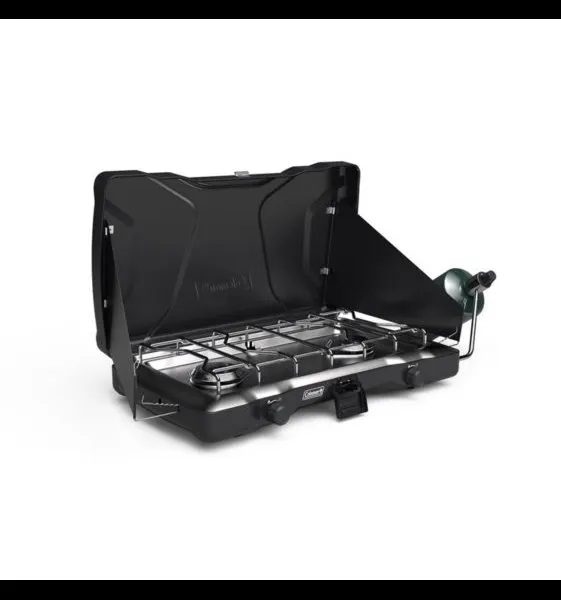
Coleman Triton+ 2-Burner Propane Stove
Coleman's regulated Triton+ two-burner with InstaStart push-button ignition, rated at 22,000 BTU across two adjustable burners. Coleman labels it for outdoor use only and not for RV use.
 Outdoor use only
For: Outdoor wood-fuel cooking
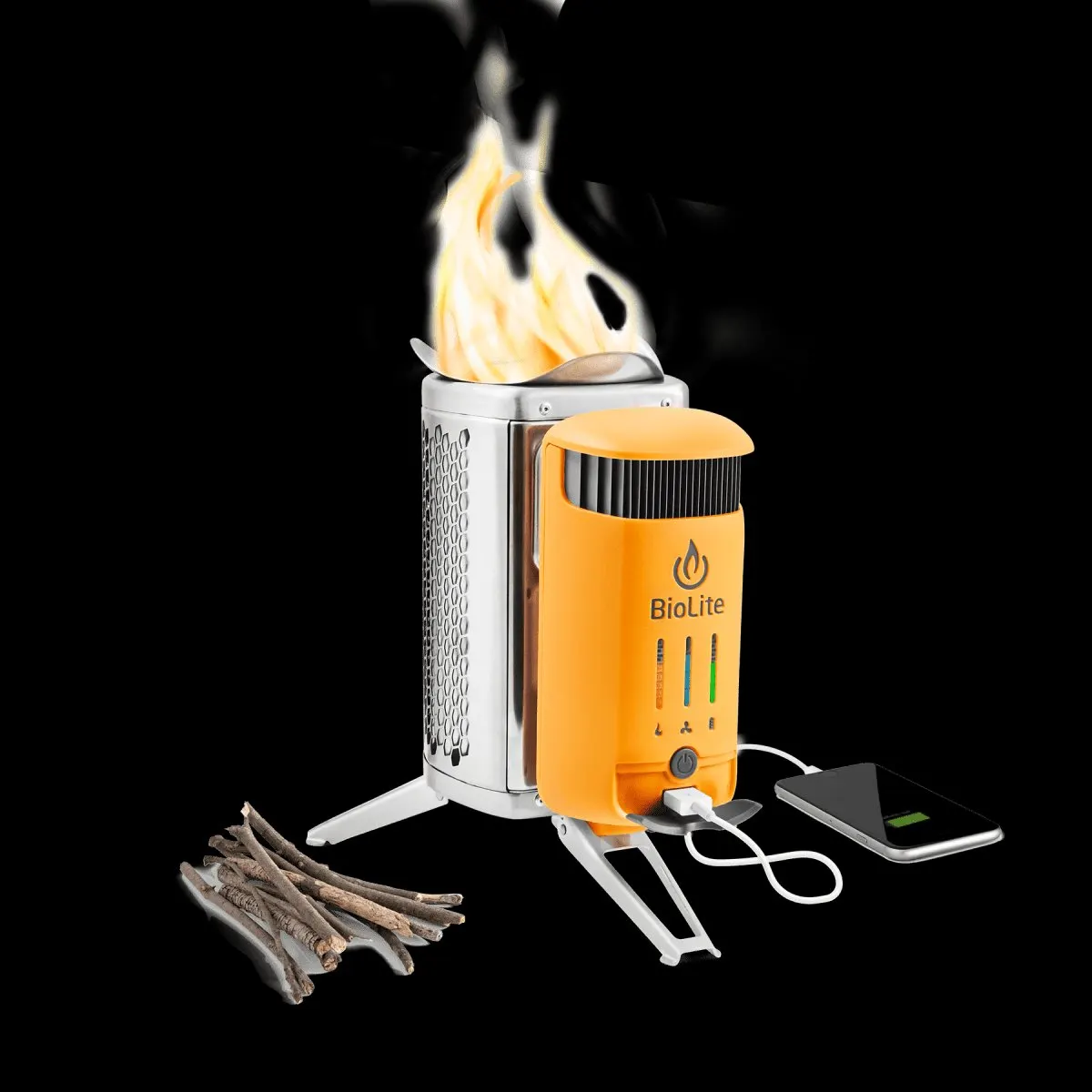
BioLite CampStove 2+
A wood-burning camp stove that generates electricity from fire. Burn sticks, pinecones and other biomass to cook a meal while charging a phone from the built-in 3W thermoelectric generator. Outdoor use only.
 Outdoor use only
For: Van-and-backpacking canister stove
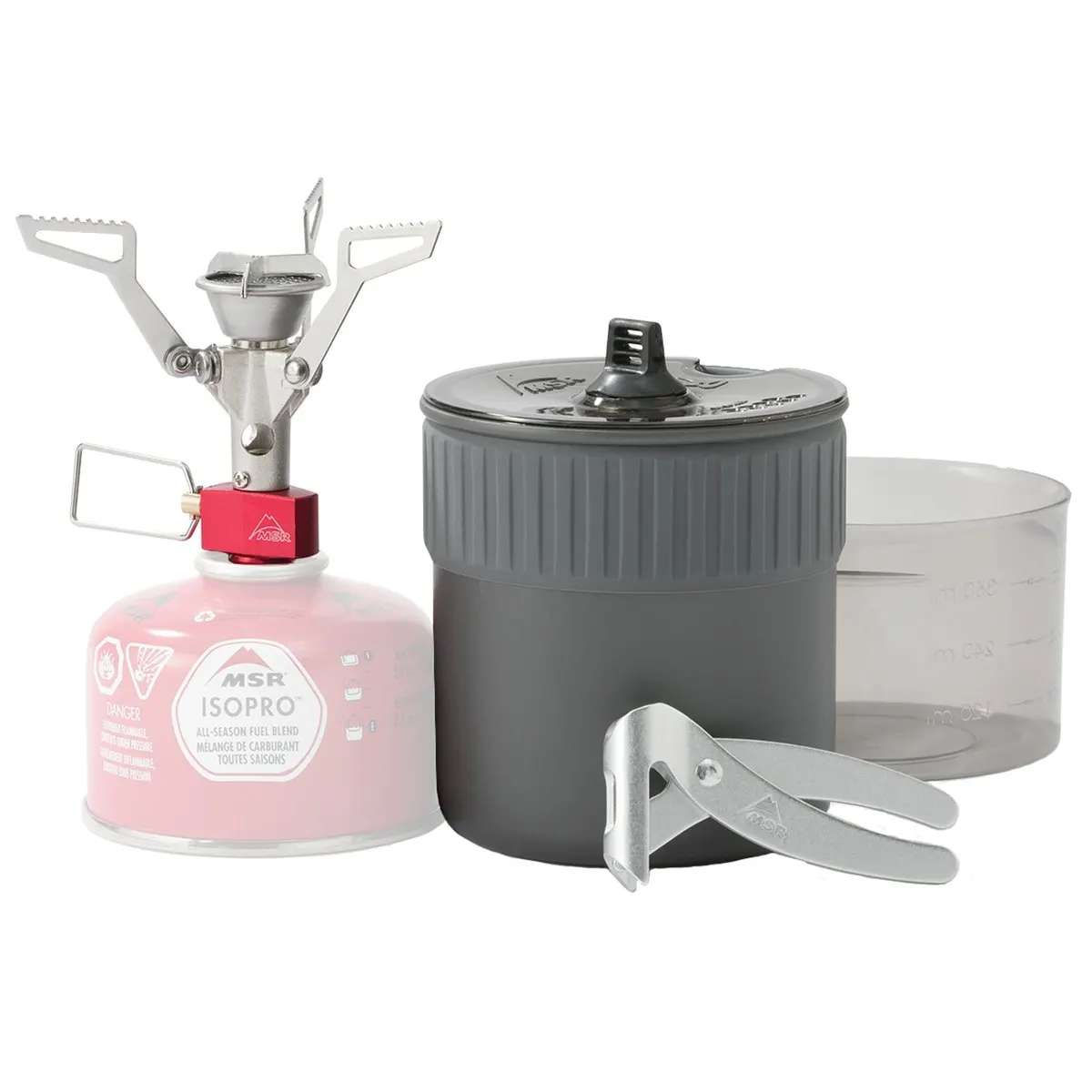
MSR PocketRocket 2 Mini Stove
An ultralight canister stove that weighs 2.6 ounces and, by MSR's rating, boils a liter in 3.5 minutes. Suits hybrid van-and-backpacking builds where the same cooking gear goes from the van to the trailhead. Canister stoves are for outdoor use.