Anker SOLIX C2000 Gen 2 vs EcoFlow DELTA 3 Max
Two 2 kWh, 2,400 W stations that can run an 1,800 W induction cooktop with headroom. Which suits a van kitchen better?
Disclosure: As an Amazon Associate I earn from qualifying purchases. Links to Amazon on this page are affiliate links: if you buy through one, VanLifeKitchens.com may earn a commission at no extra cost to you. Read our affiliate disclosure.
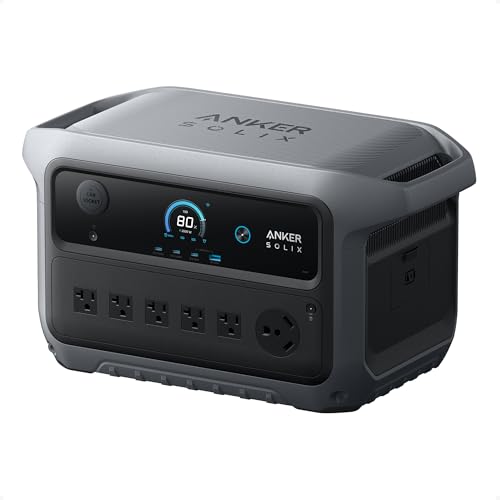
Anker SOLIX C2000 Gen 2 Portable Power Station, 2,048Wh, 2,400W (A1783)
For: Expandable induction-capable station

EcoFlow DELTA 3 Max Portable Power Station, 2048Wh, 2400W (EF-DL-H02-3M)
For: Induction cooking with headroom
We recommend the Anker SOLIX C2000 Gen 2 Portable Power Station, 2,048Wh, 2,400W (A1783)
“Both store 2,048 Wh and are rated for 2,400 W continuous, so both run an 1,800 W induction cooktop with about 600 W to spare for roughly an hour per charge by our estimate. The Anker is about 3 lb lighter, takes 800 W of solar against 500 W, publishes a cycle rating and accepts an expansion battery to 4,096 Wh. The DELTA 3 Max suits 24 V vehicles and hotter conditions, with a 24 V car input and a 113°F limit against the Anker's 104°F.”
Read the full Anker SOLIX C2000 Gen 2 Portable Power Station, 2,048Wh, 2,400W (A1783) reviewSpecifications
| Spec | Anker SOLIX C2000 Gen 2 Portable Power Station, 2,048Wh, 2,400W (A1783) | EcoFlow DELTA 3 Max Portable Power Station, 2048Wh, 2400W (EF-DL-H02-3M) |
|---|---|---|
| Best for | Expandable induction-capable station | Induction cooking with headroom |
| Model | A1783 | EF-DL-H02-3M (DELTA 3 Max, not Max Plus) |
| Capacity | 2,048 Wh (51.2 V, 40 Ah), LFP (manual) | 2,048 Wh (51.2 V, 40 Ah), LFP (manual) |
| Cycle Life | 4,000 cycles to 80% (Anker spec table) | — |
| AC Output | 120 V, 2,400 W total incl. TT-30; 4,000 W peak; SurgePad 3,000 W (manual, Anker page) | 4 x 120 V, 2,400 W total; 4,800 W surge (EcoFlow page) |
| 12V Car Socket | 12 V, 10 A (manual) | 12.6 V, 10 A, 126 W (manual) |
| Inputs | AC 1,800 W; XT60i 11–28 V 8.2 A, 28–60 V 17 A, 800 W (manual) | AC 15 A; solar 11–60 V, 13 A, 500 W; car 12 V/24 V 8 A (manual) |
| Expansion | 1 x BP2000 (Gen 2), 4,096 Wh total (Anker page) | — |
| Weight | 18.9 kg (41.7 lb) (Anker page) | About 44.8 lb (20.3 kg) (manual) |
| Dimensions | 18.1 x 9.8 x 10.1 in (Anker page) | 19.4 x 9.4 x 12.0 in (manual) |
| Temperature | Charge 32–104°F; discharge -4–104°F (manual) | Charge 32–113°F; discharge 14–113°F (manual) |
| X-Boost | — | Up to 3,400 W by lowering voltage; on by default (manual) |
| Warranty | — | 3 years + 2 with app registration (EcoFlow page) |
Anker SOLIX C2000 Gen 2 Portable Power Station, 2,048Wh, 2,400W (A1783)
- 2,400 W continuous: 600 W above the Duxtop's maximum
- Expands to 4,096 Wh with one BP2000 (Gen 2) (Anker)
- 800 W alternator charging, 100% in about 3 hours (Anker, sold separately)
- TT-30 RV outlet and a 12 V, 10 A car socket (manual)
- 41.7 lb, a heavy two-handed lift
- Solar limited to about 230 W below 28 V; 800 W max
- Anker's page lists both 4,000 and 3,000+ cycles
EcoFlow DELTA 3 Max Portable Power Station, 2048Wh, 2400W (EF-DL-H02-3M)
- 2,400 W continuous: 600 W above the Duxtop's maximum
- 2,048 Wh: about an hour of full-power induction (estimate)
- 12.6 V, 10 A car socket for a 12 V fridge
- Car input accepts 12 V or 24 V at 8 A (manual)
- 44.8 lb and 19.4 in long
- Solar capped at 500 W, the same as the 1 kWh DELTA 3
- No extra-battery support listed; no cycle rating in the manual
The short answer
For most van kitchens that cook on induction, buy the Anker SOLIX C2000 Gen 2. Both stations store 2,048 Wh and are rated for 2,400 W continuous, so both run the Duxtop 9100MC at its full 1,800 W with about 600 W to spare, for about an hour per charge by our estimate. The Anker is about 3 lb lighter, accepts 800 W of solar against 500 W, has a published cycle rating, and takes an expansion battery that doubles its capacity to 4,096 Wh. The EcoFlow DELTA 3 Max manual lists no expansion battery.
Buy the EcoFlow DELTA 3 Max if your van runs on 24 V, if you'll charge in heat above 104°F, or if you want the higher published surge figure. Its car input takes 24 V as well as 12 V, its charge and discharge limits run to 113°F against the Anker's 104°F, and EcoFlow lists 4,800 W of surge against Anker's 4,000 W peak.
For the full detail, read our Anker SOLIX C2000 Gen 2 review and EcoFlow DELTA 3 Max review. If you aren't sure a power station suits your cooking at all, start with can a power station run an induction cooktop?
This comparison is research-based. We don't test products hands-on. Specs come from each model's user manual and the makers' US product pages. Runtimes are estimates with the arithmetic shown.
Spec table
| Spec | Anker C2000 Gen 2 | EcoFlow DELTA 3 Max |
|---|---|---|
| Model (Amazon link) | A1783 | EF-DL-H02-3M |
| Rated capacity | 2,048 Wh, LFP | 2,048 Wh, LFP |
| Continuous AC | 2,400 W | 2,400 W |
| Surge or peak | 4,000 W peak | 4,800 W surge |
| Over-rating mode | SurgePad, up to 3,000 W | X-Boost, up to 3,400 W, on by default |
| RV outlet | TT-30, 2,400 W | None |
| 12 V car socket | 12 V, 10 A | 12.6 V, 10 A |
| Solar input | 800 W max (XT60i) | 500 W max (XT60i) |
| Car input | 12 V, about 98 W (estimate) | 12 V or 24 V, 8 A |
| Alternator charger | 800 W, sold separately | 800 W, sold separately |
| Cycle life | 4,000 to 80% | Not in manual |
| Expansion | 1 x BP2000 (Gen 2), 4,096 Wh | None listed |
| Weight | 41.7 lb | 44.8 lb |
| Size | 18.1 x 9.8 x 10.1 in | 19.4 x 9.4 x 12.0 in |
| Charge / discharge | 32–104°F / -4–104°F | 32–113°F / 14–113°F |
Sources: Anker SOLIX C2000 Gen 2 user manual and US product page; EcoFlow DELTA 3 Max user manual (EF-DL-H02-3M) and US product page. Anker's page lists 4,000 cycles in its specifications table and 3,000+ in a comparison block on the same page. The Anker car-input wattage is our estimate from the manual's 8.2 A limit at 11–28 V.
Induction cooking: a tie on the numbers
Our induction guide's rule is that a station's continuous AC rating should sit comfortably above the cooktop's maximum draw plus any other AC load. Surge and peak figures don't count, because a cooktop draws its wattage for minutes.
Duxtop 9100MC (1,800 W maximum). Both stations have 2,400 W continuous, about 600 W of headroom. Estimated runtime at full power is the same for both: 2,048 × 0.85 = 1,741 Wh, and 1,741 ÷ 1,800 = about 58 minutes; at 90% efficiency, 1,843 ÷ 1,800 = about 61 minutes. With the Anker's expansion battery, that roughly doubles, to about 116–123 minutes.
Nuwave PIC Gold (1,500 W default). About 900 W of headroom on both, and about 70–74 minutes at a steady 1,500 W.
A typical cook. Our guide's 20-minute cook at a steady 1,000 W uses about 333 Wh at the cooktop. Each station covers about five of those per charge, and the Anker about ten with its expansion battery.
All runtimes assume a full start, a steady draw, nothing else plugged in, and 85–90% inverter efficiency. They're estimates, not measurements.
Both have a mode that runs loads above the rating. EcoFlow's X-Boost (on by default, up to 3,400 W) and Anker's SurgePad (automatic, up to 3,000 W) both work best with heating devices, and both makers say they don't suit devices with voltage protection. An 1,800 W cooktop alone stays below 2,400 W on either station. Both cooktop manuals list voltage limits, so keep the total AC load under 2,400 W rather than relying on either mode. If you'd rather have a clean overload shutdown, EcoFlow lets you turn X-Boost off in its app.
Edge: Tie, unless you'll add the expansion battery, which only the Anker takes.
Running a 12 V fridge
Both have a 10 A car socket (12 V on the Anker, 12.6 V on the EcoFlow), above the 7.6 A maximum Dometic publishes for the CFX5 35. With equal capacity, the standard estimate is the same for both.
| Fridge (published daily figure) | Either station, standard method | Anker with expansion battery |
|---|---|---|
| ICECO VL35 ProS, 430 Wh/day | about 4.0–4.3 days | about 8.1–8.6 days |
| Dometic CFX5 35, about 320 Wh/day | about 5.4–5.8 days | about 10.9–11.5 days |
These use 85–90% of rated capacity, the fridge figures from our power budget guide, no cooking and no charging. Anker publishes a 9 W idle figure. If that applied all day, the Anker's figures would drop to about 65–69 hours on the 430 Wh fridge, by our estimate. EcoFlow doesn't publish an idle figure in the documents we opened, so we can't make the same adjustment for the DELTA 3 Max. Expect real runtimes below the standard method on both. Run your own numbers in the fridge battery calculator.
Both manuals describe automatic turn-off features. EcoFlow's AC timeout can switch off a fridge plugged into an AC outlet, and EcoFlow recommends setting it to "never" in the app. Anker's AC outlets and car socket turn off when no plug is detected (after 15 minutes and five hours, by default). Running the fridge from the 12 V socket on either station is the simpler choice.
Edge: Anker, but only because of the expansion option.
Recharging
- AC: the Anker takes up to 1,800 W, and Anker quotes 100% in 58 minutes with AC and solar together. EcoFlow lists 0–80% in 68 minutes for the DELTA 3 Max. Both refill quickly at a hookup.
- Solar: this is the clearest difference. The Anker takes up to 800 W on its XT60i input (at 28–60 V and up to 17 A). The DELTA 3 Max takes up to 500 W (11–60 V, 13 A). To reach the Anker's full 800 W, wire panels in series to a higher voltage, because below 28 V it's limited to 8.2 A, about 230 W.
- Car: both take roughly 96–98 W from a 12 V socket, about 21 hours from empty. Only the DELTA 3 Max lists a 24 V car input (8 A).
- Alternator: both makers sell an 800 W alternator charger. Anker lists 100% in about three hours. EcoFlow's bundle page estimates about 5–6 hours for the DELTA 3 Max from its 500 W alternator charger option. Either is a permanent installation that should follow the maker's instructions and be fitted by a qualified installer where codes or insurers require one.
Edge: Anker, for the larger solar input. EcoFlow, if your vehicle is 24 V.
Weight, size and outlets
The Anker is 41.7 lb and 18.1 x 9.8 x 10.1 inches. The DELTA 3 Max is 44.8 lb and 19.4 x 9.4 x 12.0 inches. Both are long, low boxes that suit an under-bench spot, and both are heavy two-handed lifts. EcoFlow's manual warns against lifting the DELTA 3 Max by one side handle.
The DELTA 3 Max has four AC outlets on the US version. Anker's manual lists NEMA 5-20R AC outlets but doesn't state how many in its text, so check the listing photos. The Anker also has a TT-30 outlet, the 30 A socket an RV's shore cord plugs into. That suits a small RV, but connecting a station to an RV's shore inlet powers the RV's whole 120 V system, so follow both makers' instructions and get a qualified technician's check where required.
Edge: Anker, slightly lighter and smaller, with the TT-30 outlet.
Battery life, expansion and warranty
Anker's specifications table lists 4,000 cycles to 80% for the C2000 Gen 2, while a comparison block on the same page lists 3,000+. The DELTA 3 Max manual gives no cycle rating, and EcoFlow's page only says its cells offer "10 years of reliable power."
The Anker takes one BP2000 (Gen 2) expansion battery, for 4,096 Wh. The DELTA 3 Max manual lists no extra battery; EcoFlow's expandable 2 kWh model is the DELTA 3 Max Plus.
The Anker's Amazon listing gives a 5-year warranty. For the DELTA 3 Max, EcoFlow describes 3 years standard plus 2 more with app registration, and its Amazon listing says "5 year manufacturer." Register either one.
Edge: Anker.
Safety and temperature
The DELTA 3 Max charges at 32–113°F and discharges at 14–113°F. The Anker charges at 32–104°F and discharges at -4–104°F. So the EcoFlow tolerates more heat, and the Anker runs in more cold. Neither can be charged below freezing. In a closed van in summer sun, the Anker's 104°F ceiling is the one to plan around, so keep either station shaded and don't leave it charging in a hot, closed vehicle.
The DELTA 3 Max manual lists an IP20 rating and says to use a waterproof bag in wet conditions. Treat both as indoor equipment, keep them away from the sink and an open door in rain, and keep the vents clear and away from the cooktop's exhaust. Neither should be wired into a vehicle's fixed electrical system without following the manufacturer's instructions and using a qualified installer where required.
Edge: Tie, depending on whether heat or cold is your bigger problem.
Value
When we checked, the two stations were listed on Amazon at similar mid-to-premium prices, with the Anker costing somewhat more. Check current prices on the review pages, since they move often. For roughly the same outlay, the Anker gives you more solar input, a published cycle rating, an expansion path, a TT-30 outlet and a slightly lighter box. The DELTA 3 Max gives you a higher surge figure, a 24 V car input and a higher temperature ceiling. For most van kitchens, the Anker's extras are the ones that matter over the life of the build, which makes it the better value.
Which one should you buy?
Buy the Anker SOLIX C2000 Gen 2 if:
- You want to add capacity later with an expansion battery.
- You'll run more than 500 W of solar.
- You'd like a TT-30 outlet for a small RV, or you want the lighter box.
Buy the EcoFlow DELTA 3 Max if:
- Your vehicle has a 24 V system.
- You'll charge in heat above 104°F.
- You already use EcoFlow's app or accessories.
If you want even more continuous AC output, the BLUETTI Elite 200 V2 is rated at 2,600 W, at 53.35 lb and with no expansion.
FAQ
Can both run the Duxtop 9100MC at full power? Yes. Both are rated for 2,400 W continuous, about 600 W above the Duxtop's 1,800 W maximum. Our estimate is about 58–61 minutes at full power on either.
Which runs a 12 V fridge longer? They're equal on capacity, about 4.0–4.3 days on a 430 Wh-a-day fridge by our standard estimate. The Anker can double that with its expansion battery.
Which charges faster from solar? The Anker, with an 800 W solar input against the DELTA 3 Max's 500 W. Reaching 800 W needs panels wired to more than 28 V.
Can I add an extra battery to either? The Anker takes one BP2000 (Gen 2) expansion battery. The DELTA 3 Max manual lists none.
Which one handles cold better? The Anker discharges down to -4°F, against 14°F for the DELTA 3 Max. Neither should be charged below 32°F.
Sources and verification
- Anker SOLIX C2000 Gen 2 review: specs and sources for the C2000 Gen 2 (checked 2026-10-13)
- EcoFlow DELTA 3 Max review: specs and sources for the DELTA 3 Max (checked 2026-10-13)
- Anker SOLIX C2000 Gen 2 user manual, US edition (Anker document, PDF hosted by a dealer): ports, AC, TT-30, XT60i and car outputs and inputs, SurgePad, auto-off, temperatures; also cited in the C2000 Gen 2 review. https://cdn.shopify.com/s/files/1/0643/9128/2937/files/Anker_SOLIX_C2000_Gen_2_Manual.pdf (checked 2026-10-13)
- Anker SOLIX US, C2000 Gen 2 product page: cycle life, peak power, solar, weight and size, 9 W idle, expansion, alternator charging; also cited in the C2000 Gen 2 review. https://www.ankersolix.com/products/c2000-gen2 (checked 2026-10-13)
- EcoFlow DELTA 3 Max user manual, model EF-DL-H02-3M (EcoFlow document, PDF hosted by a European dealer): specifications, outlets, X-Boost, car input, temperatures, IP20; also cited in the DELTA 3 Max review. https://cdn.solarpowersupply.eu/files/EcoFlow%20DELTA%203%20Max%20Portable%20Power%20Station_User%20Manual%20(2)-20260202.pdf (checked 2026-10-13)
- EcoFlow US, DELTA 3 Max product page: 4,800 W surge, charge time, warranty terms, bundle charging estimates; also cited in the DELTA 3 Max review. https://us.ecoflow.com/products/ecoflow-delta-3-max-portable-power-station-2048wh (checked 2026-10-13)
- Amazon listings for ASIN B0FVFGL38H (C2000 Gen 2) and ASIN B0FQV6LMVX (DELTA 3 Max): titles, models, warranty fields, availability (checked 2026-10-13)
- Cooktop figures and the runtime method are from this site's power station and induction guide.