LifeStraw Home Filter Pitcher vs Sawyer Squeeze Water Filter
Gravity pitcher vs hollow-fiber backpacker filter. Two completely different approaches to clean water.
Disclosure: As an Amazon Associate I earn from qualifying purchases. Links to Amazon on this page are affiliate links: if you buy through one, VanLifeKitchens.com may earn a commission at no extra cost to you. Read our affiliate disclosure.
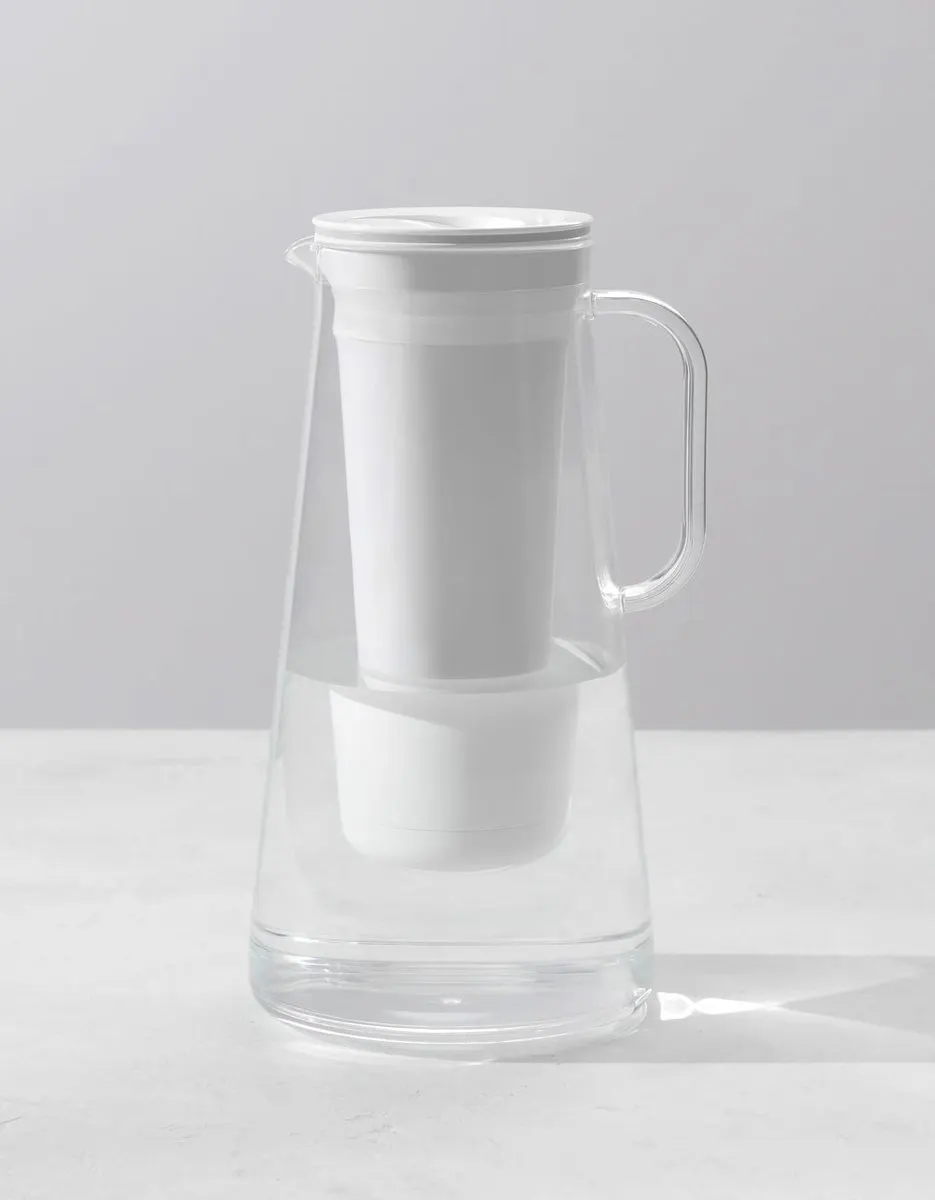
LifeStraw Home 7-Cup Gravity-Fed Water Filter Pitcher
For: Filtering treated tap water
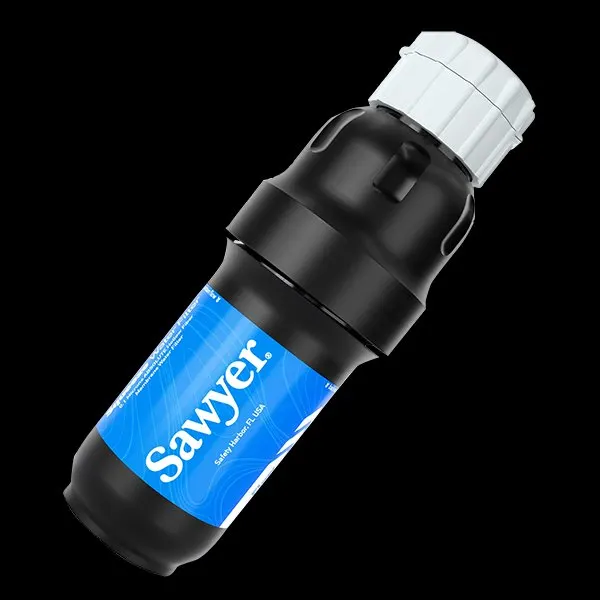
We recommend the LifeStraw Home 7-Cup Gravity-Fed Water Filter Pitcher
“Different tools for different problems. The LifeStraw Home Pitcher is the better daily-use filter for any van with counter space — gravity-fed, easy to use, no squeeze required. The Sawyer Squeeze is the better backup/emergency filter — pocket-size, hard to damage, and it threads onto Sawyer pouches and many standard bottles. Neither is rated for viruses, so neither makes every source safe to drink. Most van dwellers should own both.”
Read the full LifeStraw Home 7-Cup Gravity-Fed Water Filter Pitcher reviewSpecifications
| Spec | LifeStraw Home 7-Cup Gravity-Fed Water Filter Pitcher | Sawyer Squeeze Water Filter |
|---|---|---|
| Best for | Filtering treated tap water | Pocket backup filter |
| Model | LSH7PLPB41, 7-cup BPA-free plastic (Amazon listing) | — |
| Capacity | 7 cups (1.65 L) | — |
| Dimensions | 11.25 H x 9.44 W x 5.8 D in (Amazon listing) | — |
| Weight | About 2.3 lb empty (Amazon listing) | About 2 oz filter (Amazon listing); Sawyer lists 8.19 oz for the kit |
| Power Source | None (gravity) | — |
| Filter Life | 264 gallons / about 1 year (membrane), 40 gallons / about 2 months (carbon + ion exchange) | — |
| Does Not Remove | Viruses, fluoride, nitrates, nitrites, phosphates (LifeStraw) | — |
| Filter Rating | — | 0.1 micron absolute |
| Flow Rate | — | Not published by Sawyer (about 1.5 L/min is our rough estimate) |
| Life | — | Not stated on Sawyer's current page |
| Fits | — | Standard 28 mm bottle threads (Sawyer) |
| Warranty | — | Lifetime against defects, filter only; void if frozen after wetting (Sawyer) |
LifeStraw Home 7-Cup Gravity-Fed Water Filter Pitcher
- Rated to remove bacteria and parasites (99.999999%)
- Reduces microplastics, lead, mercury, chlorine
- Two-stage filter: membrane rated 264 gal, carbon/ion-exchange stage 40 gal
- BPA-free; fits a fridge shelf or cabinet
- Only 7-cup (1.65 L) capacity
- Slow gravity flow: about 20–25 minutes per full reservoir (LifeStraw)
- Not rated for viruses; doesn't remove fluoride or nitrates
Sawyer Squeeze Water Filter
- 0.1 micron absolute hollow fiber
- About 2 oz filter (Amazon listing)
- Lifetime warranty against defects (Sawyer)
- Inexpensive
- Doesn't remove viruses, chemicals or heavy metals
- Hand-squeezing is slow for jugs
- Freezing after wetting ruins it and voids the warranty
The short answer
Buy the LifeStraw Home Pitcher if you want one filter that lives on the galley counter and handles your everyday drinking water. It's a 7-cup (about 1.65 L) gravity pitcher with two stages: a 0.2-micron hollow-fiber membrane for bacteria, parasites and microplastics, plus a carbon and ion-exchange stage aimed at lead, mercury, chlorine taste and other chemical contaminants. For a solo traveler or a couple refilling from campground spigots, rural taps and jugs of unknown origin, it's the better primary filter, which is why it wins this matchup.
Buy the Sawyer Squeeze if you want a pocket-size pathogen filter for backup duty, hikes away from the van, and the day your main system fails. The Amazon listing puts the filter alone at about 2 ounces (Sawyer's 8.19 oz figure appears to be the whole kit), it has no cartridge to replace (Sawyer publishes no gallon rating and backs the filter itself with a lifetime warranty against manufacturer defects), and it screws onto standard 28 mm bottles. It does nothing for chemicals, heavy metals or taste, so it isn't a full answer for full-time drinking water. The Amazon listing we link is the SP129 kit, which comes with two 32 oz squeeze pouches.
The real answer for most full-timers is both. Both sit in the budget tier, they solve different problems, and together they cover the galley and the trail. Our full LifeStraw Home review and Sawyer Squeeze review go deeper on each, and the water filtration complete guide explains how they fit into a whole van water setup.
What each one actually removes
This is the dimension that matters most. Both filters use hollow-fiber membranes for the biological part of the job. LifeStraw states its 0.2-micron membrane removes 99.999999% of bacteria, 99.999% of parasites (including Giardia and Cryptosporidium) and 99.999% of microplastics, and says it is independently lab-tested to the US EPA and NSF P231 protocol for bacteria and parasites. Sawyer cites an independent lab report (Hydration, LLC, report S05-03) showing 99.99999% removal of bacteria and 99.9999% of protozoa from its 0.1-micron absolute membrane, and claims 100% microplastics removal; it does not cite an NSF/ANSI certification on its product page. On bacteria and protozoa, the two are broadly comparable on paper.
The difference is the LifeStraw's second stage. LifeStraw says its activated carbon and ion-exchange stage reduces lead, mercury, chromium III, cadmium, copper, chlorine, PFAS (PFOA and PFOS), pesticides and herbicides, and its Home product pages list NSF/ANSI 42, 53 and 401 and NSF P473; its 7-cup glass pitcher page describes the filters as WQA/NSF certified to those standards. Check the packaging on the pitcher you receive for the exact contaminant list. LifeStraw also states the pitcher does not remove fluoride, nitrates, nitrites or phosphates. The Sawyer has no carbon stage at all, so it does not remove chemicals, pesticides, heavy metals, dissolved solids or chlorine taste.
What neither one claims: virus removal, desalination, or fluoride removal. The CDC notes that portable filters do not remove viruses. In the US and Canada, viral contamination of treated spigot water is generally considered less likely than bacteria and protozoa, but if you travel where it is a realistic risk, you need a virus-rated purifier, boiling (the CDC advises a 1-minute rolling boil, or 3 minutes above 6,500 feet), or an approved chemical disinfectant on top of either filter. LifeStraw positions the Home pitcher for tap water, so don't use it as the only treatment for creek or lake water. Neither should be treated as a guarantee of safe water from every source. Match the tool to the threat.
Edge: LifeStraw Home, because it covers the chemical and taste side that a van full-timer actually runs into at older campground plumbing, while matching the Sawyer on pathogens.
Daily use and flow
The LifeStraw holds 7 cups (about 1.65 L) and filters by gravity. LifeStraw's 7-cup glass pitcher page, which uses the same two filter stages, says a full reservoir typically takes about 20 to 25 minutes once the filter is primed and broken in; the plastic pitcher's page doesn't state a time, and any membrane slows as it loads. That works if you treat it as a background process: top it up every time you pass, keep some clean water in the bottom, and never let it run dry. For a family of four, 1.6 liters is simply too small.
Sawyer's product page doesn't state a flow rate. The site's product record uses about 1.5 L per minute as a rough working estimate for a new filter, not a Sawyer rating; real flow depends on how hard you squeeze and drops as sediment loads the membrane, until you backflush. Faster on paper, but it's active work. You squeeze a pouch or bottle the whole time, and filtering a full day's drinking water that way gets tiring quickly. One workaround is to hang a dirty-water bag with the Sawyer on its outlet, turning it into a slow, hands-off gravity filter.
Edge: LifeStraw Home for everyday drinking water, because hands-off gravity filtering beats squeezing every drop. The Sawyer wins for quick refills away from the van.
Maintenance, filter life and freezing
The two filters wear out on very different schedules. LifeStraw rates the membrane for 264 gallons (about a year) and the carbon and ion-exchange stage for just 40 gallons (about 150 litres, or two months), so you'll replace the carbon far more often. As an estimate, if a couple filters about 6 litres a day for drinking, coffee and cooking, a carbon stage lasts about 25 days; a solo traveler at 3 litres a day gets about 50 days. Budget for it: a carbon stage left past its life stops doing its job and shouldn't be trusted. Upkeep beyond that is easy. LifeStraw's care guidance (on its glass pitcher page) is to hand wash the pitcher and housing with the filters removed, weekly, with a deeper clean every one to two months; follow the instructions in the box for the plastic pitcher and for flushing new filters.
The Sawyer has no cartridge to replace. It keeps working as long as you can push water through it, and backflushing with the cleaning plunger is what keeps the flow up (Sawyer's page lists a plunger in the kit; the Amazon feature text doesn't, so check the listing photos). Do it whenever flow drops noticeably and before storage, following the instructions in the box. The one hard rule is freezing. Sawyer's warranty page says freezing a filter after it has been wetted voids the warranty, that there is no reliable way to tell whether the fibers were damaged, and that a frozen filter should be replaced. A never-wetted filter is not affected. In a winter van, keep it in your sleeping bag or an insulated pouch overnight.
The LifeStraw membrane is hollow fiber too. As a general rule for hollow-fiber media, freezing while wet can damage the fibers without visible signs, so keep a used pitcher in the heated living space and don't leave it with water in it in a van parked below freezing.
Edge: Sawyer Squeeze, because there's no recurring cartridge and its maintenance is free, as long as you protect it from freezing.
Portability and where each one lives
The Amazon listing gives the plastic 7-cup LifeStraw Home as about 11.25 inches tall, 9.44 inches wide including the handle and 5.8 inches deep, and about 2.3 lb empty; full, it weighs roughly 2 kg more. Check the height against the gap under any upper cabinet, with room to lift the lid. It needs a secure spot on the counter or in a cabinet, and a pitcher full of water has to be braced or emptied before you drive. It stays at the galley.
The Sawyer filter weighs about 2 ounces per the Amazon listing. It fits in a glovebox, a daypack or a pocket, and its 28mm threads match most disposable water bottles, so you can drink straight through it on a hike. It can also go inline on a low-pressure gravity or foot-pump line. Sawyer doesn't publish a pressure rating for use after a pressurized 12 V diaphragm pump, so don't plumb it after a Shurflo-style pump.
Edge: Sawyer Squeeze, by a wide margin. It goes anywhere and takes up almost no room.
Value
Upfront, these two sit in the same budget bracket, so the sticker price shouldn't decide this for you. The real difference is what you spend after that. Check current prices on Amazon, since they move often.
The Sawyer's running cost is close to zero. You might replace the stock squeeze pouches, which are thin and the part most likely to wear (squeeze gently, or thread the filter onto a sturdier 28 mm bottle), but the filter itself doesn't need cartridges. The LifeStraw comes with a recurring carbon-stage expense: on the 6-litres-a-day estimate above, a couple goes through about one carbon stage a month, and even LifeStraw's own two-month guideline means six a year. Over two years of steady use, the LifeStraw review expects replacement filters to cost more than the pitcher did. That's the cost of chemical filtration, not a markup, but you should plan for it.
Buying both is still a modest outlay, and it gets you chemical-plus-pathogen filtration at the counter and a backup that fits in a pocket. For full-time van life, that pair is worth more than either filter alone.
Which one should you buy?
Buy the LifeStraw Home if:
- You want one primary drinking-water filter on the counter for one or two people
- You fill from older campground plumbing, rural taps or unknown jugs where lead or chlorine taste is a concern
- You're fine planning a few minutes ahead and replacing carbon on schedule
- You want filtering to happen without any hand effort
Buy the Sawyer Squeeze if:
- You want a cheap, lightweight backup for when your main system fails
- You hike, bike or paddle away from the van and need water on the trail
- Your main worry is pathogens from creeks, springs or questionable spigots
- You'd rather pay once and skip recurring cartridge costs
FAQ
Is the LifeStraw Home better than the Sawyer Squeeze? For everyday drinking water in a van, yes. It matches the Sawyer on bacteria and parasites and adds a carbon and ion-exchange stage for lead, mercury and chlorine taste. The Sawyer is better as a portable backup and trail filter.
Do either the LifeStraw Home or Sawyer Squeeze remove viruses? No. Neither manufacturer claims virus removal. In regions where viral contamination is a realistic concern, use a virus-rated purifier, boil the water, or add an approved chemical disinfectant.
Can the Sawyer Squeeze replace a countertop pitcher for full-time van life? It can handle pathogens, but it doesn't address chemicals, heavy metals or taste, and squeezing every drop gets tiring. Most full-timers are better served using it as a backup next to a primary filter like the LifeStraw Home.
Which should I buy first? If you're building a full-time rig, start with the LifeStraw Home on the counter and add a Sawyer as backup. If you're a weekender or just starting out, the Sawyer covers the most likely acute risk, pathogens, for a small outlay, and you can add a pitcher later.
What happens if either filter freezes? Freezing can damage a wet hollow-fiber membrane without any visible sign. Sawyer says a Squeeze that froze after being wetted should be replaced, and that freezing voids its warranty. Keep both filters above freezing once they've been used, especially in winter vans.
Sources and verification
- LifeStraw Home Gravity Pitcher review: specs and sources for the LifeStraw Home 7-cup plastic pitcher (checked 2026-10-12)
- Sawyer Squeeze review: specs and sources for the Sawyer SP129 Squeeze kit (checked 2026-10-12)
- Manufacturer pages cited in those reviews, not separately re-opened for this comparison: LifeStraw Home product page (https://lifestraw.com/products/lifestraw-home), LifeStraw Home 7-Cup Glass pitcher page (https://lifestraw.com/products/lifestraw-home-glass-pitcher), Sawyer Squeeze product page (https://www.sawyer.com/product/squeeze-water-filter-system), Sawyer warranty page (https://sawyer.com/warranty/) and the CDC's emergency water guidance (https://www.cdc.gov/water-emergency/about/index.html)